
REVIEW · ROME
Rome: Guided Small Group Walking Tour of City Highlights
Rome’s historic center is best understood on foot, and this two-hour small-group tour gives you a quick route through several of its biggest sights. You begin near the Roman Forum and finish in Piazza Navona, with the Trevi Fountain, Pantheon, Trajan’s Column, and Victor Emmanuel II Monument along the way.
I like the small maximum of 15 people, which makes it easier to hear the guide and ask questions. I also like the useful ending point: Piazza Navona puts you close to restaurants, cafés, bars, and more Rome sightseeing.
The main drawback is the pace. This is an express orientation walk, not a slow study of each monument. You also need to find the meeting point carefully, since a few people have had trouble locating the guide even when they were near the correct address.
Key points to know before booking
- Five major stops in about two hours: You cover Rome’s central landmarks without spending a full morning on one attraction.
- A practical route: The walk starts at Piazza d’Aracoeli and ends at Piazza Navona, near many places to eat.
- The Pantheon interior costs extra: The tour discusses the building and square, but admission is not included.
- Guides shape the experience: Sharon, Dan, Sila, Polina, Dominica, and others are praised for clear storytelling, local advice, and patience.
- Small groups help with hearing: The maximum is 15 people, though the actual group may be smaller.
- Good for a first day in Rome: You get a map in your head, basic historical context, and suggestions for what to explore next.
A fast introduction to Rome’s historic center
This walk is designed to help you get your bearings fast. It connects monuments from different periods, from ancient Rome to Baroque fountains and modern Italy, without asking you to commit to a long museum visit.
At $30.23 per person, the price is fair for a local guide and two hours of sightseeing. You are paying for organization and interpretation, not entry tickets or a full archaeological tour. If you tried to visit the Pantheon with a separate guide, then arranged your own route between these sights, you could easily spend more time and effort.
The tour is especially useful early in your stay. Several guides give suggestions for food, other sights, and ways to spend the rest of your time in Rome. That advice can be worth as much as the commentary itself, particularly when you are still learning how the center fits together.
The route is not a complete visit to ancient Rome. You do not enter the Colosseum or Roman Forum, though the start is convenient for exploring those sites afterward. You also do not get a long interior visit at the Pantheon. Think of this as a lively introduction, followed by independent sightseeing.
More City Highlights Walking Tours in Italy
- Rome: Guided City Center Evening Sightseeing Walking Tour
★ 4.4 · 953 reviews - Rome: Small-Group City Highlights Moonlight Walking Tour
★ 4.9 · 949 reviews - Florence: Highlights Walking Tour with Expert Guide
★ 4.6 · 4,662 reviews
Starting near Piazza d’Aracoeli and the Capitoline Hill
The meeting point is Piazza d’Aracoeli, at Via di S. Venanzio 8, near the Victor Emmanuel II Monument and the Roman Forum. This is a useful starting area, but give yourself extra time to locate the guide.
The meeting point directions have caused problems for some people. One person waited for more than an hour without finding the group, while another found the location difficult even with a phone and data connection. That does not appear to reflect the normal experience, but it is a practical warning: check the exact address before leaving your hotel and look for the guide well before the scheduled start.
Once the walk begins, the setting is excellent. You are close to the Capitoline Hill, the Roman Forum, and the broad staircase leading toward Santa Maria in Aracoeli. The tour does not list an extended visit to these sites, but the area gives you an immediate sense of Rome’s layers.
The group then visits the Victor Emmanuel II Monument, often called the Altar of the Fatherland. The huge white building commemorates Vittorio Emanuele II and the unification of Italy. It is one of the city’s most noticeable structures, and its scale can feel almost startling beside the older churches and ruins.
You spend about 10 minutes here. That is enough for an explanation and a few photographs, but not enough to explore the building or its upper terraces. The stop works as a visual introduction to modern Italy before the walk turns toward ancient monuments and Baroque Rome.
Trajan’s Column and the story carved in stone
The next stop is Trajan’s Column, where the guide spends about 10 to 15 minutes discussing Emperor Trajan, his life, and his military conquests. The column’s spiral relief is one of Rome’s most useful history lessons because it presents an entire military campaign in carved scenes.
This is the kind of stop that benefits from a guide. From ground level, the details can be hard to read, and the column can seem like another tall monument in a city full of them. A good explanation helps you understand why it was built and what the carved scenes were meant to show.
The time here remains brief, so do not expect a detailed archaeological lecture. Instead, you get a compact story that connects the monument to the wider Roman imperial world. Guides are encouraged to add stories and approachable explanations, which helps keep the walk from turning into a string of dates.
Trevi Fountain, wishes, and crowded streets
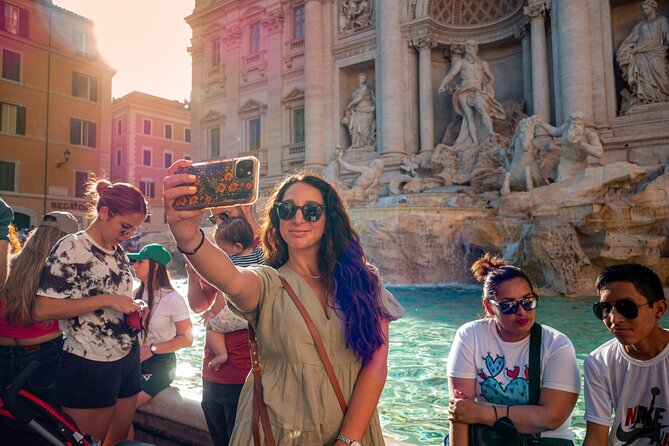
The Trevi Fountain receives about 15 minutes. That gives you time to look at the fountain, take photographs, and toss a coin if you wish. The tour also points you toward a favored gelato stop, though food and drinks are not included.
Trevi is one of Rome’s most theatrical sights. Water, carved figures, stone, and the narrow surrounding streets come together in a way that feels very different from the open spaces around the Forum. Your guide can explain the Baroque design and the fountain’s place in Roman tradition, while you take in the scene.
Fifteen minutes is enough for a first look, but it is not much time if the area is crowded. You may need to move carefully through the surrounding streets and wait for a clear place to stand. If you want quiet photographs or a long pause by the water, plan to return independently.
The gelato suggestion is a small but useful touch. Since the tour ends near plenty of places to eat, the guide can help you turn the walk into a longer food break. Just remember that this is advice, not a tasting tour.
More City Highlights Walks in Rome:
- Berlin City walk Government District and Places of Democracy
★ 4.7 · 8,467 reviews - Historic Charleston Guided Sightseeing Walking Tour
★ 5.0 · 6,216 reviews - Quebec City Walking Tour
★ 5.0 · 4,716 reviews - Oxford: University and City Walking Tour with Alumni Guide
★ 4.7 · 4,429 reviews
The Pantheon, Rome’s engineering marvel
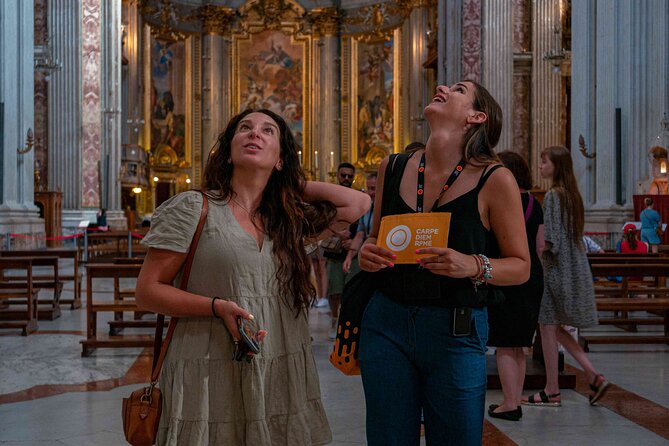
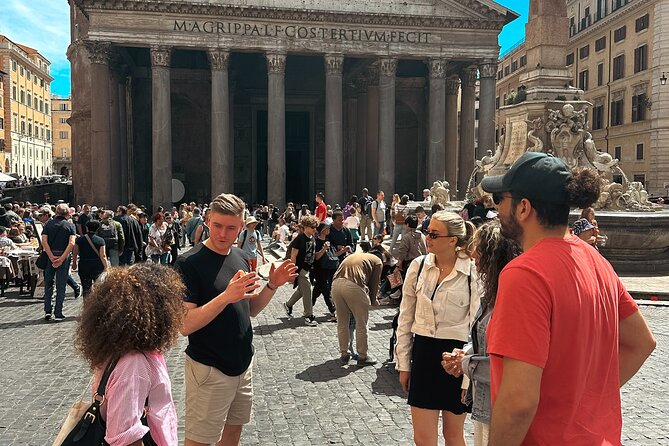
The Pantheon receives the longest stop, about 20 minutes. The guide explains its history and the surrounding square, while entry inside is not included in the $30.23 price.
The building began as a temple and is now a church. Its massive dome remains one of the great feats of Roman construction, and the opening at the top, the oculus, gives the interior its famous changing light. The tour’s timing lets you appreciate the outside, hear the main story, and decide if you want to pay for entry and return later.
This arrangement has both a benefit and a limit. You avoid spending the group’s time in an entrance line, and you can choose for yourself if the interior visit fits your plans. On the other hand, anyone expecting a complete Pantheon visit may feel shortchanged because the admission fee and interior exploration are separate.
The square outside is part of the appeal. Cobblestone lanes lead into the open space almost by surprise, and the Pantheon’s plain exterior hides the scale of the dome within. Your guide can help you notice the contrast between the building’s ancient core and the later life of the square.
Ending in Piazza Navona
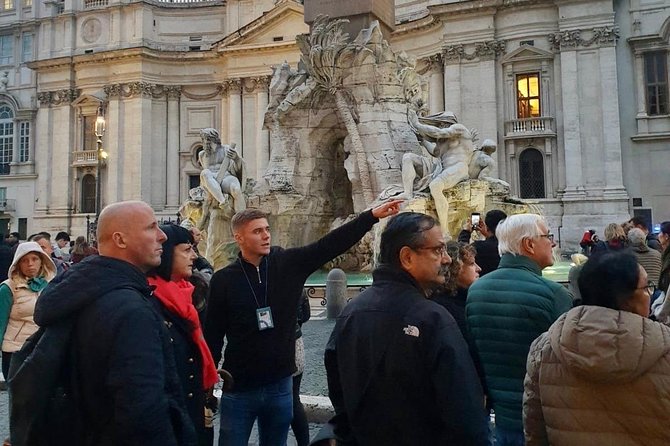
The final stop is Piazza Navona, where the tour spends about 20 minutes. This is a strong ending because the square is both a major sight and a useful place to continue your day.
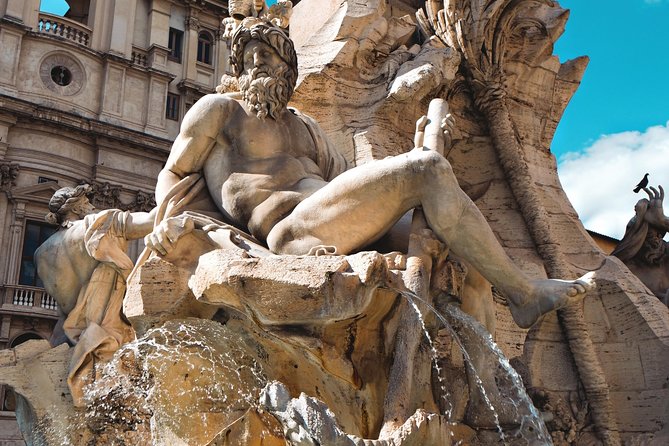
Piazza Navona follows the shape of an ancient Roman stadium. Today, its best-known features are the fountains, including Bernini’s Fountain of the Four Rivers, and the church of Sant’Agnese in Agone. The square brings together architecture, public art, cafés, and daily Roman life in one easy-to-understand setting.
The tour ends here rather than returning you to the start. That matters. A circular route would be less useful because you would need to retrace your steps. From Piazza Navona, you can eat nearby, walk toward the Pantheon again, continue to Campo de’ Fiori, or make your way toward the Tiber.
The guide can suggest restaurants, bars, and rooftop terraces in the area. Use the advice as a starting point, but remember that the tour does not include food, drinks, or reservations. The ending is flexible, which suits people who want to keep exploring.
What the guides add to the walk
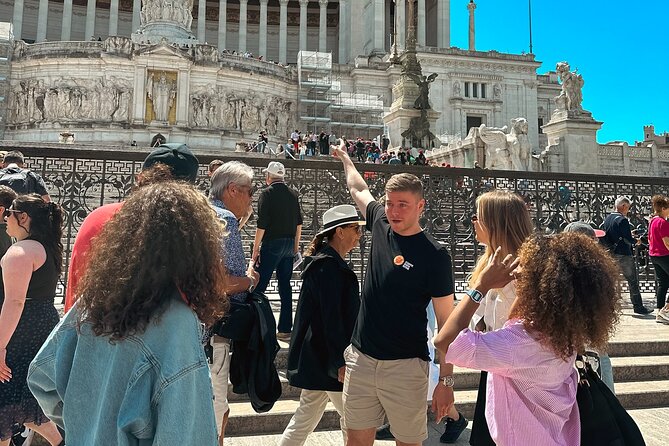
The strongest part of this experience is the human interpretation. Guides named in the feedback include Sharon, Yousouf, Polina, Christian, Sila, Dan, Dominica, Keisha, Sandy, Paulina, Vlad, Vladimir, and Anna.
Their approaches vary, but the consistent strengths are clear. You can expect historical explanations, stories, answers to questions, and practical suggestions for the rest of your visit. Dan is praised for his passion for Roman history and his ability to keep a small group engaged. Sharon is described as warm and well prepared, even in poor weather. Sila is noted for combining history, architecture, culture, and lighter facts.
That variety matters because a walking tour depends heavily on the guide assigned that day. The route is fixed, but the tone and detail may differ. Some guides may focus more on Roman history, while others may add local food advice or stories about modern Rome.
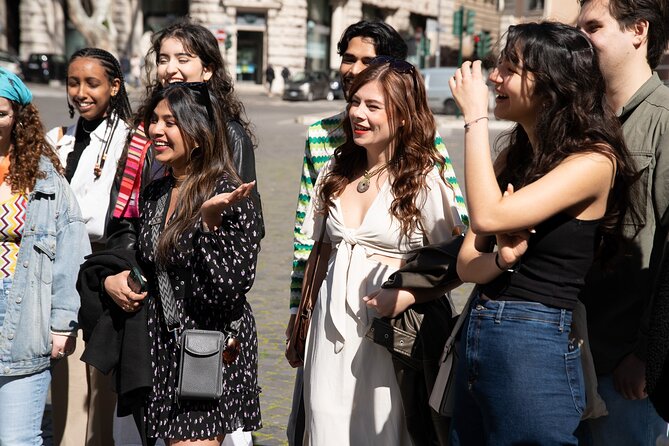
The group size helps. A maximum of 15 people is small enough for the guide to pause when traffic or church bells make hearing difficult. Smaller groups also make it easier to ask a question without holding up a large crowd. Actual group sizes may be lower, with one group reported at about seven people.
Pace, comfort, and practical limits

The walk lasts about two hours and covers several central sights. You should be ready to walk on cobblestones and remain outside for much of the experience. The details provided do not include a specific distance or accessibility assessment, so check directly if you have mobility concerns.
The schedule allows roughly 10 minutes at the Victor Emmanuel II Monument, 15 minutes at Trevi Fountain, 20 minutes at the Pantheon, 15 minutes at Trajan’s Column, and 20 minutes at Piazza Navona. Walking time connects those stops, so the commentary at each location must stay focused.
That pace suits you if you want a broad introduction. It may not suit you if you prefer long pauses, extensive photography, or detailed architectural study. Rome rewards slow wandering, and this tour gives you the framework for doing that later on your own.
Wear comfortable shoes and carry water. The experience requires good weather, and poor weather can lead to a different date or a full refund. Free cancellation is available up to 24 hours before the start time, but changes or cancellations inside that window are not accepted.
Who will get the most from this tour?
I would choose this walk for a first morning or afternoon in Rome, especially if you want the city’s central sights explained before exploring on your own. It works well for couples, friends, families with older children, and solo visitors who want a social but manageable introduction.
It is also a good match if you care about food advice. The tour ends in a part of Rome where you can stop for lunch, dinner, gelato, or a drink, and several guides provide suggestions for what to try next.
You may want something else if your main goal is entering monuments. This tour does not include the Pantheon admission, and it does not replace a dedicated Colosseum, Roman Forum, Vatican Museums, or Pantheon tour. It gives you a route and context, then leaves the longer visits to you.
A private upgrade is available if you want more control over the pace or a more personal format. The small-group version is the better value for most people, while the private option makes sense if your group has specific interests or limited time.
Is this Rome walking tour worth booking?
At $30.23, I consider it a good-value orientation tour. You see five important sights, receive commentary from a local guide, and finish in one of Rome’s best locations for continuing your day.
Book it if you want a clear introduction, enjoy short historical stories, and prefer a small group rather than a large crowd. Book it early in your stay so the guide’s food and sightseeing suggestions can shape your plans.
Skip it if you want long visits inside monuments or dislike a brisk route. For everyone else, this is a practical way to connect Rome’s ancient, Baroque, and modern landmarks in one compact walk. Just confirm the meeting point carefully, arrive early, and remember that the Pantheon entry fee is separate.
FAQ
How long does the Rome walking tour last?
The tour lasts approximately two hours.
Where does the tour begin?
The meeting point is Piazza d’Aracoeli, at Via di S. Venanzio 8, 00186 Rome, Italy.
Where does the tour end?
The walk ends in Piazza Navona, near restaurants, cafés, bars, and rooftop terraces.
What sights are included?
The route includes the Victor Emmanuel II Monument, Trevi Fountain, the Pantheon area, Trajan’s Column, and Piazza Navona.
Is entry to the Pantheon included?
No. The Pantheon entry ticket is not included in the tour price.
Are food and drinks included?
No. Food and drinks are not included, though the guide may suggest nearby gelato shops, restaurants, bars, and other places to eat.
How large is the group?
The tour has a maximum of 15 people.
What happens if the weather is poor?
The experience requires good weather. If it is canceled because of poor weather, you will be offered another date or a full refund.
More Small-Group Walking Tours in Rome
- Amsterdam Anne Frank: Small-Group Walking Tour & Local Guide
★ 4.8 · 12,789 reviews - Boston: Freedom Trail History Small Group Walking Tour
★ 5.0 · 6,450 reviews - Barcelona Tapas and Wine Experience Small-Group Walking Tour
★ 5.0 · 5,804 reviews - Reykjavík Small group Walking Tour – by CityWalk
★ 5.0 · 5,076 reviews
Just added around Rome
- Dark Heart of Rome – Facts, Legend & Mystery Walking Tour★ 4.5 · 329 reviews
- Alternative Walking Tour of Rome’s City Center & Hidden Gems★ 4.8 · 244 reviews
- Rome: Colosseum, Palatine Hill, & Roman Forum Walking Tour★ 4.7 · 423 reviews
- Rome: Haunted City Night Walking Tour★ 4.9 · 616 reviews
- Rome Walking Tour with Piazza Navona, Trevi Fountain and Pantheon★ 4.5 · 676 reviews
- Rome: Forbidden History Walking Tour & Pub Crawl with Drinks★ 4.9 · 688 reviews
- Best of Rome Walking Tour including Trevi Fountain★ 4.5 · 923 reviews
- Rome: Small-Group City Highlights Moonlight Walking Tour★ 4.9 · 949 reviews
City Highlights Walking Tours, compared.

Berlin City walk Government District and Places of Democracy
Read our review →
Historic Charleston Guided Sightseeing Walking Tour
Read our review →

Oxford: University and City Walking Tour with Alumni Guide
Read our review →
City Highlights Temple and Market Walking Tour
Read our review →
A History of Terror – Belfast City Centre Walking Tour
Read our review →Browse the lists this tour appears in