
REVIEW · ROME
Rome: City Highlights Walking Tour
Rome’s historic center unfolds like an open-air museum on this 2.5-hour walking tour, beginning at Trajan’s Market and ending at the Trevi Fountain. You’ll move through ancient ruins, grand Baroque squares, the Jewish Ghetto, and some of Rome’s most famous streets, with a guide explaining what you are seeing as you go.
I like the route’s excellent mix of major sights and quieter corners, especially the Jewish Ghetto and Hadrian’s Temple. I also like the personal guiding style reported by guests who toured with Brian, Fabio, and Monica. The main drawback is simple: you cover a lot of ground, and every monument is viewed from outside.
Key points at a glance
- Trajan’s Market to Trevi Fountain: A well-planned route across Rome’s central historic district.
- Ancient and Baroque Rome together: See Roman engineering, temples, fountains, and grand civic monuments in one walk.
- A strong guide makes the difference: Brian has been praised for his storytelling, humor, patience, and ability to answer questions.
- The Jewish Ghetto adds depth: This stop brings a more personal and complicated chapter of Roman history into the tour.
- No indoor admissions: The Pantheon and other buildings are explained from the street, so plan separate visits if you want to go inside.
- Good value at $41: The price is reasonable if you want orientation, context, and a guided route rather than a silent stroll between sights.
Why this Rome walking tour works well
Rome can feel confusing on your first day. Ancient ruins sit beside busy roads, churches appear around corners, and a famous fountain may be tucked into a small square you could easily pass without a guide. This walk gives you a clear route through the center and helps you connect the pieces.
You start at Trajan’s Market and finish at the Trevi Fountain, passing several of the city’s essential sights along the way. That makes the tour useful early in a visit. You get your bearings, learn which areas deserve more of your time, and collect stories that can make later independent visits more meaningful.
The guiding style is a major part of the value. Brian has been especially well received for his storytelling, good humor, and willingness to answer questions. Fabio has been described as friendly and reassuring, while Monica has been praised for her clear English and care in making sure the group enjoyed the walk. Your assigned guide may vary, but the experience depends heavily on how well that person brings the stones and statues to life.
The route is not designed for people who want long indoor visits. It is a street-level introduction to Rome, with explanations outside each monument. That keeps the walk moving, but it also means you should not book this as a substitute for a Pantheon visit or a full archaeological tour.
More City Highlights Walking Tours in Italy
- Rome: Guided City Center Evening Sightseeing Walking Tour
★ 4.4 · 953 reviews - Rome: Small-Group City Highlights Moonlight Walking Tour
★ 4.9 · 949 reviews - Rome: Guided Small Group Walking Tour of City Highlights
★ 5.0 · 682 reviews
Trajan’s Market: starting among Roman engineering
The meeting point is at Colonna Traiana 84, near Trajan’s Column and Trajan’s Market. Look for a guide holding a City Walkers sign or flag. One practical warning: the meeting point can be hard to identify at first, so arrive early and use the nearby Victor Emmanuel Monument as a broad landmark if you need to orient yourself.
Trajan’s Market was built in the second century AD. The complex gives you an immediate lesson in Roman construction, with its curving brick levels and carefully planned commercial spaces. You will not simply hear a date and move on. A good guide can explain how Roman builders handled large public projects and why the remains still matter.
This opening stop also sets the tone for the walk. You are looking at real ancient structures rather than a reconstructed attraction. Bring water and wear shoes you can comfortably use on Rome’s uneven streets.
Piazza Venezia and the Victor Emmanuel Monument
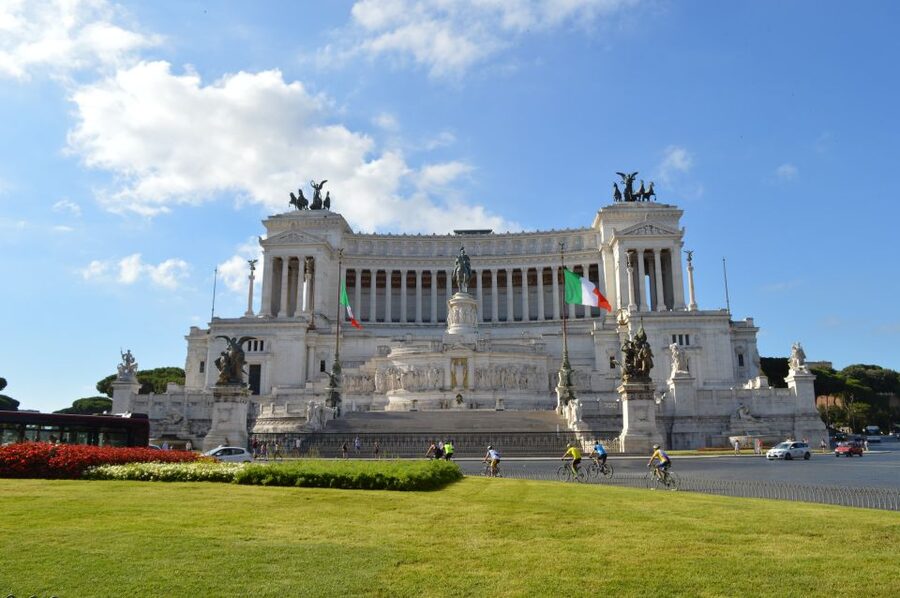
From Trajan’s Market, the walk continues toward Piazza Venezia, one of the city’s best-known squares. The huge white Monument to Victor Emmanuel II dominates the area. It honors the first king of unified Italy and is one of Rome’s most recognizable modern landmarks.
The monument is visually hard to miss, but its story is less obvious. Your guide can place it in the context of Italian unification and explain how this newer national monument fits among much older Roman buildings. That contrast is one of the useful lessons of the route: Rome is not only an ancient city. It is also a place shaped by medieval, Renaissance, Baroque, and modern Italian history.
Piazza Venezia can be busy and noisy. This is not a calm photo stop, and you may need to stay close to the guide while crossing or moving around the square. Still, it is an important orientation point, and the monument helps you understand the scale of the city center.
The Jewish Ghetto and a different side of Rome
The route then turns toward Rome’s Jewish Ghetto, an area dating to the sixteenth century. This part of the walk adds historical weight that you would not get from visiting only the famous fountains and monuments.
The Jewish Ghetto is not treated as a quick photo stop. The guide explains the area’s place in Rome’s past, giving you a look at how different communities experienced the city. For some people, this is the most distinctive part of the route because it moves beyond the standard list of Roman attractions.
One person found this portion slightly overlong compared with the rest of the tour. That is fair. If your priority is to race between the Pantheon, Piazza Navona, and Trevi Fountain, you may prefer a shorter highlights route. I think the extra context is worthwhile, particularly if you want more than a string of famous names.
More City Highlights Walks in Rome:
- Rome: City Highlights Walking Tour
★ 4.6 · 368 reviews - Berlin City walk Government District and Places of Democracy
★ 4.7 · 8,467 reviews - Historic Charleston Guided Sightseeing Walking Tour
★ 5.0 · 6,216 reviews - Quebec City Walking Tour
★ 5.0 · 4,716 reviews
Campo de’ Fiori and the city’s everyday rhythm
Campo de’ Fiori brings you into one of Rome’s best-known squares. It is famous for its street market, where you can browse stalls and look for small souvenirs. The square has a more everyday feel than the monumental spaces earlier in the walk.
The market also shows why walking works so well in Rome. You are not confined to a coach window or a fixed museum route. You can see how a public square functions, notice the food and souvenir stalls, and watch the city carry on around its historic buildings.
Market activity varies by time and day, so do not treat it as a guaranteed shopping opportunity. The tour focuses on the square and its history, not on giving you a long period to shop. If you see something you want, note the location and return later after the tour.
Piazza Navona and the drama of Roman Baroque
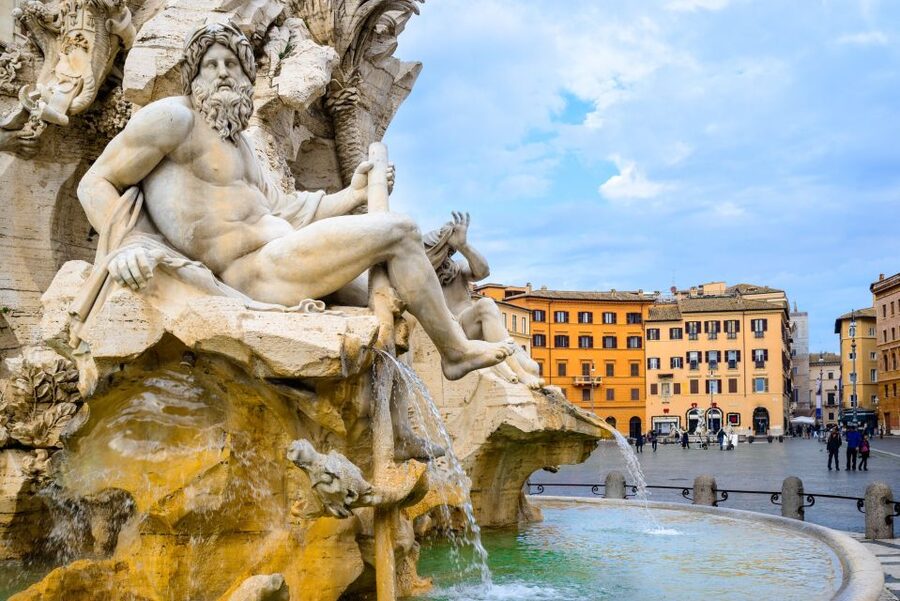
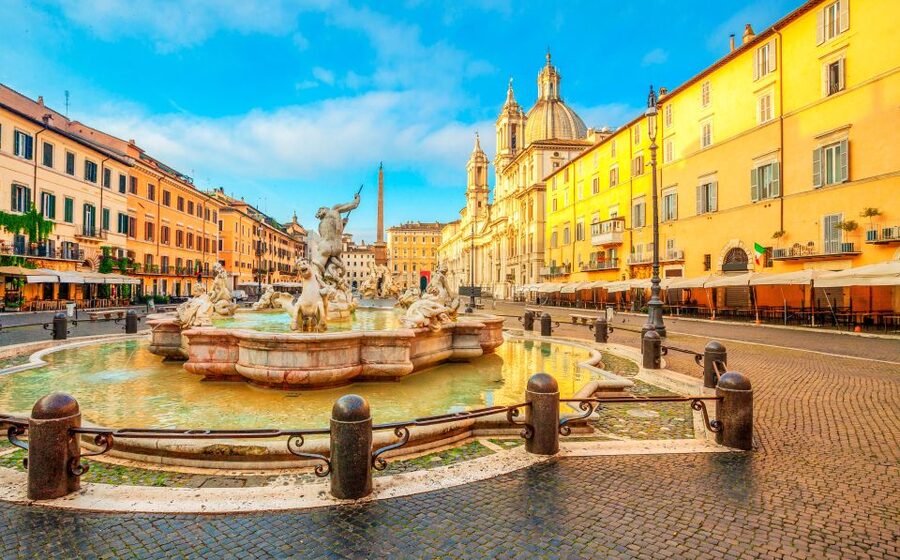
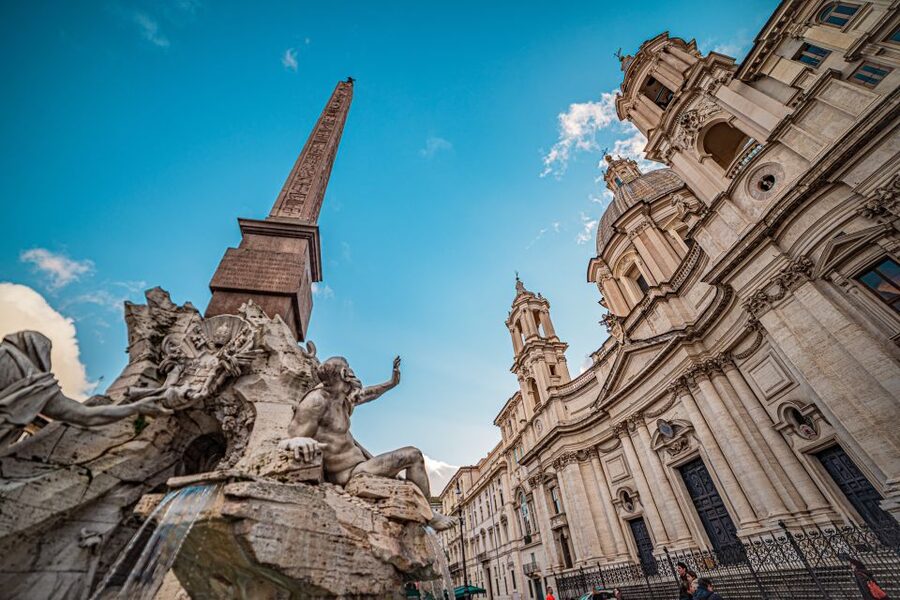
Piazza Navona is one of the artistic highlights of the route. The long square follows the shape of an ancient stadium and is lined with Baroque architecture, fountains, and sculptures. Its central Fountain of the Four Rivers is particularly important.
This is where a good storyteller earns the guiding fee. The fountain has a dramatic story connected with the four great rivers represented in its design. One review singled out the story of the Four Rivers Fountain as the best tale of the tour, and it is easy to see why. The sculpture is much more interesting once you understand the symbols and rivalries behind it.
Piazza Navona can feel crowded, especially when people gather around the fountain for photos. Listen closely and keep the guide in sight. Headphones may be provided if needed, which helps when the square is noisy or the group is larger.
The Pantheon from the outside
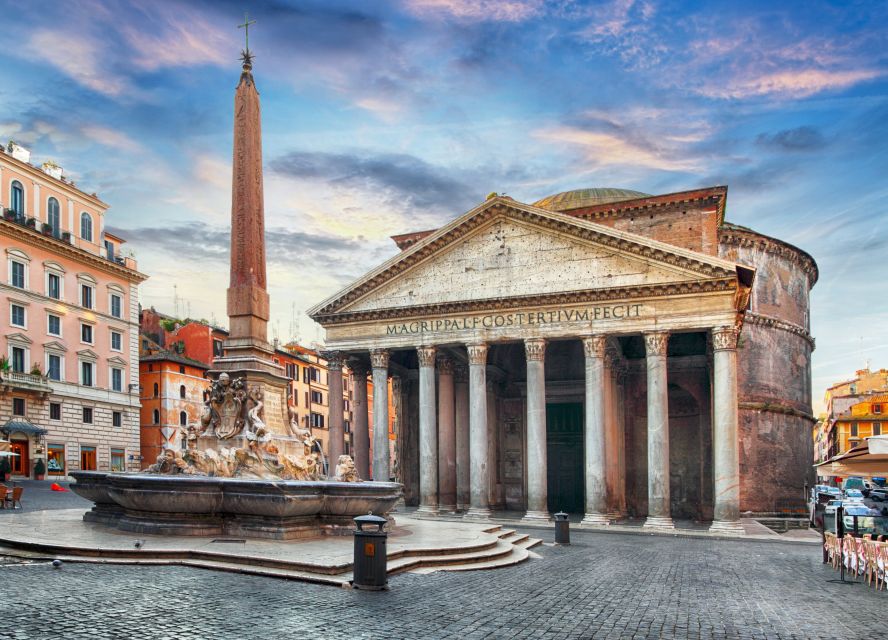
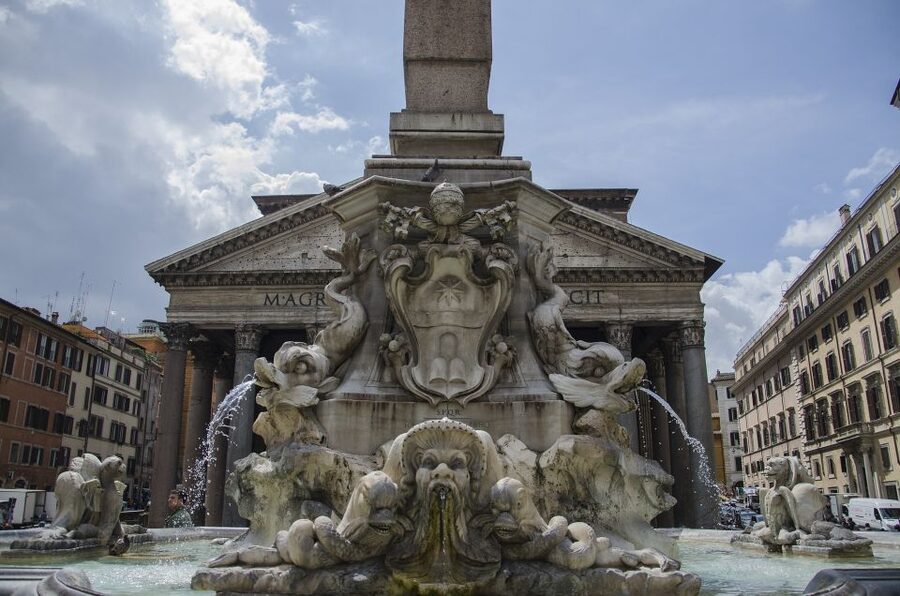
The Pantheon is one of the best-preserved ancient Roman monuments, and it is a key stop on the walk. From outside, you can study the massive columns, the pediment, and the way the building has survived as Rome changed around it.
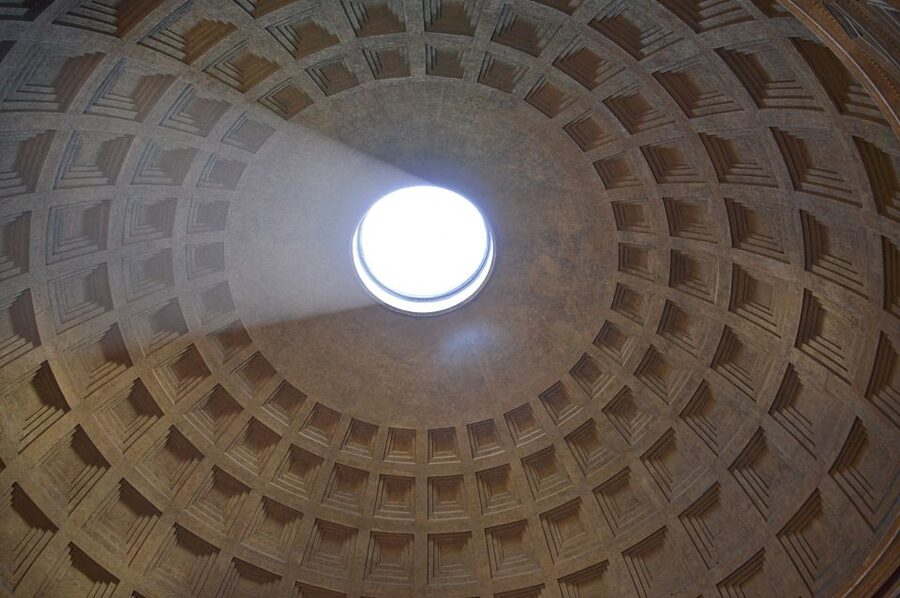
The guide explains the monument’s purpose and place in Roman history, but this tour does not include admission. That distinction matters. If you want to see the interior, including its famous dome and central opening, you need to arrange a separate visit.
Even without entry, the Pantheon makes a strong stop because its exterior tells part of the story. You can see how ancient Roman architecture was reused and respected across later centuries. The guide’s explanation helps you look beyond the familiar facade.
Hadrian’s Temple and the layers of the city

The walk continues to Hadrian’s Temple, described as the last of the great temples built in the city. The remaining columns sit among later buildings, which is typical of Rome. Ancient structures here are rarely isolated behind fences. They are woven into streets, offices, churches, shops, and public squares.
This stop may be less famous than the Pantheon or Trevi Fountain, but it helps fill in the larger picture. You begin to understand how Rome’s historic center works: one era did not simply replace another. Buildings were reused, adapted, surrounded, and sometimes partly absorbed into the modern city.
The tour does not take you inside the temple because little of the original building remains as an indoor attraction. Its value is in the explanation and the visual connection with the surrounding streets.
Trevi Fountain: a memorable finish
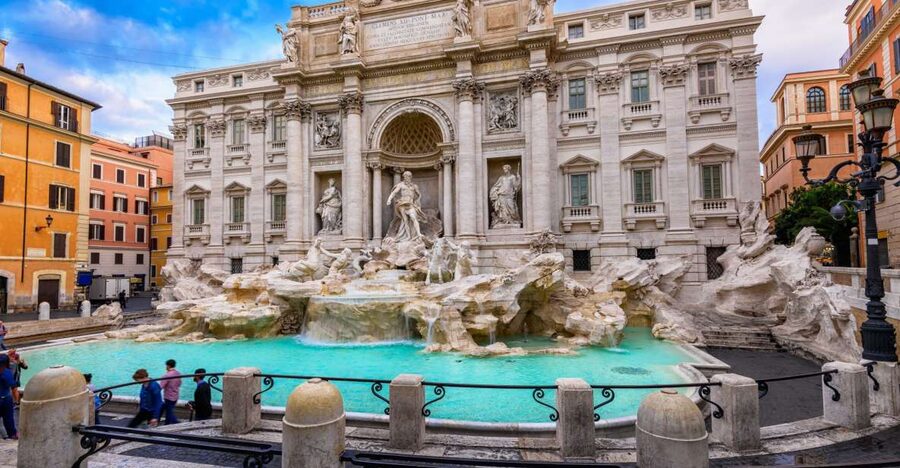
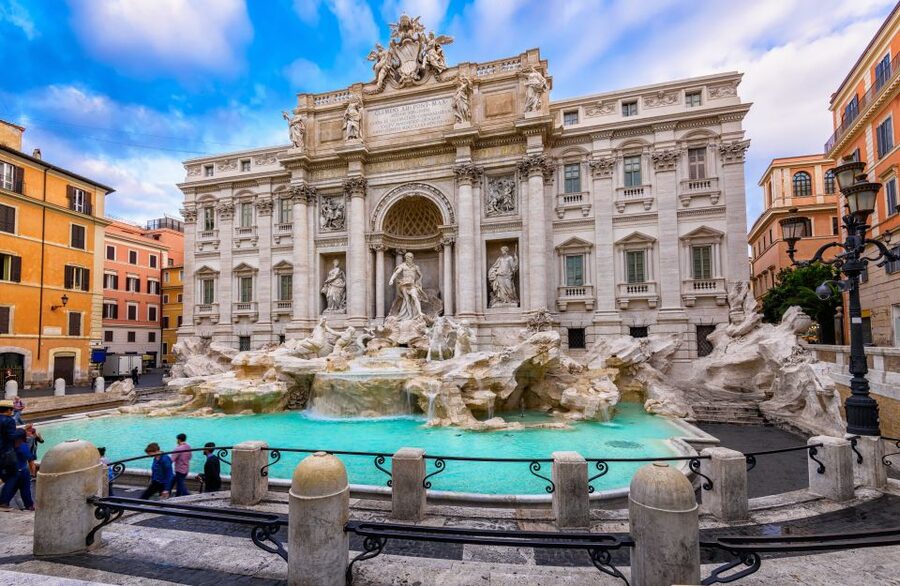
The final stop is the Trevi Fountain, one of Rome’s great Baroque showpieces. Its sculptures, water, and theatrical setting make it a natural ending for a city highlights walk.
Arriving here after several hours gives the fountain more meaning than it would have as an isolated photo stop. You have already seen Roman engineering, civic monuments, a historic Jewish quarter, market life, Baroque sculpture, and ancient temples. Trevi becomes the final flourish rather than the entire purpose of the outing.
The fountain is often crowded. Your guide can explain the design and history, but you should expect limited personal space and plenty of people taking photographs. Since the tour ends here, you can stay longer afterward, return at another time, or continue toward another part of central Rome.
Pace, walking demands, and what to bring
This is a genuine walking tour, not a gentle loop around one piazza. The route covers several major areas, and one guest specifically warned that it involves a lot of walking if you are not used to it.
Wear comfortable clothing and supportive shoes. Bring water and sunscreen, especially in warm weather. Weather-appropriate layers are sensible because the tour runs rain or shine. A small umbrella or rain jacket may be useful in wet conditions, though the supplied information does not promise any weather equipment.
The experience is not suitable for people with mobility impairments. The route includes city streets and several hours on foot, so consider your own stamina before booking. Families can enjoy it too. One guide kept children aged seven to fifteen involved by answering their questions and maintaining a good pace.
What $41 gets you
At $41 per person, the tour offers fair value if you want a human guide to connect the sights. You are paying for 2.5 hours of route planning, explanations, local history, and the chance to ask questions as you go.
The price does not include entry to any building, hotel pickup, or drop-off. That keeps the cost lower than a tour with several admissions, but you need to budget separately if you want to enter the Pantheon or other sites. The included headphones, when needed, can also make it easier to hear the guide in crowded places.
I see the best value for first-time visitors, especially those who want a strong introduction before exploring Rome alone. If you already know the historic center well, the route may feel familiar, though the Jewish Ghetto and the guide’s stories can still add something.
You can reserve now and pay later, and cancellation is free up to 24 hours before the start for a full refund. Those terms are helpful if your schedule is still shifting.
Who should book this walk
Book it if you want to cover many central highlights in one outing without spending the day inside museums. It suits first-time visitors, families with older children, couples, and anyone who enjoys history explained in plain language.
It is also a good choice if you prefer a small, personal feel. Several tours have been led for very small groups, and that allowed plenty of questions and conversation. Do not assume every departure will be private, but the guiding approach appears suited to interaction rather than a speech delivered to a silent crowd.
Skip it if you need wheelchair-friendly access, dislike walking for several hours, or want interior visits included. You may also prefer a more specialized tour if your main interest is ancient archaeology, Baroque art, or food.
Should you book the Rome City Highlights Walking Tour?
I would book this as an early Rome activity, particularly if you have never visited the city. The route gives you the famous names, but it also makes room for the Jewish Ghetto, Hadrian’s Temple, and the stories behind Piazza Navona’s sculpture.
The strongest reason to go is the guide. Brian has been praised repeatedly for his humor, warmth, storytelling, and ability to explain complicated Roman history without making it feel like a lecture. Fabio and Monica have also led engaging walks. The only clear limitation is the outside-only format, so arrange separate admissions for the Pantheon or other interiors.
For $41, this is a sensible way to get your bearings, learn how Rome’s eras overlap, and finish at the Trevi Fountain with a better sense of what you are looking at.
FAQ
How long does the Rome City Highlights Walking Tour last?
The tour lasts 2.5 hours.
What language is the tour conducted in?
The live tour guide speaks English.
Where does the tour meet?
Meet the guide at Colonna Traiana 84. The guide will hold a City Walkers sign or flag.
Where does the tour finish?
The walk finishes at the Trevi Fountain.
Does the tour include entry to the Pantheon?
No. The monuments, including the Pantheon, are explained from the outside, and no building admissions are included.
Is hotel pickup included?
No. Hotel pickup and drop-off are not included.
What should I bring?
Bring water, sunscreen, comfortable clothes, and clothing suited to the weather.
Can I cancel for a refund?
Yes. You can cancel up to 24 hours in advance for a full refund. You can also reserve now and pay later.
Just added around Rome
- Rome: Colosseum and Ancient Rome Guided Walking Tour★ 4.5 · 95 reviews
- Rome Walking Tour: Pantheon, Trevi, Navona & Hidden Gems★ 4.8 · 501 reviews
- Rome: Underground Trastevere Guided Walking Tour★ 4.8 · 87 reviews
- Rome: Trastevere and Roman Ghetto Guided Walking Tour★ 4.7 · 79 reviews
- Rome: Guided Walking Tour and Pantheon Priority Entry Ticket★ 4.3 · 317 reviews
- Rome: Trevi Fountain, Spanish Steps & Pantheon Walking Tour★ 4.6 · 336 reviews
- Rome Trastevere Walking Food Tour★ 4.8 · 97 reviews
- Rome Night Mysteries Guided Walking Tour★ 4.9 · 119 reviews
City Highlights Walking Tours, compared.

Berlin City walk Government District and Places of Democracy
Read our review →
Historic Charleston Guided Sightseeing Walking Tour
Read our review →

Oxford: University and City Walking Tour with Alumni Guide
Read our review →
City Highlights Temple and Market Walking Tour
Read our review →
A History of Terror – Belfast City Centre Walking Tour
Read our review →Browse the lists this tour appears in