
REVIEW · WALKING TOURS
Buenos Aires: San Telmo and Market Guided Walking Tour
San Telmo is where Buenos Aires feels most like a living storybook. On this two-hour walk, you move from old churches and colonial streets to comic-strip characters, the San Telmo market, and the Sunday fair, with local history tying it all together. Mafalda and Clemente add a playful Buenos Aires touch to the route.
I like the way the tour connects architecture with immigration and modern Argentine culture, rather than treating the neighborhood as a row of pretty facades. I also like the price: at $13, you get an English-speaking guide and a useful introduction to one of Buenos Aires’ most distinctive districts. The main drawback is group size. Some groups have topped 30 people, which can feel awkward on narrow streets and make it harder to hear.
Key points at a glance
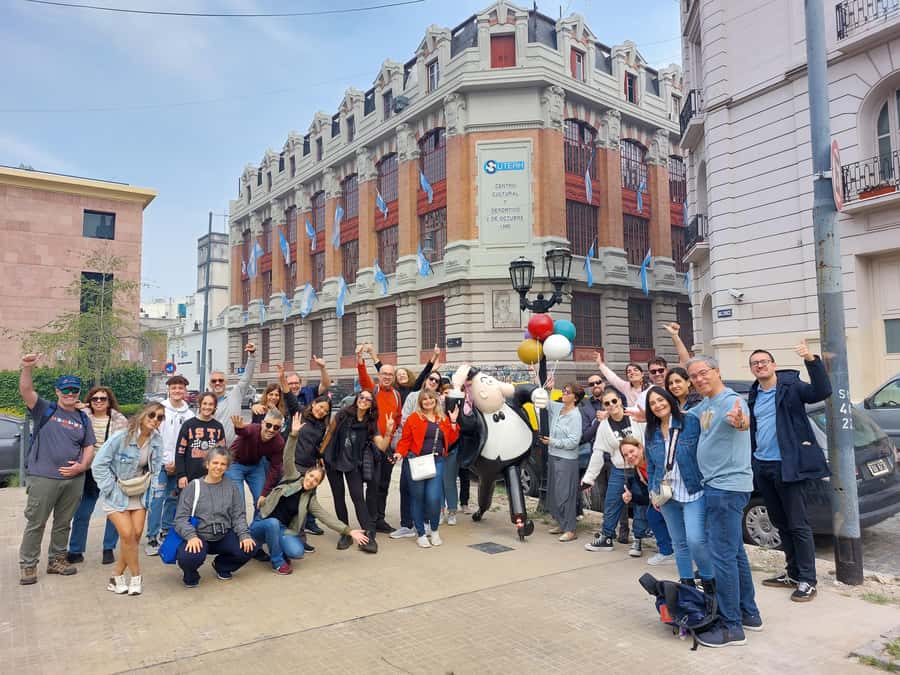
- San Ignacio meeting point: Begin near one of Buenos Aires’ oldest and most important historic churches.
- Colonial churches and 19th-century homes: Learn how San Telmo developed through architecture, religion, and immigration.
- Mafalda and Clemente: See beloved Argentine comic characters as part of the neighborhood’s public art.
- San Telmo Market: Enter the traditional indoor food market and get a look at local eating culture.
- Sunday street fair: If your tour runs on Sunday, expect music, art, vendors, crowds, and a lively route through the district.
- Guides with strong local knowledge: Juan, Santiago, and Jorge have been praised for their history, architecture, humor, and ability to answer questions.
Why San Telmo makes a good first walk in Buenos Aires
San Telmo is often described as Buenos Aires’ oldest neighborhood, and you can feel the age in its cobblestones, old facades, churches, and collective houses. But the area is not preserved in a glass case. It is also a working neighborhood shaped by immigration, commerce, art, food, music, and modern Argentine identity.
That mix gives this tour its value. You are not simply checking off buildings. You are learning why the neighborhood looks the way it does and how its past connects with the city you see today.
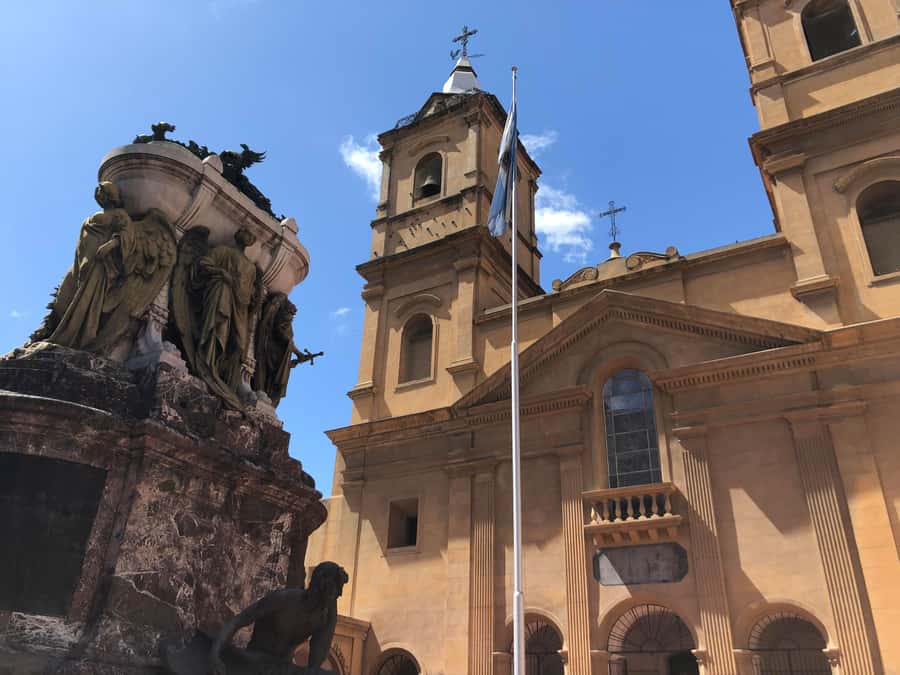
The route begins at Parroquia San Ignacio de Loyola. From there, your guide sets the stage for Buenos Aires’ foundation, colonial beginnings, and later growth. The history is presented while you walk, so the information has a physical setting: a church facade, an old street, or a house front rather than a lecture room.
This is especially useful early in a Buenos Aires visit. The city can feel large and confusing at first, with grand avenues, small lanes, ornate buildings, and neighborhoods that each have a different mood. Two hours in San Telmo gives you a clear sense of one part of the city and helps you notice details later on your own.
More Market Visits in the world:
- Bangkok: City Highlights Temple and Market Walking Tour
★ 4.5 · 3,990 reviews - Tokyo Tsukiji Fish Market Food and Culture Walking Tour
★ 5.0 · 3,184 reviews - Air Raid Shelter + St. Nicholas Market Walking Tour
★ 5.0 · 1,950 reviews
Starting at San Ignacio and the San Francisco complex
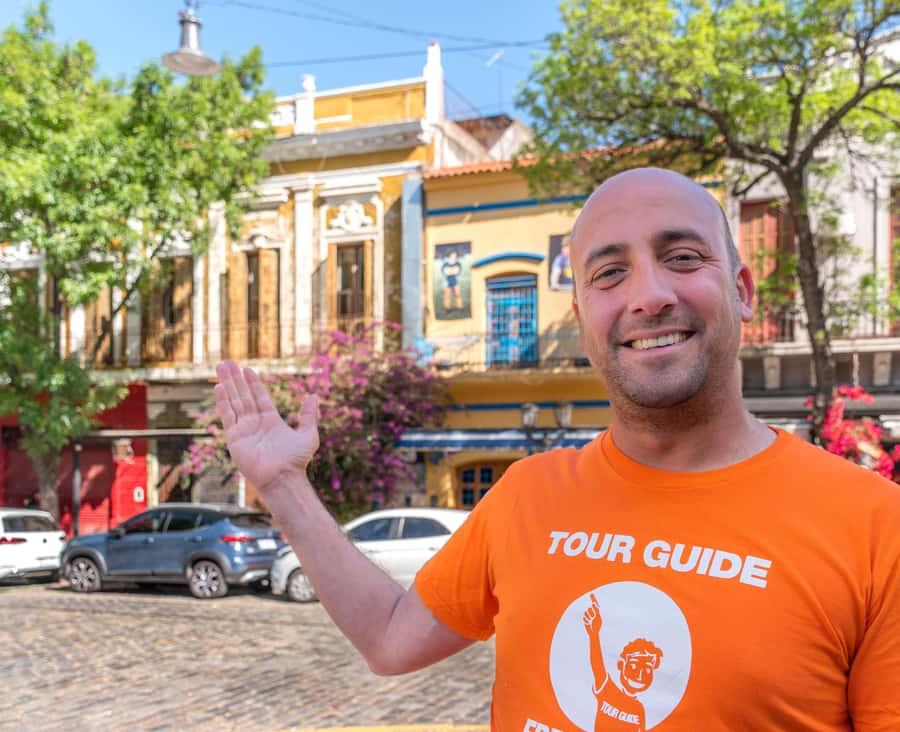
The meeting point is Parroquia San Ignacio de Loyola, and the guide can be identified by an orange T-shirt or orange umbrella. That is a practical detail worth remembering, since a popular walking-tour meeting point can be busy.
The first part of the walk focuses on the city’s early foundations and religious architecture. You then reach Iglesia y Convento de San Francisco for a guided visit and explanation. These stops matter because churches and convent complexes were closely tied to the early development of Buenos Aires.
Your guide also discusses the creator of the Argentine flag and the events that shaped Argentine national identity. The point is not just to memorize names or dates. It is to see how San Telmo fits into the larger story of Argentina, from colonial rule to the formation of the modern nation.
I would pay close attention here if you enjoy history, architecture, or politics. The tour gives you context that is easy to miss when you walk past an old church on your own. At the same time, the guide keeps the pace moving, which helps prevent the opening section from becoming too formal.
Reading San Telmo’s old facades
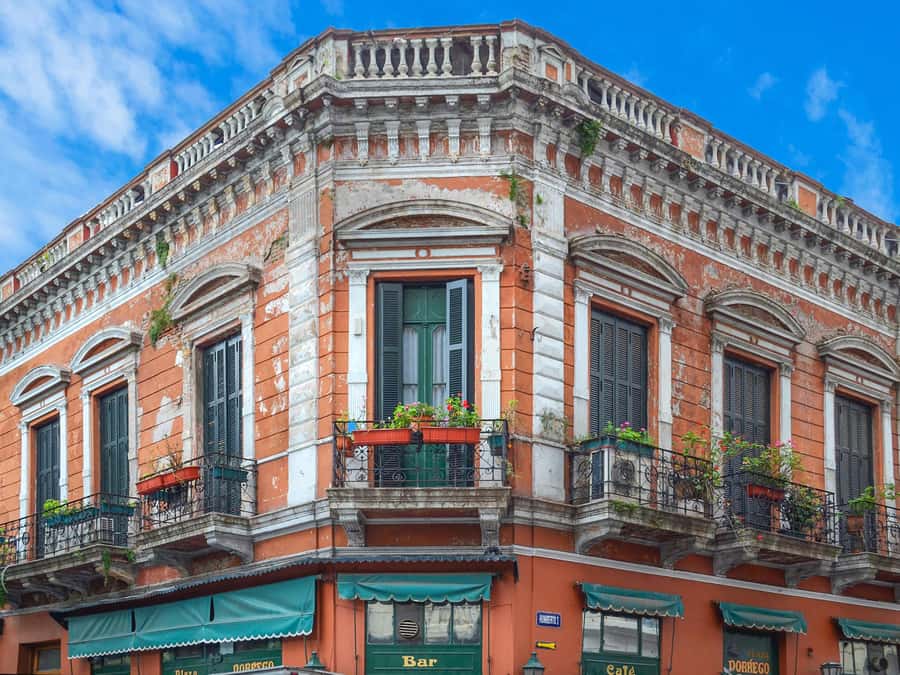
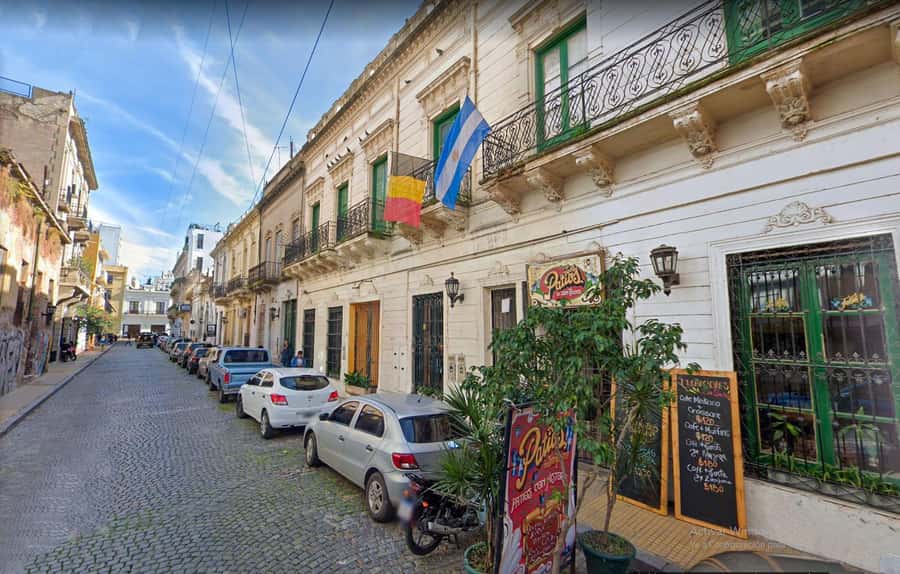
San Telmo is known for its 19th-century architecture, including the picturesque collective houses that line its streets. These buildings offer clues about how people lived, worked, and shared space in an older Buenos Aires.
Your guide points out architectural details and explains the role of immigration in shaping local culture. That connection is one of the most useful parts of the walk. San Telmo’s identity did not come from a single period or a single group. Its streets reflect layers of settlement, trade, family life, and cultural change.
The facades are attractive, but the guide helps you look beyond decoration. You may notice how narrow streets, old entrances, shared courtyards, and worn surfaces create a very different setting from the grand civic buildings elsewhere in Buenos Aires.
There is a small practical issue here: narrow streets can make a large group difficult to manage. One person in the group reported that the size felt too big for the route, while another said a group of more than 30 was handled well. Your experience will depend on the day and the guide, but you should expect occasional crowding and keep close enough to hear.
Meeting Mafalda and Clemente in the Paseo de la Historieta
The route then shifts from formal history to popular culture. At Clemente in the Paseo de la Historieta, you meet one of Argentina’s well-known comic-strip characters in a public art setting.
This part of the walk shows how Buenos Aires expresses its identity through cartoons, satire, and neighborhood art. You are not just looking at a statue for a quick photograph. The guide explains why these characters matter and how they fit into local culture.
The Mafalda statue is another highlight. Mafalda is one of the most beloved comic characters associated with Buenos Aires, and her presence in San Telmo has made this corner a favorite stop for photographs. The character is tied to sharp observations about society and everyday life, so the stop gives your guide a chance to discuss Argentine humor and social commentary.
I like this change of tone. After churches and colonial history, the comic characters make the neighborhood feel personal and modern. They also help you understand that local culture is found not only in museums and monuments, but in familiar figures that people grew up with.
The Mafalda stop can be popular, so do not expect a quiet, private photo opportunity. The value is in the explanation and in seeing how a comic character has become part of the city’s public life.
More Shopping Tours in the world:
- Tokyo: Tsukiji Fish Market Food and Walking tour
★ 5.0 · 1,724 reviews - Tokyo: Tsukiji Fish Market Guided Walking Tour
★ 4.9 · 1,397 reviews - Nishiki Market Brunch Walking Tour (7 Tastings + Brunch)
★ 5.0 · 1,355 reviews - Tsukiji Fish Market Small-Group Food Walking Tour
★ 5.0 · 621 reviews
Inside Mercado San Telmo
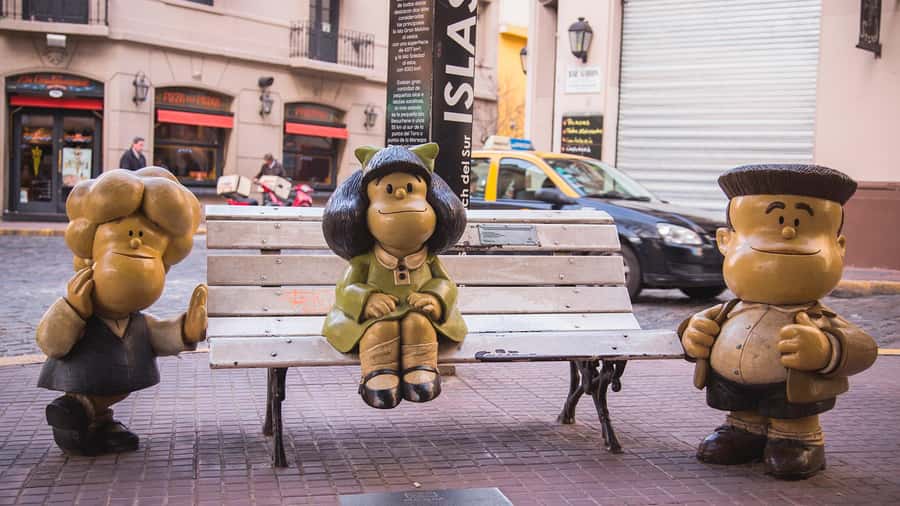
The San Telmo Food Market is the tour’s strongest food and daily-life stop. This traditional indoor market gives you a look at the neighborhood beyond its historic facades and Sunday displays.
You can expect the guide to explain the market’s role and point out traditional Argentine food culture. The description of the tour invites you to sample local food, but the exact tastings are not specified, so I would treat sampling as a possibility rather than a guaranteed tasting course.
Markets are useful because they show a city in practical terms. Here, food is connected with family habits, immigration, local trade, and the social life of the neighborhood. It is a more grounded experience than simply hearing a list of historical dates.
Give yourself time to look around, but remember that the tour lasts only two hours. If you find something you want to eat or buy, you may prefer to return after the walk instead of leaving the group. The market can also be busy, and staying near the guide matters.
This is a good place to ask questions. Guides such as Juan, Santiago, and Jorge have been praised for explaining history, architecture, art, and local stories in a way that remains easy to follow. Their willingness to answer questions is especially useful in a market, where you may want help understanding what you are seeing.
The Sunday fair, tango, and San Telmo’s public life
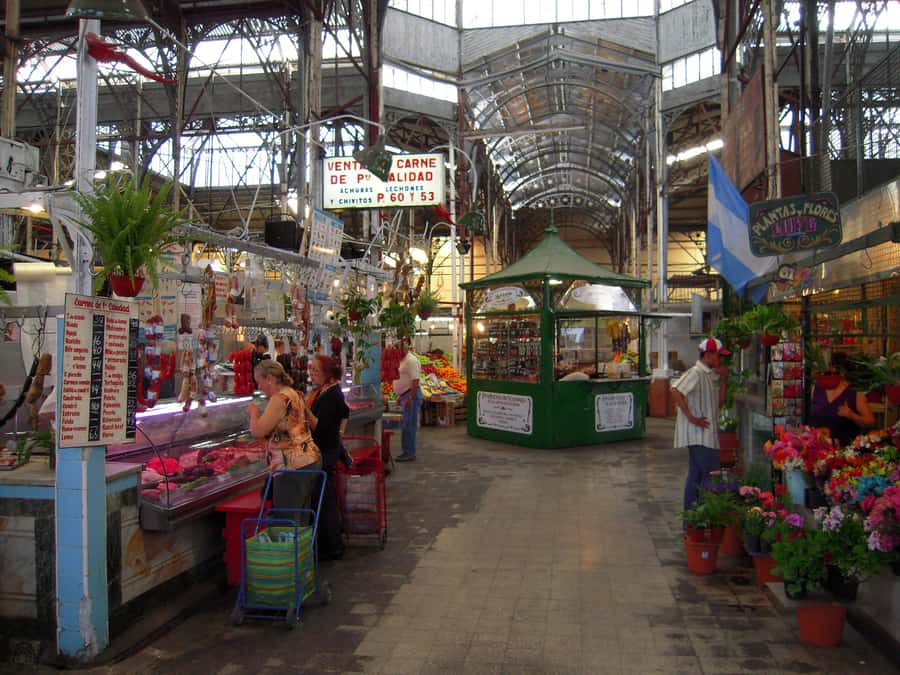
The Sunday street fair is one of the tour’s biggest draws. It brings together vendors, music, art, and local culture, turning the streets into a busy public gathering. If your tour takes place on Sunday, this is when you see San Telmo at its most animated.
The fair is also the tour’s biggest challenge. One person described navigating the chaotic fair, while another enjoyed seeing it in full swing. Both reactions make sense. The crowds are part of the experience, but they can slow the walk, make conversation harder, and require patience.
A guide gives you a better chance of understanding what you are seeing instead of simply wandering through stalls. You can learn how the fair fits into San Telmo’s identity, then return later if you want more time to browse.
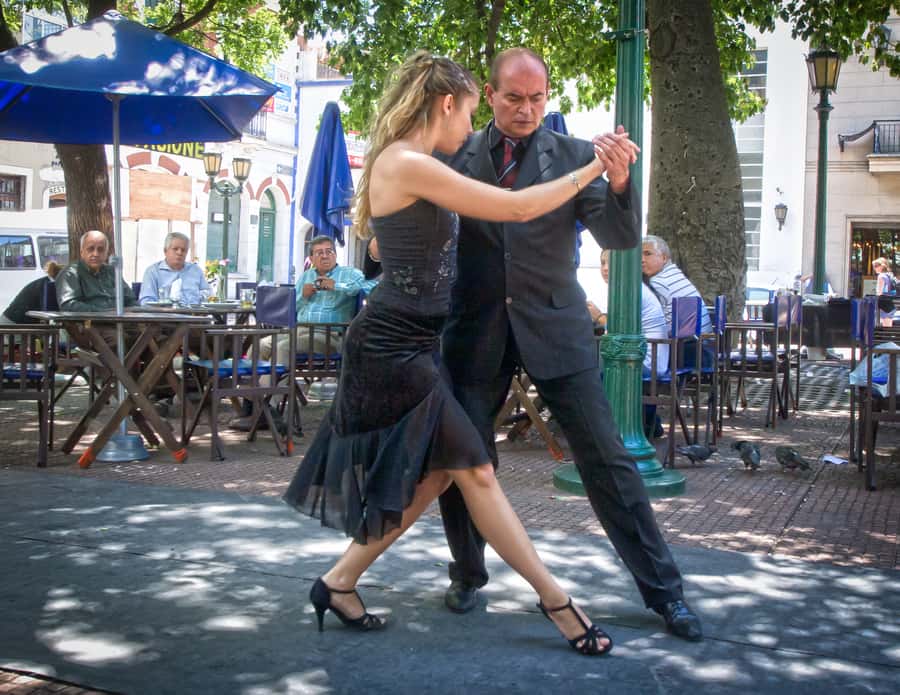
The walk finishes in San Telmo, and the area around the square may include tango performances. One visitor enjoyed ending the tour near the square while watching tango dancers. Since performances and conditions can change, I would not book the tour solely for a guaranteed show, but tango adds a fitting final note when it happens.
The Sunday route is best for people who want atmosphere and street life. If you prefer empty streets, quiet photos, and a slow architectural walk, a non-Sunday visit may feel more comfortable, though the tour’s exact starting times should be checked before booking.
What the guides add to the walk
The guide can make or break a walking tour, and this one has several strong names attached to it. Juan has been praised for his humor, kindness, and explanations of San Telmo’s history and culture. He has also led other walks in Buenos Aires, including a graffiti tour.
Santiago has been described as warm, friendly, and very good at answering questions. Jorge has received praise for giving detailed explanations even with a group of more than 30 people.
These comments point to a useful pattern: the tour works best when you take part. Ask about the buildings, the comic characters, the market, or the role of immigration. A guide who can explain history clearly becomes much more valuable when you engage rather than simply follow along.
The language is English, and the experience is led by a live English-speaking guide. The guides use an orange T-shirt or orange umbrella for identification, which should make the meeting point easier to find.
Is two hours enough for San Telmo?
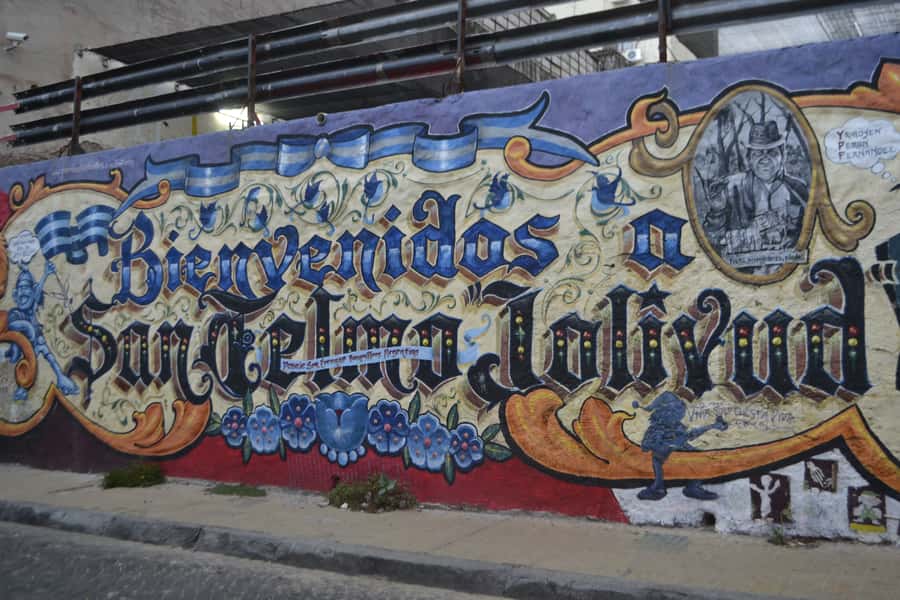
Two hours is enough for an introduction, not a complete exploration. The route covers churches, architecture, comic art, the indoor market, and the street fair, so the pace needs to stay steady.
That length is a good fit if you have limited time in Buenos Aires or want an orientation before exploring alone. You get the main historical and cultural markers without giving up half a day.
You will not have unlimited time at every stop. If you like browsing market stalls, photographing facades, or sampling food slowly, plan to return to San Telmo after the tour. The guided walk gives you a framework, then you can use that framework for a longer independent visit.
Wear comfortable walking shoes. The tour takes place rain or shine, so bring protection from the weather and be prepared for changing conditions. The supplied information does not specify accessibility details, so anyone concerned about walking surfaces, crowds, or the route should ask the operator before booking.
Is $13 good value?
At $13 per person, this is strong value if you want a guided introduction to San Telmo. The fee covers two hours with an English-speaking guide and combines history, architecture, public art, food culture, and street life.
The value is not in the number of stops alone. It comes from having someone explain why these places matter. The San Francisco complex, Mafalda, Clemente, the market, and the Sunday fair are more meaningful when connected to the story of Buenos Aires.
The price also keeps the risk low. If you are unsure how much time you want to spend on a walking tour, two hours is manageable, and you can cancel up to 24 hours ahead for a full refund. You can also reserve now and pay later, which helps if your schedule is still changing.
The main cost is not financial but practical: you may be in a large group, and the Sunday fair can be crowded. If you need a private guide, a quiet pace, or guaranteed time for food tasting, this may not be the right format.
Who should book this San Telmo walk?
I would recommend it to first-time visitors who want a clear introduction to Buenos Aires’ oldest neighborhood. It also suits solo visitors, since the group setting gives you an easy way to see the area while learning from a guide.
History and architecture fans will appreciate the churches, old facades, and explanations of colonial Buenos Aires. Anyone interested in Argentine popular culture will enjoy the Mafalda and Clemente stops.
The Sunday version is best for you if you want the fair, music, art, and the chance of seeing tango near San Telmo Square. Families may also enjoy the cartoon characters, though parents should be ready for crowds and a brisk walking pace.
I would think twice if you dislike group tours, have difficulty walking on cobblestones, or want a slow food-focused experience. The group size can be large, and the market and fair may feel crowded.
Should you book it?
Book this tour if you want an inexpensive, well-rounded introduction to San Telmo and prefer learning the story behind the streets rather than wandering without context. The strongest reasons are the combination of colonial architecture, local food culture, comic art, and the Sunday fair, plus guides such as Juan, Santiago, and Jorge who bring humor and clear explanations.
For the best fit, choose it early in your Buenos Aires stay. Use the walk to learn the neighborhood, then return to the market or fair on your own with a better sense of where you are. Just keep the group size and rain-or-shine format in mind. At $13, it is an easy recommendation for most visitors who want a practical first look at San Telmo.
FAQ
Where does the San Telmo walking tour start?
The tour starts at Parroquia San Ignacio de Loyola. Look for a guide wearing an orange T-shirt or carrying an orange umbrella.
Where does the tour finish?
The walk finishes in San Telmo.
How long is the tour?
The tour lasts two hours.
What language is the tour offered in?
The tour is offered in English with a live English-speaking guide.
Does the tour include the San Telmo Market and Mafalda statue?
Yes. The route includes a guided visit to Mercado San Telmo, the Mafalda statue, and Clemente in the Paseo de la Historieta.
Does the tour run in bad weather?
Yes. The tour takes place rain or shine.
Just added around the world
- Fira: Guided Foodie Walking Tour with Tastings★ 4.9 · 474 reviews
- Fez: Guided Walking Tour of the Historic Medina★ 5.0 · 359 reviews
- Fez: Walking Tour in the Ancient City of Fez★ 4.8 · 73 reviews
- Faro: Old Town Guided Walking Food Tour★ 4.9 · 94 reviews
- Feel like a local – Walking Tour in Mykonos Town 2hours★ 4.4 · 77 reviews
- Fes: A Guided Walking Tour Through the Historic Medina★ 4.4 · 97 reviews
- Fez: Half-Day City Private Walking Tour with a Guide★ 4.6 · 114 reviews
- Fanal / Assobiadores – Levada Walk★ 4.6 · 93 reviews
Markets, compared.
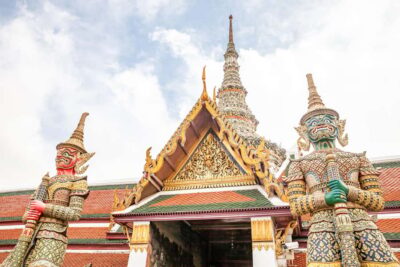
City Highlights Temple and Market Walking Tour
Read our review →
Tokyo Tsukiji Fish Market Food and Culture Walking Tour
Read our review →
London Bridge & Borough Market Food Tour with 7 Authentic Dishes
Read our review →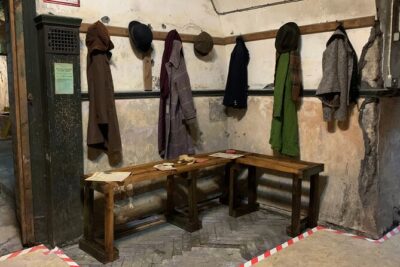
Air Raid Shelter + St. Nicholas Market Walking Tour
Read our review →
Nishiki Market Brunch Walking Tour (7 Tastings + Brunch)
Read our review →
Bologna Food & Market Tour with 6 Tastings, Pasta, Wines & More
Read our review →Browse the lists this tour appears in