
REVIEW · AUSTRALIA
Hobart History, People & Places – 2 hour city walk
Hobart’s past is written into its sandstone walls, waterfront lanes, old churches, courts, and parks. This two-hour walk gives you a useful first look at the city, but it also goes beyond dates and buildings, with stories about Indigenous Tasmanians, British invasion, convict life, and the people who shaped early Hobart.
I like the small-group format, which makes it easier to ask questions and hear the guide clearly. I also like the easy, steady pace, with time for photographs and occasional places to sit or perch. The main consideration is that this is still a full two-hour walk on city pavements, and it operates in all weather, so sensible shoes and weatherproof clothing matter.
Key points to know before you book

- Hunter Street and the waterfront: Begin near the Henry Jones Art Hotel and explore one of Hobart’s most atmospheric old quarters.
- Stories behind familiar buildings: Georgian and Victorian façades become far more interesting once you hear what happened inside them.
- A city park with surprising statues: The route uses public art and memorials to explain Hobart’s people and past.
- A lesser-known secret: Another park on the route has a darker story that even some locals may not know.
- Salamanca Place finish: End near the famous Saturday market, with the guide able to suggest cafés for coffee afterward.
- Good first-day timing: At $27.26 per person, the walk is a practical way to get your bearings before exploring Hobart on your own.
Starting at Hunter Street and the waterfront
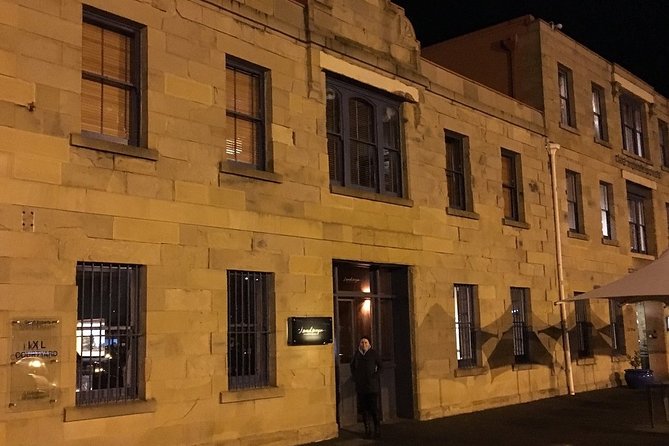
The walk begins at 25 Hunter Street, outside the Henry Jones Art Hotel. This is a useful starting point because you are already close to the waterfront and some of the city’s oldest commercial buildings.
From here, your guide leads you through central Hobart on foot. The first part focuses on streets, buildings, and the waterfront, with attention to the small details that are easy to miss when you walk alone. You might notice a doorway, stone wall, or upper-storey window without knowing why it matters. A local guide can connect that ordinary-looking feature to the city’s early growth.
Hunter Street is especially useful for understanding Hobart’s relationship with the Derwent River. The waterfront was not simply a scenic place for photographs. It was tied to trade, transport, work, and the arrival of British settlers. The walk uses this setting to explain how Hobart developed from a colonial outpost into Tasmania’s capital.
You will want your phone or camera ready here. The route includes time for photographs, and the waterfront gives you an early chance to pause and look back at the buildings rather than rushing from one stop to the next.
More City Highlights Walks in Australia:
- Adelaide: City Walking Tour with Guide
★ 4.8 · 83 reviews - Berlin City walk Government District and Places of Democracy
★ 4.7 · 8,467 reviews - Historic Charleston Guided Sightseeing Walking Tour
★ 5.0 · 6,216 reviews
Reading Hobart through Georgian and Victorian buildings
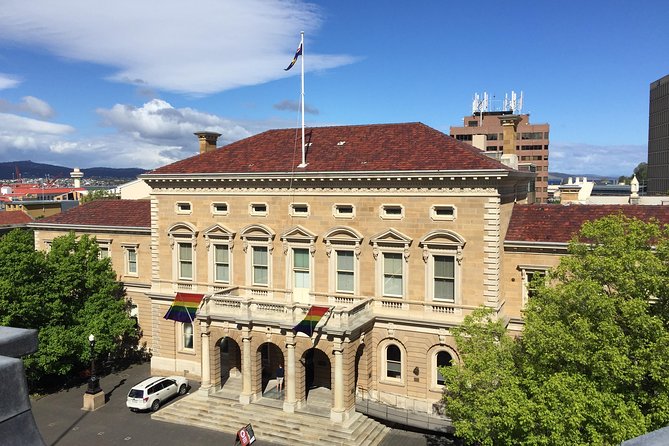
One of the strongest parts of this experience is the attention given to architecture. Hobart has many well-preserved Georgian and Victorian buildings, and the guide points out details in their design as you walk.
You do not need an architectural background to enjoy this. The value is in learning how to look. A plain stone façade can reveal the age of a building, its former use, or the social position of the people connected with it. Once your guide draws your attention to those features, you may begin noticing similar details elsewhere in the city.
The buildings also help keep the history grounded. Instead of hearing a long lecture in one place, you move through the streets and connect each story to a real setting. That makes the information easier to remember, especially if this is your first visit to Hobart.
The pace is deliberately comfortable. Several people who took the walk with Lisa praised her clear explanations, friendly manner, and ability to answer questions without making the tour feel like a list of dates. Guides named in the tour’s feedback include Lisa, Deb, and Jan, although your guide will depend on the departure.
Colonial Hobart, Indigenous stories, and convict history
The tour does not present Hobart’s colonial beginnings as a simple success story. It covers the difficulties faced by British settlers, along with the effects of British invasion on the Indigenous people of the area.
That balance matters. You hear about the growth of the city, but also about the people who were already connected to the land and how they responded to colonisation. For a short city walk, this gives the past more honesty and texture than a route focused only on handsome buildings and famous residents.
Convict history is another central theme. The walk works toward the part of town associated with political and legal power, including a church, court, and prison. These places help explain how early Hobart was governed and controlled.
This section may be particularly useful if you are visiting other parts of Tasmania connected to convict history. The walk gives you a starting framework for understanding the colony, so later visits to historic sites have more meaning. You will not get a complete account of Tasmania’s convict system in two hours, but you will hear enough to place Hobart’s streets in a wider story.
The guide’s storytelling style makes a real difference here. Lisa is repeatedly praised for bringing early Hobart to life with maps, photographs, and clear explanations. Those visual aids are useful because the modern city can hide how different the area once looked.
The first park and Hobart’s statues

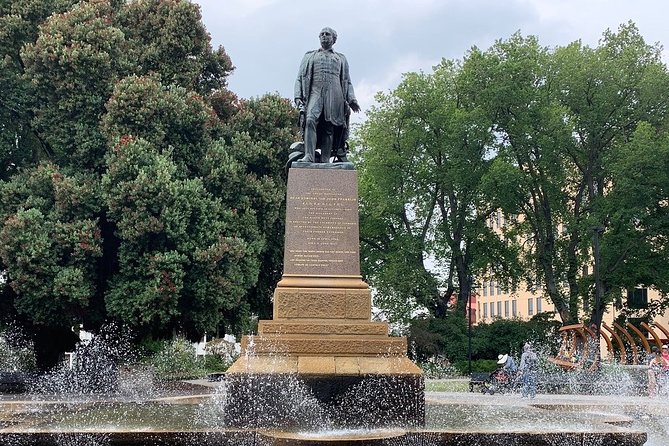
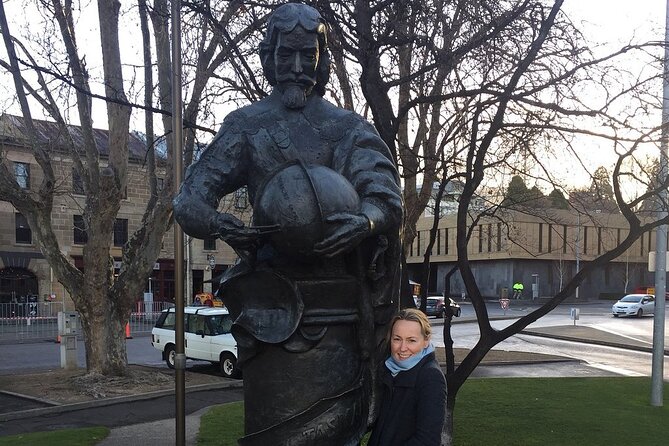
The route continues through a city-centre park where statues become part of the lesson. This is more than a quick walk across green space. Your guide explains the people represented, the stories behind the statues, and why they were placed there.
I like this part because it shows how a city chooses to remember itself. A statue can tell you what earlier generations admired, who held power, and which parts of the past were once considered important. The stories may also be amusing or unexpected, giving the tour a lighter touch after the more serious discussion of invasion and convict life.
The park offers a welcome change from pavements and heritage façades. There are places to sit or perch along the route, which helps if you prefer a slower pace or need a short rest. Still, this is not a seated sightseeing experience. You should expect to remain on your feet for much of the two hours.
The walking itself is described as easy rather than strenuous. Most people can take part, and the activity is wheelchair accessible. Because the route uses city pavements, your comfort will still depend on your own mobility and the conditions on the day.
More Two-Hour Tours in Australia:
- Berlin’s Best: 2 Hour Walking Tour Third Reich and the Cold War
★ 5.0 · 5,486 reviews - Budapest City Landmarks Walking Tour in 2 Hours
★ 5.0 · 2,048 reviews - Leipzig: 2-Hour Guided Walking Tour in German
★ 4.8 · 1,612 reviews - Lucca: 2-Hour City Center Walking Tour
★ 4.7 · 1,314 reviews
A second park with a darker secret

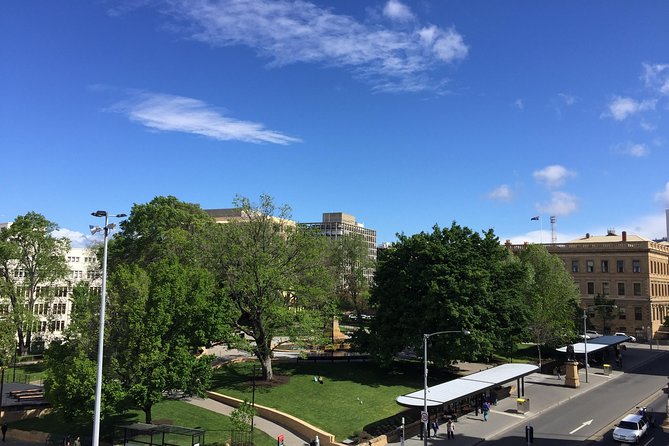
The walk then heads down to another park with a less familiar story. The exact secret is part of the guide’s presentation, and it is one of the tour’s more intriguing touches.
This stop shows why a local walk can be more useful than simply following a list of major sights. A map or guidebook can direct you to Salamanca Place and the waterfront, but it is less likely to explain the odd, uncomfortable, or easily missed stories connected with an unassuming public space.
The story also gives the tour some variety. You move from architecture to colonial politics, then to statues and a darker piece of local history. That changing focus helps the two hours pass quickly.
If you prefer only grand landmarks, this stop may feel less essential. I think it is worthwhile precisely because it takes you away from the postcard version of Hobart. The city becomes less polished and more human when you hear about the parts that are not widely advertised.
Walking toward the seat of power
The route works its way upward toward the part of town associated with government, religion, law, and punishment. Church, court, and prison are treated as pieces of the same civic story.
This is an important part of the tour because it shows how the city was organised. Early Hobart was not just a collection of homes and warehouses. It had institutions that set rules, judged behaviour, managed religion, and enforced authority.
Your guide can also answer questions as you go, which is one reason the small group helps. The tour description gives a maximum of eight people, while the additional booking information lists a maximum of ten. In either case, this is designed to be a relatively intimate walk rather than a large crowd following a flag.
A small group also makes street-side stops easier. You are more likely to hear the explanation, see old photographs or maps, and ask about something that catches your eye. If you enjoy a more personal tour, this format is a clear advantage.
Finishing at Salamanca Place
The walk ends at Salamanca Place, one of Hobart’s best-known areas. It is famous for its Saturday markets, described as the oldest markets in Australia, and it is a natural place to continue your afternoon.
The finish is practical. You do not return to the starting point, so plan your day around ending near Salamanca Place rather than Hunter Street. From here, you can continue exploring, find a café, or use the guide’s suggestions for a reviving coffee.
The market atmosphere depends on the day you visit. A Saturday departure may place you near the market itself, while another day lets you see Salamanca Place without the same market setup. Either way, the row of historic sandstone buildings gives the tour a satisfying final setting.
This is also a good place to review what you have learned. After hearing about Hobart’s waterfront trade, colonial government, public memory, and convict past, Salamanca Place feels like more than a photogenic row of buildings.
What the $27.26 price gets you
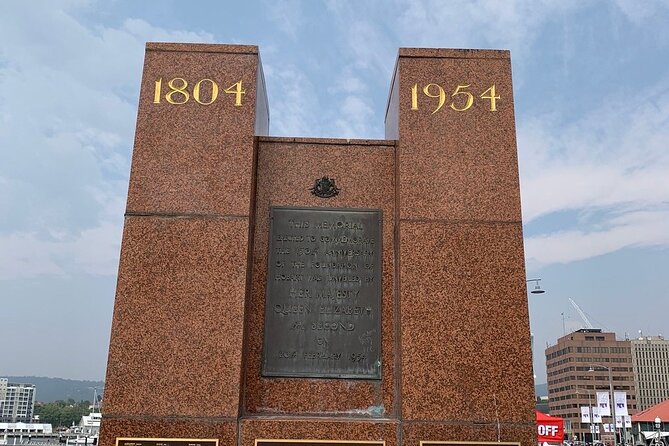
At $27.26 per person, this is good value if you want a clear introduction to central Hobart. You are paying for two hours with a local guide, not for food, drinks, transport, or entry to a separate attraction.
The value comes from interpretation. You can walk along Hunter Street, the waterfront, parks, and Salamanca Place without paying anything, but you would not automatically know the significance of the buildings or the stories behind the statues. A guide turns a pleasant stroll into a lesson in how Hobart developed.
I would especially consider booking this early in your stay. The route gives you a practical map of the centre and may help you decide where to return later. It can also sharpen your interest in other Tasmanian sites connected with colonial and convict history.
The price is less attractive if you already have a strong grasp of Hobart’s past or prefer to explore alone. It is also not designed as a food tour, museum visit, or transport-based sightseeing trip. You pay for the walking, storytelling, and chance to ask questions.
Who will enjoy this Hobart walk?
This tour suits first-time visitors who want a compact introduction before exploring independently. It is also a good fit for history-minded visitors, families with older children, and anyone who prefers stories tied to real streets and buildings.
Children must be accompanied by an adult. The route is considered easy, and previous descriptions call it a comfortable walk, but you should still allow for two hours on city pavements.
It can work well for cruise passengers, provided your ship arrives with enough time and you can reach the meeting point. The booking terms state that no refund is given if you miss the activity because your cruise ship arrives late or does not arrive, so cruise schedules require careful planning.
The tour is wheelchair accessible, allows service animals, and has seats or places to perch along the way. It runs in all weather, so bring suitable clothing. If poor weather causes the operator to cancel, you are offered another date or a full refund.
Booking and cancellation details
Confirmation is received at booking, and hotel pickup and drop-off are not included. You make your own way to 25 Hunter Street and finish at Salamanca Place.
Free cancellation is available up to 24 hours before the scheduled start time for a full refund. Changes or cancellations made inside that 24-hour window are not accepted for a refund.
The activity requires a minimum number of participants. If that minimum is not reached, you are offered another date or experience, or a full refund.
Should you book this tour?
I would book it if you want a useful first look at Hobart, especially on your first day. The route covers the waterfront, Hunter Street, parks, government buildings, and Salamanca Place, while the guide adds the colonial, Indigenous, convict, and architectural context that you would miss on a solo walk.
Book with realistic expectations. This is a pavement walk, not a deep museum presentation, and the weather can affect your comfort. But at $27.26, with a relaxed pace and a small group, it offers a strong return for two hours. If Lisa, Deb, or Jan is leading your departure, you can expect an engaging guide who uses stories, maps, and photographs to make the city easier to understand.
FAQ
Where does the Hobart walking tour start?
The tour starts outside the Henry Jones Art Hotel at 25 Hunter Street, Hobart.
Where does the walking tour finish?
The walk ends at Salamanca Place.
How long does the tour last?
The walking tour lasts approximately two hours.
Is the tour wheelchair accessible?
Yes. The tour is described as wheelchair accessible and follows city pavements. There are also places to sit or perch along the route.
What is included in the tour price?
A professional local guide is included. Food, drinks, hotel pickup, and hotel drop-off are not included.
What happens if I need to cancel?
You can cancel up to 24 hours before the start time for a full refund. Cancellations or changes made less than 24 hours before the tour are not refunded.
Just added around Australia
- Old Hobart Pub Walking Tour★ 4.5 · 91 reviews
- Southwest Tasmania Wilderness Experience: Fly Cruise and Walk Including Lunch★ 5.0 · 233 reviews
- Walk with Wildlife: Guided Tour in Great Ocean Road★ 5.0 · 148 reviews
- Darwin Heritage Walk★ 4.5 · 101 reviews
- Freycinet Walking Tour★ 5.0 · 100 reviews
- Daintree Rainforest Night Walk in Cape Tribulation★ 4.5 · 141 reviews
- Night Walk in Cairns Botanic Gardens – Let’s Go Buggin★ 5.0 · 153 reviews
- Brisbane City Essentials Walking Tour★ 5.0 · 118 reviews
City Highlights Walking Tours, compared.

Berlin City walk Government District and Places of Democracy
Read our review →
Historic Charleston Guided Sightseeing Walking Tour
Read our review →

Oxford: University and City Walking Tour with Alumni Guide
Read our review →
City Highlights Temple and Market Walking Tour
Read our review →
A History of Terror – Belfast City Centre Walking Tour
Read our review →Browse the lists this tour appears in