
REVIEW · MUNICH
Third Reich Walking Tour Munich
Munich’s Nazi past is not tucked away in a distant museum. It is written into the city center, from grand squares used for party ceremonies to beer halls where political ideas gained force. This 2.5-hour walking tour connects those places and explains how Adolf Hitler and the Nazi Party rose in Munich.
I like the way the tour joins political events to real streets and buildings, rather than treating the subject as a list of dates. I also like the guides’ use of old photographs, which helps you compare the city you see with the one that existed during the Nazi era. The main drawback is simple: this is an outdoor walk, and there is a lot to absorb in a short time.
Key points about Munich’s Third Reich walking tour
- Munich was central to the Nazi rise: See the squares, halls, and streets where the party built support and staged public displays.
- The route is fully on foot: Expect about two and a half hours outdoors, with stops at Königsplatz, Odeonsplatz, Hofbräuhaus, the Old Town Hall, and Marienplatz.
- Guides make the difference: Jake, Michael, Nicola, Aileen, Paul, Alex, and others have been praised for clear explanations, thoughtful answers, and strong presentation.
- Historical photographs add useful context: Some guides bring images that show how familiar places looked during the Nazi period.
- The subject is serious but the tone is human: Good guides use humor carefully, invite questions, and connect the past to modern Germany without making light of the crimes.
- The tour works best early in your Munich stay: It gives you a useful frame for seeing the city’s monuments, memorials, and museums afterward.
Why Munich is the right place to study the Nazi rise
Munich is often introduced through beer halls, palace interiors, and pretty squares. Yet it was also the city where Hitler built much of his political career and where the Nazi movement developed its public image.
That makes this tour more useful than a general sightseeing walk if you want to understand how extremism gained a foothold. You are not only hearing about what happened in Berlin or on distant battlefields. You are standing in the places where speeches, marches, ceremonies, and political confrontations helped shape the movement.
The walk also gives needed context. The story begins with the Nazi Party’s early growth, then follows its propaganda, ideology, and path to power before addressing the destruction of World War II and the people who resisted. It is a difficult subject, but the route keeps the history tied to visible places.
I would not treat this as a substitute for a museum visit or a full study of the period. Instead, think of it as a strong introduction. You leave with a map in your head and a better sense of how Munich’s public spaces were used for politics.
A few more walking tours around Germany worth a look
- Discover Berlin Half-Day Walking Tour
★ 5.0 · 9,624 reviews - Berlin City walk Government District and Places of Democracy
★ 4.7 · 8,467 reviews - Berlin: Third Reich & Cold War Guided Walking Tour
★ 4.9 · 8,378 reviews
Starting at Radius Tours on Dachauerstrasse
The meeting point is Radius Tours at Dachauer Str. 4, a short walk from central Munich. Check-in takes about five minutes, and the tour ends at Marienplatz, so you do not need to return to the starting point.
That start and finish are practical. You can continue sightseeing in the Old Town after the walk, visit a nearby attraction, or stop for food without arranging another transfer. The meeting point is also near public transportation, which matters if you are still finding your way around Munich.
The group can include up to 25 people. That is large enough to create a lively discussion but small enough for a guide to address questions. The exact feel will depend on the day and the guide. In quieter periods, the group may be much smaller, and one particularly lucky booking resulted in a solo walk with guide Keith.
Arrive ready to begin on time. The tour is offered in English, and confirmation is sent when you book. Service animals are allowed, and the activity is described as suitable for most people, but you should be comfortable walking and standing outside for the full duration.
Königsplatz and the architecture of political power
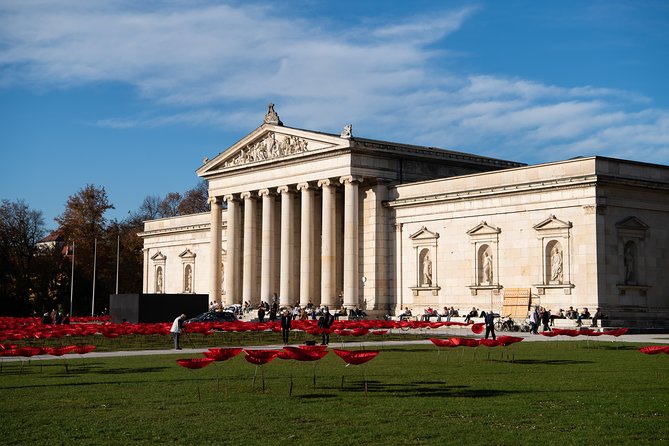
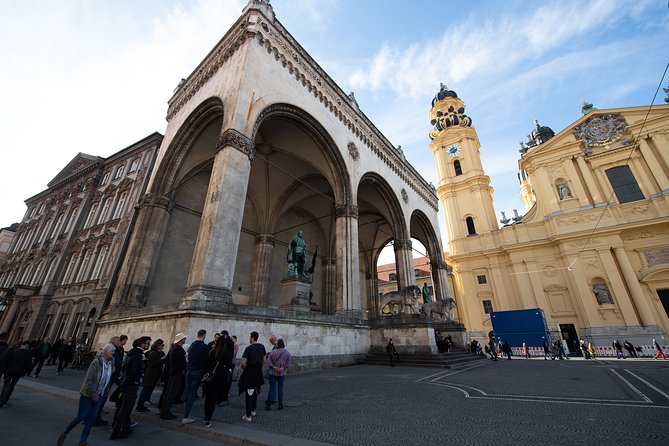
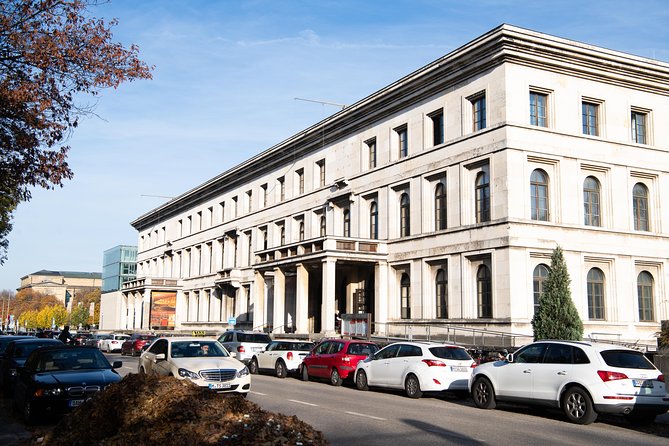
Königsplatz is the first major stop, with about 15 minutes devoted to its role in the Nazi period. This broad, formal square became an important Nazi landmark and was used for party events and ceremonies.
The value of stopping here is not just the architecture. The square shows how public space can be turned into a stage for authority. Grand buildings, open views, and organized crowds helped create a feeling of order and power. Your guide explains how the Nazi Party used the setting as part of its public image.
This is also one of the places where photographs can help. A present-day view can look calm and even elegant. Images from the period reveal how the same space was filled with flags, formations, symbols, and mass gatherings.
The stop is fairly brief, so do not expect a detailed architectural lecture. Its purpose is to establish the visual language of the regime before the tour moves into the political conflicts and meeting places that shaped its rise.
Odeonsplatz and the failed path to power
The stop at Odeonsplatz lasts about 30 minutes, making it one of the most substantial parts of the route. The square was used by the Nazi Party for marches and memorial events, but it also connects to the early struggle for power.
This is where the tour can move beyond the familiar story of Hitler simply becoming powerful. You hear about the political tactics, public appearances, and confrontations that helped the movement gain attention. The guide’s job here is to explain how ideology became organized action.
The setting is especially useful because Odeonsplatz remains an active part of Munich. You can look at the square as it exists now while learning how it was used during a period of political violence and mass persuasion.
Several guides have been praised for handling questions openly, including uncomfortable ones. That matters at a site like this. The best explanations do not reduce the period to cartoon villains and simple slogans. They help you examine how ordinary political structures, public anger, propaganda, and social pressures were exploited.
Same streets, a different route:
- Munich: Third Reich & WWII Walking Tour
★ 4.6 · 6,181 reviews - Berlin: Discover Berlin Walking Tour
★ 4.9 · 5,998 reviews - Berlin’s Best: 2 Hour Walking Tour Third Reich and the Cold War
★ 5.0 · 5,486 reviews - Berlin: Hidden Backyards Guided Walking Tour
★ 4.8 · 5,360 reviews
Hofbräuhaus and the role of beer halls
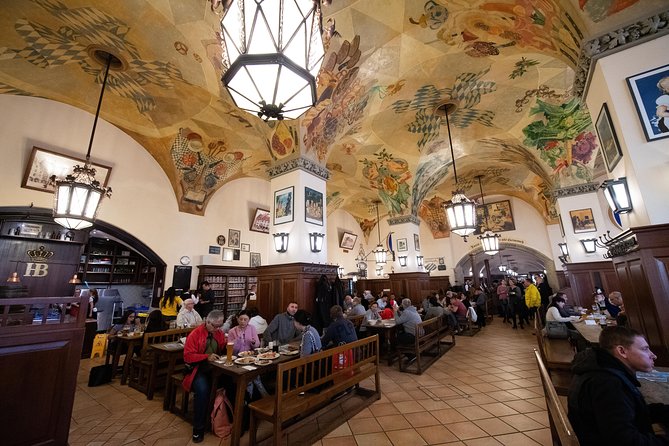
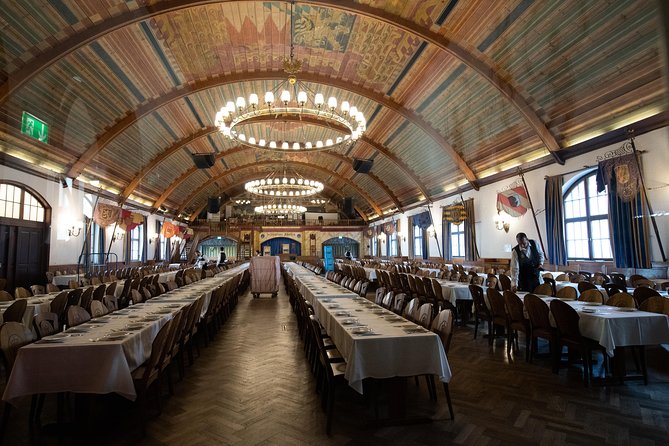
The Hofbräuhaus stop takes about 20 minutes. Munich’s beer halls were not only places for food and drink. They also served as political gathering spaces, and the Hofbräuhaus played a role in the Nazi Party’s early public life.
This part of the walk helps correct a common misunderstanding. The Nazi rise did not happen only in government offices or military headquarters. Ideas were presented to crowds in familiar social settings, where speeches and group identity could build support.
You will usually hear about the atmosphere of political meetings and the way public persuasion worked. The point is not to turn the beer hall into a relic of Nazi history. It is to show how ordinary civic and social spaces can be used to spread dangerous ideas.
The tour does not include a meal or a separate beer-hall experience. You are visiting the site as part of a historical walk. If you want to return later for food or a drink, Marienplatz and the surrounding Old Town are nearby at the end.
The Old Town Hall and Munich’s civic center
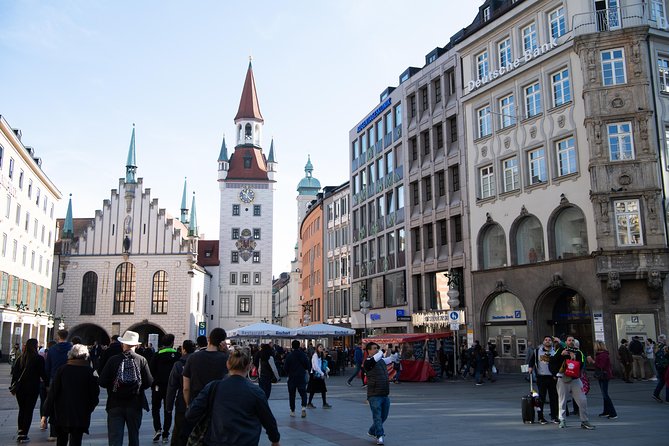
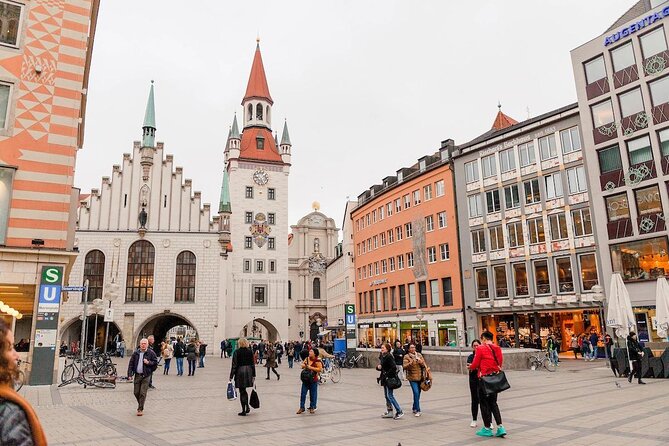
The Old Town Hall is a shorter stop of about 15 minutes. Here, the story returns to the city’s civic heart and the way local government and public ceremony intersected with the Nazi period.
A short stop can be useful after the heavier discussion at Odeonsplatz and Hofbräuhaus. It gives the guide a chance to connect national events with Munich’s municipal life and to remind you that political change affects the institutions people use every day.
Do not expect an interior tour of the Old Town Hall from this experience. The walk focuses on outdoor locations and their historical setting. The building is one piece of a larger route, not a stand-alone attraction.
Marienplatz and the final connection to modern Munich
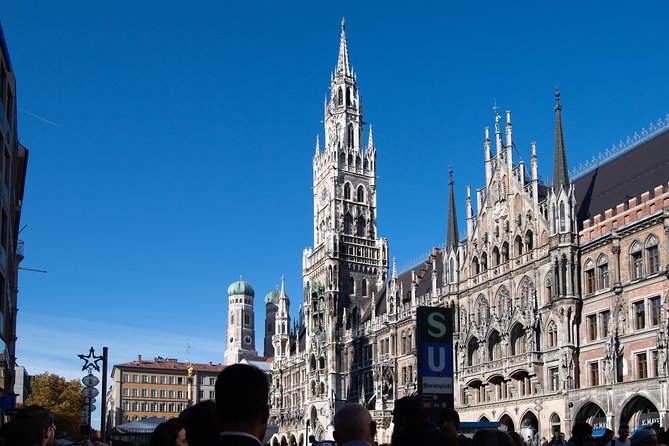
The walk ends at Marienplatz, Munich’s central square, after about 20 minutes at the final stop. This is a convenient finish, but it also works well as a closing point because Marienplatz links the historical route to present-day Munich.
Your guide brings the story back to the consequences of Nazi rule, the destruction of World War II, and the people who suffered or died under the regime. The tour also pays tribute to those who opposed the ideology, rather than focusing only on the men who held power.
I value that balance. A tour about the Third Reich should explain how the regime rose, but it should not make the perpetrators the only people worth remembering. Munich has memorials and institutions connected to resistance and remembrance, and this walk gives you a starting point for finding more afterward.
At the end, you are well placed to continue exploring. You might retrace part of the route for photographs, as some people do, or visit a museum connected with Munich’s Nazi history and the White Rose resistance.
Guides, storytelling, and the amount of information
The guide is the heart of this experience. The strongest guides on this route include Jake, Michael, Nicola, Aileen, Paul, Alex, Scott, Steve, and Keith. You will not choose among them when booking, so the exact style depends on the date.
The qualities to look for are clear speech, command of dates and events, and the ability to explain rather than recite. Michael and Jake have been praised for making complex material engaging. Nicola was noted for a good balance between explanations and walking time. Aileen used photos and built in a coffee and bathroom break after asking the group what it needed.
That last point is worth noting. The tour contains a great deal of material, and stopping for a short break can help. The route is not an academic seminar, but some sections move quickly. One person who joined in December wished for a short written outline because there was too much to remember in one afternoon.
You can make the tour more rewarding by taking brief notes or marking places on a map. If a guide shows historical photos, study the details before the group moves on. You may also want to write down names and events for later research.
The tone varies by guide, but the best presentation is serious without becoming stiff. Humor appears in some tours, usually to keep a heavy subject manageable. It should never replace the history, and the supplied feedback suggests the guides generally understand that balance.
Walking conditions and what to wear
This is an outdoor walking tour. The route covers city streets and public squares, with time spent standing while the guide speaks. Wear comfortable shoes and check the weather before you leave.
Cold weather deserves special attention. One tour took place on a bitterly cold day, and the guide adjusted the group’s position to find more sun. That is helpful, but it cannot replace a warm coat, gloves, and suitable layers. On a cold or gray day, the weather can affect your concentration as much as your comfort.
The tour also requires good weather and may be canceled if conditions are poor. In that case, you are offered another date or a full refund. The activity requires a minimum number of participants as well, so a cancellation is possible if that number is not reached.
At 2.5 hours, the walk is manageable for most people who can walk and stand for that length of time. If you need frequent seating or have limited mobility, check your needs before booking, since the supplied details do not promise regular seating or a fully step-free route.
Is $45.95 a fair price?
At $45.95 per person, this is not the cheapest way to walk around Munich. You are paying for a local English-speaking guide and a focused historical route, not for admission to an attraction or transportation between sites.
I think the price can be fair if you want context and would otherwise pass these places without understanding their importance. The tour covers several central landmarks, uses the city itself as the teaching material, and ends in a useful location. A strong guide can save you hours of piecing together the story on your own.
The value is lower if you already have extensive knowledge of Munich’s Nazi history and prefer to explore at your own pace. The route is intentionally introductory and covers a great deal in a limited time. One participant with a strong background wanted several more hours, which is a reasonable expectation for a serious history enthusiast.
You should also remember that the price does not include museum entry, food, or drinks. Those costs are separate if you continue the subject at another site afterward.
Who will get the most from this tour?
I would recommend it to first-time visitors who want to understand Munich beyond its postcard image. It is also a good fit for history students, teachers, readers of World War II history, and anyone interested in the political conditions that allowed the Nazi movement to grow.
The tour suits you if you prefer learning through places rather than reading only from a guidebook. Seeing Königsplatz, Odeonsplatz, the Hofbräuhaus, and Marienplatz in sequence helps you connect the story to the city.
It may be less suitable if you want an interior museum experience, a long research-level lecture, or a relaxed sightseeing walk with little standing. The subject is serious, the pace can be full, and the route remains outdoors.
Book it near the beginning of your stay if possible. Then you can recognize the locations again, visit a memorial or museum afterward, and look at Munich’s public spaces with a more critical eye.
Should you book the Third Reich Walking Tour?
Book this tour if you want a clear, place-based introduction to Munich’s Nazi past and value a guide who can answer questions in person. The strongest features are the central route, the use of historical photographs, the attention to resistance and remembrance, and the guides’ ability to make a difficult subject understandable.
Skip it if you need a longer, more specialized study of the period or dislike walking outdoors in uncertain weather. At $45.95, it earns its price when the guide adds context you would not get from simply photographing the buildings.
For most visitors with an interest in modern European history, I would schedule it early in a Munich visit, dress for the weather, and leave time afterward for further reading or a museum visit.
FAQ
How long is the Third Reich Walking Tour Munich?
The walking tour lasts approximately 2 hours and 30 minutes.
Where does the tour begin?
The tour begins at Radius Tours, Dachauer Str. 4, 80335 München, Germany.
Where does the tour end?
The tour ends at Marienplatz in central Munich, at 80331 München-Altstadt-Lehel.
Which locations are included?
The route includes Königsplatz, Odeonsplatz, the Staatliches Hofbräuhaus, Munich’s Old Town Hall, and Marienplatz.
Is the tour offered in English?
Yes. The tour is offered in English with a local guide.
How large can the group be?
The tour has a maximum of 25 participants.
Can I cancel for a refund?
You can cancel at least 24 hours before the start time for a full refund. Cancellations or changes made within 24 hours are not refunded. If poor weather or an insufficient minimum number of participants causes the tour to be canceled, you are offered another date or a full refund.
Just added around Germany
- Hamburg: Guided Port Walk for Families★ 4.6 · 191 reviews
- East Berlin and the Wall: Walking Tour★ 4.9 · 407 reviews
- Dresden: Shared Small Group Walking Tour in English★ 4.8 · 172 reviews
- Dresden: Taste of Dresden Food Walk★ 4.6 · 397 reviews
- Dresden: Private Guided Walking Tour★ 4.5 · 81 reviews
- Dresden: Guided City Walk and Panometer Entrance Ticket★ 4.5 · 176 reviews
- Dresden Old Town – Guided Walking Tour in English★ 4.8 · 135 reviews
- Dresden: Neustadt District Street Art Guided Walking Tour★ 4.3 · 333 reviews
Walking Tours, compared.

Magical London: Harry Potter Guided Walking Tour
Read our review →
Reykjavik Food Walk – Local Foodie Adventure in Iceland
Read our review →
History and Hauntings of Salem Guided Walking Tour
Read our review →
New Orleans Premier Ghost, Voodoo and Vampire Walking Tour
Read our review →
Amsterdam Anne Frank: Small-Group Walking Tour & Local Guide
Read our review →
Edinburgh Castle: Guided Walking Tour with Entry Ticket
Read our review →
Anne Frank’s Story – Guided Walking Tour through Amsterdam
Read our review →Browse the lists this tour appears in