

REVIEW · MUNICH
Munich: Birthplace of the Third Reich Guided Walking Tour
Munich’s Nazi past is not tucked away in a distant museum. It is woven into the city center, in old beer halls, surviving party buildings, damaged façades, and memorials to people who resisted or suffered. This 2.5-hour walking tour helps you connect those places into one clear story, from Hitler’s early speeches to the road toward war and genocide.
I like the way the tour uses real city streets rather than relying only on photographs or a lecture. I also like the range of guides, including Jake, Sam, Nic, Steve, Iain, and Aileen, who are repeatedly praised for making difficult material clear, human, and easy to follow. The main drawback is simple: you are outside for the full tour, so cold, rain, or summer heat can affect your comfort.
Key points to know before booking
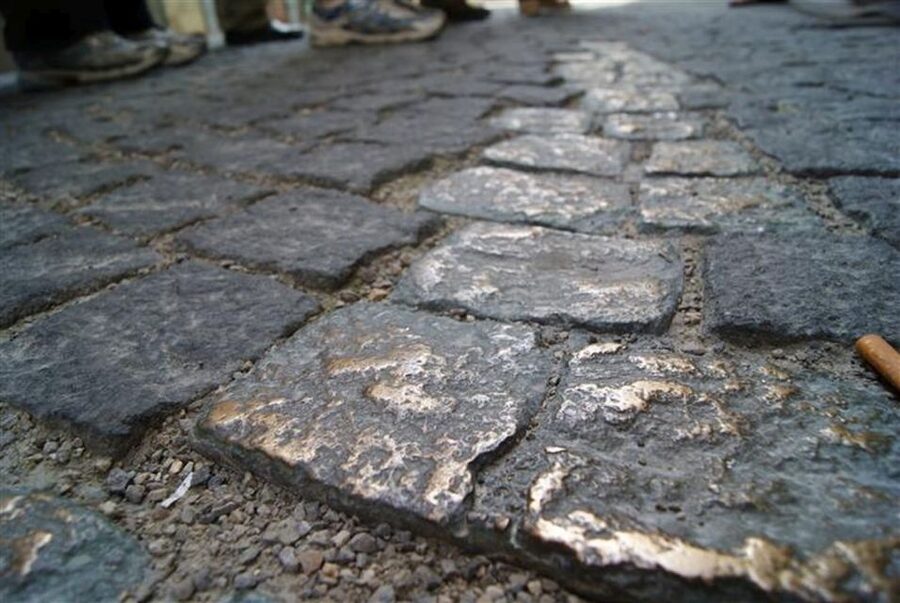
- Hitler’s early beer-hall meetings: See the places where the Nazi movement first gathered and where Hitler made major speeches.
- Kristallnacht brought into focus: Visit the building connected with Goebbels and the planning of the Night of Broken Glass.
- Munich’s Nazi headquarters: Examine surviving Nazi-era buildings alongside wartime damage and modern memorials.
- Careful storytelling: Guides such as Jake, Sam, Steve, Nic, and Aileen are praised for clear explanations, good pacing, and thoughtful handling of painful subjects.
- Good value at $29: The price covers the guide, tour, and transportation to Munich’s historic center, making this a relatively inexpensive way to add context to your sightseeing.
- Plan for the weather: Wear comfortable shoes and bring water, rain protection, or warm layers as the season requires.
Why Munich is the right place for this history
This tour begins with an important idea: Munich was not simply the backdrop for later Nazi events. It was one of the main places where the movement formed, gathered followers, tested its tactics, and built public support.
That makes the city especially useful for understanding how a political movement can grow. You are not only hearing about Hitler’s rise in the abstract. You are seeing the beer halls where small meetings took place, the streets where political violence unfolded, and the buildings tied to the Nazi government.
I find this approach more useful than a tour that treats the Third Reich as a sealed-off chapter beginning in 1933. The route places the rise of the Nazi Party in the years after the First World War, when economic hardship, political anger, anti-Semitism, and fear gave extremists room to organize.
Your guide explains how Munich became a center for this activity and how Hitler moved from a fringe political speaker to a national figure. The focus is not on making the story dramatic for its own sake. It is on showing the choices, conditions, and propaganda that made the movement possible.
More Guided Tours in Germany:
- Berlin: Third Reich & Cold War Guided Walking Tour
★ 4.9 · 8,378 reviews - Berlin: Hidden Backyards Guided Walking Tour
★ 4.8 · 5,360 reviews - Bamberg: Guided Walking Tour
★ 4.6 · 3,202 reviews
Beer halls and the first Nazi meetings
The beer halls are among the most memorable parts of the walk because they reveal the ordinary setting of an extraordinary political transformation. These were public gathering places, not secret castles. People met, drank, argued, listened to speeches, and formed political loyalties in spaces that still belong to everyday Munich.
You will see the halls connected with Hitler’s first party meetings and early speeches. Your guide explains how these gatherings helped the Nazi Party develop its identity and reach a wider audience. The setting also makes clear why skilled public speaking mattered so much to Hitler’s rise.
The tour does not treat a beer hall as a shrine. That distinction matters. These places are presented as evidence of how extremist politics entered normal civic life. The lesson is uncomfortable but useful: dangerous movements can grow in familiar public spaces, surrounded by routine and social activity.
Guides use photographs and visual material to help you compare the present streets with earlier scenes. Steve, in particular, is praised for carrying a binder of images that showed how buildings and neighborhoods looked during the period. That kind of comparison can be more effective than a long list of dates.
The beer-hall stops also give you a chance to ask questions. Several guides are praised for welcoming discussion, including questions from people who already know a fair amount about German history. If you have been reading about the subject before your visit, you should find room to ask about political factions, local personalities, or the meaning of particular sites.
The failed putsch and the march toward power
The walk follows the early attempts to seize power, including Hitler’s failed putsch. This part helps explain that the Nazi rise was not a smooth march from success to success.
The failed coup exposed the movement’s weaknesses, but it also gave Hitler a trial, publicity, and a new way to present himself to the public. Your guide uses Munich’s streets to show where political confrontation and street violence became part of the movement’s story.
You will hear about the Brownshirts and the role they played in intimidation and political conflict. The route helps you picture how the Nazi Party fought for control not just through elections and speeches, but through pressure in public spaces.
This is one of the tour’s strongest features. Rather than presenting Hitler as an inevitable figure, the guide shows a series of choices and turning points. The route explains how the party adjusted its tactics after failure and how propaganda helped turn political violence into a performance of strength.
That also makes the tour suitable for people who know the broad outline but want a clearer local setting. You may already understand what the putsch was. Seeing where Munich fits into that story gives the event more shape.
The building linked to Kristallnacht
One of the heaviest stops is the building associated with Joseph Goebbels and the planning of the Night of Broken Glass, known as Kristallnacht. The event marked a major escalation in the persecution of Jewish people in Nazi Germany.
At this point, the tour moves from political organization to organized terror. The guide explains how anti-Semitism was not merely a private prejudice or a slogan at rallies. It became government policy, public violence, destruction, and persecution.
The building itself is important because it connects political decisions with physical places. You are looking at a site where the machinery of propaganda and persecution operated, not simply hearing a general account of events elsewhere.
Expect the mood to change here. Guides are praised for handling the subject with empathy and restraint, while still allowing occasional gentle humor elsewhere in the walk. That balance is useful. A tour about Nazism should not become casual entertainment, but a completely flat delivery can make it harder to absorb two and a half hours of painful material.
Aileen, Jake, Iain, and others are noted for explaining the stages of Nazi history in a clear way. Their approach helps you understand the progression from political rhetoric to state persecution and then to war and mass murder.
A few more walking tours around Germany worth a look
- Discover Berlin Half-Day Walking Tour
★ 5.0 · 9,624 reviews - Berlin City walk Government District and Places of Democracy
★ 4.7 · 8,467 reviews - Munich: Third Reich & WWII Walking Tour
★ 4.6 · 6,181 reviews - Berlin: Discover Berlin Walking Tour
★ 4.9 · 5,998 reviews
Nazi headquarters and the scars of war
The route also reaches the former official Nazi headquarters. This is an important stop because it shows the scale and confidence of the regime once it had moved beyond its early beer-hall phase.
You will see Nazi-era buildings that survived the Second World War, along with other central Munich structures that still bear the marks of Allied bombing. The contrast is striking. Some symbols of Nazi power remain because the buildings survived, while other parts of the city were heavily damaged.
Your guide uses these structures to explain how the Nazi bureaucracy operated and how Munich functioned within the regime. The walk is not limited to Hitler’s personality. It gives attention to offices, institutions, party organization, and the wider system that allowed persecution and war to continue.
This is also where Munich’s complicated physical appearance becomes meaningful. A building can survive for practical reasons, while its political past remains disturbing. The tour encourages you to look at the city without turning its Nazi architecture into a spectacle.
The route does not erase the past, but neither does it celebrate it. That careful approach is one reason the tour works well for a first visit to Munich’s Nazi sites.
Memorials to victims and opponents
The final part of the walk brings attention to memorials for victims of Nazism and people who opposed the regime. This keeps the tour from becoming a procession of Nazi locations without human balance.
You will see how modern Munich remembers those who were murdered, persecuted, or resisted. The memorials help shift attention away from the men who gained power and toward the people who paid the price.
That is an essential part of the experience. A tour about Hitler can easily give too much space to Hitler. By ending with remembrance and opposition, the guide places responsibility and suffering back at the center of the story.
The memorials also connect the past with the present. Several guides make a point of explaining Germany’s efforts to confront its history and keep public memory alive. The goal is not to claim that remembrance solves everything. It is to show why memorials, education, and vigilance matter.
For me, this part gives the walk its moral center. You finish with more than a timeline of Nazi success. You are reminded that people resisted, that many were harmed, and that the city continues to decide how to present this past.
How the guides shape the experience
The guide can make or break a history walk, and this tour has a strong record in that area. Jake is often praised for combining energy with clear explanations and well-judged humor. Sam is described as thorough and easy to listen to. Nic is noted for friendly delivery, fluent English, and careful organization.
Steve brings extensive background on Munich’s buildings and neighborhoods, while Iain is especially suited to people who enjoy asking detailed questions. Aileen is praised for explaining the stages of Nazi history in a clear, well-ordered way. Dan has even been credited with keeping the group engaged through heavy rain.
Those details matter because the subject is demanding. You need a guide who can explain complex events without turning the walk into a university lecture, but who also avoids reducing the material to a collection of amusing anecdotes.
The best guides on this route appear to use a conversational style. They explain, pause, answer questions, and keep the group moving. Some use photos or other visual material to show how the city looked in the past.
The exact guide is not guaranteed, so you should not book solely because you hope for one particular person. Still, the range of names and repeated praise for clear teaching suggest that the operator has a deep bench of experienced guides.
Timing, walking, and weather
The tour lasts two and a half hours. That is long enough to build a real story, but short enough to fit into a busy Munich day.
You should expect steady walking through the historic center, with stops for explanations and questions. The supplied details do not specify the total distance, number of participants, or indoor entry at each stop, so do not assume this is a museum visit with lots of seating.
Weather is the practical issue to take seriously. Winter reports describe the tour continuing in freezing conditions, while summer reports mention warmth and the need for a place to stop for water. Rain is also a possibility.
Wear shoes you can walk in for several hours. Bring a rain jacket or umbrella when needed, and carry water on warm days. In cold weather, gloves and a warm coat will make it easier to focus on the guide instead of your fingers.
The earlier morning option can be useful. One visitor appreciated getting away from the crowded main square before celebrations filled it later in the day. If you prefer cooler temperatures and fewer central-city crowds, check the available start times when booking.
What the $29 price really gets you
At $29 per person, this is a good-value way to add historical context to a Munich visit. The fee includes the guide, the walking tour, and transportation to the historic center.
You meet at the Radius Tours office. Hotel pickup is not included, so you need to make your own way to the meeting point. The starting location can depend on the option selected, so check your booking details rather than assuming every departure follows the same arrangement.
The price is especially fair if you value explanation more than admission tickets. You are paying for a structured route, a live English-speaking guide, and the ability to ask questions at the actual sites.
It is less useful for you if you want long interior visits, private guiding, or a highly customized itinerary. This is a public walking experience with a set duration and a clear historical focus.
You can cancel up to 24 hours before the tour for a full refund, and you can reserve now while paying later. Those policies help if your Munich schedule is still changing.
Who should book this Munich walk?
I would recommend it most strongly to first-time visitors who want to understand how Munich fits into the rise of the Nazi Party. It also suits history students, museum fans, and anyone who has read about the Third Reich but wants to connect events with real places.
The tour can work for people with little background because the guides explain the story in sequence. It also offers enough detail for well-read visitors, especially if you take advantage of the question time.
You should think twice if you dislike serious historical subjects or find long outdoor walks tiring. The tour covers anti-Semitism, political violence, Kristallnacht, war, persecution, and the memory of victims. It is not a light city stroll.
Families with older teenagers may find it worthwhile, but the content calls for maturity. Younger children may not get much from the political detail, and the emotional weight may be difficult for them.
Should you book it?
Book this tour if you want Munich’s streets to mean more than attractive façades and famous squares. For $29, you get a clear route through the city’s Nazi past, strong historical context, and a chance to ask questions in front of the places being discussed.
I would choose it early in a Munich visit. The background can make later visits to central squares, memorials, and museums more meaningful. Just plan for the weather, arrive at the Radius Tours office, and keep your expectations focused on outdoor interpretation rather than extensive indoor sightseeing.
The tour is thoughtful, direct, and especially valuable because it gives equal attention to the rise of the Nazi movement, the victims of its policies, and those who opposed it.
FAQ
How long does the tour last?
The tour lasts 2.5 hours.
What language is the tour conducted in?
The tour is conducted in English with a live English-speaking guide.
Where does the tour meet?
You meet at the Radius Tours office. The selected option can affect the starting location, so check the details attached to your booking.
Is hotel pickup included?
No. Hotel pickup is not included.
Does the tour include transportation?
Transportation to Munich’s historic center is included. The main experience is a guided walking tour.
What places and subjects does the tour cover?
The route covers Munich’s role in the rise of the Nazi Party, old beer halls linked with Hitler’s early speeches and party meetings, the building associated with Goebbels and Kristallnacht, the former Nazi headquarters, wartime damage, and memorials to victims and opponents of Nazism.
Can I cancel for a full refund?
Yes. You can cancel up to 24 hours in advance for a full refund.
Just added around Germany
- Hamburg: Guided Port Walk for Families★ 4.6 · 191 reviews
- East Berlin and the Wall: Walking Tour★ 4.9 · 407 reviews
- Dresden: Shared Small Group Walking Tour in English★ 4.8 · 172 reviews
- Dresden: Taste of Dresden Food Walk★ 4.6 · 397 reviews
- Dresden: Private Guided Walking Tour★ 4.5 · 81 reviews
- Dresden: Guided City Walk and Panometer Entrance Ticket★ 4.5 · 176 reviews
- Dresden Old Town – Guided Walking Tour in English★ 4.8 · 135 reviews
- Dresden: Neustadt District Street Art Guided Walking Tour★ 4.3 · 333 reviews
Walking Tours, compared.

Magical London: Harry Potter Guided Walking Tour
Read our review →
Reykjavik Food Walk – Local Foodie Adventure in Iceland
Read our review →
History and Hauntings of Salem Guided Walking Tour
Read our review →
New Orleans Premier Ghost, Voodoo and Vampire Walking Tour
Read our review →
Amsterdam Anne Frank: Small-Group Walking Tour & Local Guide
Read our review →
Edinburgh Castle: Guided Walking Tour with Entry Ticket
Read our review →
Anne Frank’s Story – Guided Walking Tour through Amsterdam
Read our review →Browse the lists this tour appears in