
REVIEW · MUNICH
Munich Old Town Walking Tour
Munich’s story unfolds neatly on foot, from the grand squares of Karlsplatz and Marienplatz to the market stalls, churches, royal residences, and beer halls around the Old Town. The route gives you a useful first look at the city without asking you to spend half a day on a formal history lecture.
I like the way the tour mixes major sights with everyday Munich, especially Viktualienmarkt and the Hofbräuhaus. I also like that guides such as Patrick, Anna, Dan, Aileen, and Maria are praised for clear storytelling, humor, and practical advice. The main drawback is sound: busy streets can make it hard to hear, and children may lose interest during the history-heavy parts.
Key points to know before booking
- A two-hour first look at Munich: You see many central landmarks in a compact route.
- Strong guide-led storytelling: Guides including Patrick, Anna, Dan, Aileen, and Timmy bring in local history, beer culture, modern Munich, and restaurant tips.
- Viktualienmarkt adds local flavor: The market gives the walk a useful break from churches and royal buildings.
- No entrance fees are included or required: The tour focuses mainly on outdoor viewing and explanations, with a peek inside Hofbräuhaus.
- A maximum of 25 people: This is not a private walk, but the group limit keeps it smaller than a large city tour.
- Plan for city noise and steady walking: Good shoes help, and you may need to stay close to the guide in crowded areas.
Why this Munich walking tour works well on a first day
At $27.81 per person, this is priced as an affordable orientation rather than a full museum tour. You are paying for about two hours with a professional local guide, not for meals, hotel transport, or admission to paid attractions.
That distinction matters. You can walk around Munich’s Old Town on your own for nothing, but it is easy to pass a statue, church facade, or royal courtyard without understanding why it matters. A good guide turns the route into a connected story. Several guides are praised for explaining both older events and modern city life without burying you in dates.
I would book this early in your stay. The walk helps you decide where to return later, whether that means spending more time at the Residenz, climbing near St. Peter’s Church, eating at Viktualienmarkt, or finding a beer hall. It also gives you restaurant and city tips while there is still time to use them.
The pace seems suited to a general audience. You stop often for explanations, and the route is short enough to fit around other plans. Still, this is a walking tour through a busy city center, not a seated sightseeing ride. You should expect regular walking, street crossings, and periods when you need to stay close to the group.
More Old Town Walking Tours in Germany
- Nuremberg: Old Town Guided Walking Tour
★ 4.6 · 2,416 reviews - Munich: Old Town & Viktualienmarkt City Walk in German
★ 4.7 · 2,304 reviews - Heidelberg: Walking Tour of the Old Town
★ 4.6 · 1,742 reviews
Meeting at Radius Tours and starting at Karlsplatz
The tour begins at the Radius Tours office on Dachauer Str. 4, near Munich’s central transport area. Confirmation is provided when you book, and the office is near public transportation, which makes the start fairly practical if you are arriving by train or staying near the center.
From there, the group heads toward Karlsplatz, also called Stachus. This is the gateway to Munich’s central shopping and old-town district. The first stop is brief, but it gives the guide a chance to establish the city’s layout before the group reaches the more famous squares.
This opening is useful because Munich’s center is compact but not always obvious on a map. Once you understand how Stachus, Marienplatz, Viktualienmarkt, and Odeonsplatz fit together, later sightseeing becomes easier.
Frauenkirche and Munich’s unmistakable skyline
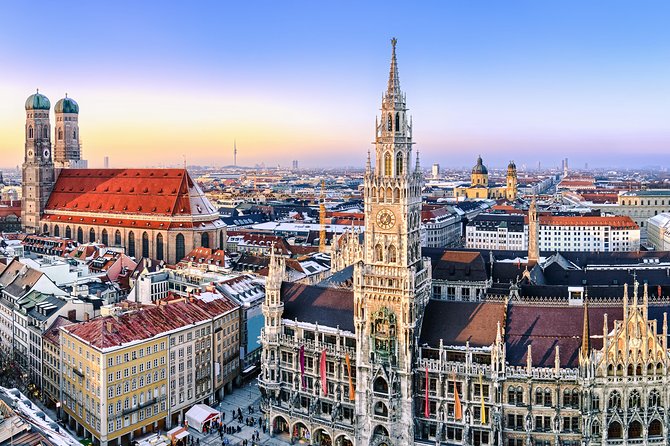
The Frauenkirche is one of Munich’s defining landmarks. Its twin towers are easy to recognize, and the church remains one of the clearest visual markers in the city center.
The stop lasts about ten minutes. You should expect an explanation of the church’s role in Munich rather than a long interior visit. The tour information highlights its enormous capacity, said to reach 20,000 people, which gives you a sense of the building’s scale.
This is also a place where the guide’s interpretation matters. A short look at the exterior can feel flat if you do not know what you are seeing. A guide can point out details, explain the church’s place in the city, and help you decide if you want to return for a longer visit.
Remember that the route is not built around extended entry time at every landmark. If you want to explore Frauenkirche in detail, save that for another visit after the walk.
Marienplatz and the Rathaus-Glockenspiel
Marienplatz is Munich’s central square and the natural heart of the tour. The New Town Hall, Old Town Hall, and surrounding buildings make this one of the most visually rewarding stops, but it is also one of the busiest.
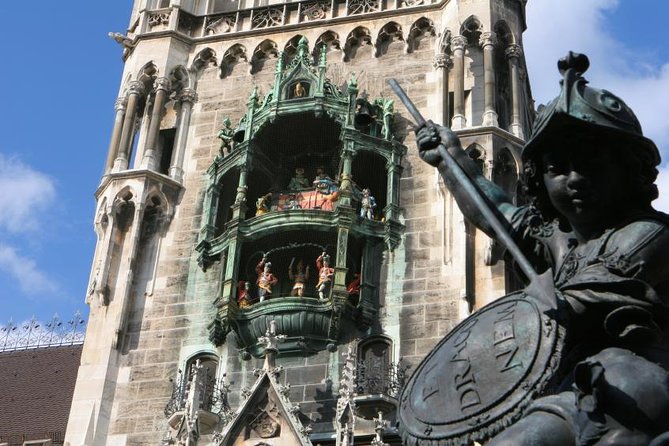
The Rathaus-Glockenspiel receives about twenty minutes. The famous carillon presents scenes connected with events from the 1500s, including its moving figures and historical pageantry. One guide-led explanation is especially useful here because the display may be easy to watch but harder to understand without context.
If you are hoping to see the figures move, ask your guide about the day’s performance timing. The supplied tour details do not promise a particular showing, so you should not book the walk solely for the animation. Even without a performance, the square gives you an excellent introduction to Munich’s civic center.
A practical point: this is one of the places where city noise can interfere with the explanation. Stay near the guide and avoid drifting to the back of the group. A few people have found parts of the walk hard to hear when the streets were crowded.
Same streets, a different route:
- Discover Berlin Half-Day Walking Tour
★ 5.0 · 9,624 reviews - Berlin City walk Government District and Places of Democracy
★ 4.7 · 8,467 reviews - Berlin: Third Reich & Cold War Guided Walking Tour
★ 4.9 · 8,378 reviews - Munich: Third Reich & WWII Walking Tour
★ 4.6 · 6,181 reviews
Viktualienmarkt, the most useful stop for food
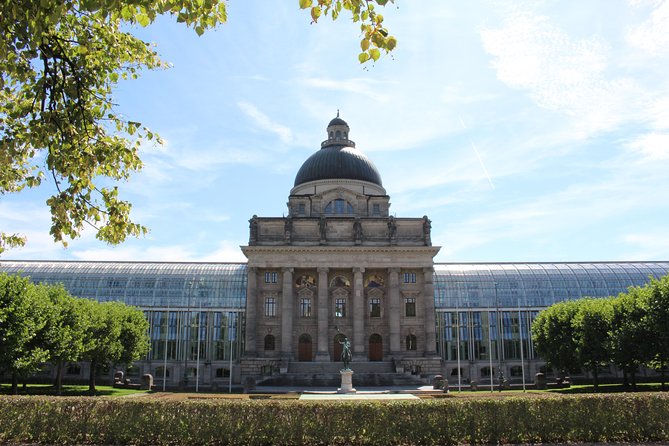
Viktualienmarkt is where the tour shifts from grand architecture to daily life. Munich’s best-known food market occupies a central area filled with stalls and a beer garden. The stop lasts about thirty minutes, making it the longest scheduled pause.
I particularly like this part of the route because it gives you a chance to think about lunch, snacks, and local food after a run of churches and public buildings. Food and drinks are not included, so any purchase is on your own account. That is a limitation for anyone expecting a tasting tour, but it also means you can choose what interests you.
The market is a good place to ask for practical recommendations. Guides have offered advice on restaurants, ethnic food, and places to eat after the walk. One useful approach is to treat the stop as a scouting visit, then return later when you are not trying to keep up with a group.
The beer garden also connects the market to Munich’s beer culture. The tour discusses beer history and local customs, but it is not a beer tasting. If you want a drink, allow time and budget for it separately.
St. Peter’s Church and the oldest part of Munich
St. Peter’s Church is presented as Munich’s oldest structure, giving the tour a strong link to the city’s earliest layers. The stop lasts around ten minutes.
You will get an explanation of why the church matters and how it fits into the Old Town. This is another point where the walk works best as an introduction. You may see enough to decide that you want to return, but the schedule does not allow for a long, quiet visit.
The church is close to Marienplatz and Viktualienmarkt, so the route remains efficient. You are not being sent far out of the center for one isolated sight. Instead, the guide connects several nearby landmarks into one walkable story.
Alter Hof and the Wittelsbach royal residences
Alter Hof marks the former residence of the Wittelsbach family, the dynasty that shaped Bavaria for centuries. The stop is short, about ten minutes, but it helps explain why Munich has so many grand royal buildings in such a concentrated area.
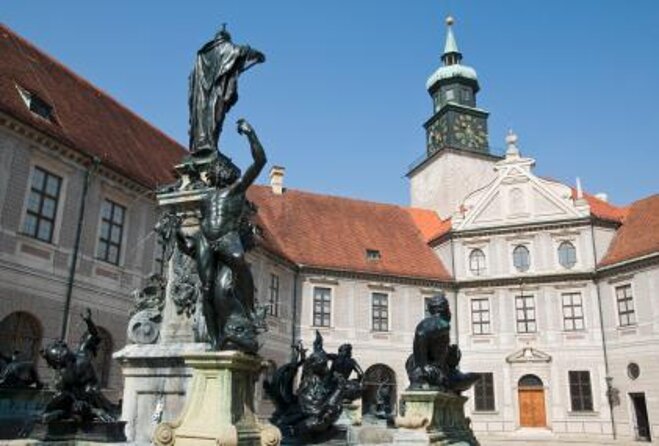
The route then continues to the Munich Residenz, the better-known royal residence. Expect a look at the building and an explanation of its role, not a full museum visit. Entry to paid attractions is not listed as part of the tour, so you should plan a separate visit if you want to see the interior collections.
This is one of the clearest examples of the tour’s value. A guide can show you how political power shaped the city’s streets and buildings, then leave you with enough context to explore the Residenz on your own. The tour does not try to replace a detailed palace visit, and that is sensible within a two-hour schedule.
A look inside Hofbräuhaus
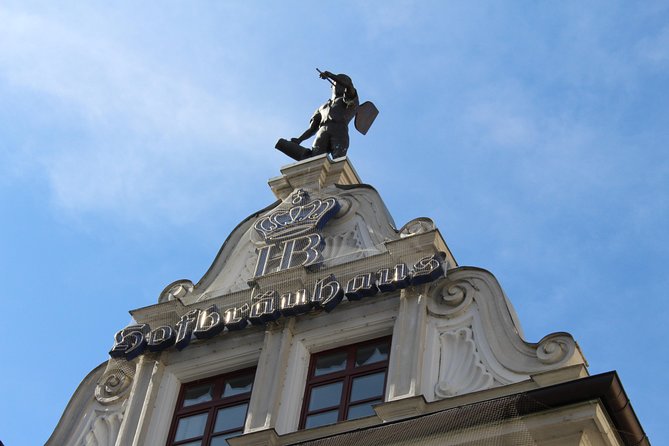
The tour highlights a peek inside the famous Hofbräuhaus beer hall. That wording matters. You should expect to see the celebrated interior and hear about Munich’s beer traditions, but you should not assume that a meal, drink, reserved table, or extended stop is included.
Food and drinks are specifically excluded. If Hofbräuhaus interests you, use the tour’s introduction to decide if you want to return later for a full visit. The beer hall can be busy, and a short orientation is often more useful than trying to fit a complete meal into an already active walking route.
Beer culture is one of the subjects guides bring into the larger story of Munich. You may hear about local customs, Oktoberfest, and the place beer halls hold in city life. This adds a lighter thread to the churches, royal buildings, and wartime history that can otherwise dominate an Old Town tour.
Finishing near Odeonsplatz
The route heads north toward Odeonsplatz, a grand square at the northern end of the central district. The schedule gives this final stop about thirty minutes, making it one of the more substantial closing sections.
Odeonsplatz is a useful ending because it connects the Old Town with another major part of central Munich. It also leaves you in a good position to continue exploring on foot or use public transportation.
There is one detail worth checking before you book: the route description names Odeonsplatz as the ending point, while the meeting-point information lists Marienplatz as the end. Both are central, but they are not the same square. Confirm the final meeting location with Radius Tours if you need to meet someone, catch transport, or plan a timed reservation immediately afterward.
Guide quality and group size
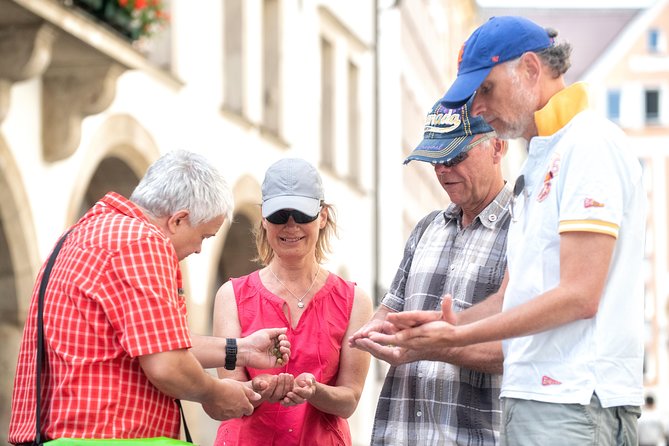
The guide is the main reason to choose this tour over a self-guided walk. The strongest feedback focuses on clear explanations, humor, energy, and the ability to make history feel connected to the places around you.
Names repeatedly praised include Patrick, Anna, Dan, Aileen, Maria, Timmy, Dani, Stephanie, Mark, Emmet, Bernd, and Iain. That does not guarantee which guide you will receive, but it shows the company uses several guides who bring their own style to the route. Some are especially good at humor, while others focus on careful historical explanation and practical directions.
The group can include up to 25 people. That is small enough to feel more personal than a large coach excursion, but it is not an intimate private tour. In crowded squares, you may need to watch for the guide and stay within hearing range.
Families should think about their children’s interests. The walk includes famous buildings and lively public spaces, but it also contains sustained history talk. One family found the children bored halfway through, so I would choose this for older children who enjoy stories, architecture, or city history rather than very young kids seeking constant activity.
Who should book this Munich tour
This tour suits you best if you want a clear first look at Munich, prefer walking to bus sightseeing, and like having a local guide explain what you are seeing. It is especially useful for a first day, when you need orientation and practical suggestions before exploring on your own.
It is also a good fit for travelers who want the main landmarks without committing to a long museum program. The walk covers churches, squares, a market, royal buildings, and beer culture in roughly two hours.
You may want something else if you need extensive interior visits, a food tasting, a private guide, or a slow photography walk. The route is an overview. It points you toward places worth a longer visit rather than giving each one enough time for detailed exploration.
The tour is offered in English, includes a professional local guide, and allows service animals. Most people can participate, but the steady walking and city-center crowds mean good footwear and attention to the guide are sensible.
Is the Munich Old Town Walking Tour worth $27.81?
For $27.81, I think this is a fair buy if you use it as a two-hour orientation. The price is modest compared with booking a private guide, and the route covers a large share of Munich’s most important central sights.
The real value comes from the guide’s interpretation. Names such as Patrick, Anna, Dan, and Aileen receive praise for making the history lively, explaining small details, and giving useful advice for the rest of your stay. The main risk is not the route itself but the usual challenge of a group walk: noise, changing guide styles, and limited time at each stop.
You can cancel for a full refund up to 24 hours before the start time. Poor weather or failure to meet the minimum group size may lead to a new date, another experience, or a full refund.
Should you book it?
Book this tour if you want to see Munich’s central sights quickly and understand how they connect. It is a particularly sensible choice on your first day, before you return to the Frauenkirche, Residenz, Viktualienmarkt, or Hofbräuhaus on your own.
Skip it if your priority is a detailed interior tour or a food-and-beer experience. For most first-time visitors who value local stories, practical tips, and a well-paced walk, the $27.81 price makes this a solid introduction to Munich.
FAQ
How long is the Munich Old Town Walking Tour?
The tour lasts approximately two hours.
What language is the tour offered in?
The tour is offered in English.
How much does the tour cost?
The listed price is $27.81 per person.
Where does the tour start?
The tour starts at the Radius Tours office at Dachauer Str. 4, 80335 München, Germany.
Which Munich sights are included?
The route includes Karlsplatz, Frauenkirche, Marienplatz, the Rathaus-Glockenspiel, Viktualienmarkt, St. Peter’s Church, Alter Hof, the Munich Residenz, and Odeonsplatz. It also includes a peek inside Hofbräuhaus.
Are food and drinks included?
No. Food and drinks are not included in the tour price.
Is hotel pickup and drop-off provided?
No. Hotel pickup and drop-off are not included.
How large is the tour group?
The tour has a maximum of 25 participants.
Can I cancel for a refund?
You can cancel up to 24 hours before the experience start time for a full refund. Cancellations or changes made less than 24 hours before the start time are not accepted for a refund.
Just added around Germany
- Hamburg: Guided Port Walk for Families★ 4.6 · 191 reviews
- East Berlin and the Wall: Walking Tour★ 4.9 · 407 reviews
- Dresden: Shared Small Group Walking Tour in English★ 4.8 · 172 reviews
- Dresden: Taste of Dresden Food Walk★ 4.6 · 397 reviews
- Dresden: Private Guided Walking Tour★ 4.5 · 81 reviews
- Dresden: Guided City Walk and Panometer Entrance Ticket★ 4.5 · 176 reviews
- Dresden Old Town – Guided Walking Tour in English★ 4.8 · 135 reviews
- Dresden: Neustadt District Street Art Guided Walking Tour★ 4.3 · 333 reviews
Old Town Walking Tours, compared.
Underground Vaults Walking Tour in Edinburgh Old Town
Read our review →
3-Hour Walking Tour of Old Town & Prague Castle
Read our review →

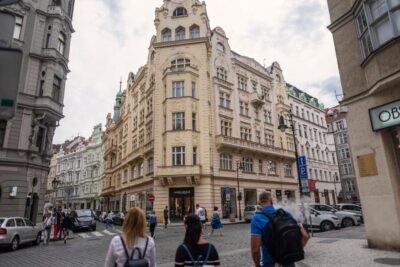
Old Town and Jewish Quarter Guided Walking Tour
Read our review →
Marrakech: Ben Youssef, Secret Garden, & Souks Walking Tour
Read our review →Browse the lists this tour appears in