
REVIEW · MUNICH
Munich: Walking Tour Old Town and Viktualienmarkt
Munich’s best introduction may be a simple walk from the Glockenspiel to Odeonsplatz, with a food market, royal buildings, beer culture, and grand churches along the way. In 90 minutes, you move through the city’s main historic sights without spending the whole day inside museums.
I like the way this route joins Viktualienmarkt with the Old Town’s major landmarks. You also get a guide who can adjust the talk to your interests. Guides such as Gitti, Karen, Claudia, and Gerhard have been praised for clear stories, local tips, and a willingness to answer questions.
The main drawback is the pace. Ten minutes at each listed stop is enough for an introduction, not a full visit. The meeting point around the Mariensäule can also be hard to spot, and the tour is described as wheelchair accessible while also being listed as unsuitable for people with mobility impairments, so ask for clarification before booking.
Key points to know before you book
- Viktualienmarkt adds local flavor: You can browse Munich’s traditional food market and see the cheeses, bread, sausages, and other delicacies that give the city center a lived-in feel.
- The route covers major sights efficiently: Marienplatz, St. Peter’s Church, Alter Hof, Hofbräuhaus, Maximilianstraße, the Residenz, and Odeonsplatz all fit into one compact walk.
- Guides adapt the experience: Gitti, Karen, Claudia, Gerhard, and others have tailored explanations to family interests, architecture, local customs, beer culture, and Munich before the 1850s.
- The price favors larger groups: At $282 for a group of up to 30, the cost can make sense for a family or organized group, but it is expensive for one or two people.
- This is an outdoor introduction: You do not get entrance fees, food, drinks, or transportation to the starting point, and the walk takes place rain or shine.
- Private and shared formats are available: A private walk gives you more room to shape the conversation, while a shared group tour can keep the cost down.
A smart first look at Munich’s historic center
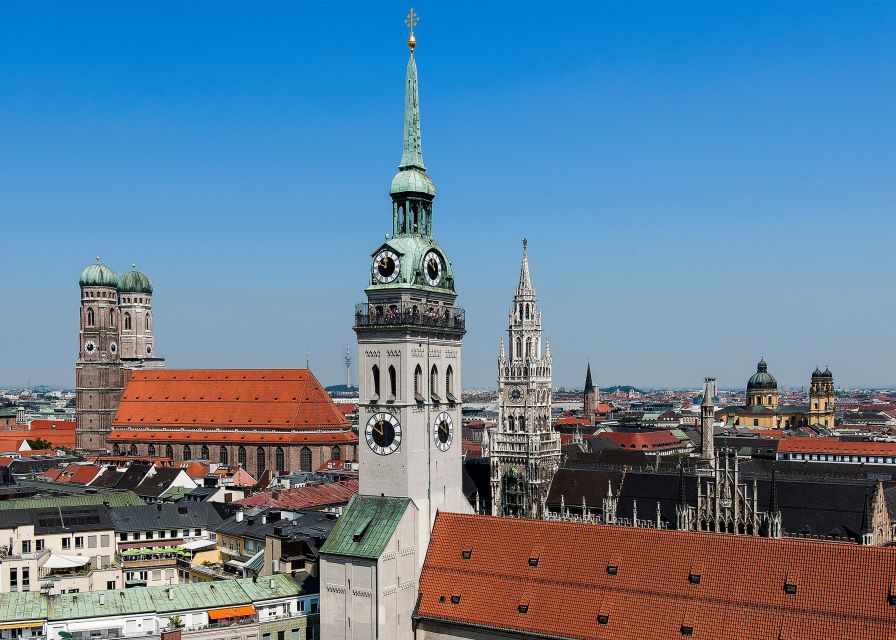
This walking tour follows a sensible line through central Munich. It begins at Marienplatz, moves south and east through the market district, then turns toward the old ducal quarter, Hofbräuhaus, the royal avenues, and Odeonsplatz.
That route matters because Munich’s center can feel like a collection of separate sights if you visit without context. A guide connects the buildings to the city’s ruling Wittelsbach family, Catholic traditions, food culture, beer halls, and modern shopping streets.
You should think of this as an orientation walk rather than a museum tour. The listed stops receive about ten minutes each, and there is no admission to the churches, Residenz, or other buildings. You will see the exteriors and hear the story, then return later if you want a longer visit.
The activity has a strong record, with a 4.7 rating from 839 reviews. The most consistent praise is for guides who tell stories rather than recite dates. That makes a real difference on a short walk. A good guide can help you understand why a square matters before you hurry on to the next one.
More Old Town Walking Tours in Germany
- Nuremberg: Old Town Guided Walking Tour
★ 4.6 · 2,416 reviews - Munich: Old Town & Viktualienmarkt City Walk in German
★ 4.7 · 2,304 reviews - Heidelberg: Walking Tour of the Old Town
★ 4.6 · 1,742 reviews
Marienplatz and the New Town Hall
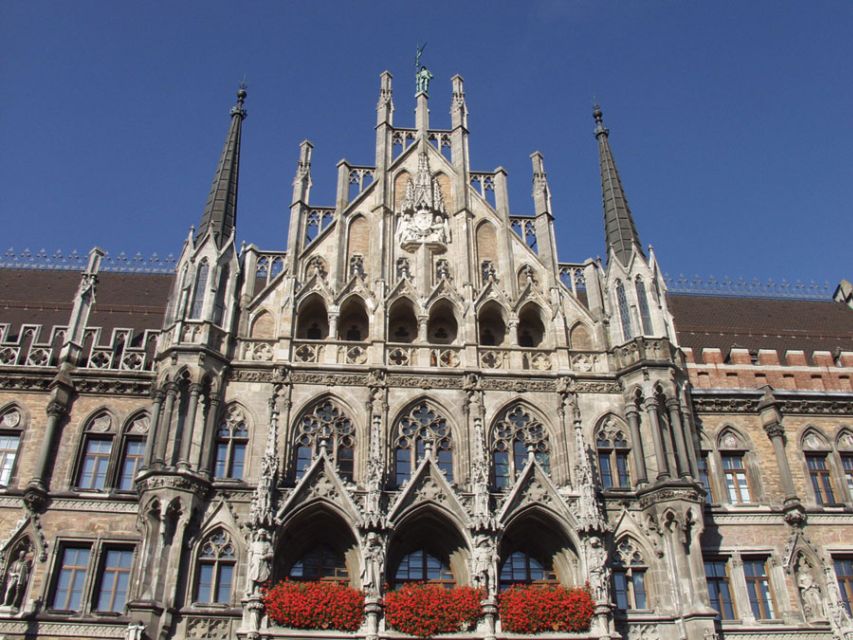
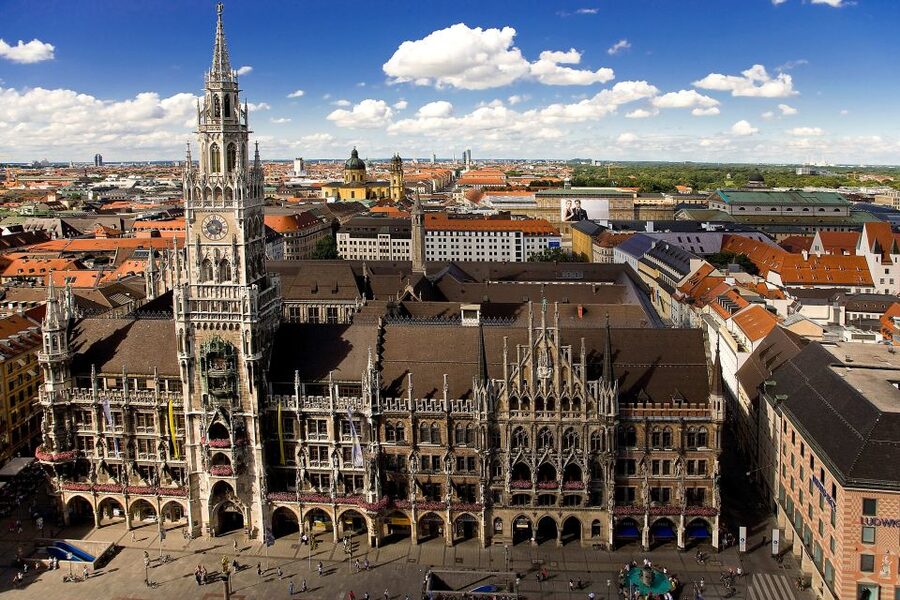
The tour begins at the Mariensäule on Marienplatz, Munich’s central square. This is the practical place to start because the New Town Hall, or Neues Rathaus, gives you an immediate sense of the city’s scale and style.
The building’s Neo-Gothic facade and famous Glockenspiel are the first major visual markers. You can expect about ten minutes here, usually enough for an explanation of the square, the town hall, and the clock display rather than a full interior visit.
If you are meeting here, pay close attention to the exact instructions. Marienplatz is open and busy, and the area around the statue gives you several possible places to wait. One visitor had trouble finding the guide because the meeting space around the Mariensäule is broad. Arriving early is sensible, but look for the guide’s identifying details rather than assuming a group will be obvious.
The square is also a useful place to begin with your own questions. If you want architecture, medieval Munich, royal politics, or daily city life, tell your guide at the start. Several guides have adjusted the walk based on those preferences.
St. Peter’s Church and Munich’s oldest parish
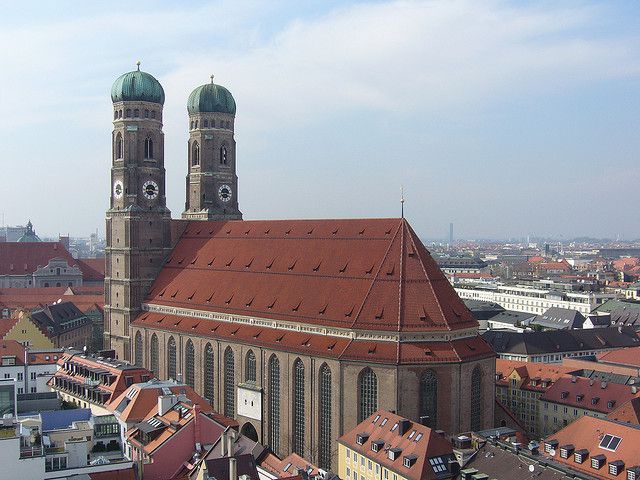
From Marienplatz, you continue to St. Peter’s Church, known locally as Alter Peter. The tour presents it as Munich’s oldest parish church, giving you a direct link to the city’s religious beginnings.
The stop is short, so you should not expect a full church visit or time for every side chapel. Instead, the guide can explain the building’s place in Munich’s development and point out features that are easy to miss when you simply walk past.
This is one of the places where a guide earns the fee. Churches can look impressive without making much sense. A clear explanation helps you place St. Peter’s within the wider story of Munich, especially when the route soon shifts from religion to food and public life.
If you have a strong interest in church art or architecture, ask how much time can be spent here. The walk includes several major sights, and the guide has to keep moving to reach Odeonsplatz in the allotted 90 minutes.
Viktualienmarkt, where the walk becomes more local
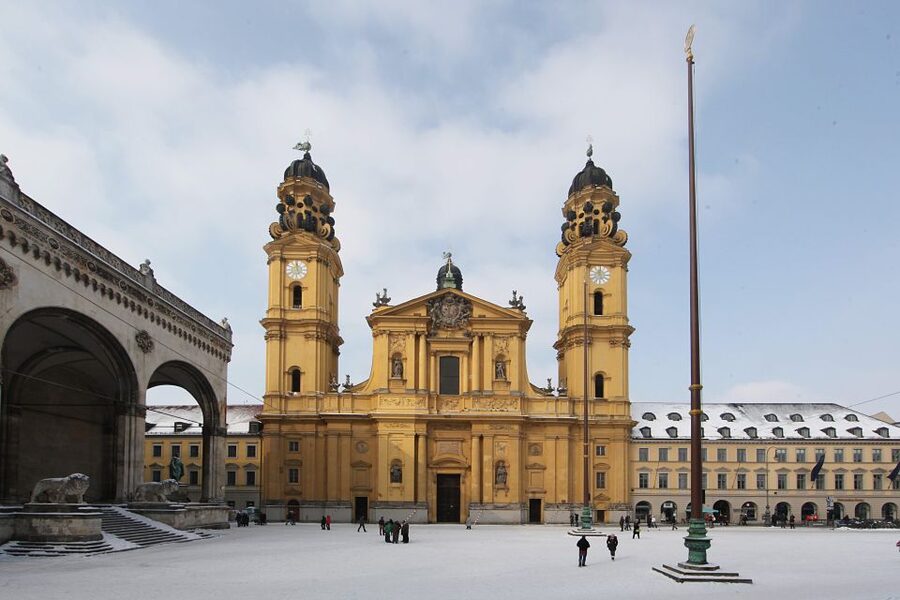
Viktualienmarkt is the most sensory part of the route. Munich’s largest traditional food market spreads through the Old Town with stalls selling fresh bread, cheese, sausages, and other regional products.
You are not promised a tasting, meal, or drink. Food and beverages are not included, and the schedule allows about ten minutes for sightseeing. Still, the market gives you something the grand squares cannot: a look at what people buy and eat in the city center.
I especially like this stop because it breaks up the architecture. After the formal town hall and old church, you get colors, smells, displays, and the chance to notice Munich as a working city. If you want to return later for a snack, ask your guide which parts of the market deserve more time.
Do not expect a guided food tour. The focus remains on the market’s role and its place in the city, not on a long series of tastings. That is a limitation, but it also keeps the tour moving toward the historic district.
Same streets, a different route:
- Discover Berlin Half-Day Walking Tour
★ 5.0 · 9,624 reviews - Berlin City walk Government District and Places of Democracy
★ 4.7 · 8,467 reviews - Berlin: Third Reich & Cold War Guided Walking Tour
★ 4.9 · 8,378 reviews - Munich: Third Reich & WWII Walking Tour
★ 4.6 · 6,181 reviews
Alter Hof and the early Wittelsbach court
The route then follows Burgstraße, described as one of Munich’s oldest streets, to Alter Hof. This former seat of the Wittelsbach dukes is the point where the city’s political story comes forward.
Alter Hof helps explain that Munich was not shaped only by merchants and churches. It was also a residence of Bavarian rulers, and the nearby streets preserve traces of that courtly past. A guide can make the transition from a food market to a ducal seat feel logical rather than random.
You will probably spend around ten minutes here. That is enough to understand the site’s importance and see how the old court fits into the surrounding streets. It is not enough for a detailed examination of every architectural phase, so visitors with a strong royal-history interest may want to return independently.
The guides have been particularly effective when explaining Munich before the 1850s, the growth of the city, and the people who shaped it. If that period interests you, say so early. The short format works best when you help set the direction.
Hofbräuhaus and the city’s beer culture
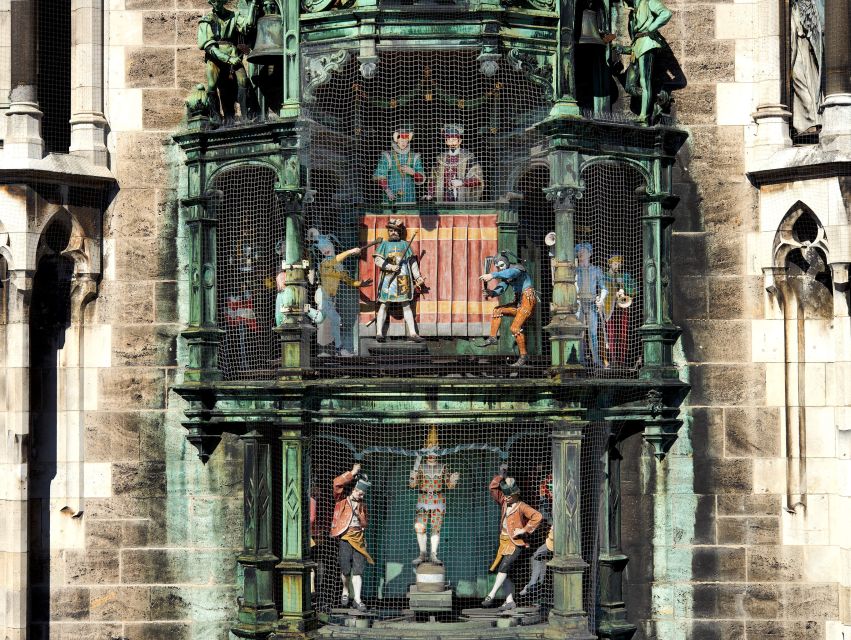
The walk continues through the winding Platzlgassen alleys to Hofbräuhaus. This beer hall is one of Munich’s most recognizable names, associated with locals, visitors, Bavarian traditions, and even royal history.
The tour does not include a meal or a beer, so you will see the site as part of the walk rather than as an organized dining stop. That is useful if you already have dinner plans or want to choose your own table later.
A guide can add context that a quick photograph cannot. One praised guide focused on the development of Munich’s beer culture, while another gave a group a taste of historic Munich bars. This subject is also a good test of the tour’s balance. Munich’s beer halls are important, but they are not the whole city.
If you want to eat here after the walk, save the venue for later and keep the tour focused. The schedule is tight, and stopping for a full meal would change the character of the experience.
Maximilianstraße, from medieval lanes to luxury shops
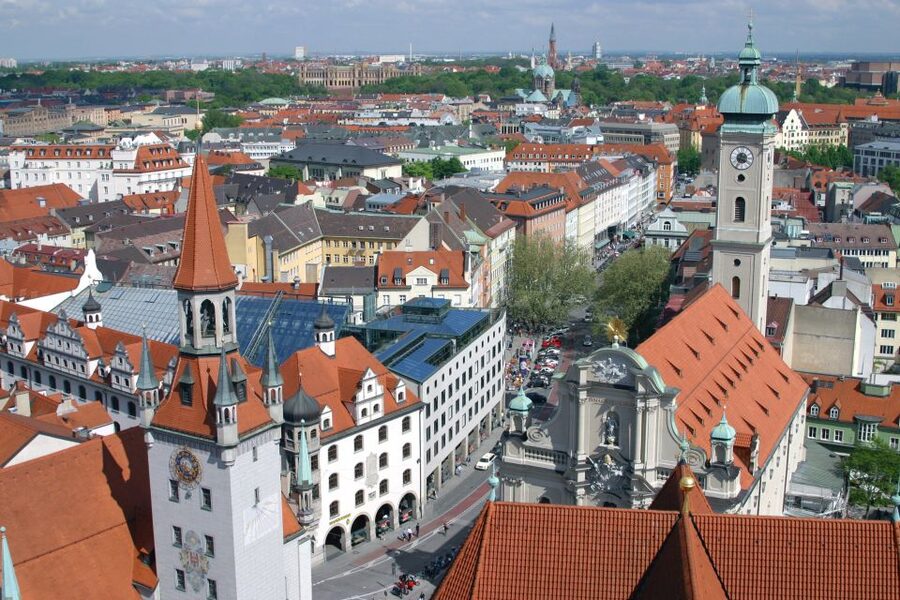
After Hofbräuhaus, the route reaches Maximilianstraße, Germany’s most exclusive shopping street. The mood changes quickly. You move from old lanes and beer culture to luxury boutiques, jewelry shops, and designer showrooms.
This contrast is one of the walk’s strengths. Munich is not presented as one frozen medieval scene. You see an old royal city that also has a polished, expensive modern center.
You do not need to shop to appreciate the street. The architecture, storefronts, and setting make it a useful stop for understanding Munich’s wealth and status. The tour gives you a brief introduction, not a shopping trip, so expect to keep walking rather than browse every store.
This section may be less interesting if your priority is food, churches, or ordinary neighborhood life. It earns its place because it shows another side of the city and leads naturally toward the opera and Residenz.
The Residenz and Bavarian royal power
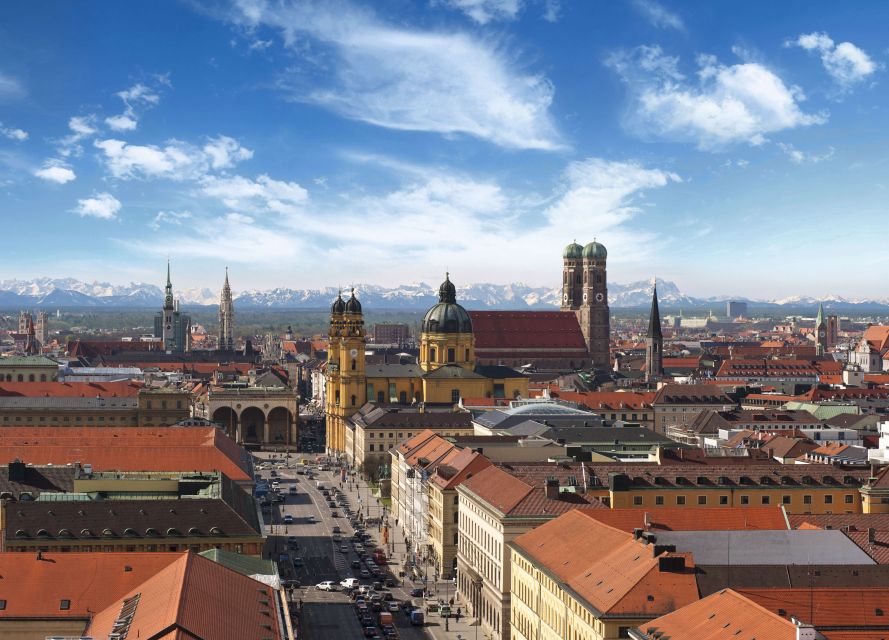
The route passes the Bavarian State Opera and the Residenz, the former seat of Bavarian royalty. The opera house brings in a neoclassical note, while the Residenz points back to the ruling court.
You should expect to view these places from outside during the walking tour. Entrance fees are not included, and the 90-minute schedule does not allow a full palace visit. If you want to see the Residenz rooms, treasury, or collections, plan a separate visit.
This is another section where interpretation matters more than time inside. A guide can explain how the opera, royal residence, streets, and public squares relate to one another. The walk becomes a lesson in how power shaped the city center.
Several guides have added architecture when their groups wanted it. Claudia, for example, continued beyond the planned end for one group and spent extra time on architectural details. That kind of flexibility cannot be guaranteed, but it shows why a private booking may be worthwhile for people with a clear interest.
Odeonsplatz and the Italian touch
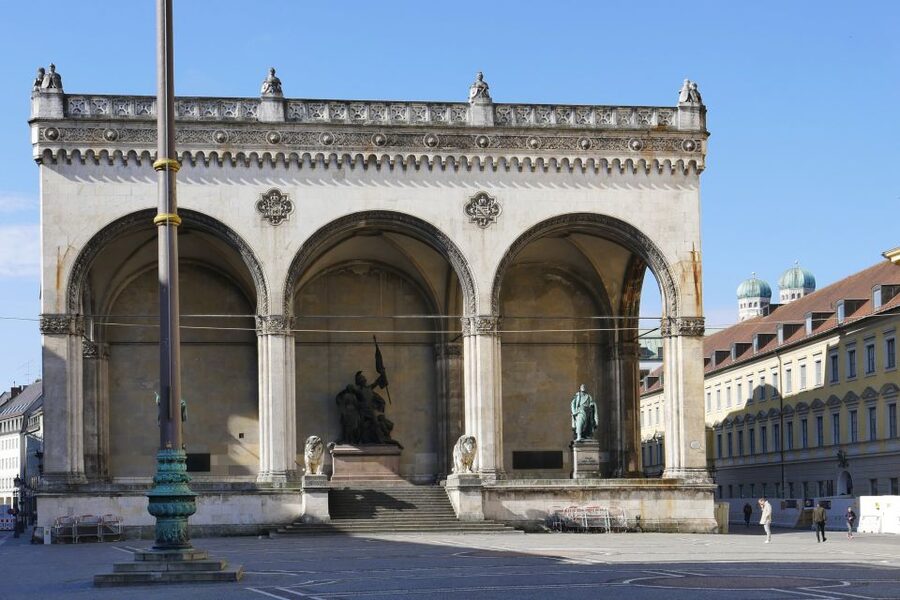
The walk ends at Odeonsplatz, a grand square marked by the Feldherrnhalle and the Theatinerkirche. The church’s Italian Baroque design gives Munich its familiar northern-Italy comparison.
This is a fitting finish because the square gathers several of the tour’s themes: royal power, public ceremony, architecture, religion, and Munich’s links to southern European style. You can pause here to take in the buildings before deciding what to visit next.
The ending also gives you a useful launching point for the rest of your day. You can ask your guide for suggestions about food, sights, and practical stops. Guides have offered restaurant recommendations, activity ideas, and even restroom pointers, which can be valuable when you have just arrived.
If your tour runs exactly 90 minutes, do not expect a long final lecture. The route contains many stops, so the guide has to watch the clock. Use the last few minutes for questions you could not fit in earlier.
Guide quality and the private option
The strongest feature is the human guide. Gitti adjusted a tour around architecture, beer culture, and early Munich history. Karen worked well with families, including a ten-year-old and a child practicing German. Claudia has been praised for storytelling and for shaping a walk around a group’s interest in history. Gerhard has also been noted for warmth, city tips, and strong local knowledge.
These examples point to a useful booking strategy: tell the guide what you want. Do you care about architecture, royal history, beer, local customs, or family-friendly stories? The more specific you are, the easier it is to make a short walk feel personal.
The private option is available, while shared group tours are also offered. A large group can include up to 30 people. One guide handled a group of 20 well, but a group that size naturally makes conversation and seeing small details harder.
At $282 per group, the price is easiest to justify when several people share it. For 10 people, it works out to $28.20 each. For two people, it becomes $141 per person, before food, transport, or admissions. A private group also gives you more control, but you should compare the cost with a smaller shared tour if you are traveling alone or as a couple.
Timing, weather, and practical comfort
The walk lasts 1.5 hours and runs rain or shine. Wear comfortable shoes. Munich’s historic center is easy to explore on foot in this format, but cobbled areas, crowds, and standing at each stop can make poor footwear tiresome.
Transportation to Marienplatz is not included, so you need to arrange your own way to the starting point. The meeting point may change with the option you choose. Confirm the exact location before leaving, especially if you have a train connection or a tight schedule.
The tour is conducted in English or German. Entrance fees are not included, and neither are meals or drinks. You can treat the walk as a framework for the day, then return to the market, church, Hofbräuhaus, or Residenz at your own pace.
The information lists the tour as wheelchair accessible but also says it is not suitable for people with mobility impairments. That is a clear point to resolve before booking. Ask the operator about walking distance, surfaces, waiting time, and access at each stop.
Free cancellation is available up to 24 hours before the start, and you can reserve now and pay later. Those policies help if your Munich plans are still shifting, but they do not change the need to confirm the meeting point and accessibility details.
Who should book this Munich walk?
I would choose this tour for a first day in Munich, especially if you want the major Old Town sights explained without committing to a full-day program. It suits families, first-time visitors, history fans, and groups that want a private guide who can answer questions.
It is also useful for people who like to build their own day. After the walk, you can decide if you want lunch at Viktualienmarkt, a beer hall visit, a palace tour, or more time around Odeonsplatz.
I would hesitate if you want extensive interior visits, a food tasting, or a slow architecture tour. The route is broad and efficient, which means each stop gets only a short introduction.
Should you book it?
Book it if you want a clear, story-filled introduction to Munich’s center and can share the $282 group price with several people. The strongest value comes from the guide’s ability to shape the talk around your interests, especially on a private tour.
Skip it if you prefer to explore at your own speed, need guaranteed mobility accommodations, or mainly want food and drink. For most first-time visitors, though, the combination of Viktualienmarkt, royal Munich, beer culture, and Odeonsplatz makes this a useful opening walk.
FAQ
How long does the Munich Old Town and Viktualienmarkt tour last?
The tour lasts 1.5 hours.
What language is the tour offered in?
A live guide conducts the tour in English or German.
Is the tour private or shared?
You can choose a private group option, and shared group tours are also available. Groups can include up to 30 people.
What sights are included?
The route includes Marienplatz and the New Town Hall, St. Peter’s Church, Viktualienmarkt, Alter Hof, Hofbräuhaus, Maximilianstraße, the Residenz, the Bavarian State Opera area, and Odeonsplatz.
Are food, drinks, and entrance fees included?
No. Meals, drinks, entrance fees, and transportation to the starting point are not included.
What should I bring?
Bring comfortable shoes. The tour takes place outdoors and runs rain or shine.
Can people with mobility impairments join?
The activity information says the tour is wheelchair accessible but also lists it as unsuitable for people with mobility impairments. Contact the provider before booking to confirm whether the route fits your specific needs.
Just added around Germany
- Hamburg: Guided Port Walk for Families★ 4.6 · 191 reviews
- East Berlin and the Wall: Walking Tour★ 4.9 · 407 reviews
- Dresden: Shared Small Group Walking Tour in English★ 4.8 · 172 reviews
- Dresden: Taste of Dresden Food Walk★ 4.6 · 397 reviews
- Dresden: Private Guided Walking Tour★ 4.5 · 81 reviews
- Dresden: Guided City Walk and Panometer Entrance Ticket★ 4.5 · 176 reviews
- Dresden Old Town – Guided Walking Tour in English★ 4.8 · 135 reviews
- Dresden: Neustadt District Street Art Guided Walking Tour★ 4.3 · 333 reviews
Old Town Walking Tours, compared.
Underground Vaults Walking Tour in Edinburgh Old Town
Read our review →
3-Hour Walking Tour of Old Town & Prague Castle
Read our review →

Old Town and Jewish Quarter Guided Walking Tour
Read our review →
Marrakech: Ben Youssef, Secret Garden, & Souks Walking Tour
Read our review →Browse the lists this tour appears in