
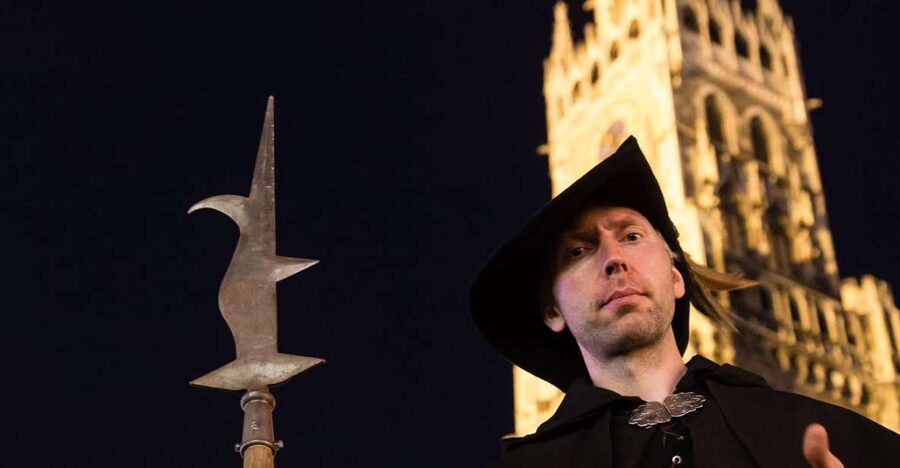
REVIEW · MUNICH
Munich: Night Watchman Walking Tour
Munich’s old town takes on a different character after dark, when the costumed night watchman leads you through lanes once patrolled for fire, theft, and disorder. I like the mix of theatrical storytelling and real city landmarks, especially the odd towers of St. Peter’s and the old churchyard tales. I also like that the route reaches places you might pass quickly in daylight, from Gruftgasse to the Alter Hof.
The main consideration is the price: $530 per group of up to 30 makes good sense for a large private party, but it is poor value for just two or three people. The 1.5-hour route is packed with material, so it suits you best if you enjoy stories, dark humor, and a guide who plays a character rather than a quiet architectural walk.
Key things to know before you book
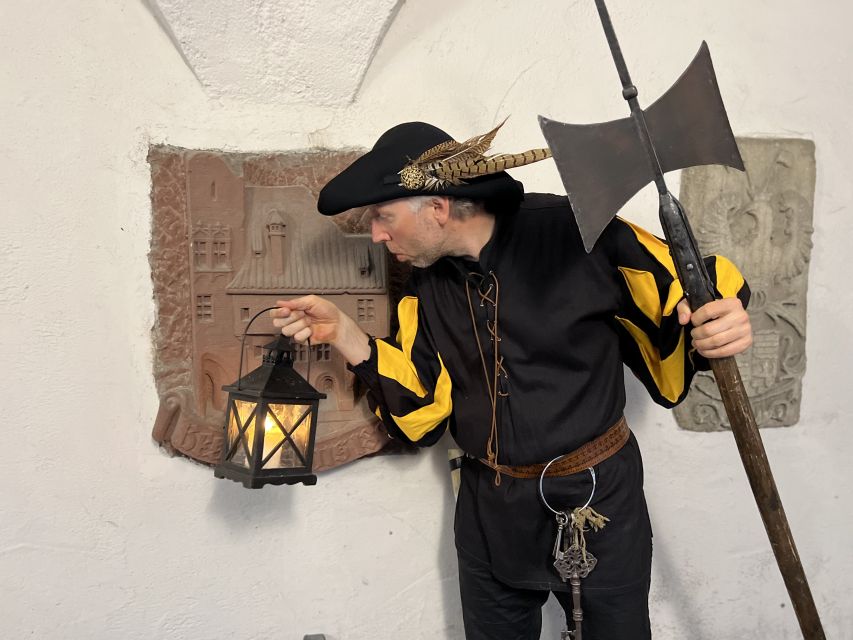
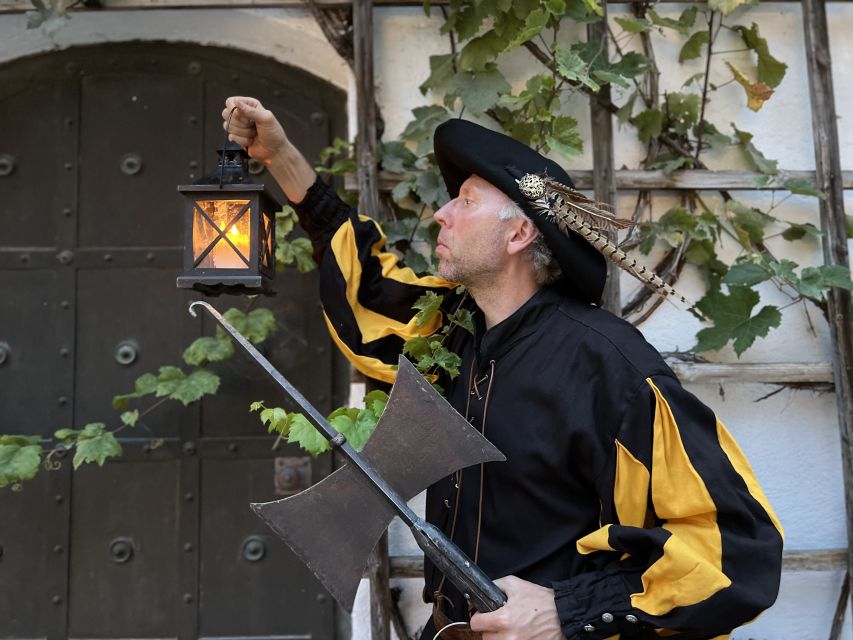
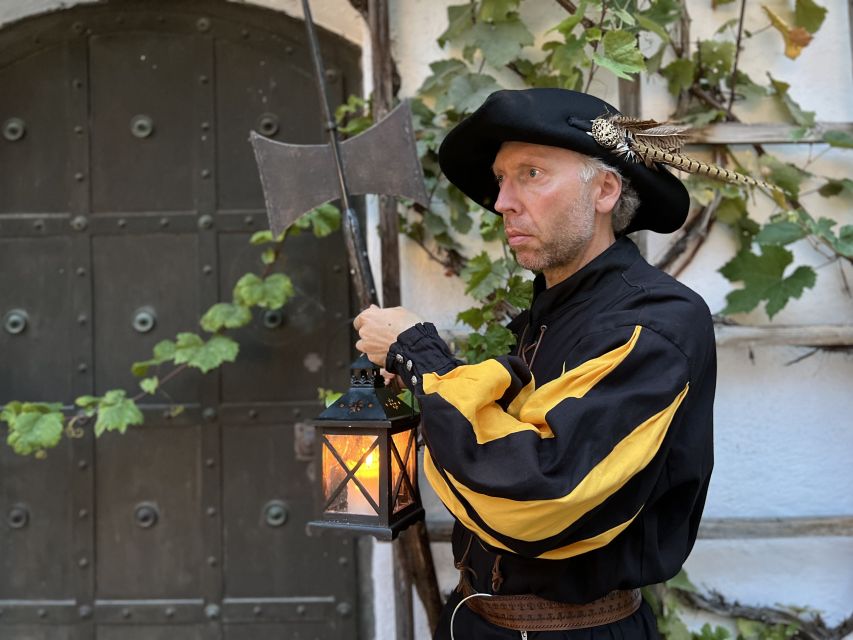
- A costumed guide leads the entire walk: The night watchman carries the mood of the tour, with a lantern, medieval clothing, sharp opinions, and plenty of local lore.
- The route covers major old-town landmarks: You visit St. Peter’s Church, the Altes Rathaus, Alter Hof, Frauenkirche, Promenadeplatz, and the Theatine Church.
- Expect unusual stories, not just dates: Tales cover torture, funeral customs, saints, royal mistresses, a golden ring, and an unfortunate fall from the Frauenkirche.
- The humor is part of the experience: Guides such as Elsbeth have been praised for an authentic, lively, and informative approach.
- It is a private-group product: The $530 rate covers up to 30 people, so the value improves sharply when shared by a family, school group, or larger party.
- English and German are available: The tour is wheelchair accessible, though the meeting point depends on the option selected.
Why Munich feels different after dark
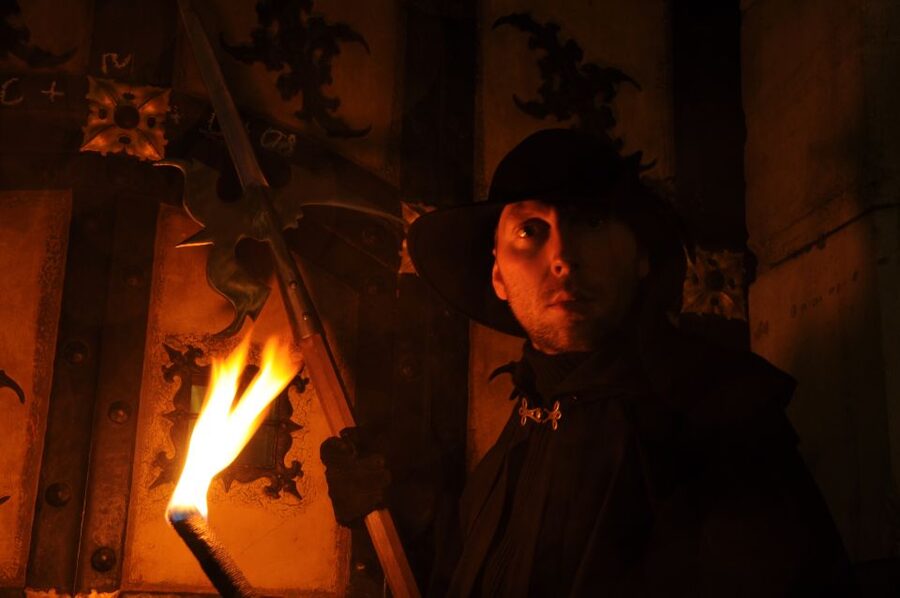
A night watchman tour works because Munich’s old center is compact and atmospheric. In daylight, you may see the same buildings as part of a busy sightseeing circuit. At night, the focus shifts to narrow passages, church towers, old walls, and the darker corners of civic life.
The guide is not simply giving a standard historical lecture. He or she plays the part of a medieval city watchman, complete with old-fashioned attitudes and a firm view of proper behavior. Law-abiding citizens, in this character’s opinion, should be in bed after 9 p.m., not enjoying Munich’s nightlife.
That comic tension gives the walk its shape. The watchman can scold the group for not knowing the city’s patron saints, then answer a practical question about Munich’s many beer taps with a joke about beer. You get facts, but they arrive through a character with opinions, grudges, and a taste for gloomy stories.
Guides such as Elsbeth have been singled out for combining authenticity, humor, and useful information. That balance matters. A costumed guide who only performs can become tiring, while a guide who only recites facts loses the point of the format.
A few more walking tours around Germany worth a look
- Discover Berlin Half-Day Walking Tour
★ 5.0 · 9,624 reviews - Berlin City walk Government District and Places of Democracy
★ 4.7 · 8,467 reviews - Berlin: Third Reich & Cold War Guided Walking Tour
★ 4.9 · 8,378 reviews
Marktplatz and the watchman’s nightly duties
The tour begins at Marktplatz, where the watchman gathers his flock before setting off through the old town. The meeting point can vary by booking option, so check the exact location and arrive ready to walk rather than assuming every departure begins in the same place.
This opening helps explain the job itself. The watchman’s work was practical: keeping peace, watching dark corners, and knowing the maze of alleys better than most residents. He is also presented as a keeper of rumors, forbidden tales, and stories about secret groups.
You should expect the guide to address you in character from the start. That makes this a better choice for people who enjoy role-play and a less suitable one for anyone wanting a quiet, strictly academic tour.
St. Peter’s Church and the crooked towers
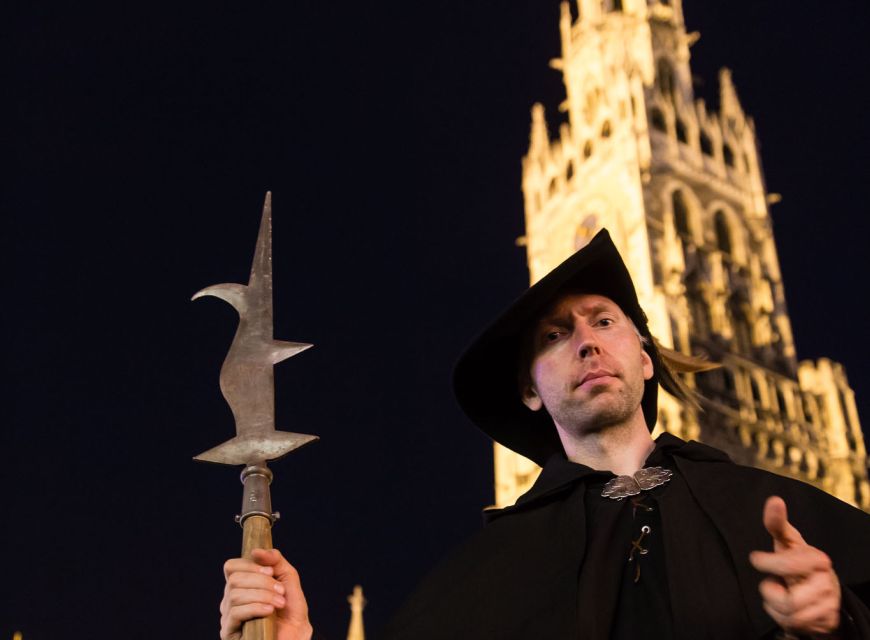
The route continues to St. Peter’s Church, one of the key visual points in Munich’s center. Rather than stopping only to identify the building, the watchman directs your attention upward to the tops of the towers and explains why they stand askew.
That detail captures the tour’s method. You are not simply told that a church is old or important. You are asked to look closely at an unusual feature and then hear the story attached to it.
On the church’s south side, the walk reaches the old churchyard. Here the tone gets darker, with stories about funeral customs, epitaphs, decomposing bodies, and missing church pews.
This section may be the most atmospheric part of the early route, but it is not light entertainment all the way through. If you dislike macabre subjects, you may find the talk about death and burial customs more grim than amusing. If you enjoy old customs and unsettling local tales, it gives the city a human scale that grand buildings alone cannot provide.
The Altes Rathaus and Munich’s old Salzstraße
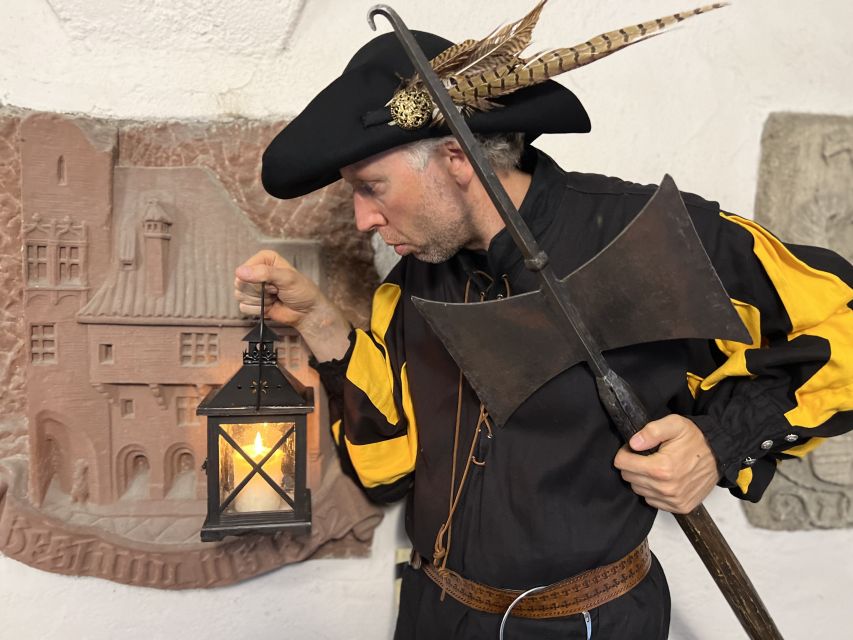
At the tower of the Altes Rathaus, the route moves into civic history. The historic Salzstraße recalls the old salt trade and the importance of commercial roads in the city’s growth.
The old city gate, or Stadttor, is treated almost like a character who can complain about its rebuilding in the 1970s. That personification is a useful example of the guide’s style: buildings speak, saints protect, and the past is allowed to grumble about the present.
The watchman also questions the group’s piety and introduces the patron saints Onuphrius and Henry the Lion. The material is specific enough to make you look again at religious symbols and civic traditions that are easy to miss during an ordinary stroll.
This is one reason the tour works well for repeat visitors to Munich. You do not need to be seeing the old town for the first time. The guide gives familiar places a new set of details and associations.
Same streets, a different route:
- Munich: Third Reich & WWII Walking Tour
★ 4.6 · 6,181 reviews - Berlin: Discover Berlin Walking Tour
★ 4.9 · 5,998 reviews - Berlin’s Best: 2 Hour Walking Tour Third Reich and the Cold War
★ 5.0 · 5,486 reviews - Berlin: Hidden Backyards Guided Walking Tour
★ 4.8 · 5,360 reviews
Torture, prison, and the Alter Hof
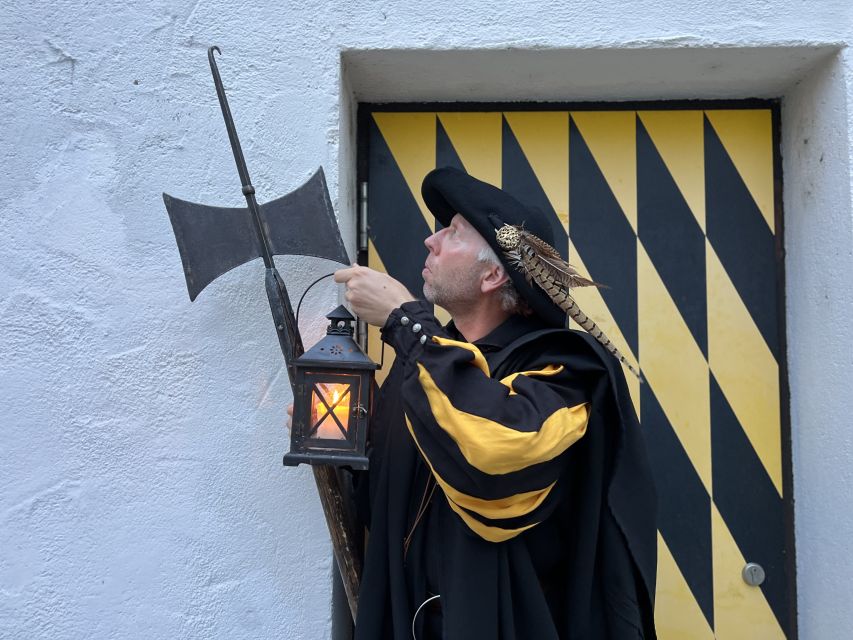
The route then passes the former torture chamber and prison before reaching the Alter Hof. These references make clear that medieval and early modern city life was not only about churches, markets, and royal ceremonies.
At the Alter Hof, the watchman explains the reputation of Louis II, including why this ruler was regarded as harsh. You also hear how the Wittelsbach family came to Munich and where the name Zwingerstock came from.
This section is valuable because it connects one building to power, punishment, and family rule. You are not only looking at an attractive old structure. You are hearing how the ruling house shaped the city and how law was experienced by people with little power.
The material is delivered quickly. In 90 minutes, the guide has to cover many locations, so you should not expect a detailed architectural study of every stop. Think of the walk as a chain of vivid stories, with the old town itself serving as the setting.
Following the 12th-century walls toward Gruftgasse
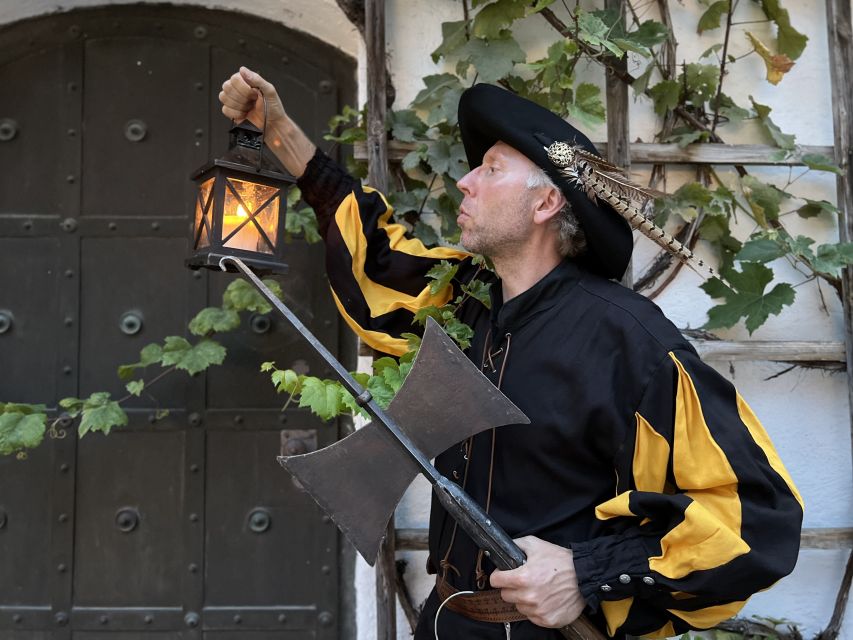
From the Alter Hof, the watchman follows traces of Munich’s 12th-century city walls and heads west from Wasserburg. The route then reaches Gruftgasse, where Alois tells the spooky story of Waller in Walchensee, a young woman, and a golden ring.
This is the kind of tale that gives a small lane a memory. The story is not just a decoration added to a walk. It helps explain why narrow passages and old names can carry more feeling than a broad square with a famous monument.
The guide’s use of local legends also keeps the tour from becoming a parade of rulers and construction dates. You get the city as a place where ordinary people, ominous events, and strange rumors belong beside official history.
The exact atmosphere will depend on the hour and the size of your group, but the evening setting is central to the effect. Dark lanes make the stories feel closer, while the old buildings provide a physical backdrop for the watchman’s account.
Schäfflergasse and the case for medieval wine
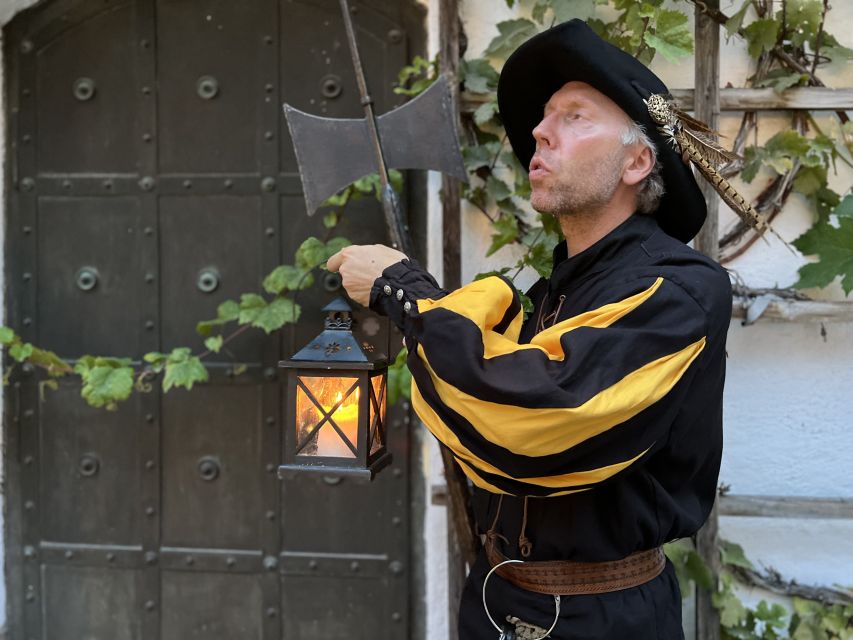
In Schäfflergasse, the guide explains why wine, rather than beer, was the preferred drink in the Middle Ages. That is a useful correction to the modern image of Munich as a city defined only by beer.
The story gives you a quick lesson in changing habits. What people drank depended on the time period and the setting, not simply on the city’s modern reputation.
This stop also shows how the tour handles everyday life. Food and drink are not treated as side notes. They are part of the city’s social history, and a simple question about beverages can open a window onto medieval Munich.
No food or drinks are included in the tour, so plan to eat before or after the walk. The route is about storytelling in the streets, not a tasting experience.
The Frauenkirche and stories from the towers
At the cathedral, the watchman directs your attention to Munich’s best-known pair of towers. The Frauenkirche is easy to recognize, but the tour adds less familiar human stories to the familiar outline.
You hear about the epitaph of a wealthy widow and the unlucky fall of Fanny von Ickstatt from the north tower. These details bring danger, status, and personal tragedy into a building often viewed mainly as a city symbol.
The focus on the towers is also practical. Since the tour takes place at night, you are not being promised interior sightseeing or an extended visit inside each church. You are using the exterior architecture and the surrounding streets as prompts for the guide’s stories.
If you want a tour centered on entering monuments, this may feel limited. If you like looking up, noticing details, and hearing the human stories attached to a façade, the stop is much more rewarding.
Promenadeplatz, two palaces, and a royal scandal
The walk continues to Promenadeplatz and the old Salzstadel. From there, you pass Palais Porcia and Palais Holstein while hearing about sovereign lord Karl Albrecht.
The story concerns the palaces and the mistress for whom they were built. It is an effective change of mood after the churchyard, prison, and tower stories. Royal power here is not presented as distant ceremony. It is tied to private desires, expensive buildings, and the way rulers used the city.
This portion should appeal to you if you prefer personal stories over institutional history. It also gives the route a broader range of subjects. Saints, prisoners, merchants, widows, rulers, and lovers all appear within a short walk.
The guide’s old-fashioned disapproval adds another layer. The watchman may treat such behavior as evidence of moral decline, which is part of the comic performance rather than a neutral modern judgment.
Salvatorkirche and the Theatine Church
Near Salvatorkirche, the tour turns to an enormous story of host desecration. The subject is religiously charged and potentially uncomfortable, so the guide’s treatment matters. The watchman format presents it as a dark episode from the city’s past, not as a casual joke.
The final major stop is the Theatinerkreuzgang, connected with Henriette Adelaide, consort of Elector Ferdinand Maria. After ten years without the desired heir to the throne, the birth of a child led to the construction of the Theatine Church.
This story links personal hope, dynastic anxiety, and architecture. A church that might otherwise look like another grand building becomes part of a family’s long wait and a ruler’s public response.
It is a fitting end to the route because it combines devotion, politics, and private emotion. The night watchman then releases his flock into the evening and continues his rounds, leaving you with the sense that the character’s working night goes on after the tour ends.
What the $530 group price really means
At $530 per group, the cost needs careful thought. For a private group of 20 to 30 people, the price works out to roughly $18 to $27 per person. For a group of 10, it is about $53 each, while two people would effectively pay $265 each.
That makes the tour far better suited to a large family gathering, school group, company outing, or organized party than to a solo visitor or couple. The private format gives your group a shared experience and avoids being placed with strangers, but the fixed price means a small party carries most of the cost.
The 1.5-hour duration also affects the value. You cover many landmarks in a short period, which is efficient for an evening introduction to Munich. You do not get long pauses at each site, detailed museum-style interpretation, or time for food and drinks.
I would view the fee as payment for a live performance and guided walk, not simply for transportation between sights. If the cost is divided among a large group and you want something more memorable than a standard city introduction, it can be reasonable.
Timing, language, and practical comfort
The tour runs in the late evening, with starting times shown according to availability. Check the chosen date carefully, since the mood depends on darkness and the route is designed for nighttime.
English and German are offered. If your group includes both languages, confirm how the selected departure handles language before paying, since the supplied details identify both languages but do not explain whether every departure is bilingual.
The tour is wheelchair accessible, an important point for visitors who need step-free access. The information does not specify the exact street surface, route adjustments, or restroom arrangements, so ask the provider if your group has particular mobility needs.
No transport is included. You reach the meeting point on your own, and the meeting point may vary with the selected option. Since this is a walking route through the old center, build enough time into your evening to find the correct starting place.
Free cancellation is available up to 24 hours before the start for a full refund. You can also reserve now and pay later, which helps if your Munich plans are still shifting.
Who will enjoy this Munich night walk
I would choose this experience for you if you like:
- Story-led sightseeing: The route is built around legends, scandals, saints, punishments, and strange local details.
- A guide in character: The costumed watchman is central, not a minor bit of decoration.
- Old-town atmosphere: You want alleys, churchyards, towers, walls, and palaces after dark.
- A quick overview: You want many central landmarks in 90 minutes rather than a full-day history course.
- Private group time: You have enough people to make the fixed price sensible.
I would choose something else if you want museum interiors, a food tour, a long architectural lecture, or a relaxed walk with plenty of time for photographs. The tone can also be too theatrical for visitors who prefer a guide to speak plainly from beginning to end.
Should you book the night watchman tour?
Book it if your group is large enough to share the $530 cost and you enjoy history served with humor, costume, and a touch of spooky drama. The best parts are the specific stops: St. Peter’s crooked towers, the old churchyard, the prison and torture chamber, Gruftgasse, the Frauenkirche stories, and the royal palaces.
For a small group, compare the per-person price with other Munich walks before committing. For a family or private party, the fixed rate becomes much easier to justify, especially if you want an evening activity that works for different ages and does not require museum attention spans.
The strongest reason to book is the guide’s personality. An effective night watchman, including guides such as Elsbeth, turns a familiar old town into a place of warnings, gossip, saints, and uneasy memories. If that sounds like your kind of Munich, this is a lively and unusual way to spend 90 minutes.
FAQ
How long is the Munich Night Watchman Walking Tour?
The tour lasts 1.5 hours.
How much does the tour cost?
The listed price is $530 per group of up to 30 people.
Is the tour private?
A private group option is available. The fixed group price can offer better value when shared by a large party.
Which languages are available?
The live guide is available in German and English.
Is the tour wheelchair accessible?
Yes, the activity is listed as wheelchair accessible.
What is included in the price?
Guidance from a night watchman dressed in medieval clothing is included. Food, drinks, and transport are not included.
Just added around Germany
- Hamburg: Guided Port Walk for Families★ 4.6 · 191 reviews
- East Berlin and the Wall: Walking Tour★ 4.9 · 407 reviews
- Dresden: Shared Small Group Walking Tour in English★ 4.8 · 172 reviews
- Dresden: Taste of Dresden Food Walk★ 4.6 · 397 reviews
- Dresden: Private Guided Walking Tour★ 4.5 · 81 reviews
- Dresden: Guided City Walk and Panometer Entrance Ticket★ 4.5 · 176 reviews
- Dresden Old Town – Guided Walking Tour in English★ 4.8 · 135 reviews
- Dresden: Neustadt District Street Art Guided Walking Tour★ 4.3 · 333 reviews
Walking Tours, compared.

Magical London: Harry Potter Guided Walking Tour
Read our review →
Reykjavik Food Walk – Local Foodie Adventure in Iceland
Read our review →
History and Hauntings of Salem Guided Walking Tour
Read our review →
New Orleans Premier Ghost, Voodoo and Vampire Walking Tour
Read our review →
Amsterdam Anne Frank: Small-Group Walking Tour & Local Guide
Read our review →

Edinburgh Castle: Guided Walking Tour with Entry Ticket
Read our review →
Anne Frank’s Story – Guided Walking Tour through Amsterdam
Read our review →Browse the lists this tour appears in