
REVIEW · JAPAN
Kamakura Walking Tour – The City of Shogun
Kamakura packs a former shogun capital, a giant bronze Buddha, quiet temple gardens, food stalls, and coastal views into one very walkable morning. This small-group walking tour gives you a useful thread through it all, rather than leaving you to puzzle out the difference between a Shinto shrine and a Buddhist temple on your own.
I like the personal guide attention, with a maximum of 10 people, and I like the way the route connects the big sights with everyday Kamakura. Guides including Miyu, Midori, and Maki are praised for making customs easy to understand and for offering ideas for the rest of your day. The main drawback is that the $35 price does not cover transportation or admission, and the tour requires good weather.
Key points to know
- Four major Kamakura stops: See Tsurugaoka Hachimangu, Komachi Street, the Great Buddha, and Hasedera Temple in one morning.
- Guides who explain customs clearly: Miyu, Midori, and Maki are noted for friendly explanations of Shinto shrines, Buddhist temples, and local traditions.
- Small group of 10 or fewer: The format gives you a better chance to ask questions and receive help with photos.
- A practical half-day route: Begin near Kamakura Station at 10 a.m. and finish at Hase Station, leaving your afternoon open.
- Budget-friendly, with extras to plan for: The tour costs $35, while transportation and about 1,200 yen in entrance fees are separate.
- Food and coastal scenery are part of the setting: You get time around Komachi Street and views connected with Kamakura’s seaside location, though meals are not included.
Why Kamakura works so well as a day trip
Kamakura is not simply a collection of temples. It was the center of Japan’s first military government under Minamoto no Yoritomo, and its religious buildings helped give the town its lasting identity. You can feel that shift as the route moves from a major shrine, through a shopping street, and then toward Buddhist temples and the coast.
This tour is especially useful if you have only one day in Kamakura. Three and a half hours is enough to see the city’s best-known sights without filling your whole schedule. You can continue on your own afterward, perhaps returning to a favorite temple, eating along Komachi Street, or spending more time near Hase.
The small group matters here. Kamakura can be crowded, particularly around its famous sights, so a group capped at 10 is easier to manage than a large procession. You can ask why a ritual is performed, how a shrine differs from a temple, or where to go next without shouting across a crowd.
A few more walking tours around Japan worth a look
- Kyoto Geisha Walking Tour: Gion District & Hidden Gems
★ 4.7 · 3,273 reviews - Tokyo Tsukiji Fish Market Food and Culture Walking Tour
★ 5.0 · 3,184 reviews - Kyoto: Gion Magical Night Walking Tour with Geisha Trivia
★ 4.9 · 2,393 reviews
Meeting at Kamakura Station at 10 a.m.
The tour begins at the Kamakura City Tourist Information Center at 1-chōme-1-1 Komachi. This is a sensible meeting point because it is near the main station and puts you close to the first part of the route.
You will want to arrive with comfortable shoes, water, and room in your schedule for walking. The tour lasts about three hours and 30 minutes, and the stops include shrine grounds, temple paths, and city streets. The route is not described as strenuous, and most people can participate, but Kamakura is best enjoyed at a steady walking pace.
The meeting time also has a practical advantage. You get a full morning of sightseeing without starting at dawn, then finish near Hase Station. That makes it easy to continue with lunch or more sightseeing in the Hase area.
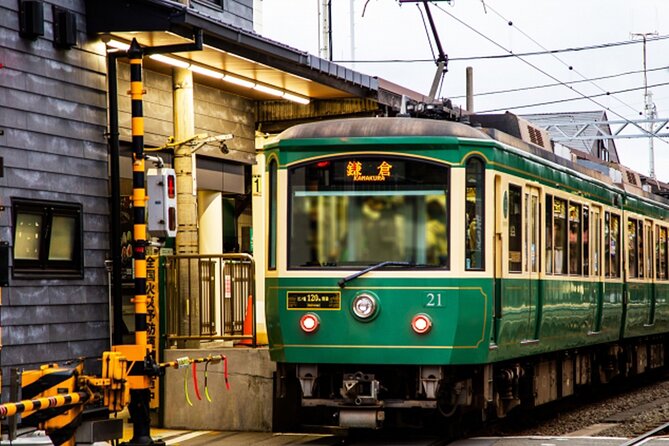
Transportation is not included. The route may involve local transport, and one account of the experience included riding the Enoden train, but you should plan to pay for any train or other transport yourself. Confirm the exact transport plan when booking so you have the right fare ready.
Tsurugaoka Hachimangu, Kamakura’s grand opening scene
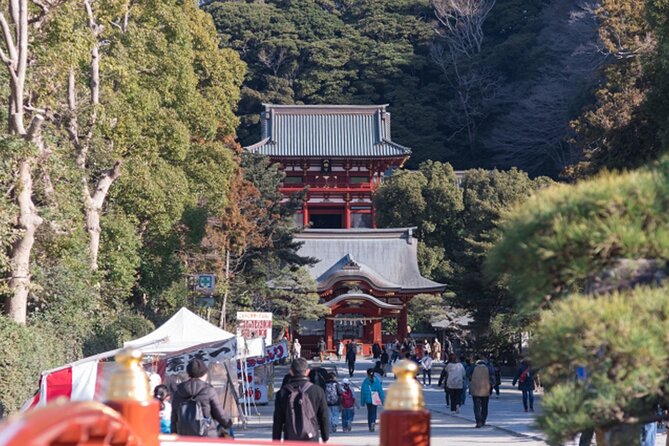
The first major stop is Tsurugaoka Hachimangu Shrine, with about 30 minutes set aside. Founded in the 12th century by Minamoto no Yoritomo, it is dedicated to Hachiman, the Shinto deity linked with warriors and the Minamoto family.
This is a good place to begin because it introduces Kamakura’s political and religious past in one setting. You will see how a shrine can be both a place of worship and a symbol of the city’s rise under the shogunate. Your guide can explain the meaning of the approach, the shrine buildings, and the rituals you may see people performing.
A guide is particularly helpful at a Shinto site. Without context, visitors often notice gates, purification areas, offering boxes, and wooden plaques but are unsure how they fit together. Guides such as Maki have been praised for explaining how people continue these customs today, not just describing them as old traditions.
Thirty minutes is enough for an introduction, but not enough for every corner of the grounds. That is the tradeoff. You will get a clear orientation, then need to decide later if you want to return for a slower visit.
Komachi Street, where the history turns into lunch
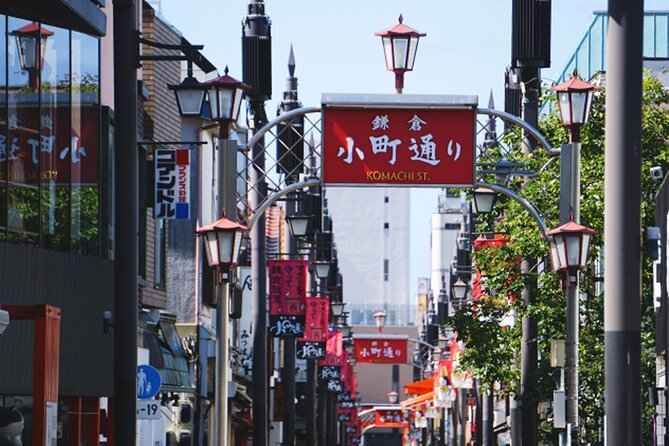
From the shrine, the route includes about 20 minutes on Komachi Street. This pedestrian shopping street is one of Kamakura’s most popular places for snacks, souvenirs, and local food.
I like this stop because it keeps the morning from becoming a string of religious sites. You get a look at present-day Kamakura, with shops and food choices woven into the historic center. The tour description also points to traditional dishes and lesser-known food spots, so ask your guide what is worth trying after the formal tour ends.
The short time here is best treated as an introduction, not a meal break. You may have time to look, sample something quick, or mark a place to revisit. If you want a proper lunch, save it for afterward.
Komachi Street can be busy, and a narrow pedestrian shopping area is not ideal for lingering with a large group. A small group helps, but you should still keep track of the guide and avoid assuming you can browse every shop during the scheduled stop.
Same streets, a different route:
- Tokyo: Imperial Palace and Shogun Historical Walking Tour
★ 5.0 · 2,251 reviews - Kyoto: Gion Geisha District Walking Tour – Stories of Geisha
★ 4.7 · 2,187 reviews - Best of Kyoto: Gion, Geisha, Pagodas & Cobblestones
★ 4.9 · 2,058 reviews - Night Walk in Gion: Kyoto’s Geisha District
★ 4.5 · 2,003 reviews
The Great Buddha, Kamakura’s unforgettable centerpiece
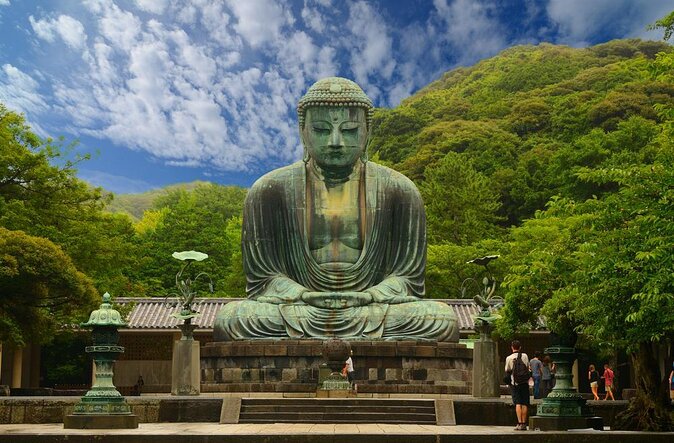
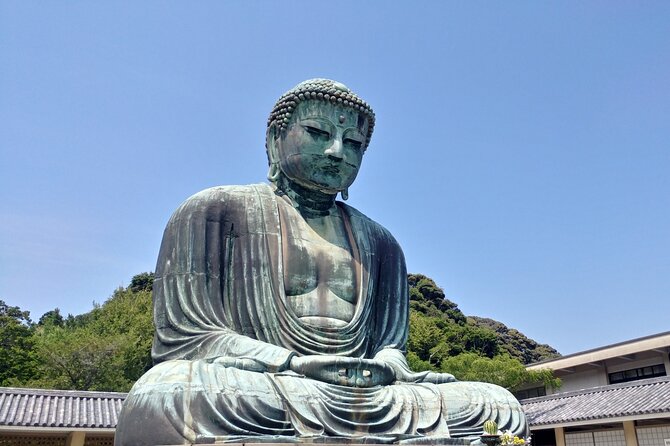
The tour then heads to Kotoku-in, home of the Great Buddha of Kamakura. The bronze statue is about 13.35 meters, or 44 feet, tall. Admission is not included, and the listed total for transportation and entry fees is about 1,200 yen.
This is the stop that gives the tour its strongest visual moment. The statue is huge, calm, and remarkably direct. Your guide can explain its place in Kamakura’s Buddhist tradition and help you notice details that a quick photograph might miss.
About 30 minutes is planned here. That gives you time to see the statue, listen to the explanation, and take photographs. You should not expect a long meditation session or an extended temple visit at this pace.
The separate admission fee is a small but important part of the value calculation. At $35, the tour remains reasonably priced for a guided half-day, but it is not an all-inclusive ticket. Bring yen or otherwise prepare for the entry charge, and remember that local transport is also extra.
The Great Buddha is one of Kamakura’s most famous sights, so this is not an offbeat alternative to the usual route. Its value comes from the explanation and the way the tour places it in a larger story. If you visited it alone, you would still see the statue. With a guide, you have a better chance of understanding why it matters.
Hasedera Temple and the final walk to Hase Station
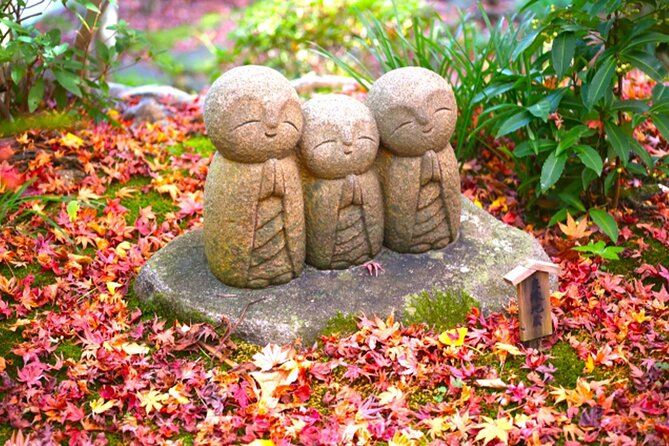
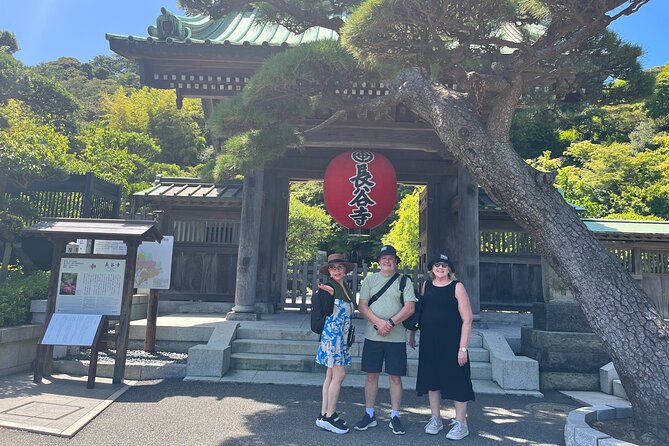
Hasedera Temple receives the longest scheduled stop, about 40 minutes. The temple is known for its peaceful grounds, gardens, and a large wooden statue of Kannon, the Buddhist bodhisattva associated with compassion.
This is a fitting final stop because it changes the pace. After the open space of the Great Buddha and the movement through town, Hasedera gives you gardens, religious art, and a calmer setting. Guides can explain how Buddhist temples differ from the Shinto shrine visited earlier, which is one of the most useful parts of the tour for first-time visitors to Japan.
Forty minutes lets you take in the main features without rushing as much as at the earlier stops. Still, Hasedera is worth more time if you enjoy gardens or want to study religious artwork. You may decide to return later, especially since the tour ends at Hase Station.
The endpoint is Hase Station, at 2 Chome-14 Hase. Ending there is convenient for continuing your day in the Hase area, but it means the tour does not return you to Kamakura Station. Plan your onward route before you leave the guide.
What the guides add to the experience
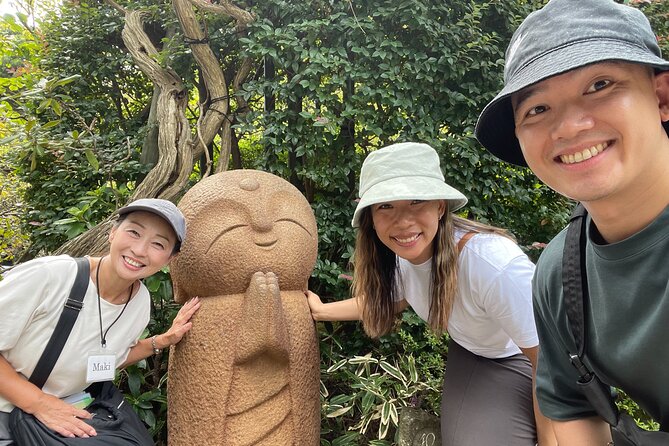
The strongest part of this tour is the human explanation. Miyu is described as engaging and good at answering questions. Midori is praised for showing fun spots along the way, helping with photographs, and making the tour enjoyable for children. Maki is described as energetic, warm, and clear when explaining temples, shrines, and Japanese customs.
Those details matter because Kamakura can be confusing when you first arrive. A shrine and a temple may both have beautiful gates, buildings, and sacred objects, but they belong to different traditions and use different rituals. A good guide gives you a simple framework so you can recognize the difference later in Kyoto, Tokyo, or elsewhere in Japan.
The guides also appear to be useful beyond the scheduled route. You can ask for suggestions for the afternoon, and the tour leaves enough time to follow those ideas. That is more valuable than a guide who simply points at each building and moves on.
The experience seems suitable for families as well as adults. Children may respond well to the Great Buddha and the train portion of the route, while adults can focus on the political and religious background. The group size keeps questions manageable, though the tour still follows a set schedule.
The $35 price and what you receive
At $35 per person, this is a fair price if you want orientation, historical context, and help comparing the main sights. You are paying for the guide rather than for a package of admissions or transport.
The extra 1,200 yen listed for transportation and entry fees is important. The Great Buddha and Hasedera admissions are not included, and local transportation is also separate. You should consider the full cost before booking, especially if you are comparing this with walking around Kamakura independently.
The tour offers the most value to someone who might otherwise miss the meaning behind the buildings. If you are already comfortable researching Japanese religious sites and planning train routes, you may prefer to explore alone. If you want a clear route and the chance to ask questions, the guide fee is easier to justify.
There is also value in time. Seeing these four major stops in one organized morning can prevent wasted walking and help you decide where to spend the rest of the day. You still retain freedom afterward, which is better than being locked into a full-day schedule.
Practical points before you book
Confirmation arrives when you book, and the tour is near public transportation. Service animals are allowed, and most people can participate. The maximum group size is 10.
Wear shoes suited to several hours on foot. You will move through streets, shrine and temple grounds, and areas where you may want to pause for photographs. Since the tour depends on good weather, check the forecast before setting aside the day.
Free cancellation is available up to 24 hours before the start time for a full refund. Cancellations or changes made less than 24 hours before the 10 a.m. start are not accepted for a refund. If poor weather forces the provider to cancel, you can choose another date or receive a full refund.
Who should book this Kamakura walking tour?
I would book this tour if you are visiting Kamakura for the first time and want to see the main sights without spending hours sorting out the route. It is also a good fit if Japanese religious customs are unfamiliar to you, or if you value a guide who can answer questions in real time.
Families may appreciate the shorter format and the chance to see the Great Buddha, temples, shrines, and possibly the Enoden train in one morning. Couples and solo visitors can use the tour as a framework, then continue at their own pace after reaching Hase Station.
I would think twice if you dislike scheduled sightseeing, want long visits at each temple, or prefer to spend most of the day eating and shopping. The itinerary is efficient, but it cannot give every site the time it deserves.
For most first-time visitors, though, the combination is sensible: major history, clear cultural explanations, coastal Kamakura atmosphere, and an open afternoon. Book it if you want Kamakura to make sense as well as look beautiful.
FAQ
How long is the Kamakura walking tour?
The tour lasts approximately three hours and 30 minutes.
Where does the tour begin?
It begins at the Kamakura City Tourist Information Center, 1-chōme-1-1 Komachi, Kamakura, at 10 a.m.
Where does the tour end?
The tour ends at Hase Station, 2 Chome-14 Hase, Kamakura.
Are transportation and admission fees included?
No. Transportation and admission fees are separate. The listed total for these additional costs is about 1,200 yen.
What sights are included?
The route includes Tsurugaoka Hachimangu Shrine, Komachi Street, Kotoku-in and the Great Buddha of Kamakura, and Hasedera Temple.
What happens if the weather is poor?
The experience requires good weather. If the provider cancels because of poor weather, you can receive a full refund or choose another date.
Just added around Japan
- Kamakura Historical Walking Tour with the Great Buddha★ 5.0 · 129 reviews
- Kamakura Private Tour: Temples, Nature, and the Great Buddha★ 5.0 · 121 reviews
- Tokyo Walking Tour with Licensed Guide Shinjuku★ 5.0 · 114 reviews
- Miyajima Half-day Trip Historical Walking Tour★ 5.0 · 284 reviews
- Hiroshima Walking Tour Why A Bomb was dropped to Hiroshima★ 5.0 · 347 reviews
- Tokyo: Asakusa & Sensoji ー Oldest Temple Walking Tour (2hrs)★ 5.0 · 213 reviews
- Asakusa Senso-ji Temple and Old Tokyo Walking Tour★ 5.0 · 560 reviews
- Asakusa Cultural Walk & Matcha Making Tour★ 5.0 · 245 reviews
Walking Tours, compared.

Magical London: Harry Potter Guided Walking Tour
Read our review →
Reykjavik Food Walk – Local Foodie Adventure in Iceland
Read our review →
History and Hauntings of Salem Guided Walking Tour
Read our review →
New Orleans Premier Ghost, Voodoo and Vampire Walking Tour
Read our review →
Amsterdam Anne Frank: Small-Group Walking Tour & Local Guide
Read our review →

Edinburgh Castle: Guided Walking Tour with Entry Ticket
Read our review →
Anne Frank’s Story – Guided Walking Tour through Amsterdam
Read our review →Browse the lists this tour appears in