
REVIEW · JAPAN
Kamakura Private Tour: Temples, Nature, and the Great Buddha
Kamakura’s best surprise is how quickly its city streets give way to quiet mountain paths. This private half-day tour links Zen temples, small shrines, the Great Buddha, ocean views, and a beach, giving you a fuller picture than a simple temple checklist.
I like the included admissions to Jochiji, Hasedera, and Kotoku-in, and I like the personal attention. Guides such as Yu, Yumi, Teiko, and Noriko have helped families, older visitors, and curious first-time visitors adjust the route and understand Shinto and Buddhist customs. The catch is simple: this is a real hill walk, at least 5 km, and hot or wet weather can make it much harder.
Key things to know before you book
- The mountain pass is the heart of the tour: Expect forest trails, uneven ground, and uphill walking between Kita-Kamakura and central Kamakura.
- You see both famous and quieter sights: The Great Buddha and Hasedera draw the crowds, while Jochiji, Sasuke Inari, and parts of the trail feel calmer.
- Your guide can shape the day: Private groups can slow down, take more breaks, or adjust plans when weather or mobility becomes an issue.
- The tour ends near the sea: Hasedera leads naturally to Yuigahama Beach and Hase Station, a pleasant finish after the temples.
- The price rewards a small group: At $98.44 per person, the value improves when two or more people share a private guide and need help with local customs and route finding.
- Comfortable shoes are essential: This is not a flat stroll. Bring water, allow extra time in hot weather, and do not treat the 5-hour schedule as a race.
Why this Kamakura route works so well
Kamakura makes an excellent day trip from Tokyo because it offers a sharp change of pace without requiring a long journey. The town combines old religious sites, wooded hills, and a south-facing coast. This tour puts those pieces together on foot, starting at Kita-Kamakura Station and finishing at Hase Station.
The route is useful if you want more than the Great Buddha. On your own, it is easy to visit one or two major temples and miss the smaller shrines and wooded trails between them. A private English-speaking guide adds context, points out customs, and handles the basic route decisions.
The format also gives you room to ask questions. Guides including Yu, Yumi, Teiko, Yoko, Naho, and Noriko have been praised for explaining Japanese history, Buddhism, Shinto, and temple etiquette in clear terms. Several guides have also helped with train connections, station directions, restaurant choices, and changes caused by rain or heat.
This is not a polished sightseeing bus tour. It is a walking day with some city streets, a mountain pass, temple grounds, and a final coastal stop. That mix is exactly what makes it appealing, but it also means you need to prepare properly.
Other walking tours people book in Japan:
- Kyoto Geisha Walking Tour: Gion District & Hidden Gems
★ 4.7 · 3,273 reviews - Tokyo Tsukiji Fish Market Food and Culture Walking Tour
★ 5.0 · 3,184 reviews - Kyoto: Gion Magical Night Walking Tour with Geisha Trivia
★ 4.9 · 2,393 reviews
Jochiji Temple begins the day quietly
The meeting point is Kita-Kamakura Station, a convenient starting place for the northern temple district. From there, the first stop is Jochiji, a Zen temple founded in 1281 by Hojo Tokiyori in memory of his young son.
Jochiji is a good opening stop because it feels restrained and peaceful. The grounds sit beside forested hills, and the walk through the temple area introduces you to the clean lines, quiet spaces, and religious atmosphere that shape Kamakura. Your guide can explain what you are seeing instead of leaving you to guess which buildings or customs matter.
The scheduled visit is about 25 minutes. That is enough for a calm look around, though it is not a long, independent temple visit. If you like gardens, old religious architecture, and quiet paths, this stop sets the right tone.
The Kamakura trail adds real exercise
After Jochiji, the route turns toward the Kamakura hiking trails. This is where the tour changes from temple sightseeing to a proper walk through the hills. The trail section is listed at about 40 minutes, but the full route includes additional walking between stops.
The path passes through a mountain pass and wooded ground. It is not described as a technical hike, but it can be strenuous, especially in heat, humidity, or rain. One family member with a knee injury had to use a taxi and missed part of the route, while another group found the climb worthwhile but needed extra breaks in 95°F, or 35°C, weather.
Take that warning seriously. Wear shoes with a good grip, carry water, and tell your guide early if you need a slower pace. Private touring helps here because the guide can adjust to your group instead of keeping to a large group timetable.
Rain can also change the experience. In wet conditions, the mountain road may become slippery, and the guide may replace sections with train or bus travel. That is a sensible safety choice, but you should not book this tour expecting the same hiking experience in every type of weather.
Zeniarai Benten brings a local legend to the trail
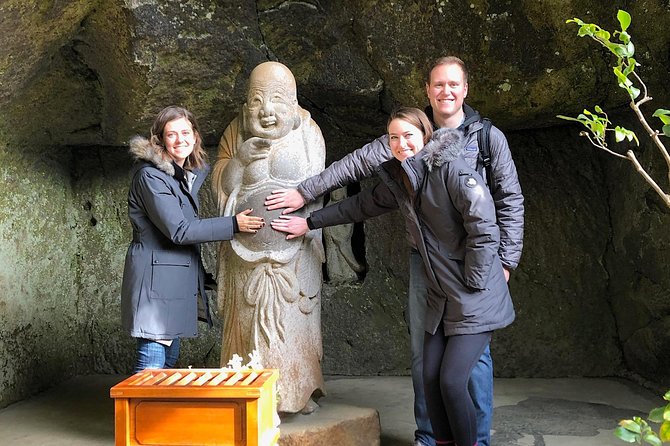
The Daibutsu Hiking Course leads to Zeniarai Benten Ugafuku Shrine, reached through a hole in the hillside framed by a torii gate. The unusual entrance gives the shrine a memorable sense of discovery without requiring a long detour from the route.
The name is linked to a custom of washing money at the shrine. Your guide can explain the practice and the shrine’s place in local belief. This is one of the stops where a guide adds real value, since the setting and rituals can be easy to misunderstand if you only take photographs and move on.
The visit lasts about 25 minutes. It is a compact stop, but it breaks up the hike with a distinct Shinto setting. You will also get a better feel for how Kamakura’s religious sites are not all grand temple complexes. Some are small, enclosed, and closely tied to local stories.
Same streets, a different route:
- Tokyo: Imperial Palace and Shogun Historical Walking Tour
★ 5.0 · 2,251 reviews - Kyoto: Gion Geisha District Walking Tour – Stories of Geisha
★ 4.7 · 2,187 reviews - Best of Kyoto: Gion, Geisha, Pagodas & Cobblestones
★ 4.9 · 2,058 reviews - Night Walk in Gion: Kyoto’s Geisha District
★ 4.5 · 2,003 reviews
Sasuke Inari Shrine has a storybook feel
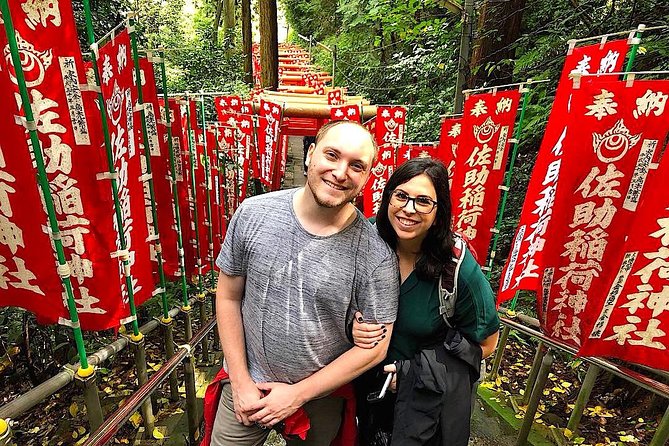
The next stop is Sasuke Inari Shrine, associated with Minamoto Yoritomo, Kamakura’s first shogun. According to legend, a white fox connected with Inari appeared in a dream and advised him on how to win a battle.
Fox imagery is central to Inari worship, and the shrine gives your guide another chance to explain the difference between Shinto shrines and Buddhist temples. The visit is planned for about 20 minutes, so expect a brief but useful stop rather than a long stay.
This part of the route also shows why the private format matters. The smaller shrine may mean more to you after someone explains the legend and customs. Without that context, you might simply see another red torii and move on.
The Great Buddha is the tour’s major landmark

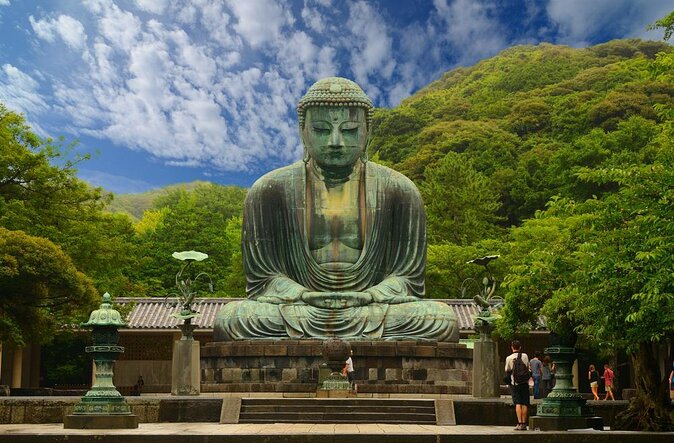
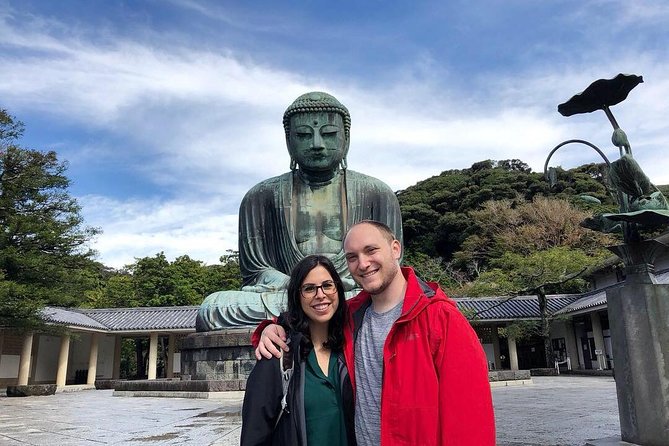
At Kotoku-in, the Great Buddha of Kamakura provides the most dramatic contrast with the quiet trail. The bronze statue is 13.35 meters tall and weighs about 121 tons. The statue in its present bronze form dates to 1252.
The scheduled visit lasts around 20 minutes, with admission included. That is enough to see the statue, take photographs, and hear the main facts, though you may want longer if you enjoy religious art or want to enter the Buddha, when that option is available. One visitor specifically mentioned seeing both the inside and outside, but the tour description does not promise that access every day, so treat it as a possible extra rather than a guarantee.
Kotoku-in is usually the busiest part of the route. After the mountain path and smaller shrines, the scale of the statue and the number of people around it can feel sudden. Your guide helps you focus on the statue’s religious meaning and construction rather than treating it as only a famous photo stop.
Hasedera combines gardens, views, and religious art
Hasedera sits partway up Mount Kamakura and is one of the tour’s strongest stops. The grounds include gardens, temple buildings, and elevated views toward the ocean and Yuigahama Beach. In June and July, hydrangeas add seasonal color, although bloom conditions can vary.
The visit is planned for about 30 minutes. That can feel short if you want to linger in the gardens or explore every level, but it fits the half-day schedule. The climb within the temple grounds also adds to the day’s physical demands, so do not assume the hardest walking ends at the mountain trail.
I especially like the way Hasedera changes the mood of the tour. Jochiji feels wooded and restrained, the hiking course feels rural, the Great Buddha feels monumental, and Hasedera opens the view toward the coast. You get several different sides of Kamakura without spending the whole day on major streets.
Yuigahama Beach is a relaxed finish
The final stop is Yuigahama Beach, where you can pause and look south across the water. The beach is planned for about 15 minutes, so this is more of a breather than a beach day.
In summer, an open-air market called Umi-no-ie may be operating. The tour does not include food or drinks, so any snack, meal, or café stop costs extra. Some guides have arranged lunch at a local restaurant when time and the group’s interests allowed, but lunch is not part of the advertised package.
The tour ends at Hase Station. The guide usually accompanies the group toward Kamakura Station as well, which is useful if you are unfamiliar with the rail system or plan to continue exploring. This finish also gives you a practical choice: head back to Tokyo, stay around Hase, or continue toward Kamakura’s shopping streets and other temples.
What the private format adds
A private tour is most valuable here because the route combines several different needs. You may want historical explanation at the temples, help with shrine etiquette, a slower pace on the hills, and advice about trains or lunch. A private guide can respond to those needs in real time.
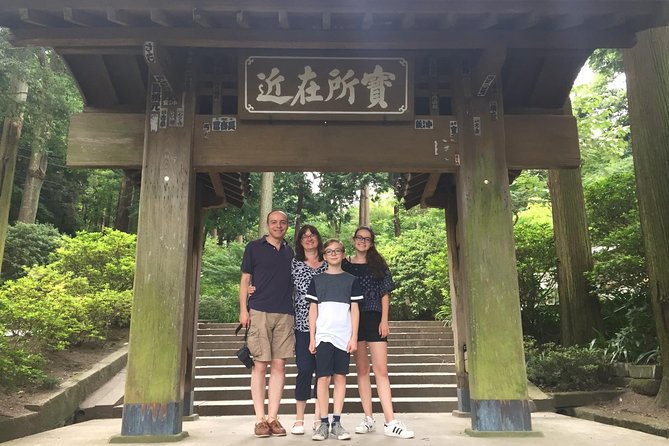
Families have found the format useful. Guides have adjusted explanations for children, helped groups with older relatives, and changed the plan when slippery paths made hiking unwise. One group with two children found the trail and shrine visits engaging because the guide explained each stop in a way that worked for both adults and children.
It can also work well for solo booking, but the minimum booking requirement is two people. If you are traveling alone, you would need to confirm whether another arrangement is possible before paying, since the stated minimum is two people per booking.
The group discount feature may improve the price for larger private groups, but the exact discount is not provided. At $98.44 per person, you are paying for a guide, three included admissions, route planning, and personal attention rather than transportation or meals.
Price, walking demands, and extra costs
The headline price is fair for a 5-hour private experience, especially for a couple or family that wants cultural explanation and help with a route that is not completely obvious. It is less attractive if you only want the Great Buddha and Hasedera, since both can be visited independently with public transportation.
You should budget for costs outside the base price:
- Food and drinks are not included.
- Hotel pickup and drop-off are not included.
- Hotel pickup can be added for 8,000 yen per person.
- Private taxi, car, or bus transportation is not included.
- If you extend the tour, the charge is 1,000 yen per person for each extra half hour, paid in cash.
- Local train, bus, or taxi fares may be needed if weather, heat, or mobility concerns change the route.
The tour includes all fees and taxes listed for the experience, plus admission to Jochiji, Hasedera, and Kotoku-in. That makes the cost easier to judge because the main entry fees are already covered.
Who should book this tour
I would choose this tour if you want Kamakura to feel like a place, not just a list of famous stops. It suits couples, families, and small groups who value conversation, local context, and the ability to adjust the pace.
It is also a good choice if you are uneasy about finding the mountain trail. Some paths are not well marked in English, and the guide can connect the temples and shrines in a way that is harder to manage on your own.
I would hesitate if anyone in your group has limited mobility, a knee problem, or little tolerance for hills. Ask about a modified route before booking. The company has adjusted plans for older participants and bad weather, but the standard experience still includes at least 5 km and a mountain pass.
Summer requires extra care. Heat and humidity have caused groups to take more breaks and see fewer sites than planned. Rain can also replace hiking with public transportation. The tour requires good weather, and if poor weather cancels it, you can take another date or receive a full refund.
Should you book the Kamakura private tour?
Book it if you want a half-day mix of forest, temples, shrines, a huge bronze Buddha, and the coast, with an English-speaking guide who can explain what you are seeing. The strongest part is the balance between major sights and quieter stops such as Jochiji, Zeniarai Benten, and Sasuke Inari.
Skip it if you want a flat, leisurely stroll or a fully self-guided visit focused only on the Great Buddha. For everyone else, the route offers good value, provided you wear proper shoes, prepare for hills, and accept that weather may change the plan.
FAQ
How long does the Kamakura private tour last?
The tour lasts approximately 5 hours. The scheduled stops total less than that, leaving time for walking between locations, breaks, and route changes.
Where does the tour start and end?
The tour starts at Kita-Kamakura Station in Yamanouchi. It ends at Hase Station, and the guide usually accompanies the group toward Kamakura Station.
How much walking is involved?
You will walk at least 5 km, including a mountain pass. Comfortable walking shoes are required, and you should have a moderate level of physical fitness.
Are the temple entrance fees included?
Yes. Admission to Jochiji Temple, Hasedera Temple, and Kotoku-in, home of the Great Buddha, is included.
Is hotel pickup available?
Hotel pickup is available for an additional 8,000 yen per person. Hotel drop-off and private transportation are not included in the base price.
What happens if bad weather affects the tour?
The experience requires good weather. If it is canceled because of poor weather, you can choose a different date or receive a full refund. The route may also be adjusted during the tour, with train, bus, or taxi travel used instead of a slippery mountain section.
Just added around Japan
- Kamakura Walking Tour – The City of Shogun★ 5.0 · 100 reviews
- Kamakura Historical Walking Tour with the Great Buddha★ 5.0 · 129 reviews
- Tokyo Walking Tour with Licensed Guide Shinjuku★ 5.0 · 114 reviews
- Miyajima Half-day Trip Historical Walking Tour★ 5.0 · 284 reviews
- Hiroshima Walking Tour Why A Bomb was dropped to Hiroshima★ 5.0 · 347 reviews
- Tokyo: Asakusa & Sensoji ー Oldest Temple Walking Tour (2hrs)★ 5.0 · 213 reviews
- Asakusa Senso-ji Temple and Old Tokyo Walking Tour★ 5.0 · 560 reviews
- Asakusa Cultural Walk & Matcha Making Tour★ 5.0 · 245 reviews
Japan Walking Tours, compared.
Kyoto Geisha Walking Tour: Gion District & Hidden Gems
Read our review →
Tokyo Tsukiji Fish Market Food and Culture Walking Tour
Read our review →
Gion Magical Night Walking Tour with Geisha Trivia
Read our review →
Imperial Palace and Shogun Historical Walking Tour
Read our review →
Gion Geisha District Walking Tour – Stories of Geisha
Read our review →
Best of Kyoto: Gion, Geisha, Pagodas & Cobblestones
Read our review →

Shinjuku Local Bar and Izakaya Guided Walking Tour
Read our review →Browse the lists this tour appears in