
REVIEW · SOUTH AFRICA
Johannesburg City Centre Walking Tour
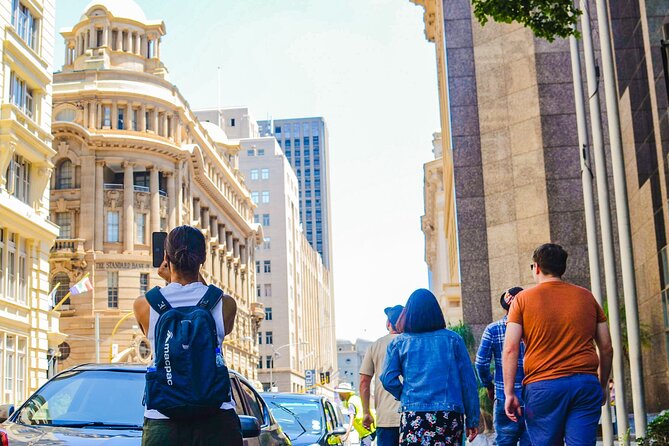
Johannesburg makes the most sense on foot, but central streets can feel daunting if you do not know the city. This three-hour walk brings you through Main Street, the Workers Museum, Chancellor House, Mary Fitzgerald Square, and Gandhi Square before finishing with a South African braai in Maboneng. You also get a high city view from the Top of Africa.
I like the small group of no more than 10 people, which gives you room to ask questions and keep close to your guide. I also like the guides’ personal approach: Mathapelo, Tebogo, Clement, Kutlwano, Mulalo, and Sibongile are all praised for clear local insight, honest answers, and careful attention to safety.
The main thing to check is the lunch and transport arrangement. The tour description includes a braai, while the formal inclusions list only water and says extra costs are not covered. The walk also ends away from its starting point, so plan your ride back.
Key points to know before booking

- Walk through Johannesburg’s working city center: See Main Street, Gandhi Square, Mary Fitzgerald Square, and older commercial buildings rather than only polished visitor areas.
- Visit places tied to South African history: Chancellor House recalls Nelson Mandela and Oliver Tambo’s law practice, while the Workers Museum explains migrant labor and compound life.
- Use a local guide for confidence: Guides such as Tebogo and Mathapelo help you understand where to walk and when a short taxi ride makes more sense.
- Look down from the Top of Africa: The city view gives you a useful sense of Johannesburg’s scale and layout.
- End with a braai in Maboneng: Expect a social meal with South African flavors, including plant-based options.
- Keep the practical details in mind: The tour costs $45.19 per person, lasts about three hours, accepts mobile tickets, and is often booked roughly 21 days ahead.
Why a guided walk works in central Johannesburg
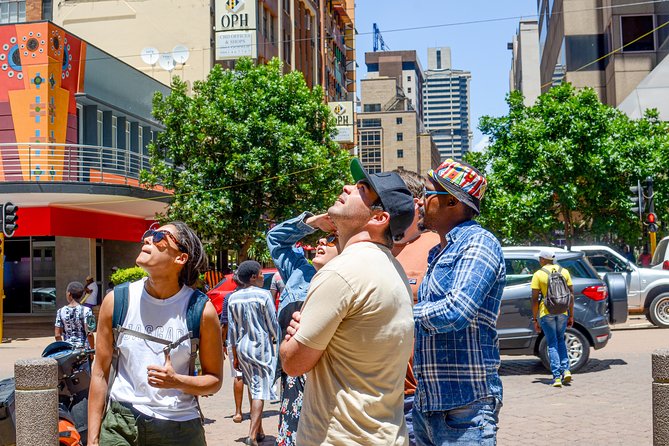
Johannesburg is not a city I would reduce to a few postcard sights. Its center carries the marks of mining, migration, segregation, protest, renewal, and decline. You see old stone and concrete buildings beside newer art spaces, busy sidewalks beside neglected facades, and formal memorials close to ordinary daily life.
That contrast is the reason I prefer this kind of walk to a quick drive past downtown. A car can show you the outline of the city, but it cannot give you the same feel for how the streets connect. You can stop, look up at the architecture, ask about a name on a building, and notice how residents use the area.
The guide matters here. Reviews of the experience repeatedly single out Mathapelo, Tebogo, and Sibongile for being attentive and easy to talk with. Clement is described as making the walk feel like a relaxed conversation, while Kutlwano is praised for sharing direct opinions and later offering ideas for other things to see in Johannesburg.
That personal contact is especially useful for visitors who are uneasy about walking downtown alone. The guides do not simply point out buildings. They help you judge the streets as you go, and some groups have used a taxi or Uber for part of the route when walking through a less comfortable area.
More City Highlights Walks in South Africa:
- Cape Town Walking Tour: Bo-Kaap & City Highlights
★ 4.8 · 161 reviews - Johannesburg: City Centre Walking Tour
★ 4.8 · 152 reviews - Berlin City walk Government District and Places of Democracy
★ 4.7 · 8,467 reviews
Starting at Gandhi Square and Main Street
The meeting point is outside Nando’s at Gandhi Square, at Shop 180 in the Metropolitan Building on Rissik Street, Marshalltown. The square is a practical starting place because it puts you close to the older central business district and to several important streets.
Main Street is the first substantial stop, with about 30 minutes set aside. This is where the tour begins to show Johannesburg as a mining city and a commercial center. Look for older architecture, street activity, and the way the city’s gold-era identity still shapes the names and buildings around you.
I like this opening because it gives you time to adjust to the pace of the walk. You are not rushed from one landmark to the next. Your guide can explain what you are seeing, point out details you might otherwise miss, and help you get a first sense of Johannesburg’s scale.
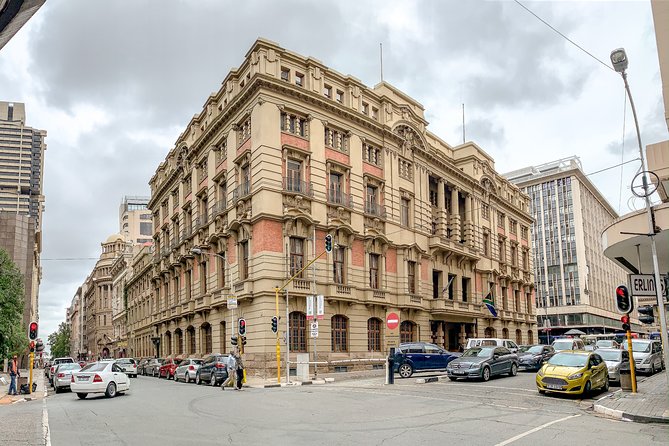
Do not expect a preserved historic district in the European sense. Main Street is part of a living, working center. Some buildings have been cared for, while others show wear. That mixture is part of the lesson, but it can disappoint anyone expecting a tidy sightseeing zone.
The Workers Museum and the story behind the city
The Workers Museum is scheduled for about 20 minutes. It occupies a former workers’ compound, making it one of the most useful stops for understanding how Johannesburg was built and who did the hard labor.
The city’s story is not only about gold mines, investors, and grand offices. It is also about people who came to work, lived under strict conditions, and helped create the wealth that made Johannesburg powerful. The museum gives that human scale to the city.
I would pay close attention here, even if museums are not usually your main reason for booking a walking tour. This stop connects the streets outside with the systems that shaped South African life. It also adds useful context before you visit other places linked to politics and law.
The time is short, so this is an introduction rather than a full museum visit. If you want to read every display slowly, you may feel pressed. Still, a focused visit works well within a three-hour route.
Chancellor House and the legal fight against apartheid
Chancellor House receives about 15 minutes. This is one of the most important stops because it was associated with Nelson Mandela and Oliver Tambo’s law office, one of the first Black-owned law firms in South Africa.
The building gives you a more grounded view of Mandela. Instead of meeting only the familiar public figure from speeches and statues, you see the professional setting where he and Tambo worked with clients and challenged an unjust legal system.
I find this kind of place more revealing than a large monument. The setting is modest and tied to real work. Your guide can connect the office to the wider political and legal struggle, and you can ask questions that a fixed display may not answer.
The scheduled time is brief, so think of Chancellor House as a concentrated historical stop. It is not presented as a long museum visit. Its value comes from the story attached to the building and from the guide’s ability to explain why it matters.
A few more walking tours around South Africa worth a look
- Soweto: Walking Tour with a Local Guide and Lunch
★ 4.9 · 648 reviews - Plettenberg Bay: Bungee Jumping with Zipline and Sky Walk
★ 5.0 · 506 reviews - Cape Town: Nathi Langa Township Walking Tour
★ 4.9 · 493 reviews - Cape Town: Art, Culture & History Walking Tour
★ 4.9 · 392 reviews
Mary Fitzgerald Square and the city’s public life
The walk continues to Mary Fitzgerald Square, with roughly 10 minutes planned here. The square is used for meetings and public gatherings, so it helps you understand how Johannesburg’s open spaces have served civic and political life.
This is a good place to notice the difference between a tourist attraction and a city space. You may see little that looks like a conventional sight, but the square carries meaning because people have gathered there to speak, organize, celebrate, and protest.
The stop is short, and that is appropriate. The square works best as part of the larger walk rather than as a destination requiring a separate visit. Your guide’s explanation gives it context, while the surrounding streets keep the experience tied to present-day Johannesburg.
The Top of Africa and a wider view of Johannesburg
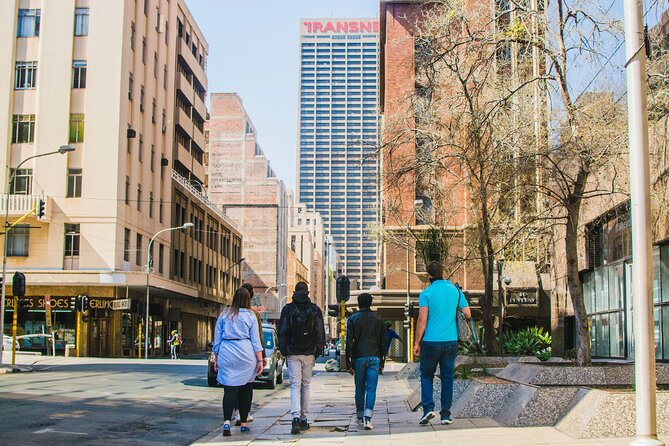
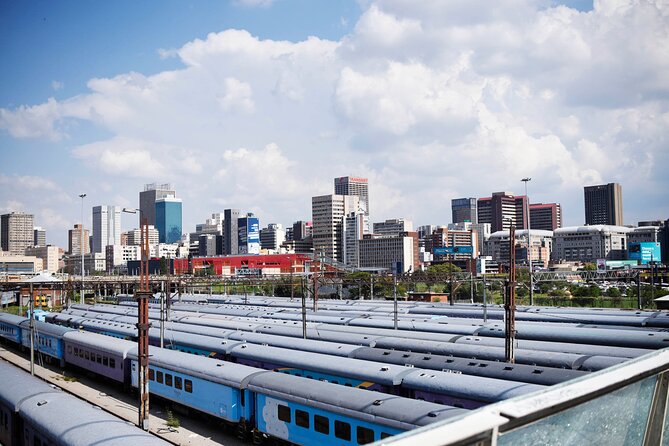
The tour also includes the Top of Africa, a high viewpoint that lets you look across the city. This is one of the few moments when you step back from street level and see how central Johannesburg fits together.
I like the change in perspective. After walking past buildings and through squares, you can finally see the city as a whole. The view helps explain the distance between neighborhoods and gives you a clearer sense of the central district’s position.
It is also a strong photo stop. Bring your phone or camera, but do not let the view replace the street experience. The point is not simply to collect a skyline picture. It is to connect what you have seen on foot with the larger city around you.
The exact order of the stops can vary, and the description does not provide a minute-by-minute route for every section. Treat the Top of Africa as an important part of the experience, but not as a promise of a long observation-deck visit.
Maboneng, local food, and the braai finish
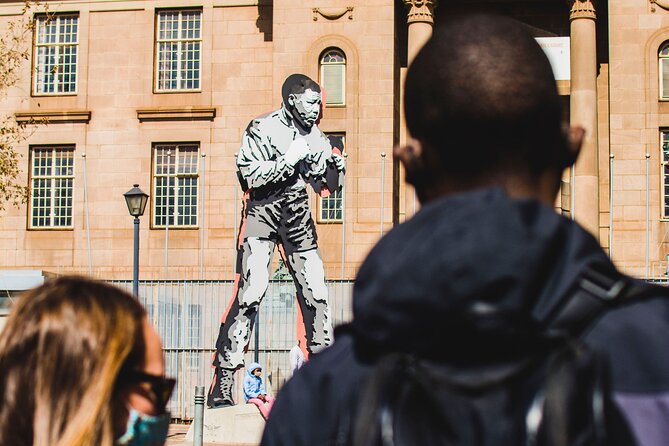
The experience ends with lunch in the Maboneng Precinct, an arts-focused part of Johannesburg known for creative activity, food, music, and public art. Several accounts describe a taxi or Uber ride from the central route to Maboneng, so do not assume the entire distance is walked.
The meal is a South African braai, or barbecue, and plant-based choices are available. This gives the tour a useful finish: instead of ending with one last building, you sit down to eat and talk about what you have seen.
The food is part of the experience’s appeal. A braai is social and informal, and it gives you a chance to try local flavors in a setting that feels connected to the neighborhood. Chakalaka, a spicy vegetable relish, has been especially well received, so it is worth asking about it if it is available.
Here is the practical wrinkle: the description says the tour ends with lunch, but the formal inclusions list specifies water and says additional items and costs are not included. I would confirm exactly what the $45.19 price covers before booking, especially if lunch, a taxi, or drinks are important to your budget.
Maboneng can also feel different from the older central streets. That contrast is useful. You see one part of Johannesburg dealing with decline and another using art, food, and small businesses to draw people back into the city.
Safety, pace, and what the walk feels like
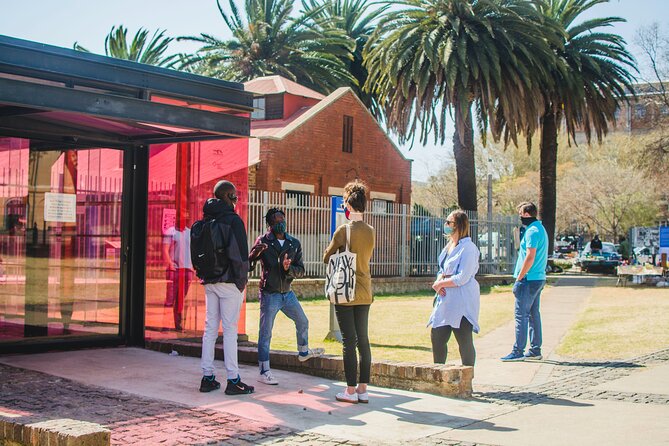
Safety is a central reason to choose this tour. I would not treat that as a promise that every street is risk-free. Rather, the value is having someone who understands the area, watches the route, and knows when walking is sensible and when a short taxi ride is wiser.
Several guides have helped groups arrange an Uber or taxi, including when a section felt less comfortable. Sibongile also helped a participant organize the ride back and checked that the person arrived safely. Those details show the kind of practical care you should expect from a good guide.
The route is a real city walk, not a gentle stroll through a closed museum complex. Wear comfortable shoes, carry water, and keep your belongings secure. Water is included, but the tour does not list other personal items or extra expenses as included.
The maximum group size is 10. That is small enough for conversation without making the outing feel like a private tour. The reviews also suggest that guides allow time to look around rather than talking without pause, which makes the experience easier to absorb.
Most people can participate, and the meeting point is near public transportation. Still, the distance, city sidewalks, possible street crossings, and changes in transport may matter if you have mobility concerns. Ask the operator for more detail before booking if you need a fully accessible route.
What the $45.19 price gives you
At $45.19 per person, this is not the cheapest way to see Johannesburg, especially if you are comparing it with a self-guided walk. The price pays for more than movement between sights. You are buying local interpretation, route judgment, a small group, and access to places that can be difficult to understand on your own.
I see the strongest value in the guide’s role. A map can take you to Main Street and Gandhi Square, but it cannot explain why Chancellor House matters, connect the Workers Museum to the city’s labor system, or tell you when it is better to use a taxi.
The meal adds value if it is included as described. Because the published details are not fully clear about food and transport costs, I would ask before paying. A few extra costs could change the total, and the phrase all additional items and cost is broad.
The tour is often reserved about 21 days in advance. That suggests you should not wait until the morning of your visit if your schedule is fixed, particularly if you want a particular guide or date.
Who will get the most from this tour
I would recommend this walk to a first-time visitor who wants a serious introduction to Johannesburg rather than a quick drive around major sights. It suits people who enjoy asking questions, taking photographs, and seeing how history fits into ordinary streets.
It is also a good choice if you are interested in South African politics, labor history, architecture, food, or urban change. The combination of Chancellor House, the Workers Museum, public squares, Main Street, and Maboneng covers more ground than a single-theme tour.
Solo visitors may value the company and local guidance. Parents or older travelers should consider the walking pace and the need for possible taxi transfers. Anyone expecting a polished, fully restored city center should adjust expectations. This tour shows Johannesburg as it is, including its energy, creativity, and visible problems.
The guide can also help you shape the rest of your stay. Kutlwano followed up with suggestions for other sights, and several guides are praised for answering questions beyond the set stops. That makes the walk useful early in a Johannesburg visit, when you are still working out where to go next.
Should you book the Johannesburg City Centre Walking Tour?
I would book it if you want to understand central Johannesburg from street level and prefer local explanation to a simple sightseeing loop. The strongest parts are the small group, the careful guides, Chancellor House, the Workers Museum, and the closing braai.
I would pause if you want a long museum visit, a fully predictable walking route, or a price that clearly includes every meal and transfer. Confirm the lunch and transport details first.
For most first visits, this is a smart way to get your bearings while seeing a side of Johannesburg that is easy to miss from a tour bus. Book it near the start of your stay, keep an open mind about the city’s contrasts, and let the guide’s local judgment shape the day.
FAQ
How long does the Johannesburg City Centre Walking Tour last?
The tour lasts approximately three hours.
How much does the tour cost?
The listed price is $45.19 per person.
Where does the tour start?
It starts outside Nando’s at Gandhi Square, Shop 180 in the Metropolitan Building, at Rissik Street and Gandhi Square in Marshalltown, Johannesburg.
Where does the tour end?
The stated end point is the Constitution Hill Human Rights Precinct at 11 Kotze Street, Braamfontein. The tour information also says to end the tour with lunch, so confirm the final lunch location when booking.
What places are visited?
The route includes Main Street, the Workers Museum, Chancellor House, Mary Fitzgerald Square, Gandhi Square, Johannesburg’s central streets, the Top of Africa, and the Maboneng Precinct.
Is lunch included?
The experience description says the tour ends with a South African braai lunch and offers plant-based options. The formal inclusions list only water and says additional items and costs are not included, so confirm exactly what the lunch price covers.
Is transportation included?
The published details do not list transportation as an included item. Some routes have used a taxi or Uber between parts of the city, so ask whether any transfer costs are extra.
How large is the group?
The maximum group size is 10 people.
Can I cancel for a full refund?
Yes. You can cancel at least 24 hours before the local start time for a full refund. Cancellations or changes made less than 24 hours before the start time are not accepted for a refund.
Just added around South Africa
- Soweto Walking Tour with Lunch★ 5.0 · 288 reviews
- Whale Watching Walking Tours (Land-Based) – from JUNE 2025★ 5.0 · 88 reviews
- Culture Walking Tour of Durban★ 5.0 · 110 reviews
- The 10 Tastings of Cape Town With Locals: Private Food Walking Tour★ 4.5 · 169 reviews
- Bo-Kaap: Walk with a local★ 5.0 · 131 reviews
- Cape Town Woodstock Street Art Walking Tour★ 4.5 · 77 reviews
- Constantia Wine Walk Storytelling Vineyard Tour with Lunch★ 5.0 · 77 reviews
- Stellenbosch: Guided Historical Walking Tour★ 4.7 · 283 reviews
City Highlights Walking Tours, compared.
Berlin City walk Government District and Places of Democracy
Read our review →
Historic Charleston Guided Sightseeing Walking Tour
Read our review →
Oxford: University and City Walking Tour with Alumni Guide
Read our review →
City Highlights Temple and Market Walking Tour
Read our review →
A History of Terror – Belfast City Centre Walking Tour
Read our review →Browse the lists this tour appears in