
REVIEW · SOUTH AFRICA
Bo-Kaap: Walk with a local
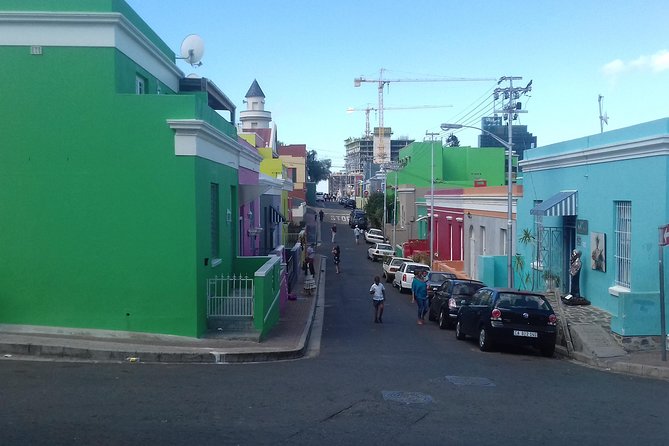
Bo-Kaap is much more than a row of photogenic houses. This short walk puts you with a guide who lives in the neighborhood, such as Ilyas, Rafiq, Siddiq, or Sadiq, and connects the bright facades to slavery, Islam, migration, family life, and the ongoing fight to protect the community. The local connection is the heart of the experience.
I especially like the stop at Atlas Trading Company, where the smells of Cape Malay spices bring the story into the present. I also like the chance to meet local residents and taste a homemade treat, sometimes a fresh koeksister at a guide’s aunt’s house. The main drawback is simple: one hour goes quickly, and the walk includes hills, cobblestones, and uneven pavement.
Key points at a glance
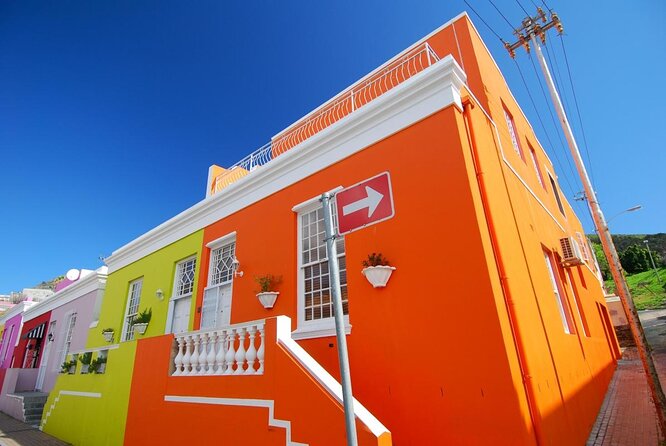
- Hear Bo-Kaap from someone who lives there: Guides share family memories and everyday details that a self-guided photo walk can miss.
- Visit Auwal Mosque: See one of South Africa’s oldest mosques and learn why Bo-Kaap is closely tied to the arrival and growth of Islam in the Cape.
- Smell the neighborhood’s cooking traditions: Atlas Trading Company offers a close-up look at the spices used in Cape Malay food.
- Taste something local: Rooibos tea or coffee and a snack are included, with some walks featuring a homemade koeksister.
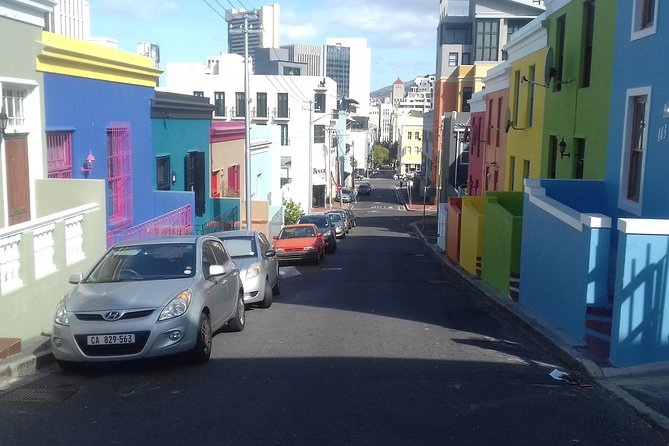
- Photograph the famous colorful streets: You get the classic Bo-Kaap views, along with quieter lanes and less obvious corners.
- Keep the timing in mind: The tour lasts about an hour, meets at 71 Wale Street, and returns there.
Why a local guide changes the Bo-Kaap walk
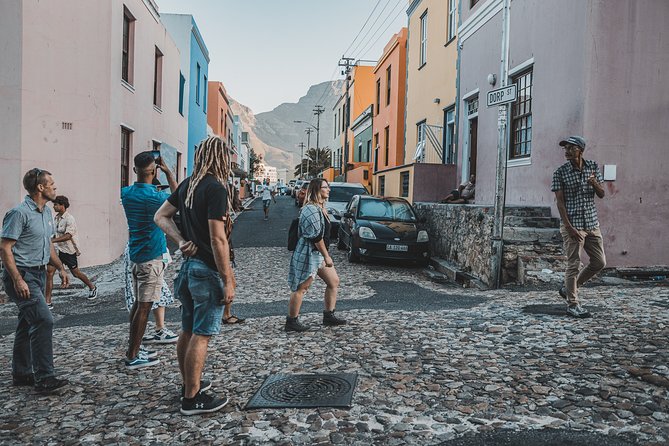
The painted houses are the easy part of Bo-Kaap. You can see them in a few minutes, take photos, and move on. The harder story is understanding who built this community and why it matters.
Bo-Kaap grew from the forced movement of enslaved people, artisans, and political exiles brought to the Cape by Dutch settlers. Their origins reached across Africa, India, Sri Lanka, Indonesia, Malaysia, and other parts of the Indian Ocean world. Many were Muslim, which helps explain Bo-Kaap’s strong Islamic identity and its place in Cape Town’s religious story.
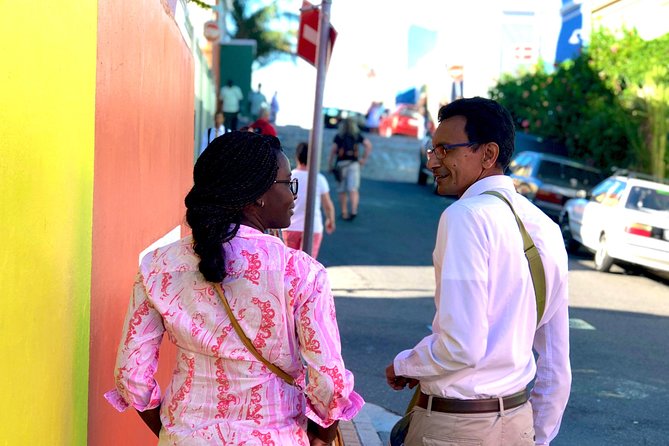
A local guide can connect those broad facts to real streets and family experience. Ilyas, Rafiq, Siddiq, and Sadiq are among the guides named by the operator, and each brings a personal link to the area. Several guides were born and raised in Bo-Kaap, and some still live there. That matters because the walk is not just about old buildings. It also covers daily life, current concerns, local relationships, and the pressure to preserve the community.
You may stop as the guide greets friends or points out places that mean something to local families. You might hear about a community garden, a family home, or a quieter back street that larger groups pass by. Those moments are not polished museum exhibits, and that is their value. They help you see Bo-Kaap as a living neighborhood instead of a backdrop for photographs.
A few more walking tours around South Africa worth a look
- Soweto: Walking Tour with a Local Guide and Lunch
★ 4.9 · 648 reviews - Plettenberg Bay: Bungee Jumping with Zipline and Sky Walk
★ 5.0 · 506 reviews - Cape Town: Nathi Langa Township Walking Tour
★ 4.9 · 493 reviews
Meeting at 71 Wale Street
The walk begins at 71 Wale Street in Schotsche Kloof and ends at the same point. That makes the tour easy to fit into a morning or afternoon of exploring central Cape Town.
The meeting point is near public transportation, and the activity uses a mobile ticket. Confirmation arrives at booking. The group can include up to 20 people, though several people praised the small-group feel and the chance to ask questions without competing with a large crowd.
I would arrive a little early. The experience is short, so a late start cuts into the actual walk. Since the end point is the starting point, you can plan another nearby activity afterward without arranging a second ride from somewhere else.
The guides set a manageable pace, but this is still a walking tour. Wear shoes with a solid sole. Bo-Kaap has slopes, uneven cobblestones, and changes in elevation. One solo woman specifically found it comfortable to book a morning departure and arrange transport to and from the area in advance. That is sensible planning, especially if you do not know Cape Town well.
Starting with Bo-Kaap’s difficult past
The opening section gives you the basic shape of the neighborhood. Bo-Kaap sits at the foot of Signal Hill in Cape Town’s City Bowl, an attractive setting that can make it easy to forget how difficult its past has been.
The guide explains how enslaved people, workers, artisans, and exiles shaped the area. You learn about the connection between the neighborhood and Islam, often described as the birthplace of Islam in the Cape. The point is not to turn the walk into a list of dates. It is to show how faith, family, food, language, and place became linked over generations.
This is also where a guide’s personal stories add weight. A local can explain what it means to have a family that has lived in Bo-Kaap for generations, or why preserving the neighborhood is a present-day concern rather than an abstract idea. The story of the houses becomes more meaningful when you understand that the community behind them has faced displacement and change.
Allow time for questions. The activity is built around conversation, and the strongest part of the experience is likely to be the exchange between you and the guide. If you only want quick facts and photographs, you may find the hour slow in places. If you want context, the slower pace is a benefit.
Auwal Mosque and the religious heart of the area
Auwal Mosque is one of the important stops. It is recognized as one of the oldest mosques in South Africa and helps explain why Bo-Kaap is so closely associated with Islam.
The mosque gives the walk a physical anchor. Instead of hearing that Muslim communities shaped Cape Town and then moving on, you have a place where that story becomes visible. Your guide can put the mosque into the wider account of enslaved people and political exiles who brought religious traditions to the Cape.
The supplied details do not specify the length of the mosque visit or any special entry conditions, so treat it as part of the guided route rather than planning a long independent visit. As with any place of worship, follow the guide’s instructions and dress and behave respectfully.
This stop is especially useful if you have seen Bo-Kaap online and know little about its people. The brightly painted streets are not a complete story. The mosque helps correct that shallow first impression.
Same streets, a different route:
- Cape Town: Art, Culture & History Walking Tour
★ 4.9 · 392 reviews - Cape Town: Street Art Walking Tour in Woodstock
★ 4.8 · 293 reviews - Stellenbosch: Guided Historical Walking Tour
★ 4.7 · 283 reviews - Cape Town: Langa Township Walking Tour
★ 4.8 · 272 reviews
Atlas Trading Company and the smell of Cape Malay cooking
At Atlas Trading Company, the tour shifts from religion and settlement to food. This well-known spice shop is a sensory stop: you smell the spices used in everyday Cape Malay cooking and connect them to the neighborhood’s past.
That connection is unusually thoughtful. The spices are not presented only as ingredients for a tasty meal. They also represent how enslaved people found ways to express identity and freedom in the kitchens of their owners. Food becomes a record of culture, adaptation, and resistance.
You do not need to be a serious cook to enjoy this part. Smell is often more memorable than another spoken explanation, and the spice shop gives you a clearer sense of how Cape Malay food developed. If you have time after the walk, Atlas is also a useful place to return to for spice shopping, since the tour ends back at 71 Wale Street.
The guide’s explanation matters here. On your own, you might notice the aromas but miss the link between the shop, the cooking traditions, and the history of the community. This is one reason I think the tour offers more than a standard photo stop.
The snack that makes the walk personal
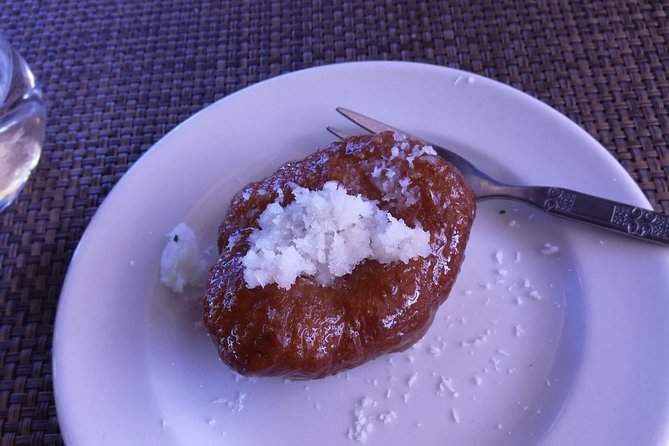
A cup of rooibos tea or coffee and a snack are included. In some departures, the snack has been a homemade koeksister, a sweet Cape Malay treat. One particularly memorable version was served fresh from the oven at a guide’s aunt’s house.
That kind of stop is not guaranteed in exactly the same form every time, so do not book the tour solely for a specific pastry. Still, the inclusion adds warmth to a short walk. You are not simply being shown a neighborhood. You are being offered a small taste of local hospitality.
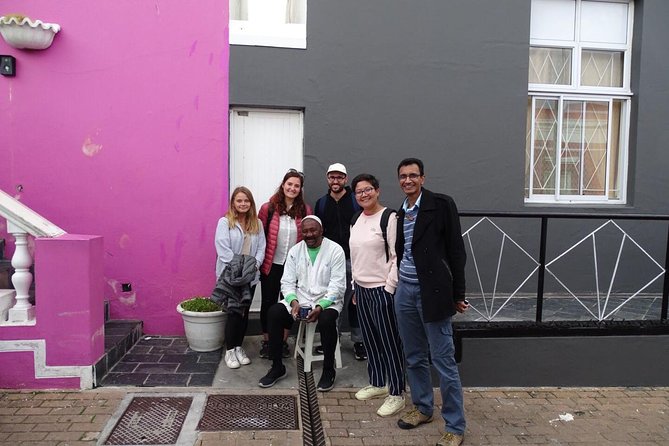
The home visit also shows why the guide’s community connection matters. Meeting a relative or greeting people along the way can make the route feel less like a performance arranged for tourists. It also requires good manners from you. Listen, ask before taking photographs, and remember that Bo-Kaap is home first and an attraction second.
The tea and snack are modest, but they help break up the walking and give you time to speak with the guide. For a one-hour tour, that personal pause carries more value than adding another viewpoint or a longer list of buildings.
The colorful streets, with more than a camera stop
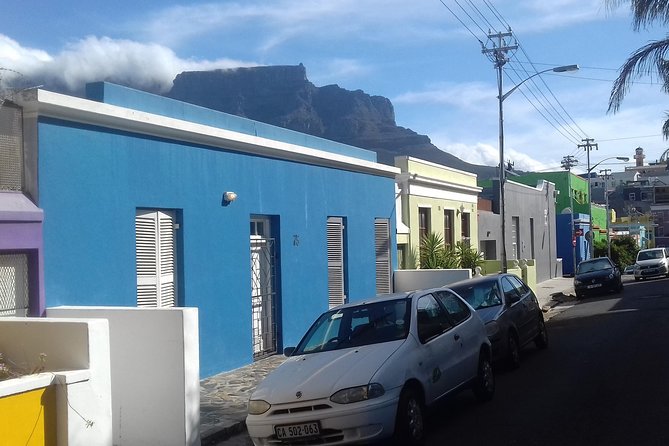
Bo-Kaap is one of South Africa’s most photographed areas, and you will have plenty of chances to take pictures. The painted houses are the obvious draw, but the better photographs often come when you understand what you are looking at.
Your guide can point out streets beyond the most familiar facades. Some sections are quieter and less crowded with tour groups while remaining just as attractive. You can ask for picture stops, and the pace allows time to look around rather than march from one landmark to the next.
Remember that this is an active neighborhood. People live behind those colorful doors, and not every person or home is part of the tour. Ask before photographing residents, private property, or a family gathering. The best photo walk is one that respects the place it records.
The slopes are manageable for most people, but the route is not perfectly flat. If your balance or mobility is limited, the uneven surfaces and elevation changes may be a concern. The activity information says most people can participate, but it does not promise a step-free route.
What the $25.31 price delivers
At $25.31 per person, this is not the cheapest way to see colorful streets. You can walk through parts of Bo-Kaap for free. The price makes more sense when you count what the guide adds: roughly an hour of local interpretation, access to stories tied to the guide’s own family and community, a visit to Auwal Mosque, the Atlas spice stop, and tea or coffee with a snack.
I see the strongest value in the human connection. A self-guided walk can show you the houses, but it may leave you with little understanding of the forced migration, Islamic heritage, food traditions, and present-day concerns behind them. The guide turns scattered sights into a connected story.
The maximum group size is 20, and several descriptions of the experience point to a more personal feel. Group size can vary, so do not assume you will have a private tour. Still, the format allows questions and conversation, which is important here.
The tour is also short enough to fit into a busy Cape Town schedule. If you are already spending money on a full-day city tour, you might not need another broad overview. This walk is best seen as a focused add-on for Bo-Kaap.
Who should book this walk
I would choose this experience if you want to understand Bo-Kaap rather than simply photograph it. It suits first-time visitors to Cape Town, people interested in local food and faith, and anyone who prefers meeting a resident over following a large sightseeing group.
It is also a good choice for solo visitors who want structure and local guidance for an hour. The route stays in one area, returns to its starting point, and offers a chance to ask direct questions.
You may want something else if you dislike walking on hills, have very little tolerance for history, or want a long food tour with several tastings. The snack is a pleasant addition, not a full meal. The tour also requires good weather, and it can be canceled if the minimum number of participants is not reached.
Book at least a few weeks ahead if your schedule is fixed. This experience averages about 21 days of advance booking, which suggests that popular dates can fill. You can cancel for a full refund up to 24 hours before the start time. If weather causes cancellation, you are offered another date or a full refund.
Should you book Bo-Kaap: Walk with a local?
Yes, if you want the colorful houses to come with a human story. The best parts are the local guides, the personal family connections, the mosque, and the stop at Atlas Trading Company. The chance to taste a homemade koeksister or meet members of the community gives the walk a warmth that a basic sightseeing circuit lacks.
I would skip it only if uneven streets are a serious problem or if you want a longer, food-focused outing. For most visitors, $25.31 is fair value for a focused hour with a local guide, especially when you make use of the questions, stories, and context. Wear comfortable shoes, bring water, and arrive ready to look beyond the paint.
FAQ
How long does the Bo-Kaap walking tour last?
The activity lasts approximately one hour.
Where does the tour begin?
The meeting point is 71 Wale Street, Schotsche Kloof, Cape Town, 8001, South Africa.
Where does the tour end?
The walk ends back at the meeting point on Wale Street.
How much does the experience cost?
The listed price is $25.31 per person.
What is included with the tour?
A cup of rooibos tea or coffee and a snack are included. Some departures may feature a homemade koeksister.
Does the tour visit Auwal Mosque?
Yes. Auwal Mosque is included as a stop on the walk and is described as one of the oldest mosques in South Africa.
Will the tour visit Atlas Trading Company?
Yes. The route stops at Atlas Trading Company, where you can smell spices used in Cape Malay cooking.
How many people can join the tour?
The activity has a maximum of 20 participants.
Can I cancel for a refund?
You can cancel at least 24 hours before the local start time for a full refund. Cancellations or changes made less than 24 hours before the start time are not accepted for a refund. If poor weather or insufficient participation causes cancellation, you are offered another date or a full refund.
Just added around South Africa
- Whale Watching Walking Tours (Land-Based) – from JUNE 2025★ 5.0 · 88 reviews
- Culture Walking Tour of Durban★ 5.0 · 110 reviews
- The 10 Tastings of Cape Town With Locals: Private Food Walking Tour★ 4.5 · 169 reviews
- Cape Town Woodstock Street Art Walking Tour★ 4.5 · 77 reviews
- Constantia Wine Walk Storytelling Vineyard Tour with Lunch★ 5.0 · 77 reviews
- Stellenbosch: Guided Historical Walking Tour★ 4.7 · 283 reviews
- Cape Town: Street Art Walking Tour in Woodstock★ 4.8 · 293 reviews
- Johannesburg: City Centre Walking Tour★ 4.8 · 152 reviews
Walking Tours, compared.

Magical London: Harry Potter Guided Walking Tour
Read our review →
Reykjavik Food Walk – Local Foodie Adventure in Iceland
Read our review →
History and Hauntings of Salem Guided Walking Tour
Read our review →
New Orleans Premier Ghost, Voodoo and Vampire Walking Tour
Read our review →
Amsterdam Anne Frank: Small-Group Walking Tour & Local Guide
Read our review →

Edinburgh Castle: Guided Walking Tour with Entry Ticket
Read our review →
Anne Frank’s Story – Guided Walking Tour through Amsterdam
Read our review →Browse the lists this tour appears in