
REVIEW · LISBON
Best of Lisbon Walking Tour: Rossio, Chiado & Alfama
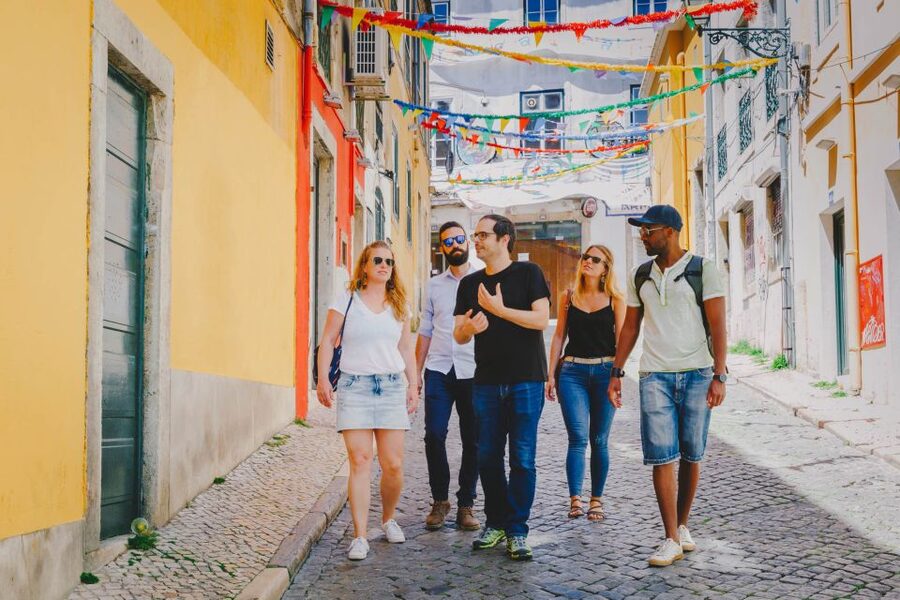
Lisbon’s story unfolds best on foot, and this three-hour walk links its grand squares with its oldest lanes. You move from Rossio and Baixa into Chiado and Alfama, while your guide explains the earthquake, dictatorship, revolution, Fado, and daily life. The pastel de nata and wine stops keep the history grounded in local tastes.
I like the clear route through several central districts, and I like how guides such as Filipa, Martin, Daniel, Maria, and Carlos bring different personalities to the walk. The price is also fair at $23, especially with three tastings included. The main consideration is the walking itself: Lisbon is hilly, Alfama has uneven lanes, and three hours can feel full if you prefer a slow, stop-and-sit sightseeing style.
Key points to know before you book
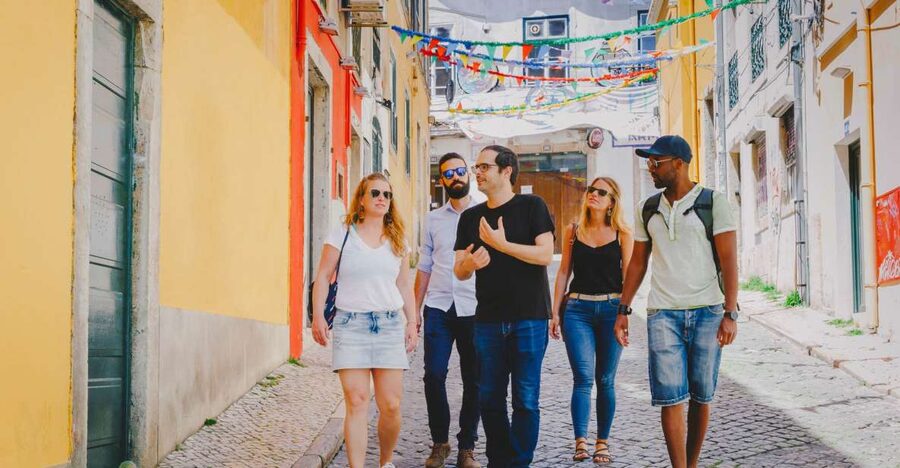
- Start in Rossio and finish by the river: The route runs from the statue of Dom Pedro IV to Praça do Comércio, giving you useful bearings for the rest of your stay.
- See three very different districts: Chiado feels elegant and literary, Baixa is orderly and rebuilt, and Alfama is old, steep, winding, and tied closely to Fado.
- History comes with local context: You hear about Portugal’s independence, the 1755 earthquake, and the 1974 Carnation Revolution.
- Food is part of the route: The tour includes one pastel de nata, one savory snack, and one wine tasting, often described as codfish cake and green wine.
- Guides shape the experience: Past participants have singled out Filipa, Martin, Daniel, Maria, Carlos, Joana, and others for warmth, humor, useful advice, and clear storytelling.
- Bring proper shoes: You will walk for three hours through slopes, cobbles, steps, and narrow streets. Pets are not allowed.
Why this route works as a first look at Lisbon
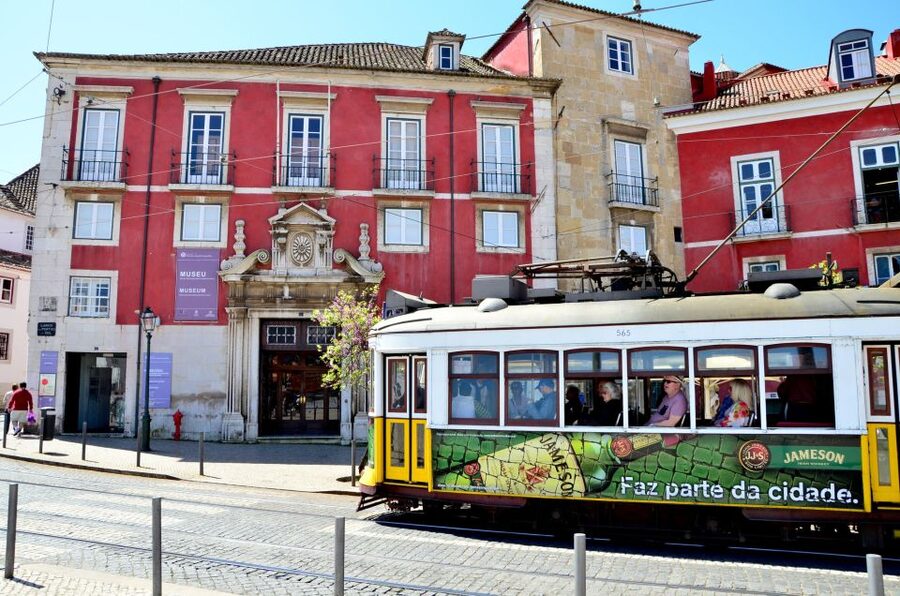
Lisbon can be confusing at first. Its central districts run into one another, streets change name, and the hills make a map look flatter than the city feels. Starting at Rossio and ending at Praça do Comércio gives you a simple line through the center. You can use that mental map for the rest of your visit.
The route also avoids the problem of seeing famous places as disconnected photo stops. Rossio leads naturally toward Restauradores, then to Carmo and Chiado. From there, you move through Baixa toward Alfama and the riverfront. Your guide supplies the links between places, which is where a walking tour earns its fee.
At $23 per person, the value is strong if you want orientation, basic history, and small food samples in one outing. You are not paying for entry to a museum or monument, and admission fees are not included. Instead, you are paying for a local guide, a planned route, explanations at each stop, and the convenience of tasting a few Portuguese staples without arranging separate visits.
A few more walking tours around Lisbon worth a look
- Lisbon: History, Stories and Lifestyle Walking Tour
★ 4.8 · 10,902 reviews - Best of Lisbon Small-Group Guided Walking Tour
★ 5.0 · 4,869 reviews - Lisbon: Food and Wine Small Group Walking Tour
★ 4.9 · 4,082 reviews
Rossio Square and the heart of old Lisbon
Meet near the statue of Dom Pedro IV in Rossio Square. This is a practical meeting point, close to public transport and surrounded by the city’s central streets. It also gives your guide a natural place to explain how Lisbon’s old and newer areas meet here.
Rossio is more than an open plaza for photographs. It is a useful introduction to Lisbon’s public life and architecture. Look toward Rossio Railway Station, where the ornate neo-Manueline facade gives the station a distinctly Portuguese appearance. Your guide will point out details that are easy to miss if you simply pass through on the way to a train.
The scheduled stop here lasts about 15 minutes, followed by roughly 10 minutes at St. Dominic’s Square. That second stop adds another layer to the central area and gives you time to look around without racing straight into the next neighborhood.
This early section is also where the tone of the tour becomes clear. Guides such as Martin, Filipa, Joana, and Daniel have been praised for making history easy to follow without burying you in dates. That matters in Lisbon, where a good explanation can turn a plain square into a place you remember.
Restauradores and the story behind independence
Restauradores Square is marked by a tall obelisk commemorating the restoration of Portugal’s independence from Spain. The monument gives your guide an opening to explain a major turning point in Portuguese history.
This is a good example of the tour’s approach. You are not entering a museum or spending half an hour on one display. You are standing in the city itself, looking at a monument while learning why it was placed there. The pace lets you connect the event to the streets around you, then continue walking.
The route is not built for detailed architectural study at every stop. If you want long periods for close photography, you may find the group moves on before you are finished. But for a first visit, the balance is sensible. You get context, a few strong views, and enough time to keep the walk moving.
Carmo Square and the Carnation Revolution
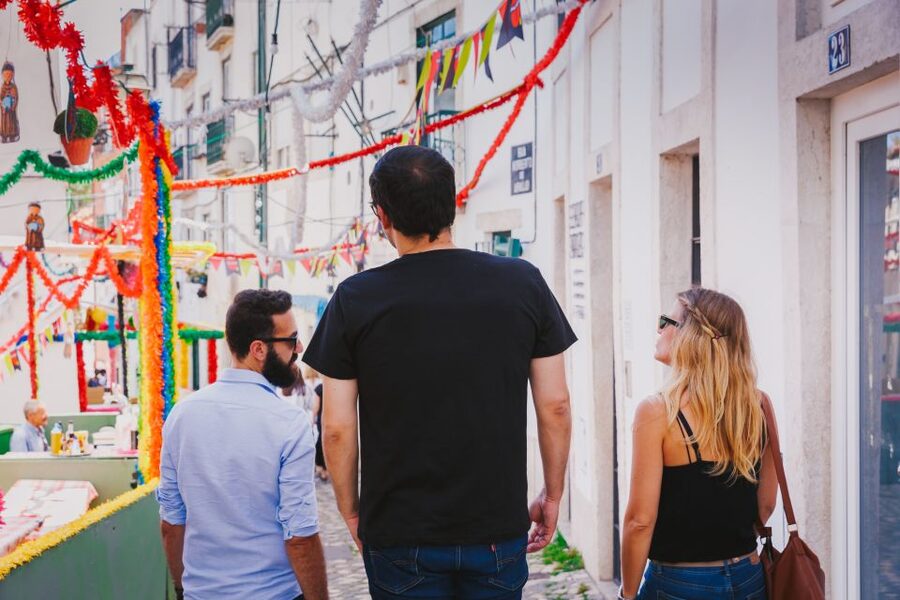
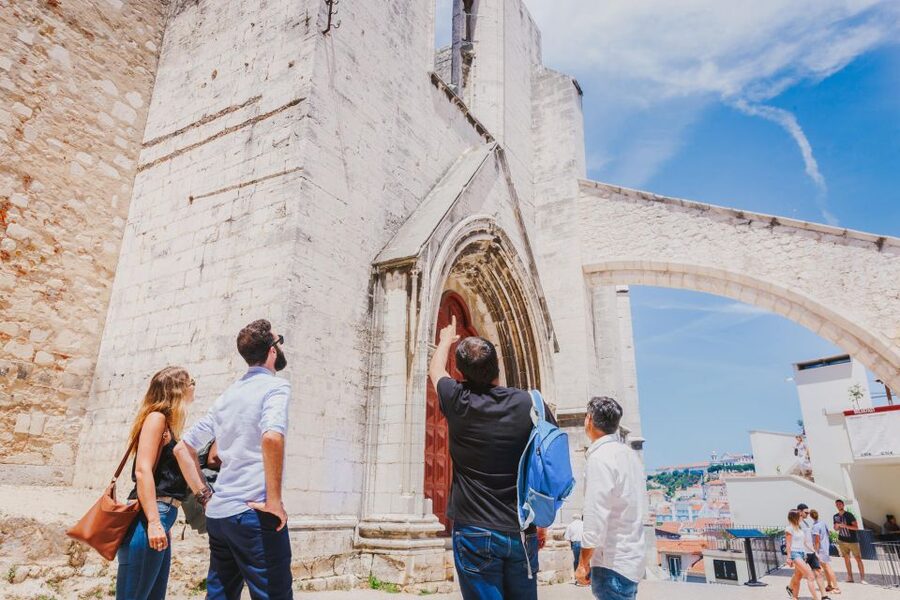
Carmo Square is one of the most meaningful stops. Here, the guide discusses the Carnation Revolution of 1974, which ended 48 years of dictatorship in Portugal. The subject gives the tour a modern political edge that many city walks leave out.
You will also hear about the square’s role in the events of that day. The experience is especially useful if you want more than a postcard version of Lisbon. The city’s tiled facades, cafés, and viewpoints are attractive, but understanding the recent past makes the social character of Portugal easier to read.
The stop lasts about 15 minutes and includes time for photographs and views along the way. The exact delivery will depend on your guide. Daniel has been praised for making historical material lively and personal, while Maria and Natalia have been noted for mixing facts with humor. That range is worth keeping in mind: the route is shared, but the feel may change with the person leading it.
Same streets, a different route:
- Age of Discoveries Walking Tour in Belém
★ 5.0 · 1,513 reviews - Lisbon Food Tour with 10+ Tastings of Local Delicacies & Wines
★ 5.0 · 1,339 reviews - Sintra & Cascais Day Tour with Pena Palace Entry and Gardens Walk
★ 5.0 · 962 reviews - Lisbon Roots – Small group Food & Culture Walking Tour w/tastings
★ 5.0 · 910 reviews
Chiado, where cafés meet bookshops and theaters
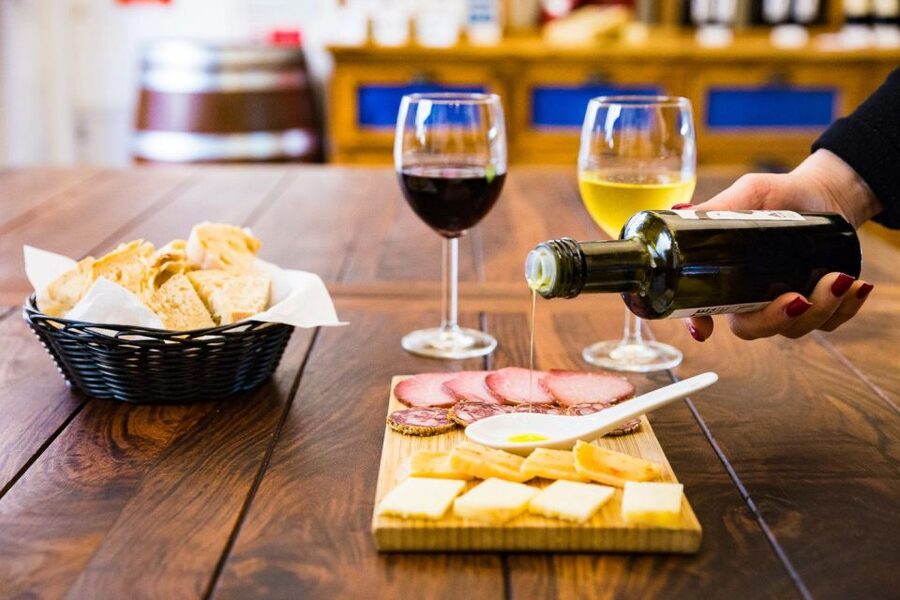
Chiado brings a different mood. The district is associated with old cafés, boutiques, theaters, and small bookstores, and the walking route passes through this elegant part of central Lisbon rather than treating it as a quick backdrop.
I like this change of pace. Rossio and Baixa give you open spaces and grand civic design. Chiado feels more intimate and urban. It is a place to notice shopfronts and street life, not just major monuments.
The tour passes through Chiado for around 15 minutes. That is enough to introduce the district and point out places to return to, but not enough for shopping or a café break. If you already know you want to browse bookstores or sit over coffee, make a note of the area and come back later.
This is one reason the walk works well on your first or second day. Guides often give practical advice about restaurants, shortcuts, and places to explore independently. Several guides, including Carlos, Maria, Catherine, and Joana, have been praised for offering useful suggestions beyond the official route.
Baixa and the city rebuilt after disaster
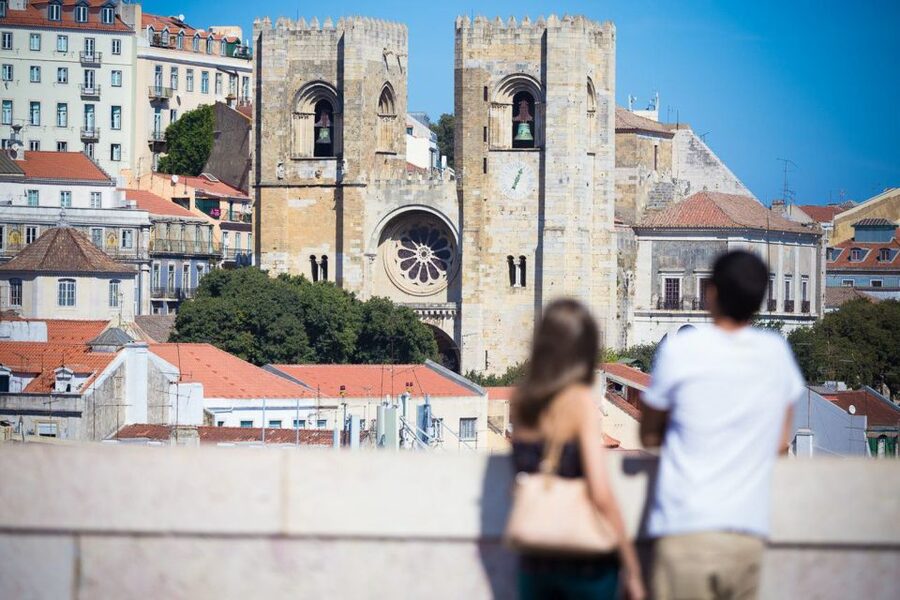
Baixa is the most orderly part of the walk. The district was rebuilt after the 18th-century earthquake under new urban rules, with a planned layout and attention to earthquake resistance. Your guide explains why the streets feel different from the crooked lanes of Alfama.
This contrast is one of the strongest parts of the experience. Instead of treating Lisbon as one uniform old town, the tour shows you how different periods produced different street plans. In Baixa, the broad avenues and regular blocks make sense once you know the story behind them.
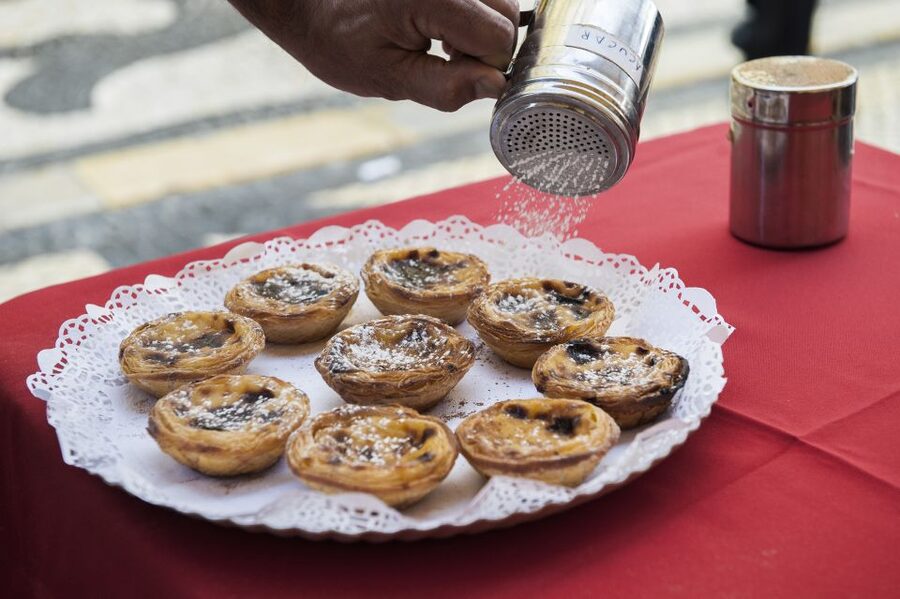
Baixa is also where the first food tasting takes place. You receive a pastel de nata, the familiar Portuguese egg custard tart. It is a small inclusion, but a well-chosen one. Food gives you a break from walking and a simple way to connect the city’s culture with something you can taste.
The food stop is not a full meal. You should still eat before the tour if you need a substantial breakfast or lunch. Think of the tart as a sample, not a replacement for one of Lisbon’s proper meals.
Viewpoints and the physical shape of Lisbon
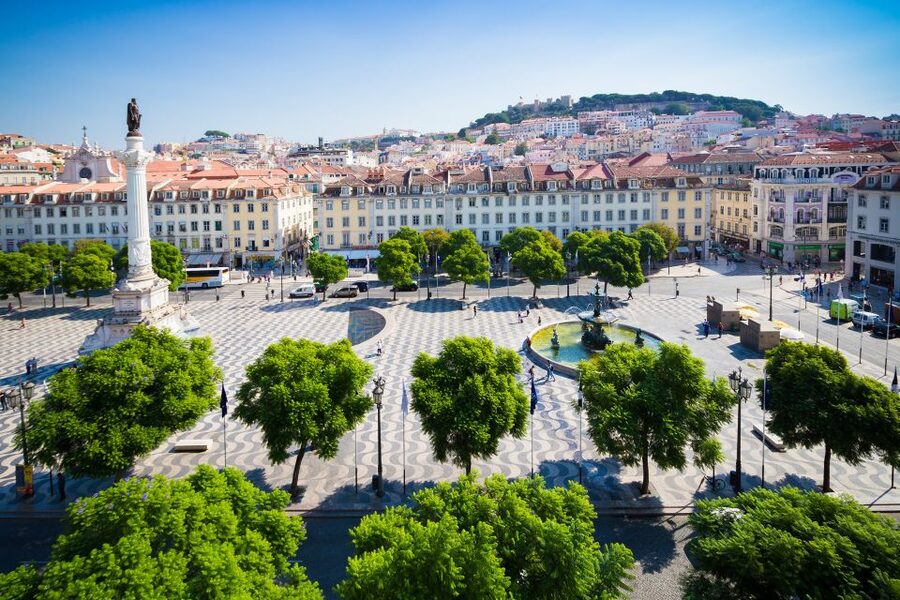
The route includes several viewpoints, each scheduled for roughly 10 to 15 minutes. The precise outlook may vary, but these pauses help you understand Lisbon’s hills and layered neighborhoods.
I find viewpoints most useful when a guide explains what you are seeing. Without context, rooftops and river views can blur together. With a map in your head, you can begin to distinguish the central grid, the higher districts, and the older quarter below.
The hills are also a practical issue. This is not a flat city walk. You may encounter slopes, cobbled surfaces, and narrow lanes, especially as you approach Alfama. Wear comfortable shoes with a secure sole, and choose clothes suited to three hours outdoors. The tour information does not list an accessibility plan, so anyone concerned about steep or uneven ground should ask the provider before booking.
Alfama, Fado, and the final tasting
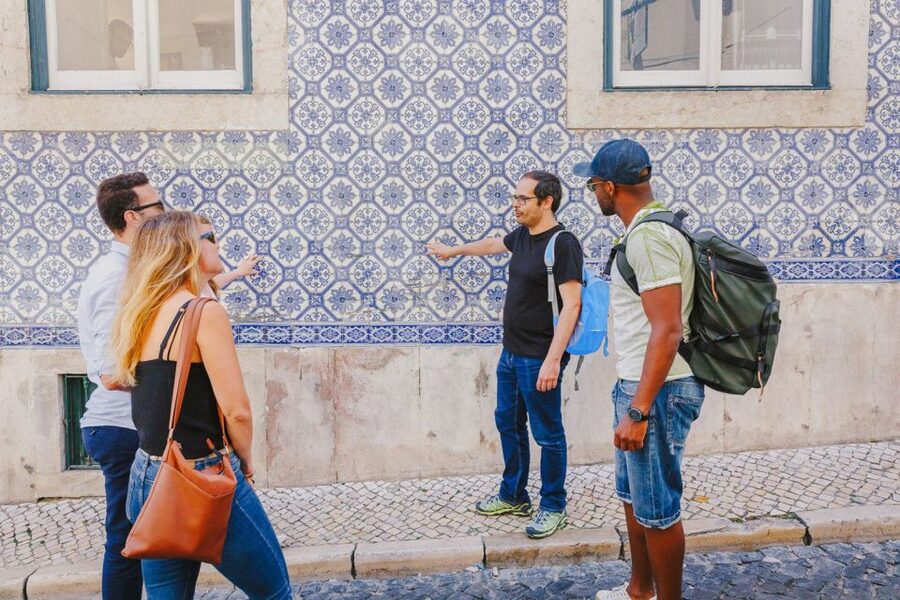
Alfama is the most atmospheric part of the route. Its streets wind through Lisbon’s oldest neighborhood, and the walk slows into a 30-minute section of photographs, views, and local explanation.
This is where the tour feels least like a standard checklist. You are moving through alleys and sloping lanes instead of wide planned streets. Your guide introduces Fado, Lisbon’s distinctive musical tradition, and points out details such as the tiled facades. One particularly useful tip is to ask why many Alfama buildings are covered in tiles. That question can lead to a better understanding of the neighborhood than simply photographing the patterns.
The second tasting takes place in Alfama and includes a local snack and wine. Several descriptions of the experience identify the snack as a codfish cake and the wine as green wine. The official inclusions specify one snack tasting and one wine tasting, so exact serving details may vary, but you should expect a modest local sample rather than a full tasting menu.
This break comes at a good point in the route. By then, you have walked through several districts and climbed into the old quarter. A small drink and snack give the group time to pause and talk. It also keeps the experience social rather than turning the guide’s commentary into a nonstop lecture.
Ending at Praça do Comércio
The walk ends at Terreiro do Paço, better known as Praça do Comércio. This grand riverside square was once the entrance hall of the city, and it is a fitting finish after the tighter streets of Alfama.
Ending here is practical. You are left in a central area with clear visual landmarks and plenty of options for continuing your day. Your guide can also help you decide what to see next, and several guides have been praised for giving restaurant suggestions and shortcuts.
The final square provides a useful sense of scale. You have moved from a statue in Rossio through planned streets, historic neighborhoods, hills, and old lanes, then arrived at the open waterfront. That progression is the real strength of the route.
Guides, group mood, and what the rating tells you
The experience has a 4.9 rating from about 2,700 reviews, and the strongest pattern is clear: people value the guides. Names that receive especially warm praise include Filipa, Martin, Daniel, Maria, Carlos, Joana, Natalia, Guilherme, Ricardo, and Catherine.
The common strengths are enthusiasm, patience, humor, clear explanations, and practical recommendations. Daniel is praised for bringing a group together and making difficult weather enjoyable. Maria is noted for lively storytelling and local insight. Carlos is described as patient with questions, while Ricardo has sometimes allowed the walk to run beyond three hours when the group was enjoying the conversation.
You should not assume every tour will last longer than three hours. The stated duration is three hours, and guide style will differ. Still, the range of feedback suggests that the experience depends heavily on who leads your departure. That is normal for a walking tour, and here it appears to be a positive part of the design.
The tour is in English only. That makes it a good choice if you want history and local advice delivered in a conversational format. It may be less suitable if you prefer a silent audio guide, a private group, or a tightly scripted sightseeing program.
Is $23 good value for Lisbon?
For $23, you receive a three-hour guided walk, a pastel de nata, a savory snack, and wine. You also get a route that covers Rossio, Restauradores, Carmo, Chiado, Baixa, viewpoints, Alfama, and Praça do Comércio. That is a lot of ground for a modest price.
The value is best if you are new to Lisbon and want help with orientation. The guide can show you how the central districts connect, explain why they look different, and suggest places to return to. You can then spend later days choosing your own museums, restaurants, Fado venues, or viewpoints.
The price does not include admission to attractions, and the tour is not designed around interior visits. If your priority is entering major monuments, you will need separate tickets and time. This walk is about streets, squares, viewpoints, food, and context.
Who should book this walk?
I would choose it for a first Lisbon morning, particularly if you want to understand the city before exploring on your own. It suits couples, solo visitors, friends, and families with older children who can manage three hours of walking.
It is also a good fit if you enjoy history in manageable portions. You hear about independence, the earthquake, dictatorship, revolution, urban planning, and Fado without spending the whole day in a classroom.
I would think twice if you have limited mobility, dislike hills, or want a leisurely café-centered outing. The route covers a lot, and the uneven streets of Alfama are part of the experience. Bring water, wear good shoes, and leave room in your schedule for a proper meal afterward.
Should you book the Best of Lisbon Walking Tour?
Book it if you want a useful first map of Lisbon, a friendly English-speaking guide, and a smart mix of landmarks, neighborhoods, recent history, and local tastes. The pastel de nata, codfish cake, and wine are modest extras, but they make the walk feel more connected to Portugal.
Skip it if you want museum entry, a private guide, or a flat and slow route. For most visitors who want to get their bearings and understand why Lisbon looks the way it does, $23 is a sensible spend, especially early in your stay. Free cancellation up to 24 hours before the tour and the reserve-now, pay-later option also make it easy to fit into a changing itinerary.
FAQ
Where does the Lisbon walking tour start?
The tour starts in Rossio Square, near the statue of Dom Pedro IV.
Where does the tour finish?
It finishes at Terreiro do Paço, also called Praça do Comércio.
How long does the walking tour last?
The stated duration is three hours. Some guides may run slightly longer when the group has many questions, but you should plan around the full three-hour schedule.
What areas of Lisbon does the tour visit?
The route includes Rossio, Restauradores, St. Dominic’s Square, Carmo Square, Chiado, Baixa, viewpoints, and Alfama before ending at Praça do Comércio.
What food and drink are included?
The tour includes one pastel de nata, one snack tasting, and one wine tasting. The snack may be a codfish cake, and the wine is described in the experience details as green wine.
Is the tour conducted in English?
Yes. The live tour guide and stated tour language are English.
What should I bring?
Wear comfortable shoes and comfortable clothes. The tour involves several hours of walking through Lisbon’s slopes, cobbled streets, and winding lanes. Pets are not allowed.
Just added around Lisbon
- Fado: Musical Walking Tour with Food & Live Show★ 5.0 · 121 reviews
- Eat & Walk Through Lisbon: A Local Food & Wine Experience★ 4.9 · 458 reviews
- Best of Lisbon Private Walking Tour★ 5.0 · 370 reviews
- Lisbon: Private Dark History Walking Tour with Drinks★ 4.8 · 387 reviews
- Lisbon: Award-Winning Guided Walking Food Tour with Local Drinks★ 5.0 · 374 reviews
- Lisbon: Best of City Private Walking Tour★ 4.9 · 601 reviews
- Lisbon: Belém Walking Tour with Jerónimos Monastery Ticket★ 4.9 · 637 reviews
- Lisbon: Kickstart Street Art Walking Tour★ 4.9 · 717 reviews
Walking Tours, compared.

Magical London: Harry Potter Guided Walking Tour
Read our review →
Reykjavik Food Walk – Local Foodie Adventure in Iceland
Read our review →
History and Hauntings of Salem Guided Walking Tour
Read our review →
New Orleans Premier Ghost, Voodoo and Vampire Walking Tour
Read our review →
Amsterdam Anne Frank: Small-Group Walking Tour & Local Guide
Read our review →

Edinburgh Castle: Guided Walking Tour with Entry Ticket
Read our review →
Anne Frank’s Story – Guided Walking Tour through Amsterdam
Read our review →Browse the lists this tour appears in