
REVIEW · UK
Air Raid Shelter + St. Nicholas Market Walking Tour
Bristol’s Corn Exchange hides far more than its grand stone exterior suggests. With a guide such as Duncan, Owen, Theresa, or Bruce, you’ll enter underground passageways, WWII air raid shelters, old rooms tied to Bristol’s music scene, and possibly rooftop viewpoints before finishing near St Nicholas Market.
I like the rare access beneath a familiar city landmark and the way the guides connect wartime Bristol with ordinary people’s lives. I also like the modest price, about $17.34, which makes this an easy add-on to a day in the city. The main drawback is physical: expect stairs, standing, some confined spaces, and only limited walking.
Key points to know before booking
- The Corn Exchange is the real star: You enter areas most people pass without knowing they exist.
- WWII takes center stage: The shelter and museum displays focus on Bristol during the Blitz and civilian life in wartime.
- Guides shape the experience: Duncan, Owen, Theresa, and Bruce are named in tour feedback, with strong praise for their energy, research, and storytelling.
- St Nicholas Market finishes the outing: Food is not included, but the market gives you an easy place to eat afterward.
- Plan for stairs and standing: The tour is mostly underground, with steps, confined areas, and some outdoor time.
- It suits locals as well as first-time visitors: Many Bristol residents discover parts of the Corn Exchange they have never seen.
Entering Bristol’s Corn Exchange
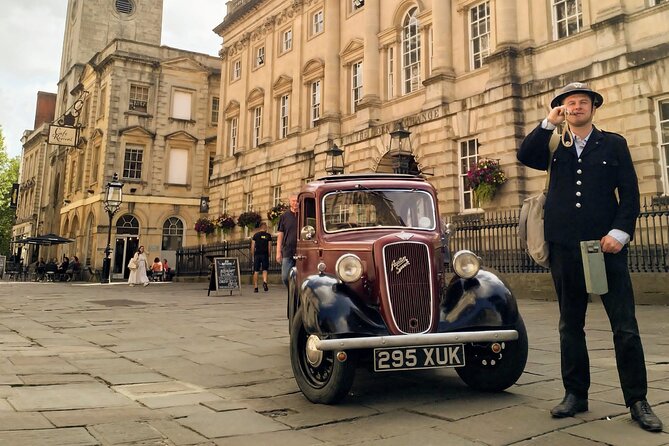
The tour begins at the Corn Exchange on Corn Street, in central Bristol. That is a convenient meeting point near public transport, and the building itself gives the outing an immediate sense of place. You are not starting with a generic city walk. You are beginning at one of Bristol’s key historic buildings.
The Corn Exchange is best known from the outside for its grand architecture and central position. Inside and below it, the tour opens up a less visible side of the building. You may see subterranean passageways, old rooms, air raid shelter spaces, and areas connected with music performances.
That contrast is the main reason to book. You can walk past the Corn Exchange on another day and see only its public face. Here, the guide helps you understand how the building changed roles over time, from a place linked with commerce to a shelter during the Second World War and, in other rooms, a music venue.
The tour description lists the Corn Exchange portion as one hour, while the full activity lasts about two hours. That suggests the wider experience includes time moving between areas, listening to explanations, and reaching the St Nicholas Market end point. Allow the full two hours rather than planning a tight connection immediately afterward.
More Market Visits in the UK:
- London Bridge & Borough Market Food Tour with 7 Authentic Dishes
★ 5.0 · 1,972 reviews - Bristol: Air Raid Shelter & St. Nicholas Market Walking Tour
★ 4.8 · 320 reviews - Bangkok: City Highlights Temple and Market Walking Tour
★ 4.5 · 3,990 reviews
Inside the WWII air raid shelter
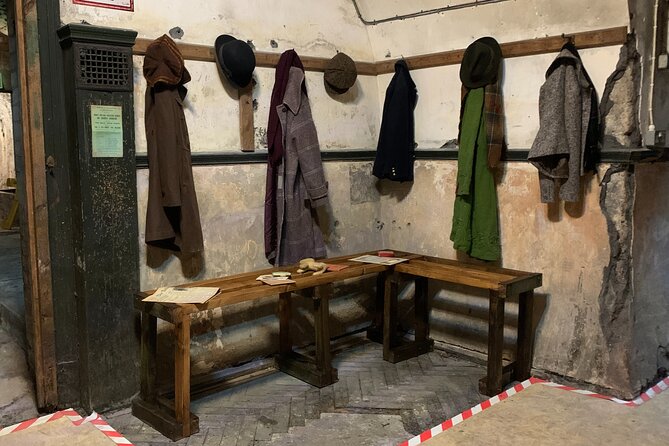
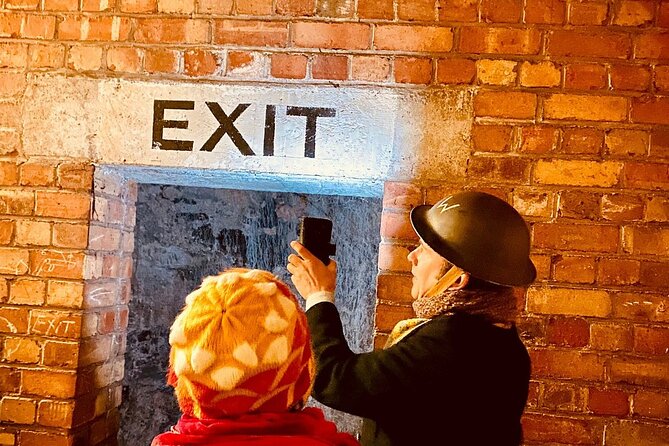
The air raid shelter is the heart of the experience. Bristol suffered bombing during the Blitz, and the shelter offers a direct way to think about that period at street level. Instead of seeing wartime history only through dates and photographs, you are taken into the sort of underground place where people sought safety.
The focus is not just on military events. Guides explain how the bombing affected Bristol and its people, bringing the subject back to daily life. That human scale gives the tour more weight than a quick list of raids and damage.
The shelter contains historic objects and displays, giving the guide something concrete to discuss. The collection has been built up with care, and stories and photographs connected with Bristol add local detail. You may also hear material gathered from people connected with earlier tours, which helps the presentation feel like an ongoing record rather than a fixed museum script.
Duncan is especially associated with the tour and is described as passionate about the shelter and its preservation. Owen is also named as a guide, with strong praise for his clear explanations of the vaults and museum area. Theresa and Bruce have led tours as well. The exact guide will depend on the date, but the experience appears to rely heavily on a guide who can tell the story with warmth and humor.
That personal approach matters here. Wartime shelters can feel bleak if the presentation is only technical. A lively guide can explain the difficult material without making light of the suffering. The strongest accounts of this tour point to a good balance between serious history, amusing local details, and time for questions.
Hidden rooms, passageways, and rooftop views
The air raid shelter is not the only unusual part of the Corn Exchange. You also get access to passageways and rooms that are normally closed to casual visitors. The tour highlights areas once associated with major bands, adding a later chapter to the building’s story.
This mix gives the outing a broader appeal. If you are interested in wartime Bristol, the shelter provides the central reason to go. If you enjoy architecture, music history, or unusual city interiors, the extra rooms make the visit feel more complete.
Rooftop views are also part of the advertised access. The exact view and time spent outside are not specified, so I would treat this as a useful bonus rather than the main purpose of the tour. Outdoor conditions can affect that portion. One account describes the guide continuing in heavy wind and rain, so wear clothing that can handle Bristol weather.
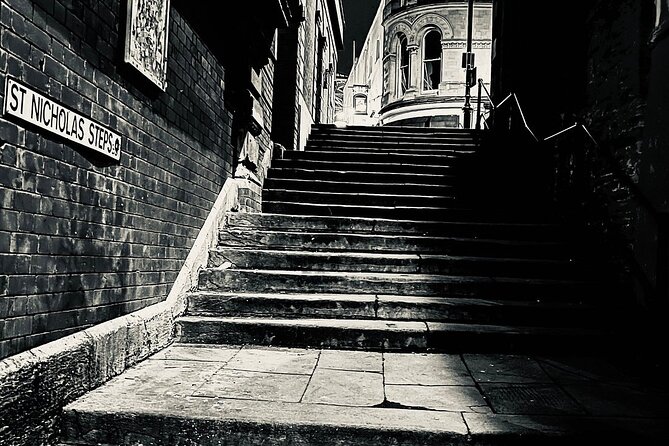
The passageways and underground areas are not designed like a modern attraction. Expect a more practical, preserved setting. That can be part of the appeal, since you are seeing a real historic space rather than a polished reconstruction. It also means you should wear sensible shoes and be ready for steps.
What the walk is physically like
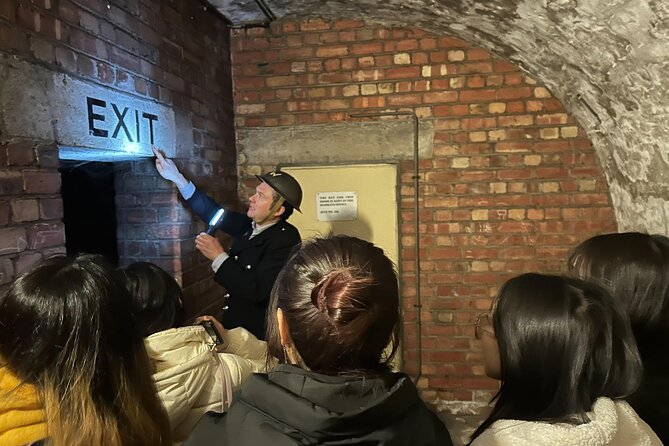
This is a short walking tour, but it is not a brisk city walk. Most of the activity involves standing while the guide explains the building, the shelter, and Bristol’s wartime experience. Walking is described as limited, but stairs are part of reaching the shelter.
You may also spend time in confined underground areas. If you dislike narrow spaces, ask yourself how comfortable you are with that before booking. The tour is not presented as suitable for dogs, and the practical advice is clear: wear suitable clothing and footwear.
Most people can participate, according to the tour information. Still, that broad statement should not be confused with step-free access. The presence of stairs, standing, and confined areas means anyone with mobility concerns should check the details with the operator before paying.
For families, the format can work well because the guide keeps the subject active and story-led. The material is serious, but it is not presented as a dry lecture. The experience has also been described as suitable for different age groups, making it a reasonable afternoon activity for a mixed party.
More Shopping Tours in the UK:
- Tokyo Tsukiji Fish Market Food and Culture Walking Tour
★ 5.0 · 3,184 reviews - Tokyo: Tsukiji Fish Market Food and Walking tour
★ 5.0 · 1,724 reviews - Tokyo: Tsukiji Fish Market Guided Walking Tour
★ 4.9 · 1,397 reviews - Nishiki Market Brunch Walking Tour (7 Tastings + Brunch)
★ 5.0 · 1,355 reviews
Ending at St Nicholas Market
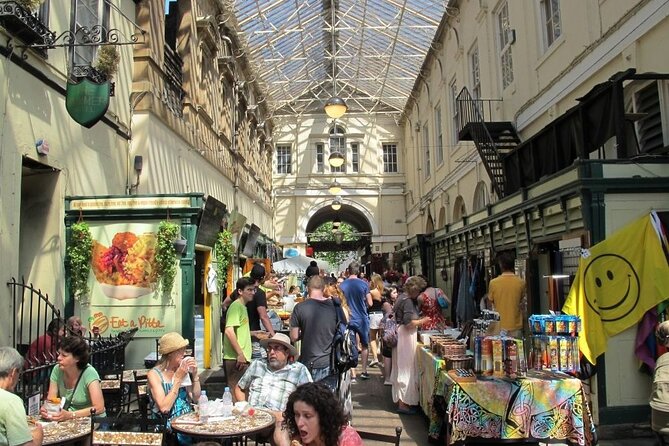
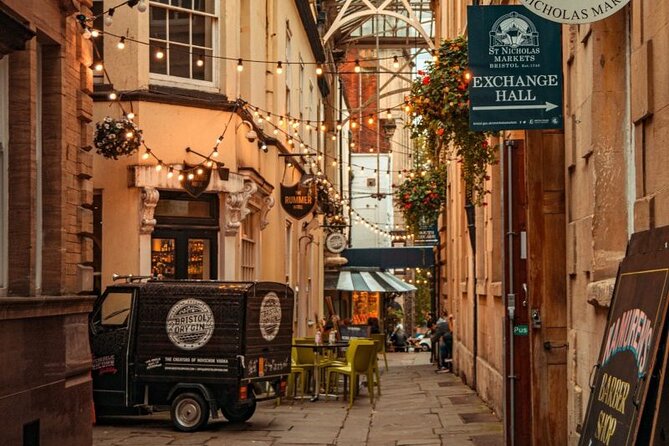
The tour ends back at the meeting point, with St Nicholas Market at the center of the final part of the experience. The market is known for its food stalls, and the tour places you close to one of the best spots in Bristol for an informal meal.
Lunch is not included, so plan to buy food separately. That is actually useful for a city outing because it lets you choose your own price and style. You might finish with a quick snack, sit down for a fuller meal, or continue exploring central Bristol after the tour.
The market also changes the mood of the afternoon. You begin with an enclosed historic building and the difficult subject of wartime Bristol, then finish among food stalls and everyday city life. It is a simple but effective way to close the experience without forcing a formal restaurant stop into the schedule.
If you are booking this around lunchtime, leave room in your plans to eat at the market rather than rushing away. The food is not part of the admission price, but the location makes it easy to add.
The guides make the difference

This tour depends more on its guide than on a large collection of displays. Duncan is repeatedly described as enthusiastic, amusing, and deeply committed to preserving the shelter. Owen is praised for his explanations of the underground areas, while Theresa is noted for an engaging presentation. Bruce is also named as an effective guide.
Those names do not guarantee who will lead your departure, but they show the sort of presentation you can expect: conversational, local, and strongly tied to Bristol. The guides appear willing to answer questions rather than simply move a group from one room to the next.
I particularly like that the tour seems to welcome people who already live in Bristol. It is not only a basic introduction for first-time visitors. The Corn Exchange has enough unseen spaces and local detail to surprise people who have passed through the city for years.
The tone can be a little eccentric at times, which suits a small historical tour better than a stiff formal script. If you prefer a quiet museum visit with minimal commentary, this may feel too talkative. If you enjoy stories, questions, and a guide who clearly cares about the place, that energy is a major benefit.
Is $17.34 good value?
At about $17.34 per person, this is a strong-value experience if you want a focused historical activity rather than a full city sightseeing tour. Admission fees and taxes are included, and the price gives you access to areas of the Corn Exchange that are not part of an ordinary visit.
The value comes from access and interpretation. You could look at the building from outside for free, but you would miss the shelter, passageways, rooms, and the local stories that tie them together. The guide is doing much of the work, turning an unusual space into a coherent two-hour experience.
You should remember that lunch is extra, and the tour does not replace a broader Bristol walking tour. It focuses mainly on the Corn Exchange, the air raid shelter, and nearby market life. That narrow focus is a strength if you are interested in WWII or unusual buildings, but it may feel limited if you want a complete introduction to Bristol’s landmarks.
The maximum group size is 25 people. That is large enough to create a social tour but small enough for a guide to keep the group together in underground rooms. Group size can affect how easily you hear explanations, especially in enclosed spaces, but the limit is reasonable for this kind of experience.
Who should book this experience?
I would recommend it to anyone interested in wartime history, local stories, historic buildings, or unusual access. It is particularly useful for people who have already seen Bristol’s main sights and want something less predictable.
It also works well for Bristol residents. The fact that long-time locals can discover the shelter for the first time is a good sign that this is not simply a standard tourist loop. The focus stays on one important building and its hidden spaces, which gives the tour a strong local identity.
Families can consider it too, especially if children enjoy stories about buildings, underground areas, and wartime life. The tour is mostly standing, so younger children may need a little patience during the explanations. The guides’ humor and questions help keep the pace from feeling like a school lesson.
I would think twice if you want extensive outdoor walking, a polished museum environment, or a fully accessible route with no steps. I would also avoid booking if confined spaces make you uncomfortable. For everyone else, the practical drawbacks are manageable with good shoes and weather-ready clothing.
Booking, meeting point, and cancellation
You meet at the Corn Exchange, Corn Street, Bristol BS1 1JQ. The activity ends back at the meeting point, and confirmation is provided when you book. It is offered in English and uses a mobile ticket.
The tour is generally booked about 19 days ahead, so I would reserve early if your Bristol dates are fixed. Free cancellation is available up to 24 hours before the start time for a full refund. Cancellations or changes made less than 24 hours before the start are not accepted for a refund.
One caution is worth noting: at least one departure was affected by a guide not arriving, with cancellation sent through the booking app. That appears to be an exception rather than the normal pattern, but if a problem affects your booking, check all available messages and contact methods rather than relying on one notification.
Should you book the Corn Exchange shelter tour?
Book it if you want a small, unusual slice of Bristol rather than a broad city overview. The shelter, old passageways, music rooms, and market finish create a compact experience with plenty of local character.
The best reason to go is the combination of access and storytelling. You are not merely told that Bristol suffered during the Blitz. You enter a place connected with that experience, then hear how the city and its people lived through it.
Skip it if you need a step-free route, dislike underground spaces, or want a tour packed with long-distance city walking. For everyone else, the low price, central location, strong guides, and rare Corn Exchange access make this an easy recommendation.
FAQ
How much does the Air Raid Shelter and St Nicholas Market Walking Tour cost?
The tour costs $17.34 per person. All fees and taxes are included, but lunch is not included.
How long does the tour last?
The full experience lasts approximately two hours. The Corn Exchange portion is listed as one hour.
Where does the tour begin?
The meeting point is the Corn Exchange, Corn Street, Bristol BS1 1JQ, United Kingdom.
Where does the tour end?
The activity ends back at the meeting point.
Is the tour offered in English?
Yes. The tour is offered in English.
What does the tour include?
It includes access to the Corn Exchange areas described in the tour and all fees and taxes. The experience features underground passageways, rooftop views, WWII air raid shelters, historic rooms, and a finish near St Nicholas Market.
Is lunch included?
No. Lunch is not included, but the tour finishes among the food stalls of St Nicholas Market.
How large is the group?
The tour has a maximum group size of 25 people.
Is the tour suitable for everyone?
Most people can participate, but the tour includes stairs, standing, some walking, and confined underground areas. It is not suitable for dogs.
Can I cancel for a full refund?
Yes. You can cancel at least 24 hours before the start time for a full refund. Cancellations or changes made less than 24 hours before the start are not accepted for a refund.
Just added around the UK
- Falmouth: Vibrant Historical Walking Tour (award-winning)★ 4.9 · 75 reviews
- The Must-Sees of Edinburgh: Small Group Walking Tour in French★ 4.9 · 88 reviews
- Edinburgh: Old Town History Walking Tour★ 4.9 · 528 reviews
- Edinburgh: Old Town Stories – Guided Walking Tour★ 4.9 · 86 reviews
- Ghosts, Ghouls & Gallows :The Original Bristol Ghost Walk★ 4.6 · 76 reviews
- Edinburgh: Private Walking Tour with a Local★ 4.4 · 78 reviews
- Edinburgh: Private Walking Tour in French with Clémentine★ 5.0 · 73 reviews
- Edinburgh: Multi-Sensory Old Town Historical Walking Tour★ 4.6 · 290 reviews
Markets, compared.

City Highlights Temple and Market Walking Tour
Read our review →
Tokyo Tsukiji Fish Market Food and Culture Walking Tour
Read our review →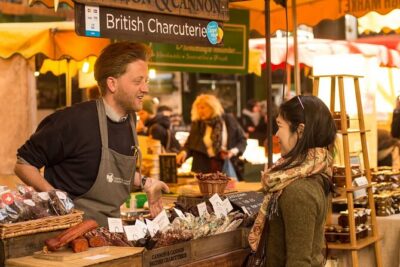
London Bridge & Borough Market Food Tour with 7 Authentic Dishes
Read our review →


Nishiki Market Brunch Walking Tour (7 Tastings + Brunch)
Read our review →
Bologna Food & Market Tour with 6 Tastings, Pasta, Wines & More
Read our review →
Tsukiji Fish Market Small-Group Food Walking Tour
Read our review →Browse the lists this tour appears in