
REVIEW · KYOTO
Kyoto: Gion Walking Tour
Gion is more than a pretty lane of wooden houses and the occasional glimpse of a maiko. This two-hour walk connects three hanamachi districts with Kyoto’s larger story, from Pontocho and the Kamo River to Gion-Kobu, Gion-Higashi, and Yasaka Shrine. Guides Jose and Saskia bring maps, photos, anecdotes, and plenty of time for questions.
I especially like the six-person limit, which makes it easy to hear the guide and stop when something catches your eye. I also like the tour’s conversational style: you can ask about geiko life, Japanese customs, restaurants, football, shrines, or daily life in Japan instead of simply following a memorized script.
The main drawback is that the route does not include Hanamikoji-dori, one of Gion’s best-known streets. A maiko or geiko sighting is never promised, either, and the 3.3-kilometer walk can feel long in Kyoto’s summer heat. Still, the pace is designed for frequent stops rather than a forced march.
What makes this Gion walk worth your time
- Three hanamachi in two hours: Compare Pontocho, Gion-Kobu, and Gion-Higashi rather than seeing only one famous street.
- A small group of up to six: You can hear clearly, ask follow-up questions, and spend more time on subjects that interest you.
- Guides who make Kyoto personal: Jose and Saskia share stories about life in Japan alongside the formal history.
- Small details get attention: Traditional house fronts, alley layouts, statues, bridges, and shrine customs all become part of the story.
- Yasaka Shrine adds context: If time permits, you learn how the former Gion Shrine gave the district its name and connects to the Gion Festival.
- Useful flexibility: The 9:45 and 12:30 departures can include a free visit to the Gion Gallery if you want to extend the outing.
Starting beside the Disney Store in central Kyoto
The meeting point is in front of the Disney Store at Kyoto Shijo-Kawaramachi. This is the only Disney Store in Kyoto, so it should be straightforward to identify. Your guide sits outside holding an iPad displaying the Get Your Guide image and the tour title with its start time.
This location puts you in the middle of downtown Kyoto, not at a quiet shrine gate or a station platform. Give yourself enough time to reach Shijo-Kawaramachi, especially if you are coming from another part of the city. The walk ends around Yasaka Shrine, so you finish near one of Kyoto’s main sightseeing areas rather than returning to the starting point.
You should arrive ready to walk. The route covers about 3.3 kilometers, or two miles, with regular stops for explanations. Comfortable shoes matter more than fashionable ones. Water, sunscreen, a hat, and an umbrella are sensible additions, since much of the experience takes place outdoors.
The tour costs $35 per person. That is a fair price for a two-hour small-group walk, particularly when the group is full and you receive more access to the guide than on a large city tour. If only two or three people book, the outing can feel close to a private tour without the cost of hiring one.
A few more walking tours around Kyoto worth a look
- Kyoto Geisha Walking Tour: Gion District & Hidden Gems
★ 4.7 · 3,273 reviews - Kyoto: Gion Magical Night Walking Tour with Geisha Trivia
★ 4.9 · 2,393 reviews - Kyoto: Gion Geisha District Walking Tour – Stories of Geisha
★ 4.7 · 2,187 reviews
Pontocho Alley and the Kamo River
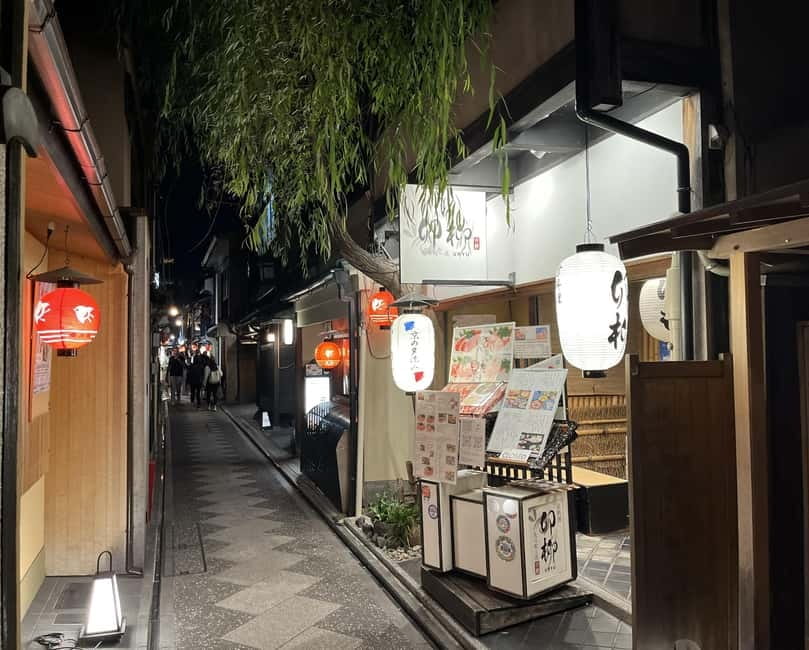
The walk begins with Pontocho Alley, one of Kyoto’s best-known entertainment districts. The narrow lane is famous for restaurants and traditional establishments, but its real value on this tour is the chance to understand how a hanamachi functions.
From Pontocho, the route includes Pontocho Kaburenjo, the theater connected with performances by artists from the district. Your guide explains how entertainment, restaurants, dance, music, and the geiko world fit together. This helps separate real local practice from the simplified image of geisha culture often presented to first-time visitors.
The route then reaches the Kamo River and the Yagi-san and Kita-san statues. These stops may sound modest on a sightseeing schedule, but that is exactly where a guide earns the fee. A statue or river view can pass unnoticed when you walk alone. With context, it becomes part of Kyoto’s political, religious, or neighborhood story.
Sanjo Ohashi, or Sanjo Bridge, gives the walk a wider city frame. The bridge links the old entertainment quarters with central Kyoto and offers a natural point to discuss movement through the city. You are not simply being led from one photogenic lane to another. You are learning how the districts relate to the river, bridges, roads, and commercial center.
Yamato-dori and the wooden streets of Gion-Kobu
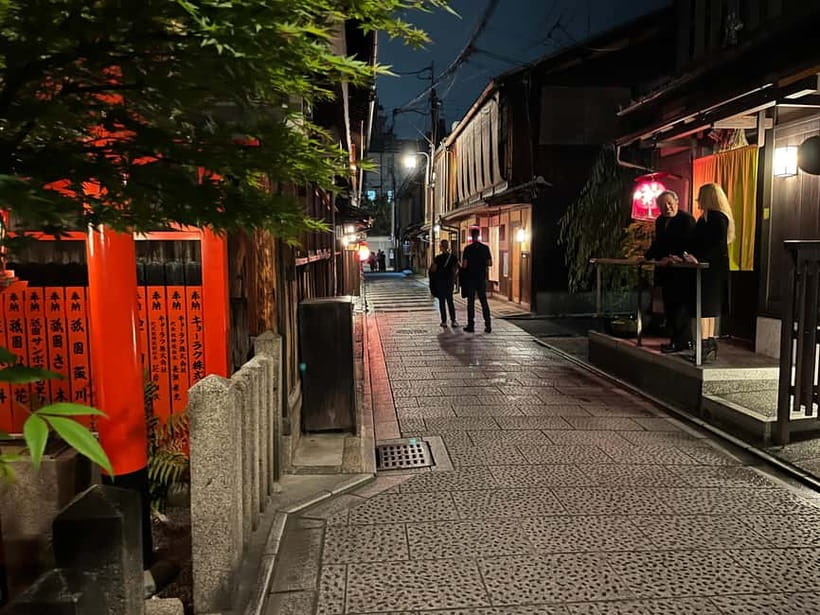
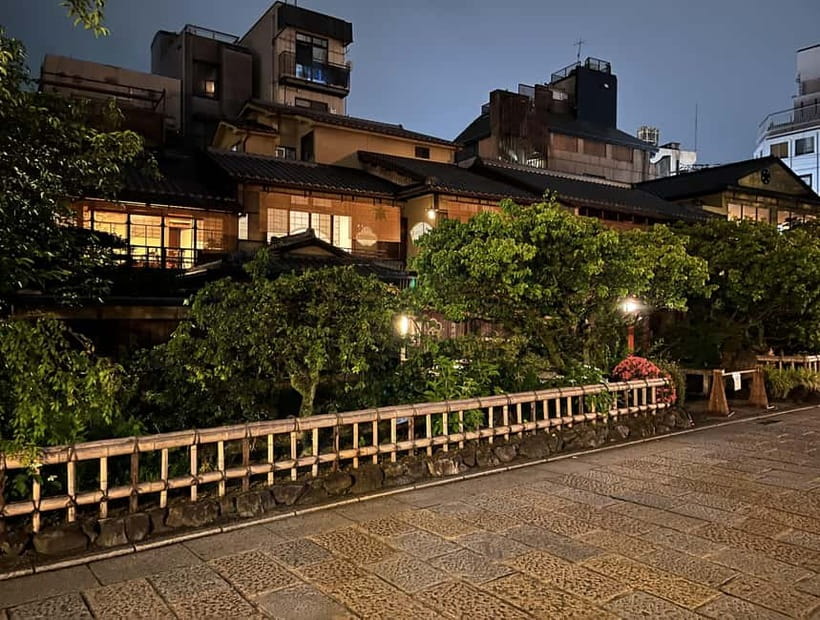
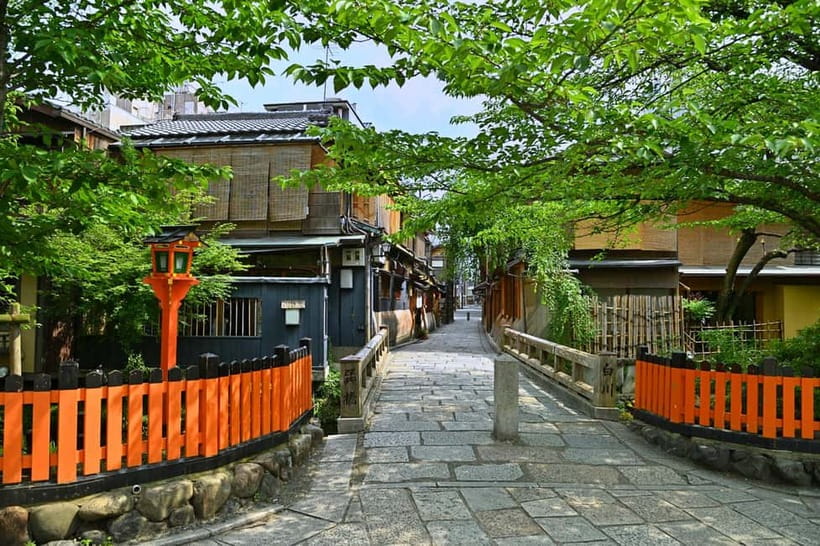
From the river, the route continues along Yamato-dori and into Gion-Kobu, including Gion-Shinbashi-dori and Gion Shirakawa. This is the section most visitors picture when they imagine old Kyoto: wooden machiya facades, carefully kept lanes, waterways, bridges, and a quieter mood than the main shopping streets.
The guide points out details in the architecture and explains how the neighborhood has been preserved. The national historical preservation area is not just a backdrop for photographs. It reflects rules and traditions that protect the scale and appearance of the streets.
Gion-Kobu is one of Kyoto’s hanamachi, or geiko districts. Here, your guide discusses the working life of maiko and geiko, including their training, routines, performances, and place within the district. The tour also clarifies terminology that can be confusing. Maiko are apprentices, while geiko are established performers. You get a more grounded picture than the usual quick explanation about painted faces and elaborate clothing.
This part of the route is also where the small group helps most. Gion’s lanes can be narrow, and large groups often clog the pavement or force a guide to repeat every point. With no more than six people, you can stop at a suitable place, look at an old facade, and keep the conversation moving.
Do remember that Hanamikoji-dori is not included. If that street is your main reason for visiting Gion, you will need to see it separately. This is not necessarily a weakness, since the tour intentionally uses other streets and districts, but it is an important planning detail.
Tatsumi Shrine and two bridges with different moods
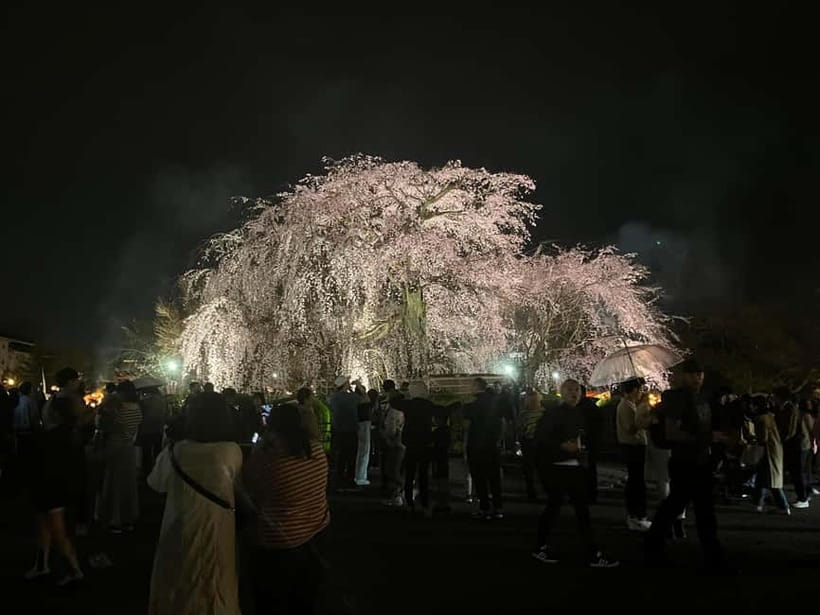
Tatsumi Jinja and Tatsumi Bridge add a smaller, more intimate pause. The shrine is associated with the Gion-Shirakawa area, while the bridge and surrounding lanes offer another chance to see how religious sites, homes, restaurants, and entertainment businesses sit close together.
I like this kind of stop because it slows the tour down. The best part of Gion is often not a grand monument. It is the relationship between a small shrine, a bend in a lane, a stream, and the buildings around them. Your guide can explain what you are seeing without turning every pause into a long lecture.
The guides also use an iPad to show photos, maps, and images of how Kyoto has changed over time. That is useful when the modern street does not immediately reveal its past. A visual comparison can make the city’s changes easier to understand, especially if you are interested in urban history or traditional architecture.
The pace is generally described as sensible, with frequent short talks rather than one long speech. That format suits curious people. You can ask a question, hear an answer, and then see the next example a few minutes later.
Same streets, a different route:
- Best of Kyoto: Gion, Geisha, Pagodas & Cobblestones
★ 4.9 · 2,058 reviews - Night Walk in Gion: Kyoto’s Geisha District
★ 4.5 · 2,003 reviews - Kyoto Gion Geisha District Walking Tour – The Stories of Geisha
★ 5.0 · 1,441 reviews - Nishiki Market Brunch Walking Tour (7 Tastings + Brunch)
★ 5.0 · 1,355 reviews
Gion-Higashi and the quieter side of the geisha districts
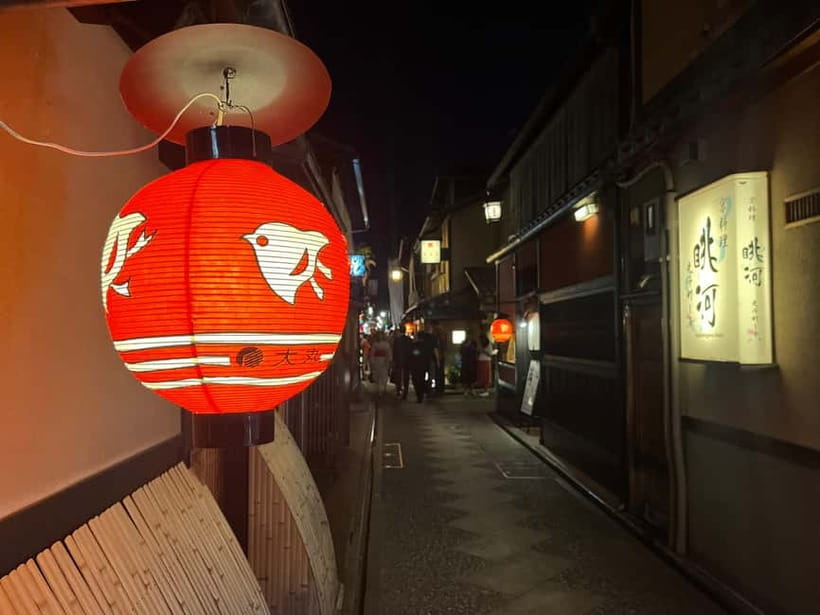
The route then moves into Gion-Higashi, the third hanamachi included in the walk. Seeing Pontocho, Gion-Kobu, and Gion-Higashi in one outing is a real strength. Instead of treating Gion as one uniform neighborhood, the tour shows you that Kyoto’s entertainment districts have their own identities and boundaries.
Gion-Higashi can feel less immediately familiar than the postcard streets of Gion-Kobu. That makes the guide’s explanation particularly useful. You learn how the districts are organized and how the hanamachi system has continued into modern Kyoto.
This is also a good place to keep expectations realistic. The tour explains the world of maiko and geiko, but it is not a staged performance or a guaranteed sighting. If you happen to see a maiko or geiko, the moment is luck, not part of the paid promise.
That distinction matters. You should never treat a performer as a photo opportunity or block a narrow lane while waiting. The tour’s better contribution is teaching you how to recognize the districts and understand the people who work in them. You can then behave more respectfully if you see someone on the way to an appointment.
Yasaka Shrine and the origin of Gion
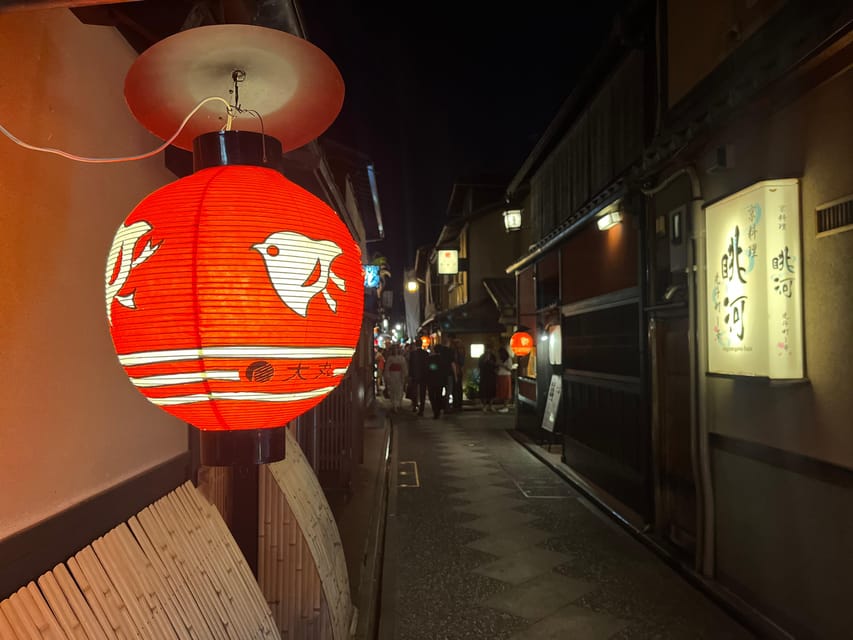
The final major stop is Yasaka Shrine, formerly known as Gion Shrine. The name matters because the shrine is tied to the origin of the Gion district’s name and to traditions that go back more than 1,100 years.
The guide visits the shrine if time allows. That qualification is worth noting, since the amount of time spent at earlier stops and the group’s questions can affect the finish. Yasaka Shrine is also a useful place to connect religion, neighborhood identity, and festival life.
If there is enough time, you hear about the Gion Festival, one of Japan’s three most famous and important festivals. The festival’s roots reach back more than 1,100 years, and its connection to the former Gion Shrine helps explain why the district is more than an entertainment quarter.
A shrine visit also gives you a chance to ask practical questions about Japanese worship. The experience is not described as a formal ceremony, and no amenities are included, but the guides can explain what you are seeing and may point out particular areas of interest.
What guides Jose and Saskia add
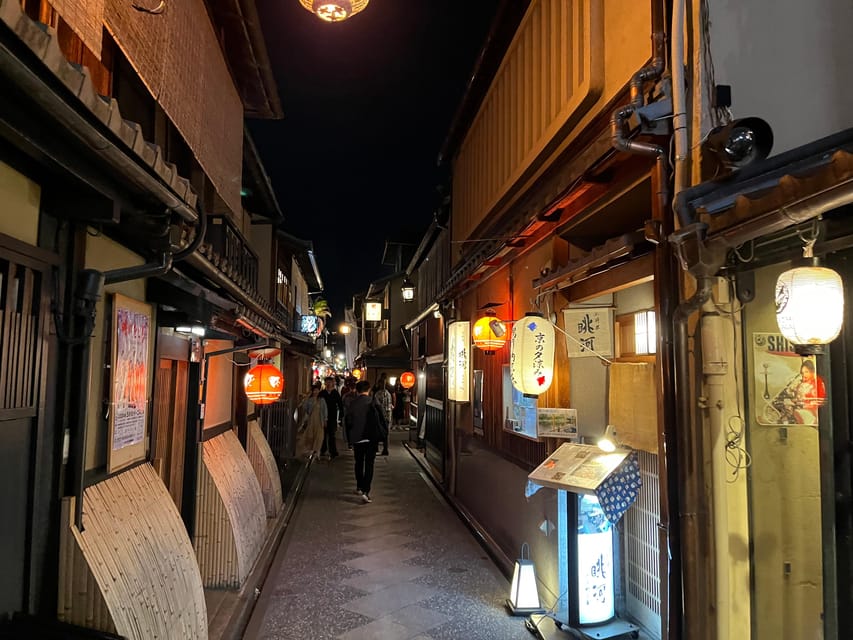
The strongest feature of this experience is the guide-led conversation. Jose and Saskia are the names most often associated with the tour, and both are described as warm, energetic, and deeply interested in Kyoto. Other guides may lead the walk, so do not assume both will be present on every departure.
Jose is praised for using maps, old and new photographs, and plenty of stories to show how Kyoto changed over time. Saskia offers tours in Dutch and has also guided in English. Spanish, French, English, and Dutch are available, which is useful if you prefer to discuss complicated cultural subjects in a language you follow easily.
The guides are not Japanese natives, according to the information provided, but they have lived in Japan for years and speak with strong familiarity about the country and its customs. Some people may prefer a Japanese guide for a tour about local culture. Others will appreciate the perspective of long-term foreign residents who understand the questions first-time visitors tend to ask.
The format suits a curious group. You can ask about the geisha districts, Japanese daily life, Kyoto restaurants, history, language, shrines, or anything else you notice. The guides are also willing to adapt explanations to the group, rather than forcing every person through the same fixed lecture.
Timing, weather, and seasonal changes
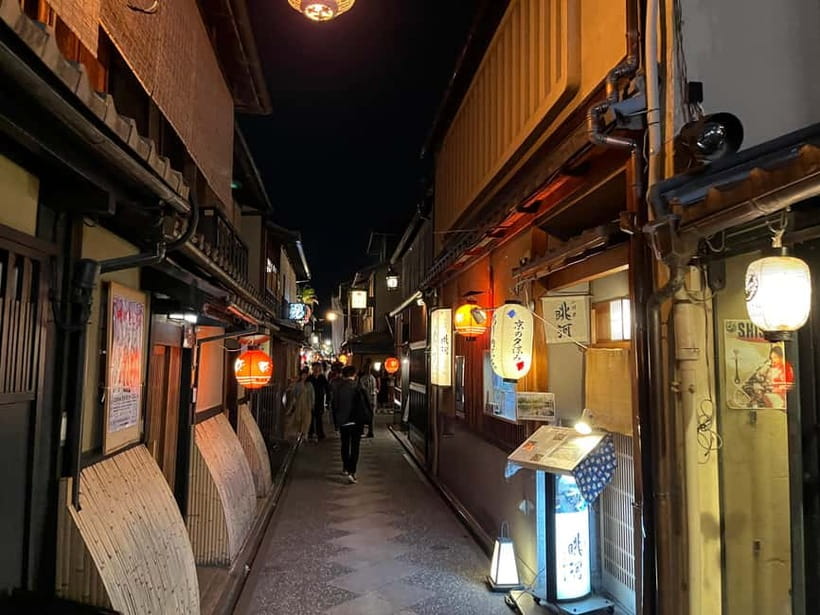
The tour lasts two hours, and the available start time depends on the date. The 9:45 and 12:30 departures have an extra option: you can visit the Gion Gallery at no additional cost if you want to extend your time.
During cherry blossom season, roughly late March through early April, the route changes slightly to show flowering areas around Gion. This is a useful seasonal adjustment, though it also means the exact walk may not match the standard route.
Spring is not the only season to consider. Summer heat can make two miles feel demanding, while rain can affect your time in the open lanes. Bring water, sun protection, and an umbrella. Comfortable shoes are more important than anything the tour operator might provide, since no amenities are included.
The small group format helps in poor weather because you will not spend as much time waiting for a large crowd to gather. Still, this remains an outdoor walking tour. If you dislike walking in heat or rain, choose your departure carefully.
Who will get the most from this tour?
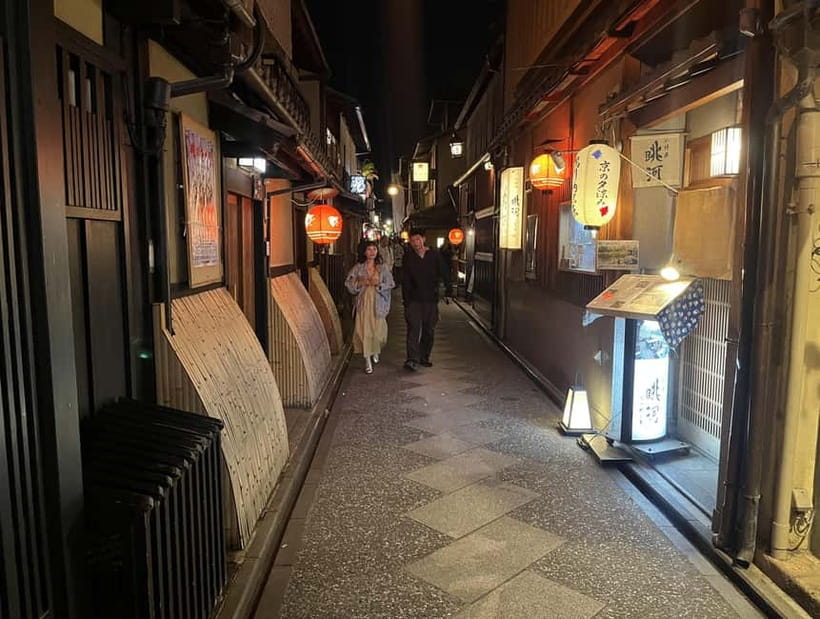
I would choose this walk if you want context rather than a quick photo stop. It is especially useful early in a Kyoto visit, when you can use the guide’s explanations to understand the city for the rest of your stay.
It suits:
- First-time visitors who want a clear introduction to Gion and Kyoto.
- People curious about maiko and geiko life beyond stereotypes.
- Families who benefit from a guide willing to answer many questions.
- Couples and solo visitors who prefer a small, relaxed group.
- Repeat visitors who have already walked through Gion but missed its smaller details.
- Dutch, Spanish, French, or English speakers who want a tour in one of those languages.
You may want another experience if you mainly want a guaranteed geisha encounter, a meal, a performance, or entry inside a traditional establishment. None of those are promised here. This is a walking and interpretation tour, not a show.
Booking, cancellation, and practical value
You can cancel up to 24 hours before the start for a full refund, and the reserve-now, pay-later option keeps your plans flexible. Availability and start times change, so check the date before building the rest of your Kyoto schedule around the walk.
At $35, the tour offers good value when you consider the route, small group size, language options, and chance to ask unlimited questions during the two hours. A self-guided walk costs less, but you would need to research Pontocho, the hanamachi system, Gion’s preservation area, Yasaka Shrine, and the Gion Festival yourself. You would also miss the visual materials and personal stories.
The value is strongest for people who enjoy learning as they walk. If you only want scenic lanes and photographs, you can explore Gion without paying for a guide. If you want to understand why those lanes look and function as they do, $35 is a reasonable spend.
Should you book the Kyoto Gion Walking Tour?
Book it if you want a friendly, question-driven introduction to Kyoto’s traditional entertainment districts. The route covers more than the usual Gion postcard view, and the combination of Pontocho, Gion-Kobu, Gion-Higashi, and Yasaka Shrine gives you a useful sense of how the area fits together.
Go in with the right expectations. Hanamikoji-dori is not included, a maiko or geiko sighting is not guaranteed, and the shrine visit depends on time. Bring good shoes and water, then let your questions shape the experience. For most visitors who have two hours and want to see Gion with sharper eyes, this is a smart, fairly priced choice.
FAQ
How long is the Kyoto Gion Walking Tour?
The tour lasts two hours. The route covers about 3.3 kilometers, or two miles.
How many people can join the tour?
The group is limited to six participants. If fewer people book, the experience may feel close to a private tour.
Which areas does the walking route include?
The route includes Pontocho, Gion-Kobu, and Gion-Higashi. It also includes areas around the Kamo River, Sanjo Bridge, Yamato-dori, Gion-Shinbashi-dori, Gion Shirakawa, Tatsumi Shrine, and Yasaka Shrine if time allows.
Is Hanamikoji-dori included?
No. Hanamikoji-dori is not part of the itinerary.
Will I see a maiko or geiko?
A maiko or geiko sighting cannot be guaranteed. The tour explains their lifestyle, work, customs, and routines, but it does not promise an encounter.
What languages are available?
The tour is offered in English, Spanish, Dutch, and French.
What should I bring?
Bring comfortable shoes, water, sunscreen, a sun hat, and an umbrella. No amenities are provided as part of the tour.
Just added around Kyoto
- Kyoto : Private Custom Walking Tour With A Local Guide★ 4.6 · 144 reviews
- Kyoto: Private 2.5 Hour Historical Walking Tour★ 4.9 · 121 reviews
- Kyoto: Private Walking Tour with a Local★ 4.6 · 118 reviews
- Kyoto: Gion Sunset Walking Tour with Local Guide★ 4.7 · 351 reviews
- Kyoto: Imperial Palace & Nijo Castle Guided Walking Tour★ 4.7 · 453 reviews
- Kyoto Gion Cultural Walk & Geisha Show with Dining Options★ 5.0 · 518 reviews
- Kyoto: Gion Hidden Gems & Geisha Culture Tour★ 4.9 · 126 reviews
- Kyoto: Geisha Dinner & Gion Cultural Walk★ 5.0 · 73 reviews
Walking Tours, compared.

Magical London: Harry Potter Guided Walking Tour
Read our review →
Reykjavik Food Walk – Local Foodie Adventure in Iceland
Read our review →
History and Hauntings of Salem Guided Walking Tour
Read our review →
New Orleans Premier Ghost, Voodoo and Vampire Walking Tour
Read our review →
Amsterdam Anne Frank: Small-Group Walking Tour & Local Guide
Read our review →

Edinburgh Castle: Guided Walking Tour with Entry Ticket
Read our review →
Anne Frank’s Story – Guided Walking Tour through Amsterdam
Read our review →Browse the lists this tour appears in