
REVIEW · KYOTO
Kyoto: Gion Hidden Gems & Geisha Culture Tour
Gion is at its best when you leave the main road. This two-hour walk takes you from the willow-lined Shirakawa Canal through old lanes, shrines, wooden townhouses, and finally to Hanamikoji Street, where a geisha or maiko may pass on the way to an appointment. The chance to see traditional Kyoto in motion is the main draw, but it is never guaranteed.
I like the route for two practical reasons: you see several famous sights in one compact walk, and a local guide gives meaning to places you might otherwise photograph and pass by. Guides such as Uta, Takumi, Dan, Mai, and Wajid have been praised for clear explanations, good pacing, restaurant suggestions, and answers to questions. The trade-off is a fairly brisk route, with some uneven streets and stairs, so this is not a gentle sightseeing stroll for everyone.
Key points to know before you book
- Start at Macdonald Shijo Ohashi: Meet beside the McDonald’s at 105-1 Hashimoto-cho, where a guide carries a Local Guide Stars sign.
- See Gion away from the main crowds: Shirakawa Canal and the back lanes offer a quieter side of the district.
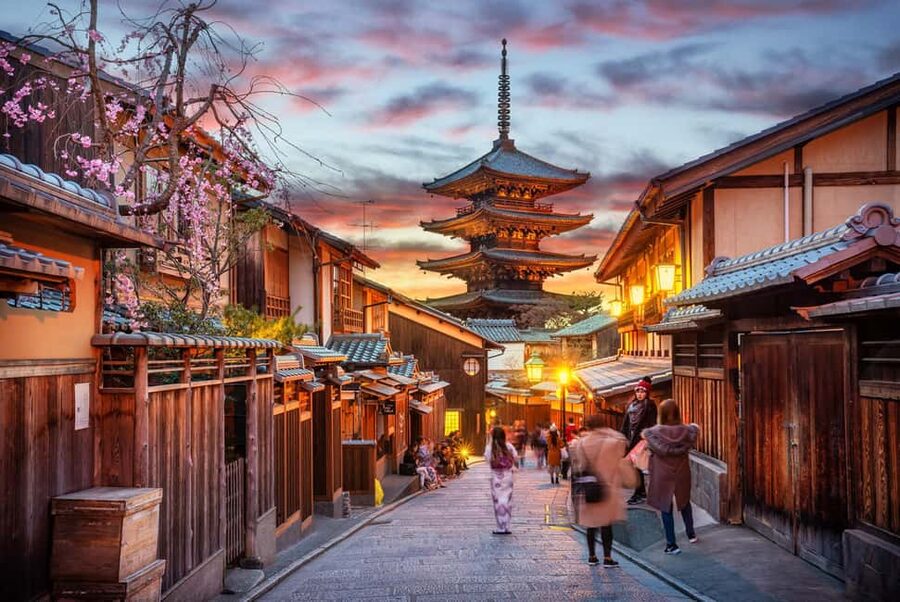
- Visit several shrines and temples: The route includes Tatsumi-jinja, Yasaka Shrine, Hōkan-ji, and Yasui Kompira-Gu.
- Learn about geiko and maiko culture: The guide explains training, dances, kimono work, and traditional hairstyles.
- Allow for a quick walking pace: Fitting this many stops into two hours requires steady movement.
- Geisha sightings are possible, not promised: Evening timing can improve the atmosphere, but the tour should not be booked solely for a sighting.
Why this short Gion walk works well
At $23 per person, this tour is priced as an affordable introduction rather than a deep cultural seminar. You get two hours with an English-speaking local guide, a route through several of Kyoto’s most atmospheric districts, and useful orientation for the rest of your stay.
I see the strongest value in the context. Gion’s narrow streets can look simple at first glance. A guide can explain why a lane matters, how a teahouse differs from an ordinary restaurant, or what you are seeing when a maiko hurries past in formal dress. That extra layer makes the walk more than a photo stop.
The tour also works well early in a Kyoto visit. You can use the guide’s suggestions to plan later visits, choose a restaurant, and understand how Gion connects with the streets leading toward Kiyomizu-dera. Several guides have also shared restaurant recommendations, which is handy because the tour ends in an area filled with dining choices.
The two-hour limit keeps the experience manageable. You will not spend half a day walking from temple to temple, and you can still fit in dinner or another evening activity afterward. The downside is that each place receives only a short explanation. If you want extended time inside temples or a detailed study of geisha arts, you will need a longer or more specialized experience.
More Hidden Gems Walks in Kyoto:
- Kyoto Geisha Walking Tour: Gion District & Hidden Gems
★ 4.7 · 3,273 reviews - Dublin Highlights and Hidden Gems Guided Walking Tour
★ 5.0 · 6,020 reviews - Explore Berlin: See All The Iconic Sights & Some Hidden Gems
★ 5.0 · 4,429 reviews
Meeting beside Shijo Bridge
The meeting point is the McDonald’s Shijo Ohashi store at 105-1 Hashimoto-cho, Shimogyo-ku, Kyoto-shi. Look for the guide beside the restaurant holding a Local Guide Stars sign.
This detail matters because the front of the McDonald’s can be crowded. Do not simply wait at the busiest entrance and assume the guide will spot you. The instructions direct you to the side of the restaurant, so arrive with enough time to find that position.
The route begins with a short guided walk and photo stop before reaching the Shirakawa Canal. Since the tour moves through busy parts of Kyoto, keep your group together and listen for the guide’s instructions when crossing streets or moving through narrow lanes.
Shirakawa Canal and Gion’s classic first view
Gion Shirakawa is a graceful introduction to the district. Willow trees line the canal, stone paths run beside the water, and traditional tea houses create the setting most people picture when they think of old Kyoto.
This is a good place for photographs, but the guide adds useful restraint. The tea houses are working businesses, not museum displays, and the streets are also part of a residential neighborhood. You will get more from the stop if you take in the architecture and atmosphere without blocking entrances or treating private spaces as scenery.
The canal area can feel calm, especially on later departures. One guide, Noa, was praised for keeping the group together and waiting until everyone had caught up before speaking. That simple habit makes a difference on a walking tour, particularly when narrow streets split the group.
Tatsumi-jinja and the small-shrine experience
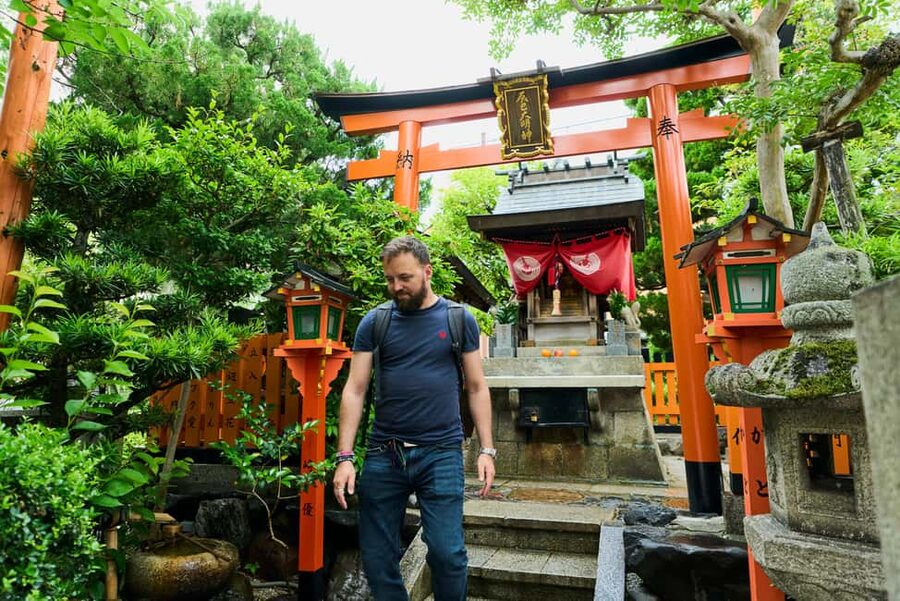
Tatsumi-jinja offers a more intimate shrine stop than Kyoto’s grandest religious sites. You visit with the guide, pause for photographs, and hear about the place as part of Gion’s older network of beliefs and customs.
Small shrines often reward attention to detail. Look at the gate, the compact scale, and the way the shrine fits into the surrounding streets. The point here is not to spend a long time exploring a large complex. It is to see how religious sites sit beside the entertainment district and remain part of daily life.
The route includes several such contrasts. One minute you are near elegant teahouses, and soon you are standing at a shrine tucked into the urban fabric. That change of mood is one of the best reasons to take the walk with a guide.
Same streets, a different route:
- Kyoto: Gion Magical Night Walking Tour with Geisha Trivia
★ 4.9 · 2,393 reviews - Kyoto: Gion Geisha District Walking Tour – Stories of Geisha
★ 4.7 · 2,187 reviews - Best of Kyoto: Gion, Geisha, Pagodas & Cobblestones
★ 4.9 · 2,058 reviews - Night Walk in Gion: Kyoto’s Geisha District
★ 4.5 · 2,003 reviews
Yasaka Shrine and the larger Kyoto setting
Yasaka Shrine gives the tour a more substantial religious landmark. You visit the shrine with the guide, hear background about its role in Kyoto, and have time for photographs.
The stop helps connect Gion to the wider city. Gion is not an isolated stage set. Yasaka Shrine, the lanes around it, and the roads leading toward eastern Kyoto show how religion, commerce, festivals, and traditional arts have long shared the same district.
Your guide’s style will shape this part of the experience. Kenta was praised for explaining Japanese history and geisha culture, while Alex was noted for bringing the area’s stories to life. Names and assignments can change, but the best guides use the shrine to explain both what you see and why it matters.
Do not expect a long, quiet temple visit here. The schedule includes several later stops, so the emphasis is on orientation and storytelling rather than extended private reflection.
Ninenzaka and the route toward Hōkan-ji

Ninenzaka brings you into one of Kyoto’s most recognizable old streets. Its sloping, stone-paved route and traditional buildings make it highly photogenic, and it leads toward the famous profile of Hōkan-ji Temple.
This section can also be one of the busiest and most demanding. The surface is not a smooth modern sidewalk, and the incline requires care. Comfortable shoes are essential, especially if you are walking in summer heat or rain.
The appeal of the route is that you do not see Ninenzaka as a separate attraction. You approach it through the surrounding lanes and learn how it connects with Gion, Yasaka Shrine, and the eastern temple district. The guide can point out the Edo-period wooden townhouses that give the area its old-Kyoto character.
You should expect other people here, even if an evening departure makes the streets calmer. The route does not promise an empty Ninenzaka, and weather can affect the experience. Bring water and sunscreen in warm weather, and carry an umbrella or raincoat because the walk continues in the rain.
Hōkan-ji and the familiar Yasaka Pagoda view
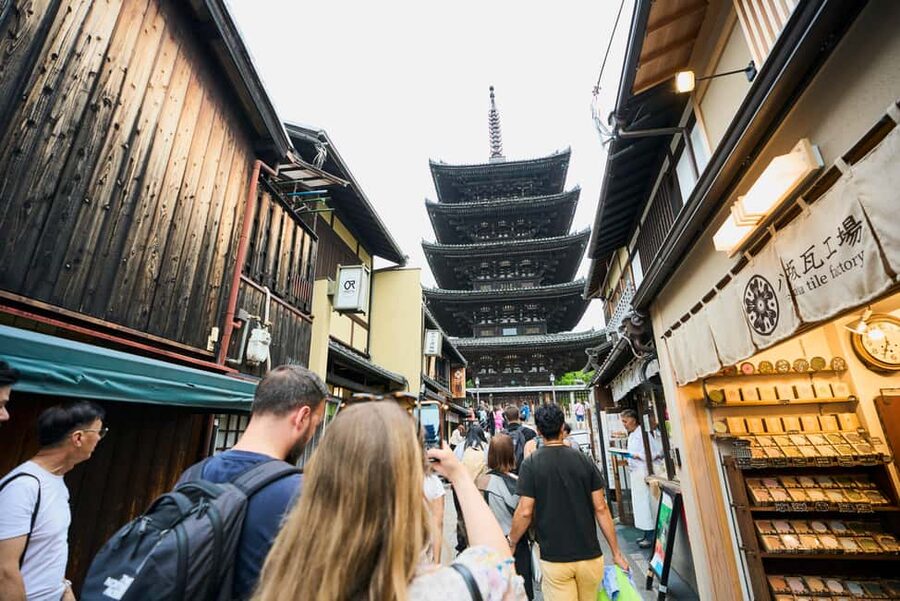
Hōkan-ji is best known for its pagoda, often called the Yasaka Pagoda. The tour includes a photo stop and guided explanation, giving you time to appreciate the landmark from the surrounding streets.
The pagoda is especially useful for understanding Kyoto’s visual layers. Wooden houses, sloped lanes, temple architecture, and the city beyond come together in a single view. It is a memorable stop even if you have already seen photographs of it.
This is another place where a guide helps with practical movement. The streets can be narrow, and stopping in the wrong spot can obstruct people going about their day. Listen when the guide asks the group to move or gather.
The tour does not state that you enter every temple or spend a long period inside Hōkan-ji. Treat this as a guided exterior visit and photo opportunity rather than a full temple tour.
Yasui Kompira-Gu and a different kind of shrine visit
Yasui Kompira-Gu is one of the more unusual stops on the route. You visit the shrine with the guide, then continue on foot toward Hanamikoji Street.
Its presence makes the route more varied. You are not simply moving from one postcard view to another. The walk includes a smaller religious site with its own atmosphere, giving your guide another chance to explain local customs and the way shrines fit into Kyoto life.
Because the tour is compact, listen closely during stops. You may hear details that are easy to miss if you are focused only on taking photographs. The value of a stop like this comes from the explanation as much as from the building itself.
Hanamikoji Street and the world of geisha culture
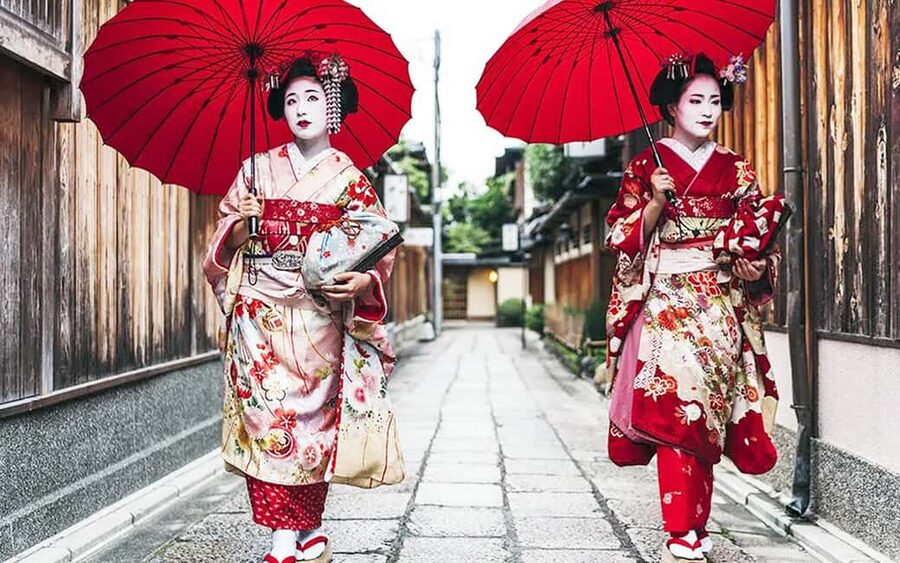
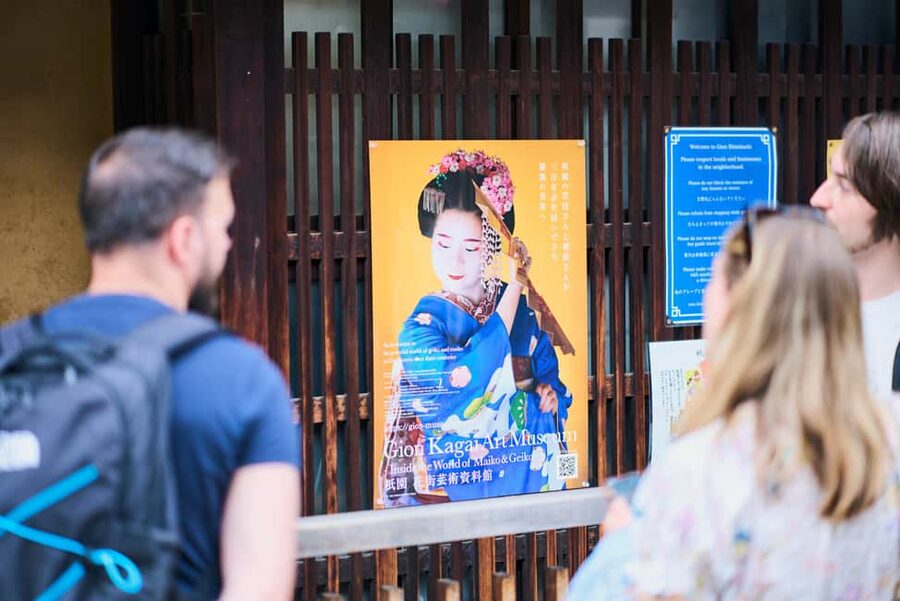
The tour ends on Hanamikoji-dori, the center of Gion’s geisha district. Here the focus shifts from streets and shrine architecture to geiko and maiko culture.
Your guide explains the strict training involved, the graceful dances associated with the profession, and the craft behind formal kimono, hairstyles, and accessories. This is important context because a quick sighting on the street tells you very little about the people you see.
You may spot a geisha or maiko traveling to an evening engagement. Some participants have seen one or even both during the walk, but you should treat that as a fortunate extra. The tour cannot control who is working, which route they take, or whether they pause.
If you do see someone, use respectful behavior. Do not use flash photography, and do not block the street or follow the person. Photography is allowed during the tour, but flash is not permitted inside temples. The guide’s explanation should help you understand the difference between observing a living tradition and turning it into a spectacle.
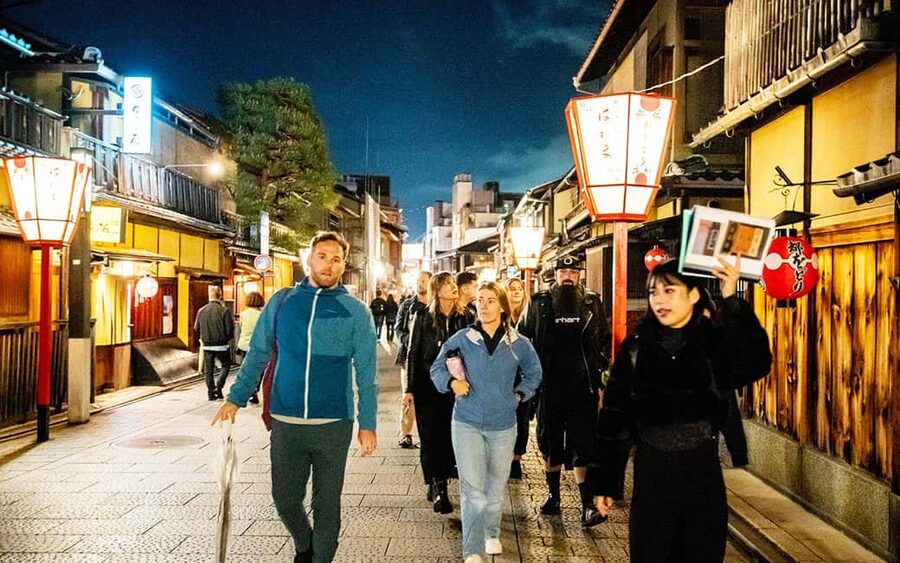
An evening start can give Hanamikoji a special mood, with fewer daytime crowds and more activity connected to the district’s traditional entertainment culture. Start times vary, so check availability for the date you want.
The guides make the difference
The experience depends heavily on the individual guide, and the praise has been consistent across several names. Uta has been described as warm, enthusiastic, and especially good at making stops feel alive. Mai has been praised for being kind and fun, while Takumi has been noted for keeping a large group engaged and explaining the old lanes and teahouses with care.
Dan has received strong marks for clear historical explanations and restaurant suggestions. Wajid has been praised for excellent English, patience, and breaking down Japanese terms. These examples suggest that the operator places real weight on storytelling and questions, though your guide will be assigned rather than selected.
Pacing also gets attention. Some participants found it ideal, while another described it as quick but necessary to cover the route. I would plan for steady walking, not a slow wander. If you need frequent rests, the schedule may feel tight.
The tour can also suit families. Uta was specifically praised for working well with children aged eight and ten. Still, the route includes uneven surfaces and is not suitable for people with mobility impairments or wheelchair users.
Weather, clothing, and practical comfort
Wear comfortable walking shoes. This is not optional advice, since the route includes stone paths, slopes, and several hours of standing and walking when you include time before and after the tour.
Bring water and sunscreen in warm weather. Humidity has made the walk uncomfortable for some people, even when the guide and route were good. An umbrella or raincoat is necessary in wet weather because the tour operates in the rain.
Photography is welcome, but flash photography is not allowed inside temples. Keep your camera ready for the canal, old townhouses, shrines, pagoda, and Hanamikoji, but follow the guide’s instructions at religious sites and around working geisha businesses.
The activity is not suitable for wheelchair users or people with mobility impairments. If you have difficulty with slopes, stairs, or uneven paving, choose a different Kyoto experience.
Who should book this $23 experience?
I would book this tour if you are visiting Kyoto for the first time and want a clear introduction to Gion without paying for a long private tour. It is also useful if you want local recommendations for dinner or need help understanding the difference between geisha culture and the simplified images often seen in popular media.
It suits solo visitors, couples, families with older children, and anyone who prefers a guide to wandering alone. The English-language explanations and chance to ask questions add real value for visitors unfamiliar with Japanese customs.
I would think twice if you want a slow photography walk, extensive temple interiors, or guaranteed geisha access. You should also avoid it if uneven streets and a brisk pace would be difficult.
The booking terms are flexible: you can cancel up to 24 hours ahead for a full refund, and reserve now while paying later. That is useful when Kyoto plans are still shifting.
Should you book the Gion walk?
Book it if you want a compact, well-priced first look at Gion, with shrines, old streets, traditional buildings, and a practical introduction to geiko and maiko culture. The route covers a lot in two hours, and the local guide is the main reason it works.
Choose an evening departure if you like a quieter atmosphere and want the best chance of seeing Gion during its working hours. Just keep expectations sensible. You are booking a guided walk through a living district, not a guaranteed geisha sighting.
FAQ
How long does the Kyoto Gion tour last?
The walking tour lasts two hours.
What language is the tour conducted in?
The tour is conducted in English by a live local guide.
Where does the tour meet?
Meet at the McDonald’s Shijo Ohashi store at 105-1 Hashimoto-cho, Shimogyo-ku, Kyoto-shi. The guide waits beside the restaurant with a Local Guide Stars sign.
What sights are included?
The route includes Shirakawa Canal, Tatsumi-jinja Shrine, Yasaka Shrine, Ninenzaka, Hōkan-ji Temple, Yasui Kompira-Gu Shrine, and Hanamikoji-dori.
Is seeing a geisha guaranteed?
No. You have a chance to see a geisha or maiko, particularly during an evening departure, but sightings are not guaranteed.
Can I take photographs?
Yes. Photography is allowed, but flash photography is not permitted inside temples.
What should I bring?
Wear comfortable walking shoes and bring water and sunscreen. If rain is forecast, bring an umbrella or raincoat.
Is the tour suitable for wheelchair users?
No. The tour is not suitable for wheelchair users or people with mobility impairments.
Can I cancel the booking?
Yes. You can cancel up to 24 hours in advance for a full refund. You can also reserve now and pay later.
Just added around Kyoto
- Kyoto : Private Custom Walking Tour With A Local Guide★ 4.6 · 144 reviews
- Kyoto: Private 2.5 Hour Historical Walking Tour★ 4.9 · 121 reviews
- Kyoto: Private Walking Tour with a Local★ 4.6 · 118 reviews
- Kyoto: Gion Sunset Walking Tour with Local Guide★ 4.7 · 351 reviews
- Kyoto: Imperial Palace & Nijo Castle Guided Walking Tour★ 4.7 · 453 reviews
- Kyoto: Gion Walking Tour★ 5.0 · 195 reviews
- Kyoto Gion Cultural Walk & Geisha Show with Dining Options★ 5.0 · 518 reviews
- Kyoto: Geisha Dinner & Gion Cultural Walk★ 5.0 · 73 reviews
Hidden Gems Walking Tours, compared.
Dublin Highlights and Hidden Gems Guided Walking Tour
Read our review →
Explore Berlin: See All The Iconic Sights & Some Hidden Gems
Read our review →
San Marco to Rialto Walk & Spritz Like a Local
Read our review →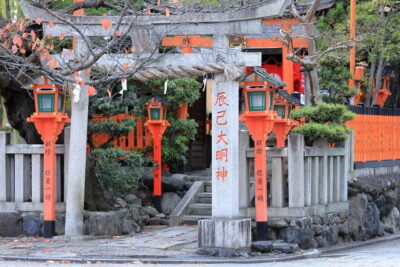
Kyoto Geisha Walking Tour: Gion District & Hidden Gems
Read our review →
Eat Like a Local: Venice 3-Hour Small-Group Food Tasting Tour
Read our review →
Montmartre Hidden Gems and Scenic Highlights Walking Tour
Read our review →
Guided Walking Tour of City Highlights & Hidden Gems
Read our review →
Browse the lists this tour appears in