
REVIEW · KYOTO
Kyoto Gion Geisha District Walking Tour – The Stories of Geisha
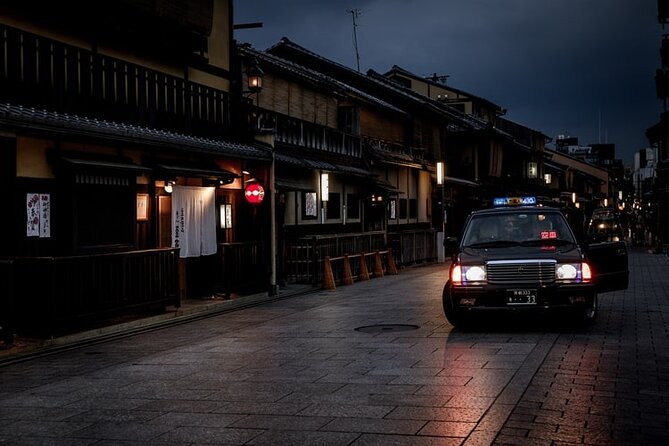
Gion after dark is a different place from Gion at midday. The tour leads you past lantern-lit lanes, traditional tea houses, theaters, and quiet corners where geiko and maiko may be heading to appointments. The real focus is not a staged sighting, but the stories and customs behind Kyoto’s geisha world.
I like the small maximum group of 15, which makes it easier to hear your guide and ask questions. I also like the route’s mix of famous sights and less obvious details, such as the buildings and codes connected with the old flower towns. The main drawback is simple: this is a walking tour, and evening Kyoto can be very cold.
Key points to know
- After-dark timing: See Gion when the largest daytime crowds have gone.
- A two-hour introduction: Learn about geiko, maiko, Kyoto, and traditional entertainment without giving up a full evening.
- Several named guides: Guides including Ben, Shin, Deborah, Melanie, Manuel, Nami, Kenji, and others have led this experience.
- Historic route: Walk from the Izumo-no-Okuni statue and Minamiza toward Tatsumi Bridge, Hanamikoji Street, and Yasaka Shrine.
- Small-group format: The maximum group size is 15 people.
- Good value at $25: The price covers the guide and all listed admission fees, with no bottled water included.
Why an evening walk suits Gion
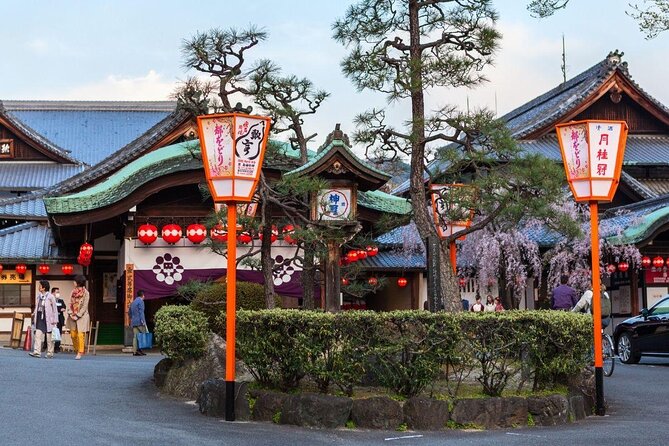
Gion is best understood as a working district, not simply a backdrop for photographs. Its narrow streets contain traditional restaurants, tea houses, performance spaces, and private residences. The evening timing helps you see the area in the setting that gives it much of its character: lanterns glowing, doorways opening for appointments, and the streets growing quieter after the daytime sightseeing rush.
You may see geiko or maiko moving between appointments, but the tour does not promise a personal encounter. That is important. The value is in learning how to recognize the difference between a maiko and a geiko, understanding the role of the flower towns, and seeing why many plain-looking buildings matter.
Guides such as Ben, Shin, Deborah, Melanie, Manuel, Nami, Kenji, Tommy, Joy, and Adrian have been associated with this tour. Your guide will vary, but the strongest guiding style here is clearly conversational. You can expect explanations, questions, and connections between Gion’s streets and broader Japanese culture.
A few more walking tours around Kyoto worth a look
- Kyoto Geisha Walking Tour: Gion District & Hidden Gems
★ 4.7 · 3,273 reviews - Kyoto: Gion Magical Night Walking Tour with Geisha Trivia
★ 4.9 · 2,393 reviews - Kyoto: Gion Geisha District Walking Tour – Stories of Geisha
★ 4.7 · 2,187 reviews
Starting near Shijo and the Izumo-no-Okuni statue
The tour begins at Ben’s Cookies Kyoto Shijo, at 89 Shinchō in the Shimogyo Ward. This is a useful central meeting point near public transportation, though you should allow a few minutes to find the exact spot before the scheduled start.
One of the first meaningful stops is the statue of Izumo-no-Okuni. Okuni is remembered as the founder of kabuki theater, and the bronze statue offers a natural way to discuss Japan’s performance traditions. This is not a long museum visit. You will spend about 10 minutes here, listening outdoors and getting the cultural background that makes the rest of the walk easier to follow.
I like this opening because it widens the subject beyond the familiar image of a woman in elaborate makeup. Kyoto’s entertainment districts developed alongside theater, music, dance, and hospitality. Starting with Okuni helps you see that geisha culture belongs to a larger story about Japanese performance.
Since the stop is outside, keep an eye on the weather. There is no indoor orientation session listed, and the tour requires good weather to operate.
Minamiza connects Gion with kabuki
The route also includes Minamiza, Kyoto’s historic kabuki theater. Kabuki is known for dramatic storytelling, elaborate costumes, and highly stylized performances. Even if you do not attend a show, seeing the theater gives you a physical link to the entertainment traditions discussed by the guide.
This stop works best as context rather than a full theater visit. The tour is not advertised as a kabuki performance, and no performance ticket is included. Instead, you learn why the theater belongs in a walk about geiko, maiko, and Kyoto’s old entertainment quarters.
That distinction helps set realistic expectations. If you want a performance, you will need a separate booking. If you want a short, well-placed explanation of how theater and traditional entertainment connect, Minamiza adds useful depth without taking over the evening.
Tatsumi Bridge and Gion Shinbashi
Tatsumi Bridge is one of the most scenic points on the route. It sits in Gion Shinbashi, an area known for traditional buildings, tea houses, and the atmosphere of old Kyoto. The stop lasts about 10 minutes, giving you time to look closely at the streets rather than simply rushing through them.
This is one of the places where an informed guide makes a real difference. A building that looks closed or unremarkable may carry clues about the district’s traditional business. Your guide can point out details you would likely pass without noticing and explain how the area functions.
The bridge is also a good place for evening photographs, although you should be considerate of people going about their work. The tour’s subject is a living culture. It is not a license to block lanes, follow performers, or photograph private moments.
The route is compact, but it still involves a fair amount of standing and walking. One visitor described the weather as arctic cold, while another noted that a heavy coat made winter conditions manageable. That is practical advice worth taking seriously.
Same streets, a different route:
- Best of Kyoto: Gion, Geisha, Pagodas & Cobblestones
★ 4.9 · 2,058 reviews - Night Walk in Gion: Kyoto’s Geisha District
★ 4.5 · 2,003 reviews - Nishiki Market Brunch Walking Tour (7 Tastings + Brunch)
★ 5.0 · 1,355 reviews - Kyoto Arashiyama Walking Tour: Bamboo, Monkeys, Gardens & Secrets
★ 5.0 · 1,216 reviews
Hanamikoji Street and the old flower towns
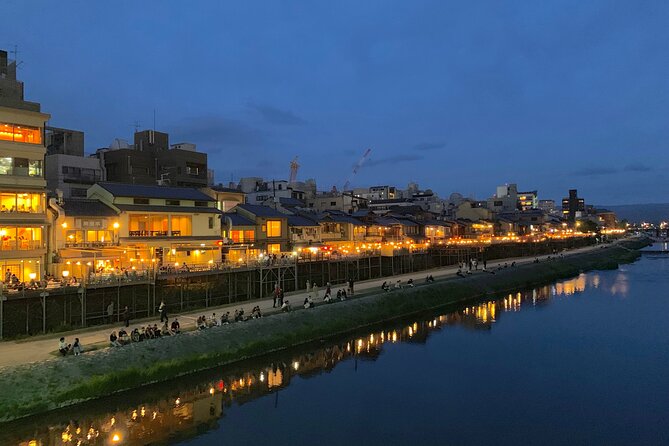
Hanamikoji Street is one of Gion’s best-known lanes, lined with traditional machiya houses, restaurants, and teahouses. It is also the point where the difference between seeing Kyoto and understanding Kyoto becomes clear.
At first glance, Hanamikoji can seem like a photogenic street with carefully preserved buildings. Your guide adds the human and commercial story: how the district’s entertainment businesses work, why access to certain establishments can be restricted, and how geiko and maiko train for their roles.
The phrase flower town refers to Kyoto’s traditional entertainment districts. Guides on this walk explain the codes and customs connected with them, including details that are not always clear in standard guidebooks. This is where the tour earns its $25 price. You are not paying for admission to a major attraction. You are paying for someone to interpret an area that can otherwise look like a collection of attractive facades.
The listed time here is about 10 minutes, but explanations may be spread across nearby streets. Do not expect a long visit inside a tea house. The tour takes place outdoors and focuses on the district’s history, culture, and present-day practices.
Gion Corner and the practical limits of the route
Gion Corner is a cultural center and performance venue that presents several traditional Japanese arts in a condensed format. It is a useful reference point for understanding the range of entertainment associated with Kyoto.
The walking tour does not include a performance at Gion Corner. Think of it as a landmark and a talking point, not a theater ticket. If you are hoping to see dance, music, or a formal geisha performance, you should arrange that separately.
One useful feature of this experience is its length. At about two hours, it fits neatly before dinner or after another daytime activity. A few people have felt that the itinerary could use more content, so you should book it as an introduction, not as a full study of geisha culture. It gives you a framework for further exploration rather than answering every possible question.
Yasaka Shrine makes a fitting finish
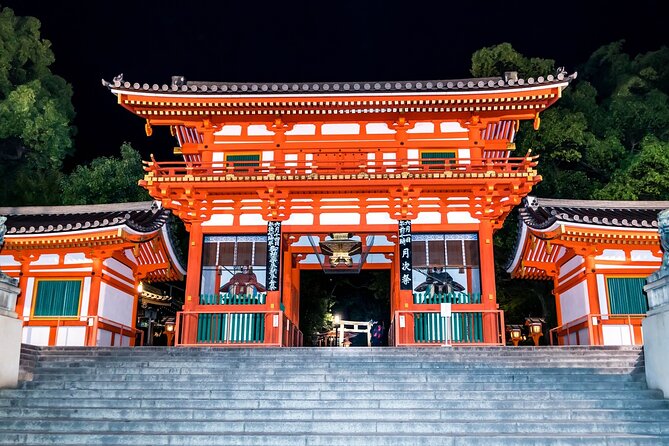
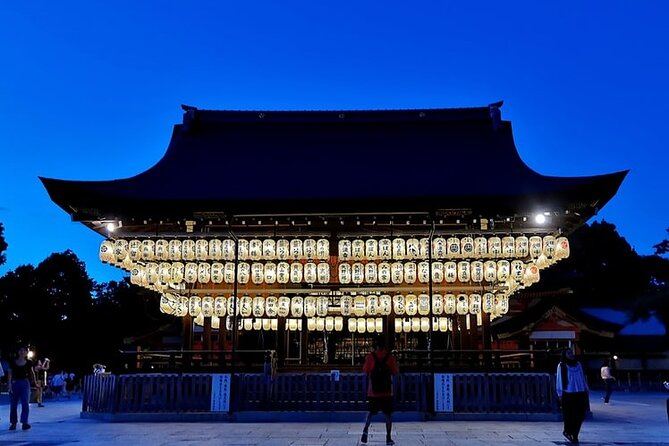
The walk ends at Yasaka Shrine, also known as Yasaka Jinja or Gion Shrine. This is one of Kyoto’s major Shinto shrines and a fitting place to finish because it links Gion’s entertainment district with the wider religious life of the city.
The shrine is free to enter, and the listed stop lasts about 10 minutes. You can see the shrine’s connection to Gion and finish in an area where you can continue exploring on your own. Since the tour ends here rather than returning you to the starting point, think about your plans for dinner or transport afterward.
Ending at Yasaka Shrine also gives you a clear sense of direction. The tour begins near Shijo and finishes in Gion, so you are not retracing the full route. That makes the experience feel like a useful introduction to the district rather than a loop designed only for convenience.
What the guides add to the experience
The guide is the most important variable in a walking tour like this. The names connected with the experience include Ben, Shin, Deborah, Melanie, Manuel, Nami, Kenji, Tommy, Joy, Adrian, Sakuri, Nikki, Ikari, and Manny.
The strongest guide descriptions center on clear explanations, enthusiasm, and the ability to answer questions. Ben is noted for explaining hidden codes of the flower towns and for connecting Gion with Pontocho and Kyoto by night. Deborah is described as especially strong on the subject and related history. Nami, Kenji, Melanie, Manny, and others are associated with friendly, detailed introductions to geiko, maiko, and Japanese entertainment.
You should not assume you will receive a particular guide unless your booking confirms it. Still, the range of guide names suggests that the operator uses several people with different styles. Some may lean more toward cultural history, while others may add personal stories and general Kyoto advice.
I would ask questions. Why are geiko and maiko dressed differently? How does training work? What is the difference between a performance space and a private tea house? How has the district changed? The tour is more useful when you treat it as a conversation rather than a silent procession.
What geiko and maiko explanations can teach you
The tour is designed to explain the geisha world with more care than a quick photo stop allows. In Kyoto, geisha are often called geiko, while younger apprentices are called maiko. Their clothing, hairstyle, makeup, and training differ, and the guide can help you understand those distinctions.
You also learn that this is a professional art form built around performance, hospitality, music, dance, and social skill. The old entertainment districts have rules and customs that are not obvious from the street. A good explanation helps you avoid treating geiko and maiko as costumed attractions.
That cultural framing is one of the tour’s best qualities. You may see a maiko crossing a lane, or you may see none at all. Either way, the walk has value if you leave with a clearer idea of the work, training, and setting behind the public image.
Price, group size, and overall value
At $25 per person, this is a modestly priced guided walk in one of Kyoto’s most sought-after districts. All fees and taxes are included, and the advertised group limit is 15 people. Bottled water is not included, so bring your own.
The value depends on what you want. If you only need directions through Gion, you can walk the streets without paying. If you want clear explanations of the district’s customs, geiko and maiko, kabuki, flower towns, and Kyoto’s traditional entertainment, the fee is reasonable.
The group size matters. Fifteen people is not private, but it is small enough for a guide to keep the group together and respond to questions. It also keeps the walk more manageable in narrow lanes. Larger groups would make it harder to hear and easier to obstruct the streets.
The tour is especially useful early in your Kyoto visit. It gives you context for later walks, meals, performances, and shrine visits. You may also find it suits a multigenerational family, since the route is short enough for young adults and older relatives while still offering material beyond simple sightseeing.
Cold weather, walking pace, and what to bring
Evening conditions are the main practical concern. Several accounts describe cold weather, and the walk is outdoors. In winter, bring a proper coat, not just a light jacket. Comfortable shoes are also important because the experience lasts about two hours and includes several stops on foot.
A small bottle of water is sensible since bottled water is not provided. You should also keep your camera ready, but use it respectfully. Gion is a working neighborhood, and the people you see may be on their way to appointments rather than performing for tourists.
The tour requires good weather. If poor weather causes cancellation, you will be offered another date or a full refund. Otherwise, you can cancel for a full refund up to 24 hours before the start time. Cancellations within 24 hours are not refunded, and changes in that period are not accepted.
The activity allows service animals, is near public transportation, and is listed as suitable for most people. Since the route is a walking tour with outdoor stops, consider your own comfort with standing and walking before booking.
Who should book this Gion walk
I would choose this tour if you are visiting Kyoto for the first time and want an introduction to Gion that goes beyond photographs. It is also a good fit if you have already seen the main temples and want an evening activity focused on culture and local history.
Families with teenagers and young adults should find the subject easy to discuss together. The short duration helps, and the guide can connect the geisha world with theater, clothing, training, business, and city history.
You may want something else if you expect a private meeting with a geisha, an included performance, or entry into a tea house. None of those are promised. This is an outdoor walking tour with interpretation, not a staged encounter.
Should you book it?
At $25, this is an appealing way to give Gion some context without spending a full evening or a large sum. I like the after-dark timing, the route from Shijo to Yasaka Shrine, and the chance to learn why ordinary-looking doors and lanes matter.
Book it if you want a friendly introduction, enjoy walking, and can handle a chilly evening. Skip it if you want a guaranteed geisha sighting or a formal performance. For most first-time visitors to Kyoto, it is a practical first step into Gion, especially when scheduled near the beginning of your stay.
FAQ
How long does the Kyoto Gion Geisha District Walking Tour last?
The tour lasts approximately two hours.
How much does the tour cost?
The listed price is $25 per person.
What is the maximum group size?
The tour allows a maximum of 15 travelers.
Where does the tour begin?
The meeting point is Ben’s Cookies Kyoto Shijo, at 89 Shinchō, Shimogyo Ward, Kyoto, 600-8001, Japan.
Where does the tour end?
The tour ends at Yasaka Shrine, at 625 Gionmachi Kitagawa, Higashiyama Ward, Kyoto, 605-0073, Japan.
Are admission fees included?
All fees and taxes are included. Bottled water is not included.
What happens if the weather is poor?
The experience requires good weather. If it is canceled because of poor weather, you will be offered a different date or a full refund. You can also cancel up to 24 hours before the start time for a full refund.
Just added around Kyoto
- Kyoto: Meet the Geisha Maiko with Gion Walking Tour★ 4.8 · 371 reviews
- Cool Kyoto: 5-Hour Walking Tour with the Last Samurai★ 4.8 · 73 reviews
- Gion Walking Tour by Night★ 4.5 · 429 reviews
- Kyoto Sake Brewery & Tasting Walking Tour★ 5.0 · 623 reviews
- Kyoto Gion Night Walk & Geisha District Guided Tour★ 5.0 · 786 reviews
- Kyoto: Izakaya Bars Guided Walking Tour★ 4.9 · 815 reviews
- Kyoto Gion: 2-Hour Geisha Culture & History Walking Tour★ 5.0 · 1,186 reviews
- Kyoto Arashiyama Walking Tour: Bamboo, Monkeys, Gardens & Secrets★ 5.0 · 1,216 reviews
Walking Tours, compared.

Magical London: Harry Potter Guided Walking Tour
Read our review →
Reykjavik Food Walk – Local Foodie Adventure in Iceland
Read our review →
History and Hauntings of Salem Guided Walking Tour
Read our review →
New Orleans Premier Ghost, Voodoo and Vampire Walking Tour
Read our review →
Amsterdam Anne Frank: Small-Group Walking Tour & Local Guide
Read our review →

Edinburgh Castle: Guided Walking Tour with Entry Ticket
Read our review →
Anne Frank’s Story – Guided Walking Tour through Amsterdam
Read our review →Browse the lists this tour appears in