
REVIEW · KYOTO
Kyoto Gion Cultural Walk & Geisha Show with Dining Options
A maiko’s dance is the heart of this Kyoto experience, but the better surprise is how much context comes before it. Your guide leads you through Gion, explains the difference between geiko and maiko, and helps replace movie myths with the working traditions of Kyoto’s entertainment districts. I especially like the small group of up to eight and the direct question-and-answer time with the performer.
I also like the choice of a Japanese lunch, an afternoon tea break, or a dinner built around eight shared dishes. Guides such as Kenta, Ken, and Akari are repeatedly praised for clear English, patience, and a real concern for treating the culture with respect. The main drawback is that the food portions may feel light to a big eater, and the walking route is not suitable for people with mobility impairments.
Key points to know before booking
- The maiko meeting lasts about 50 minutes: You watch one or two dances, ask questions, and may have time for photographs.
- Gion comes before the show: The 1.5 to 2-hour walk gives meaning to what you see later.
- Three food options are available: Choose lunch from 10:30, tea from 14:30, or dinner from 18:30, subject to availability.
- The group stays small: The maximum is eight participants, so questions do not disappear in a crowd.
- The meeting point is easy to find: Look for the Izumo no Okuni statue near Exit 4 of Keihan Gion Shijo Station.
- Pack light: Large bags and luggage are not allowed, and the route is not designed for people with mobility limitations.
Why this Gion walk is more than a photo stop
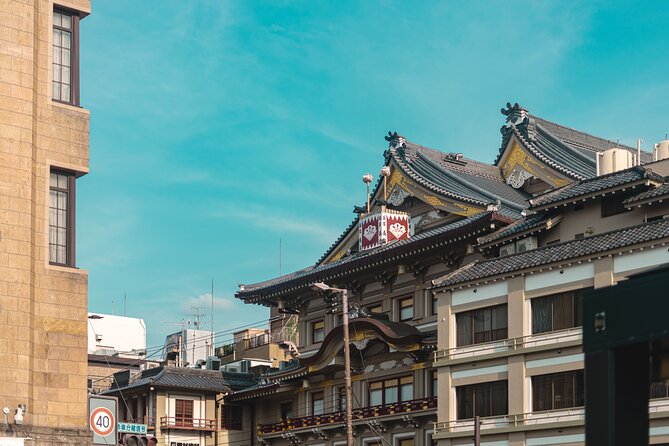
Kyoto’s geiko culture is often reduced to costumes, white makeup, and quick street photographs. This tour gives you a fuller picture. You walk through the districts where the tradition still operates, learn about training and performance, then meet a maiko in a setting where conversation is part of the experience.
That order matters. Seeing a dance first can be lovely, but seeing it after learning about the discipline behind the role makes the movements easier to appreciate. Your guide explains the terms used in Kyoto, including geiko for the city’s professional entertainers and maiko for apprentices. The discussion also covers the history, rituals, schools, and daily structure connected with the art.
I like that this is not presented as a mysterious fantasy world. The strongest guides, especially Kenta, Ken, and Akari, explain the subject in plain English and correct common misunderstandings without turning the walk into a lecture. Several guests specifically praised Kenta’s effort to protect the dignity of geiko and maiko while still making the subject accessible.
You should also expect a respectful tone. This is not a chance to chase performers through the streets or treat Gion like a stage set. The walk is meant to show you how the district functions and how to behave around its residents and performers.
More Cultural Walking Tours in Kyoto:
- Kyoto: Geisha Dinner & Gion Cultural Walk
★ 5.0 · 73 reviews - Savannah First Squares Culinary & Cultural Walking Food Tour
★ 5.0 · 3,229 reviews - Tokyo Tsukiji Fish Market Food and Culture Walking Tour
★ 5.0 · 3,184 reviews
Meeting at the Izumo no Okuni statue
The tour begins in front of the statue of Izumo no Okuni, near Exit 4 of Keihan Gion Shijo Station. This is a practical meeting point in central Kyoto, but give yourself enough time to find the correct exit and statue, especially if you are arriving during a busy part of the day.
From here, the guide introduces the area and sets the tone for the walk. The route takes you through Gion and toward Miyagawasuji, another historic entertainment district. The exact path can vary, but the purpose remains the same: connect the streets, buildings, shrines, schools, and customs with the geiko tradition.
The tour lasts about three hours, or 210 minutes. Roughly half is spent walking and half at the meeting and performance, although the published details describe the walking portion as 1.5 to 2 hours and the maiko session as about 50 minutes. Plan for a steady walking pace rather than a strenuous hike.
Your guide may also point out temples and a shrine along the way. Those stops are not the main subject, but they help place Gion within Kyoto’s older city fabric. You are not simply walking from a station to a restaurant. You are learning how the entertainment district sits beside ordinary religious and neighborhood life.
What you learn while walking through Gion
The walk is the part that gives the show its meaning. Your guide explains how someone becomes a maiko, what training involves, and how a maiko’s role differs from that of a geiko. You also hear about the arts involved, including dance, music, manners, dress, and formal hospitality.
This background is useful because many people arrive with a Hollywood version of geisha culture. The tour works to separate those images from Kyoto’s actual terms and traditions. The explanations focus on history and present-day practice rather than on sensational stories.
Kenta is often praised for making the walk feel like a conversation with a local friend. Akari receives similar praise for her enthusiasm and clear explanations. Ken is also noted for speaking slowly and clearly, a useful quality if English is not your first language.
The small group makes a real difference here. With no more than eight people, you can ask about details as they come up. Guides have also helped take group photographs, offered advice about other things to do in Kyoto, and adjusted their pace to suit the party.
There is a practical etiquette lesson, too. Gion is not only a sightseeing area. The guide helps you avoid behavior that could disturb local people or performers. That advice is one of the most valuable parts of the walk because it lets you see the district without treating it like a theme park.
Miyagawasuji and the maiko performance
The second half takes place in Miyagawasuji, where you meet a maiko for a question-and-answer session and performance. The meeting lasts about 50 minutes and includes one or two songs or dances, depending on the program.
The performer is a maiko, meaning an apprentice geiko. You can expect to ask about her life, training, routine, and reasons for entering the profession. The tone is interactive rather than a distant stage show. Several accounts describe the maiko as patient, engaging, and willing to respond to the group’s questions.
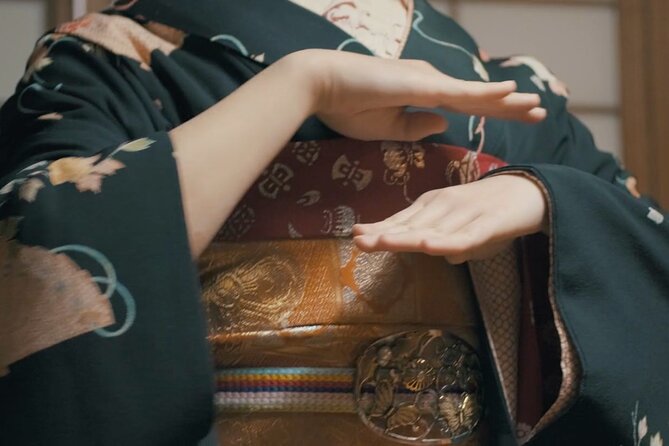
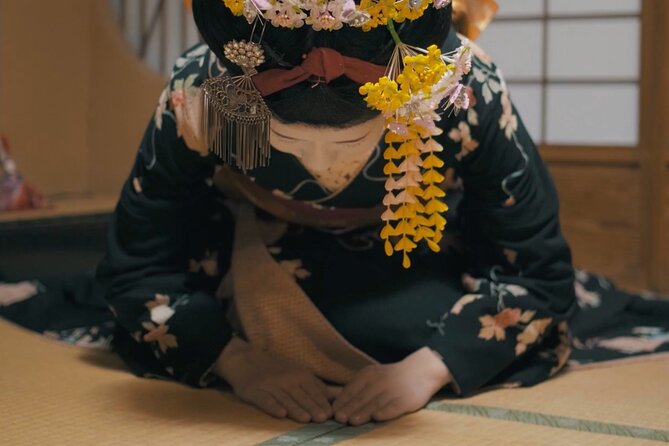
The dance is brief, but it is the emotional high point of the experience. The kimono, hairstyle, makeup, posture, and controlled movements all become easier to understand after the walking tour. One performance may be enough to show the precision involved, while two dances give the session a little more variety.
A simple game may also be included. That adds a lighter moment and keeps the meeting from feeling stiff. You may be allowed to take photographs, but respect any instructions given during the visit. One person specifically noted that photographs were not to be shared online, so ask before posting images.
This is close contact, but it is not a private audience. You are part of a small group, and the maiko must answer several questions and perform within a fixed time. Keep your questions concise and polite so everyone gets a turn.
More Tours with Dinner in Kyoto:
- Osaka: Deep Backstreets Walking Tour with Dinner Option
★ 4.9 · 902 reviews - Sydney: Blue Mountains Late Start: Walks, Wildlife & Dinner
★ 4.9 · 295 reviews - Marrakech: Authentic Moroccan Food Walking Tour & Dinner
★ 4.8 · 261 reviews - Athens at Night Small-Group Walking Tour with Dinner
★ 5.0 · 230 reviews
Choosing lunch, tea, or dinner
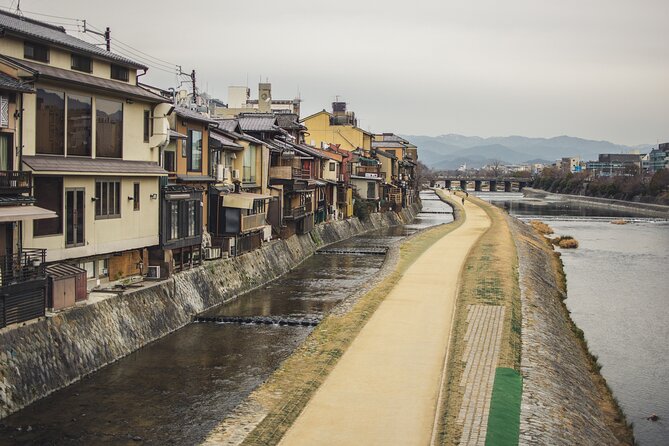
You can choose among three time and meal formats. The morning option begins at 10:30 and includes a Japanese lunch plate. The afternoon option begins at 14:30 and includes a cup of tea. The evening option begins at 18:30 and includes dinner with eight shared dishes.
The lunch version works well if you want to keep your evening free for another Kyoto activity. It also gives you the chance to see Gion in daylight, which one guest specifically recommended. Daylight makes it easier to notice the architecture and street details during the walk.
The tea option is the lightest choice. It suits people who want the cultural meeting without committing to a full meal, or who already have lunch and dinner plans. Since only a cup of tea is included, do not book this option expecting substantial food.
The dinner version offers the fullest meal setting. The eight dishes are shared, and the food has been described as beautifully arranged, tasty, and in one case similar to a small kaiseki-style meal. Portions are not necessarily large, so hungry diners may want to treat the meal as part of the cultural program rather than a feast.
Drinks are available with the dinner option, and the tea session may include a flavored tea such as orange tea. The exact dishes and drinks can change, so book this for the meeting and performance first, with food as a useful extra.
Is the $108 price good value?
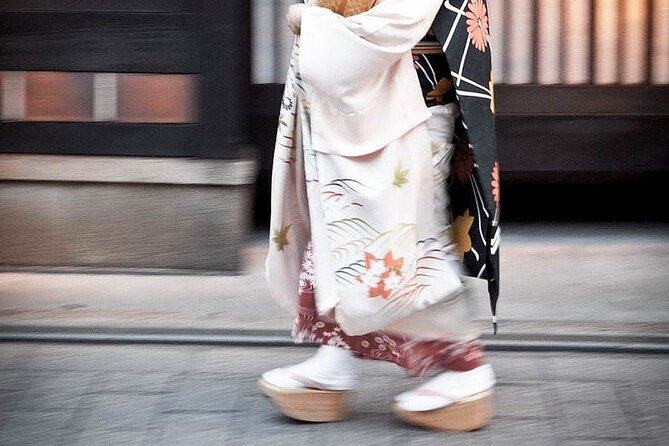
At $108 per person, the price is not a bargain walk, but it covers several separate elements: an English-speaking guide, up to two hours of walking, a 50-minute maiko meeting, a performance, questions, and your selected food or tea.
The strongest value comes from access and explanation. A public walk through Gion will show you the streets, but it will not normally provide this kind of structured conversation with a maiko. A performance alone might be attractive, but without the district walk and historical background, it would be easier to miss what you are seeing.
The small group also supports the price. With a maximum of eight people, you have a reasonable chance to ask questions and see the performance without being lost in a large crowd. The meal is a bonus rather than the main reason to book.
I would consider it good value if geiko culture is high on your Kyoto list, or if you want one planned activity that combines a neighborhood walk, cultural explanation, food, and live performance. I would look elsewhere if you mainly want a cheap sightseeing walk or a large dinner.
Practical details that affect your day
Wear comfortable shoes. The route lasts up to two hours on foot, and the walking portion is not suitable for people with mobility impairments. Kyoto can also be hot, so bring water and dress sensibly. One guide has provided cold drinks on warm days, but you should not rely on that as a standard inclusion.
Large bags and luggage are not allowed. Leave suitcases at your hotel or another permitted storage point before arriving. This rule matters most for people coming directly from a train station or changing hotels.
The tour is offered in English with a live guide. Reports about Kenta, Ken, and Akari repeatedly highlight their clear speech and willingness to answer questions. If you are anxious about following a cultural explanation in English, the small group and conversational format should help.
You can cancel up to 24 hours before the start for a full refund, and the reserve-now, pay-later option lets you hold a place without paying immediately. Starting times depend on the selected option and availability, so check the exact time before planning temple visits around it.
Who should book this experience?
I would recommend it to first-time visitors who want more than a quick glimpse of Gion. It suits couples, families with older children, and solo visitors who like asking questions rather than simply taking photographs.
It is especially useful if you have wondered what geiko and maiko actually do, how the training works, or why the clothing and performance styles matter. The guide-led walk makes the subject understandable even if you arrive with little prior interest.
Families should note that the experience is cultural and fairly structured. Children who enjoy conversation, performance, and Japanese history may get a lot from it. Very young children or anyone who struggles with walking may find the pace and etiquette requirements less comfortable.
It also suits repeat visitors to Kyoto. The shrines and major temples may already be familiar, while Gion’s living traditions offer a different view of the city. The walk is quiet and local in feel compared with Kyoto’s busiest sightseeing corridors, though crowds and street conditions can vary.
Should you book the Gion geisha walk and show?
Book it if you want a respectful introduction to geiko and maiko culture, not just a costumed photo opportunity. The best reasons are the small group, the clear guides, and the chance to ask a maiko direct questions before watching her dance.
Choose the lunch or daytime tea option if you want better light for the streets and a less formal schedule. Choose dinner if you want the most complete evening, but remember that eight shared dishes may be elegant rather than filling.
Skip it if you dislike walking, cannot leave large luggage behind, or want a long theatrical production. For most other visitors, the $108 cost is justified by the combination of access, explanation, and performance. This is one of Kyoto’s more focused cultural outings, and it gives you a better chance of seeing Gion as a living district rather than a backdrop.
FAQ
Where does the tour meet?
Meet in front of the statue of Izumo no Okuni near Exit 4 of Keihan Gion Shijo Station.
How long does the experience last?
The experience lasts three hours, or 210 minutes.
What language is the tour conducted in?
The tour is conducted in English with a live guide.
How large is the group?
The group is limited to eight participants.
What happens during the walking portion?
You walk through Gion and related historic areas while learning about geiko and maiko history, training, lifestyle, rituals, and present-day culture. The walking portion lasts about 1.5 to 2 hours.
How long is the maiko meeting?
The maiko meeting lasts about 50 minutes and includes a question-and-answer session and a performance with one or two songs.
What food options are available?
The 10:30 option includes a Japanese lunch plate. The 14:30 option includes a cup of tea. The 18:30 option includes dinner with eight shared dishes.
Can I bring luggage?
Large bags and luggage are not allowed. The experience is also not suitable for people with mobility impairments.
More Shows in Kyoto
- Show me the City! A Small Group Walking Tour of Toronto
★ 5.0 · 621 reviews - Freiburg: Drag Queen Show Walk with Betty BBQ
★ 4.6 · 605 reviews - Stratford-Upon-Avon: The Famous Walk Talk Show
★ 4.9 · 342 reviews - Hanoi: Street Food Walking Tour & Water Puppet Show
★ 4.8 · 205 reviews
More Dining Experiences in Kyoto
- Naples: Street Food Experience With 6 Stops
★ 4.7 · 392 reviews - Hiroshima: Food and Culture Guided Walking Tour with Dinner
★ 4.9 · 212 reviews - Tirana: Local food experience & walking tour
★ 5.0 · 154 reviews - Bologna: Dinner, Wine & Tastings Walking Tour
★ 4.8 · 109 reviews
Just added around Kyoto
- Kyoto : Private Custom Walking Tour With A Local Guide★ 4.6 · 144 reviews
- Kyoto: Private 2.5 Hour Historical Walking Tour★ 4.9 · 121 reviews
- Kyoto: Private Walking Tour with a Local★ 4.6 · 118 reviews
- Kyoto: Gion Sunset Walking Tour with Local Guide★ 4.7 · 351 reviews
- Kyoto: Imperial Palace & Nijo Castle Guided Walking Tour★ 4.7 · 453 reviews
- Kyoto: Gion Walking Tour★ 5.0 · 195 reviews
- Kyoto: Gion Hidden Gems & Geisha Culture Tour★ 4.9 · 126 reviews
- Kyoto: Geisha Dinner & Gion Cultural Walk★ 5.0 · 73 reviews
Cultural Walking Tours, compared.

Savannah First Squares Culinary & Cultural Walking Food Tour
Read our review →
Tokyo Tsukiji Fish Market Food and Culture Walking Tour
Read our review →
New Orleans French Quarter, Voodoo and Culture Walking Tour
Read our review →
Southernmost Food & Cultural Walking Tour by Key West Food Tours
Read our review →
Valletta: Street Food and Culture Walking Tour
Read our review →
Lisbon Roots – Small group Food & Culture Walking Tour w/tastings
Read our review →
Browse the lists this tour appears in