
REVIEW · KYOTO
Kyoto: Meet the Geisha Maiko with Gion Walking Tour
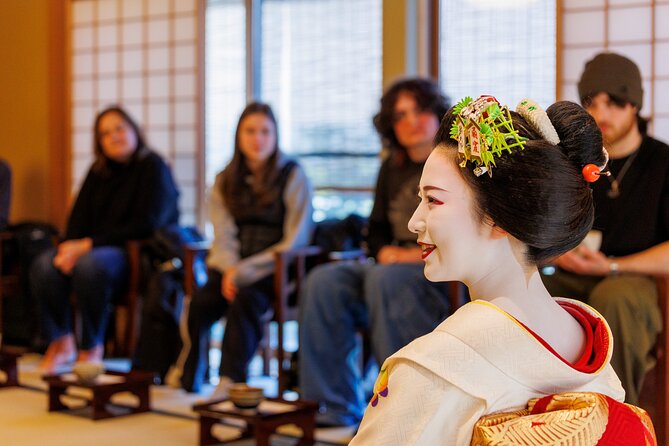
Kyoto’s most memorable moment here comes after the walk, when you enter a private ochaya, or traditional teahouse, and meet a maiko and a former geiko face to face. You watch one or two dances, then ask direct questions about training, daily life, dress, and Kyoto’s geisha districts.
I like the honest conversation as much as the performance, since it turns a beautiful but distant art form into a human exchange. I also like the Gion walk, especially the Shirakawa Canal and Hanamikoji Street, because your guide gives you useful context before you step inside the teahouse.
The main consideration is timing. The full experience can run longer than expected, and the dance itself may last only a few minutes, with much of the 90-minute visit devoted to conversation and questions. Plan your day with breathing room.
Key points at a glance
- A rare private setting: Enter an ochaya that is normally closed to casual drop-in visitors.
- Performance plus conversation: See a maiko dance, then ask questions with help from an English-speaking guide.
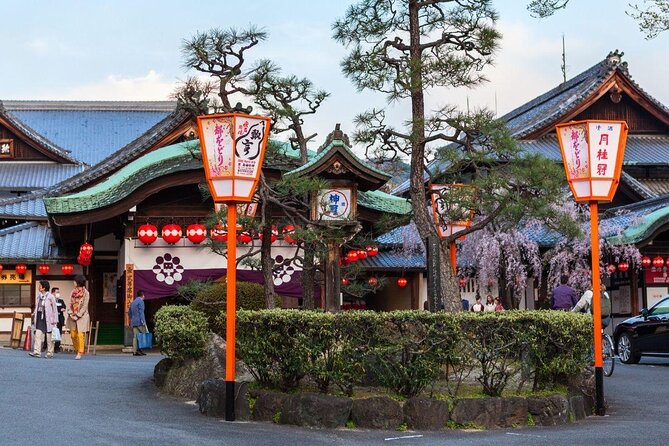
- A useful Gion introduction: Walk past the Shirakawa Canal, Tatsumi-jinja Shrine, Hanamikoji Street, Gion Corner, and Kenninji Temple.
- Personal photos are allowed: Take photographs during the performance and photo session, but ask the maiko before posting images online.
- Guides make a real difference: Mika, Naomi, Tom, Takuma, Tom, Yuko, Chiko, and others have been praised for clear English and thoughtful explanations.
- Bring socks: You must wear socks inside the performance venue, and the second-floor room is reached by stairs.
Why the ochaya visit is the heart of the experience
The appeal of this tour is access. Kyoto’s geiko and maiko performances are linked to traditional teahouses, where entry is often restricted and arrangements are not simple for an independent visitor. This experience gives you a scheduled introduction to that world without pretending that a short tourist visit makes you an expert.
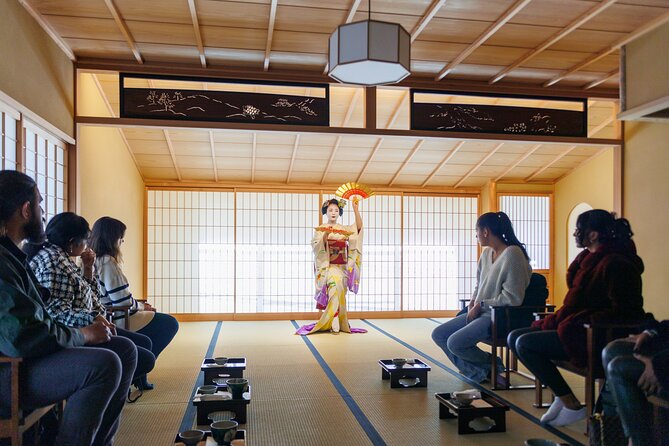
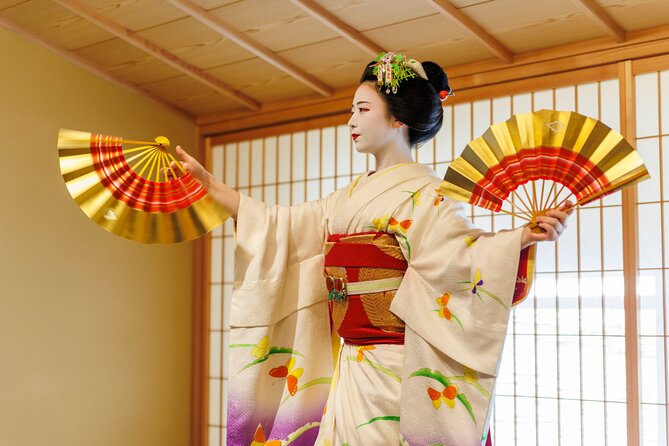
You enter a private residence and venue called an ochaya. The room is on the second floor, so you climb stairs before taking your seat. In this quieter setting, a maiko performs one or two traditional dances, accompanied by the atmosphere and formal style of Kyoto’s entertainment districts.
Do not book this expecting a long stage show. One dance may last less than five minutes. That is not a weakness if you understand what you are buying. The performance is the doorway to the more unusual part: a conversation with the maiko and a former geiko or teahouse owner.
The questions are what give the visit its value. You can ask about the maiko’s training, the path toward becoming a geiko, the meaning of the clothing and makeup, and the changing role of this work in modern Kyoto. Your guide translates and explains, helping the exchange feel natural rather than like a scripted presentation.
The former geiko adds a second viewpoint. A maiko is still in training, while a geiko is an established artist. Hearing both perspectives gives you a better sense of the years of discipline behind the polished appearance.
A few more walking tours around Kyoto worth a look
- Kyoto Geisha Walking Tour: Gion District & Hidden Gems
★ 4.7 · 3,273 reviews - Kyoto: Gion Magical Night Walking Tour with Geisha Trivia
★ 4.9 · 2,393 reviews - Kyoto: Gion Geisha District Walking Tour – Stories of Geisha
★ 4.7 · 2,187 reviews
Starting at the Shirakawa Canal
You have two possible starting arrangements. One begins at the Izumo-no-Okuni statue. The other is connected with the Wargo Kyoto Kimono Rental, Gionshijo Store. If you choose the kimono option, you change at the rental shop and walk to the statue yourself, a trip of about three minutes.
That small detail matters. Allow time to dress, collect your belongings, and reach the guide without rushing. A kimono also changes the pace of the walk. You will want to move carefully on Gion’s streets, and your guide may help you find suitable places for photographs.
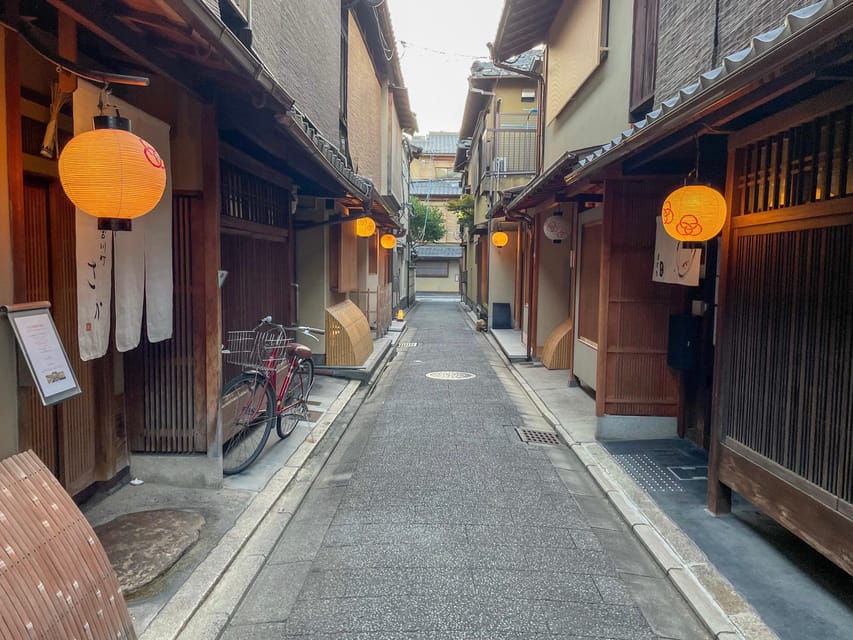
The first major stop is the Shirakawa Canal, where the water, willow-lined path, traditional facades, and narrow lanes create one of Gion’s most attractive scenes. Your guide uses the area to explain how the district functions and where maiko and geiko work.
I like beginning here because it gives you a visual sense of place before the more formal meeting. You are not simply being taken to a room for a performance. You first see the streets connected with the culture you are about to encounter.
The walk lasts about 70 to 80 minutes in total. It is not a strenuous hike, but the ground can be uneven, and summer heat can make the walk tiring. One useful improvement would be a planned café pause on very hot days, but the schedule is built more as a continuous walk.
Tatsumi-jinja, Hanamikoji, and Gion Corner
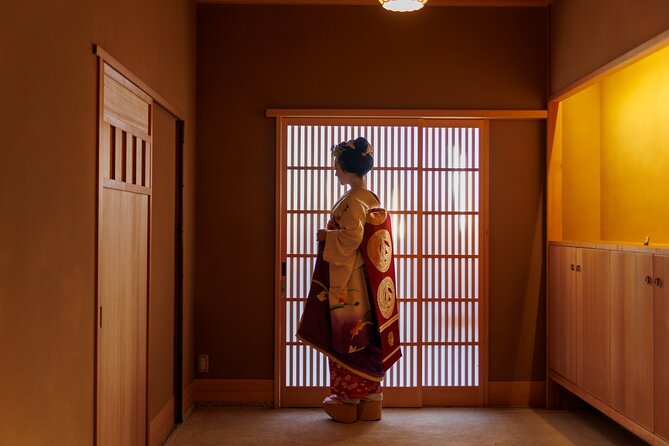
The short stop at Tatsumi-jinja Shrine lasts about five minutes. It is a compact visit, not a full shrine tour, so keep your expectations modest. The value comes from hearing how the shrine fits into the local district rather than spending a long time inside.
You then continue to Hanamikoji Street, one of Gion’s best-known traditional streets. The guided stop lasts about ten minutes. Here, your guide can point out the design of the buildings and explain the difference between seeing a geisha district from the outside and understanding how it operates.
This is also a place to remember basic courtesy. Gion is a working neighborhood, not a theme park. The tour helps you look without treating people, houses, or private entrances as photo props. That context is especially useful if you are wearing a kimono and attracting attention yourself.
Gion Corner is included as another orientation stop. The schedule does not promise a full performance there, so think of it as part of the district walk rather than a separate show.
Several guides have been singled out for making this part work well in English. Mika is described as patient and warm, Naomi as a strong storyteller, and Tom as especially capable at translating questions. Other names associated with positive experiences include Takuma, Yuko, Chiko, Ayako, Ellie, Eric, and Chika.
The guide you receive may vary, but the role is important. A good guide explains customs without turning the district into a lecture, keeps the group together, and translates carefully once you reach the teahouse.
Kenninji Temple is a brief look, not a temple visit
The route includes a photo stop and guided sightseeing near Kenninji Temple, for about 15 minutes. This is useful if you want to connect Gion’s entertainment district with Kyoto’s religious architecture, but it is not a full temple visit.
I would not build your day around seeing Kenninji through this tour. If the temple matters to you, return separately with enough time to explore it properly. The tour’s real focus is Gion and the ochaya meeting, and the temple stop mainly adds visual and cultural context.
That distinction helps prevent disappointment. The walk offers several glimpses rather than lengthy visits. You see enough to understand the neighborhood, then move on to the main appointment.
Same streets, a different route:
- Best of Kyoto: Gion, Geisha, Pagodas & Cobblestones
★ 4.9 · 2,058 reviews - Night Walk in Gion: Kyoto’s Geisha District
★ 4.5 · 2,003 reviews - Kyoto Gion Geisha District Walking Tour – The Stories of Geisha
★ 5.0 · 1,441 reviews - Nishiki Market Brunch Walking Tour (7 Tastings + Brunch)
★ 5.0 · 1,355 reviews
Miyagawasuji and the 90-minute meeting
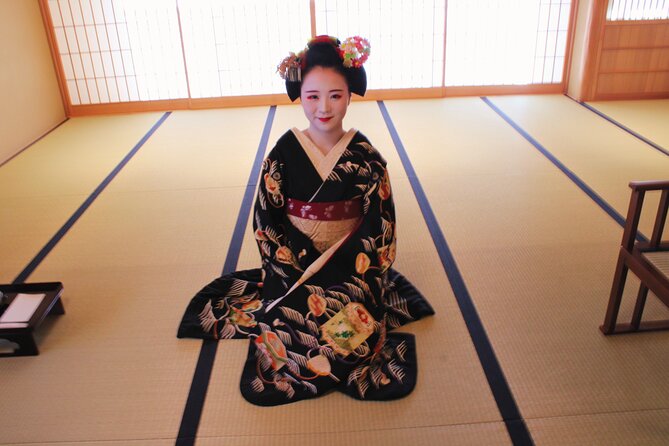
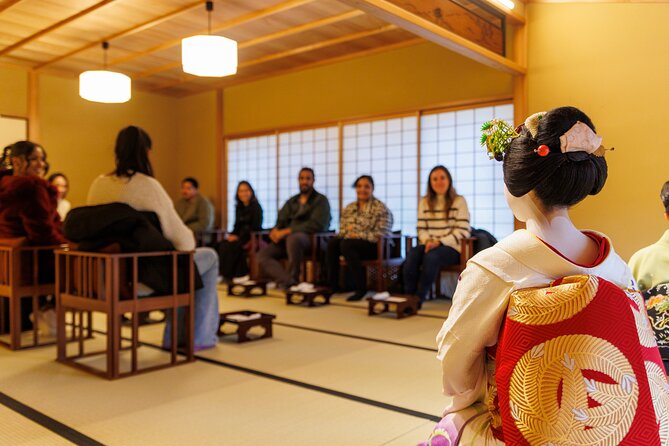
The walk ends at Miyagawasuji, another of Kyoto’s traditional flower districts. This is where you spend about 90 minutes for the maiko meeting, performance, questions, and photographs.
The setting is intimate, but the exact group size can vary. Small groups are available, and some sessions have had only around seven people. A smaller group makes it easier to hear the answers, ask a personal question, and take an unhurried photograph.
The sequence usually centers on three parts:
- A greeting and introduction to the teahouse setting
- One or two maiko dances, with the former geiko also present
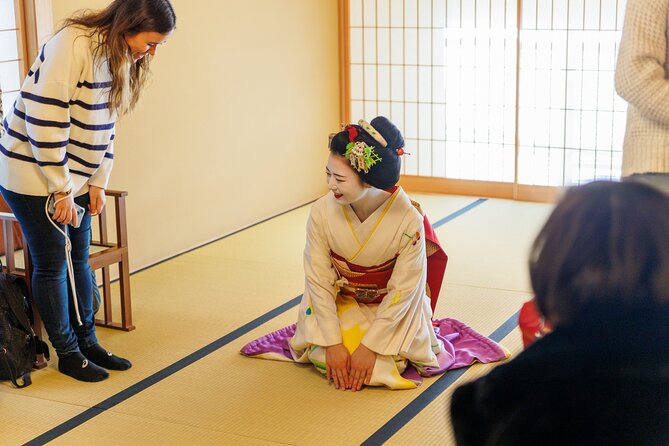
- A question period followed by individual or group photographs
The word performance can set the wrong expectation if you imagine a theater production. This is a short traditional presentation in a private room. Its appeal lies in the closeness of the setting and the chance to speak afterward.
The photo session is another strong point, but it comes with clear rules. Photography and video are allowed only during the performance and the photo session. If you want to post a maiko’s photograph online, ask her directly for permission first. Videos cannot be uploaded online.
You must wear socks inside the venue. On rainy days, do not arrive in wet socks or wet clothes. Carry an umbrella during the walk and make sure you have a dry pair of socks available if the weather is poor.
What the conversation adds
The conversation keeps this from being a simple costume-and-dance attraction. The maiko is not there only to pose. You get a chance to learn about the work behind the public image, while the former geiko or teahouse owner helps explain the customs from an older and more experienced point of view.
You may hear about the long training process, the difference between maiko and geiko, the clothing, and the discipline needed to perform. The exact questions depend on your group, so prepare a few of your own. Ask concise questions and let the guide translate them fully.
This is also where cultural respect matters most. A maiko’s appearance is carefully prepared, but she is still a working person. Asking before touching clothing, taking extra photographs, or posting images is basic courtesy. The tour’s rules make that clear.
The strongest guides do more than translate words. They explain tone, customs, and context so you can understand the meaning behind the answers. That is why names such as Mika, Naomi, Tom, and Takuma come up so often in positive accounts of the experience.
Price, duration, and what you receive
At $106 per person, this is not a low-cost walking tour. You are paying for more than a stroll through Gion, though. The price includes an English-speaking local guide, roughly 70 to 80 minutes of district walking, entry to the private meeting, the maiko performance, conversation with the maiko and venue owner, a Q&A, and photographs.
The value depends on your priorities. If you only want to see Gion’s streets, you can explore them independently for very little money. If you want access to a private ochaya and a translated conversation with a maiko and former geiko, arranging the same experience yourself would be difficult.
The listed duration is three to five hours. That range is important. The walking portion and meeting can take longer than the shortest estimate, and the group may finish later than planned. One person nearly had a train connection problem after the tour ran beyond the expected time, so do not schedule a bullet train immediately afterward.
You can cancel up to 24 hours before the experience for a full refund, and reserve now while paying later. The tour runs in rain or shine. Organizer-related cancellations are refundable, but incidental hotel or train expenses are not, so keep your wider schedule sensible.
Who should book this Gion experience?
I would recommend it most strongly to you if you have a real interest in Japanese performing arts, Kyoto customs, or the difference between maiko and geiko. It is also a good choice if you want an experience that goes beyond taking photographs of traditional streets.
The optional kimono rental makes the day more visual and memorable, especially for people who want photographs during the walk. You should remember that kimono can make walking slower, and the outfit does not change the basic structure of the tour.
This is less suitable if you want a long dance program, a relaxed café crawl, or a temple-focused excursion. The performance is brief, the route includes several short stops, and the Q&A takes up much of the teahouse visit.
Children under 10 are not permitted. The tour is not suitable for wheelchair users or people with mobility impairments, since the private room is upstairs and accessible only by stairs.
Practical advice before you go
Wear comfortable shoes for the walking section, even if you book a kimono. Bring socks, and on rainy days carry an umbrella and a dry change of socks.
Leave space in your schedule after the tour. The activity may last longer than expected, and the end point is Miyagawasuji rather than the starting point.
Think of three questions before you arrive. The conversation becomes more rewarding when you ask about something specific instead of waiting for a general speech.
Keep your camera away during parts of the visit when photography is not allowed. Take photographs only during the performance and designated photo session, and ask before posting images online.
Finally, treat the walk as a neighborhood visit, not a hunt for secret sightings. The best part of the day is the access arranged for you inside the ochaya, not chasing people on the street.
Should you book it?
Book this tour if meeting a maiko, hearing personal stories, and entering a private teahouse sound more interesting to you than checking off another Kyoto landmark. The short dance is beautiful, but the real value comes from the conversation, translation, and setting.
Skip it if your schedule is tight, you cannot manage stairs, or you expect a full-length stage performance. For everyone else, $106 is a fair price for access that is difficult to arrange independently, especially when paired with a thoughtful guide such as Mika, Naomi, Tom, or Takuma.
FAQ
How long does the Kyoto maiko experience last?
The full activity takes about three to five hours. The Gion walk lasts around 70 to 80 minutes, and the meeting at the ochaya takes about 90 minutes, though the day can run longer.
Where does the tour start?
The starting point depends on the option you book. Choices include the Izumo-no-Okuni statue and the Wargo Kyoto Kimono Rental, Gionshijo Store.
What happens if I choose the kimono rental option?
After changing into a kimono, you walk to the Izumo-no-Okuni statue by yourself. The rental store is about three minutes from the statue, where your guide waits.
What is included in the tour?
You receive an English-speaking local guide, the Gion walking tour, the maiko meeting, one or two live dances, conversation with a maiko and venue owner, a Q&A, and a photo session with the maiko.
Can I take photographs or videos?
Photography and video are allowed only during the performance and photo session. Ask the maiko directly before posting any photographs online. Videos cannot be uploaded online.
Do I need to bring anything special?
Bring socks. You must wear socks at the performance venue, and wet socks or wet clothes are not allowed inside on rainy days.
Is the tour accessible for wheelchair users?
No. The experience is not suitable for wheelchair users or people with mobility impairments. The performance room is on the second floor and can be reached only by stairs.
Can I cancel the booking?
You can cancel up to 24 hours in advance for a full refund. The activity runs in rain or shine, and incidental hotel or bullet train costs are not refunded if organizer-related changes affect your plans.
Just added around Kyoto
- Cool Kyoto: 5-Hour Walking Tour with the Last Samurai★ 4.8 · 73 reviews
- Gion Walking Tour by Night★ 4.5 · 429 reviews
- Kyoto Sake Brewery & Tasting Walking Tour★ 5.0 · 623 reviews
- Kyoto Gion Night Walk & Geisha District Guided Tour★ 5.0 · 786 reviews
- Kyoto: Izakaya Bars Guided Walking Tour★ 4.9 · 815 reviews
- Kyoto Gion: 2-Hour Geisha Culture & History Walking Tour★ 5.0 · 1,186 reviews
- Kyoto Arashiyama Walking Tour: Bamboo, Monkeys, Gardens & Secrets★ 5.0 · 1,216 reviews
- Nishiki Market Brunch Walking Tour (7 Tastings + Brunch)★ 5.0 · 1,355 reviews
Walking Tours, compared.

Magical London: Harry Potter Guided Walking Tour
Read our review →
Reykjavik Food Walk – Local Foodie Adventure in Iceland
Read our review →
History and Hauntings of Salem Guided Walking Tour
Read our review →
New Orleans Premier Ghost, Voodoo and Vampire Walking Tour
Read our review →
Amsterdam Anne Frank: Small-Group Walking Tour & Local Guide
Read our review →

Edinburgh Castle: Guided Walking Tour with Entry Ticket
Read our review →
Anne Frank’s Story – Guided Walking Tour through Amsterdam
Read our review →Browse the lists this tour appears in