
REVIEW · MEXICO CITY
Walking Tour of the Historic Center of Mexico City
Mexico City’s historic center makes the most sense when you see its layers side by side: Aztec ruins beside a Spanish cathedral, Rivera murals inside a colonial-era building, and grand civic palaces still woven into daily city life. This small-group walk of up to 10 people gives you that useful first look without trying to cover the whole capital in one day.
I like the mix of major sights and human-scale details, especially the Diego Rivera murals in the Ministry of Education and the short stop at the archaeological window beneath a modern street. I also like the guides’ attention to shade, street crossings, questions, and the pace of the group. The main drawback is simple: three hours on cobblestones at Mexico City’s altitude can feel long, and a slow group may not reach every planned stop.
Key points to know before you book
- Zócalo to Bellas Artes: The route connects the city’s most important central landmarks in one walk.
- Aztec and Spanish history together: Templo Mayor, the cathedral, and colonial plazas show how Mexico City was rebuilt over its earlier capital.
- Diego Rivera murals included: The Ministry of Education is one of the tour’s best interior stops.
- Small groups matter: The maximum is 10 people, which makes questions and street crossings easier to manage.
- Guides bring different strengths: Fernanda, Alexia, Luis, Nat, Benjamin, Sara, Thomas, Oscar, Eduardo, and Gabby have all led tours, with a shared focus on history and local life.
- Plan for real walking: Wear comfortable shoes, expect uneven streets, and take the altitude and sun seriously.
Why this walk is a smart first look at Mexico City
The historic center is a lot to absorb on your own. The streets are full of grand facades, street commerce, shrines, government offices, museums, and archaeological remains. Without context, it is easy to admire the buildings while missing the larger story.
This tour gives you a framework. You move from the Mexica capital to the Spanish viceroyalty, then through independence, reform, revolution, muralism, and present-day Mexico. The guides also connect the buildings to subjects such as indigenous languages, Day of the Dead traditions, music, politics, and food.
That range is the tour’s purpose. It is not a detailed visit to every museum or church. Instead, it helps you decide where to return later. Alexia, for example, is described as offering a mix of historical and contemporary context rather than a long lecture at each site. That is useful if you want orientation first and deeper visits afterward.
English is the offered language. The guides named in the feedback include Fernanda, Alexia, Luis, Nat, Benjamin, Sara, Thomas, Oscar, Eduardo, and Gabby. You are not selecting a particular guide in the information provided, so expect the personality and emphasis to vary. The common thread is an approachable style, clear explanations, and time for questions.
More History Walking Tours in the world:
- Berlin: Third Reich & Cold War Guided Walking Tour
★ 4.9 · 8,378 reviews - Munich: Third Reich & WWII Walking Tour
★ 4.6 · 6,181 reviews - Berlin’s Best: 2 Hour Walking Tour Third Reich and the Cold War
★ 5.0 · 5,486 reviews
Starting beneath the flag in the Zócalo
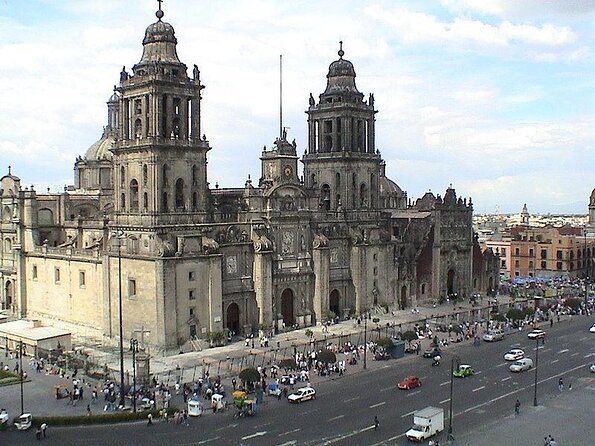
The walk begins at Plaza de la Constitución, usually called the Zócalo. This enormous square is the right place to begin because it gathers so much of Mexico City’s story in one view.
From here, you can see the National Palace, the Supreme Court of Justice, the Metropolitan Cathedral, and commercial streets with long-established silversmith shops. Your guide uses the square to explain how the city’s political and religious power developed around this central space.
The stop is brief, about 15 minutes, and admission is free. That brevity is sensible. The Zócalo is open and exposed, so the guide may move the group toward shade or a better place to talk. One useful feature of the small group is that it is easier to hear and stay together in a busy public square.
Look beyond the scale of the buildings. The point is not simply that the plaza is large. It is the meeting place of the city’s government, church, national identity, public demonstrations, and everyday movement. This is where the walk’s theme of old and new Mexico begins.
The cathedral and the city built over itself
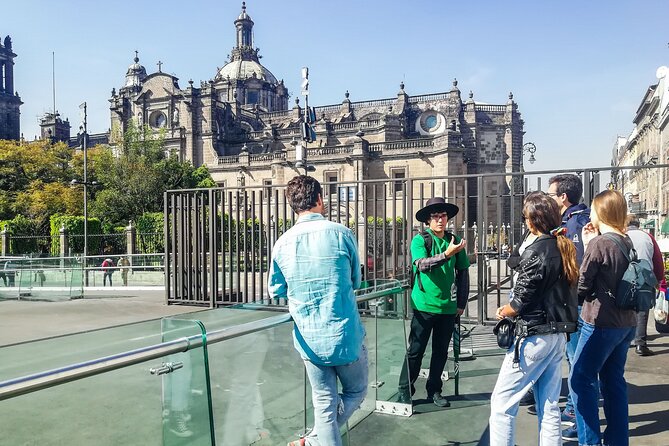
The Metropolitan Cathedral is discussed from the outside, with about 10 minutes devoted to its origins, construction, and Baroque and neoclassical details. Admission is not included, and the schedule does not promise an interior visit.
That limitation is worth noting. The cathedral is one of the most important buildings in the center, but this tour gives you a guided introduction rather than a full church visit. If you want to study the altars, chapels, organs, or interior decoration, plan a separate visit.
The exterior is still a useful lesson in how Mexico City developed. The cathedral occupies a site connected to the earlier Mexica ceremonial center, so its location carries more meaning than its architectural style alone. Your guide explains that shift from pre-Hispanic religious power to Spanish Catholic rule.
After the cathedral, the route reaches the outside of Templo Mayor. You see the archaeological remains dedicated to the Mexica gods associated with rain and the sun, then learn why the site mattered and how the ancient city was laid out.
This is one of the most important historical moments of the walk. Mexico City was not simply founded on empty ground. The Spanish capital was built over Tenochtitlan, and fragments of that earlier city remain beneath streets and buildings. The tour does not present Templo Mayor as an isolated ruin. It places the site within the geography and power structure of the Mexica capital.
Because the stop is outside, you get orientation rather than a full archaeological museum visit. Still, the connection between the cathedral, the Zócalo, and Templo Mayor gives you a clear picture of how conquest reshaped the city.
Rivera’s murals inside the Ministry of Education
The Museo Vivo del Muralismo is one of the strongest parts of the route. You enter the Ministry of Education and spend about 25 minutes with murals by Diego Rivera.
The building contains roughly a third of the murals Rivera painted during his career. That makes this more than a quick look at one famous panel. The paintings cover festivals, traditions, work, political life, and social struggle in early 20th-century Mexico.
I especially like this stop because it links architecture, art, and public education. Rivera’s murals were not made only for private collectors. They were placed in a public building where ordinary people could encounter stories about Mexican society and identity.
The visit is included, but time is limited. A guide such as Fernanda may allow a few extra minutes in the courtyard when the group schedule permits, but you should not expect a full art-history lecture or enough time to inspect every mural closely. If Rivera is a main reason for your visit, return here independently with more time.
This stop also gives the tour a needed change of pace. After several outdoor explanations, you get shade, walls covered in art, and a chance to look rather than simply walk. Still, stay aware of the group’s schedule. The route has many more stops ahead.
A few more walking tours around the world worth a look
- Magical London: Harry Potter Guided Walking Tour
★ 4.7 · 22,044 reviews - Reykjavik Food Walk – Local Foodie Adventure in Iceland
★ 5.0 · 18,952 reviews - History and Hauntings of Salem Guided Walking Tour
★ 5.0 · 14,564 reviews - New Orleans Premier Ghost, Voodoo and Vampire Walking Tour
★ 4.5 · 12,856 reviews
Santo Domingo and the machinery of colonial power
Plaza de Santo Domingo brings the walk into the period of New Spain. You spend about 15 minutes learning how the square figured in the viceroyalty, along with the trade in spices and goods from Asia.
This is a good reminder that colonial Mexico was tied to far wider trading networks. The plaza was not just a pretty public space. It was connected to commerce, government, religious authority, and the movement of goods across the Pacific.
The guide also discusses the Inquisition and French attempts to conquer Mexico. These subjects give the square a political edge. You see how power operated through both church institutions and imperial competition.
The stop is outside and free. That makes it easy to take in without a ticket, though the short time means you will hear the main story rather than examine every surrounding building. Pay attention to the guide’s explanation of how daily commerce and grand political events occupied the same streets.
A shaded pause at Plaza Tolsá
Plaza Tolsá is the tour’s planned rest stop. You sit or stand in the shade while the guide shifts from buildings to living culture.
Topics may include indigenous languages, the Day of the Dead, music, politics, and Mexican food. Each guide brings personal observations, so this is likely to be one of the more varied parts of the experience. Luis, for instance, is described as offering personal recommendations along with history, while Fernanda is praised for connecting the past with present-day Mexico.
The square also gives you a chance to see the equestrian statue of Charles IV, commonly called El Caballito, or the little horse. Nearby are the exterior of the National Museum of Art and the Mining Palace.
This is a good place to ask questions. You can ask about neighborhoods, food, customs, or sites to visit after the tour. The setting also helps break up the walking, which matters if you are still adjusting to the altitude or dealing with the heat.
The archaeological window beneath the street
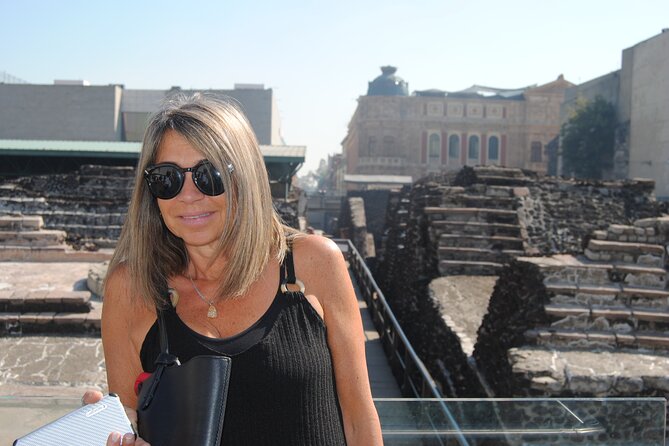
The Ventana Arqueológica is a short stop, about five minutes, but it makes a memorable point. You look at the remains of the past through an archaeological window beside the main temple area.
The guide explains how the remains were found and why so many historic structures in the center conceal older layers. This is a small detail with a large lesson: Mexico City is not built on a single historical period. Its streets often sit above buried foundations, walls, and traces of earlier life.
Admission is included. Since the stop is brief, it works best as a visual reminder rather than a major archaeological visit. You will want to listen closely because the explanation moves quickly.
Bellas Artes, Palacio Postal, and the city’s grand public face
Palacio de Bellas Artes is one of the route’s headline sights. You see the exterior and learn why the building is considered essential in Mexico City. The stop lasts about 15 minutes, and admission is not included.
The building is especially good for a short walking tour because both its outside and inside are celebrated, even though this experience focuses on the exterior. You get a chance to take in the facade, the scale, and the way the building anchors this part of the center. If you want to see the interior murals and performance spaces, you will need to return on your own.
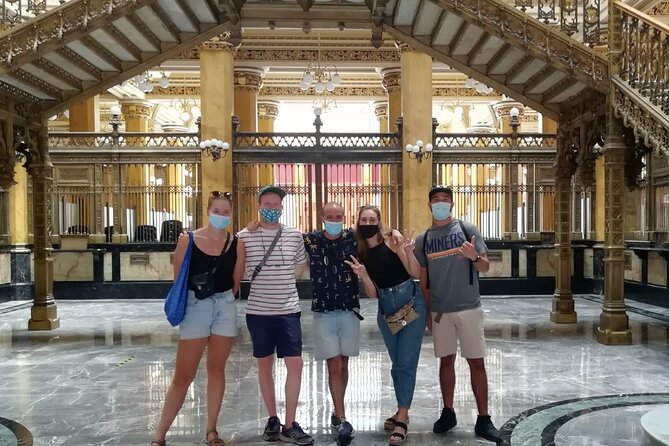
Next comes Palacio Postal, a still-functioning palace that shows how economic and political ambition was expressed through public architecture. The tour discusses the building from the outside, and admission is not included.
These two stops make a useful pair. Bellas Artes represents art and national culture, while Palacio Postal reflects communication, commerce, and government power. Both remind you that the historic center is not a museum frozen in time. Its grand buildings continue to shape the city around them.
The House of Tiles and the end near Bellas Artes
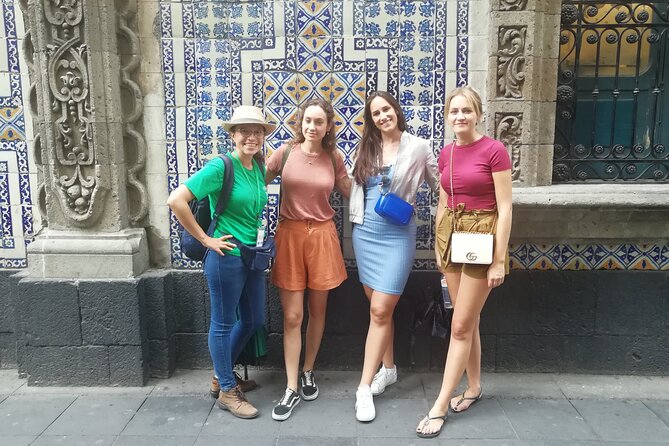
The final major sight is the Casa de los Azulejos, or House of Tiles. Its tiled facade makes it one of the most photographed buildings in the center, and it is an easy place to appreciate even after several hours of history.
The tour ends at Edificio Guardiola on Avenida 5 de Mayo, beside the Palace of Fine Arts and the House of Tiles. That location is practical. You finish near several landmarks, so you can continue exploring, stop for food, or return to one of the buildings that caught your interest.
The advertised route includes nine main areas, plus the Templo Mayor explanation between the cathedral and the Ministry of Education. The schedule totals about three hours, but the actual experience can depend on street conditions, group pace, heat, and time spent answering questions.
One important point comes from the walking demands. A group with several people who find cobblestones difficult may move slowly enough that not every planned stop receives equal time. The guide may also need to adjust for street crossings, sun, or bathroom breaks. That is not necessarily a flaw, but you should treat the route as a guided overview, not a timed checklist.
Walking conditions, group size, and what to bring
The maximum group size is 10. That is a useful limit in the historic center. You can hear the guide more easily, ask questions without holding up a large crowd, and receive more direct help at crossings or crowded corners.
You should still prepare for a serious walk. Some streets are cobbled or uneven, and there may be stretches without a place to sit. Mexico City’s elevation can make a three-hour outing feel harder than the same distance at sea level.
Wear shoes you can walk in for several hours. Bring water, sun protection, and a hat if you use one. Shade is part of the guide’s pacing, but you will spend much of the tour outdoors.
The meeting point is Plaza de la Constitución in the Centro Histórico. Transportation to the starting point is not included, though the location is near public transportation. Service animals are allowed, and most people can participate, but the cobblestones and length deserve honest consideration if you have limited mobility.
Is the price good value?
The exact price is not provided here, so I cannot judge it against a specific fee. The value depends on what you want from a city tour.
You are paying for an English-speaking guide, a planned route, a small group, and entry to the Ministry of Education’s mural area and archaeological window. You are also paying for the explanations that tie separate sights together. Without that context, the Zócalo, cathedral, ruins, and palaces can feel like disconnected photo stops.
There is one fair point to consider. The provider is called Kactus Free Walking Tour, and one person felt that a visitor might prefer a free walk led by a college student, with payment given directly to that guide. So compare the cost and tipping expectations before booking. The included access and group limit may justify the fee for you, but the tour is best chosen for its structure and context, not because it is the cheapest way to walk downtown.
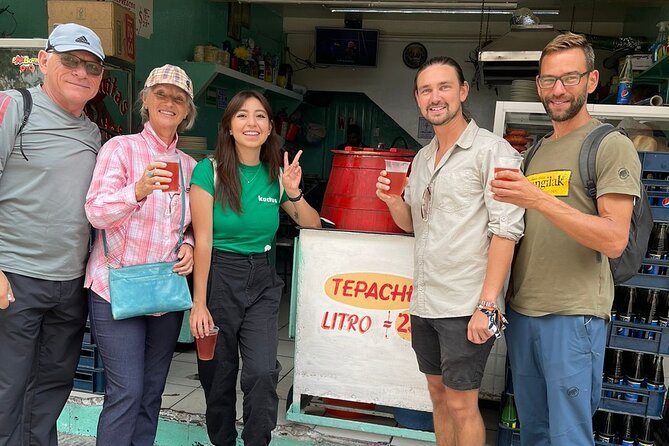
Tips are not included. Food, sweets, and any purchases along the way are also extra.
Who should book this Mexico City walk?
I would choose this tour if you are visiting Mexico City for the first time and want a clear introduction before tackling museums and neighborhoods on your own. It suits solo visitors, couples, friends, and mixed-age groups who enjoy history but do not want a formal lecture.
It is also a good choice if you want more than architecture. The route brings in indigenous languages, food, politics, music, colonial trade, muralism, and modern life. Guides such as Luis, Alexia, Nat, Fernanda, and Benjamin are praised for making the information easy to follow and leaving room for questions.
I would hesitate if you need frequent seating, dislike uneven streets, or want long interior visits. The cathedral, Bellas Artes, Palacio Postal, and House of Tiles are mainly exterior stops. For detailed museum time, book separate visits after you have used this walk to choose your priorities.
Book at least 24 hours before the start if your plans may change. Cancellation is free up to that point. Cancellations or changes within 24 hours are not refunded, and poor weather or failure to meet the minimum group size can lead to a rescheduled tour or full refund.
My call: a strong orientation walk with real walking demands
I would book this as an opening activity in Mexico City, especially if you want the city’s big story explained in plain English. The best features are the small group, the range of historical periods, the Rivera murals, and the guides’ practical care with shade, crossings, questions, and pace.
Just keep your expectations in the right place. This is a well-shaped introduction, not an in-depth visit to every monument. If you arrive ready to walk, listen, and note where you want to return, it offers good value and a useful sense of how Mexico City’s past remains under your feet.
FAQ
How long is the walking tour?
The tour lasts approximately three hours.
Where does the tour begin?
It begins at Plaza de la Constitución in the Centro Histórico of Mexico City.
Where does the tour end?
It ends at Edificio Guardiola on Avenida 5 de Mayo, beside the Palace of Fine Arts and the House of Tiles.
Is the tour offered in English?
Yes. English is the offered language.
How many people can join the tour?
The maximum group size is 10 people.
Is admission to the sights included?
Admission is included for the Museo Vivo del Muralismo and the Ventana Arqueológica. The cathedral, Palacio de Bellas Artes, and Palacio Postal are listed as admission not included, while several outdoor stops are free.
Is transportation included?
No. Transportation to the meeting point is not included. The meeting point is near public transportation.
What is the cancellation policy?
You can cancel up to 24 hours before the start time for a full refund. Cancellations or changes made less than 24 hours before the start are not refunded. Poor weather or failure to meet the minimum number of participants may result in another date or a full refund.
Just added around the world
- Fira: Guided Foodie Walking Tour with Tastings★ 4.9 · 474 reviews
- Fez: Guided Walking Tour of the Historic Medina★ 5.0 · 359 reviews
- Fez: Walking Tour in the Ancient City of Fez★ 4.8 · 73 reviews
- Faro: Old Town Guided Walking Food Tour★ 4.9 · 94 reviews
- Feel like a local – Walking Tour in Mykonos Town 2hours★ 4.4 · 77 reviews
- Fes: A Guided Walking Tour Through the Historic Medina★ 4.4 · 97 reviews
- Fez: Half-Day City Private Walking Tour with a Guide★ 4.6 · 114 reviews
- Fanal / Assobiadores – Levada Walk★ 4.6 · 93 reviews
History Walking Tours, compared.



Berlin’s Best: 2 Hour Walking Tour Third Reich and the Cold War
Read our review →
Third Reich Berlin: Hitler and WWII Walking Tour
Read our review →
New Orleans Garden District History Walking Tour
Read our review →
Cartagena: Historic Center and Getsemaní Shared Walking Tour
Read our review →
Imperial Palace and Shogun Historical Walking Tour
Read our review →Browse the lists this tour appears in