
REVIEW · MEXICO
Guadalajara City Center Walking Tour
Guadalajara’s story unfolds in a compact stretch of plazas, churches, government halls, theaters, and market lanes. This $35 walking tour connects the city’s big sights with the legends behind them, ending at the grand Cabañas Museum after about 2 hours and 15 minutes on foot.
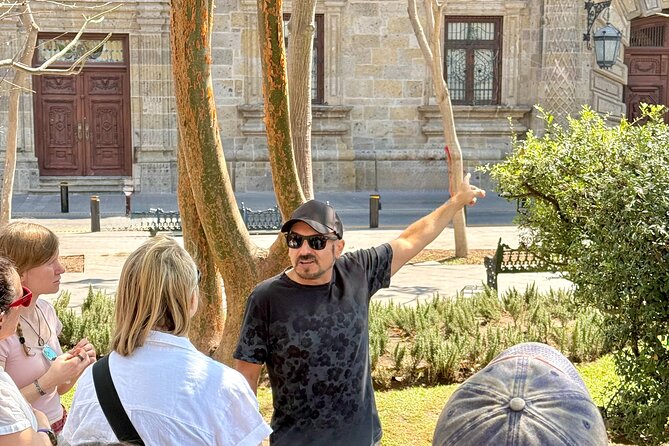
I like the clear route from the Regional Museum to Cabañas, and I like the balance of architecture, local folklore, Mexican history, and everyday city life. Guides such as Alex add useful food and neighborhood advice, and the groups are capped at 20 people.
The main drawback is the pace: 13 stops in a little over two hours means many visits are brief. Some interiors can also be closed, especially on Mondays, Saturdays, holidays, or during special events, so this is best viewed as an orientation walk rather than a series of long museum visits.
Key points to know before you book
- The route crosses Guadalajara’s historic core: You move from Liberation Square through the cathedral district, government buildings, Degollado Theater, Tapatía Square, and San Juan de Dios Market.
- Orozco’s murals are a major highlight: The Governor’s Palace includes impressive work by José Clemente Orozco, though the building is closed on Mondays and certain special dates.
- The tour is led in English: A certified, experienced guide accompanies the group, with Alex frequently praised for his history, local tips, and friendly manner.
- Expect a real walking tour: The route lasts about 2 hours 15 minutes, with roughly 10 minutes assigned to each of 13 stops.
- It ends at Cabañas Museum, not back at the start: You finish on the museum’s steps, near the San Juan de Dios area.
- The price is reasonable for a first look: At $35 per person, you pay for context and navigation, not admission tickets or hotel transportation.
Why this route works for a first day in Guadalajara
Guadalajara’s center can feel like several cities layered together. Grand colonial facades sit beside government offices, religious buildings, market stalls, public art, and busy pedestrian areas. A guide helps you connect those pieces instead of simply photographing them one by one.
The route begins at the Regional Museum of Guadalajara on Calle Liceo at 10:00 a.m. From there, you cross the central plazas in a logical line toward Cabañas Museum. You do not waste time shuttling between far-flung sights, and you finish in a useful area for continuing your own afternoon.
Each stop receives about 10 minutes. That is enough for an explanation, photographs, and a few questions, but not enough for a full interior visit. I would book this for your first morning in the city, then return later to the places that deserve more time.
More City Highlights Walks in Mexico:
- Historic Downtown Walking Tour
★ 5.0 · 1,289 reviews - Mexico City: Historic Downtown Walking Tour
★ 4.8 · 1,039 reviews - Berlin City walk Government District and Places of Democracy
★ 4.7 · 8,467 reviews
Liberation Square and the city’s public heart
Plaza de la Liberación is the opening scene, and it gives you room to get your bearings. It is Guadalajara’s largest public square and a natural starting point for the city’s central monuments.
This is where the tour begins to explain Guadalajara through public space. Instead of treating the square as a pretty backdrop, the guide uses it to set up the city’s past and the importance of the buildings around it.
The stop is free, as are all the listed stops on this walk. Keep your camera ready, but listen closely too. The value here comes from understanding how the square relates to the cathedral, government buildings, and nearby plazas.
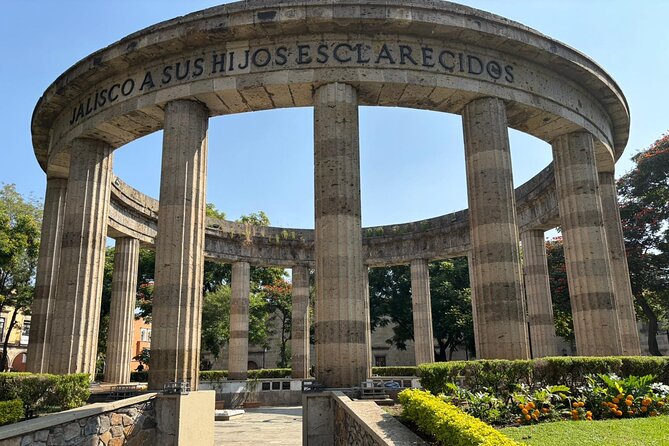
From there, you reach the Rotonda de los Jaliscienses Ilustres, a circular monument honoring notable people from Jalisco. The guide explains who these figures were and why they mattered to the state, the country, or the wider world.
That makes this more than a quick monument stop. It gives you a sense of the people Guadalajara chooses to remember. Ten minutes is enough for the main story, though anyone interested in Mexican history may want to return later and read the names at a slower pace.
City Hall, Guadalajara Square, and the cathedral
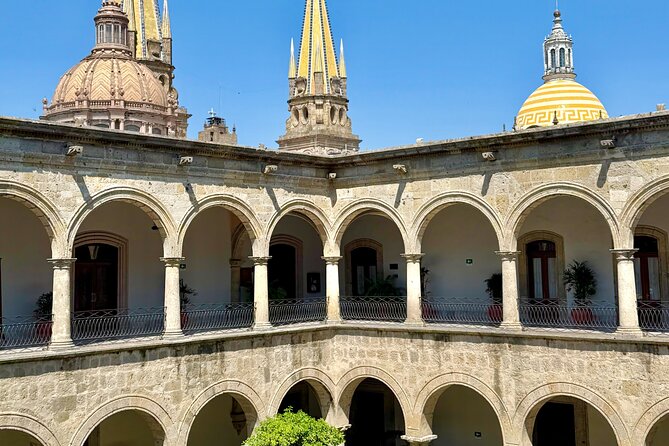
Palacio Municipal de Guadalajara brings you to a working civic building with striking architecture. Inside, murals tell the difficult story of the city’s founding and the hardships it faced.
This stop has a practical limitation. The building is closed on Saturdays, government holidays, and during special events, so the tour may need to explain the exterior rather than show you the interior. If the doors are open, the murals make the short visit worthwhile.
Plaza Guadalajara follows, with a story about the city’s nickname, the Pearl of the West, along with an unusual Guinness World Record. This is the kind of short local detail that gives a walking tour personality. You get a memorable fact to carry with you, even if the square itself takes only a few minutes to explore.
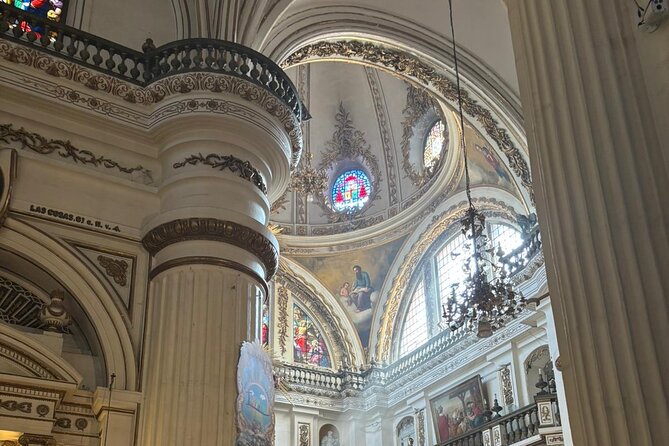
Next comes Guadalajara Cathedral, the city’s most recognizable landmark. Its towers have defined the central skyline for generations, and the guide explains the building’s construction and the bishops connected with its crypts.
The cathedral stop is listed as free, but entry is subject to religious holidays. That means your view may depend on services or church restrictions. Plan on hearing the story from outside if access is limited, and do not expect a long self-guided visit during the 10-minute slot.
French gifts, Pancho Villa, and Orozco’s Governor’s Palace
Plaza de Armas shifts the focus from church architecture to politics, public life, and national history. Here you hear about a gift from the French government that caused controversy, then connect the square with the story of Pancho Villa, one of Mexico’s best-known outlaws and revolutionary figures.
The details give the plaza more weight than a quick photo stop. You begin to see how foreign influence, Mexican politics, and famous personalities overlap in the center of Guadalajara.
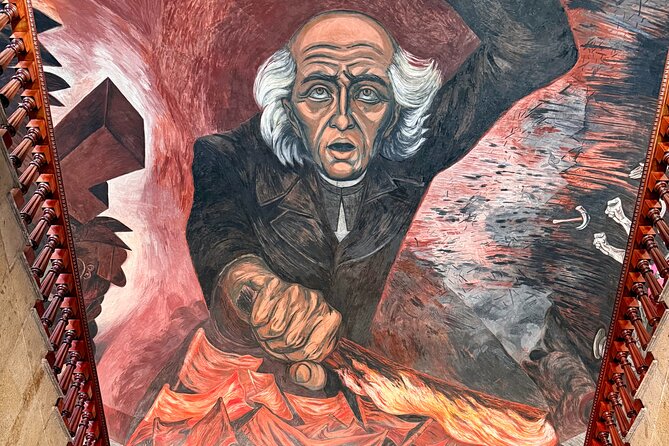
The Governor’s Palace is one of the most important stops on the route. This elegant government building houses murals by José Clemente Orozco, a major Mexican muralist whose work can be forceful, dramatic, and politically charged.
I would give this stop priority. Ten minutes will introduce you to the murals and their setting, but it will not replace a proper museum visit. The palace is closed on Mondays, government holidays, and during special events, so check the day before you book.
This is one reason Tuesday through Friday may be better than Monday for this particular route. The tour still offers plenty on a Monday, but you could miss one of its strongest interiors.
A few more walking tours around Mexico worth a look
- Playa del Carmen Walking Food Tour
★ 5.0 · 1,274 reviews - Frida Kahlo VIP [Museum Tickets Included] Walk, Markets & Churros
★ 5.0 · 982 reviews - Walking Tour of the Historic Center of Mexico City
★ 5.0 · 870 reviews - Puerto Vallarta’s Best Canopy Zipline + Jorullo Bridge walk!
★ 5.0 · 817 reviews
Degollado Theater and the city’s founding stories
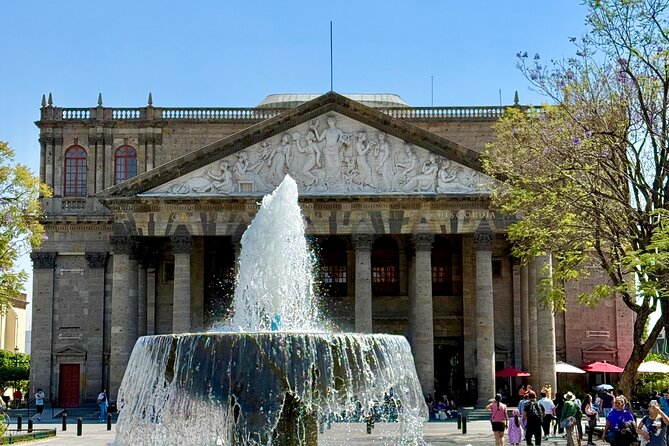
Teatro Degollado is a luxurious centerpiece of downtown architecture and one of the walk’s visual high points. It is described as Mexico’s oldest working theater, and the guide adds the legends tied to the building.
The tour does not promise a full performance or an extended theater visit, so think of this as an architectural and historical stop. You get the building’s place in Guadalajara’s cultural life, then continue through the surrounding plazas.
At Plaza Fundadores, the guide explains an unexpected link between Valentine’s Day and Guadalajara’s founding story. This is a good example of the tour’s method: large events are paired with small, memorable details.
The story gives the city’s origin a human scale. You are not only hearing dates and official names. You are also picking up the legends and odd connections that make a place easier to remember after you leave.
Devil’s Alley and Tapatía Square
The route then turns toward Devil’s Alley, where narrow passageways carry tales of the Spanish Inquisition and nuns tempted by dark powers. This is the most atmospheric part of the walk, at least in subject matter.
Treat these stories as local legends rather than a formal history lecture. Their purpose is to show how old streets gather tales over time. The change of mood also keeps the walk from becoming a steady march through dates, names, and government buildings.
Plaza Tapatía explains the affectionate term Tapatía and the public works that shape this part of the center. You also see monuments along a square built on a bridge that helped unite different parts of the city.
This is a useful place to understand Guadalajara as a living urban center, not just a collection of monuments. The tour links language, city planning, and local identity in one short stop.
San Juan de Dios Market brings the city down to street level
San Juan de Dios Market is where the route shifts most clearly from monumental Guadalajara to everyday commerce. It is one of Latin America’s largest indoor markets, with exotic products and souvenirs spread through a large, busy setting.
You receive about 10 minutes here, so do not expect to inspect every aisle or shop at length. Instead, use the stop as an introduction. Notice the range of goods, the scale of the market, and the way the atmosphere differs from the formal plazas behind you.
I like this part of the route because it keeps the tour from becoming too polished. Guadalajara is not only cathedrals and government halls. It is also shopping, food, local trade, and the practical energy of a major Mexican city.
If you see something you want to buy, you may need to return after the tour. Ten minutes is short for browsing, comparing prices, and making a purchase. The good news is that the route ends nearby, so coming back is easy if you want more time.
Cabañas Museum provides a strong finish
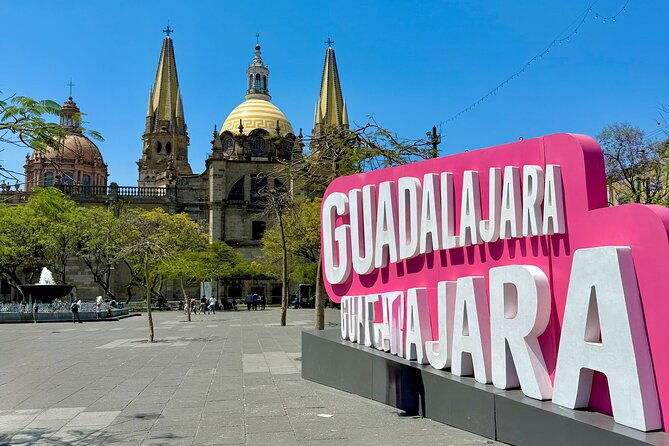
The final stop is Instituto Cultural Cabañas, also called Cabañas Museum. The tour ends on its monumental steps, where you can admire the skyline and the modern sculptures in the square.
Ending here is smart. You finish with a broad view of central Guadalajara rather than simply circling back to the starting point. The museum itself deserves more time than the 10-minute tour stop allows, so consider treating the walk as an introduction and visiting the interior separately if your schedule permits.
Because the end point is Cabañas Museum at C. Cabañas 8, you should plan your afternoon from there rather than assume you will return to the Regional Museum. This is particularly useful if you want to continue around San Juan de Dios or explore more of the historic center.
What $35 buys you
At $35 per person, the tour is not an admission package. The listed stops are free, and the price does not include pickup or drop-off. You are paying for a certified guide, a planned route, interpretation, and the ability to ask questions as you go.
That is fair value if this is your first visit to Guadalajara. A good guide can point out details you would likely walk past and help you understand why the plazas and buildings matter. The most useful benefit is not the number of stops. It is the connection between them.
The value is lower if you already know the center well or prefer to spend an hour inside one building. You could walk many of these streets yourself, and the short stop times may feel rushed if you want detailed architectural study.
Group discounts are available, and the maximum group size is 20. That is small enough for a more personal feel than a giant city tour, though the exact experience depends on how many people book that day.
Guide style and the pace on foot
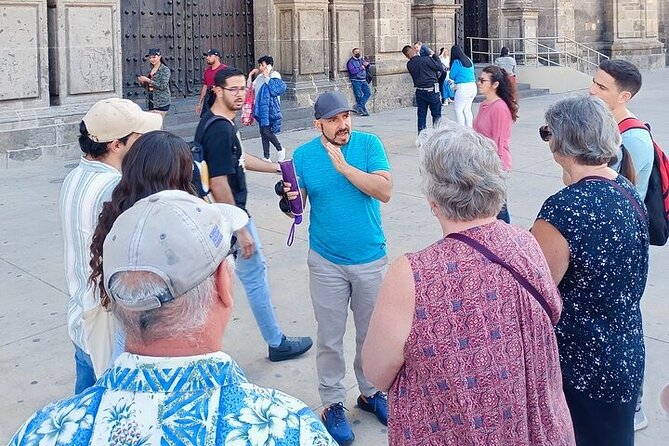
The guide is certified and experienced, and the tour is offered in English. Alex is specifically praised for presenting history in an entertaining way, answering questions, taking photographs when asked, and offering suggestions for food and things to do after the walk.
That combination matters. A city guide should not only recite information. You want someone who can explain why a place matters, respond to your interests, and help you use the rest of your time in Guadalajara.
The pace is described as well balanced, but this is still a walking tour with 13 stops. Wear comfortable shoes, leave room for pauses, and expect to move through public areas rather than sit for long periods.
Most people can participate, service animals are allowed, and the meeting point is near public transportation. Since hotel transport is not included, you must make your own way to the Regional Museum by 10:00 a.m.
Best days, best audience, and practical limits
Try to avoid Monday if seeing the Governor’s Palace interior matters to you. The palace is closed on Mondays, and the Municipal Palace is closed on Saturdays, government holidays, and special event days. The cathedral may also restrict entry during religious holidays.
This tour suits first-time visitors, solo travelers, couples, and anyone who likes learning a city by walking through it. It also works well for people who want a quick orientation before choosing which buildings, markets, and museums deserve a longer visit.
It is less suitable if you dislike walking, want extensive free time at every stop, or need hotel pickup. The tour is short enough to fit into a busy day, but long enough that you should treat it as an active morning.
Free cancellation is available if you cancel at least 24 hours before the local start time. Changes or cancellations inside that window are not accepted for a refund, so keep that deadline in mind when arranging your schedule.
Should you book this Guadalajara walking tour?
I would book it for a first morning in Guadalajara, especially if you want the city’s center to make sense quickly. The route brings together public squares, church history, Orozco’s murals, local legends, a working market, and the Cabañas Museum in one compact outing.
Book it with realistic expectations. You will get an informed overview, not a full museum tour, and some interiors may be closed. If the $35 price fits your budget and you value a guide who can explain the city while pointing out what to explore later, this is a sensible introduction to Guadalajara.
FAQ
How long does the Guadalajara City Center Walking Tour last?
The tour lasts approximately 2 hours and 15 minutes. It includes 13 stops, with about 10 minutes planned at each location.
Where does the tour start?
It starts at the Regional Museum of Guadalajara, C. Liceo 60, Zona Centro, Guadalajara, at 10:00 a.m.
Where does the tour end?
The tour ends on the steps of Cabañas Museum at C. Cabañas 8, Las Fresas, Guadalajara.
Is transportation included?
No. Hotel pickup and drop-off are not included. The meeting point is near public transportation.
Is the tour offered in English?
Yes. The tour is offered in English and includes a certified, experienced guide.
What is the cancellation policy?
You can cancel up to 24 hours before the local start time for a full refund. Cancellations or changes made less than 24 hours before the start time are not accepted for a refund.
Just added around Mexico
- 3-Hour Guided Walking Tour of Guanajuato★ 5.0 · 280 reviews
- Private walking tour in Guanajuato (available from 1 person)★ 5.0 · 355 reviews
- History and Murals: Walking Tour Guadalajara★ 5.0 · 237 reviews
- Walk Guadalajara!★ 5.0 · 474 reviews
- Guadalajara Private Walking Tour★ 5.0 · 167 reviews
- Playa del Carmen: 3-Hour Local Food Walking Tour★ 4.8 · 267 reviews
- Mexico City: Guided walking tour through the most historic parts of the city.★ 4.5 · 172 reviews
- Mexico City: Lucha Libre Show, Walking Tour & Tequila★ 4.6 · 156 reviews
City Highlights Walking Tours, compared.
Berlin City walk Government District and Places of Democracy
Read our review →
Historic Charleston Guided Sightseeing Walking Tour
Read our review →
Oxford: University and City Walking Tour with Alumni Guide
Read our review →
City Highlights Temple and Market Walking Tour
Read our review →
A History of Terror – Belfast City Centre Walking Tour
Read our review →Browse the lists this tour appears in