
REVIEW · MEXICO
History and Murals: Walking Tour Guadalajara
José Clemente Orozco’s murals at the Cabañas Museum are the heart of this Guadalajara walk. You first see the vast frescoes on your own, then Fernando explains their symbols, politics, and violence with care. I like the mix of art, architecture, and Mexican history, and I like that the tour finishes at Mercado Libertad, where you can eat birria, try tejuino, and shop for local goods.
Fernando is the guide named most often in the tour details, and his strength is context. He connects Guadalajara’s churches and plazas to colonial rule, independence, social movements, and modern Mexico. The main drawback is simple: this is a mostly standing and walking tour, with no headset or microphone, and access to the Government Palace and Teatro Degollado can change.
Key points to know before you book
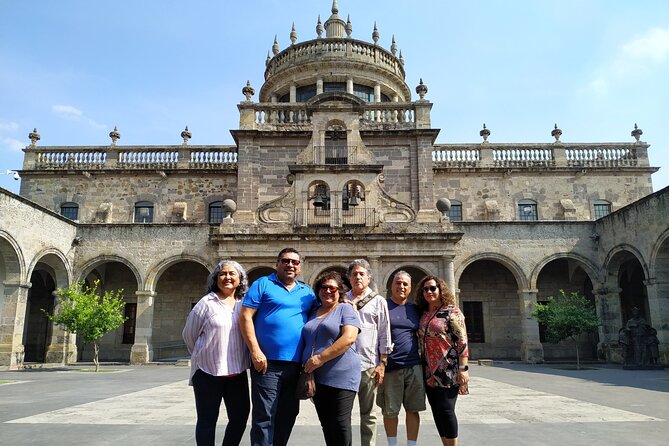
- Orozco’s 57 Cabañas frescoes: The included museum visit gives you a full hour with one of Mexico’s major mural cycles.
- A strong local guide: Fernando leads in English and is praised for detailed explanations, patience, humor, and practical food advice.
- A useful first-day orientation: The route covers Guadalajara’s core sights before ending at Mercado Libertad.
- Small group size: The tour is limited to 15 people, which makes questions and conversation easier.
- Food at the finish: You can seek out local dishes such as birria, tortas ahogadas, and tejuino at the market.
- A walking tour with limits: Expect three to four hours on foot, with much of the time spent standing outdoors.
Why the Cabañas murals make this tour different
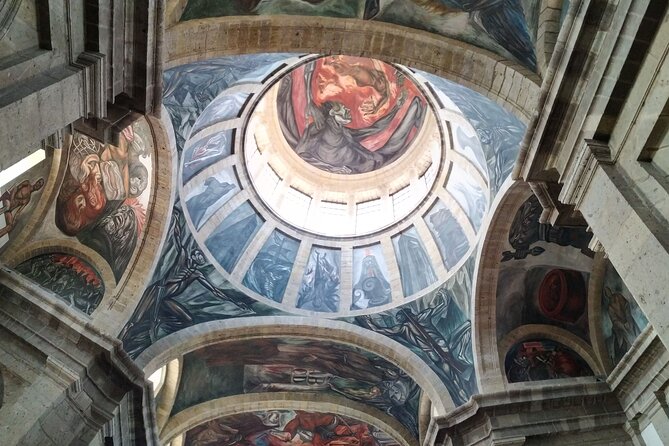
Many city walks move from one church facade to the next and leave you with a blur of dates. This one has a clear artistic climax at the Cabañas Museum, where Orozco painted 57 frescoes across the walls and domes of the main chapel.
The scale matters. You are not looking at one framed painting in a quiet gallery. You are standing inside a complete visual program, with figures and scenes extending above you. The tour allows about an hour here, enough time to look first and listen afterward.
I especially like the order. You get a chance to form your own response before Fernando explains what you are seeing. That is useful with Orozco, whose work can feel forceful and unsettling even before you know the historical references. His murals are not simply decorative scenes of Mexican identity. They ask hard questions about power, war, technology, conquest, and human behavior.
The museum is also an important practical advantage. Entry is included, and the tour is designed to help you avoid the regular queue. The Cabañas complex is one of Guadalajara’s essential cultural stops, so having it built into a guided route gives the afternoon a strong purpose.
More Street Art Walks in Mexico:
- London: Street Art and Graffiti Guided Walking Tour
★ 4.9 · 1,354 reviews - Berlin: City Street Art Guided Walking Tour
★ 4.8 · 1,051 reviews - Naples Spanish Quarters Walking Tour Street Art, Folklore & Sweet
★ 5.0 · 797 reviews
Starting at Plaza de Armas
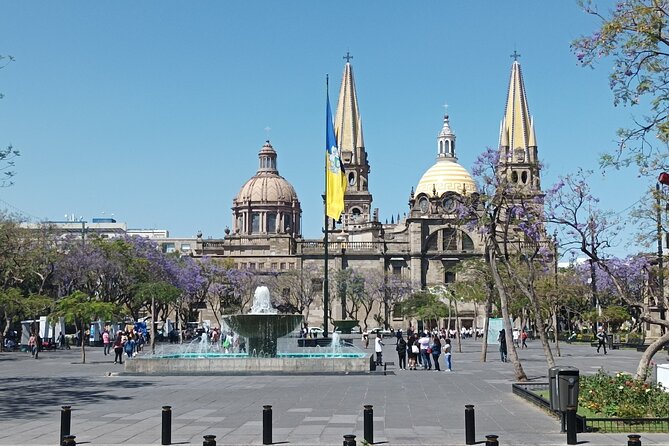
Meet at 10:00 a.m. at the kiosk in Plaza de Armas, in the center of Guadalajara. This is a sensible starting point because the square sits among many of the city’s key civic and religious buildings.
You begin with the oldest major square in the city, founded in the 16th century. The 20-minute stop gives Fernando room to explain how Guadalajara developed around its central institutions. Look in several directions here. The square is not an isolated monument, but a place where the cathedral, government buildings, and public life meet.
This opening also helps you get your bearings. If you are new to Guadalajara, the historic center can feel like a series of grand buildings without a clear order. Starting here gives the rest of the walk a map in your head.
Churches, quarry stone, and the cathedral
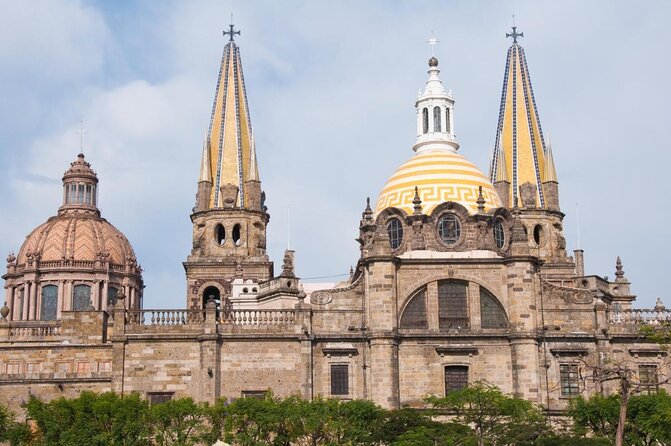
The first short church stop is Parroquia El Sagrario Metropolitano. Inaugurated in 1839, it was Guadalajara’s first parish built from golden quarry stone and uses a neoclassical design. The visit is brief, about 10 minutes, but the church adds variety before the much larger cathedral.
Guadalajara Cathedral receives about 20 minutes. Its construction began in the 16th century, and it remains the main church of Jalisco. You see both the exterior and interior, so the stop is not limited to taking a quick picture of the towers.
I like this part because Fernando can place the cathedral within the city’s religious and political structure instead of treating it as a pretty building alone. The route is not only about architecture. It shows how church authority shaped the historic center and how these buildings continue to function in daily city life.
The time can feel short if you want a long, quiet look inside. This is a guided overview rather than an extended church study. If you care most about religious art, you may want to return later on your own.
Civic power around the Rotonda and government buildings
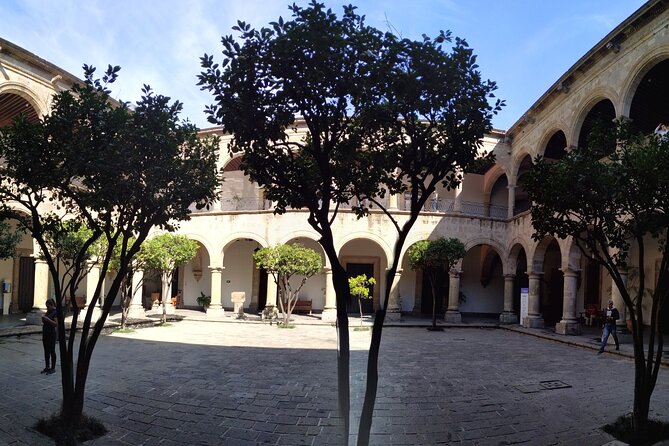
At the Rotonda de los Jaliscienses Ilustres, you see a neoclassical monument dedicated to important men and women from Jalisco. The stop takes roughly 10 minutes and shifts the story from religious institutions to regional identity.
Nearby, the Guadalajara Municipal Palace occupies a neocolonial building constructed between 1949 and 1952. It is the seat of the city’s municipal council. The building is part of the route, but the supplied timing does not list a separate admission or interior visit, so think of it mainly as an exterior point of interest unless your guide says otherwise.
The Palacio de Gobierno del Estado de Jalisco adds a longer political story. Inaugurated in 1790, it served as a court during the viceregal period, later became a military barracks, and then housed the Jalisco congress. Its main staircase contains one of José Clemente Orozco’s murals.
That mural is an important link to the later Cabañas visit. You see Orozco in a government setting before encountering his larger body of work. Access to the palace is not guaranteed, since entry depends on state government availability. The tour notes also indicate that preparations connected with the 2026 FIFA World Cup have contributed to government buildings remaining closed at times.
This is worth understanding before you book. If the palace is closed, you still receive the outside history and the Orozco connection, but the interior visit cannot be promised. A 4-star assessment of the tour specifically pointed to closed government buildings as a limitation, while also noting the strength of the mural discussion.
A few more walking tours around Mexico worth a look
- Historic Downtown Walking Tour
★ 5.0 · 1,289 reviews - Playa del Carmen Walking Food Tour
★ 5.0 · 1,274 reviews - Mexico City: Historic Downtown Walking Tour
★ 4.8 · 1,039 reviews - Frida Kahlo VIP [Museum Tickets Included] Walk, Markets & Churros
★ 5.0 · 982 reviews
Independence, theater, and Guadalajara’s founding
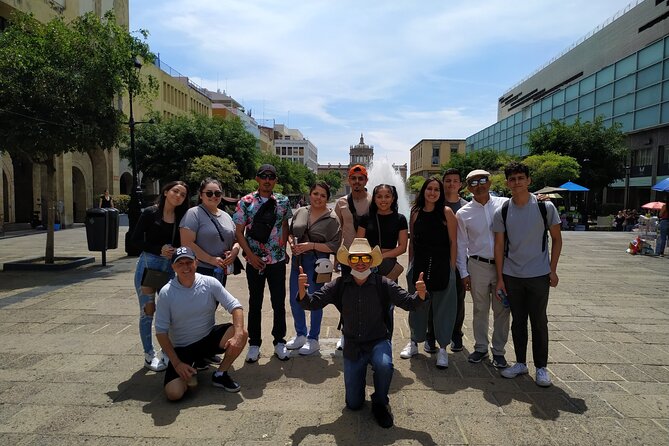
Plaza de la Liberación follows. Built in the 1950s, it honors Mexico’s independence and gives you another large civic space to compare with Plaza de Armas. The stop is about 10 minutes.
Teatro Degollado is one of Guadalajara’s most handsome buildings and is known for its beauty and acoustics. It opened in 1866 during the Reform War, an important period of conflict between conservative and liberal forces in Mexico. The theater stop lasts about 10 minutes, and interior access depends on local availability.
There is a planned 15 to 20 minute break at Café Degollado for water, the restroom, and a rest for your feet. That pause matters. The tour is not a hard hike, but you spend much of it standing on pavement, listening in public spaces, and moving between sights.
From there, Plaza Fundadores marks Guadalajara’s foundation in 1542. A bronze sculpture by local artisan Rafael Zamarripa honors the founders. This is a compact stop, yet it helps connect the modern city to the earlier settlements and relocations that shaped Guadalajara’s beginnings.
Plaza Tapatía and the route toward Cabañas
Plaza Tapatía was built in the 1970s and is the largest and newest square in the historic center. It is focused on commerce, public space, and handicrafts, so the atmosphere changes again as you approach the market and museum area.
The walk works well here because the sights do not all belong to one period. You move from colonial institutions to 19th-century civic buildings, 20th-century public planning, and present-day commerce. That mix gives you a better sense of Guadalajara as a living city rather than a preserved monument district.
Plaza Tapatía also prepares you for the final part of the route. The Cabañas Museum and Mercado Libertad are close enough to form a natural end to the walk, with art first and food and shopping afterward.
One hour inside the Cabañas Museum
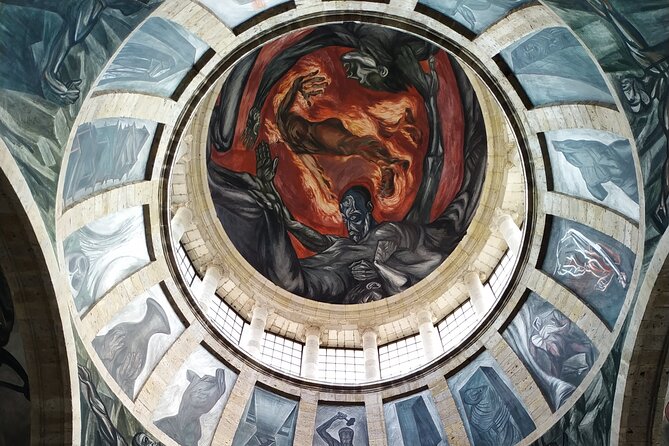
The Cabañas Museum is the tour’s main event. You have about an hour to see Orozco’s frescoes in the former hospice complex, including the murals covering the main chapel walls and domes.
The museum visit rewards patience. Take a few minutes to look upward, then step back and consider how the images work together. If you rush from panel to panel, you can miss the way Orozco uses the architecture itself as part of the message.
Fernando’s role is especially useful here. He explains the visual ideas without forcing you to accept one fixed response. His approach, as reflected in the tour’s descriptions, is to let you experience the work first and then add context. That is the right way to handle large public art.
You should also expect serious subject matter. Orozco’s work deals with conflict, authority, suffering, and the cost of political and technological power. The museum is not just a pleasant stop for photographs. It is the place where the tour asks you to think.
The Cabañas murals have UNESCO World Heritage status, and admission is included in the tour price. That inclusion improves the value considerably, since the museum is one of the city’s major paid cultural sights.
Finishing at Mercado Libertad
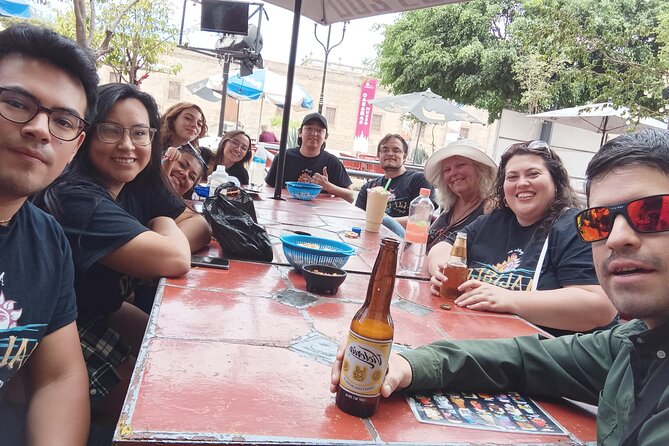
The tour ends at Mercado Libertad, also called San Juan de Dios Market. It is described as the largest traditional market in Guadalajara and the largest of its kind in Latin America. You find typical food, regional crafts, souvenirs, and everyday goods under one roof.
The official visit is about 15 minutes, but the end point is useful even if you want to stay longer. You are free to continue browsing, eat lunch, or use the market as a base for further exploring after the guided portion ends.
This is where Fernando’s local advice can make a practical difference. He has directed people toward birria and tortas ahogadas, and he has introduced visitors to tejuino, a traditional fermented corn drink served cold. Those details turn the finish into more than a quick walk through souvenir stalls.
Keep your expectations realistic. Mercado Libertad is a working market, not a quiet craft gallery. You may find crowds, noise, food smells, and many different kinds of merchandise. That is part of its value. You get a direct look at local commerce, and you can bargain for some souvenirs instead of paying museum-shop prices.
Guide style, group size, and pace
The group limit is 15 people, a good size for a central-city walking tour. It is small enough for questions, yet large enough that the experience does not depend entirely on a private conversation.
Fernando receives the strongest praise in the supplied tour information. He is described as punctual, patient, personable, and able to explain Guadalajara and Mexican history in clear English. His background in history and sociology comes through in the way he connects buildings with social issues and current events.
That last point is useful. Guadalajara’s public spaces can show signs of protests, political activity, or graffiti. Fernando presents those subjects without pretending the city is frozen in the past. You get history, but you also get an explanation of how the city is being shaped now.
There are no audio headsets or microphones. In a quiet building, that may not matter. In a busy plaza, you need to stay close enough to hear. If you have hearing concerns, ask about the group position at the start.
What the $53.05 price gets you
At $53.05 per person, this is not the cheapest way to walk through Guadalajara’s center. The value comes from the guide’s interpretation, the included Cabañas admission, the small group limit, and the food orientation at the end.
A self-guided walk can cover the same streets for less money, but it will not easily provide the political background, Orozco interpretation, or market recommendations in one morning. The museum entry alone also gives the guided option more substance than a simple orientation walk.
I consider the price reasonable for a first visit, especially if you have only a short stay in Guadalajara. It is less compelling if you already know the historic center well or prefer to spend hours inside each church and museum at your own pace.
The tour is offered in English and is available by mobile ticket. It is near public transportation, and most people can participate, but the route involves steady walking and standing. Wear comfortable shoes, carry water, and expect sun exposure between indoor stops. The Café Degollado break helps, but it does not turn this into a seated sightseeing tour.
Who should book this Guadalajara walk?
I would recommend it most strongly to first-time visitors who want a firm introduction to the city without spending a full day on a bus. It suits people who like architecture but also want politics, art, religion, and food in the same experience.
It is also a good choice for anyone drawn to Orozco. The museum visit is long enough to matter, and Fernando’s approach gives you both personal viewing time and historical explanation.
Families and couples should find the pace manageable if everyone is comfortable walking. Solo visitors may especially appreciate the conversation and the guide’s willingness to answer questions. Food-focused visitors will like ending at Mercado Libertad, though the market visit itself is short, so plan to stay afterward if you want a full meal.
I would hesitate only if you need guaranteed access to every interior, dislike standing, or want a relaxed private tour with no group. Government Palace and Teatro Degollado access can change, and there is no promise that every building will be open.
Should you book it?
Book this tour if you want Guadalajara’s center explained by a local guide who can connect Orozco’s art with the city’s churches, public buildings, and social history. The strongest parts are the Cabañas Museum, Fernando’s detailed storytelling, and the finish at Mercado Libertad.
Skip it if you prefer a self-guided stroll or need a tour built around guaranteed indoor access. For most first-time visitors, though, the mix is well judged: a small group, major historic sights, one outstanding museum, and a practical introduction to what to eat and buy afterward.
Free cancellation is available up to 24 hours before the 10:00 a.m. start time. Cancellations within 24 hours are not refunded, and poor weather or failure to meet the minimum group size can lead to a rescheduled tour or full refund.
FAQ
Where does the tour begin?
It begins at 10:00 a.m. at Plaza de Armas in Guadalajara’s Zona Centro, near the kiosk.
Where does the tour end?
It ends at Mercado Libertad, also called San Juan de Dios Market, at C. Dionisio Rodríguez 52 in the San Juan de Dios area.
How long does the walking tour last?
The experience lasts approximately three to four hours. Much of the route involves walking and standing, with a planned 15 to 20 minute break at Café Degollado.
Is admission to the Cabañas Museum included?
Yes. Admission to the Cabañas Museum is included, with about one hour set aside to see José Clemente Orozco’s murals.
Is access to the Government Palace and Teatro Degollado guaranteed?
No. Access to both places depends on local or state government availability. The route still includes their exterior history and architectural context if interiors are closed.
What is the cancellation policy?
You receive a full refund if you cancel at least 24 hours before the experience start time. Cancellations or changes made within 24 hours are not refunded. If poor weather or an insufficient number of bookings cancels the tour, you are offered another date or a full refund.
Just added around Mexico
- 3-Hour Guided Walking Tour of Guanajuato★ 5.0 · 280 reviews
- Private walking tour in Guanajuato (available from 1 person)★ 5.0 · 355 reviews
- Walk Guadalajara!★ 5.0 · 474 reviews
- Guadalajara Private Walking Tour★ 5.0 · 167 reviews
- Guadalajara City Center Walking Tour★ 5.0 · 225 reviews
- Playa del Carmen: 3-Hour Local Food Walking Tour★ 4.8 · 267 reviews
- Mexico City: Guided walking tour through the most historic parts of the city.★ 4.5 · 172 reviews
- Mexico City: Lucha Libre Show, Walking Tour & Tequila★ 4.6 · 156 reviews
Street Art Walking Tours, compared.


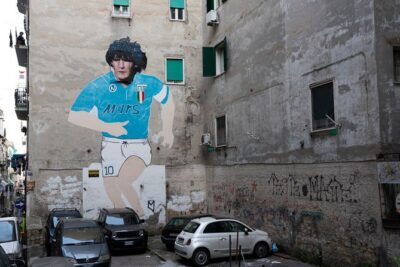
Naples Spanish Quarters Walking Tour Street Art, Folklore & Sweet
Read our review →

NYC: Brooklyn Graffiti & Street Art Walking Tour in Bushwick
Read our review →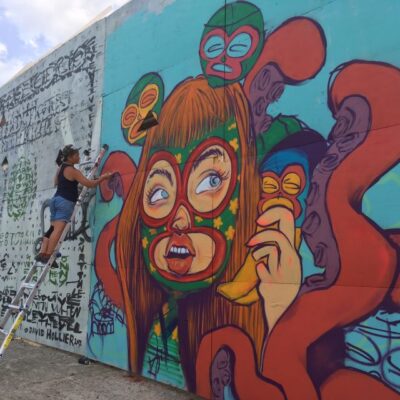

Browse the lists this tour appears in