

REVIEW · VERONA
Verona Highlights Walking Tour in Small-group
Verona’s story unfolds in a compact city center, and this two-hour walk gives you a useful first look at its Roman arena, medieval power squares, Scaliger tombs, and Shakespeare connections. You move on foot at a steady pace, with time for questions and photos rather than a long lecture from one spot.
I like the small maximum of 16 people, which makes it easier to hear the guide and ask about details. I also like the mix of famous sights and lesser-noticed traces, including Roman remains tucked into modern streets and a restored medieval bridge beside Castelvecchio.
The main tradeoff is simple: this is an orientation tour, not a deep visit inside Verona’s monuments. Most admission tickets are not included, and the two-hour route covers a lot of ground, so you will need comfortable shoes and a willingness to keep moving.
Key points at a glance
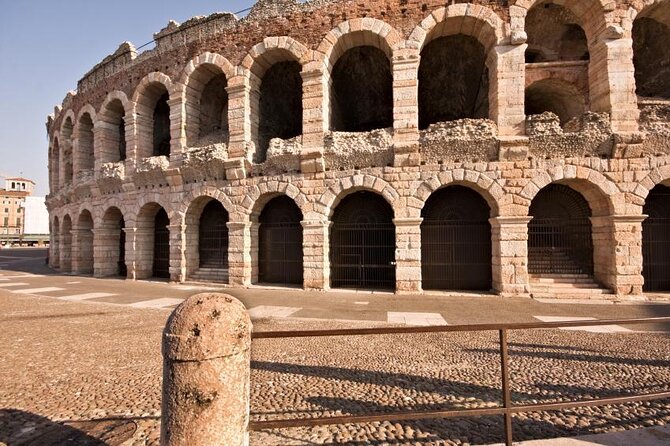
- Roman Verona in one walk: See the Arena, Arch of Gavi, Porta Borsari area, and other reminders of the city’s ancient past.
- A strong first stop at Piazza Bra: Begin and end beside the Arena, Verona’s massive Roman amphitheater.
- Medieval power on display: Visit Piazza dei Signori and the open-air Scaliger tombs, with their striking Gothic arches.
- Shakespeare, with a dose of reality: See Juliet’s courtyard and Romeo’s private house from outside.
- Personal guiding matters: Guides including Frank, Isabella, Priscilla, Maria, and Francesco have been praised for clear English, humor, and local stories.
- Good value for a short stay: At $42.33, you pay for a two-hour guide-led overview, but not for entry to the Arena or Juliet’s House.
Why this walk works as your Verona introduction
Verona can feel confusing at first. Roman ruins sit beside medieval towers. Elegant Venetian buildings frame old market squares. A modern clothing store may contain a piece of the original Roman city. Without context, it is easy to admire the stonework without understanding how the pieces fit together.
This tour gives you that framework. You begin at Piazza Bra, walk through the old center, and return to the same square. That makes the route practical on arrival day, especially if you have only a few hours in Verona or want help deciding which monuments deserve a later indoor visit.
The pace is relaxed by walking-tour standards, but it is not slow. The route includes several stops, and some are brief. You should expect roughly five to 15 minutes at many sights, with the guide explaining what you are seeing before moving on.
The tour is offered in English and normally has no more than 16 people. That is a useful middle ground. You get the energy of a shared walk without the size of a large coach group. Guides have included Isabella, Frank, Priscilla, Maria, and Francesco, though your guide is assigned by the operator and cannot be guaranteed in advance.
More City Highlights Walking Tours in Italy
- Florence: Highlights Walking Tour with Expert Guide
★ 4.6 · 4,662 reviews - Bologna: City Center Walking Tour
★ 4.5 · 3,478 reviews - Florence: Duomo Complex with Tickets & City Walk Guided Tour
★ 4.7 · 2,057 reviews
Piazza Bra and the Arena: Verona’s grand opening scene
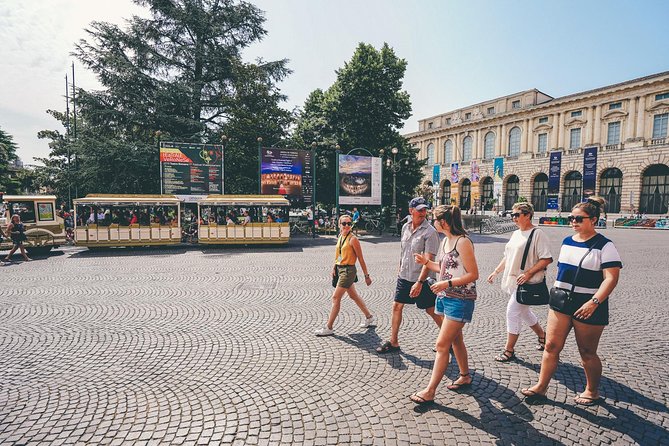
Piazza Bra is the meeting point, and it is a smart place to start. This broad square is Verona’s largest, lined with cafés, restaurants, and handsome buildings. It also gives you your first view of the Arena, the city’s great Roman amphitheater.
Built in the first century AD, during the Augustan period, the Arena predates Rome’s Colosseum by several decades. It could once hold as many as 30,000 people. The outer ring suffered heavy losses over the centuries, but the inner tiers remain impressive and are still used today.
Your guide explains how the Arena moved from Roman public entertainment to a modern performance venue. It now hosts international concerts and the Verona Arena Festival, the city’s summer opera season. That connection between ancient architecture and live performance is one of the most interesting parts of the tour.
You have about 10 minutes at the Arena, and admission is not included. This is important. The walking tour lets you understand the building from outside, but it does not replace an interior visit. If you want to see the stone seating and performance space up close, look for a separate Arena tour or purchase entry for another time.
One practical advantage is that the walk ends back at Piazza Bra. You can continue directly into the Arena afterward if opening hours and tickets allow, or return later without having to find the meeting point again.
Castelvecchio and the restored Scaligero Bridge
Castelvecchio introduces Verona’s medieval side. The castle once protected the city and is now home to a museum. The walking tour focuses on the exterior and the nearby bridge, rather than a full museum visit.
The Scaligero Bridge crosses the Adige and connects the late-medieval castle with the river’s opposite bank. Its red-brick arches and sturdy stonework make it one of Verona’s most memorable medieval structures.
The bridge was almost destroyed during wartime bombing and was rebuilt to match the original design. That reconstruction story gives the site more meaning than a quick photograph would. You are looking not only at an old bridge, but at a careful effort to restore a major piece of Verona’s identity.
If you want to enter Castelvecchio and spend time with its art collection, plan a separate visit. The walking tour gives you the setting and history, but only a short look at the complex.
Roman traces hiding in ordinary city streets
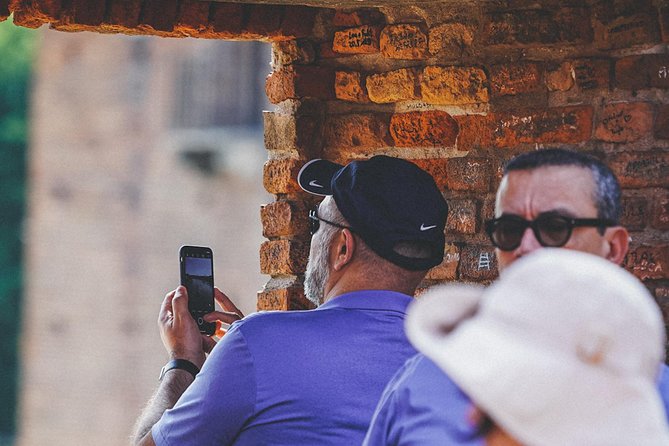
One of the pleasures of this route is the way ancient Verona appears in places you might otherwise pass without noticing. The Arch of Gavi is a first-century AD monument linked to the Gavia family, an important Roman family of Verona.
The arch was originally located outside the city along the Via Postumia. Napoleon had it demolished in 1805, and it was later reconstructed in its current position. That history is a useful reminder that Verona’s monuments have not simply sat untouched for 2,000 years. They have been moved, damaged, repaired, and reinterpreted.
The route also takes in the remains of Porta Borsari, the marble front of the original Roman city gate. The brickwork behind it and the missing upper towers help you picture the larger defensive structure that once marked entry into Roman Verona.
You may also see Roman remains incorporated into modern commercial buildings. One unusual example is part of an ancient wall and a house visible inside a Benetton store. Details like this are exactly why a guide can add value. On your own, you could walk past without realizing what is under your feet or behind a shopfront.
More City Highlights Walks in Italy:
- Lucca: 2-Hour City Center Walking Tour
★ 4.7 · 1,314 reviews - Venice: Walking Guided Tour of the City Must-See Sites
★ 4.7 · 1,095 reviews - Florence in a Day: Michelangelo’s David, Uffizi and Guided City Walking Tour
★ 4.5 · 1,048 reviews - Rome: Guided City Center Evening Sightseeing Walking Tour
★ 4.4 · 953 reviews
Juliet’s House and the careful line between story and history
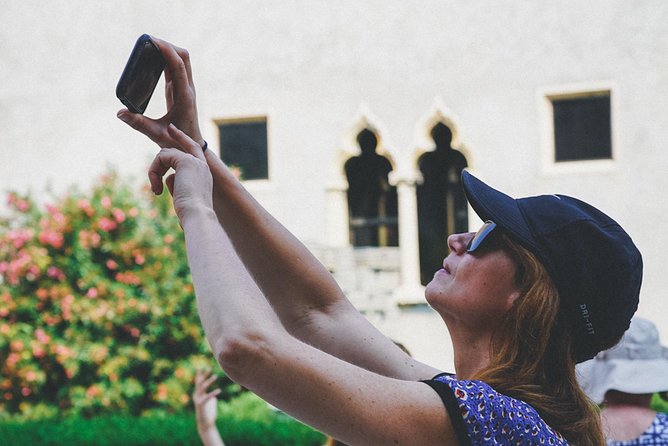
Casa di Giulietta, or Juliet’s House, is one of Verona’s busiest photo stops. The courtyard is associated with the Capuleti family and the heroine of Shakespeare’s tragedy. The tour takes you into the courtyard, where you can see the famous setting linked to Juliet.
The guide can also explain the difference between medieval buildings and the later choices that shaped the site’s romantic image. The balcony and much of the public presentation belong to a modern tradition built around the Romeo and Juliet story. That does not make the visit worthless. It makes it more interesting, especially when you understand how literature and tourism helped create the attraction.
The stop lasts about five minutes, and admission is not included. The courtyard may be enough for you if you mainly want a photo and a quick look. If you want to visit the interior or the balcony, you need a separate ticket.
There is a special restriction from December 6, 2025, through January 6, 2026. During that period, access to Juliet’s Balcony requires a ticket purchased through the city system. The tour company can provide information, but it will not buy the ticket for you.
Romeo’s House is another quick stop, but expectations matter. The medieval palace was associated with the Montecchi family, traditionally linked with Romeo. It is privately owned and inhabited, so you can see it only from the outside.
Piazza delle Erbe and Piazza dei Signori
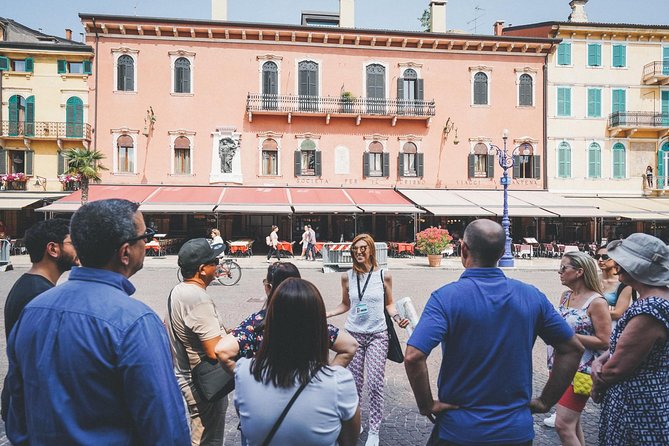
Piazza delle Erbe occupies the site of Verona’s Roman forum. It remained a center of public life through later periods, and its buildings show several layers of the city’s development.
The square contains monuments connected with Verona’s rulers, including the famous fountain built during the Scaliger period. Frescoes and decorated façades add color above the market area. The guided stop is brief, around five minutes, but you may want to return later for a slower look.
Piazza dei Signori feels more formal. It was once the center of political power, and a statue of Dante Alighieri has watched over the square since 1865. Because of that statue, the piazza is also called Piazza Dante.
This is a good place to listen closely to the guide’s explanation of Verona’s ruling families and changing political life. The square is not just a pretty courtyard. It shows how medieval and later Verona organized authority, ceremony, and public space.
Nearby, you may see the entrance to Torre dei Lamberti, a viewpoint above the city. The walking tour does not include a tower visit, so treat it as a possible add-on if you want a higher view after the walk.
The Scaliger tombs, Verona’s most striking short stop
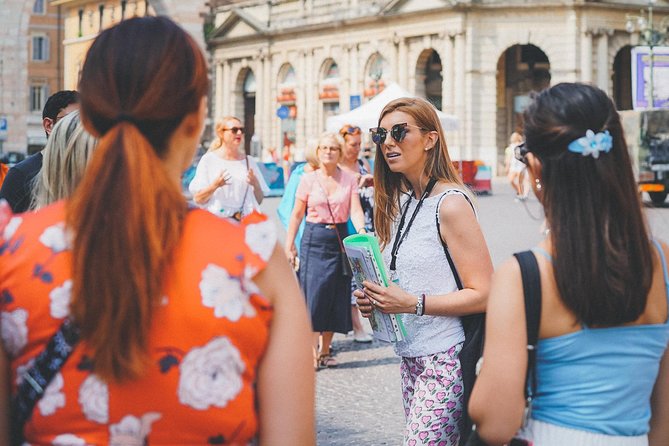
The Arche Scaligere are the outdoor tombs of the Scaliger family, Verona’s powerful medieval rulers. Their Gothic stonework and elaborate pointed arches are far more dramatic than many people expect from a quick city walk.
The monuments honor figures including Cangrande I, Mastino II, and Cansignorio. You see sarcophagi enclosed by decorative arches, placed beside the church of Santa Maria Antica.
The stop lasts about five minutes, and admission is not included. That is enough time for an explanation and photographs, but not for detailed study of every carving. If medieval sculpture interests you, return on your own and give the site more time.
For me, this is one of the best examples of the tour’s value. A passerby may see ornate stone gates. With context, you see a political statement in stone, built by a family that wanted its power remembered.
What the guides add to the walk
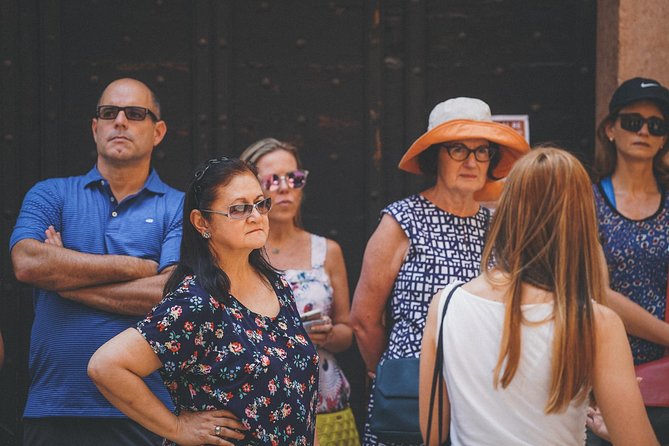
The strongest part of this experience is the guiding. The route is easy to follow, but the facts and stories determine how much you take away.
Frank has been praised for combining historical detail with humor and for offering food and city suggestions at the end. Isabella has led tours with a friendly, lively approach, adding architectural and cultural background without making the walk feel heavy. Priscilla brings a local connection to Verona and has been especially attentive to older members of a group.
Maria and Francesco have also guided walks noted for clear explanations and a personable manner. Your guide may be someone else, but these examples show the tone you can expect: informal, story-based, and open to questions.
A good guide also helps you notice small things. That may mean pointing out a Roman wall inside a modern shop, explaining why a bridge was rebuilt, or showing how a medieval square changed under Venetian influence. I would use the question time well. Ask about places to eat, monuments worth entering, and how Verona’s Roman, medieval, and modern layers connect.
One caution: the quality of a live tour depends partly on the individual guide and the pace of the group. The published score is 4.8 from 494 ratings, with 97 percent recommending it, but no guide can give every person the same depth of detail. One assessment found the history and architecture solid but wanted more information about modern Verona, including its population, university, and business life.
Price, pace, and practical details
The price is $42.33 per person for about two hours. At that rate, I see the tour as good value if you want a clear introduction and the chance to ask questions. You are paying for a local guide and a planned route through major sights, not for monument entry.
The Arena, Juliet’s House, and the Scaliger tombs list admission as not included. Piazza Bra, Piazza delle Erbe, and Piazza dei Signori are free to view. Check the cost of any interior visits separately before booking so the total does not surprise you.
The walk starts and ends in Piazza Bra. Hotel pickup and drop-off are not provided, but the meeting point is near public transportation. The tour runs in rain or shine, so bring suitable clothing and shoes. Some sections may not be easy for people with reduced mobility or other disabilities, and the operator advises contacting them if you are unsure.
Minors must be accompanied by an adult. Service animals are allowed, and most people can take part. The booking requires at least two participants, and the maximum group size is 16.
Free cancellation is available if you cancel at least 24 hours before the local start time. Changes or cancellations inside that window are not accepted for a refund. If the minimum number is not reached, the operator offers another date or experience, or a full refund. Severe weather, sudden monument closures, or other unexpected disruptions may be handled case by case rather than guaranteeing a full refund.
Who should book this Verona walk?
I would book it if you are visiting Verona for the first time, have limited time, or want the city’s history explained as you walk. It also suits anyone who likes architecture, Roman remains, medieval politics, and the Romeo and Juliet story, but does not want a long indoor museum visit.
Families can use it as a first look, though children need to manage a steady two-hour walk. Older adults may enjoy the clear route and personal attention in a small group, but anyone with mobility concerns should ask about the specific route before paying.
I would choose another plan if your main goal is to spend time inside the Arena, Juliet’s House, or Castelvecchio. This tour points you toward those places. It does not give you a full visit to them.
Should you book it?
Book this walk if you want a friendly, efficient introduction to Verona with Roman ruins, medieval squares, Juliet’s courtyard, and the Arena all in one route. The price is fair for two hours with a guide, especially when the group stays near the 16-person limit.
Skip it if you prefer exploring alone, dislike keeping pace with a group, or want detailed interior visits. For most first-time visitors, though, it is a practical beginning. Take the walk early in your stay, note the places that deserve more time, then return to the Arena, Castelvecchio, or Juliet’s House on your own.
FAQ
How long does the Verona Highlights Walking Tour last?
The tour lasts approximately two hours.
Where does the tour begin and end?
It begins and ends in Piazza Bra in Verona.
Is the tour offered in English?
Yes. The tour is offered in English.
What is the maximum group size?
The maximum is 16 participants.
Are admission tickets included?
No. Admission is not included for the Arena, Casa di Giulietta, or the Arche Scaligere. Piazza Bra, Piazza delle Erbe, and Piazza dei Signori are free to view.
Does the tour include hotel pickup?
No. Hotel pickup and drop-off are not included.
Does the tour run in bad weather?
Yes. The tour runs rain or shine, although severe weather or other unexpected events can affect the experience and refund arrangements.
Can children join the tour?
Yes, most people can participate, but minors must be accompanied by an adult.
What is the cancellation policy?
You can cancel up to 24 hours before the start time for a full refund. Cancellations or changes made less than 24 hours before the start time are not accepted for a refund.
Just added around Italy
- Ferrara: City Highlights Walking Tour with Local Guide★ 4.6 · 219 reviews
- Verona: Romeo and Juliet Guided Walking Tour★ 4.6 · 82 reviews
- Discover Pompeii: French Walking Tour of the Buried City★ 4.8 · 253 reviews
- Naples: Maradona Stadium Guided Exterior Walking Tour★ 4.3 · 113 reviews
- Dark Heart of Rome – Facts, Legend & Mystery Walking Tour★ 4.5 · 329 reviews
- Catania: Street Food Guided Walking Tour★ 4.9 · 326 reviews
- Cefalù: History and Legends Guided Walking Tour★ 4.8 · 132 reviews
- Catania: Guided Street Food Walking Tour★ 4.7 · 300 reviews
City Highlights Walking Tours, compared.

Berlin City walk Government District and Places of Democracy
Read our review →
Historic Charleston Guided Sightseeing Walking Tour
Read our review →
Oxford: University and City Walking Tour with Alumni Guide
Read our review →
City Highlights Temple and Market Walking Tour
Read our review →
A History of Terror – Belfast City Centre Walking Tour
Read our review →Browse the lists this tour appears in