

REVIEW · TORONTO
Toronto: Distillery District Historic Walking Tour
Toronto’s Distillery District is more than a pretty row of cafés and boutiques. Behind those cobblestones lies the story of Gooderham & Worts, a company that grew into one of the world’s largest distilleries while Toronto was still a young, hard-drinking city. The most interesting moments come when the guide links a building, wall, or street to that past.
I like the way this tour combines architecture and business intrigue, rather than treating the district as a backdrop for photographs. I also like the short one-hour format and the guides’ easy humor, with Eric, Erik, Nicole, Devin, Tom, Sarah, and others praised for making the story lively and personal. The main consideration is that this is a history walk, not a regular whisky tasting. For spirits, book the separate Prohibition & Spirits Walking Tour.
Key points at a glance
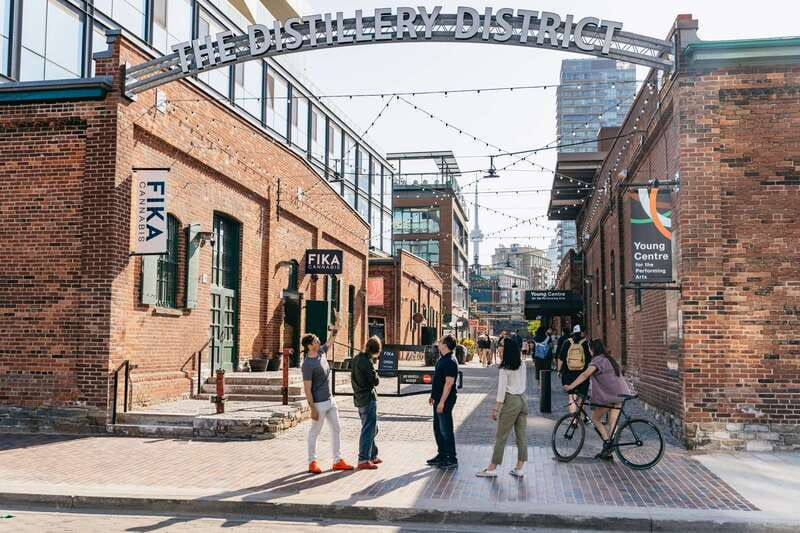
- Victorian industrial architecture: See North America’s largest and best-preserved collection of Victorian industrial buildings.
- Gooderham & Worts story: Follow the company from its rise to international success, then its eventual decline and closure.
- Toronto before it was polished: Hear about a young city shaped by alcohol, work, commerce, and social change.
- Possible interior access: Some tours include a look inside buildings or spaces not normally open to the public, though this should not be treated as guaranteed.
- Easy one-hour walk: The route is suitable for most visitors, with comfortable shoes still a sensible choice.
- Strong guide-led experience: The best part is the storytelling, with guides often answering questions and adjusting the talk to a small group.
Why the Distillery District deserves a guided walk
I understand why many people visit the Distillery District without booking anything. The setting does much of the work. Victorian brick buildings, old industrial details, cobblestone lanes, galleries, restaurants, bars, boutiques, sculptures, and theaters give you plenty to see at your own pace.
The trouble is that the district can feel like a stylish shopping quarter if you do not know what you are looking at. A guide gives the place a proper timeline. You begin to see the buildings as parts of a working complex, not as isolated façades.
That change in viewpoint is the real value of the tour. The district’s appeal is visual, but its importance is economic. Gooderham & Worts helped shape Toronto’s growth, employment, trade, and public life. The tour connects those large ideas to specific structures and spaces.
I especially like that the story reaches beyond alcohol. The company’s operations touched jobs, manufacturing, transport, and social change. One account also noted the use of the site for producing antifreeze, while another pointed out the employment opportunities created for women. Those details make the district feel less like a preserved museum and more like a former workplace with a complicated past.
More History Walking Tours in Canada
- Gastown Historic Walking Food Tour
★ 5.0 · 1,863 reviews - Vancouver: Gastown Historical Walking Food Tour
★ 4.8 · 539 reviews - Quebec City: Old Quebec Historical Walking Tour
★ 4.8 · 409 reviews
Starting at 11 Gristmill Lane
The meeting point is the Go Tours Canada office at 11 Gristmill Lane, close to the red heart at Parliament Street and Mill Street. The office sits within the Distillery District, so you are already in the middle of the setting before the walk begins.
I would arrive a little early. The district is easy to explore, but the old lanes and several nearby entrances can make the exact meeting spot less obvious on a first visit. Check in at the office rather than waiting somewhere else in the complex.
Bring comfortable shoes and a camera. The walking level is described as easy, and the tour is wheelchair accessible. Still, cobblestones can be less forgiving than a smooth pavement, so supportive footwear makes sense.
The tour is conducted in English. It is generally recommended for people aged 10 and above, which reflects the subject matter and the amount of spoken history involved. Younger children may enjoy the buildings, but the full story is aimed more at older children, teenagers, and adults.
One hour among working buildings
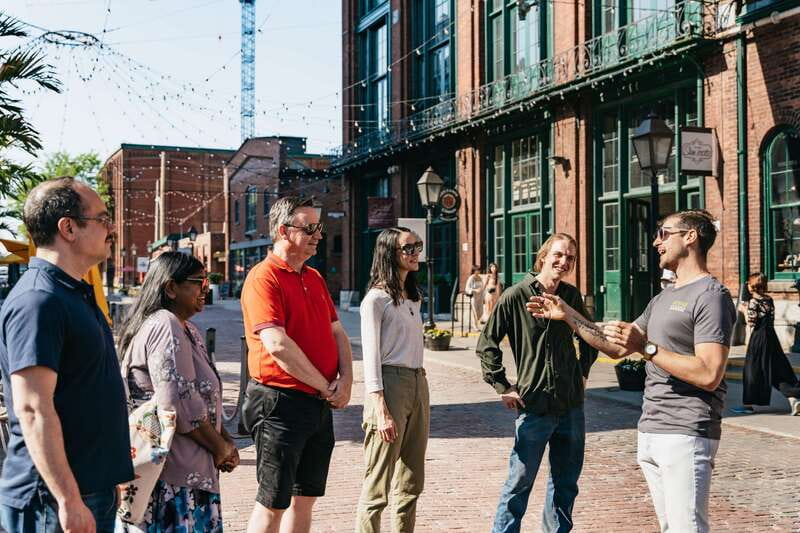
The hour moves through the Distillery District rather than treating it as a single attraction. You will see how the buildings relate to one another and how the former distillery functioned as a large industrial operation.
Pay attention to the materials and scale. Heavy brick walls, narrow passages, old industrial forms, and sturdy construction tell you that this was designed for production, storage, and movement of goods. It was not built as a decorative neighborhood.
One especially memorable detail from the tours is a white building with walls about a meter thick. A guide can make a simple architectural feature meaningful by explaining why such construction mattered. Details like this are easy to miss when you are taking photographs on your own.
The route also gives you a chance to look at the district from the inside and outside. The exact interior access can vary, but some tours have included a brief look into spaces that are not normally open to the public. That possibility adds something you cannot get from a self-guided stroll, although I would not book the tour solely on the promise of entering a particular building.
Gooderham & Worts and the making of Toronto
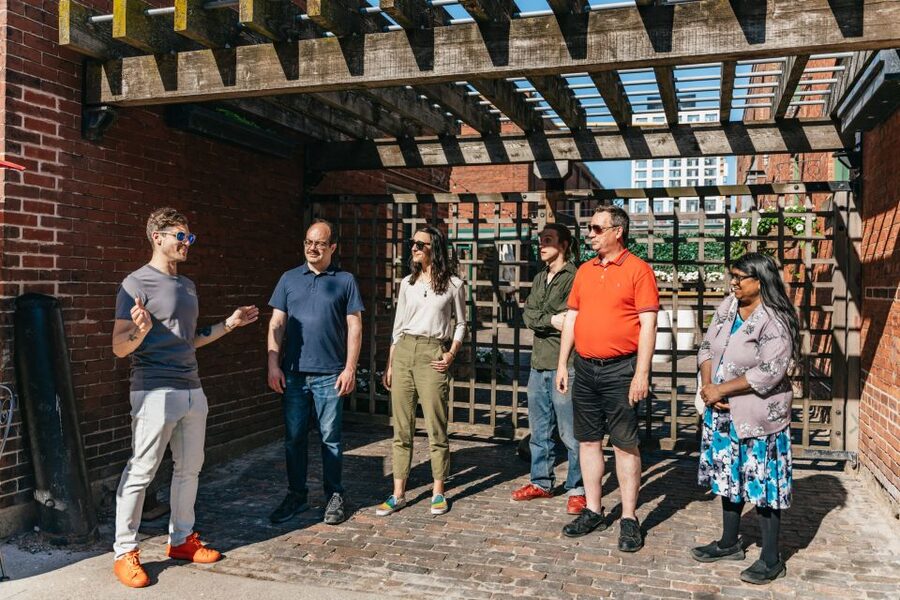
The central story is the rise of Gooderham & Worts. The company became enormous, and the tour explains how that growth connected with Toronto’s early development.
You hear about a city that was young, ambitious, and not especially restrained. Alcohol was part of daily commerce and social life, and the distillery became a major force in the local economy. The phrase a drunk city captures the tone of the story, but the guide also places the business in a wider setting of labor, family, trade, and urban growth.
The company story has a useful arc. First comes expansion and success. Then come the tensions, pressures, and changes that helped bring the business down. That rise and fall gives the tour more shape than a string of disconnected dates.
The families behind Gooderham & Worts are part of the account, as are the decisions and relationships that helped the company grow. You will hear about business intrigue, changing fortunes, and the eventual end of distilling at the site. The company stopped distilling in 1990, a surprisingly recent date considering how old the buildings look.
I like this part because it corrects a common misunderstanding. Toronto’s old industrial story is not only about factories and railways. Distilling played a major role, and the company became a world leader in its field. Once you know that, the scale of the district makes more sense.
Same streets, a different route:
- Quebec City Walking Tour
★ 5.0 · 4,716 reviews - Old Quebec City: Grand Walking Tour with Private Option
★ 4.8 · 2,609 reviews - Montreal Mile End Authentic Food Tour with 7 Delicacies Tastings
★ 5.0 · 2,598 reviews - The Original Old Montréal Walking Tour by Guidatour
★ 4.5 · 2,217 reviews
Stories from Toronto’s rough early years

The tour is not a dry corporate timeline. The guides bring in stories about the city’s early years, when business, alcohol, politics, and social habits overlapped.
That is where the individual guide matters. Eric and Erik have been praised for energy, humor, and clear storytelling. Nicole has led tours for both full groups and a single participant, taking time to answer questions and keep the walk personal. Devin is known for bringing the period to life, even in heavy rain, while Tom has been singled out for an engaging presentation and useful suggestions for exploring the area afterward.
These details matter because a one-hour walking tour can easily become a lecture. The best guides keep you looking around while they talk. They point out a wall, lane, or building and then explain what happened there or why it mattered.
Expect questions to be welcome. The experience works especially well for people who like to connect architecture with people and events. If you are interested in Toronto beyond the usual skyline views, this is a useful way to see how the city developed from the ground up.
What you may see inside
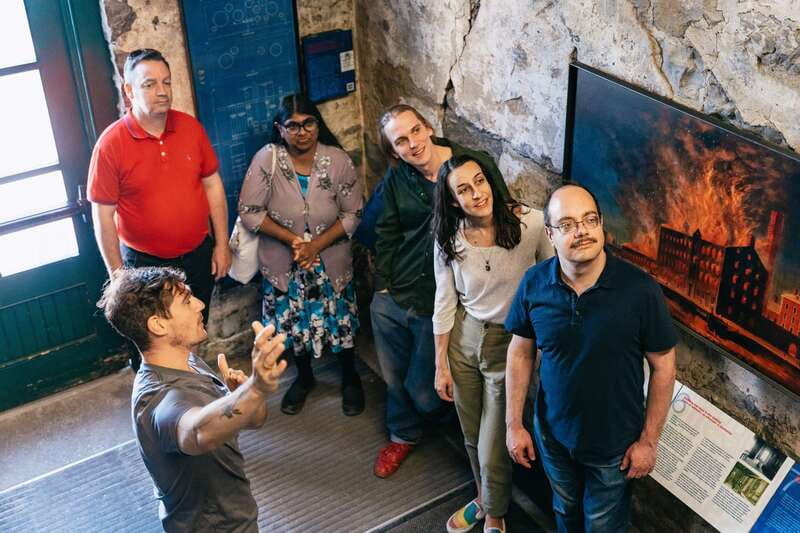
The tour description emphasizes architecture from the inside and outside, and several accounts describe access to parts of buildings that the general public may not enter. This is one of the strongest reasons to choose a guided walk instead of simply wandering around.
I would keep expectations realistic. The tour lasts one hour, and it is not a full building-by-building inspection. Interior access may depend on the day, the route, or which spaces are available. The value lies in seeing enough of the site to understand how the complex was built and used.
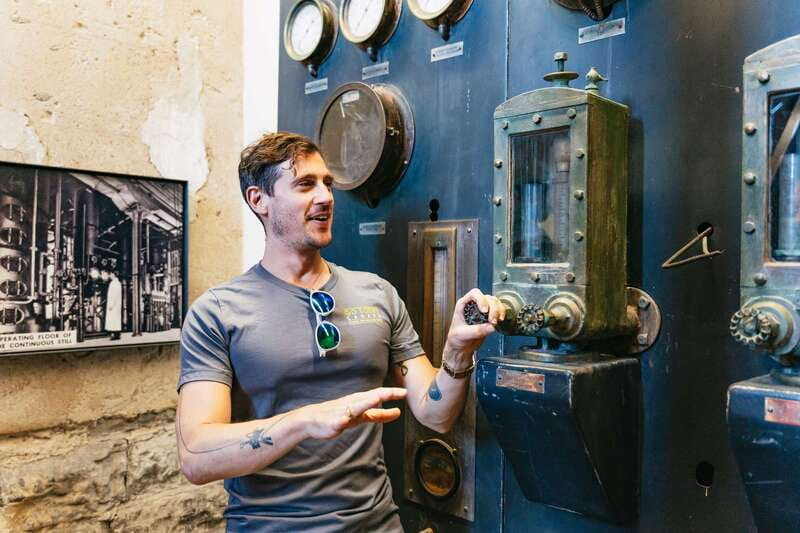
The walls, rooms, and industrial details also help explain the working conditions and scale of production. A guide can turn an apparently plain interior into evidence of security, storage, manufacturing, or changing use over time.
For photography, the district gives you plenty to work with. The old brick, stone, lanes, doorways, and industrial details are more interesting once you know their purpose. I would save some time after the walk for your own photographs, since the tour’s pace is set by the group and the guide’s stops.
The difference between this tour and a tasting
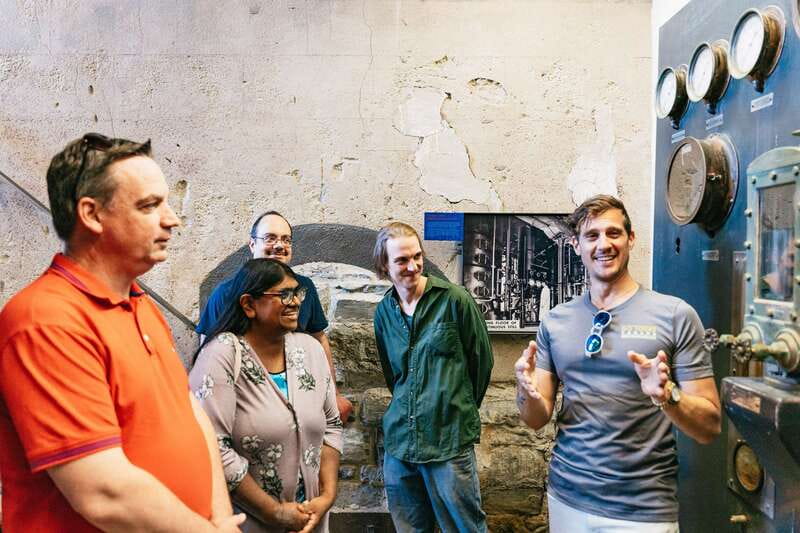
This is the point to get right before booking. The standard Distillery District Historic Walking Tour includes the one-hour guided walk and sales tax, but it does not promise an alcohol tasting.
Some older tour experiences included chocolate, beer, or a sample at the end. Treat those as past arrangements rather than part of the current standard offer. If tasting spirits is important to you, book the separate Prohibition & Spirits Walking Tour, which combines Prohibition and Distillery District history with a flight of spirits at the end.
That separation is useful. You can choose the history walk if you want architecture and city stories without planning the visit around drinking. You can choose the spirits option if tasting is a central part of your day.
The district itself has restaurants and bars, so you can easily continue with food or a drink after the walk. The tour does not need to provide refreshments to be worthwhile, but you should know exactly what you are paying for.
Is $20 a fair price?
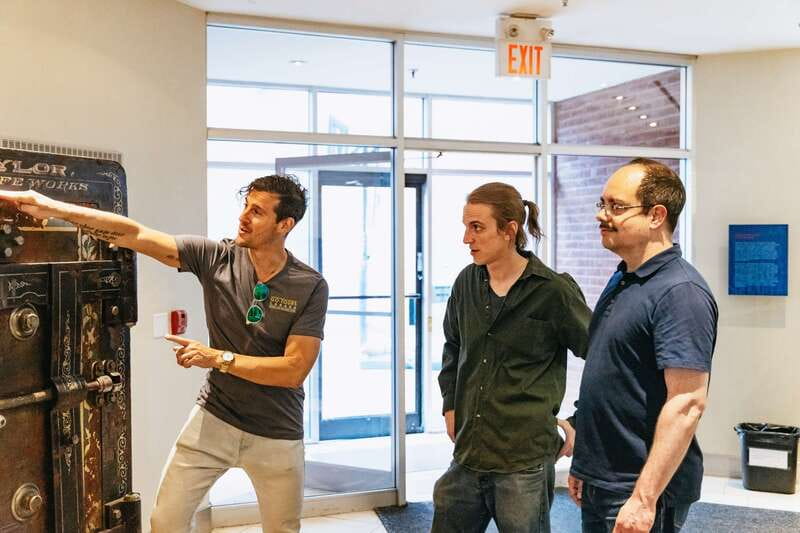
At $20 per person, this is a reasonably priced guided introduction to one of Toronto’s most visited historic areas. You are paying for a professional English-speaking guide, a structured route, interpretation of the buildings, and the chance to ask questions.
The value is strongest if this is your first visit to the Distillery District. You will come away with a clearer sense of what you are seeing, and you can then return to the restaurants, galleries, shops, sculptures, and theaters with more context.
It is also good value for repeat visitors. Several people who already knew the district well found that they understood very little of its past until taking the walk. That is a useful test. If you have already visited several times but only photographed the lanes and browsed the shops, the tour can give the area a new purpose.
The price is less compelling if you want a long, detailed industrial museum visit or a full whisky experience. One hour goes quickly. You will receive a lively overview, not an exhaustive study of every building or company record.
Group size and the personal feel
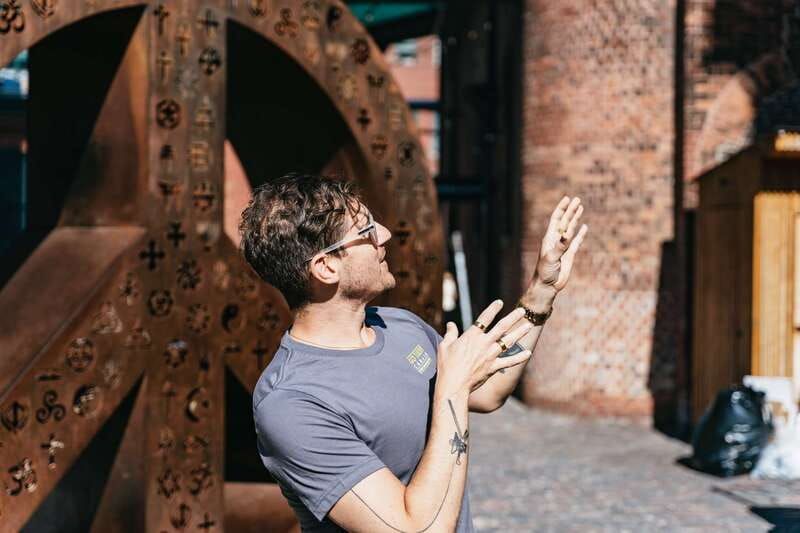
The available information does not set a fixed maximum group size, so I would not assume a private tour. Still, the guides have handled small groups well, including occasions when only one person or a couple attended.
That matters because a small group lets you ask more questions and gives the guide room to follow your interests. A larger group may feel less personal, but the easy walking route and open setting should keep the experience manageable.
I like the evidence that guides do not simply cancel when attendance is low. Some have continued with the scheduled walk and even spent extra time answering questions. That is reassuring if you are visiting outside the busiest period.
The experience is also flexible in mood. Guides have been described as funny, warm, energetic, and serious when the subject requires it. You should expect personality, not a recorded audio presentation.
When to book and how to fit it into your day
The tour lasts one hour, so it fits neatly into a half-day visit. I would schedule it near the start of your time in the district. The guide’s explanations will help you decide which buildings, shops, galleries, and food spots deserve a closer look afterward.
Give yourself time before the start to find 11 Gristmill Lane and check in. Afterward, resist the urge to leave immediately. The district is designed for lingering, and several people have stayed for hours to enjoy the shops, food, drinks, and atmosphere.
Rain does not automatically ruin the experience. One guide kept much of a rainy tour indoors, and the district’s buildings provide some shelter. Still, bring suitable clothing and shoes. Toronto weather can change, and the tour remains a walking activity.
Free cancellation is available up to 24 hours in advance for a full refund. You can also reserve now and pay later, which helps if your schedule is still changing.
Who will enjoy this walk most
I would recommend it to first-time visitors who want more than photographs. It is also a good fit for Toronto residents playing tourist at home, especially if you have visited the district many times without learning how it developed.
History fans will appreciate the company story and the early Toronto setting. Architecture fans will enjoy the preserved industrial buildings and the chance to see details that are easy to miss. Families with children around age 10 and above can manage the easy route, though the amount of talking may not suit very young children.
This is not the best choice if your main goal is drinking whisky. It is also not ideal if you prefer to explore entirely alone or want a long museum-style visit. The tour depends on listening, moving with a group, and allowing the guide to set the rhythm.
Should you book the Distillery District Historic Walking Tour?
I would book it if you want the Distillery District to make sense. The one-hour walk gives you the architecture, the Gooderham & Worts story, and the rough edges of Toronto’s early years without taking over your day.
The strongest reasons are the guides, the chance of limited interior access, and the way the tour connects attractive buildings to real work and business. Eric, Erik, Nicole, Devin, Tom, Sarah, and the other guides have made the experience personal for both large groups and solo participants.
Book the standard tour for history and architecture. Choose the Prohibition & Spirits Walking Tour if a spirits flight matters. At $20, the historic walk is a sensible buy for first-time visitors and repeat visitors who want to see the district with fresh eyes.
FAQ
How long is the Distillery District Historic Walking Tour?
The guided walking tour lasts one hour.
What is the price?
The price is $20 per person, including sales tax.
Where does the tour meet?
Meet at the Go Tours Canada office at 11 Gristmill Lane, near the red heart at Parliament Street and Mill Street, inside the Distillery District.
What language is the tour conducted in?
The tour is conducted in English with a live guide.
Is the walking route difficult?
The walking level is easy. Comfortable shoes are recommended, and the tour is wheelchair accessible.
Is alcohol tasting included?
The standard historic walking tour does not list an alcohol tasting as included. For a spirits flight, book the separate Prohibition & Spirits Walking Tour.
Can I cancel the booking?
Yes. You can cancel up to 24 hours in advance for a full refund. Reserve now and pay later is also available.
Just added around Canada
- Charlottetown Small Group Walking Tour With Province House★ 4.5 · 123 reviews
- Charlottetown Walking Tour★ 5.0 · 244 reviews
- Historic Walking Tour of Charlottetown★ 5.0 · 211 reviews
- The Banff Stargazing Tour – 2hr Walking Tour★ 5.0 · 189 reviews
- Banff Ghost Walks★ 4.5 · 122 reviews
- Toronto: Private Walking Tour with a Local★ 4.7 · 150 reviews
- Toronto: Dark History Nighttime Walking Tour★ 4.7 · 273 reviews
- Toronto: City Walking Tour★ 4.9 · 185 reviews
History Walking Tours, compared.



Berlin’s Best: 2 Hour Walking Tour Third Reich and the Cold War
Read our review →
Third Reich Berlin: Hitler and WWII Walking Tour
Read our review →
New Orleans Garden District History Walking Tour
Read our review →
Cartagena: Historic Center and Getsemaní Shared Walking Tour
Read our review →
Imperial Palace and Shogun Historical Walking Tour
Read our review →Browse the lists this tour appears in