
REVIEW · TORONTO
Toronto: City Walking Tour
Toronto’s PATH is the surprise star of this walking tour. This vast downtown walkway links office towers, shops, restaurants, subway stations, and hotels, giving you a useful look at how Toronto works below street level. I like the route because it mixes modern downtown landmarks with 19th-century Old Toronto, and I like that guides such as Nick, Ken, Jason, and Dave use stories, jokes, and old photographs rather than simply reciting facts.
The main drawback is the amount of walking. You need a moderate level of fitness, and this is not a suitable tour for wheelchair users or people who find three hours on foot difficult. The route also gives you outside views of the CN Tower and Rogers Centre, but admission to either attraction is not included.
Key points of the Toronto walking tour
- The PATH becomes your indoor map of Toronto: See how more than 30 kilometers of walkways connect downtown buildings, shops, restaurants, hotels, and subway stations.
- The route covers both new and old Toronto: Move from the Entertainment District and waterfront to Union Station, Brookfield Place, and the historic streets around St. Lawrence Market.
- Small groups keep the walk social: The group is limited to 10 people, leaving room for questions, conversation, and the occasional photo stop.
- Local guides add personality: Nick, Ken, Jason, Dave, Ram, Neil, and other Toronto guides are known for clear explanations, humor, personal stories, and practical advice.
- St. Lawrence Market is a useful finish: The tour ends around lunchtime, when you can explore the food stalls and put your guide’s recommendations to work.
- It is a good first-day orientation: You leave with a better sense of downtown routes, the waterfront, the Toronto Islands, and places worth returning to.
Why this three-hour walk works well early in your stay
Toronto can feel spread out at first. The streets, underground passages, sports venues, office towers, waterfront, and older commercial districts do not always fit together neatly on a first visit. This tour gives you a practical framework before you start exploring alone.
I would book it near the beginning of a Toronto visit. Your guide points out routes you can later repeat, explains how the PATH fits into the city center, and gives ideas for what to do after the tour. You also get information about reaching the Toronto Islands, which is especially helpful if you are trying to plan your own afternoon.
The small group format matters here. With no more than 10 participants, you can ask where to eat, how to get around, or what to see next without trying to catch a guide’s attention in a crowd. The guides also begin by helping people introduce themselves, which creates a friendly tone for the walk.
The experience has received a 4.9 rating from 185 bookings, with praise focused on clear explanations, humor, good pacing, and the guides’ love for Toronto. Several guides are mentioned by name, including Nick, Ken, Jason, Dave, Ram, Neil, and Justin. The exact guide depends on the date, but the pattern is consistent: expect an informal walk with room for questions rather than a stiff lecture.
More City Highlights Walking Tours in Canada
- Quebec City Walking Tour
★ 5.0 · 4,716 reviews - Private Tour: Quebec City Walking Tour
★ 5.0 · 596 reviews - Calgary City Highlights 3 Hour Walking Tour | Gratuity-Based
★ 4.5 · 378 reviews
Starting beneath Roy Thomson Hall in the Entertainment District
Meet at the southwest corner of King Street West and Simcoe, beneath the small electronic billboard for Roy Thomson Hall. This puts you in Toronto’s Entertainment District, an appropriate starting point for a city tour because the area is filled with theaters, restaurants, bars, nightclubs, and concert venues.
The opening section introduces Toronto as an active downtown rather than a collection of isolated sights. Your guide begins showing you how the streets connect, where the main venues sit, and how the city’s newer identity grew around offices, sports, music, and theater.
You will need to pay attention to the exact meeting point. The description refers to the billboard beneath Roy Thomson Hall, not a ticket entrance for a specific attraction. Arrive ready to walk, with your camera handy and comfortable shoes on.
This is also a good place to ask your guide for a quick orientation. If you are staying downtown, you can begin building a mental map right away. Guides are happy to answer questions during the route, and the relaxed format makes it easy to mention your interests early.
The CN Tower and Rogers Centre from street level
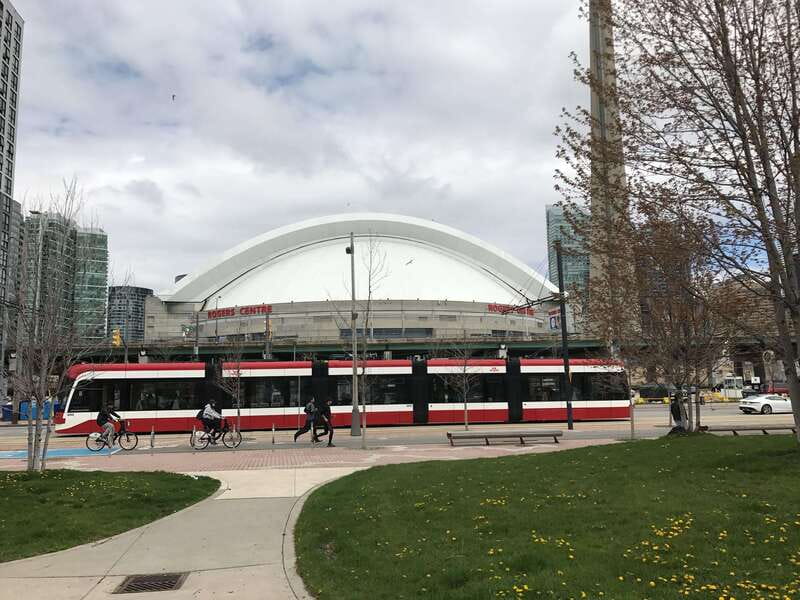
From the Entertainment District, the route heads toward the waterfront and passes two of Toronto’s most recognizable buildings, the CN Tower and Rogers Centre. The CN Tower once held the title of the world’s tallest freestanding structure, and it remains the city’s defining landmark.
This tour does not take you up the CN Tower. That is important when comparing it with a dedicated tower visit. You get views, context, and stories from the outside, but entry is not included and no time is set aside for the observation levels.
The same applies to Rogers Centre, known to many locals by its former name, the Skydome. Your guide shares stories about the stadium and points out details you could easily miss while walking past. Sports fans may get extra value from this part, but you do not need to follow baseball or football to appreciate the building’s place in Toronto.
One guide has been praised for pointing out a Steve Nash star, and other walks have included unusual city details, photo stops, old railroad cars, parks, and concert venues. These details show the strength of a local guide: the main sights provide the structure, while personal knowledge gives the route its character.
A short waterfront pause before the PATH
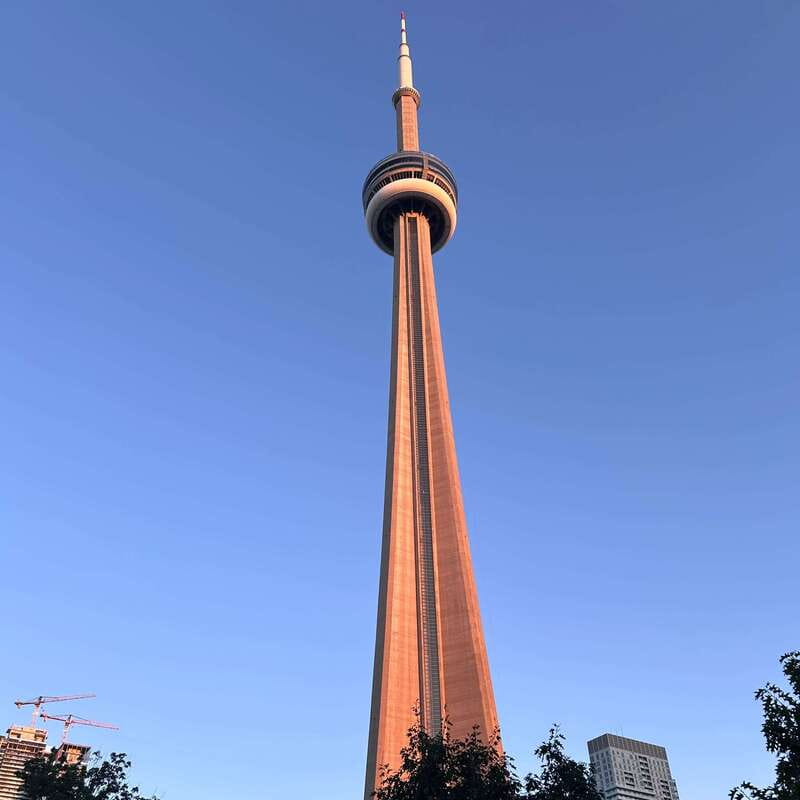
The walk reaches Toronto’s waterfront for a short break. This pause gives you a chance to rest, take photos, and shift from the open city streets to the indoor network that follows.
The waterfront portion is not presented as a long lakeside excursion. If you want an extended visit beside Lake Ontario, a separate waterfront walk would suit you better. Here, the waterfront works as a useful link between the Entertainment District and downtown’s underground system.
Your guide also explains how to get to the Toronto Islands and what you can do there. That advice is practical because the islands are a separate outing, not part of this walking tour. You will not spend the afternoon on the islands during this experience, but you can leave with a clearer idea of how to plan that visit later.
More City Highlights Walks in Canada:
- Gratuity-Based Vancouver City Highlights 3 Hour Walking Tour
★ 4.5 · 320 reviews - Toronto: City Highlights Walking Tour | 3-Hour
★ 4.6 · 306 reviews - Calgary: City Highlights Walking Tour | 3-Hour
★ 4.6 · 271 reviews - Montreal: RESO Underground City and Downtown Walking Tour
★ 4.8 · 236 reviews
Finding your way through the 30-kilometer PATH
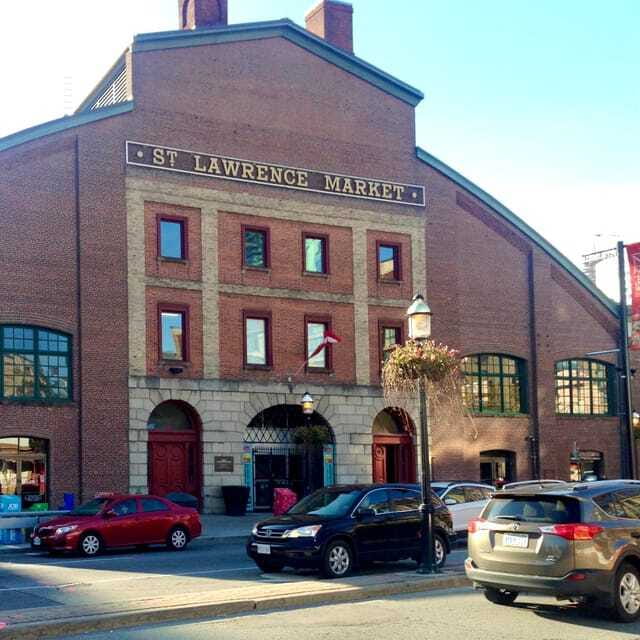
The PATH is the most useful part of the tour for many first-time visitors. This mostly underground walkway stretches about 30 kilometers, or 20 miles, beneath and between downtown buildings. It links more than 70 office towers and includes around 600 places to eat, more than 800 shops, six subway stations, and seven hotels.
Those numbers matter less than what the system feels like in practice. The PATH is a second downtown, built for moving through Toronto during winter and rainy weather. It can also feel confusing, with many entrances and connections, so an explanation from someone who knows the system is worth more than a quick glance at a map.
The route takes you in and out of the PATH rather than keeping you underground for the entire walk. That is a good choice. You get a sense of the city above street level, then see how office workers and shoppers use the indoor network below it.
Do not expect to cover all 30 kilometers. The tour gives you a sample and teaches you how the system connects important parts of downtown. You will still need to read signs and pay attention when using it alone, but the walk makes the PATH much less mysterious.
Brookfield Place and the architecture of downtown
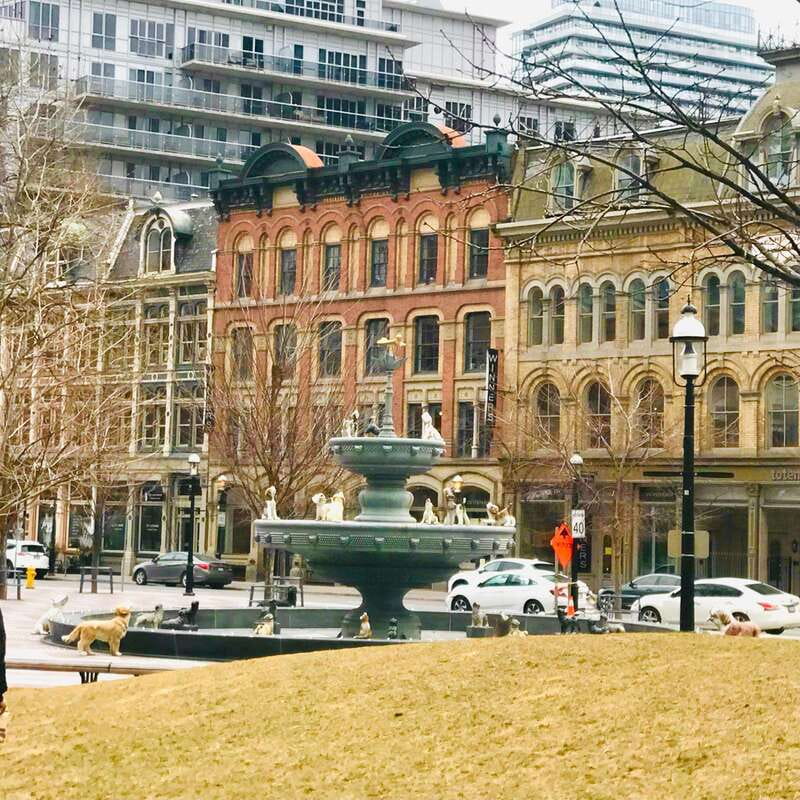
The route includes Brookfield Place, one of Toronto’s most striking buildings. Its design is associated with Spanish architect Santiago Calatrava, and the interior gives the tour a welcome architectural pause after the practical PATH section.
This stop works because it is more than a quick photo opportunity. Your guide can help you notice the shape, scale, and design of the building, then place it within Toronto’s modern downtown. The tour repeatedly shifts between function and beauty: the PATH shows how people move through the city, while Brookfield Place shows how the city chooses to present itself.
The route also includes Union Station. The station is an important downtown connection and helps explain why this part of Toronto is so busy with movement. You will see the relationship between transportation, offices, sports venues, hotels, and the underground walkway.
Some guides use photographs or flash cards showing how Toronto changed over time. Ken has used historical images during the walk, and other guides bring old photos or visual material to help explain the city’s transformation. These tools are especially useful when modern towers make it hard to picture earlier Toronto.
Old Toronto and the change of pace

During the final third, the tour enters Old Toronto. The mood shifts noticeably from the glass towers, large venues, and indoor connections of the modern core.
Here, you see buildings linked to Toronto’s 19th-century boom and streets with a more established character. The area also has restaurants and historic buildings, making it a good place to continue exploring after the tour.
I like this part because it keeps the walk from becoming a simple downtown highlights circuit. You get a sense of Toronto as a city that has been rebuilt and enlarged over time, not just a modern center that appeared all at once.
The historical material is often told through stories about the city’s founders, changing neighborhoods, architecture, and the people who shaped Toronto. Guides such as Ken and Dave have been praised for adding anecdotes and personal experiences, while Nick is known for explaining information clearly and answering questions patiently.
The pace is steady, with regular stops to look at buildings and hear the story behind them. You will walk extensively, but the route is not designed as a race. One useful strength is that you are shown places you might otherwise pass without noticing.
Ending at St. Lawrence Market around lunchtime
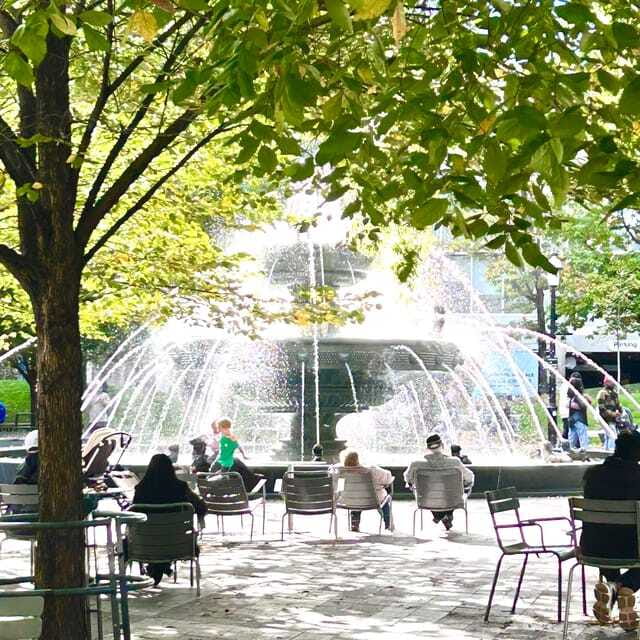
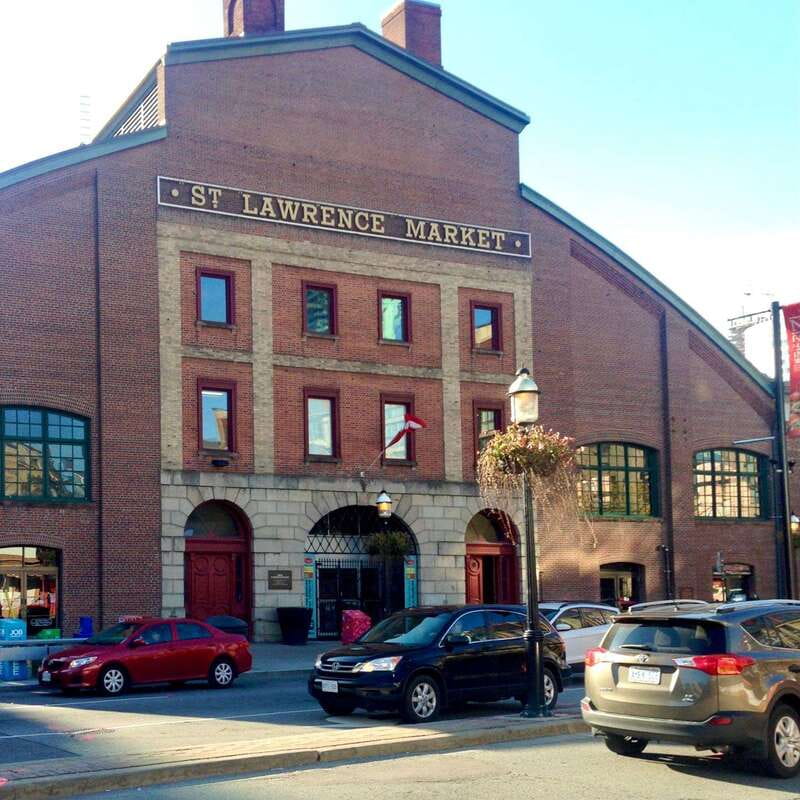
The final stop is St. Lawrence Market, one of Toronto’s best places to finish a morning walk. The market is known for its food stalls, popular vendors, and long-standing place in the city’s daily life.
Your guide points out foods and venues worth trying, but food and drinks are not included in the $38 price. Plan to buy lunch separately if you want to eat in the market. The timing is convenient, since the tour often ends around lunchtime and you can continue exploring without backtracking.
This ending also gives you a useful choice. You can stay for food, explore the market on your own, or use your newly improved sense of direction to continue through Old Toronto. A guide may also suggest restaurants or a nearby pub. Neil, for example, has been praised for recommending a pub where the group continued socializing after the walk.
St. Lawrence Market is a better ending than a return to the original meeting point. You finish in an area with something practical to do, rather than being left beside an office tower with no next step.
What $38 gets you
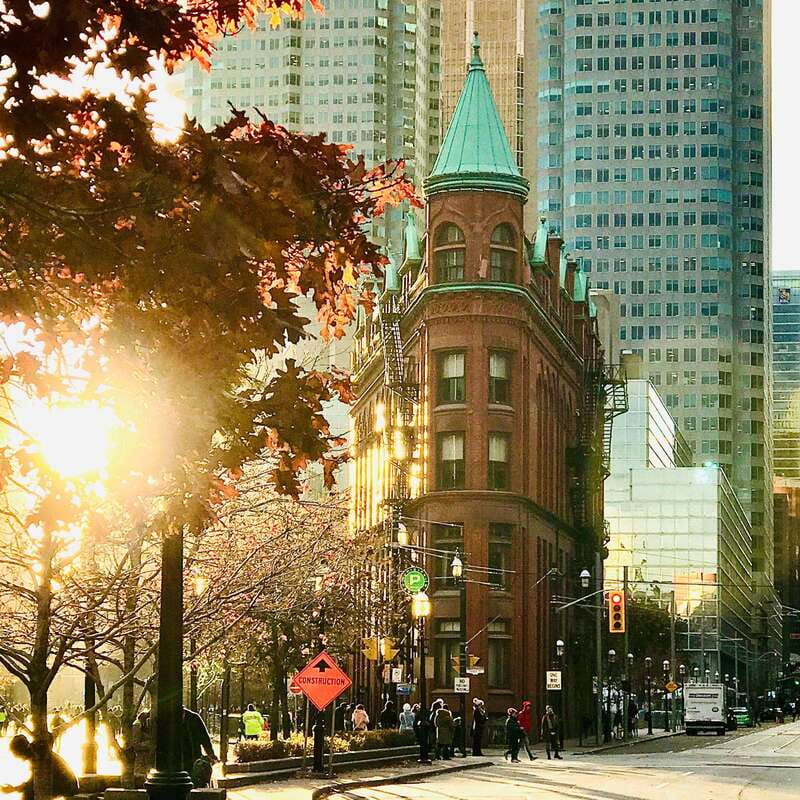
At $38 per person, this is a fair price for a three-hour guided walk with a local English-speaking guide and entry to the public areas of Queen’s Quay Terminal, the PATH, Union Station, Brookfield Place, and St. Lawrence Market.
The value comes from the combination of orientation and interpretation. You could walk past the CN Tower, Rogers Centre, Union Station, Brookfield Place, and St. Lawrence Market alone. What is harder to reproduce is the explanation of how the places fit together, how to use the PATH, and what details deserve your attention.
The price does not cover food, drinks, the CN Tower, or Rogers Centre. That keeps the tour focused on walking and city context, but you should budget separately for lunch and any paid attractions you plan to visit.
The small group limit adds value. A private tour is not guaranteed, but one solo participant received a private walk rather than having the tour canceled. Even with a full group of 10, the format leaves more room for conversation than a large coach tour.
Who should book this Toronto walk
I would recommend it most strongly to first-time visitors, couples, solo travelers, and small groups who want a clear introduction before exploring Toronto independently.
It suits you if you enjoy:
- Walking at a steady pace with regular stops
- City history told through stories and examples
- Architecture, public spaces, sports venues, and food markets
- Asking questions throughout the route
- Learning practical details from a local guide
- Getting ideas for later visits to the Toronto Islands and downtown neighborhoods
It is also a good match for people arriving in winter or during wet weather, since the PATH gives the tour an indoor element. Still, bring weather-appropriate clothing because much of the route is outdoors.
You should think twice if three hours of walking feels difficult. Wheelchair users cannot join this tour, and it is not suitable for people with a low level of fitness. Children must be accompanied by an adult, and unaccompanied minors are not allowed.
Useful planning details before you go
Wear comfortable shoes and bring a camera. There is no need to bring food for the tour, though you may want money or a card for lunch at St. Lawrence Market.
The tour is offered in English and uses a live guide. The exact starting time varies, so check availability when booking. You can cancel up to 24 hours in advance for a full refund, and the reserve now, pay later option gives you some flexibility while your plans are still taking shape.
Because the route includes outdoor streets, the waterfront, and indoor passages, the walk works in different seasons, but your clothing matters. A winter walk can include snow, and one February outing went ahead in snowy conditions. Rain does not necessarily end the experience either, though you should be ready to walk between covered sections.
Should you book the Buzz Tours city walk?
Book it if you want Toronto to make sense quickly. The best parts are the explanation of the PATH, the shift from the Entertainment District to Old Toronto, the practical Toronto Islands advice, and the chance to ask a local guide about what to do next.
Skip it if your priority is going inside the CN Tower, touring Rogers Centre, or spending most of your time at the waterfront. Those attractions are only seen from outside, and the tour is built around walking, stories, and orientation.
For most first-time visitors with moderate fitness, $38 is a sensible investment. Start early in your stay, listen closely during the PATH section, and stay at St. Lawrence Market afterward for lunch. That combination gives you both a useful map of downtown and an easy way to keep exploring on your own.
FAQ
How long is the Toronto city walking tour?
The tour lasts three hours and includes extensive walking through central Toronto.
Where does the tour begin?
It begins at the southwest corner of King Street West and Simcoe, beneath the small electronic billboard for Roy Thomson Hall.
Where does the tour finish?
The tour ends at St. Lawrence Market, where you can continue exploring and buy food separately.
Is the CN Tower included?
No. The route passes the CN Tower and includes views and information from outside, but entry is not included.
Does the tour visit the Toronto Islands?
No. The guide explains how to get to the Toronto Islands and what to do there, but the islands are not part of this three-hour walking route.
How large is the group?
The tour is limited to 10 participants.
Is the tour suitable for wheelchair users?
No. The experience is not suitable for wheelchair users or people with a low level of fitness. Children must be accompanied by an adult.
Just added around Canada
- Charlottetown Small Group Walking Tour With Province House★ 4.5 · 123 reviews
- Charlottetown Walking Tour★ 5.0 · 244 reviews
- Historic Walking Tour of Charlottetown★ 5.0 · 211 reviews
- The Banff Stargazing Tour – 2hr Walking Tour★ 5.0 · 189 reviews
- Banff Ghost Walks★ 4.5 · 122 reviews
- Toronto: Dark History Nighttime Walking Tour★ 4.7 · 273 reviews
- Toronto: Private Walking Tour with a Local★ 4.7 · 150 reviews
- Toronto: Distillery District Historic Walking Tour★ 4.8 · 267 reviews
City Highlights Walking Tours, compared.
Berlin City walk Government District and Places of Democracy
Read our review →
Historic Charleston Guided Sightseeing Walking Tour
Read our review →
Oxford: University and City Walking Tour with Alumni Guide
Read our review →
City Highlights Temple and Market Walking Tour
Read our review →
A History of Terror – Belfast City Centre Walking Tour
Read our review →Browse the lists this tour appears in