
REVIEW · ITALY
Sorrento: Sunset City Walking Tour with Limoncello Tasting
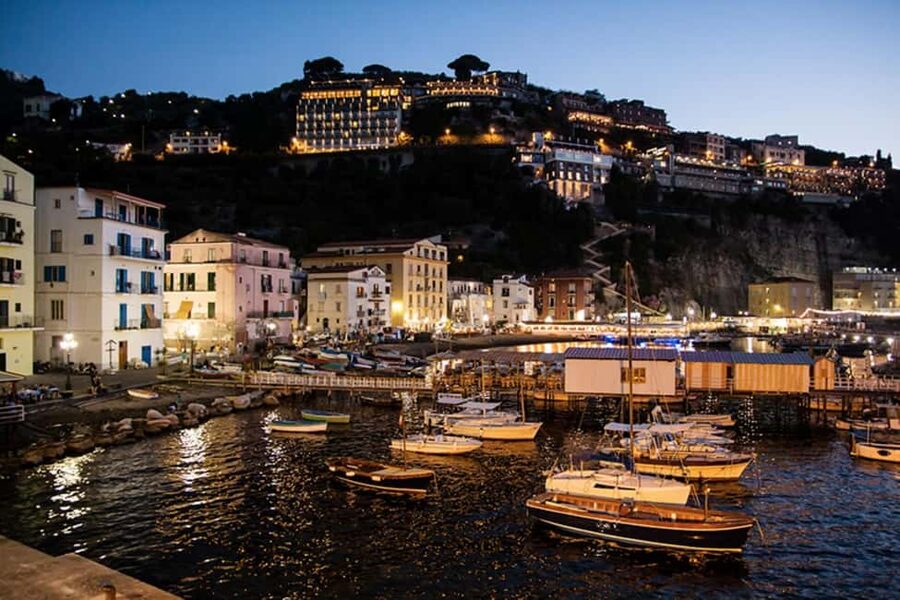
Sorrento’s best introduction may be the Valley of the Mills, a dramatic, overgrown ravine hidden below the town center. From there, this 90-minute walk moves through old lanes, churches, viewpoints, local craft shops, and a small lemon garden before finishing with limoncello tasting. It gives you the useful big picture before you start exploring on your own.
I like the way the tour connects geology and daily life, explaining why Sorrento looks the way it does and how its lemons became part of the local identity. I also like the timing: the walk reaches the sea-facing Villa Comunale around sunset, when the Bay of Naples makes its best photo backdrop. The main consideration is that this is a history and architecture tour with a tasting at the end, not a drinking event. The samples are small, and the walk takes priority.
Key points to know before booking
- The Valley of the Mills comes first, with an explanation of Sorrento’s land formation and the abandoned mills below town.
- Mario is the guide most often named, and his style combines local stories, geography, architecture, and practical advice.
- The sunset viewpoint is Villa Comunale, a public park above the water with broad views across the Bay of Naples.
- The tasting includes more than limoncello, with lemon cream, pistachio cream, melon cream, and other local products.
- The route covers about 3 kilometers, at an easy pace with regular stops, but it is not suited to people with mobility limitations.
- Book it early in your stay if you want restaurant tips, shopping suggestions, and a quick sense of how Sorrento’s center fits together.
Why this sunset walk works as a first evening in Sorrento
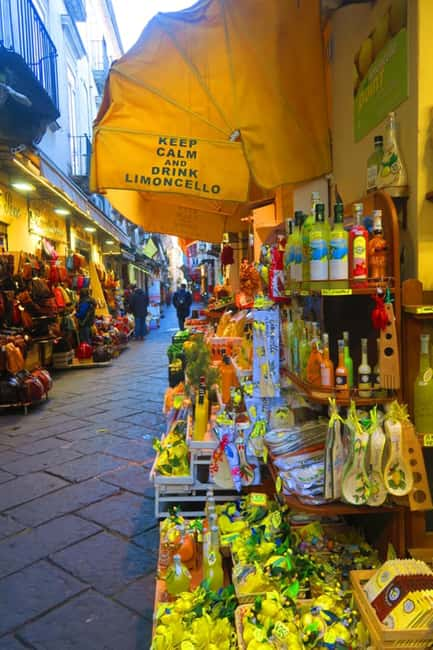
Sorrento can feel confusing at first. Its old center is compact but full of narrow lanes, unexpected openings, stairways, churches, artisan shops, and sea views that appear between buildings. A good guide helps you put those pieces in order.
This tour begins at the Piccadilly Pub on Via Fuorimura and then heads into the center. You are not simply ticking off landmarks. You are learning how the town formed, why its buildings sit where they do, and how lemon growing, wood inlay, religion, and tourism shaped modern Sorrento.
The route is roughly 3 kilometers and moves at a slow, explanatory pace. That makes it manageable for most people who are comfortable walking on city streets, but you should still wear firm, comfortable shoes. Sorrento is hilly in places, and the old center is not designed for smooth, uninterrupted walking.
The sunset timing adds atmosphere, but it also changes with the season. In spring and autumn, the light may be fading by the time you reach the main viewpoint. In summer, you can expect a brighter, longer evening. The tour still runs for about 90 minutes, but the exact colors and brightness depend on the date.
More City Highlights Walking Tours in Italy
- Florence: Highlights Walking Tour with Expert Guide
★ 4.6 · 4,662 reviews - Bologna: City Center Walking Tour
★ 4.5 · 3,478 reviews - Florence: Duomo Complex with Tickets & City Walk Guided Tour
★ 4.7 · 2,057 reviews
The Valley of the Mills and Sorrento’s unusual setting
The first major stop is the Vallone dei Mulini, or Valley of the Mills. This deep ravine sits surprisingly close to Sorrento’s busy center. Its thick vegetation and old stone remains make it feel far removed from the streets above.
The guide uses this stop to explain Sorrento’s geomorphological formation, meaning how natural forces shaped the ground beneath the city. That context is useful because Sorrento is built on high coastal terrain cut by ravines. You begin to understand why the town has sudden drops, steep edges, and different levels rather than a simple flat grid.
The ancient mills point to an older working Sorrento. Water once powered local industry here, and the remains show how practical this hidden valley was before the town became a major holiday destination. The stop lasts about 15 minutes, long enough for photographs and a clear explanation without turning into a geology lecture.
I like this opening because it immediately gives you something you might miss alone. From the street, the valley can seem like an odd gap in the city. With the right explanation, it becomes a key to understanding Sorrento.
Via San Cesareo and the old town’s everyday life

From the valley, the walk enters Via San Cesareo, described as Sorrento’s oldest street. This is one of the places where the tour shifts from broad history to daily life.
The street runs through the old center, with narrow lanes, small shops, and local artisan businesses. You may see products connected to the traditions discussed later, including lemon goods and wood inlay. The value here is not only the street itself. It is learning how the old center functions as a living part of town rather than a museum set aside for sightseeing.
The tour helps you get your bearings. After this walk, it is easier to return on your own for dinner, shopping, or a second look at a church or courtyard. Several people who took the tour used it as their first-night orientation, then revisited favorite areas the next day.
Because the walk takes place later in the day, some businesses may be closed depending on the season and start time. One practical tip: think of the shops as background to the tour, not as a guaranteed shopping window. The guide can still explain the local crafts and point you toward places to return to later.
Sant’Antonino Square and Sorrento’s patron saint

Sant’Antonino Square introduces one of the city’s most important religious figures. Saint Antonino is Sorrento’s patron saint, and the guide explains his life, local importance, and reported miracles.
This stop gives you a sense of how religion fits into the town’s identity. In Sorrento, churches and public squares are not just old architecture. They are tied to traditions, local celebrations, and stories passed through generations.
The square also helps break up the walking route. The tour is structured around short explanations rather than one long speech, so you have time to look around and take photographs. If you enjoy understanding the meaning behind statues, churches, and public spaces, this part adds useful context.
More City Highlights Walks in Italy:
- Lucca: 2-Hour City Center Walking Tour
★ 4.7 · 1,314 reviews - Venice: Walking Guided Tour of the City Must-See Sites
★ 4.7 · 1,095 reviews - Florence in a Day: Michelangelo’s David, Uffizi and Guided City Walking Tour
★ 4.5 · 1,048 reviews - Rome: Guided City Center Evening Sightseeing Walking Tour
★ 4.4 · 953 reviews
The Franciscan cloister and a quieter side of town
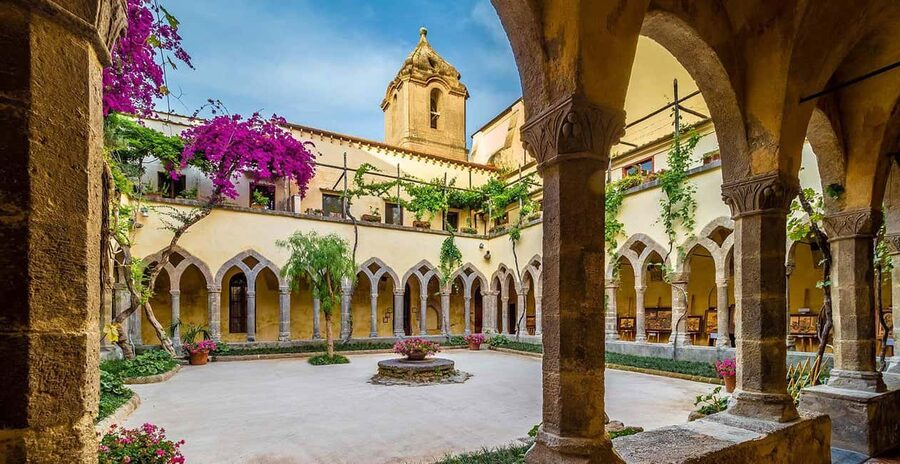
The Chiostro di San Francesco is a 13th-century Franciscan convent and one of Sorrento’s most attractive old buildings. Its cloister offers a calmer setting after the narrow streets of the center.
The appeal is architectural as much as religious. The building shows the layers of Sorrento’s past in a compact space, with stonework and arched forms that reward a slow look. The guide explains its place in the city and points out details that are easy to pass without noticing.
Access to historic and religious sites can sometimes change because of ceremonies or institutional events. If a scheduled stop is unavailable, the route may use another point of similar interest. The tour keeps its general length and subject matter, but you should not treat every stop as guaranteed on every date.
Villa Comunale and the sunset over the Bay of Naples

Villa Comunale is the scenic high point of the walk. This public park overlooks the sea and offers one of Sorrento’s clearest views across the Bay of Naples.
This is the moment that gives the tour its name. The guide aims to reach the viewpoint during the evening light, but the sunset is not a fixed show. In early spring and autumn, the sky may already be darker. Cloud cover can also change the view. Even so, the park is a strong photo stop at any time of day.
You can look toward the water, frame the coastline, and get a better sense of Sorrento’s position above the coast. The view is especially useful for orientation because it connects the old center with the wider Bay of Naples.
Bring your phone or camera, but do not expect a long photography session. The tour has several stops still to come, and the guide keeps the group moving. If sunset photography is your main goal, arrive prepared and consider returning to Villa Comunale on your own another evening.
Sedil Dominova and Sorrento’s civic past
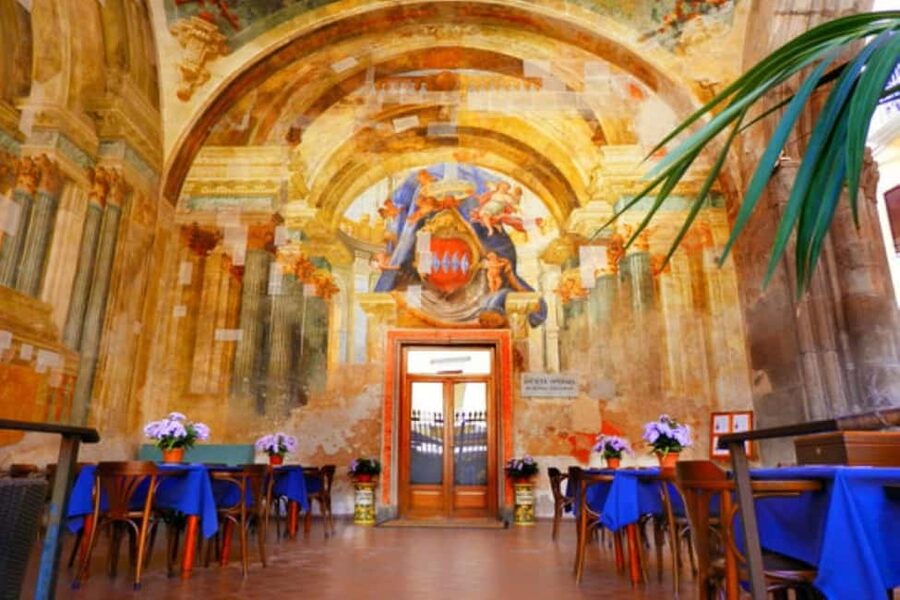
Sedil Dominova is one of Sorrento’s oldest civic buildings. It served as an ancient parliament, making it an important reminder that the city’s story is not only about churches, lemons, and sea views.
The building represents local government and public life in an earlier Sorrento. The guide explains why it matters and places it within the town’s political and social development. This is the sort of detail you might miss if you only followed a map from one pretty street to another.
The stop lasts around 10 minutes. That is enough time to understand the building’s purpose and appreciate its appearance without slowing the tour too much.
Sorrento inlay, a craft worth understanding

Sorrento is famous for its wood inlay, often called intarsia. This is one of the city’s most distinctive artistic traditions, and the tour explains its history, local importance, and production method.
The craft involves carefully arranged pieces of wood and other materials to create decorative patterns and pictures. The appeal is in the precision. Small differences in color and grain can form detailed designs, and finished pieces often appear more complex than their simple materials suggest.
This section is useful if you are considering a purchase. Instead of seeing a polished souvenir with no context, you learn what makes genuine Sorrento inlay different and why detailed work costs more. The tour does not turn into a shopping trip, but it gives you enough background to look more carefully in the artisan shops along Via San Cesareo.
The lemon garden and how limoncello is made
The lemon portion begins with a visit to a small lemon garden. Here, the guide explains the history of Sorrento lemons and the basic process used to make limoncello.
The setting matters. Limoncello is not just a brightly colored bottle sold to tourists. It connects the local crop with a familiar after-dinner drink. You learn how the lemon peel contributes to the flavor and how the liqueur is produced.
This is also a good place to ask questions about quality. The tasting partner uses certified organic lemons from the Amalfi Coast, and the guide explains what to look for when buying local liqueurs. That advice can help you avoid choosing a bottle based only on its label or packaging.
Keep your expectations clear. The lemon garden is a short stop within a larger city walk. If you want a full agricultural visit or a detailed cooking class, this is not that. It is a concise explanation tied to Sorrento’s food culture.
The limoncello tasting at Campaniadamare
The final stop is at Campaniadamare, where you taste limoncello and other liqueurs. The samples include traditional limoncello, lemon cream, pistachio cream, and cantaloupe melon cream. The included food products also include almonds with pistachio, orange, and lemon.
The portions are intentionally small, around half the amount normally served in a bar. That makes sense because the alcohol is strong and several products are offered. You can compare flavors without turning the last part of the tour into a drinking session.
The tasting is meant to help you understand the products and decide if you want to buy something local. Some people enjoy it more than others, especially if they prefer sweeter cream liqueurs or are curious about regional food products. If you are expecting generous pours, cocktails, or a long social tasting, you may find this part brief.
The shop is also a practical final stop. You can ask about ingredients, compare bottles, and purchase products if you wish. Buying is optional, and the tasting remains a small part of the overall experience.
What the guide adds to the walk
The guide makes a large difference here because the route covers several subjects. Mario is the guide most often named for this experience, and his approach combines clear historical explanations with stories about everyday Sorrento.
The strongest part of the guiding is the variety. You hear about volcanic and coastal geography, old buildings, local legends, the patron saint, wood inlay, lemons, and limoncello. That range helps you see how the city’s attractions connect.
Mario also gives practical suggestions for restaurants, bars, pizzerias, and shops in the area. Those tips are most useful when you take the tour near the beginning of your stay. You can use the advice later instead of choosing every meal by chance.
A few people found the full 90 minutes slightly longer than necessary, while others appreciated the amount of explanation. If you prefer a fast photo walk, this may feel talk-heavy. If you want a clear introduction to Sorrento, the pace is a strength.
Price, timing, and who should book
At $29 per person, the tour offers good value if you want a local guide, several central sights, a sunset viewpoint, and a tasting in one outing. You are paying for interpretation and orientation rather than admission to a major paid attraction.
The price is less compelling if you mainly want limoncello. The tasting is brief, and the samples are small. The real product is the city walk, with the drinks serving as a pleasant finish.
I would book this early in a Sorrento visit. You will understand the old center faster, learn which places deserve a return visit, and get food and shopping suggestions while you still have time to use them.
The tour is not suitable for people with mobility impairments, heart problems, lactose intolerance, or those seeking a vegan experience. It is also not recommended for people over 80, babies under one year, or anyone who finds a 3-kilometer urban walk difficult.
Arrive a few minutes early at the exact meeting point in front of the Piccadilly Pub. The guide wears a red sports cap, but arrives at the scheduled start time rather than waiting there well in advance. If you are delayed, contact the provider through WhatsApp or the booking service. A delay of more than 10 minutes can mean missing the group.
Should you book the Sorrento sunset walking tour?
Book it if you want history, local context, and a gentle orientation walk with a scenic finish. It is particularly useful on your first evening, when the old streets still feel unfamiliar and you want practical ideas for the rest of your stay.
Skip it if you want a dedicated food tour, a long limoncello tasting, or a route built mainly around shopping. The tasting is a bonus, not the headline.
For most visitors who enjoy architecture, local stories, and a well-timed sea view, the $29 price is fair. Wear good shoes, keep your schedule flexible around sunset, and treat the limoncello as the final detail in a city tour rather than the whole reason to go.
FAQ
How long does the Sorrento sunset walking tour last?
The tour lasts about 90 minutes.
What is the price?
The listed price is $29 per person.
Where does the tour begin?
It begins at the Piccadilly Pub, in front of the entrance on Via Fuorimura number 1.
How will I recognize the guide?
The guide will be wearing a red sports cap and will meet you directly in front of the pub entrance.
What language is the tour conducted in?
The live guided tour is conducted in English.
What places are visited?
The route includes the Valley of the Mills, Sorrento’s historic center, Via San Cesareo, Sant’Antonino Square, the Chiostro di San Francesco, Villa Comunale, Sedil Dominova, a small lemon garden, and a limoncello tasting shop.
How far do you walk?
The route is approximately 3 kilometers. It is described as easy and fairly slow, with pauses for explanations.
What is included in the tasting?
You can taste limoncello, lemon cream, pistachio cream, cantaloupe melon cream, and products including almonds with pistachio, orange, and lemon.
Is hotel pickup included?
No. Hotel pickup and drop-off are not included.
What happens if it rains?
For light rain, bring an umbrella or raincoat and wear suitable shoes. If there is heavy rain, a thunderstorm, or hail, the tour may be canceled and the refund will be full.
Just added around Italy
- Genoa Walking Tour: Explore Top Sights & Hidden Gems★ 4.0 · 138 reviews
- Genoa Food, Wine Tasting & History Walking Tour★ 5.0 · 212 reviews
- Taste Genoa: A Full Meal Walking Food Tour by Do Eat Better★ 5.0 · 509 reviews
- Genoa Walking Tour: Discover Hidden Treasures and Street Food★ 5.0 · 80 reviews
- Tasty Florence Street Food with Guided Walking of the City★ 5.0 · 174 reviews
- Medici Legends & Renaissance Wonders: Florence Small Group Tour★ 5.0 · 205 reviews
- Florence: Whispers of the Renaissance walking tour★ 4.5 · 78 reviews
- Florence Food Tour of 10+ Authentic Tastings with Cheeses & Wines★ 5.0 · 155 reviews
City Highlights Walking Tours, compared.

Berlin City walk Government District and Places of Democracy
Read our review →
Historic Charleston Guided Sightseeing Walking Tour
Read our review →


Oxford: University and City Walking Tour with Alumni Guide
Read our review →
City Highlights Temple and Market Walking Tour
Read our review →

A History of Terror – Belfast City Centre Walking Tour
Read our review →Browse the lists this tour appears in