
REVIEW · GERMANY
Rostock: City Walking Tour
Rostock’s old town is best understood on foot, where medieval streets, Gothic churches, the town hall, and traces of the old city wall sit close together. This private two-hour tour gives you a clear first look at the Hanseatic city without turning the outing into a long lecture on trade routes and dates.
I like the small private group, which gives you room to ask questions and keeps the pace more personal. I also like the practical focus on seeing the city, rather than spending most of the tour on Hanseatic history. The main consideration is that the tour is conducted in German, and the walking route is not suited to people with mobility impairments.
Key points at a glance
- Meet beneath Rostock’s griffin: Find your guide at the main entrance of the Rathaus, a simple and memorable meeting spot.
- A two-hour old-town overview: See major central sights without giving up half a day.
- Private group for up to six: The price works best when shared by a full group.
- Medieval and modern Rostock: The route links historic architecture with parts of the 20th-century city.
- Questions are welcome: The guide can explain the sights without flooding you with dates.
- German-language guiding: You need to be comfortable following the tour in German.
Starting beneath the griffin at Rostock Rathaus
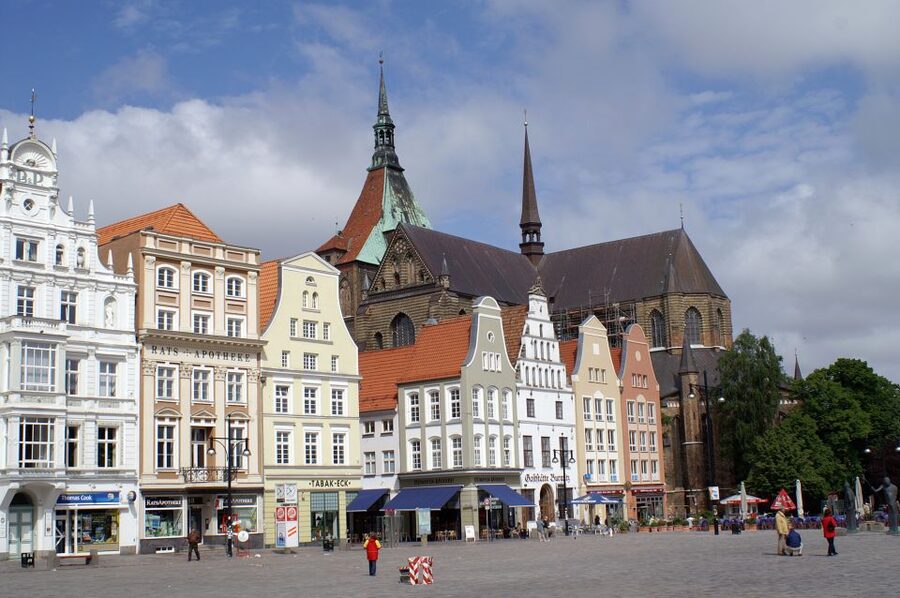
Your meeting point is the main entrance of Rostock’s Rathaus, under the symbol of the Greif, or griffin. That is a useful arrangement in a city center, since you do not need to search for a hotel lobby, pier, or hard-to-find side street.
The Rathaus also begins the tour with a strong sense of place. Rostock was one of northern Germany’s important Hanseatic cities, and the town hall helps frame that story through its central role in civic life. Your guide can use the building and square to explain how the old town fits together before you begin walking.
I suggest arriving a few minutes early. The instructions identify the entrance and the griffin symbol, but a central square can still be busy, especially if several groups are gathering. Look for the guide directly at the main entrance rather than wandering around the building.
The provider is Rostock Guide Anne Kirchmann. The tour information identifies German as the guiding language, so this is best for you if you understand spoken German well enough to follow explanations and ask questions.
More City Highlights Walking Tours in Germany
- Berlin City walk Government District and Places of Democracy
★ 4.7 · 8,467 reviews - Munich: Old Town & Viktualienmarkt City Walk in German
★ 4.7 · 2,304 reviews - Dresden: Guided City Walk
★ 4.6 · 2,075 reviews
Rostock’s old town in a compact two-hour route
The basic strength of this experience is its scale. Two hours is long enough to connect several parts of central Rostock, but short enough to fit before lunch, after arriving by train, or between other plans.
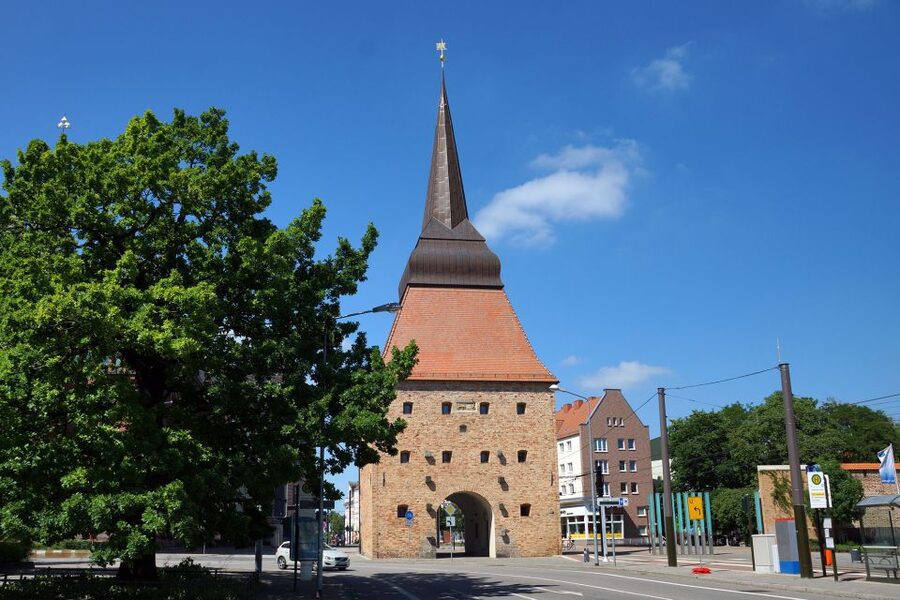
You can expect the route to cover the old town and historic harbor area, with stops or explanations around the town hall, Gothic churches, medieval city wall, old-town lanes, riverside boulevards, and the university square. The exact order may depend on the guide and the group, but the route is designed as a broad city introduction rather than a visit focused on one building.
That matters because Rostock is easier to appreciate once you see how its pieces relate. The churches are not isolated monuments. The town hall is not just a photo stop. The wall, lanes, square, and water all help explain the shape of the historic center.
You should also expect to walk continuously for much of the two hours. There is no mention of interior admissions, transport, or a seated portion, so plan for an outdoor walking experience. Wear shoes that you can use comfortably on old-town streets, and bring suitable clothing for northern Germany’s changeable weather.
Gothic churches and the city’s medieval character
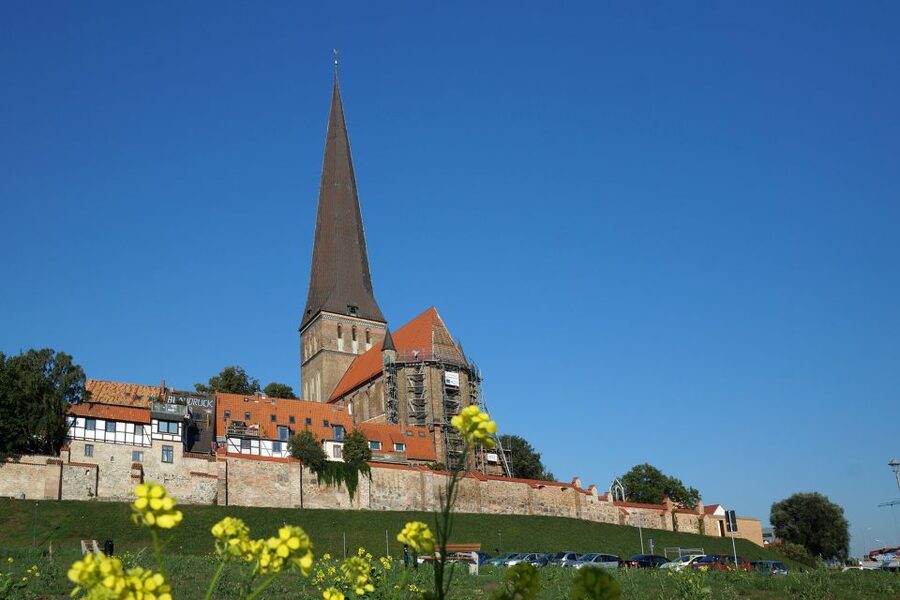
The Gothic churches are likely to be among the most memorable architectural stops. Their scale gives you a quick sense of the money, skill, and civic pride that shaped Rostock during its medieval and Hanseatic period.
A guide adds value here by pointing out what you might miss when walking alone. You may learn how a church relates to the surrounding quarter, what architectural features to notice, or how religious buildings fitted into the city’s daily life. The information is presented as part of a walk, not as a formal academic lesson.
That lighter approach suits this tour well. One recent participant specifically appreciated that the guide did not spend ten minutes talking only about the Hanseatic League. Instead, the focus stayed on moving through the city and making the major sights understandable.
You should not book this expecting a detailed architectural study or a long interior visit. The supplied information promises conversation about Gothic churches and the city’s key sites, but it does not promise entry to every building. Think of the churches as important points in a wider route.
Old lanes, riverside streets, and the harbor area
The old-town alleys give the walk its character. Main sights tell you what Rostock considers important, while narrow streets and less obvious corners show how the center is arranged from one block to the next.
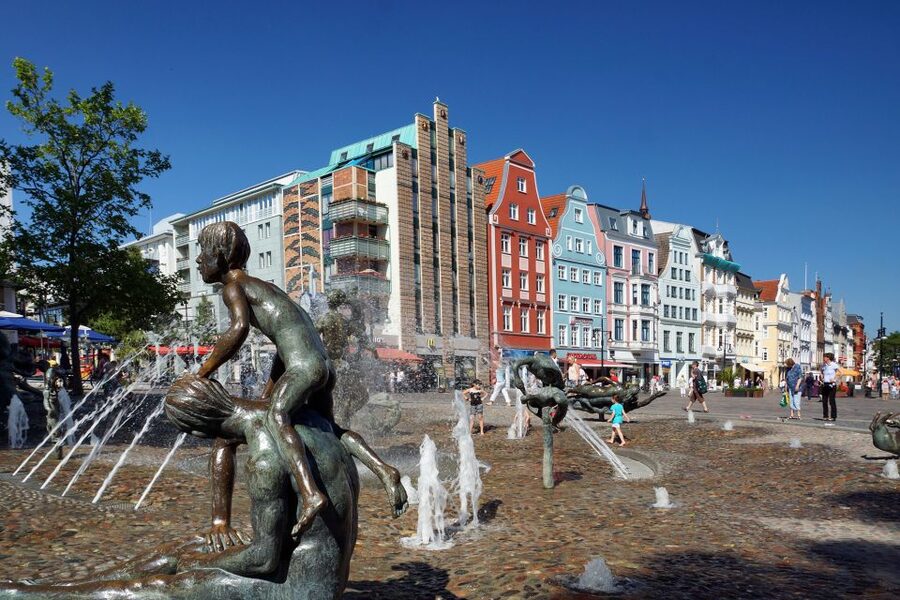
The route also reaches riverside boulevards and the historic harbor area. This changes the view from enclosed medieval streets to a more open setting connected with Rostock’s waterfront identity. You will see how the city’s central history is tied not only to churches and civic buildings, but also to water and trade.
The harbor portion is especially useful if you have only seen Rostock from a train or cruise connection. It gives you another way to read the city. Instead of treating the waterfront as a separate attraction, the tour connects it with the old center.
The description also notes a span from medieval architecture to the 20th century. That suggests a broader story than a carefully preserved medieval core alone. You might notice later changes in the city fabric, rebuilding, or newer streets alongside older structures. The details are best drawn from your guide on the day, since the precise 20th-century stops are not specified.
More City Highlights Walks in Germany:
- Regensburg: Guided City Walking Tour of the Old Town
★ 4.7 · 1,395 reviews - Cologne: Old Town Highlights Walking Tour
★ 4.6 · 1,093 reviews - Trier: Guided City Walk with Wine Tasting
★ 4.8 · 979 reviews - Ulm: City Center Walking Tour with Minster Visit
★ 4.7 · 831 reviews
University Square and the city beyond its postcard sights
University Square adds another layer to the walk. It shifts attention from churches and walls to education and civic life. A central university space can help you see Rostock as a living city, not just a collection of old buildings.
This is one reason I prefer a route that includes several types of place. You get architecture, public squares, water, lanes, and city history in one sitting. The variety keeps the pace moving and helps you remember the city by districts and spaces rather than by a list of names.
The guide’s role is important here. A good walking tour should tell you why a square matters, not merely identify it. The available feedback points to clear explanations, interesting background information, and time for questions. You can use that opportunity to ask about a building, a street, or a part of Rostock you plan to revisit later.
At the same time, the walk is not designed as a deep history seminar. One participant liked that the tour avoided too many dates and explained things in a simple way. If you want an exhaustive account of Rostock’s medieval politics, wartime damage, or architectural details, you may need a longer specialist tour or a museum visit afterward.
What the guide style means for your experience
The strongest pattern in the feedback is clarity. The tour seems to favor useful explanations over a flood of facts. That is a real advantage during a short city walk, when too many dates can blur together before you reach the next corner.
You can expect to ask questions as you go. A German-language private tour also gives your group a chance to set the tone. If your party wants more background on the Hanseatic era, ask. If you would rather keep moving and focus on what is in front of you, say so.
This flexibility is more valuable in a private group than on a large public tour. You are not waiting for dozens of people to gather, and the guide can respond to the interests of your own group. The price of $147 is therefore not a per-person ticket. It covers up to six people, so six friends or family members pay about $24.50 each before any separate booking charges.
For two people, the effective cost is $73.50 per person. For a solo visitor, it is a costly way to get a basic overview. The value improves sharply as your group gets larger, especially if you want a private German-language walk rather than a general public departure.
The rating is 4.9 from 198 bookings, which supports the idea that the format is working well for many people. Still, a high rating does not change the basic limits: the experience lasts two hours, is conducted in German, and centers on outdoor walking.
Who will get the most from this Rostock walk
I would choose this tour if you are visiting Rostock for the first time and want a quick orientation before exploring on your own. It should also suit you if you enjoy asking questions, prefer a private group, and want a guide to connect the main sights without making the tour feel like a classroom.
It works well for:
- Couples or families who can share the group price
- Friends traveling together in a group of up to six
- Visitors with only a short period in Rostock
- People who want a general old-town introduction
- German-speaking visitors who prefer a local guide
- Anyone who likes history in moderate portions rather than long lectures
You may want another option if you need an English-language guide, use a wheelchair, have difficulty with extended walking, or want extensive interior visits. The tour is specifically marked as unsuitable for people with mobility impairments.
It is also not the right match if your main interest is only the harbor, only the churches, or only Hanseatic history. The value lies in the combination of places and the way they create a general picture of the city.
Booking details that matter
The tour lasts two hours and is offered as a private group experience for up to six people. The only included item listed is the expert guide, so you should not expect entrance tickets, food, or transport to be part of the price.
You meet at the Rathaus rather than being collected from your hotel. That makes the start simple, but you are responsible for reaching the meeting point yourself. The location is the main entrance under the griffin symbol.
The tour allows free cancellation up to 24 hours before the start for a full refund. You can also reserve now and pay later, which helps if your schedule may change. Starting times depend on availability, so check the date you want before making plans around it.
Should you book this Rostock walking tour?
Book it if you want a short, private introduction to Rostock’s old town and can follow German. The mix of town hall, Gothic churches, city wall, university square, harbor area, and riverside streets gives you more than a single landmark visit, while the two-hour length leaves time for your own exploring.
I would especially recommend it for a full group of up to six, when the price becomes reasonable. The tour’s best quality is its balance: enough history to make the city meaningful, but not so much that you spend the whole outing counting dates.
Skip it if you need English, require an accessible route, or want a detailed specialist tour. For the right group, though, this is a sensible way to get your bearings in Rostock and learn what deserves a closer look later.
FAQ
Where does the Rostock walking tour meet?
Meet your guide in front of the Rathaus at the main entrance, beneath the symbol of the Greif, or griffin.
How long does the tour last?
The walking tour lasts two hours.
What language is the tour conducted in?
The live tour guide speaks German.
Is this a private tour?
Yes. It is offered as a private group experience for up to six people.
What sights are included?
The route covers key parts of Rostock’s town center, including the Rathaus, Gothic churches, medieval city wall, old-town alleys, riverside boulevards, university square, and historic harbor area.
Is the tour suitable for people with mobility impairments?
No. The activity is marked as unsuitable for people with mobility impairments.
Just added around Germany
- Private 2-Hour Hamburg Highlights Walking Tour★ 5.0 · 105 reviews
- Sightseeing Tour – Free Tour – Historic Center-Hamburg On Foot★ 5.0 · 112 reviews
- Discover Hamburg Walking Tour★ 5.0 · 77 reviews
- Historic Dresden Small-Group Walking Tour in English★ 5.0 · 160 reviews
- Walking Through Dresden’s Past with Dr. Fraser Macdonald★ 5.0 · 72 reviews
- Guided Brewhouse Walking Tour in Cologne★ 5.0 · 482 reviews
- Walking tour of Cologne: The essential and unmissable★ 5.0 · 121 reviews
- Berlin Walking Tour★ 4.5 · 378 reviews
City Highlights Walking Tours, compared.
Berlin City walk Government District and Places of Democracy
Read our review →
Historic Charleston Guided Sightseeing Walking Tour
Read our review →

Oxford: University and City Walking Tour with Alumni Guide
Read our review →
City Highlights Temple and Market Walking Tour
Read our review →
A History of Terror – Belfast City Centre Walking Tour
Read our review →Browse the lists this tour appears in