
REVIEW · INDIA
Jodhpur Blue City Heritage Walking Guided Tour
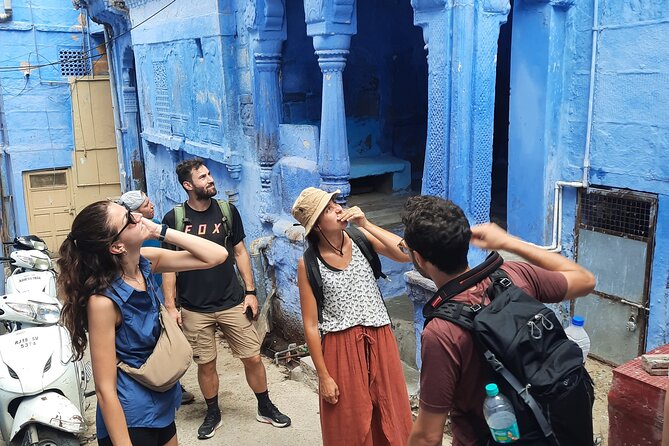
Jodhpur’s blue quarter is best understood on foot, where narrow lanes turn suddenly toward old temples, quiet reservoirs, painted houses, and busy market streets. This tour links those contrasts in about two hours, with local stories filling in the gaps between the sights. I especially like the Navchowkiya neighborhood and the chance to see Toorji Ka Jhalra, two places that reveal more about daily life than a quick fort visit can.
I also like the small group limit of 15 and the low price of $13.39, which makes a guided introduction easy to justify. The main consideration is pace: the route includes hilly lanes, uneven walking, and about 1 hour 40 minutes to 2 hours on foot. Guide quality can vary, so ask for clear meeting instructions and tell your guide what interests you most.
Key points to know before booking
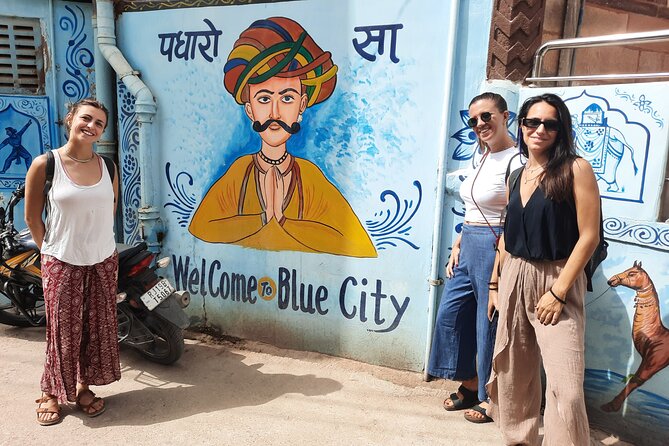
- The blue lanes are the heart of the walk: Navchowkiya offers the most atmospheric part of the route, with indigo homes, twisting alleys, and everyday neighborhood scenes.
- The route mixes famous sights with local texture: You visit Toorji Ka Jhalra, Gulab Sagar, old water reservoirs, temples, and Sardar Market.
- Imtiaz is one guide name to look for: He has led a route through the blue quarter, Jwalamukhi Temple, and Hanuman Temple, with an uphill section before the descent.
- It is good value at $13.39: The fee covers an English or Hindi-speaking licensed guide and several free-entry sights.
- Expect a compact walking tour, not a full-day outing: The advertised duration is under two hours, and the group can reach 15 people.
- The Clock Tower is both meeting point and finale: You begin and end near Sardar Market, where food, spices, textiles, and handicrafts fill the surrounding streets.
Why this walk gives you more than a fort visit
Mehrangarh Fort is Jodhpur’s headline attraction, but the city below it tells a different story. The Blue City Heritage Walking Tour focuses on that lower city, where old water systems, homes, shrines, markets, and lanes still fit together in a lived-in neighborhood.
I like this format because you are not simply moving from monument to monument. The route asks you to notice how Jodhpur works: how water was collected in a dry region, how homes were painted, how market streets connect to older quarters, and how religious buildings sit within the city fabric.
The experience begins and ends at the Clock Tower near Pal Haveli, in the old city’s Gulab Sagar area. That location is useful because the Clock Tower is easy to recognize, close to public transportation, and surrounded by Sardar Market. The meeting point can be crowded, so arrive with enough time to find the tower rather than trying to locate the guide at the last minute.
The tour is priced at $13.39 per person. That is a sensible fee if you want context and orientation during your first hours in Jodhpur. You are paying for a licensed English or Hindi-speaking guide, not entrance tickets, since the listed stops have no separate admission charge.
More History Walking Tours in India
- Private Heritage Walking Tour in Jaisalmer Fort and Old Bazaar
★ 5.0 · 306 reviews - The Cultural And Historical Walking Tour in Margao
★ 5.0 · 280 reviews - Old Delhi Heritage Walking Tour
★ 5.0 · 247 reviews
Fateh Pol and the edge of Mehrangarh Fort
The first stop is Fateh Pol, one of Mehrangarh Fort’s major gates. It commemorates a victory over the Mughals in 1707, giving your guide a chance to set the political background before you move into the city below.
You spend only about five minutes here, so this is more of a history stop than a full fort visit. Do not book this walking tour expecting time inside Mehrangarh or a detailed examination of the fort’s palaces. The gate works as an introduction, placing Jodhpur’s old neighborhoods in the shadow of the stronghold that ruled them.
The carvings and heavy stonework make the stop worthwhile even though it is brief. If you want a full look at Mehrangarh, plan a separate visit. This tour is designed to connect the fort area with the old city, not replace the fort experience.
Ranisar and Padamsar, Jodhpur’s old water solution
The walk then reaches Ranisar and Padamsar, two connected reservoirs built in the 15th century. In a dry city, these lakes are not just scenic pauses. They show how earlier residents planned for water and made use of precious rainfall.
You have roughly 10 minutes here. That is enough to take in the setting and hear the basic story, but not enough for a long rest or a detailed architectural study. The reservoirs offer a calmer contrast to the stone lanes and market streets, especially early in the day.
I find this stop useful because it adds practical context. Jodhpur’s beauty can distract you from the hard conditions that shaped the city. A water reservoir explains more about local planning than a string of decorative façades alone.
Navchowkiya, where the blue lanes matter most
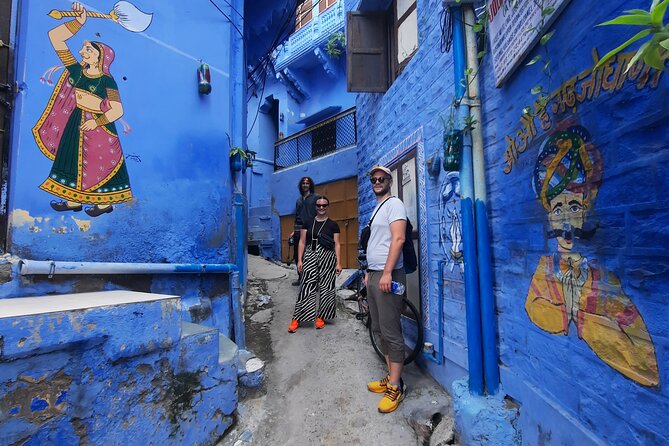
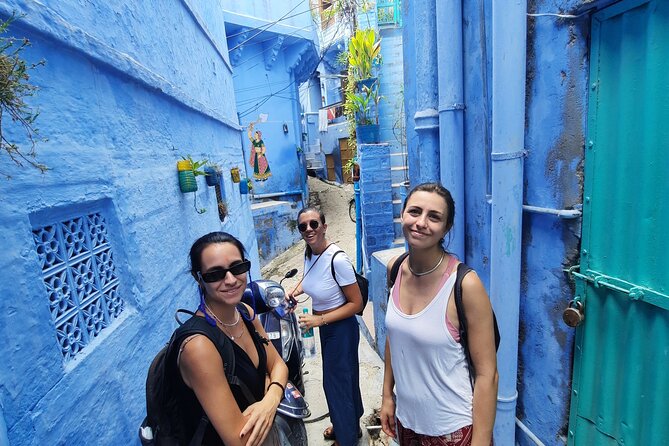
The longest stop is Navchowkiya, with about 30 minutes in the Blue City. This is the part of the tour most closely tied to its name. You move through narrow, twisting lanes lined with indigo-painted homes and older buildings.
The blue color is only part of the appeal. The real pleasure comes from the scale of the neighborhood. You are close to doorways, walls, balconies, and small corners that are easy to miss from a vehicle. A local guide can explain the area’s customs, architecture, and daily rhythms while helping you move through the maze.
One route described by the guide included an uphill walk to Jwalamukhi Temple and Hanuman Temple before descending into the blue quarter. That detail matters. The tour may include more than a flat stroll through painted streets, and the uphill section can make the experience more demanding in the heat.
The descent into the Blue City is one of the route’s strongest features. It gives you a sense of changing levels and neighborhoods rather than dropping you beside a single photo stop. If your guide is Imtiaz, you may find that his route includes these temple viewpoints and a strong focus on Jodhpur’s past.
You should wear shoes with a secure grip and carry water. The supplied details do not specify the exact surface at every point, but old-city lanes and hill sections are rarely as smooth as a modern sidewalk. The tour is listed as suitable for most people, yet anyone with limited mobility should ask about the walking route before booking.
Same streets, a different route:
- Fontainhas Heritage Walk by Make It Happen
★ 5.0 · 2,834 reviews - The Great Indian Food Tour: Old Delhi Food and Heritage Walk
★ 5.0 · 1,698 reviews - Group Guided Walking Tour in Fort and Colaba
★ 5.0 · 1,073 reviews - Spiritual City Walking Tour-THE Pushkar Route
★ 5.0 · 907 reviews
Toorji Ka Jhalra and the art of the step well
Toorji Ka Jhalra is one of the most rewarding stops because it combines engineering, social history, and decoration. Built in the 18th century by a queen consort, this step well descends through a carefully cut series of steps and carved stone details.
You spend around 15 minutes here. That is enough to understand how the structure works and to admire its design, though you may want extra time for photographs. Step wells are more than striking places for pictures. They were practical spaces where people could reach water at changing levels, and their construction required careful planning.
This is also a good place to pay attention to the guide’s storytelling. Without context, a step well can look like an impressive hole in the ground. With explanation, it becomes a record of water management, craftsmanship, and the role of royal women in civic building projects.
The stop is free to enter as part of the walking route. Keep your expectations realistic about the visit length. You are seeing Toorji Ka Jhalra as one piece of a broad old-city walk, not spending an hour here with a specialist historian.
Gulab Sagar, a short pause beside old waterworks
Gulab Sagar comes next, with about five minutes allocated. Built in the 18th century, this lake served as a water reservoir and now forms part of the old city’s visual character.
The short stop means you will not have time for a long sit or a detailed circuit of the water. Still, it helps connect the earlier reservoirs and step well into one larger story. Jodhpur’s historic beauty was supported by systems designed for survival in an arid region.
Because Gulab Sagar is near the Clock Tower area, it also helps bring the walk back toward the market. The route moves from quieter water sites into the city’s commercial center, which gives the tour a pleasing change of pace.
Clock Tower Market, the liveliest finish
The final major stop is Clock Tower Market, also called Sardar Market. The late 19th-century Clock Tower, built by Maharaja Sardar Singh, anchors the area and makes the meeting point easy to identify.
You have about 30 minutes here, the same amount of time given to Navchowkiya. This is not a silent museum quarter. You will find shops selling handicrafts, textiles, spices, and local food, along with the daily movement of Jodhpur’s old commercial center.
I like ending here because the market gives you an immediate chance to continue exploring after the guide leaves. You can return to a shop, look for a snack, or use the area as a base for the rest of your day.
Keep your attention on your belongings and your footing. The market is active, and the Clock Tower area can feel much busier than the blue lanes. The guide can help with orientation, but purchases and food are not included in the tour price.
The guide makes the difference
The tour includes an English or Hindi-speaking licensed guide, and the guide is the main reason to book rather than follow the route alone. The listed attractions are accessible without an admission charge, but the value comes from linking them together and explaining what you are seeing.
Imtiaz is one named guide associated with this experience. His route has included the climb to Jwalamukhi Temple and Hanuman Temple, followed by a descent through the blue neighborhood. He has also been described as helpful with photographs, which is useful if you want more than hurried snapshots of your group.
You should still set your expectations carefully. A walking tour is shaped by the person leading it, and one poor experience involved communication before the start and a guide who did not deliver the expected route. The operator offered a refund in response, but the incident is a reminder to confirm the start time, meeting place, and intended route when you book.
A small group can help. The maximum is 15 people, though some departures may be smaller or private depending on bookings. If you want the most from the walk, tell the guide whether you care most about architecture, local customs, photography, food, or history.
Timing, price, and practical planning
The advertised duration is approximately 1 hour 40 minutes to 2 hours. That is short enough to fit before lunch, after a fort visit, or between other old-city plans. It is also long enough to feel like a real orientation rather than a quick photo walk.
Morning may be the most comfortable choice because one route included a cool early walk before the climb and descent. The tour data does not promise a particular temperature or time for every departure, so check the selected start time and plan for sun, heat, and uneven ground.
At $13.39, the tour offers good value for a first look at Jodhpur. You receive a guide, a planned route through several historic areas, and help making sense of places that can be confusing on your own. Gratuities are not included, and neither are items not specifically listed.
The tour starts and ends at the same Clock Tower location. That makes planning simple, especially if you are staying in or near the old city. It also means you can continue directly into Sardar Market once the walk finishes.
Free cancellation is available if you cancel at least 24 hours before the local start time. Changes or cancellations within 24 hours are not refundable, so check your plans before that deadline.
Who should book this Jodhpur walk?
I would recommend it to first-time visitors who want a compact introduction to the old city and prefer local explanation to wandering alone. It also suits photographers, architecture fans, and anyone curious about how water shaped life in Rajasthan.
It is a good fit for people who enjoy walking through working neighborhoods rather than staying only at major monuments. The route has temples, reservoirs, markets, painted homes, and a step well, so you get a broad picture in a short period.
I would be more cautious if you want a slow, highly detailed history tour or a fully flat route. The advertised duration leaves limited time at each site, and the route can include hills and narrow lanes. Anyone with mobility concerns should confirm the exact path before booking.
Should you book it?
Book this tour if you want an inexpensive, well-focused introduction to Jodhpur’s old city, especially the blue lanes and water structures. The best reasons are the 30-minute visit to Navchowkiya, the stop at Toorji Ka Jhalra, and the practical finish at Clock Tower Market.
Skip it if your priority is a long visit inside Mehrangarh Fort or a relaxed half-day walk with plenty of time at each stop. For most visitors, though, this is a useful first layer of Jodhpur: short, affordable, and grounded in the city’s streets rather than only its grand monuments.
FAQ
How long does the Jodhpur Blue City Heritage Walking Tour last?
The tour lasts approximately 1 hour 40 minutes to 2 hours.
Where does the tour begin and end?
It begins and ends near the Clock Tower, behind Pal Haveli, in the old city’s Gulab Sagar area of Jodhpur.
What sights are included?
The route includes Fateh Pol, Ranisar and Padamsar reservoirs, Navchowkiya and the Blue City, Toorji Ka Jhalra step well, Gulab Sagar, and Clock Tower Market.
Is a guide included?
Yes. The tour includes an English or Hindi-speaking licensed guide.
How many people can join the tour?
The maximum group size is 15 people.
Can I cancel for a full refund?
Yes. You can receive a full refund if you cancel at least 24 hours before the experience start time. Cancellations within 24 hours are not refunded.
Just added around India
- Evening Walking Tour with Fire Rituals-The Pushkar Route★ 4.9 · 108 reviews
- Chennai Walking Tour ( 2 hours guided tour)★ 3.8 · 85 reviews
- Bangalore: Palace, Temples, Fort & Markets Walking Tour★ 4.9 · 97 reviews
- Agra: Street Food Walking Tour, Spice Market, & Tuk-tuk Ride★ 4.9 · 102 reviews
- Private Guided Walking Tour in Bandra Queen of Suburbs★ 5.0 · 383 reviews
- Breakfast Walk in Old Delhi★ 5.0 · 449 reviews
- The Cultural And Historical Walking Tour in Margao★ 5.0 · 280 reviews
- Private Heritage Walking Tour in Jaisalmer Fort and Old Bazaar★ 5.0 · 306 reviews
History Walking Tours, compared.



Berlin’s Best: 2 Hour Walking Tour Third Reich and the Cold War
Read our review →
Third Reich Berlin: Hitler and WWII Walking Tour
Read our review →
New Orleans Garden District History Walking Tour
Read our review →
Cartagena: Historic Center and Getsemaní Shared Walking Tour
Read our review →
Imperial Palace and Shogun Historical Walking Tour
Read our review →Browse the lists this tour appears in