
REVIEW · INDIA
Spiritual City Walking Tour-THE Pushkar Route
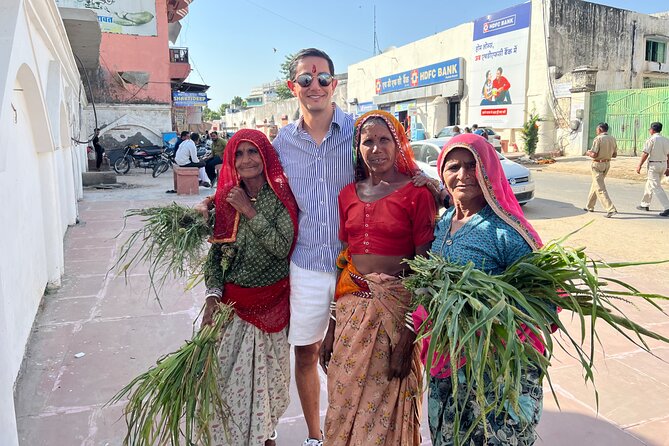
Pushkar’s appeal comes into focus on foot, one shrine and ghat at a time. This small holy town is not just a pretty lake stop: it is a working pilgrimage center where Hindu and Sikh visitors come to pray, bathe, remember family members, and receive blessings. The route links places you could easily miss on your own, from the Sikh gurdwara to the rare Brahma Temple.
I especially like the small group limit of six, which gives you room to ask questions, and the way the tour joins Hindu and Sikh traditions rather than treating Pushkar as a single-faith destination. The included masala chai and malpua, a syrup-coated local pancake, add a welcome taste of everyday Pushkar. One caution: the advertised tour types can overlap, so confirm the exact start time, food, ceremony, and final stops before booking.
Key details before you book
- Pushkar’s rare Brahma Temple: Learn why this is one of the very few important temples dedicated to Lord Brahma.
- Eight spiritual stops: The route includes a Sikh gurdwara, several temples, Pushkar Lake, Brahma Ghat, and Gau Ghat.
- Guides Manish and Vishwanath: Past visitors particularly valued their explanations of religion, ritual, local customs, and Pushkar family traditions.
- A taste of Pushkar: Masala tea is served in a clay cup, with traditional malpua included as the tour refreshment.
- A short but full walking route: The listed stops add up to roughly three hours, though the overall experience may last from one to three hours depending on the version booked.
- Good value at $6.76: Hotel pickup, entrance fees, guiding, and refreshments are included, but optional rituals, extra food, and drinks cost more.
Why Pushkar works best on foot
Pushkar is compact enough to explore by walking, and that is the right way to approach its religious center. You pass from one sacred place to another through streets where temples, shrines, shops, sweet makers, and daily life sit close together.
A vehicle would get you from point to point, but it would miss the links between them. The value here is not grand architecture alone. It is the chance to hear why a ghat matters, why a temple has a certain name, and how different communities use the same town.
The route is also useful for first-time visitors who might feel unsure around worship. Pushkar has active religious sites, not museum displays. Your guide can explain when to remove shoes, where photography may be sensitive, and what a ritual means before you decide if you want to take part.
The tour is advertised with up to ten tour types, so the exact feel can vary. Some versions are presented as morning walks, while others focus on sunset and a fire ceremony. That is the main point to settle before paying. Ask which temples are included, whether breakfast or only tea is planned, and if the route ends at your hotel or in the town center.
More City Highlights Walks in India:
- Berlin City walk Government District and Places of Democracy
★ 4.7 · 8,467 reviews - Historic Charleston Guided Sightseeing Walking Tour
★ 5.0 · 6,216 reviews - Quebec City Walking Tour
★ 5.0 · 4,716 reviews
Starting at Gurudwara Sahib
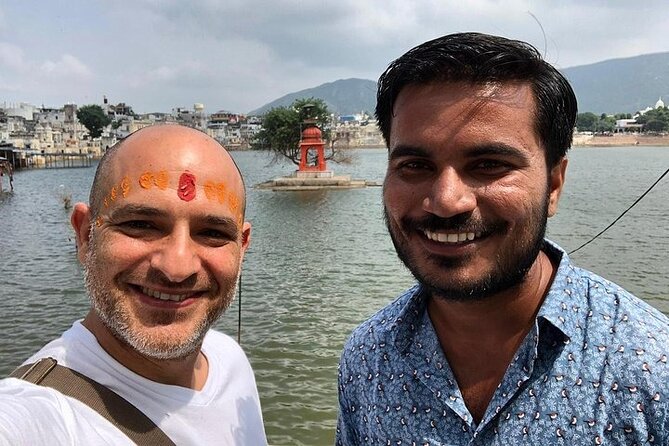
The walk begins at Gurudwara Sahib, a Sikh place of worship. This is an excellent opening because it gives Pushkar a wider religious frame. You learn about Sikh beliefs and why the town matters to the Sikh community before moving into its Hindu temples.
The stop is planned for about 30 minutes and has no admission charge. The guide’s role matters here. Manish is repeatedly praised for explaining religion in clear English, while Vishwanath is known for connecting the town to his Brahmin family, which has lived in Pushkar for seven generations.
This is not simply a quick photo stop. If you are unfamiliar with Sikh customs, use the time to ask practical questions about worship, service, and respectful behavior. The contrast with the Hindu temples later in the walk helps you understand Pushkar as a shared religious town rather than a place with only one tradition.
Varaha Temple and the old stone shrines
Varaha Temple is next, with around 25 minutes set aside for the visit. Varaha is associated with a boar incarnation of Vishnu, and the temple’s heavy stone and plaster construction follows a Rajasthani haveli style.
The earlier temple was said to rise 150 feet, while the present statue was installed in 1784. Details like these give the building a place in time and help you look past the facade. The walled compound also shows how temple architecture can create a separate sacred space within a busy town.
You then visit Old Rangji Temple, also called Rama Vaikuntha Temple. The stop is shorter, about 15 minutes, but it is valued for its workmanship and Rajasthani stone architecture. Since the visit is brief, listen for the guide’s explanation of what makes this temple different from the others rather than expecting a long interior visit.
One practical point: temple visits can be affected by worship, local rules, and the time of day. The supplied details do not promise access to every interior space, so treat the guide’s interpretation and the exterior architecture as important parts of the stop.
Atmateshwar Mahadev, Pushkar’s old Shiva temple
Atmateshwar Mahadev represents Lord Shiva and is described as the oldest Shiva temple in town. The visit lasts about 25 minutes.
The central feature is a statue of Shiva shown with his complete family. That makes this a useful place to ask about family imagery in Hindu worship and how different deities are represented in the town’s shrines.
I like this stop because it adds another major strand to the route. The walk is not built around one famous building. It moves through Sikh, Vishnu, Shiva, and Brahma traditions, giving you a basic map of the religious ideas that shape Pushkar.
If your main interest is architecture, this temple may feel less immediately grand than the Brahma or Rangji stops. Its importance comes more from its local religious role and the explanation you receive than from a single dramatic view.
A few more walking tours around India worth a look
- Fontainhas Heritage Walk by Make It Happen
★ 5.0 · 2,834 reviews - The Great Indian Food Tour: Old Delhi Food and Heritage Walk
★ 5.0 · 1,698 reviews - Group Guided Walking Tour in Fort and Colaba
★ 5.0 · 1,073 reviews - Private Guided Walking Tour in Fort & Colaba
★ 5.0 · 895 reviews
Brahma Temple and the question of one temple
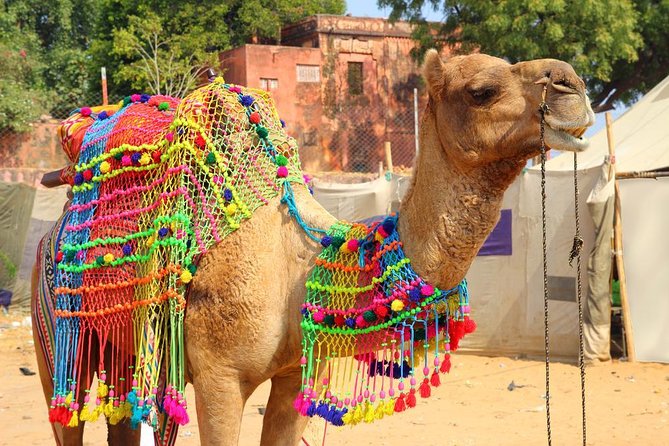
The Brahma Temple is the best-known stop on the route, with about 30 minutes planned. The guide explains why Brahma, a major Hindu deity, has only one prominent temple in the world associated with his worship.
That story is central to Pushkar’s identity, and it is also where a guide can prevent a visit from becoming a quick, confusing walk through a crowded shrine. Ask about the mythology, the temple’s architecture, and the difference between observing a ritual and paying for one.
Optional blessings and ceremonies are not included. You can choose to participate, but you should ask the price and nature of any offering before agreeing. One especially valued part of the experience is the clear explanation given before a blessing ceremony, when available.
Some versions of the tour end near the Brahma Temple, while others continue to Brahma Ghat and additional stops. Confirm this when booking. The distinction matters if the sunset, fire ceremony, or lake portion is the main reason you want to go.
Pushkar Lake and the meaning of the ghats
After the Brahma Temple, the route heads toward Pushkar Lake and Brahma Ghat. The lake is surrounded by bathing steps and prayer spaces, and the guide explains how families come here to pray for happiness and pay tribute to deceased relatives.
Brahma Ghat is also a strong photography stop, though photography should never come before privacy or worship. A calm view can change quickly when a ceremony begins, so keep your camera away if the guide indicates that a ritual is private.
The lake portion gives the tour its emotional center. Temples tell stories through stone and decoration, but the ghats show those beliefs being practiced. You see why Pushkar is important to pilgrims, not simply attractive to sightseers.
Some past participants especially valued an evening version with sunset and a fire ceremony. That experience is not guaranteed on every booking, so check whether you are selecting the morning route, the evening route, or a version that combines the same temple stops with a different time of day.
Chai, malpua, and a rooftop pause
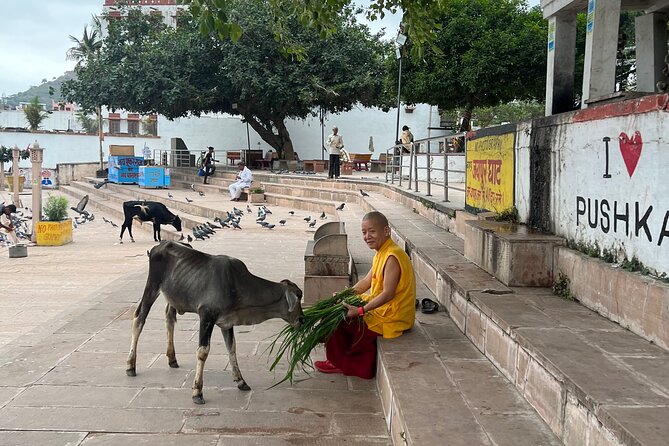
At Brahma Ghat, the route includes a short refreshment stop at Alka Rooftop Restaurant, where you may enjoy a lemon, ginger, and honey drink with a view over the market. The tour also lists masala tea served in a clay cup, flavored with cardamom and ginger.
The traditional food is malpua, a sweet pancake coated in sugar syrup and made with curd, spices, and khoya, then topped with nuts. It is a small serving, not a full meal, but it gives you a direct taste of a familiar Pushkar sweet.
This is where the tour’s wording needs careful attention. Guiding, entrance fees, tea, and malpua are included, but extra food and drinks are not. A separate booking or evening version may offer a different snack or refreshment. If you expect a full breakfast, lunch, or dinner, you will need to budget for it separately.
The rooftop pause is useful after several temples because it gives you a place to sit and orient yourself. It also changes the pace from sacred sites to market life. You can ask the guide about local foods and shopping, but do not assume a shopping excursion or restaurant meal is part of the walk.
Gau Ghat and the end of the route
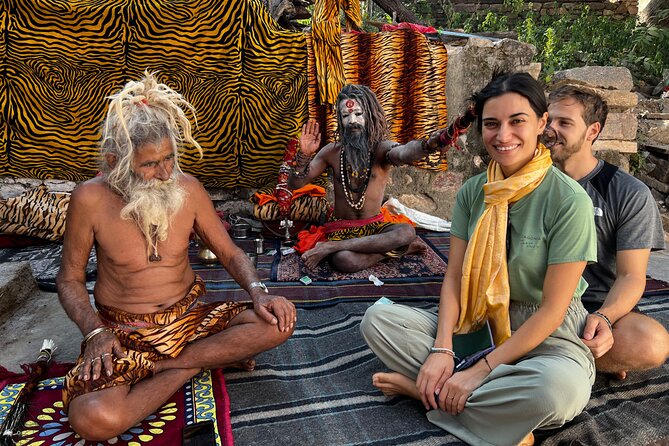
Gau Ghat is described as one of the oldest of Pushkar’s 52 ghats and is also known as Gandhi Ghat. Nearby Halwai Gali is associated with sweet makers and confectioners, giving the final section a more local, food-focused character.
The route information is unclear about whether Gau Ghat is a full on-site visit or a point discussed from nearby. It specifically warns not to go to the listed location, so confirm the meeting point and final stop before setting out. This is a small detail, but it can prevent confusion at the end of a walking tour.
The ghat itself helps explain how Pushkar’s sacred geography works. Different ghats carry different names, associations, and uses. Your guide can connect Gau Ghat with the lake, nearby food streets, and the wider network of pilgrimage places.
Depending on the version you book, the walk may finish here, at Brahma Ghat, or near the Brahma Temple. Hotel pickup and drop-off are listed as included, but one past disagreement centered on whether the return was arranged after the walk. Confirm the drop-off plan in advance, especially if you have a train, bus, or fixed dinner reservation.
What guides Manish and Vishwanath add
The strongest part of this experience is the human explanation. Manish is praised for his English, friendly manner, and ability to explain Hinduism, Sikhism, caste, rituals, and Pushkar’s past without making the walk feel like a lecture.
Vishwanath brings a different strength. His family’s long connection with Pushkar and his Brahmin background give him personal context for local ceremonies and customs. He has also been praised for performing prayers in both Hindi and English at Brahma Ghat when guests choose a ritual experience.
Do keep your questions focused. The tour covers many places in a short time, and the quality of the experience depends on how much time is available at each stop. If you want long architectural study, a specialist temple tour may suit you better. If you want a clear introduction to religion and local practice, this format is a good fit.
The group limit of six is important. It is small enough for questions and easier to manage around temple entrances, though the guide may still need to balance different interests and language levels.
Value, duration, and practical limits
At $6.76 per person, this is unusually inexpensive for a guided city walk that includes hotel pickup, entrance fees, refreshments, taxes, and a small group. The value is strongest if you want orientation and cultural context rather than a polished luxury outing.
The advertised duration ranges from one to three hours, while the listed stop times suggest close to three hours for the full route. That difference likely reflects the various tour versions. Allow extra time if you select an evening option, a ceremony, or a route with more conversation.
Most visitors can participate, and the walk begins near public transport. You should still expect time on foot, temple thresholds, and busy streets. Wear comfortable shoes and clothing suitable for religious sites. Keep optional ritual charges separate from the tour price.
Free cancellation is available until 24 hours before the start time. Changes made inside that window are not accepted, and poor weather may lead to a different date or a full refund. Those rules are simple, but they make it wise to book the walk early in your Pushkar stay, when you still have flexibility.
Who should book the Pushkar Route
Book this experience if you want a low-cost introduction to Pushkar that connects temples, lake rituals, Sikh traditions, and local food. It suits first-time visitors, curious couples, families, and anyone who wants a guide to explain what is happening rather than simply point at buildings.
It is also a strong choice if you are interested in Hindu worship but want clear boundaries around participation. Ceremonies are optional, and the guide can explain them before you decide.
Think twice if you want a full food tour, a long shopping session, or a carefully fixed itinerary with no variation. Breakfast and chai are modest refreshments, not a full meal, and the different route versions can overlap. Confirm the exact stops, timing, ceremony, food, and return arrangement before booking.
For $6.76, the tour offers a lot: a local guide, several important temples, Pushkar Lake, ghats, and a small taste of traditional food. I would choose it for cultural orientation and human stories, then leave room in my schedule to revisit the lake or temple that speaks to me most.
FAQ
How much does the Spiritual City Walking Tour cost?
The listed price is $6.76 per person.
How long does the tour last?
The experience is advertised as lasting approximately one to three hours. The full list of stops suggests that the longest version can take close to three hours.
What places are visited?
The route includes Gurudwara Sahib, Varaha Temple, Old Rangji Temple, Atmateshwar Mahadev Mandir, Brahma Temple, Pushkar Lake, Brahma Ghat, and Gau Ghat.
Are hotel pickup and drop-off included?
Yes. Hotel pickup and drop-off are listed as included. Since the exact ending point can vary by route, confirm the return arrangement when booking.
Is breakfast included?
A traditional malpua and masala tea are listed as included. Additional food and drinks are not included, and the refreshment can vary by tour version.
Are temple entrance fees included?
Yes. Entrance fees are listed as included, along with taxes, handling charges, and guiding fees.
Are religious ceremonies included?
No. Holy rituals and ceremonies that you choose to join are not included in the tour price and may involve an additional charge.
Can I cancel for a full refund?
Yes, if you cancel at least 24 hours before the experience start time. Cancellations made less than 24 hours before the start time are not refundable.
Just added around India
- Evening Walking Tour with Fire Rituals-The Pushkar Route★ 4.9 · 108 reviews
- Chennai Walking Tour ( 2 hours guided tour)★ 3.8 · 85 reviews
- Bangalore: Palace, Temples, Fort & Markets Walking Tour★ 4.9 · 97 reviews
- Agra: Street Food Walking Tour, Spice Market, & Tuk-tuk Ride★ 4.9 · 102 reviews
- Private Guided Walking Tour in Bandra Queen of Suburbs★ 5.0 · 383 reviews
- Breakfast Walk in Old Delhi★ 5.0 · 449 reviews
- Old Delhi Heritage Walking Tour★ 5.0 · 247 reviews
- The Cultural And Historical Walking Tour in Margao★ 5.0 · 280 reviews
City Highlights Walking Tours, compared.

Berlin City walk Government District and Places of Democracy
Read our review →
Historic Charleston Guided Sightseeing Walking Tour
Read our review →

Oxford: University and City Walking Tour with Alumni Guide
Read our review →
City Highlights Temple and Market Walking Tour
Read our review →
A History of Terror – Belfast City Centre Walking Tour
Read our review →Browse the lists this tour appears in