
REVIEW · CHINA
Hong Kong: Kowloon Street Market & Food Culture Walking Tour
Hong Kong’s best food stories often begin away from the famous skyline. This two-hour walk starts at Prince Edward Station and threads through Kowloon’s markets, bakeries, food shops, and everyday streets before ending at Ladies’ Market. You may taste preserved eggs, sausages, fruit, or walnut cookies while learning why Hong Kong imports nearly all its food.
I especially like the six-person maximum, which gives the guide room to answer questions and explain small details you might otherwise miss. I also like that tastings are included, so you can try unfamiliar foods without constantly opening your wallet. The main caution is the pace: the route covers many stops on foot, and one past guest needed a sit-down break during a 2.5-hour outing.
Key points to know before you book
- Food tells the story: The stops connect snacks and ingredients with trade, family customs, climate, post-war life, and Hong Kong’s changing identity.
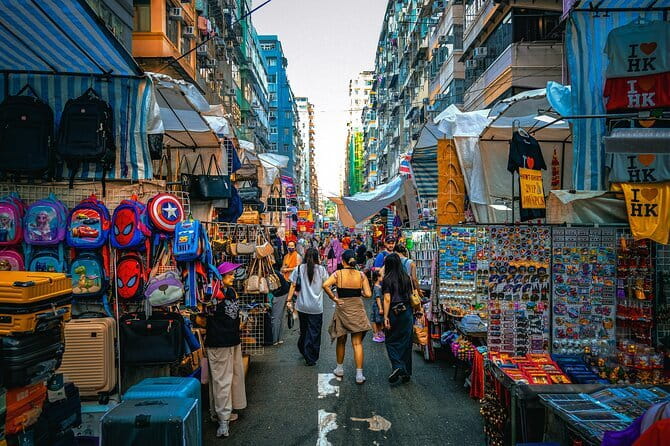
- The route is highly local: Goldfish Street, wet markets, bakeries, preserved-food shops, and paper-offering stores show you parts of Kowloon that are easy to pass without understanding.
- Guides shape the experience: Stephen, Alice, Summer, Michael, and Isaac have led departures, with a strong focus on stories, questions, and personal insight.
- Tastings are part of the price: You do not need to budget separately for the food sampled during the walk.
- The group stays small: A maximum of six people should feel more like a guided neighborhood walk than a large sightseeing group.
- Plan for walking: The tour starts at Prince Edward Station at 3:00 pm and finishes near Mong Kok MTR Station and Ladies’ Market.
From Prince Edward to the everyday Kowloon
This is not a tour built around grand monuments. It is about reading the street in front of you. A goldfish shop becomes a lesson in rents and upstairs businesses. A fruit stall reveals Hong Kong’s dependence on international trade. A bakery connects a simple cookie with family memory.
That approach gives the walk its value. You are not just stopping to eat something. You are learning why that food exists, how it reaches Hong Kong, and what it says about the city.
The route begins at Prince Edward Station, with a 3:00 pm start. It ends at Ladies’ Market on Tung Choi Street, close to Mong Kok MTR Station. That finish is useful: you can continue shopping, find dinner, or take the MTR onward without arranging another transfer.
The advertised duration is about two hours, though the walk can run longer. One reported outing lasted 2.5 hours, so avoid booking a tight dinner reservation immediately afterward. The route includes several short stops, but you are moving between them on city streets rather than sitting in one place.
More Cultural Walking Tours in China:
- Savannah First Squares Culinary & Cultural Walking Food Tour
★ 5.0 · 3,229 reviews - Tokyo Tsukiji Fish Market Food and Culture Walking Tour
★ 5.0 · 3,184 reviews - New Orleans French Quarter, Voodoo and Culture Walking Tour
★ 4.5 · 2,961 reviews
Goldfish Street and the business above the shop
The first stop, Goldfish Street on Tung Choi Street, offers a quick lesson in how Hong Kong adapts to limited space. Goldfish are sold in clear plastic bags, a familiar sight that also points to the city’s commercial instincts.
Here, the guide explains the business behind the display. Some shops have recorded very large sales, while high rents push local companies toward less obvious spaces. The result is an upper level of commerce, with businesses operating above the street-facing shops.
This stop works best if you look beyond the fish. The point is not simply to photograph bags of goldfish. It is to see how a dense city keeps old trades alive while property costs reshape the way those trades operate.
You have only about ten minutes here, so expect a focused explanation rather than a long visit. The stop is free, and no special admission is required.
Fruit at Kiu Ming Mansion and Hong Kong’s imported pantry
At Kiu Ming Mansion, the food story turns from local streets to global supply lines. Hong Kong grows very little of its own food, with agriculture accounting for about 0.1 percent of the territory. Much of the fruit on sale has traveled by air or through tightly managed supply chains.
You may taste fruit that arrived from overseas, including strawberries from Japan. The interesting part is the contrast between the ordinary act of eating fruit and the complex movement required to put it on a Hong Kong shop counter.
I like this stop because it gives you a practical way to understand the city. Hong Kong’s food culture is not only about recipes and cooking methods. It is also about trade, speed, storage, and the city’s ability to bring ingredients from far away.
The stop lasts around ten minutes. If you expect a full fruit tasting session, keep expectations modest. The focus is the explanation and a sample, not a large serving.
Walnut cookies at Ki Tsui Cake Shop
Ki Tsui Cake Shop shifts the mood toward baking and memory. The planned tasting is walnut cookies, a modest snack with a larger role in the story of Hong Kong food.
The guide uses the bakery to explain how familiar treats can preserve cultural memory. You will hear about the way food reflects changes in Hong Kong’s identity, including the shift from older traditions to modern urban life.
This is the kind of stop that rewards curiosity. A cookie may seem simple, but its importance often comes from when people ate it, who bought it, and which family occasions gave it meaning. The guide’s storytelling matters here, and several guides have been praised for making cultural details easy to follow.
The bakery visit takes about ten minutes. It is also a good moment to notice the difference between a guided tasting and simply buying a pastry on your own. You get context, not just calories.
More Market Visits in China:
- Organic Chinese Dumpling Class with Market Walk
★ 5.0 · 88 reviews - Bangkok: City Highlights Temple and Market Walking Tour
★ 4.5 · 3,990 reviews - London Bridge & Borough Market Food Tour with 7 Authentic Dishes
★ 5.0 · 1,972 reviews - Air Raid Shelter + St. Nicholas Market Walking Tour
★ 5.0 · 1,950 reviews
Pat Chun and the taste of post-war Hong Kong
At 136A Fa Yuen Street, the walk introduces Pat Chun, a Hong Kong brand associated with sauces and preserved flavors. The stop focuses on the city’s post-war baby boom and on the idea of edible heritage.
You will learn how a long-running local company has kept its production tied to Hong Kong while resisting a move to made-in-China production. That detail turns a bottle on a shelf into a question about identity, trust, and what it means to preserve a local business.
There may be a tasting here, with the food serving as a direct link to the story. Do not expect a sit-down meal. This is a quick stop designed to help you connect a flavor with a period of social change.
I find this part useful because it avoids treating tradition as something frozen in place. Hong Kong food customs have changed with population growth, commerce, and manufacturing. The tour shows how a business can respond to those pressures while still presenting itself as distinctly Hong Kong.
Mahjong, horse racing, and a local social bargain

The stop near the Hong Kong Jockey Club off-course betting branch on Argyle Street takes the discussion beyond food. It looks at mahjong, horse racing, colonial law, and the way gambling became part of Hong Kong’s public life.
The guide explains how local traditions and colonial rules interacted. In this account, legal gambling did not simply exist for private entertainment. Revenue from the Hong Kong Jockey Club supports public services, creating a distinctive arrangement between leisure and civic funding.
This stop is a good reminder that a food walk can also be a city-culture walk. You are seeing how people spend time, where they gather, and how law shapes ordinary habits.
It is not a food tasting stop in the same way as the bakery or marinated-food shop. If you want nonstop eating, this section may feel like a pause. If you want a better sense of Kowloon life, it adds useful balance.
Preserved eggs and sausages on Canton Road
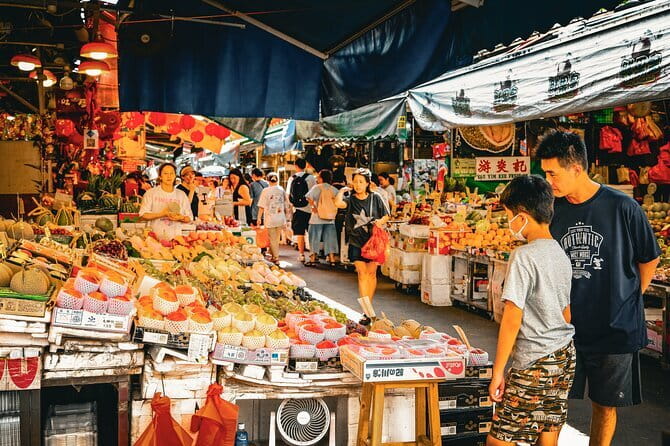
At 1031A Canton Road, a marinated-food shop brings the tour back to the kitchen. The tasting includes preserved eggs and sausages, foods shaped by the need to keep ingredients usable in Hong Kong’s climate.
The guide presents preservation as a form of practical invention. Before modern refrigeration became part of daily life, people needed reliable ways to store meat and eggs. Salting, curing, and other methods turned time and weather from problems into part of the cooking process.
This stop may ask more of your palate than the cookie. If you are cautious with unfamiliar foods, you can take a small taste and ask questions before trying more. That is one reason the small group helps. A guide has room to explain what you are eating instead of rushing everyone through a crowded counter.
The stop also supports one of the tour’s central ideas: local food is often shaped by necessity. Hong Kong cooking is not only about strong flavors. It is about keeping food safe, useful, and enjoyable under real conditions.
Seafood at Lok Yuen House
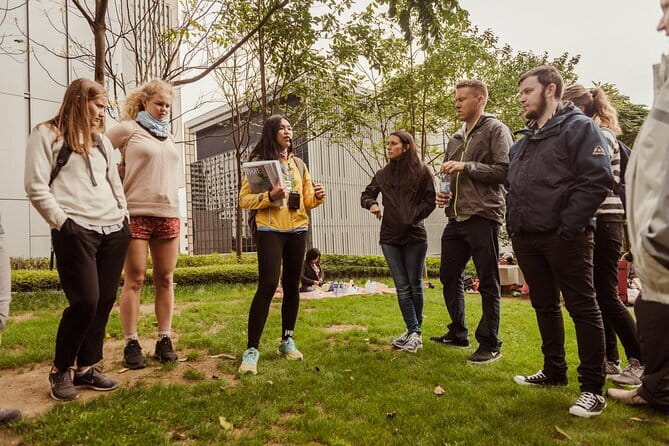
Lok Yuen House introduces the seafood trade. At the seafood shop, you will hear how Hong Kong connects to the wider ocean economy, with ingredients such as Canadian geoduck reaching local stalls quickly.
The point is freshness. The shop represents a preference for bringing seafood to the market fast and preparing it simply, rather than hiding its quality under heavy treatment.
This stop may be more about observation and explanation than a substantial seafood meal. The supplied details do not promise a large seafood tasting, so you should think of it as a look at the trade and the shops that serve it.
Still, it adds range to the walk. You have already seen fruit arrive from Japan and learned about preserved foods made for storage. Here, you see the opposite approach: speed from sea to stall.
Paper offerings and family remembrance
At 1028 to 1036 Canton Road, paper-offering shops show a different kind of food-related culture, one based on family care and ancestor remembrance. Chinese families may burn paper replicas as offerings, including items modeled on modern goods.
The guide explains the clash between this tradition and luxury branding. When Gucci tried to stop shops from producing paper versions of its products, local custom proved stronger than the brand’s legal pressure.
This is one of the route’s more striking cultural stops because it shows tradition responding to modern consumer life. The paper goods are not presented as museum pieces. They are part of a living practice that can copy contemporary objects and adapt to changing ideas of status and care.
You will not find a food tasting here, but the stop helps prevent the tour from becoming a simple snack crawl. It places food within a wider set of family, economic, and spiritual customs.
The walking pace, guide quality, and group size
The quality of this experience depends heavily on the guide. Stephen has been praised for taking people to places they would be unlikely to find alone and for offering detailed insight into each location. Alice has been described as friendly, patient, and enthusiastic about Hong Kong. Summer has handled questions thoughtfully during a longer outing, while Michael has focused on local culture, history, and personal stories. Isaac has also led the food and tradition route.
That range matters because the itinerary has many short stops. A dry explanation could make ten minutes feel long. A strong guide turns each stop into a compact story with a reason to care.
The six-person maximum is another real advantage. You can ask why a shop matters, what an ingredient is, or how a custom fits into modern Hong Kong without shouting over a large group. The format also makes the food tastings easier to manage.
The walk is not described as difficult, but it is still an urban walking tour. You should wear comfortable shoes and allow extra time. If you are 62 or older, have mobility concerns, or simply prefer a slower pace, remember that one outing lasted 2.5 hours and included a need for a seated break. The available information says most people can participate, but it does not promise regular seating.
Is the $32.80 price good value?
At $32.80 per person, the tour sits in a reasonable range for a small-group food walk with a professional local guide and tastings included. You are paying for more than snacks. The price also covers route planning, interpretation, language help, and access to places that are easy to misunderstand when explored alone.
The value is strongest if you want context. You could walk through Mong Kok for free, visit some of the same streets, and buy food as you go. What you would miss is the connection between goldfish shops, imported fruit, preserved foods, betting branches, seafood, and ancestor offerings.
It is less valuable if you want a full meal. The included food consists of tastings and snacks, not a restaurant lunch or dinner. Plan to eat separately before or after, especially if you have a large appetite.
The small group also makes the price easier to justify than a large coach-style outing. You are buying a personal introduction to Kowloon rather than a checklist of major sights.
Who should book this Kowloon walk?
I would choose this tour if you have already seen Hong Kong’s major landmarks and want daily life to take the lead. It suits first-time visitors too, especially if you want a guide to handle navigation and language barriers while you get oriented.
It is a good match for you if you:
- Like trying unfamiliar food in small portions
- Want local markets and shops rather than major attractions
- Enjoy cultural explanations alongside tastings
- Prefer a small group with time for questions
- Want to finish near Mong Kok and continue exploring on your own
I would think twice if you need a sit-down meal, dislike preserved foods, or cannot manage a couple of hours on foot. The tour also depends on decent weather. If poor weather causes cancellation, you are offered another date or a full refund.
Free cancellation is available if you cancel at least 24 hours before the 3:00 pm start. Changes or cancellations inside that window are not accepted for a refund.
My recommendation
Book this tour if you want Hong Kong explained through ordinary shops and everyday food. The strongest parts are the small group, included tastings, and the guides’ ability to connect a snack with trade, family life, business, or local law.
Do not book it expecting a grand food feast or a relaxed café crawl. You will walk, sample small portions, and listen closely. For me, that is the right trade: at a modest price, you get a thoughtful introduction to Kowloon that goes well beyond the usual market photographs.
FAQ
Where does the Hong Kong food tour start?
The tour starts at Prince Edward Station on Prince Edward Road West, Prince Edward, Hong Kong.
Where does the tour finish?
It ends at Ladies’ Market on Tung Choi Street in Mong Kok, near Mong Kok MTR Station.
What time does the tour begin?
The scheduled start time is 3:00 pm.
How long does the tour last?
The stated duration is approximately two hours. One outing lasted 2.5 hours, so it is sensible to allow extra time.
Are food tastings included?
Yes. Snacks and food tastings are included as part of the tour. Anything not specifically mentioned is not included.
How many people can join the tour?
The maximum group size is six people. A professional local guide leads the walk.
More Shopping Tours in China
- Tokyo: Tsukiji Fish Market Food and Walking tour
★ 5.0 · 1,724 reviews - Tokyo: Tsukiji Fish Market Guided Walking Tour
★ 4.9 · 1,397 reviews - Nishiki Market Brunch Walking Tour (7 Tastings + Brunch)
★ 5.0 · 1,355 reviews - Bologna Food & Market Tour with 6 Tastings, Pasta, Wines & More
★ 5.0 · 1,328 reviews
Just added around China
- Full-Day Private Customized Walking Tour of Hong Kong★ 5.0 · 106 reviews
- Dark Side of Hong Kong – Kowloon Caged Homes Walking Tour★ 5.0 · 418 reviews
- Organic Chinese Dumpling Class with Market Walk★ 5.0 · 88 reviews
- Introduction to Hong Kong: Central Tip Based Walking Tour★ 5.0 · 202 reviews
- Beijing City Walk: Explore Hutongs Life and Old Beijing★ 5.0 · 146 reviews
- Forbidden City Private Walking Tour with Optional Sights★ 5.0 · 400 reviews
- Beijing Private Hutong Food Walking Tour★ 5.0 · 299 reviews
- Beijing Walking Food Tour with a Local Friend★ 5.0 · 73 reviews
Cultural Walking Tours, compared.
Savannah First Squares Culinary & Cultural Walking Food Tour
Read our review →
Tokyo Tsukiji Fish Market Food and Culture Walking Tour
Read our review →
New Orleans French Quarter, Voodoo and Culture Walking Tour
Read our review →
Southernmost Food & Cultural Walking Tour by Key West Food Tours
Read our review →
Valletta: Street Food and Culture Walking Tour
Read our review →
Lisbon Roots – Small group Food & Culture Walking Tour w/tastings
Read our review →
Browse the lists this tour appears in