
REVIEW · HELSINKI
Helsinki: Small-Group Walking Tour with City Planner Guide
Helsinki makes more sense when someone explains the city’s odd mix of Russian imperial monuments, Finnish nationalism, Orthodox domes, modern libraries, and quiet public spaces. This three-hour walk with city planner Emek connects those pieces in a way a simple checklist tour cannot. I especially like the open question time and the small group, often no more than six people.
I also like the gentle pace. You stop inside buildings, warm up in winter, and get plenty of chances to look around instead of marching from one sight to the next. The main consideration is distance: you may walk up to 6 kilometers, and the tour runs in rain, snow, and cold, so proper shoes and warm layers matter.
Key points at a glance

- City planning adds a useful angle: Emek explains how Helsinki’s streets, buildings, public spaces, and political history fit together.
- The route covers major central sights: Senate Square, both cathedrals, Market Square, Esplanadi, Central Station, and Oodi are all part of the usual plan.
- Small groups keep the conversation personal: You can ask about Finnish culture, politics, architecture, or daily life without speaking into a microphone.
- The tour links old and new Helsinki: You move from imperial-era landmarks and old burial grounds to Oodi, Amos Rex, and the modern cultural district.
- The pace suits curious first-time visitors: There are frequent stops, indoor visits, and time for explanations rather than a fast march.
- Weather preparation is essential: Bring comfortable shoes, warm clothing, and an umbrella.
Why a city planner makes Helsinki easier to understand
Helsinki is not a city that gives away all its stories at street level. A grand statue in Senate Square, an Orthodox cathedral on a hill, and a modern library may look like unrelated sights. Emek’s city-planning background helps you see how power, religion, geography, and public life shaped the center.
That angle is the best reason to choose this walk over a standard sightseeing circuit. You do not only hear when a building was built. You hear why it sits where it does, how Helsinki developed under outside influence, and how the city works today.
The stories reach from the plague in the Middle Ages to Lenin’s stay in the early 1900s. They also cover Finnish politics, local customs, architecture, and everyday life. You can ask questions as you go, including questions that fall outside the formal route. That flexibility matters if you want practical advice about what to see after the tour or a clearer explanation of Finnish society.
The guide’s style is conversational rather than theatrical. You are not issued headphones or required to follow a flag through a crowd. In a small group, you can hear clearly and stop the guide when something catches your interest.
More Small-Group Walking Tours in the world:
- Amsterdam Anne Frank: Small-Group Walking Tour & Local Guide
★ 4.8 · 12,789 reviews - Boston: Freedom Trail History Small Group Walking Tour
★ 5.0 · 6,450 reviews - Barcelona Tapas and Wine Experience Small-Group Walking Tour
★ 5.0 · 5,804 reviews
Starting at Senate Square and Helsinki Cathedral
The walk usually begins at Aleksanterinkatu 9, at Nanso Kluuvin Kulma. The exact meeting point can depend on the option you book, so check your confirmation before setting out. Starting in or near a café is useful in Helsinki’s colder months, since you are not waiting outdoors at a monument.
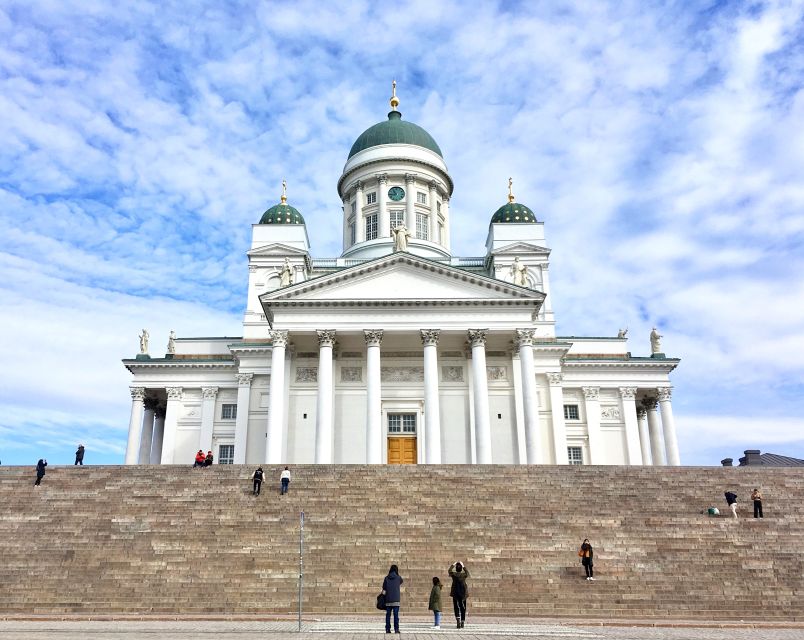
Senate Square is the natural opening scene. Four major buildings frame the space, with Helsinki Cathedral dominating the uphill side. Here, Emek sets up the city’s relationship with Sweden and Russia, the growth of Helsinki as a capital, and the role of architecture in expressing authority.
You spend about 20 minutes at the square, enough time for an explanation and photographs without turning the stop into a long lecture. The square is also where the city’s layered identity becomes clear. The setting feels ordered and ceremonial, yet the stories behind it include foreign rule, political change, religion, and ordinary public life.
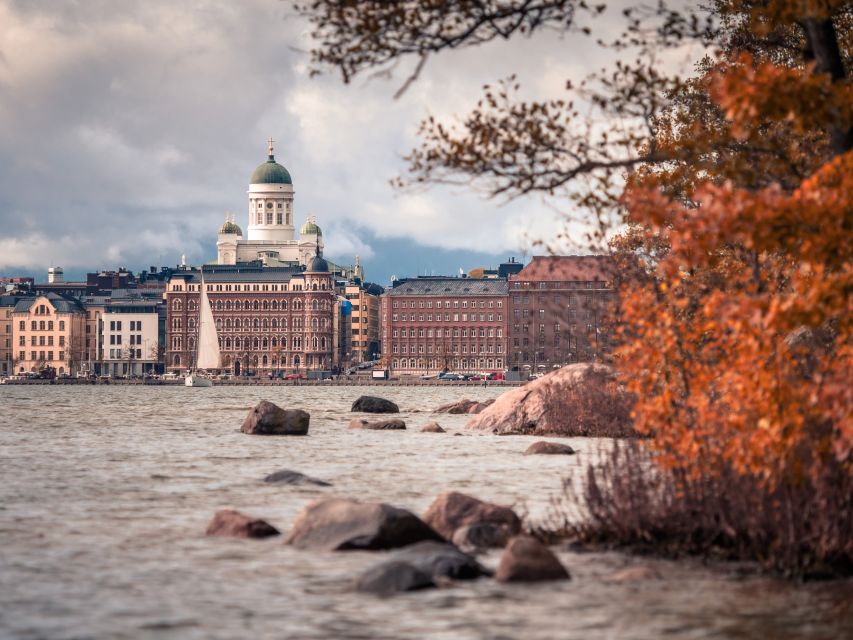
Helsinki Cathedral follows with a shorter visit of about 15 minutes. Its pale exterior and green domes are among the city’s most familiar sights, but a guide can help you read the building as part of the wider square rather than as an isolated church.
The Orthodox cathedral and Helsinki’s eastern ties
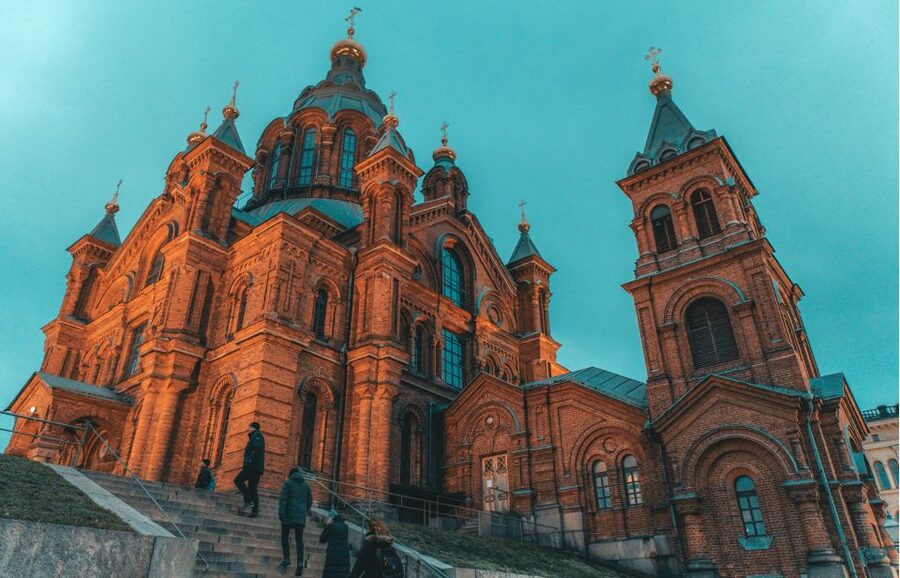
Uspenski Cathedral gives the morning a different tone. Its red-brick walls and onion domes make a sharp contrast with the Lutheran cathedral across the center. The visit lasts about 20 minutes, and this is one of the stops where the guide’s historical and architectural approach pays off.
You learn why an Orthodox cathedral exists in Helsinki and how the city’s past under Russian rule still appears in its buildings. The point is not simply to compare two churches. It is to understand how religion, empire, migration, and national identity have left visible marks on the capital.
The cathedral is also a reminder that Finland’s story is not neatly separate from its neighbors. Swedish and Russian influence appears in language, government, architecture, and public memory. Emek’s explanations connect those influences to modern Finnish life without reducing the country to a simple east-versus-west story.
Presidential Palace, Market Square, and the harbor edge
Next comes the Presidential Palace, usually viewed from outside. You spend roughly 10 minutes passing by and hearing about the building’s political role. This is a useful stop if you want context for Finland’s government and public institutions, but do not expect a palace interior visit.
Market Square brings you closer to everyday Helsinki. The open-air market sits near the harbor, and the stop gives you a chance to see where locals buy food, seasonal produce, and traditional items. The guide can also explain how the square fits into the center’s public life.
A visit to Helsinki Market Hall follows for about 15 minutes. This indoor stop is especially helpful in cold or wet weather. It adds a more grounded food and shopping setting to a route otherwise filled with official buildings, churches, and cultural institutions.
Food and drinks are not included, so you should not count on a meal during the walk. You may have time to buy something, but the tour remains a sightseeing experience rather than a food tour. If you are hungry, eat beforehand or plan a proper stop afterward.
More Guided Tours in the world:
- Magical London: Harry Potter Guided Walking Tour
★ 4.7 · 22,044 reviews - History and Hauntings of Salem Guided Walking Tour
★ 5.0 · 14,564 reviews - Edinburgh: Harry Potter Magical Guided Walking Tour
★ 4.8 · 11,944 reviews - Edinburgh Castle: Guided Walking Tour with Entry Ticket
★ 4.7 · 11,699 reviews
Esplanadi, Runeberg, and the city’s public spaces
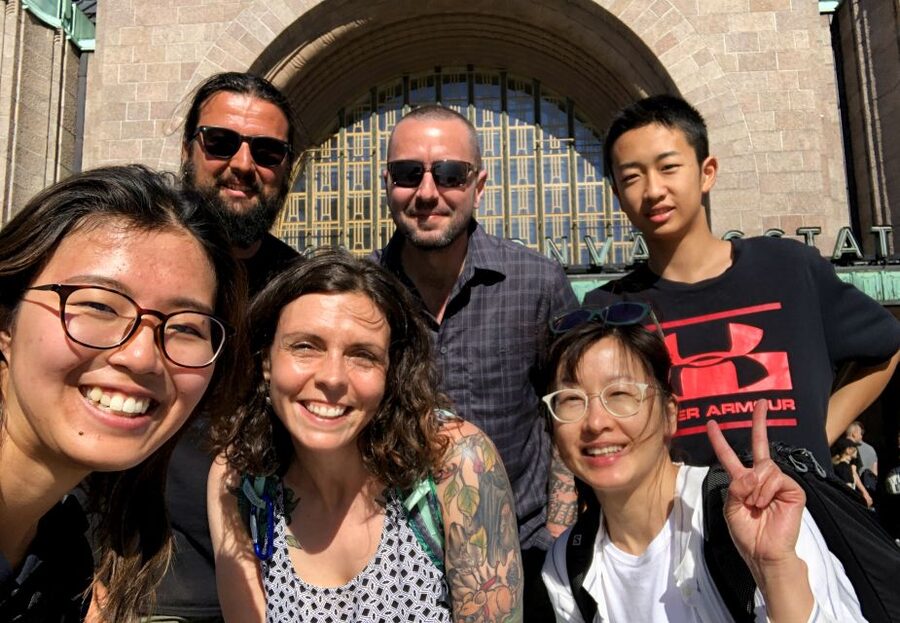
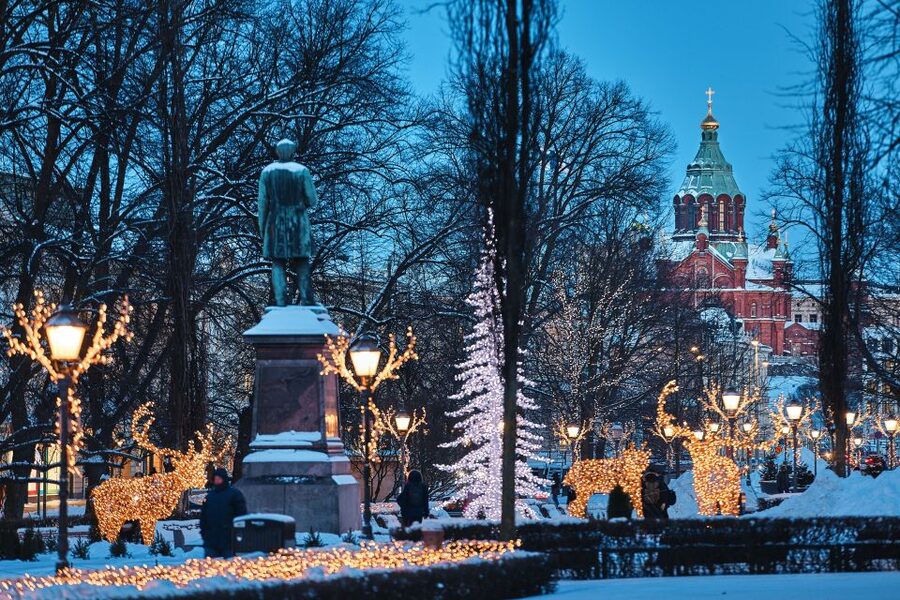
Esplanadi is one of the most pleasant stretches of the route. The park links the formal center with the shopping streets and gives you a view of how Helsinki uses open space. The stop lasts about 15 minutes, enough to discuss the park and its place in city life.
The Johan Ludvig Runeberg monument adds a cultural and national layer. Runeberg is closely tied to Finnish literary and national identity, and the monument helps show how public statues can shape a country’s shared memory.
You also pass the Swedish Theatre. It is a brief stop, around five minutes, but it points to Finland’s Swedish-speaking heritage. Helsinki’s language politics and cultural life are easier to grasp when you see how Swedish institutions sit within the Finnish capital.
One appealing feature of this section is the mix of movement and pauses. You are not confined to a parade of grand facades. Parks, monuments, theaters, and streets show how residents use the city between official landmarks.
Central Station and Helsinki’s modern civic center
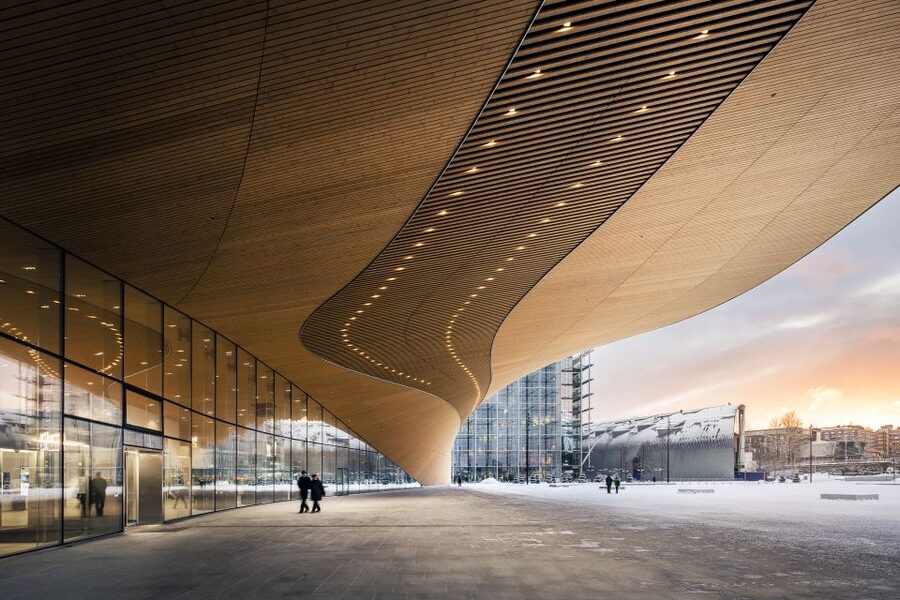
Helsinki Central Station is one of the route’s most useful orientation points. You spend about 15 minutes there, looking at a building that still works as a major transport hub while also serving as a landmark of Finnish architecture.
From here, the route moves toward the contemporary cultural center. You pass Kiasma, the Museum of Contemporary Art, and continue through Kansalaistori, or Citizens’ Square. Musiikkitalo, the concert hall, is also viewed from the outside.
These brief pass-by stops do not offer enough time for a full museum or concert-hall visit. Their value is in the sequence. Helsinki’s modern public architecture is placed beside the older center, showing how the city continues to add new civic spaces rather than freezing its identity in the imperial-era core.
If you are eager to enter Kiasma or Musiikkitalo, plan a separate visit. This tour gives you an introduction, not an admission-based tour of each institution.
Ending inside Oodi, one of Helsinki’s best modern spaces
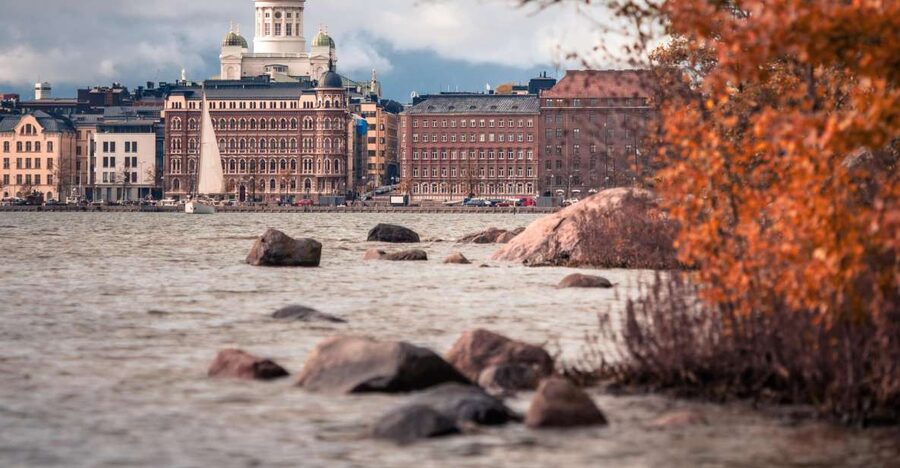
The final major stop is Oodi, Helsinki’s central library. You spend about 20 minutes inside, and it is a smart place to end. Oodi is more than a place to borrow books. It represents Finland’s belief in shared public services, learning, and accessible civic space.
The building also gives you a chance to connect the tour’s main themes. Earlier, you saw power expressed through a cathedral, a palace, and a monumental square. At Oodi, public investment takes a more open and practical form.
The indoor finish is welcome in winter. You can warm up, look at the design, and absorb the contrast between old Helsinki and the city’s current ambitions. Several people who have taken the tour have found the library a particularly strong ending because it brings Finnish daily life into the story.
The walk finishes at Helsinki Central Railway Station. That is convenient if you are catching a train, using public transport, or continuing to explore the center on foot.
What the three-hour pace feels like
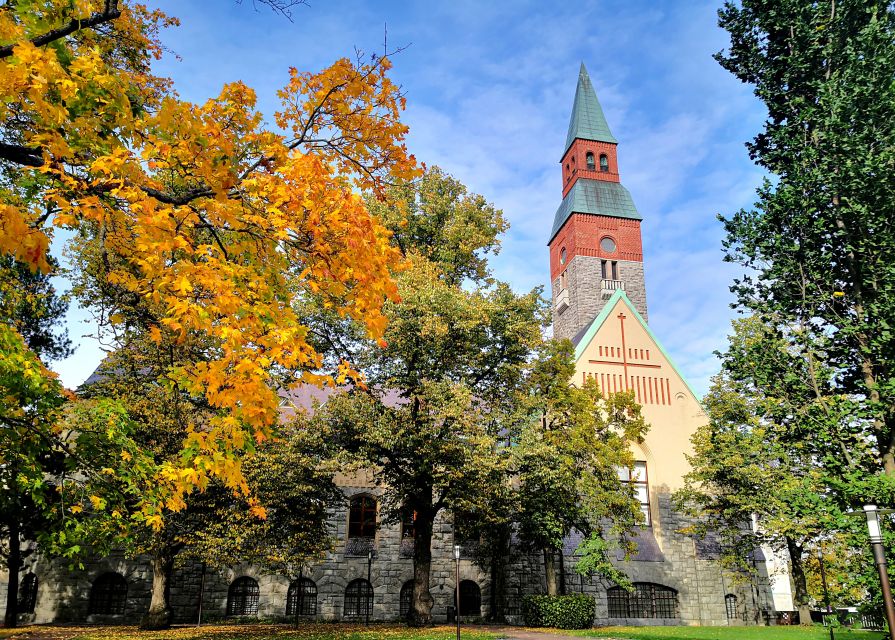
The advertised duration is three hours, with a route of up to 6 kilometers. That sounds substantial, but the walk is broken into many short stops. You pause at squares, churches, parks, markets, and cultural buildings, so it is not a nonstop hike.
One account described walking about 2 miles and found the outing comfortable for a couple in their early 70s. Another described a four-hour experience, which suggests that questions and discussions can sometimes extend the planned time. You should plan for three hours, but avoid scheduling a tight connection immediately afterward.
The route includes both indoor and outdoor time. That is important in Helsinki, where weather can change quickly and winter conditions can be demanding. Wear shoes with good support, bring warm clothing, and carry an umbrella. The tour runs in all weather, and the itinerary can change because of conditions, public holidays, or city events.
The experience is not suitable for wheelchair users. It is also not a hop-on, hop-off tour, and transportation to or from attractions is not included. You move through the city on foot from the meeting point to the railway station.
The value of the $58 price
At $58 per person, this is not the cheapest way to look at Helsinki. It is a reasonable price if you value a small group, a three-hour route, and a guide who can handle detailed questions about architecture, history, politics, and city planning.
The value improves if Helsinki is your first stop in Finland or if your visit is short. In one outing, you get the basic map of the center and a framework for understanding what you see afterward. You may also save time by learning which sights deserve a longer visit on your own.
A large group tour might cost less, but you give up the easy conversation that makes this experience work. A private tour offers more control, but usually at a higher total price. The small-group option sits between the two: personal enough for questions, but shared with a few other people.
Food, drinks, attraction admission, and transport are not included. That keeps the cost focused on the guide and the walking experience. If you want inside access to museums or a full meal, budget separately.
Who will enjoy this Helsinki walking tour
I would choose this for a first visit, a short stay, or the first full day of a longer trip. It gives you a useful overview before you decide which churches, museums, markets, and neighborhoods deserve more time.
It suits people who prefer explanation over speed. You can ask about Finnish customs, local politics, architecture, the city’s past, and current life. Families can also benefit from the flexible style. Emek has been able to keep children involved while still giving adults substantial information.
The tour works well for older walkers who are comfortable covering several kilometers at a relaxed pace. Frequent stops help, but you still need to walk on city streets and remain outdoors in poor weather.
You may want something else if you dislike guided discussion, want to spend long periods inside each attraction, or need a fully accessible route. This is a broad city introduction, not a museum tour, food tour, or private vehicle excursion.
Should you book it?
Book this tour if you want Helsinki explained through its buildings, streets, politics, and public life rather than simply photographed. Emek’s city-planning background gives the walk a clear point of view, while the small group leaves room for real conversation.
I would especially recommend it to first-time visitors, cruise or short-stay visitors, families seeking an adaptable outing, and anyone curious about how Finnish society works. Skip it if you need wheelchair access, dislike walking in uncertain weather, or prefer to explore every sight at your own pace.
The best practical choice is to schedule it early in your Helsinki stay. You finish near Central Station with a stronger sense of direction, a clearer idea of what you have seen, and useful context for the rest of your time in the city.
FAQ
How long is the Helsinki walking tour?
The tour lasts three hours. The route may cover up to 6 kilometers, and discussions can sometimes make the outing last longer.
What language is the tour offered in?
The live tour guide speaks English.
Where does the tour begin?
The meeting point may vary by booking option. One listed starting point is Aleksanterinkatu 9, at Nanso Kluuvin Kulma.
Where does the tour finish?
The tour finishes at Helsinki Central Railway Station.
What sights are included?
The usual route includes Senate Square, Helsinki Cathedral, Uspenski Cathedral, the Presidential Palace, Market Square, Helsinki Market Hall, Esplanadi, the Runeberg monument, Swedish Theatre, Central Station, Kiasma, Kansalaistori, Musiikkitalo, and Oodi.
Is this a private tour or a group tour?
Private and small-group options are available. One small-group format has a maximum of six people.
Are food, drinks, or transportation included?
No. Food and drinks are not included, and transportation to or from attractions is not included.
What should I bring?
Bring comfortable shoes, warm clothing, and an umbrella. Tours take place in rain or shine.
Is the tour wheelchair accessible?
No. The activity is not suitable for wheelchair users.
Just added around the world
- Vatnajökull Glacier Walk from Hali★ 5.0 · 479 reviews
- Old Hobart Pub Walking Tour★ 4.5 · 91 reviews
- Ice Cave and Glacier Walk into Blue Glacier Canyon★ 5.0 · 224 reviews
- Southwest Tasmania Wilderness Experience: Fly Cruise and Walk Including Lunch★ 5.0 · 233 reviews
- Saigon’s Hidden Flavors – Private Street Food Walk with Local Students★ 5.0 · 301 reviews
- Hobart History, People & Places – 2 hour city walk★ 5.0 · 224 reviews
- Vegan Walk Not Just Vegan Food★ 5.0 · 266 reviews
- Ho Chi Minh City: Highlights & Hidden Gems – Free Walking Tour★ 5.0 · 194 reviews
Small-Group Walking Tours, compared.

Amsterdam Anne Frank: Small-Group Walking Tour & Local Guide
Read our review →
Freedom Trail History Small Group Walking Tour
Read our review →
Barcelona Tapas and Wine Experience Small-Group Walking Tour
Read our review →
Reykjavík Small group Walking Tour – by CityWalk
Read our review →

Hidden Alleyways and Historic Sites Small-Group Walking Tour
Read our review →
Old Montreal Small-Group Walking Tour | Max 10 | by MTL Detours
Read our review →Browse the lists this tour appears in