
REVIEW · GERMANY
Frankfurt Highlights English Walking Tour
Frankfurt’s story comes into focus on foot, where imperial coronations, wartime memory, market food, modern towers, and Main River views all fit into one compact route. The walk moves from the cathedral and Römerberg through the rebuilt old town, then adds the Jewish cemetery, city planning model, and Eiserner Steg.
I like the wide historical range, from the Holy Roman Empire to present-day city planning. I also like the local practical advice, including food stops, drink suggestions, bathrooms, and lesser-seen corners. The main consideration is time: three hours can feel long, and some people found the pace quick, with intermittent steps along the way.
Key points to know before you book
- Ten central stops: See the cathedral, Römerberg, New Old Town, Eiserner Steg, Jewish cemetery, and more.
- History with a clear storyline: The route connects medieval Frankfurt, imperial ceremony, wartime memory, and modern urban life.
- Strong guide element: Guides including Hannes, Jennifer, Anna, Anne, Annika, and Philip are praised for clear explanations and lively stories.
- Market access depends on the day: Kleinmarkthalle and the city planning model are not included on Sundays or German holidays.
- Small-group setting: The maximum is 20 people, though some departures have been much smaller.
- Allow two to three hours: The pace is generally manageable, but it may feel demanding if you have back pain or prefer slow walking.
Why this route gives you a useful first look at Frankfurt
Frankfurt can seem like a city of banks and glass towers when you first arrive. This walk corrects that first impression quickly. You spend much of the time in the historic center, where the guide explains how Frankfurt became a place of trade, imperial ceremony, religious life, destruction, rebuilding, and modern finance.
The route is especially useful because it does not stop at postcard sights. You see the familiar Römer and cathedral, but also the Old Jewish Cemetery, the Staufenmauer, the Carmelite monastery, and the city planning department’s large model of Frankfurt.
I like that balance. You get the obvious sights you would want to check off, but you also get details that are easy to miss on your own. The guides are expected to explain the city in plain English, and the strongest departures add stories about wine, art, architecture, daily life, food, and the Holy Roman Empire.
The tour is offered at 10 a.m. and costs $36.28 per person. That is a fair price if you want three hours of orientation and historical context rather than simply a quick photo walk. It also gives you ideas for the rest of your stay. Several guides have offered suggestions for meals, drinks, museums, and free places to visit.
A few more walking tours around Germany worth a look
- Discover Berlin Half-Day Walking Tour
★ 5.0 · 9,624 reviews - Berlin City walk Government District and Places of Democracy
★ 4.7 · 8,467 reviews - Berlin: Third Reich & Cold War Guided Walking Tour
★ 4.9 · 8,378 reviews
Starting at Frankfurt Cathedral and Römerberg
The meeting point is Braubachstraße 41, in the central old town. Arrive early and use the written address rather than relying only on the map pin. One person missed the tour after finding that the map pointer was about a block away from the printed address, a particularly frustrating problem in rainy or snowy weather.
Frankfurt Cathedral, or the Kaiserdom, is the natural place to begin. It was the imperial church where Holy Roman Emperors were elected and crowned. The guide uses the exterior to explain the church’s role and Frankfurt’s place in European politics.
On Sundays, the cathedral is exterior only. That is worth knowing before you book, since the tour still visits the area but the inside is not part of the Sunday experience.
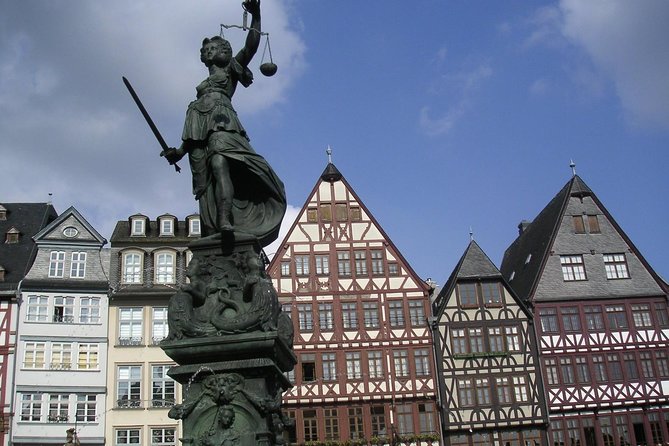
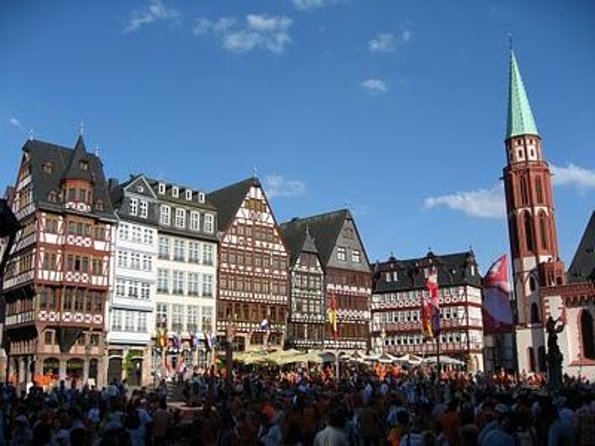
From there, the group moves to Römerberg, Frankfurt’s best-known historic square. You see the Römer city hall, the Justicia statue, and the Book Burning Memorial. The guide explains how the square functioned as a civic and political center, while also placing the memorial in the larger story of censorship and persecution.
The stop lasts about 15 minutes, so expect focused commentary rather than a long visit inside a building. The value is in knowing what you are looking at. Without that background, the ornate façades and statues can seem like a pleasant but disconnected old-town scene.
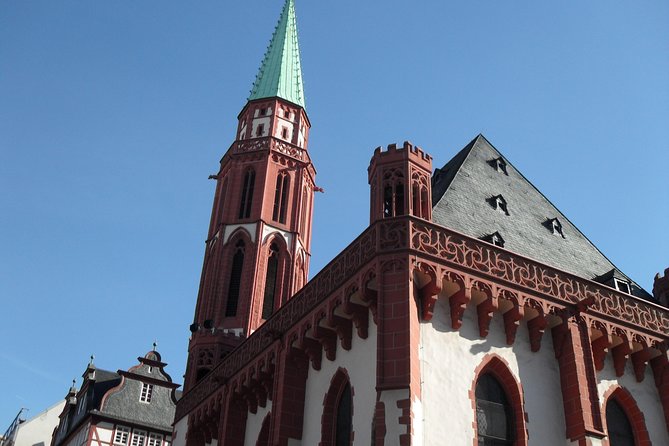
The Old Nicholas Church follows. This is one of Frankfurt’s oldest churches, and its position near Römerberg makes it an easy stop on the walking route. Again, Sunday visitors see the exterior only.
Carmelite paintings and the small details of old Frankfurt
At Karmeliterkloster, the focus shifts from imperial ceremony to art and religious life. The wall paintings date from 1513 to 1521, giving you a direct link to the early sixteenth century.
This is the sort of stop that benefits from a guide. A casual walk might take you past the monastery without much thought. With an explanation of the paintings and their period, the building becomes part of Frankfurt’s larger story rather than just another old façade.
The route is not a nonstop march. Guides have included short pauses, snack stops, and bathroom breaks, which matter on a three-hour walk. You should still wear comfortable shoes and dress for the weather. The itinerary includes intermittent steps, even though the overall route is described as stroller-friendly.
That combination means the walk is broadly accessible, but not perfectly flat or effortless. If you use a stroller, have back pain, or walk slowly, tell the guide early. The guides have been described as considerate and willing to check on people in the group, but the pace can vary by departure.
Kleinmarkthalle: a useful food stop, not just a photo stop
Kleinmarkthalle is one of the most practical stops on the route. This indoor market sells produce, chocolate, cheeses, meats, pastries, and more. The guide can help you understand what you are seeing and may point out foods and drinks worth trying during your stay.
The market is not open as part of this tour on Sundays or German holidays. That changes the rhythm of the route, so do not count on a market visit if you book one of those days.
I like this stop because it connects sightseeing with daily life. You are not only looking at restored buildings. You are also seeing where people shop and where you can return later for a snack or a casual meal.
Fifteen minutes is enough for an introduction, but not a full market meal. If food is one of your main reasons for booking, think of Kleinmarkthalle as a preview rather than the centerpiece.
Same streets, a different route:
- Munich: Third Reich & WWII Walking Tour
★ 4.6 · 6,181 reviews - Berlin: Discover Berlin Walking Tour
★ 4.9 · 5,998 reviews - Berlin’s Best: 2 Hour Walking Tour Third Reich and the Cold War
★ 5.0 · 5,486 reviews - Berlin: Hidden Backyards Guided Walking Tour
★ 4.8 · 5,360 reviews
Frankfurt’s Jewish past at the cemetery and medieval wall
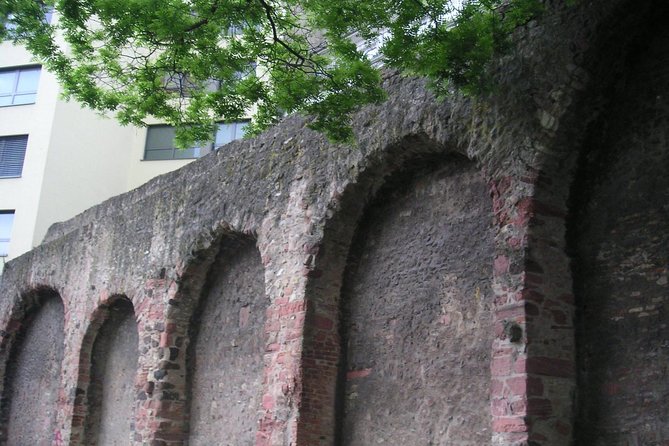
The Old Jewish Cemetery is one of the most serious stops. The guide explains Frankfurt’s Jewish community, which has been present since the 1100s, along with the medieval Jewish ghetto.
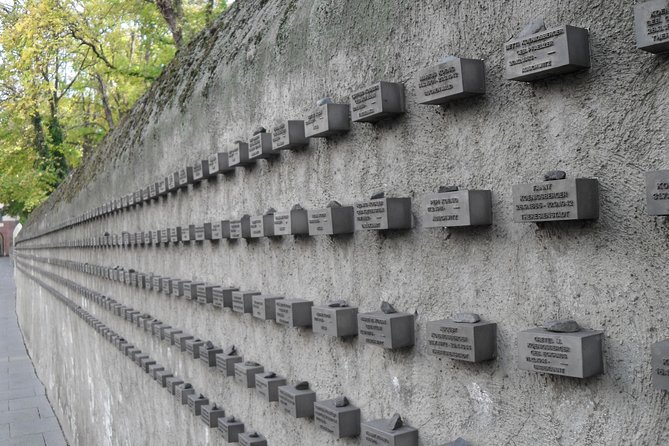
The cemetery is viewed through the gate. You do not walk through the grounds, but the surrounding Holocaust Remembrance Wall and the visible stones create a powerful setting. Allow about 30 minutes here, making it one of the longest stops on the route.
This part gives the tour moral weight. Frankfurt’s story is not only about emperors, trade, architecture, and reconstruction. It also includes a Jewish community with centuries of history and the catastrophe of the Holocaust. A good guide can connect those periods without reducing them to a list of dates.
The Staufenmauer later adds another piece of the medieval city. This section of city wall dates from the 1100s and was also part of the medieval Jewish wall. Seeing it after the cemetery helps you understand how neighborhoods, defenses, and religious communities fit within the old city.
Expect this portion to be reflective rather than light entertainment. That is a strength, but it may not suit someone seeking only cheerful sightseeing.
The city planning model and Frankfurt’s modern face
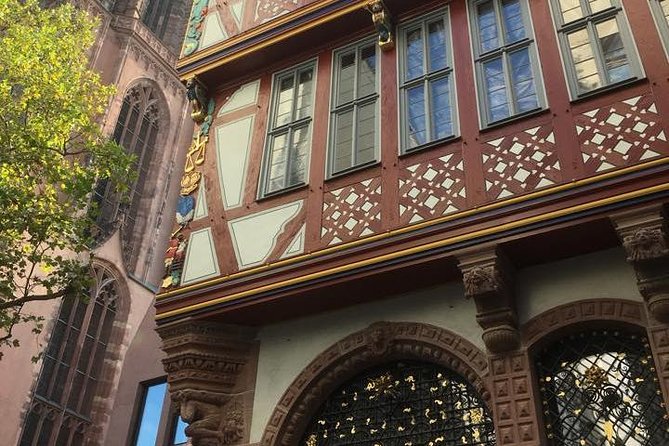
At the Stadtplanungsamt, you see a large scale model of present-day Frankfurt. This stop is not available on weekends or German holidays.
The model helps explain the city beyond the old center. Frankfurt is a modern financial and business hub, and the planning model lets the guide discuss how the city is shaped today. It also gives you a visual bridge between the medieval streets you have walked and the newer districts visible from the river.
This is an unusual inclusion for a basic city walk. Many tours stop once the old buildings have been covered. Here, the guide shows you that Frankfurt is still changing, with decisions about buildings, streets, housing, and public space affecting daily life.
If you book on a weekend, the guide must adjust the route because the planning department is closed. The tour remains worthwhile, but you should expect a slightly different sequence or explanation.
The New Old Town and the former coronation path
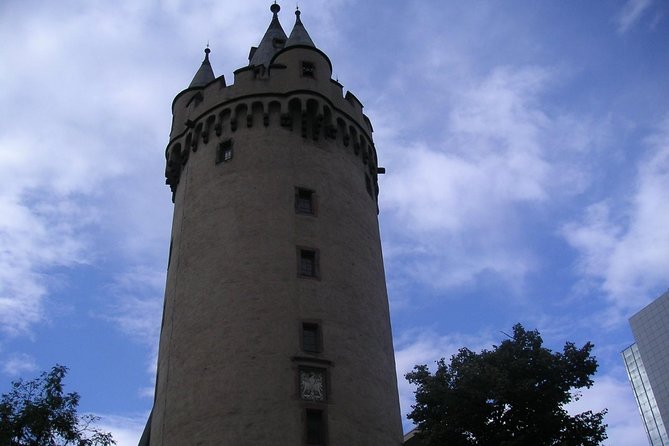
The New Old Town is one of the most interesting parts of the walk because it raises a basic question: what does an old town mean when much of it has been rebuilt?
You walk through the area and along the former coronation path used by Holy Roman Emperors. The guide connects the restored or reconstructed streets with the ceremonial route, helping you see the area as more than a collection of attractive façades.
This is also where Frankfurt’s complicated relationship with memory becomes clear. The city has preserved historic forms while rebuilding much of the center after wartime destruction. I find that context more useful than simply hearing that a neighborhood is old.
The stop lasts about 20 minutes. You have time to look around, but the guide’s explanation is the main event. If you want detailed interior visits, museum time, or long photo breaks, you will need to return later on your own.
Eiserner Steg and the final Main River views
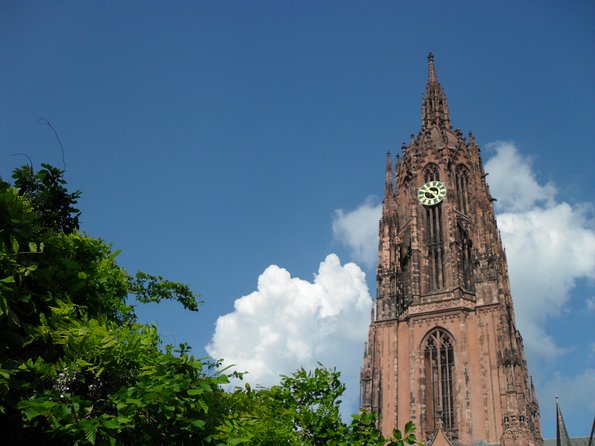
The Eiserner Steg, also called the Love-lock Bridge, provides the tour’s broadest views. From the bridge, you can see both sides of the Main, including the European Central Bank, the museum riverbank, and Sachsenhausen.
It is a good late-tour position because you can place the city’s parts in relation to one another. The old center is behind you, the river separates Frankfurt’s districts, and the skyline shows the city’s modern role.
The bridge stop lasts about 10 minutes. It is short, but the views add variety after several historic streets and buildings. Bring a coat in cooler weather, since an exposed bridge can feel colder than the sheltered old town.
The walk ends back at the starting point. That makes the tour easy to fit into a day of sightseeing, though you should not plan a tight train connection immediately afterward. The advertised duration is two to three hours, and the length depends on the group, pace, questions, and daily closures.
How the guides shape the experience
The biggest strength here is the guide rather than any single monument. Hannes is praised for answering questions beyond a memorized script and for connecting Roman-era references, medieval Frankfurt, and modern life. Jennifer is described as funny, interactive, and able to keep attention for the full three hours.
Anne, Anna, Annika, Anika, and Philip are also named as guides who offer clear historical explanations and useful food and drink advice. Since guide assignments can change, you should not book expecting one particular person unless the operator confirms it.
The best version of this tour feels like a conversation with a well-prepared local. You get dates and names, but also explanations of why a street, church, wall, or memorial matters. Guides have handled cold, rain, and Sunday closures by adjusting the route and keeping the group moving.
The tradeoff is that the experience depends on the individual guide and group pace. Some people found three hours passed quickly because the stories were engaging. Others found the pace fast or the full duration tiring, especially older participants or anyone dealing with back pain.
Price, group size, and who should book
At $36.28, this is good value if you want a solid first orientation to Frankfurt. Ten stops, a local English-speaking guide, historical context, and practical recommendations would cost more to assemble through separate paid attractions, even though the tour itself includes no admission tickets.
The maximum group size is 20. That is small enough for questions and easier listening than a large coach tour. Some departures have been as small as nine people, though you should plan for the full maximum.
This tour suits you best if:
- You have only a day or two in Frankfurt.
- You want history explained rather than just photographed.
- You enjoy a mix of famous sights and less obvious stops.
- You want food, drink, and free-activity suggestions from a local guide.
- You can comfortably walk for two to three hours.
- You prefer English commentary and a morning start.
You may want another option if you need a very slow pace, a fully step-free route, or extensive indoor visits. It is also less complete on Sundays and German holidays because the cathedral and Old Nicholas Church are exterior-only, while Kleinmarkthalle and the city planning model are unavailable.
Free cancellation is available up to 24 hours before the 10 a.m. start time. Changes or cancellations made within that final 24-hour period are not accepted for a refund.
Should you book the Frankfurt Highlights walk?
Book it if you want Frankfurt to make sense quickly. The route links the cathedral, Römerberg, medieval walls, Jewish history, rebuilt old town, market culture, modern planning, and river views into one coherent morning.
The two things to check are the day and your walking comfort. Choose a weekday if Kleinmarkthalle and the city planning model matter to you, and allow the full three hours rather than treating this as a quick stroll.
For most first-time visitors, I would book this as an opening activity. It gives you the background to return to the places that catch your interest, while the guides’ practical suggestions help you use the rest of your time in Frankfurt well.
FAQ
How much does the Frankfurt Highlights English Walking Tour cost?
The listed price is $36.28 per person.
How long does the walking tour last?
The tour lasts approximately two to three hours.
Where does the tour start and finish?
It starts at Braubachstraße 41, 60311 Frankfurt am Main, Germany, at 10 a.m. The tour ends back at the meeting point.
Is the tour offered in English?
Yes. The tour is offered in English and includes a mobile ticket.
What happens on Sundays and German holidays?
Frankfurt Cathedral and the Old Nicholas Church are exterior-only on Sundays. Kleinmarkthalle and the city planning department’s scale model are not included on Sundays or German holidays.
How large is the group?
The maximum group size is 20 people.
Can I cancel for a refund?
Yes. You can cancel at least 24 hours before the start time for a full refund. Cancellations or changes made less than 24 hours before the start time are not accepted for a refund.
Just added around Germany
- Hamburg: Guided Port Walk for Families★ 4.6 · 191 reviews
- East Berlin and the Wall: Walking Tour★ 4.9 · 407 reviews
- Dresden: Shared Small Group Walking Tour in English★ 4.8 · 172 reviews
- Dresden: Taste of Dresden Food Walk★ 4.6 · 397 reviews
- Dresden: Private Guided Walking Tour★ 4.5 · 81 reviews
- Dresden: Guided City Walk and Panometer Entrance Ticket★ 4.5 · 176 reviews
- Dresden Old Town – Guided Walking Tour in English★ 4.8 · 135 reviews
- Dresden: Neustadt District Street Art Guided Walking Tour★ 4.3 · 333 reviews
Walking Tours, compared.

Magical London: Harry Potter Guided Walking Tour
Read our review →
Reykjavik Food Walk – Local Foodie Adventure in Iceland
Read our review →
History and Hauntings of Salem Guided Walking Tour
Read our review →
New Orleans Premier Ghost, Voodoo and Vampire Walking Tour
Read our review →
Amsterdam Anne Frank: Small-Group Walking Tour & Local Guide
Read our review →

Edinburgh Castle: Guided Walking Tour with Entry Ticket
Read our review →
Anne Frank’s Story – Guided Walking Tour through Amsterdam
Read our review →Browse the lists this tour appears in