
REVIEW · BERLIN
Berlin: Hidden Backyards Guided Walking Tour
Berlin’s best urban surprises often sit behind an ordinary doorway. This two-hour walk through Spandauer Vorstadt leads you into courtyards where artists work, residents pass through, and ivy softens old walls. It also explains how the district grew around the New Synagogue and changed into one of Mitte’s most international quarters.
I like the small-scale history, which connects architecture with Jewish life, industry, housing, and Berlin’s creative scene. I also like the excellent guides, especially Nick, Nicolas, Susanne, Lydia, and Alex, who are repeatedly praised for making complicated local history easy to follow.
The main caution is language. The activity is offered in English and German, but some departures have been conducted only in German. Confirm your preferred language before booking, especially if the historical explanation is the main reason you are coming.
Key points at a glance
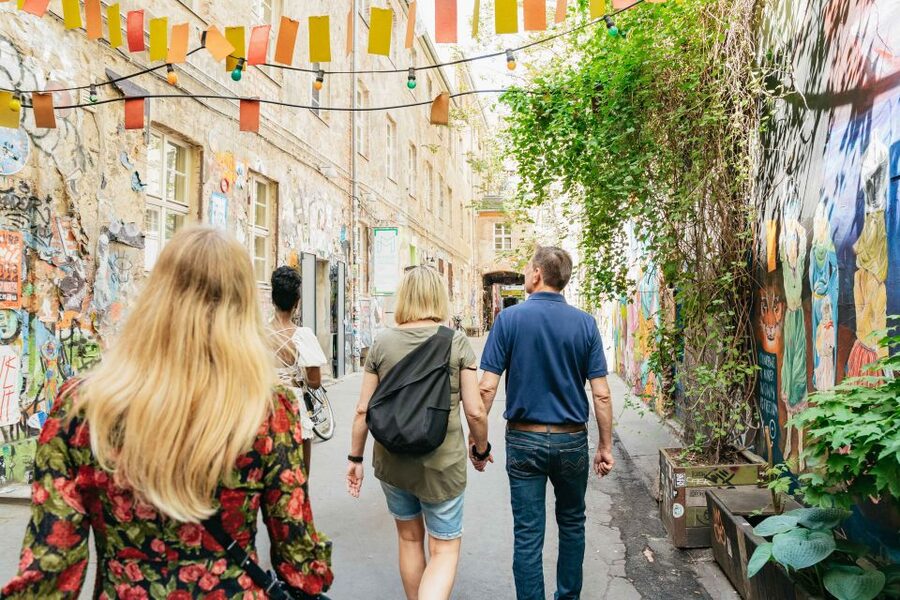
- A doorway-level view of Berlin: Walk through courtyards and passageways that are easy to miss from the street.
- Haus Schwarzenberg: See an old courtyard now filled with art studios, creative spaces, and street art.
- Jewish Berlin in context: Learn how the area around the New Synagogue became a center of Jewish life.
- Hackesche Höfe and Heckmann Höfe: Compare two very different courtyard complexes, from polished architecture to a more informal artistic atmosphere.
- A gentle two-hour route: The walk covers several stops at an easy pace, with no food or drink included.
- Good value at $23: You are paying for access, explanation, and local context rather than admission to a major monument.
Why Berlin’s courtyards tell a better story
Berlin is easy to read from its grand sights: the Brandenburg Gate, Museum Island, the Reichstag. But those places explain the city in broad strokes. The courtyards of Mitte show how Berlin functioned at street level.
The Spandauer Vorstadt developed through layers of housing, commerce, religious life, workshops, and later creative work. A narrow entrance from a busy street can lead to a space that feels calmer, older, and more personal. That change in mood is the point of the tour.
I like this route because it does not treat architecture as decoration. Your guide explains how buildings were used and how the district changed over time. You hear about the area’s Jewish traditions, the development of the quarter, and the shift toward a fashionable, international neighborhood.
The walk is also useful if you have already seen Berlin’s main sights. It gives you a different way to understand the city, based on courtyards, back entrances, old facades, and the daily life that took place behind the main street.
More Guided Tours in Berlin:
- Berlin: Third Reich & Cold War Guided Walking Tour
★ 4.9 · 8,378 reviews - Berlin: City Street Art Guided Walking Tour
★ 4.8 · 1,051 reviews - Berlin: History of the Third Reich Guided Walking Tour
★ 4.7 · 791 reviews
Meeting at Hackescher Markt
The tour begins in front of the Butler’s shop at Hackescher Markt 4. This is a central meeting point, but give yourself a little time to identify the correct shop and find your guide.
From there, the group heads into Berlin-Mitte and the Spandauer Vorstadt. The route finishes near Oranienburger Straße, with two possible drop-off points listed in the tour details. That makes it easy to continue toward the New Synagogue area, cafés, shops, or nearby sights after the walk.
The two-hour length is well judged. There is enough time for several courtyards and a useful explanation of the district, but not so much that the walk becomes tiring. You should still wear comfortable shoes. This is an easy city walk, not a hike, but you will be standing and moving for the full tour.
Haus Schwarzenberg and Berlin’s creative side
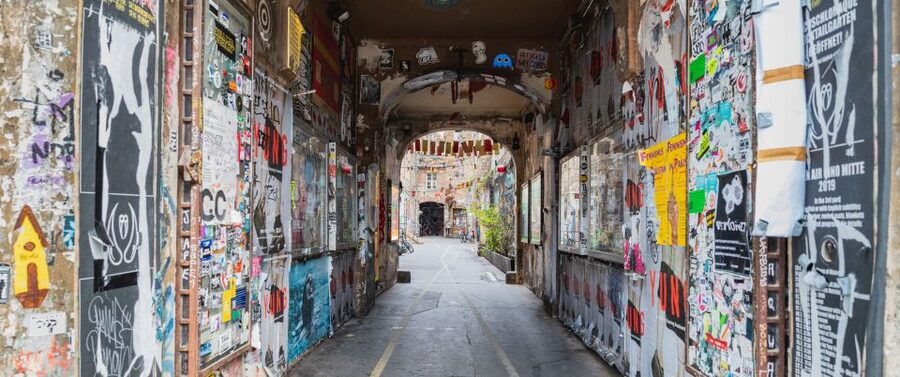
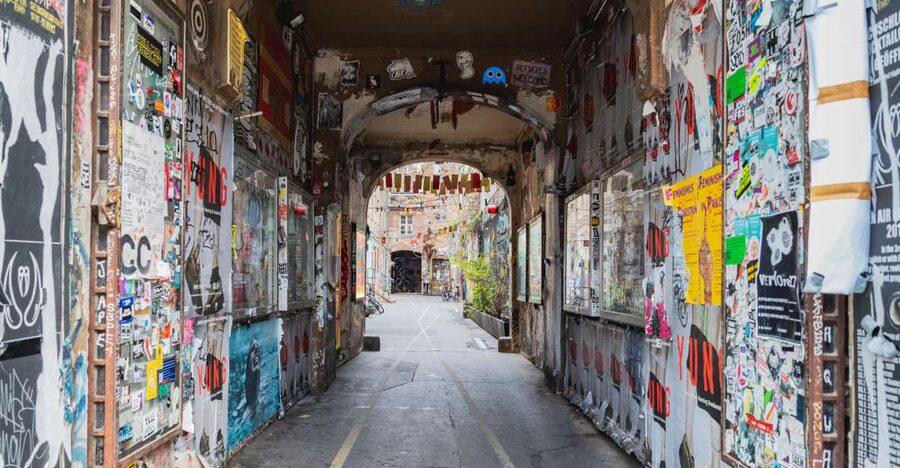
Haus Schwarzenberg is one of the most memorable stops. This courtyard has an aged, rough-edged character that feels very different from the tidier commercial courtyards nearby.
Its walls are covered with street art, and the buildings now contain art studios and other creative spaces. The appeal is not polished beauty. It is the sense that the place has been reused rather than scrubbed clean. The courtyard shows how older urban spaces can survive by taking on new roles.
Your guide also explains the different functions the buildings have had over the years. That detail matters. Instead of simply seeing murals and old brickwork, you begin to understand the courtyard as part of Berlin’s changing social and economic story.
I would pay close attention here if you enjoy street art, adaptive reuse, or Berlin’s alternative culture. The stop is also a good reminder that the city’s creative identity did not come from one grand cultural project. It grew in overlooked spaces such as this.
Hackesche Höfe, polished and popular
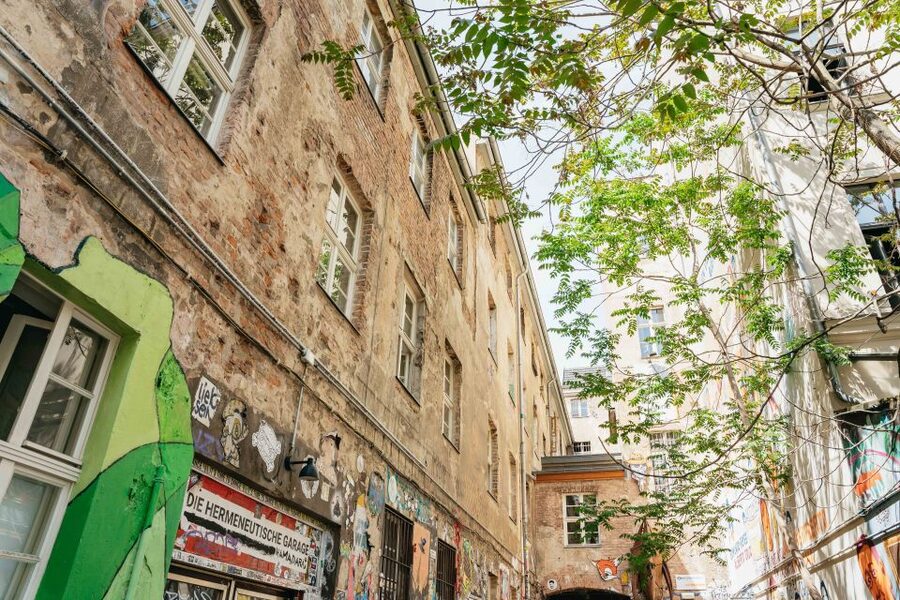
Hackesche Höfe offers a sharp contrast. This courtyard complex is more orderly and architectural, with a style that many visitors associate with central Berlin’s early 20th-century urban design.
The tour places the courtyards in their neighborhood setting rather than presenting them as a stand-alone photo stop. You see how a series of connected inner spaces could hold shops, workshops, homes, and social activity away from the main road.
This is one of the more recognizable stops, so it can be busier than the smaller courtyards. That is not a flaw, but it does mean the atmosphere may be less quiet. Your guide’s role is especially useful here, since the visual details alone do not explain how the complex fits into the district’s wider story.
If you are visiting Hackesche Höfe independently, you can see the architecture. With the tour, you get a clearer sense of why these courtyards matter and how they relate to the surrounding streets.
A few more walking tours around Berlin worth a look
- Discover Berlin Half-Day Walking Tour
★ 5.0 · 9,624 reviews - Berlin City walk Government District and Places of Democracy
★ 4.7 · 8,467 reviews - Berlin: Discover Berlin Walking Tour
★ 4.9 · 5,998 reviews - Berlin’s Best: 2 Hour Walking Tour Third Reich and the Cold War
★ 5.0 · 5,486 reviews
Rosenhöfe and the details between major stops
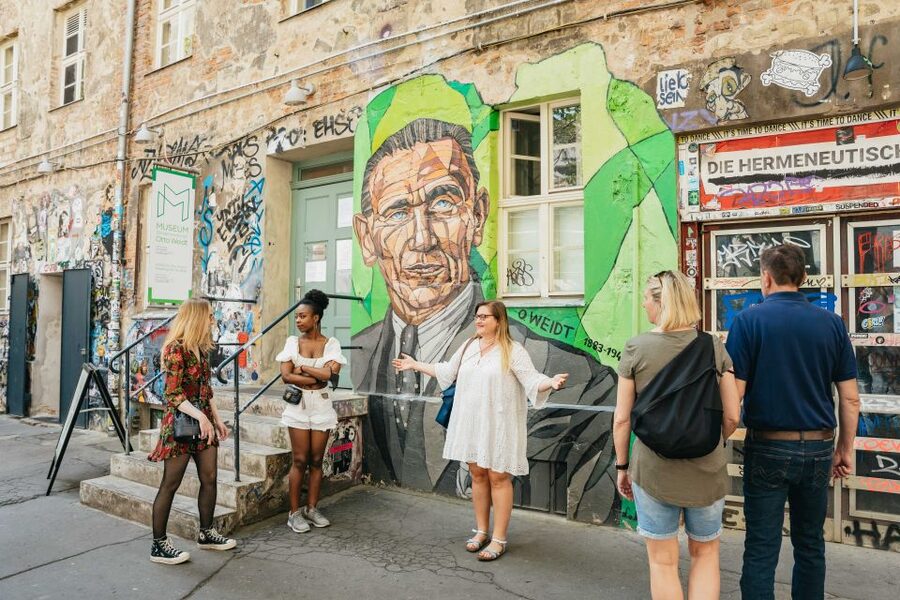
Rosenhöfe is part of the route’s quieter rhythm. The appeal of this stop is not only one famous building. It is the sequence of spaces and the way the guide connects them.
The walk gives you time to notice entrances, courtyards, building fronts, and passageways that you might otherwise pass without a thought. Berlin often rewards slow looking. A small doorway or decorated facade can tell you as much about a neighborhood as a large public monument.
This is also where a good guide makes a real difference. Nick has been praised for explaining local history with energy and clarity, while Nicolas has been described as informal and friendly. Other guides, including Susanne, Lydia, Alex, and Minit, have also led this route. The experience can therefore depend partly on who is assigned that day, but the strongest feedback consistently points to guides who connect facts with stories.
Sophienkirche and the Jewish quarter

The stop at Sophienkirche adds another layer to the route. The church helps place the courtyards within the wider religious and architectural setting of the neighborhood.
From here, the route continues along Auguststraße and through the area around the New Synagogue. This is an important part of the walk because the district’s Jewish history is not treated as a detached topic. It is connected to the streets, buildings, and institutions around you.
You learn how the area became a center of Jewish life and how that identity was transformed over time. The tour also includes unusual details, such as the story of the first female rabbi, according to one account of the route. Details like this give the history a human scale.
The treatment appears to be broader than a single memorial stop. You get a sense of the neighborhood as a living part of Berlin, shaped by religious communities, social change, war, division, redevelopment, and today’s international culture. If you want a full tour of Jewish Berlin, this is not enough by itself. If you want a compact introduction tied to the physical neighborhood, it is a useful choice.
Heckmann Höfe, a leafy pause in Mitte
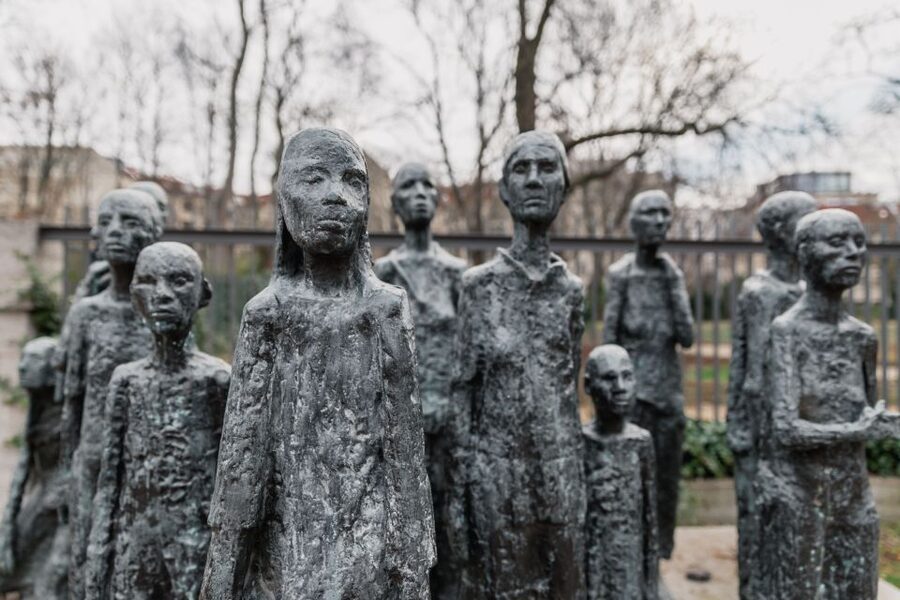
Heckmann Höfe provides one of the route’s most pleasant changes of pace. The courtyard is colorful, with trees, ivy-lined buildings, and a calmer feeling than the busy streets outside.
It dates to the 19th century and now works as a local meeting place with shops, creative activity, and room to pause. The courtyard feels less like a formal monument and more like a functioning urban space.
That distinction is important. You are not just looking at an old facade. You are seeing how an inner courtyard can offer relief from traffic and commercial streets while still serving as part of the neighborhood.
The tour does not include food or drinks, so do not expect a café break as part of the booking. Still, the setting gives you a natural moment to slow down and take in the architecture. After the tour, Oranienburger Straße offers plenty of options if you want to continue on your own.
What the guide adds
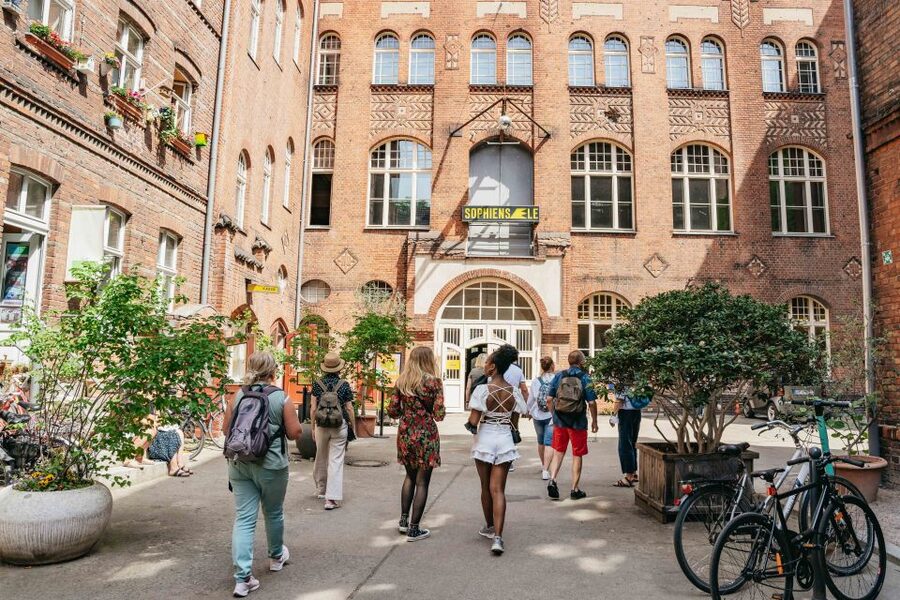
The value of this experience rests heavily on the guide. Courtyards can be attractive without explanation, but the history behind them is easy to miss.
The strongest guides on this route have been described as warm, funny, clear, and able to explain a large span of Berlin’s past without making the walk feel like a lecture. Nick receives especially frequent praise for combining local facts with a lively presentation. Susanne is noted for her dynamic delivery, while Lydia is praised for connecting the courtyards to their history and wider context.
You should expect a story-led walk rather than a silent architectural inspection. The guide explains the relationship between architecture and social or economic change. That approach suits me because it answers the questions that usually come to mind: Why were these spaces built? Who used them? Why did they survive? What changed when Berlin’s neighborhoods changed?
The listed tour languages are English and German. Yet some people have found that a particular departure was German only, while others with intermediate German managed to follow along. If you need English, check the departure language carefully before reserving.
Is $23 a fair price?
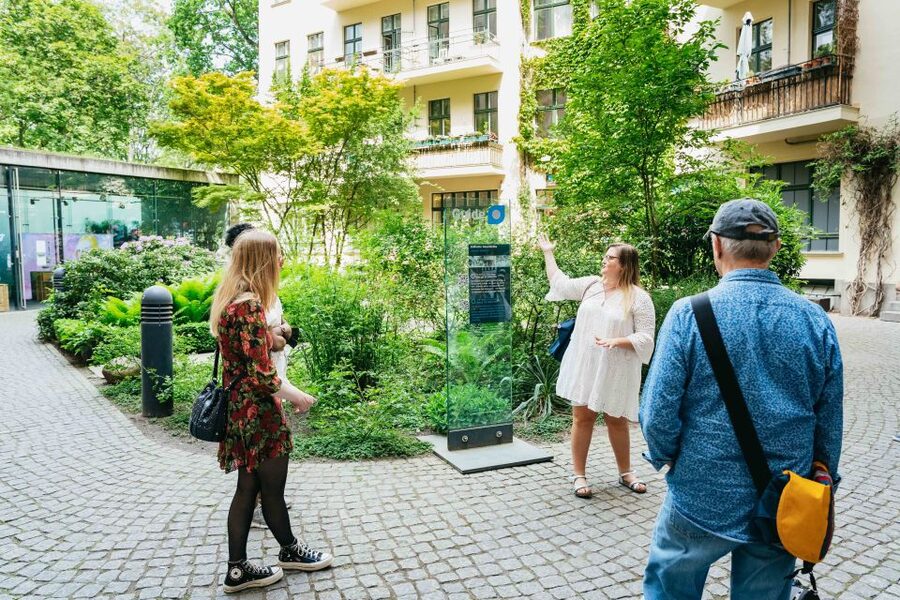
At $23 per person, this is a reasonable price for a two-hour guided walk in central Berlin. You are not paying for entry to a major museum or a special performance. You are paying for a route through spaces that are easy to miss and for someone who can explain why they matter.
The price works best for visitors who would otherwise wander through Hackescher Markt and Oranienburger Straße without understanding the courtyards. It is less useful for someone who only wants famous landmarks or prefers to explore silently at their own pace.
There are no food, drinks, or separate attraction tickets included. That keeps the cost clear. The main benefit is the guide’s access to the route and the added context, not a collection of paid admissions.
A free-cancellation policy up to 24 hours before the start and a reserve-now, pay-later option also make the booking flexible. The tour runs rain or shine, so check the forecast and bring suitable clothing. One visitor enjoyed the walk even in heavy rain, while another took it in bitter cold. The courtyards remain interesting in poor weather, but comfort depends on your coat, shoes, and patience.
Who should take this walk?
I would recommend it to first-time visitors who want more than Berlin’s headline sights, as well as repeat visitors looking for a fresh angle on Mitte.
It suits you especially well if you like:
- Architecture and old urban neighborhoods
- Jewish history presented in its local setting
- Street art and working creative spaces
- Short, guided walks with plenty of explanation
- Finding places you would probably miss alone
- Seeing how old buildings are used today
It is also a good option for people who want an easy introduction to Berlin’s social history without committing to a long museum visit.
You may want something else if you are looking for a full Jewish Berlin tour, a food walk, or a visit inside major museums and synagogues. The tour is mainly outdoors, and the language of a particular departure needs checking.
Should you book it?
Book this tour if you want Berlin’s backstory in manageable form. The route is compact, the walking is easy, and the courtyards show a side of Mitte that many independent visitors miss.
The best reason to go is the combination of place and explanation: Haus Schwarzenberg’s street art, Hackesche Höfe’s formal design, Heckmann Höfe’s leafy calm, and the Jewish quarter’s deeper context. At $23, that is solid value when the guide is as engaging as Nick, Nicolas, Susanne, Lydia, Alex, or Minit.
Skip it if you dislike guided walks, need guaranteed English without checking, or want a tour focused only on Berlin’s major monuments. For everyone else, this is a smart two-hour addition to a Berlin itinerary, especially after you have seen the city’s famous sights and want to look behind the doors.
FAQ
How long does the Berlin Hidden Backyards tour last?
The tour lasts two hours.
How much does the tour cost?
The listed price is $23 per person.
Where does the tour begin?
Meet your guide in front of the Butler’s shop at Hackescher Markt 4.
Where does the tour finish?
The walk has two listed drop-off locations on Oranienburger Straße.
Which places are visited?
The route includes Haus Schwarzenberg, Hackesche Höfe, Rosenhöfe, Sophienkirche, Auguststraße, and Heckmann Höfe.
What languages are available?
The activity lists live guides in English and German. Some departures have been conducted only in German, so check the language before booking.
Is the tour wheelchair accessible?
Yes, the activity is listed as wheelchair accessible.
Are food and drinks included?
No. Food and drinks are not included.
Does the tour run in bad weather?
Yes. The walk takes place rain or shine.
Can I cancel the booking?
You can cancel up to 24 hours in advance for a full refund. A reserve-now, pay-later option is also available.
Just added around Berlin
- East Berlin and the Wall: Walking Tour★ 4.9 · 407 reviews
- Cold War, Berlin Wall, Spies and the East Side Gallery★ 4.8 · 254 reviews
- Berlin: walking tour about Charité★ 4.4 · 537 reviews
- Berlin: Walking Tour of the Top 10 Sightseeing Attractions★ 4.7 · 150 reviews
- Berlin: Sightseeing Walking Tour of the Top 20 Attractions★ 4.5 · 196 reviews
- Berlin: The Time of National Socialism Walking Tour★ 5.0 · 220 reviews
- Berlin: Kreuzberg Guided Walking Evening Tour★ 4.7 · 555 reviews
- Berlin : Must-see attractions Walking Tour★ 4.8 · 83 reviews
Walking Tours, compared.

Magical London: Harry Potter Guided Walking Tour
Read our review →
Reykjavik Food Walk – Local Foodie Adventure in Iceland
Read our review →
History and Hauntings of Salem Guided Walking Tour
Read our review →
New Orleans Premier Ghost, Voodoo and Vampire Walking Tour
Read our review →
Amsterdam Anne Frank: Small-Group Walking Tour & Local Guide
Read our review →
Edinburgh Castle: Guided Walking Tour with Entry Ticket
Read our review →
Anne Frank’s Story – Guided Walking Tour through Amsterdam
Read our review →Browse the lists this tour appears in