
REVIEW · FLORENCE
Florence: Uffizi & Accademia Small Group Walking Tour
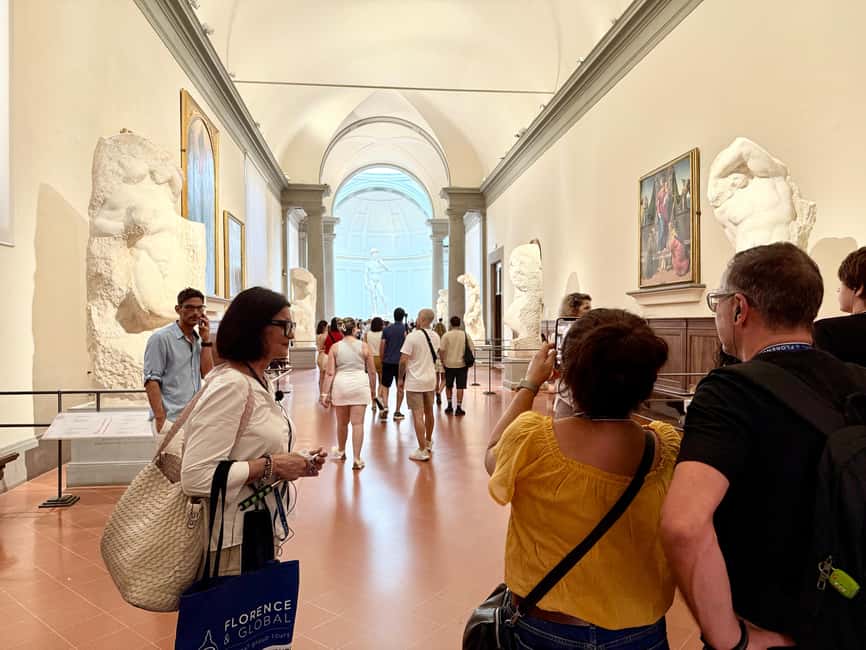
Michelangelo’s David is the headline, but the real strength of this tour is the way it links Florence’s streets to its art. You move from the Accademia to the Duomo, across Piazza della Signoria, and into the Uffizi, where Botticelli’s Birth of Venus and works by Leonardo and Michelangelo give the day its grand finish. The four-hour route packs in Florence’s essential sights without wasting time hunting for museum entrances.
I like the small-group format, which usually means 10 to 15 people and sometimes fewer. I also like the guides’ clear passion for art. Guides such as Sylvia, Deborah, Rosa, Margaret, Anna, and Rosie have been praised for humor, strong pacing, and the ability to make difficult art topics easy to follow.
The main drawback is stamina. Four hours of walking, standing, and looking at art is a lot, especially in summer heat or crowded galleries. There may be little time for a proper bathroom or drink break, so plan ahead and bring water if allowed by the museums.
Key points to know before booking
- David comes first: Start at the Accademia with a guided look at Michelangelo’s most famous sculpture.
- Two major museums in one morning or afternoon: The tour covers both the Accademia and Uffizi, rather than asking you to arrange separate visits.
- A useful outdoor link: Walk through Duomo Square and Piazza della Signoria between the museums, gaining a quick view of Florence’s public spaces and landmarks.
- Small groups matter: Groups are generally limited to 10 to 15 people, with some departures much smaller.
- Skip-the-ticket-line access helps: It does not mean every entrance is instant, but it cuts down on the time and confusion of buying tickets on site.
- Plan for an active four hours: Wear comfortable shoes, carry identification, and leave luggage and large bags behind.
Why this Florence tour works as an art introduction
Florence can feel like one enormous museum. The Uffizi needs a plan. The Accademia has one world-famous sculpture surrounded by works many people overlook. The Duomo area can be hard to understand when you are simply trying to avoid the crowds.
This tour gives you a practical route through the center and supplies a guide to explain what you are seeing. That matters because Renaissance art is full of names, symbols, rivalries, religious themes, and Medici connections. Without context, you may admire the colors and faces but miss why the work changed European art.
You should not expect to see every room or every painting in either museum. The point is a guided selection of major works, presented in a clear order. This suits you if you want a strong first look at Florence’s art rather than several quiet hours studying individual paintings.
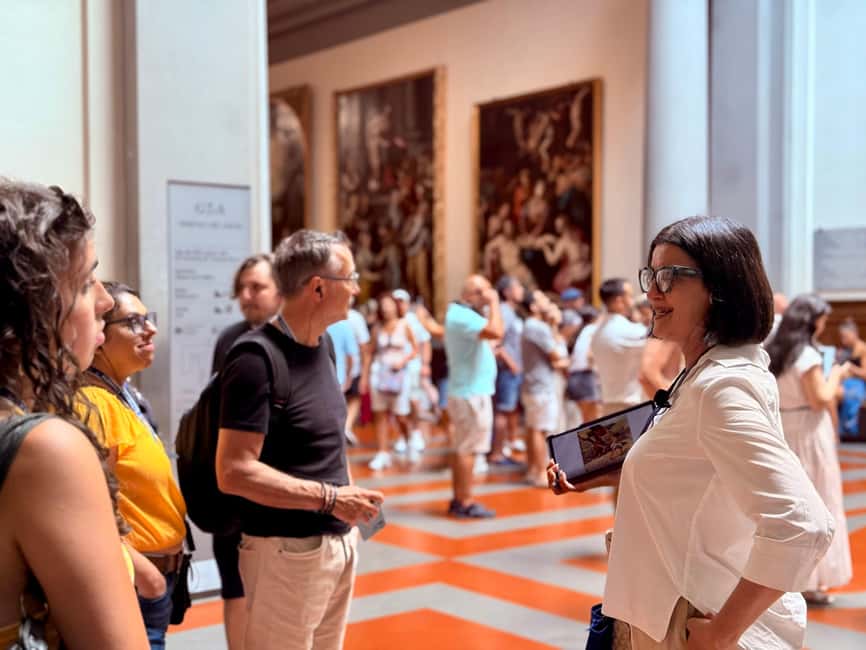
The headsets are useful. Florence’s museums can be noisy, and groups gather around the same famous works. With a radio and earpiece, you can stand a little away from the guide and still follow the explanation while looking at the art.
More Small-Group Walking Tours in Florence:
- Amsterdam Anne Frank: Small-Group Walking Tour & Local Guide
★ 4.8 · 12,789 reviews - Boston: Freedom Trail History Small Group Walking Tour
★ 5.0 · 6,450 reviews - Barcelona Tapas and Wine Experience Small-Group Walking Tour
★ 5.0 · 5,804 reviews
Michelangelo’s David at the Accademia
The tour begins at the Accademia, where Michelangelo’s David is the main event. You will learn about the sculpture’s creation and why its scale, pose, and detail made it such a powerful symbol of Florence.
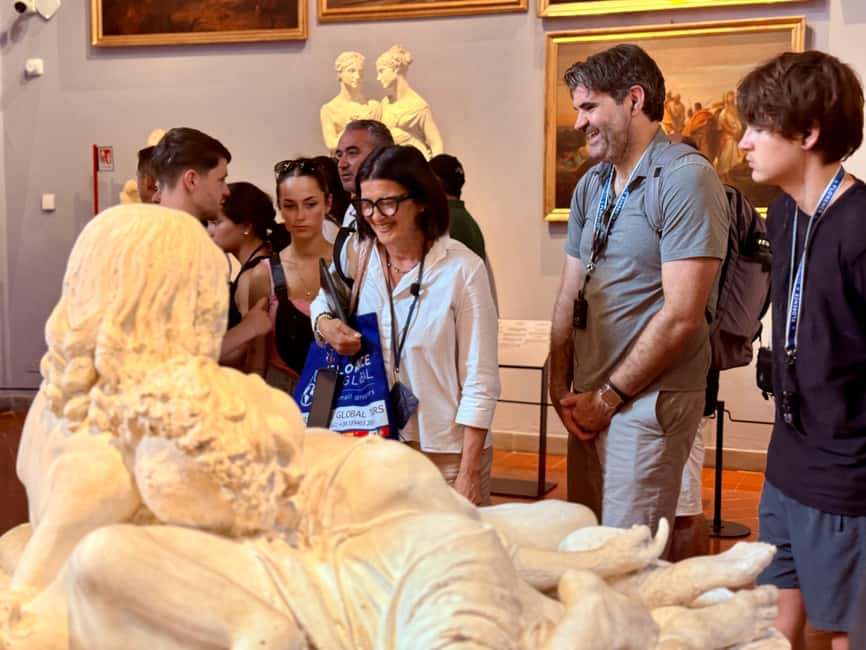
The guided explanation gives you more than a quick photo stop. Look closely at David’s hands, feet, face, and the tension in his body. The statue is familiar from countless pictures, but its size and physical presence are difficult to grasp until you are in the room with it.
Guides often add humor to this stop. Rosie has been praised for her playful way of discussing David, while other guides such as Deborah and Rosa have earned strong marks for explaining the artistic details and keeping the group engaged. That light touch helps, especially if you are visiting with children or teenagers.
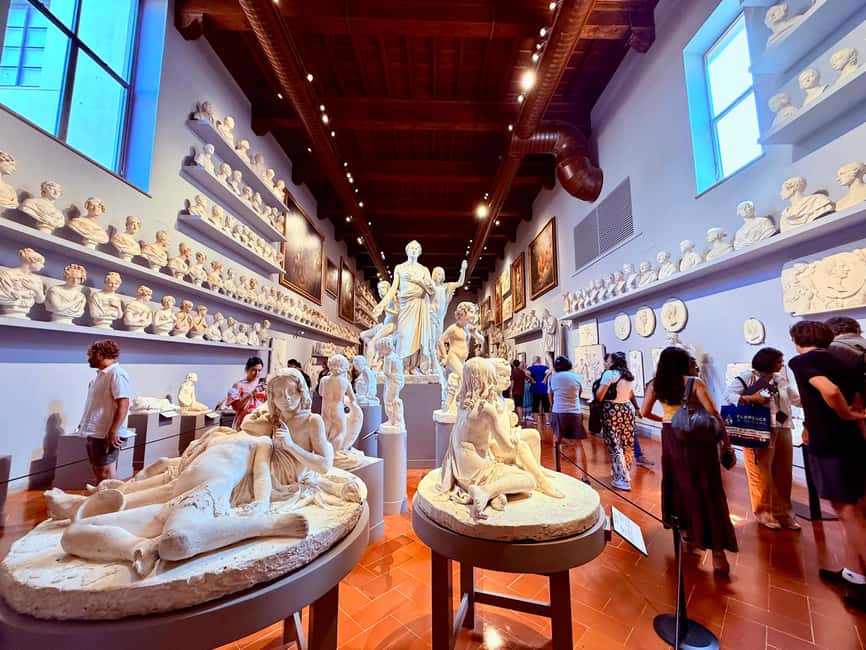
The Accademia is not only David. You will see other sculpture and painting, and your guide will point out important pieces and explain how they fit into Florence’s artistic story. Still, David takes center stage. If you have already spent serious time at the museum, this tour may move too quickly for a second, detailed visit.
One practical issue deserves attention: bathroom access. The Accademia stop may include only a short pause, and the museum restroom line can be longer than the available free time. Use the facilities before the tour if possible, and do not wait until the last minute.
Duomo Square and Brunelleschi’s famous dome
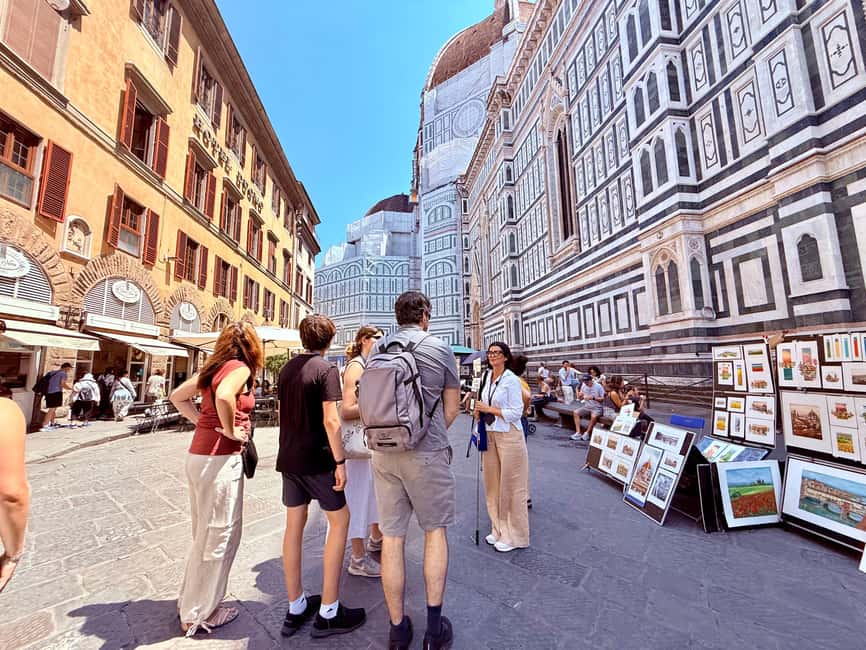
After the Accademia, the route heads outdoors to Duomo Square. Here you can admire the cathedral façade and Brunelleschi’s dome, one of Florence’s defining sights.
The tour does not include a climb of the dome. Instead, you get an exterior explanation of the cathedral complex and a chance to understand how its buildings relate to one another. That makes this stop useful for getting your bearings in central Florence.
Brunelleschi’s dome is especially worth seeing with a guide because the building is not just a pretty roof. Its scale and construction were major achievements, and the dome remains one of the city’s most recognizable features. Your guide can put the structure into the wider story of Florence’s artists, architects, patrons, and civic pride.
This is also a natural place for photographs, though the square can be crowded. Keep close to the group and listen through the headset. A guide may point out details you would walk past on your own, but you will not have unlimited time to linger.
Piazza della Signoria and Florence’s public stage
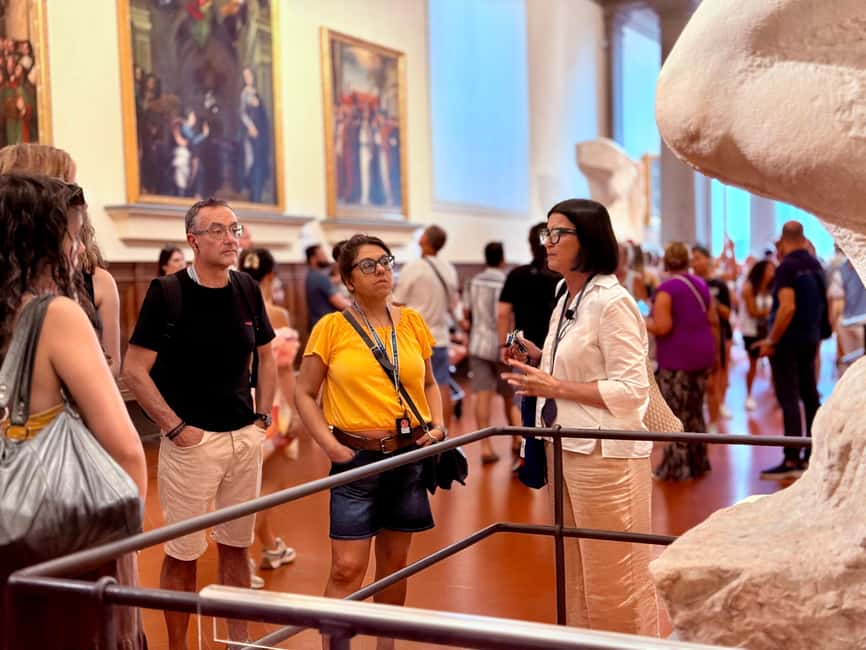
The walk continues through Piazza della Signoria, the city’s great civic square. This outdoor section breaks up the museum time and gives you a look at Florence beyond its galleries.
The square connects art with public life. Statues, architecture, and political power meet here, and a good guide can explain why this location mattered to Florence. The walk also makes the tour feel like more than two separate museum visits.
This portion is not a long city tour. Think of it as a focused connection between the Accademia and Uffizi, with selected sights and stories along the way. You may stop for photographs and questions, but the schedule needs to keep moving so the Uffizi visit fits into the four-hour plan.
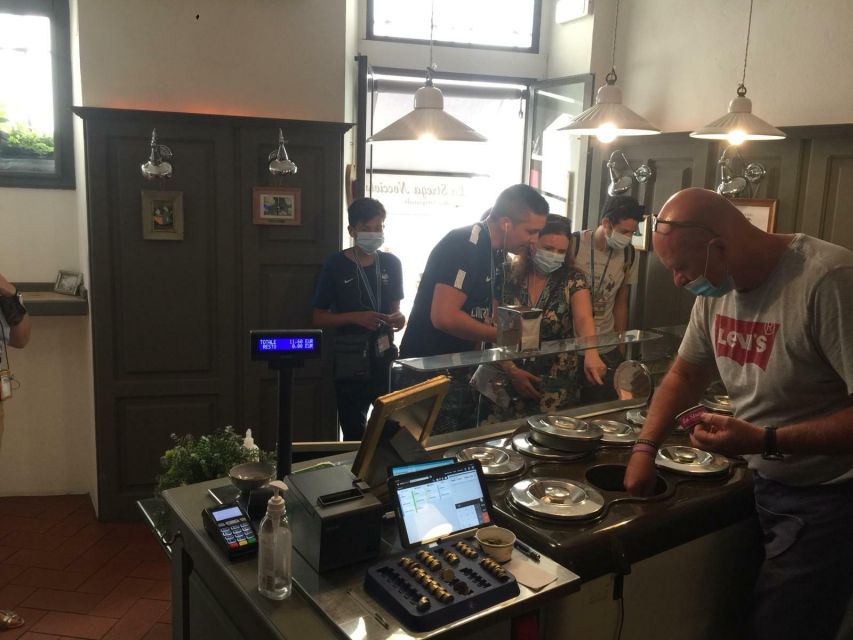
Some guides add personal recommendations during the walk. One guide has included advice about gelato quality and where to find better versions. Another guide has stopped for coffee and a snack, though you should not count on that during every departure. The basic plan is sightseeing, not a café break.
A few more walking tours around Florence worth a look
- Florence: Highlights Walking Tour with Expert Guide
★ 4.6 · 4,662 reviews - Uffizi & Accademia Timed Entry: Small Group Duomo Walking Tour
★ 4.5 · 3,630 reviews - Florence: Duomo Complex with Tickets & City Walk Guided Tour
★ 4.7 · 2,057 reviews - Florence: Guided Walking Tour
★ 4.6 · 1,602 reviews
The Uffizi, from Botticelli to Leonardo
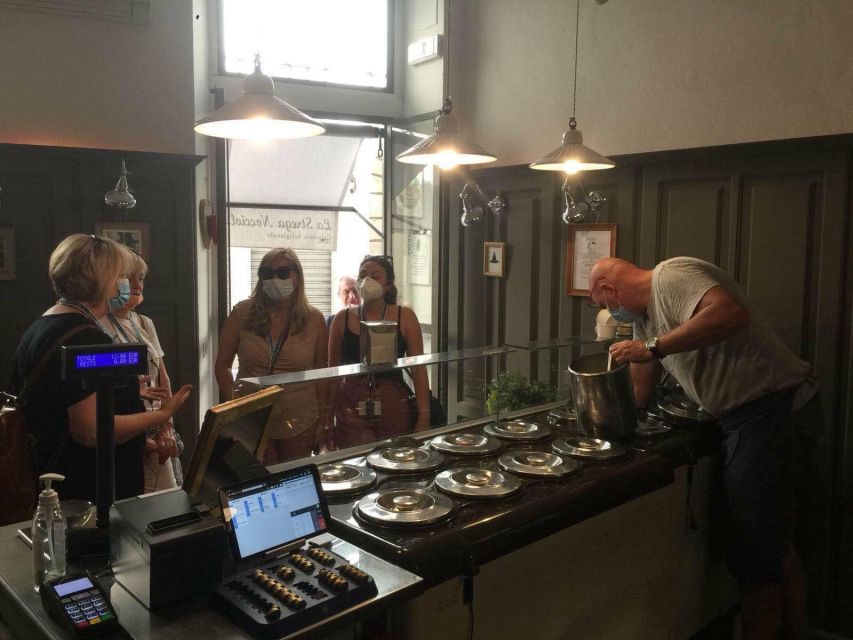
The Uffizi is the longest and most art-heavy part of the tour. Your guide leads you through selected rooms and focuses on major works by Botticelli, Leonardo, Michelangelo, and other important artists.
Botticelli’s Birth of Venus is one of the big reasons people book this tour. It is easy to look at the painting, take a picture, and move on. A guide can explain its figures, setting, symbolism, and place within Florentine art, giving you a way to look beyond the famous face and flowing hair.
You will also encounter works by Leonardo and Michelangelo. The value here is not simply seeing famous names. It is understanding how artists handled the human body, space, movement, light, and religious subjects in different ways.
The Uffizi can be confusing on your own because there is so much to see and because the most famous rooms attract crowds. Guides such as Sylvia, Anna, Margaret, and Deborah have been praised for choosing the key works, keeping groups together, and making the route understandable even when the museum is busy.
The tour is a highlights visit, not a complete survey. If you want to study every gallery, read every label, or return to a favorite painting several times, schedule a separate Uffizi visit. If you want a well-chosen first pass, the guided route saves time and keeps the museum from becoming an exhausting maze.
Upper-floor views and the final stretch
The Uffizi’s upper level provides a welcome change after the concentrated gallery time. From the museum, you can enjoy views toward the Ponte Vecchio and the city.
These views give the art a physical setting. You are no longer only looking at paintings connected to Florence. You are seeing the river, bridges, rooftops, and streets that shaped the city’s identity.
Do not expect a long rest at the terrace or an extended city viewpoint stop. The tour still has a schedule, and the guide needs to finish the museum route. Still, this is one of the more pleasant parts of the experience because it lets you pause and look outward after several hours indoors.
The guides make the biggest difference
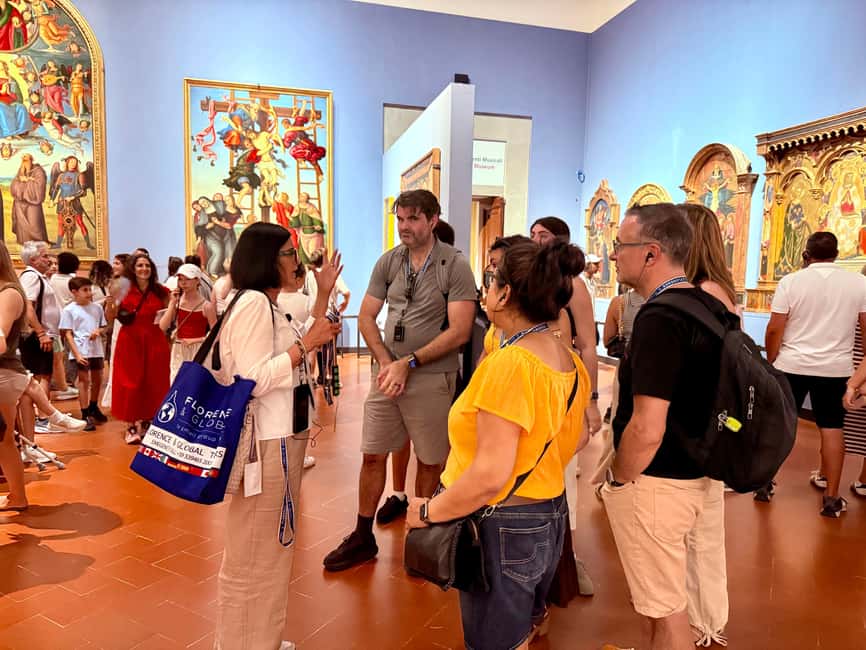
The strongest feature of this experience is the quality of its guides. Names appearing across the feedback include Sylvia, Deborah or Debra, Rosa, Rosie, Margaret, Anna, Amanda, Elena, Caterina, Cosetta, Kyrie, and Anna Maria.
That list matters for two reasons. First, the exact personality of your tour depends on who leads it. Second, the repeated praise for different guides suggests that the company has several strong people rather than relying on one star guide.
The best guides do more than recite dates. Sylvia has been praised for her humor, care, and ability to keep a group together. Deborah is known for detailed explanations, strong organization, and obvious affection for Florence. Rosa has earned praise for taking command when crowds make movement difficult. Margaret has been especially effective at turning art history into an enjoyable lesson.
The guides also appear willing to help when practical problems arise. One guide assisted a family using a stroller and helped them avoid stairs. Another made sure a guest who felt faint could get water and food, then helped that person catch up with the group. Those moments matter because a four-hour walking tour is not only an academic exercise.
Guide style can vary. One person may give more historical background, while another may focus on visual details or humorous stories. The tour is a good fit if you enjoy listening and asking questions. It is less suitable if you want to wander independently or control the pace of every room.
Group size, pace, and comfort
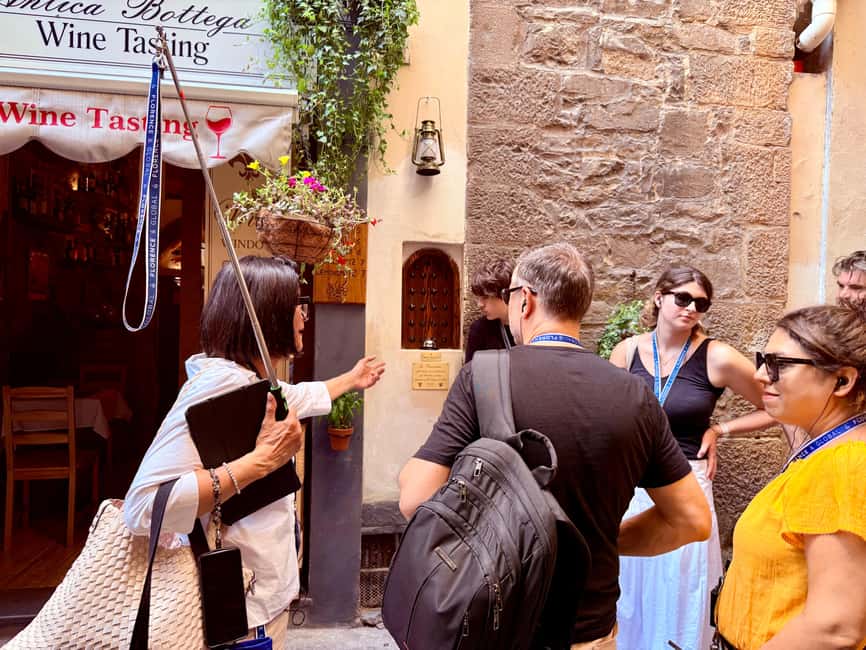
The advertised small group is usually 10 to 15 people, though some departures have been as few as three. A group of eight to twelve is a sweet spot: large enough to have energy, small enough for questions and personal attention.
The headsets help when the group grows. They also let you look closely at a painting instead of standing shoulder to shoulder beside the guide. In crowded rooms, keep the guide in sight and pay attention when the group moves.
The pace is steady. You will walk between sites, stand in museums, stop for explanations, and continue through the galleries. Several guides have been praised for keeping a comfortable pace, but the tour still demands more energy than a short museum introduction.
Wear comfortable shoes. Bring identification for yourself and children, since passport or ID details are required for the booking and identification may be needed at entry. Pets and large bags are not allowed, so avoid arriving with luggage.
Wheelchair access is listed as available, and one guide has helped a family with a stroller use an elevator entrance. Since museum routes and entrances can vary, confirm your needs when booking rather than assuming every part of the walk will be effortless.
Is $148 a fair price?
At $148 per person, this is not a budget museum visit. You are paying for admission to both major museums, a live guide, skip-the-ticket-line access, radio equipment, and a planned route through several of Florence’s top sights.
The value is strongest if you are visiting Florence for a short time, dislike museum logistics, or want help deciding what deserves your attention. Buying tickets, finding each entrance, and moving between the Accademia and Uffizi can take more effort than expected. A good guide also gives you context that you would otherwise need to prepare yourself.
The price is harder to justify if you already know Renaissance art well, have plenty of time, or prefer quiet, independent museum visits. You will not get unlimited time with each painting, and the outdoor stops are brief rather than a full city tour.
For a first Florence visit, I consider the price reasonable if the tour helps you avoid missed tickets and gives you a clear introduction to the city’s major art. Book it for the value of expert guidance and time saved, not because every line will disappear instantly. Even skip-the-line groups may face short waits, security checks, or crowd control.
Who should book this tour?
I would choose this tour if you want to see David and the Uffizi in one organized outing. It works particularly well for first-time visitors, families with older children, couples, and anyone who wants a strong introduction without spending a full day planning museum logistics.
It also suits people who enjoy stories. The guides bring in Medici connections, artist rivalries, Florence anecdotes, and visual details, and several have been praised for making the subject lively rather than dry.
You should think twice if you need frequent breaks, dislike standing, or want to explore at your own speed. Four hours with no guaranteed drink stop can feel long, especially in hot weather. Eat beforehand, use a restroom before starting, and bring water if museum rules permit it.
The first Sunday of each month is a special case. Museum entry is free, but advance reservations are not available under those conditions, so entry is not guaranteed. On that date, the paid tour’s normal ticket arrangement may not provide the same certainty.
Should you book it?
Book this tour if you want Florence’s essential art explained by a strong local guide, with David, the Duomo, Piazza della Signoria, and the Uffizi connected in one route. The combination is efficient, and the small group makes the experience more personal than a large coach-style outing.
I would skip it only if you have already visited both museums, want long unhurried gallery time, or find four hours without dependable breaks too demanding. For most first-time visitors with limited time, the $148 cost buys a useful mix of access, direction, and cultural context.
FAQ
How long does the tour last?
The tour lasts four hours.
Which museums are included?
The tour includes guided visits to the Accademia and the Uffizi.
Will I see Michelangelo’s David?
Yes. The tour begins with a visit to the Accademia and a guided look at Michelangelo’s David.
Does the tour include the Duomo?
You visit Duomo Square to see the cathedral façade and Brunelleschi’s dome from outside. A dome climb is not listed as part of the activity.
Does the tour include the Ponte Vecchio?
You can enjoy views of the Ponte Vecchio from the upper floor and terrace of the Uffizi.
Is the group small?
Small groups generally contain 10 to 15 people. Some departures may be smaller.
Which languages are available?
Live guides are available in English, German, Spanish, French, and Italian.
What should I bring?
Bring comfortable shoes and a passport or ID card. Children also need a passport or ID card.
Are large bags and pets allowed?
No. Pets and luggage or large bags are not allowed.
Just added around Florence
- Florence: Private Walking Tour of Florence’s Hidden Gems★ 4.6 · 297 reviews
- Private Flavors of Florence Walking Tour (Food and Wine Included)★ 5.0 · 373 reviews
- Florence: Food Walking Tour with Local Steak and Tuscan Wine★ 4.9 · 529 reviews
- Walking Food Tour of Florence with Tastings and Wine★ 5.0 · 518 reviews
- Florence: Duomo Complex with Tickets & City Walk Guided Tour★ 4.5 · 183 reviews
- Florence Walking Tour★ 5.0 · 621 reviews
- Florence: Street Food Walking Tour with Wine★ 4.9 · 719 reviews
- Florence: Mysteries of the Medici Guided Walking Tour★ 4.4 · 940 reviews
Small-Group Walking Tours, compared.
Amsterdam Anne Frank: Small-Group Walking Tour & Local Guide
Read our review →
Freedom Trail History Small Group Walking Tour
Read our review →
Barcelona Tapas and Wine Experience Small-Group Walking Tour
Read our review →
Reykjavík Small group Walking Tour – by CityWalk
Read our review →

Hidden Alleyways and Historic Sites Small-Group Walking Tour
Read our review →
Old Montreal Small-Group Walking Tour | Max 10 | by MTL Detours
Read our review →Browse the lists this tour appears in