
REVIEW · GERMANY
Bremen: Walking Tour of Historic Schnoor District
The best part of this tour is the setting: Schnoor’s winding lanes squeeze together tiny houses, old façades, goldsmiths, and craft shops beside Bremen’s historic center. The quarter feels less like a formal monument and more like a small neighborhood built one careful brick and timber frame at a time.
I like the compact one-hour format and the way the walk brings architecture to life. I also like the mix of genuine old buildings and carefully recreated façades, which helps you read the district instead of simply photographing it. The main consideration is that the tour is in German, lasts only an hour, and views are from outside, so visitors wanting interior access or a longer history walk should look elsewhere.
Key points to know before you book
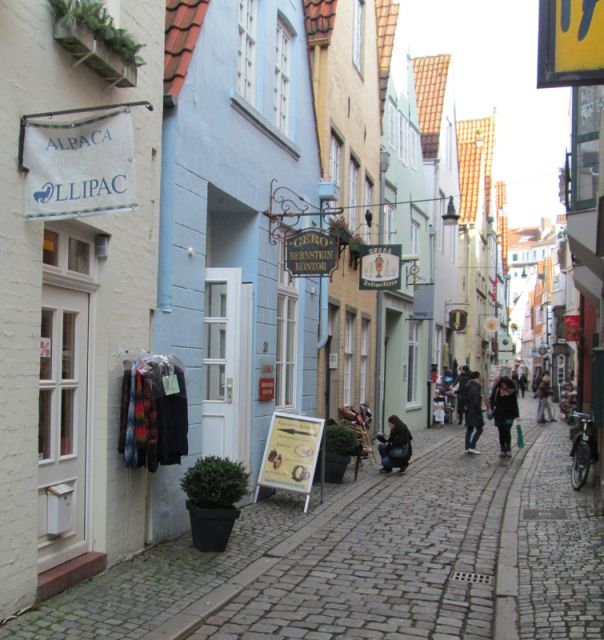
- Schnoor’s narrow lanes: Walk through a compact quarter where small houses appear strung together like pearls.
- Architecture from several centuries: See Gothic brickwork, half-timbering, Baroque and Renaissance details, classicism, and historicism.
- Important surviving buildings: Look for Haus Schnoor 15, known as Brasilhaus, and Packhaus Schnoor 2, both linked to the 15th century.
- A lively German-speaking guide: Guide Sönke has been praised for funny local stories and a warm Bremen character.
- A useful short introduction: The one-hour route works well early in a city visit, especially if you want context before exploring alone.
- Exterior viewing only: You will not enter the historic houses, church, tea room, or other buildings.
Entering Schnoor from Domsheide
The walk begins in front of Die Glocke concert hall at Domsheide 6. Your guide waits with a Bremen Tour Guide sign, giving you a clear meeting point in central Bremen.
This location matters because Schnoor is not presented as an isolated attraction. You start near the city’s major historic core, then move toward a quarter that feels much smaller and more intimate. The change happens quickly: broad urban space gives way to tight lanes and closely packed façades.
The guide leads the route on foot, so comfortable shoes are a sensible choice. The paths are narrow, and you will spend the full hour walking and stopping rather than sitting through a formal presentation.
The group may be shared or private, depending on the option you choose. A private group gives you a more personal setting, while the shared format keeps the price at a modest $14 per person. Since the walk is short, the group arrangement may matter less than the language and the guide’s style.
The tour is conducted in German. That is an important booking detail, not a small footnote. If you understand German, the commentary can add a lot to the streets and buildings. If you do not, you may still appreciate the architecture, but the historical explanation and jokes will be harder to follow.
A few more walking tours around Germany worth a look
- Discover Berlin Half-Day Walking Tour
★ 5.0 · 9,624 reviews - Berlin City walk Government District and Places of Democracy
★ 4.7 · 8,467 reviews - Berlin: Third Reich & Cold War Guided Walking Tour
★ 4.9 · 8,378 reviews
Why Schnoor feels different from the rest of Bremen
Schnoor is one of Bremen’s oldest quarters, with a written reference reaching back to the 13th century. A Franciscan monastery was built on the edge of the district at that time, and only the monastery church remains today.
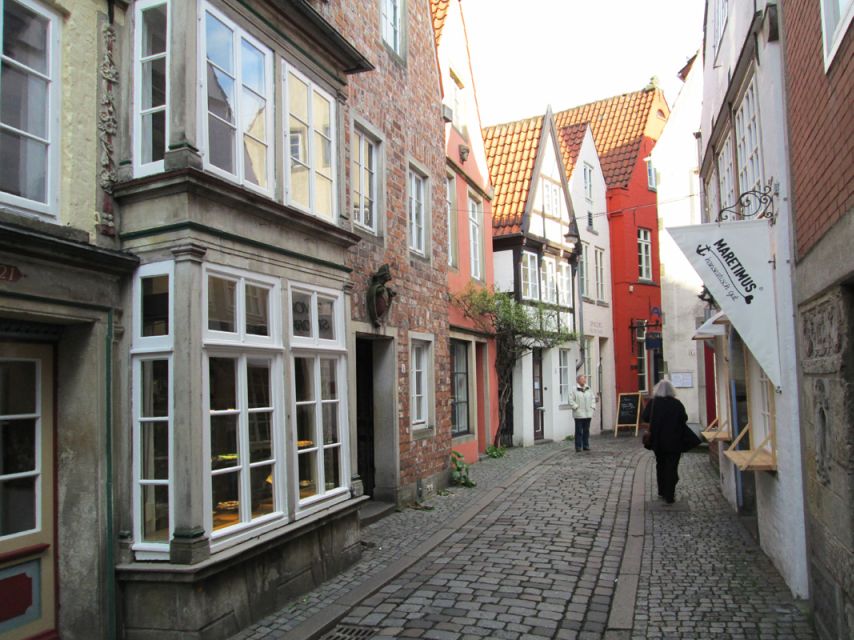
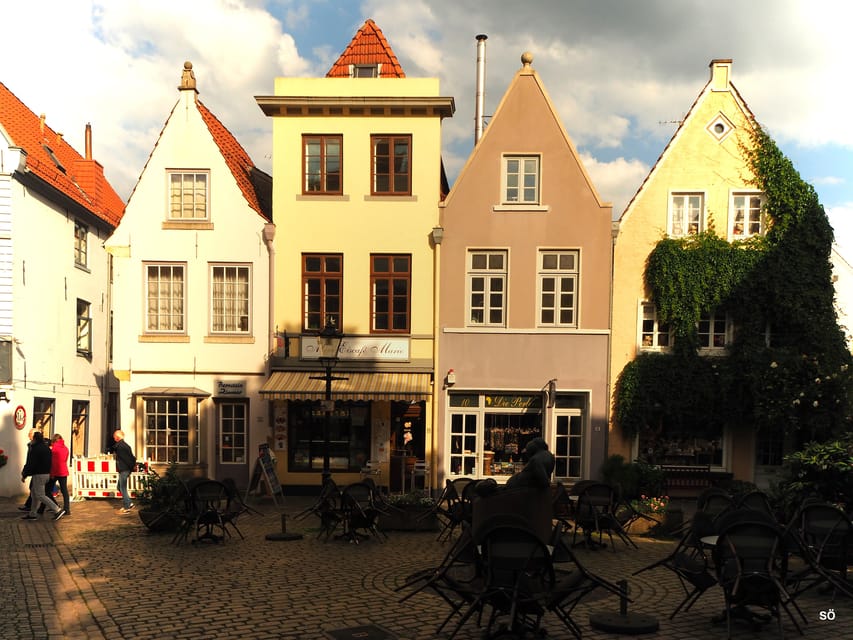
The name and layout are closely tied to the quarter’s traditional character. Small houses line narrow passages, creating the feeling of a compact village inside a larger city. The lanes are not designed for grand views. Their appeal comes from close-up details: timber framing, brick, small windows, changing rooflines, and the way one façade seems to lean into the next.
I like this kind of urban history because it is easy to read while walking. You do not need to stand far away to understand the place. The buildings are close enough for the guide to point out small changes in style and construction.
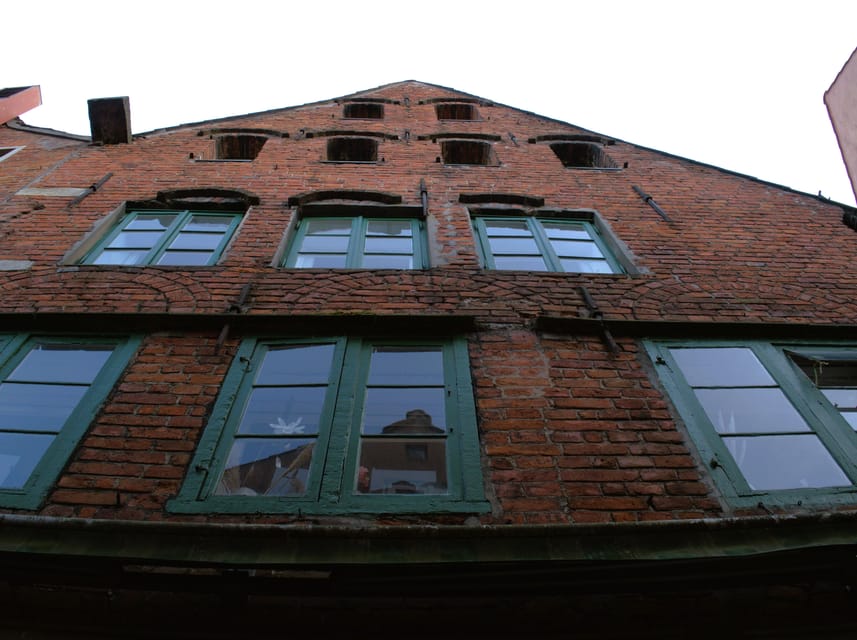
Many preserved houses date from the 17th and 18th centuries, though the tour also covers older structures and later restorations. This gives Schnoor a romantic look, but the route does not pretend that every building has survived untouched. Some structures were recreated according to historical specifications, and some buildings now show only façades because the structures once stood elsewhere.
That distinction is useful. You get a more honest view of historic preservation, including the difference between an original building and a reconstruction made to fit the quarter’s historic appearance.
St. John’s Church and the Franciscan connection
One of the main sights along the route is the Catholic St. John’s Church. The present church was built in the 14th century in redbrick Gothic style, making it an important marker of Schnoor’s medieval past.
The red brick links the church to a familiar northern German building tradition. Its form also helps explain how religious buildings shaped the district around them. The church is not just a stop for a quick photograph. It gives the guide a way to explain the Franciscan presence and the early development of the quarter.
You should expect to view the church from outside. The tour does not include interior visits, so the value here comes from the exterior architecture and the historical setting rather than from paintings, chapels, or interior decoration.
This is a good example of the tour’s general approach. It uses visible places to tell a larger story. You walk, pause, listen, and then continue through the lanes. The result is informal and easygoing, but the one-hour limit means the commentary must stay focused.
Haus Schnoor 15 and Packhaus Schnoor 2
The tour points out some of Schnoor’s oldest surviving secular buildings. Two named examples are Haus Schnoor 15, also called Brasilhaus, and Packhaus Schnoor 2.
These buildings help shift the focus from churches and public monuments to ordinary urban life. A packhouse suggests storage and trade, while the houses along Schnoor show how people lived and worked in a tightly packed quarter. Their value is not just age. It is the chance to see how business, housing, and narrow street design worked together.
The guide also explains the range of restoration work found in the district. Some houses preserve old building fabric, while others have been recreated to match historical specifications. You may see buildings that consist only of façades, with the original structures having stood somewhere else.
For me, this is one of the most useful parts of the walk. Without explanation, a polished old façade can look original even when it is not. The tour gives you a better way to look at historic districts, asking what has survived, what has been repaired, and what has been rebuilt.
Same streets, a different route:
- Munich: Third Reich & WWII Walking Tour
★ 4.6 · 6,181 reviews - Berlin: Discover Berlin Walking Tour
★ 4.9 · 5,998 reviews - Berlin’s Best: 2 Hour Walking Tour Third Reich and the Cold War
★ 5.0 · 5,486 reviews - Berlin: Hidden Backyards Guided Walking Tour
★ 4.8 · 5,360 reviews
Half-timbered houses, the tea room, and small shops
Schnoor’s visual appeal comes from variety within a very small space. The route includes narrow half-timbered houses near the Weser River, along with buildings displaying different periods and styles.
You will see more than one version of old Bremen architecture. Some façades emphasize timber framing, while others show brick or plaster. The route also introduces classicism, historicism, Baroque, and Renaissance influences. In a large city, these styles might be spread across several neighborhoods. In Schnoor, they appear in close succession.
One especially appealing stop is a half-timbered house with a tea room. It gives the district a lived-in, human scale. This is not a collection of huge monuments that require a long explanation. It is a series of small buildings where the details are close to eye level.
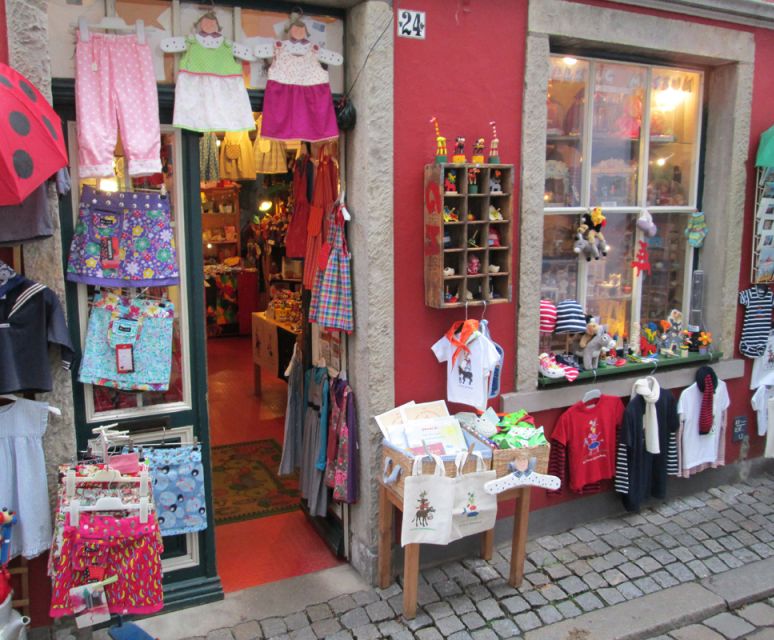
The lanes are also lined with goldsmiths and shops selling local handicrafts. These businesses add a present-day layer to the old quarter. You can look at the shopfronts as part of the walk, then return later if something catches your eye.
Food and drinks are not included. The short duration means the tour itself does not make room for a meal or café stop, so plan to eat separately if you want more than a quick look at the tea room and shops.
The guide makes the difference
A one-hour neighborhood tour depends heavily on the guide. The route is compact, and you could walk through Schnoor on your own, so the spoken commentary needs to add something you would not get from a casual stroll.
Guide Sönke has received particular praise for a warm, humorous style and for telling entertaining stories about Schnoor and Bremen. His approach appears to combine local character with historical explanation, including amusing details and Bremen expressions.
That style suits Schnoor well. The district is visually clear even without a guide, but its smaller stories are harder to find on your own. You might notice an old timber frame, a church tower, or an unusual façade. A good guide explains why it matters and how it fits into the quarter’s past.
The strongest feedback centers on the tour being informative without feeling dry. People who already knew the lanes said they learned new details, which is a useful clue for repeat visitors. If you have walked through Schnoor before, the tour can still add value by showing you what to notice.
Keep in mind that Sönke may not be your guide on every departure. The experience provider is Bremen Tour Guide, and the advertised language is German. The guide’s personality will shape the tour, but the subject matter remains the historic quarter itself.
Is one hour enough?
One hour is enough for an introduction, not for every corner of Schnoor. You can expect a brisk but relaxed walk through the main lanes, with stops for the church, historic houses, architectural styles, and local stories.
The short format is useful if you are fitting Bremen into a busy day. It works well as an orientation walk before you explore independently. After the tour, you can return to the lanes, browse the handicraft shops, or spend more time looking at façades that the guide identified.
The limit is depth. You will not have time for a long discussion at every building, and you will not enter the interiors. If your main interest is detailed architectural study, a longer private walk would give you more breathing room, assuming that option is available for your chosen departure.
For most people, the hour feels like a focused introduction rather than a complete study of Bremen’s old quarter. That is not a weakness if you want a clear first look. It is a limitation if you expect an extensive city history tour.
What the $14 price delivers
At $14 per person, this is a reasonably priced way to add structure and context to a visit to Schnoor. You are paying for a live guided walk, not for admission to a museum or the interior of a historic building.
The value comes from interpretation. The lanes are free to enter on your own, but it is easy to pass through without understanding the importance of Haus Schnoor 15, Packhaus Schnoor 2, St. John’s Church, or the restored façades. A short guided walk can help you make better use of the time you spend in the district afterward.
The price also makes sense for a first-time visit when you want a low-commitment activity. You are not tying up half a day or paying for transportation. The tradeoff is that food, drinks, and any shopping are extra, and the tour does not include indoor admissions.
A private option may be worth considering if your group wants a more personal setting or has specific questions. The shared option is the better value if you mainly want the basic route and historical explanation.
Who should book this Schnoor walk?
I would recommend this tour to anyone who wants an easy introduction to Bremen’s oldest-looking quarter, especially if you understand German and enjoy architecture, local stories, and small urban details.
It is a good fit for:
- First-time visitors who want a quick orientation
- People who enjoy historic houses more than large museums
- Repeat visitors who want context for buildings they have already seen
- Families and couples looking for a short activity
- Visitors with limited time in Bremen
- Anyone interested in restoration and changing architectural styles
It is less suitable if you need wheelchair access, since the activity is not suitable for wheelchair users. It is also not the right choice if you want to tour interiors, hear commentary in a language other than German, or spend several hours on one historic area.
Bring comfortable shoes, and remember that the buildings are viewed from outside. The meeting point is clear, the route is short, and free cancellation is available up to 24 hours before the tour. You can also reserve now and pay later, which helps if your Bremen schedule is still changing.
Should you book it?
Book this walk if you want a short, affordable introduction to Schnoor and can follow a German-speaking guide. The best reasons are the close-up look at old houses, the mix of original and recreated architecture, and the local stories that help the quarter feel like more than a pretty collection of lanes.
Skip it if you want interior visits, a long architectural lecture, or a multilingual tour. In that case, walking Schnoor independently may be enough.
For most German-speaking visitors, the $14 price is fair for one hour of focused context. I would schedule it near the start of your Bremen visit, then use the rest of your day to return to the lanes and explore at your own pace.
FAQ
Where does the Schnoor walking tour meet?
The meeting point is in front of Die Glocke concert hall at Domsheide 6, Bremen, 28195. Your guide will wait with a sign saying Bremen Tour Guide.
How long does the tour last?
The walking tour lasts one hour.
What language is the tour conducted in?
The live tour guide speaks German.
Is a private tour available?
Yes. You can choose a private group option. A shared walking tour is also available.
Does the tour include entry into the historic buildings?
No. The buildings are viewed from the outside only.
Is food or drink included?
No. Food and drinks are not included in the tour price.
Is the tour suitable for wheelchair users?
No. The activity is not suitable for wheelchair users.
Just added around Germany
- Hamburg: Guided Port Walk for Families★ 4.6 · 191 reviews
- East Berlin and the Wall: Walking Tour★ 4.9 · 407 reviews
- Dresden: Shared Small Group Walking Tour in English★ 4.8 · 172 reviews
- Dresden: Taste of Dresden Food Walk★ 4.6 · 397 reviews
- Dresden: Private Guided Walking Tour★ 4.5 · 81 reviews
- Dresden: Guided City Walk and Panometer Entrance Ticket★ 4.5 · 176 reviews
- Dresden Old Town – Guided Walking Tour in English★ 4.8 · 135 reviews
- Dresden: Neustadt District Street Art Guided Walking Tour★ 4.3 · 333 reviews
Walking Tours, compared.

Magical London: Harry Potter Guided Walking Tour
Read our review →
Reykjavik Food Walk – Local Foodie Adventure in Iceland
Read our review →
History and Hauntings of Salem Guided Walking Tour
Read our review →
New Orleans Premier Ghost, Voodoo and Vampire Walking Tour
Read our review →
Amsterdam Anne Frank: Small-Group Walking Tour & Local Guide
Read our review →

Edinburgh Castle: Guided Walking Tour with Entry Ticket
Read our review →
Anne Frank’s Story – Guided Walking Tour through Amsterdam
Read our review →Browse the lists this tour appears in