
REVIEW · WALKING TOURS
Belgrade: 3-Hour Small Group Walking Tour
Belgrade’s story is written across its streets, royal palaces, cafés, churches, and fortress walls. This three-hour walk gives you a useful first look at the city, moving from the National Assembly through central squares and Knez Mihailova Street before finishing above the meeting point of the Sava and Danube.
I like the efficient route and the way local guides such as Dragan, Milan, Radica, Marko, and Nebojša connect Serbia’s past with daily life today. I also like the practical advice built into the walk, from food and bar tips to suggestions for the rest of your stay. The main drawback is simple: this is nearly three hours of walking with few long pauses, and a group can reach as many as 25 people.
Key points to know before booking
- Royal Belgrade in one short walk: See the National Assembly, Old Palace, New Palace, Nikola Pašić Square, and Terazije.
- A strong first-day orientation: The route ends at Kalemegdan and Belgrade Fortress, leaving you well placed to continue exploring.
- Guides shape the experience: Dragan, Milan, Radica, Marko, Isidora, and Nebojša are praised for clear English, personal stories, humor, and useful local advice.
- Good value at $35.09: You receive a licensed guide and included entrances while covering a large part of central Belgrade.
- Easy pace, serious mileage: The tour is rated low intensity, but it is still almost nonstop walking for roughly three hours.
- Watch the solo booking rule: The shared tour requires at least two people. If you are alone, a 75 percent supplement may apply, or you can cancel without a fee if the operator contacts you in time.
Why this walk works as your Belgrade introduction
Belgrade can feel scattered at first. Its grand civic buildings sit beside traces of royal rule, Ottoman influence, socialist Yugoslavia, and modern Serbia. This tour gives you a basic map of those layers without asking you to spend half a day inside museums.
The route also makes good practical sense. You start near the National Assembly in the central district, pass through the main squares, walk down the city’s best-known pedestrian street, visit the cathedral quarter, and finish at the fortress. You are not zigzagging across town or wasting time on transport.
At $35.09 per person, the price is reasonable for a guided three-hour introduction. The real value is the context. You can see a palace or monument on your own, but a guide helps explain why two rival royal families mattered, why Hotel Moskva remains part of Belgrade’s identity, and how the fortress shaped the city.
The tour is offered in English and can be booked by mobile ticket. It is suitable for most people, and the stated intensity is low. Still, low intensity does not mean effortless. Wear shoes you can walk in and bring water. On a hot day, shade and hydration matter. One guide, Radica, was especially careful about both during a warm outing, which is the kind of small practical touch that can make a city walk much more pleasant.
More Small-Group Walking Tours in the world:
- Amsterdam Anne Frank: Small-Group Walking Tour & Local Guide
★ 4.8 · 12,789 reviews - Boston: Freedom Trail History Small Group Walking Tour
★ 5.0 · 6,450 reviews - Barcelona Tapas and Wine Experience Small-Group Walking Tour
★ 5.0 · 5,804 reviews
The National Assembly and Belgrade’s royal rivalry
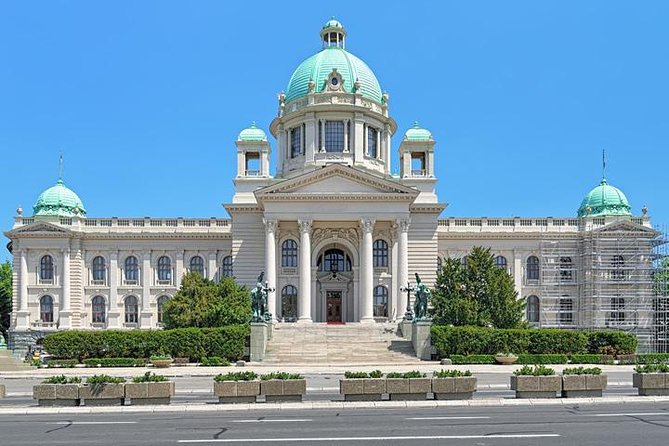
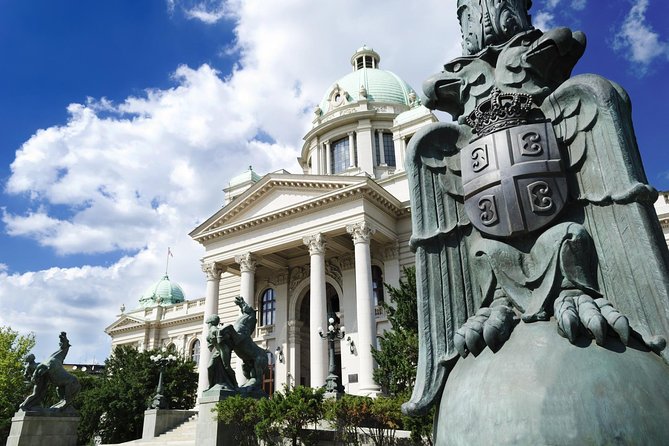
The meeting point is the Statue of Nikola Pašić at Trg Nikole Pašića, with the tour beginning at 10:00 in the morning. The first major sight is the House of the National Assembly of the Republic of Serbia, a formal early-20th-century building that has witnessed major political turns.
This is a smart opening. Serbia’s modern political story starts here in a very visible way, and the building gives your guide a natural place to explain how the country moved through monarchy, war, changing borders, and modern statehood. You are not simply looking at a government building. You are beginning with the political center of the capital.
Across from the parliament are the Old Palace and New Palace. They were linked to the Obrenović and Karađorđević dynasties, rival royal houses that shaped Serbia’s modern era. Today, the buildings serve official functions, including the residence of the Serbian President and the City Assembly.
The stop lasts about 15 minutes and does not require an admission ticket. That makes it a quick orientation rather than an architectural tour. You should expect to hear more about the people and rivalries connected with the buildings than to spend time inside them.
Nikola Pašić Square and the story of modern Serbia
The next pause is at Nikola Pašić Square, named for one of the leading figures in Serbia’s modern political development. The stop lasts about 10 minutes, so the guide needs to keep the story focused.
This part of the route helps connect the grand buildings you have just seen with the creation of the Kingdom of Serbs, Croats and Slovenes. If Balkan political history feels tangled, this is one of the points where a guide is genuinely useful. You can ask questions and get a basic framework before the tour moves into the city’s social and commercial center.
The central location also makes the square useful for getting your bearings. You are still close to major public buildings, but the walk is moving toward places where people shop, meet, eat, and spend time.
Terazije Fountain and Hotel Moskva
Terazije Square has been one of Belgrade’s central meeting places since the 19th century. The fountain is the formal focus of the stop, but Hotel Moskva provides the more memorable human story.
The hotel has hosted scientists, artists, officials, and other notable figures. Your guide may also tell the unusual tale of two camels accompanying a high-profile African visitor. It is a small story, but that is exactly why it helps. City history is easier to remember when it includes odd details rather than only dates and political names.
The tour allows about 15 minutes here. You will hear about Belgrade’s grand hotel era and the role such places played in public life. This is a useful contrast with the parliament and palaces. Instead of state power, you are looking at a setting tied to travel, status, conversation, and public theater.
If you like architecture, Terazije also gives you a sense of the city’s changing appearance. The tour does not promise an interior visit to Hotel Moskva, so treat this as a guided exterior stop and historical explanation rather than a hotel tour.
More Three-Hour Tours in the world:
- Prague: 3-Hour Walking Tour of Old Town & Prague Castle
★ 4.7 · 5,696 reviews - Experience Porto’s Charm: 3-Hour Guided Walking Tour
★ 5.0 · 2,432 reviews - Valletta: 3-Hour Walking Tour
★ 4.7 · 2,219 reviews - Belfast: Political Conflict 3-Hour Walking Tour
★ 4.6 · 2,215 reviews
Republic Square and the city’s pedestrian heart
Republic Square is the busiest civic point on the route. It is framed by the National Theatre and National Museum, with the Prince Mihailo monument at its center.
This is where Belgrade’s public life comes into sharper focus. The square works as a meeting point, a transport reference, and a gateway to the pedestrian center. Your guide can explain the importance of the monument and the surrounding institutions while you watch the city move around you.
The stop lasts about 15 minutes. It is enough time for orientation and photographs, but not enough for a museum visit. If you want to explore the National Museum or National Theatre properly, save that for another part of your schedule.
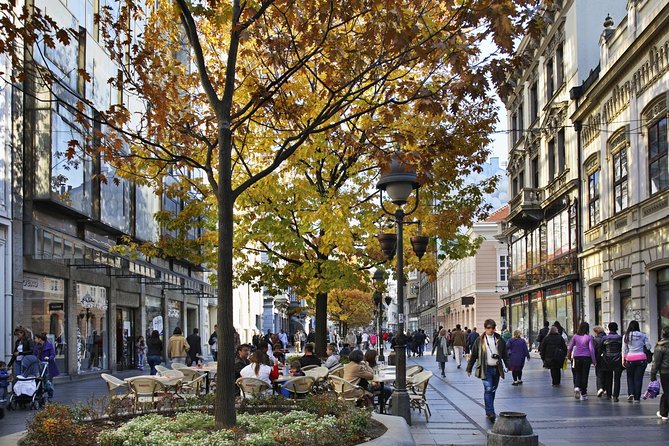
From here, the route continues along Knez Mihailova Street, the city’s main pedestrian boulevard and shopping area. Historic facades meet cafés, shops, and everyday city life. This is one of the most useful parts of the walk because it shows you where central Belgrade feels most social and accessible.
You will also get a practical sense of the street’s location in relation to Republic Square, the fortress, and the cathedral quarter. If you return later on your own, the route will already feel familiar.
St. Michael’s Cathedral and the Question Mark tavern
Knez Mihailova leads toward St. Michael’s Cathedral, the principal church in central Belgrade. The cathedral contains the tombs of important Serbian historical figures, giving the guide another chance to connect architecture with national history.
Religious sites require clothing that covers your knees and shoulders. That rule is worth taking seriously if you plan to enter. The supplied information says all entrances are included, but the tour details do not promise extended interior time at every stop, so expect the guide to keep the group moving.
Across from the cathedral are the residence of Princess Ljubica and the city’s oldest tavern, known by its unusual name, Question Mark. Together, these buildings create one of the more appealing historic corners of the walk.
Princess Ljubica’s residence offers a look at early Serbian domestic and royal life, while the tavern points to the city’s long café culture. The odd name is memorable, and the setting gives you a good place to ask your guide for lunch, drinks, or evening suggestions. Isidora and Radica were especially praised for offering practical ideas about restaurants, bars, food, and souvenirs, so this is a useful moment to ask for recommendations.
The advertised stop lasts about 15 minutes. That is short, but the point is to introduce the area rather than replace a full museum visit or meal.
Kalemegdan Park and Belgrade Fortress
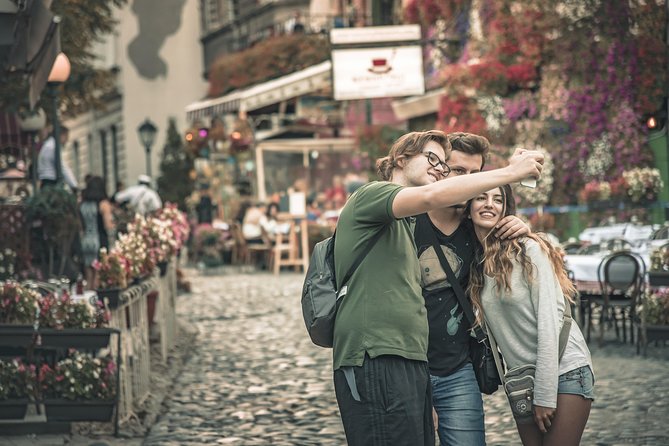
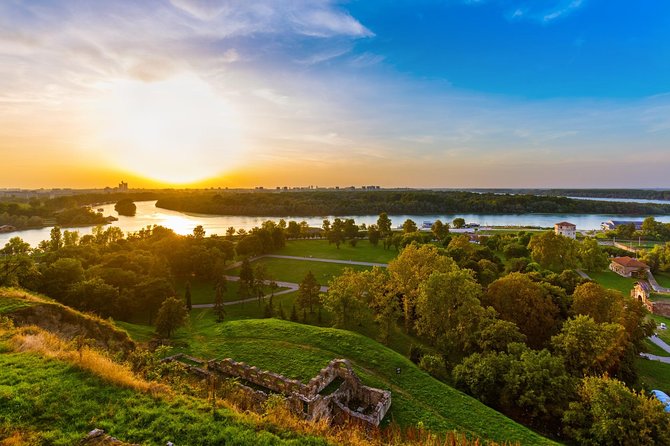
The walk ends at Kalemegdan Park and Belgrade Fortress, the strongest finish on the route. The fortress sits above the confluence of the Sava and Danube, and its walls give you a clear sense of why this location mattered for centuries.
The final section takes about 30 minutes. You first pass through the park, then continue toward the outer part of the fortification and the Victor monument. Victor has become one of Belgrade’s symbols, and the viewpoint around it gives you one of the city’s most striking panoramas.
This is not just a pretty ending. The fortress explains Belgrade’s position as a city shaped by competing powers and river routes. From the walls, your guide can tie together many of the themes raised earlier: military importance, changing rule, city growth, and the meeting of different cultures.
The tour ends here rather than returning to the starting point. That is convenient if you want to keep exploring Kalemegdan, visit more of the fortress, or continue toward the rivers. It also means you should plan your next stop from the fortress rather than assume you will be returned to the parliament.
The guides make the biggest difference
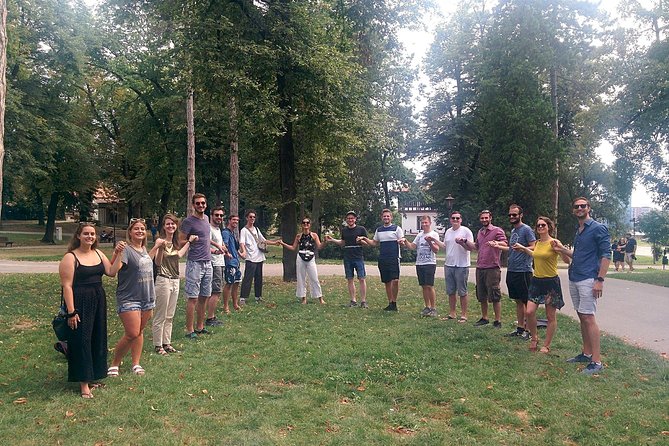
The route is fixed, but the guide determines how much you get from it. The strongest guide comments praise clear English, careful answers, a friendly manner, and the ability to explain both Serbian history and the wider Balkan setting.
Dragan is described as patient and clear, with a wide grasp of history, architecture, and politics. Milan is praised for an easy pace, clear explanations, and a willingness to answer every question. Marko is noted for personal stories, warmth, and a strong introduction to Serbia and Belgrade.
Nebojša brings a useful mix of city history, Yugoslav history, humor, and practical suggestions. One account describes him as adjusting the walk to the interests of the group. Radica is praised for clear English and Spanish, an engaging style, and care during hot weather. Isidora is also singled out for patience, kindness, and detailed answers.
The guide roster can change, so you should not book expecting one specific person unless the operator confirms it. The pattern is encouraging, though: the highest praise centers on guide quality rather than on the monuments alone. That matters on a history-heavy walking tour.
Group size, pace, and the solo booking rule
The maximum group size is 25, which is larger than many people expect from the phrase small group. A group of four or five should feel personal. A full group may make it harder to hear in busy squares or to ask frequent questions.
The tour requires a minimum of two people for shared operation. If you book alone and no one else joins, the operator says a 75 percent supplement may apply. You should be informed no later than 24 hours before departure and offered a choice between paying the supplement or canceling without a fee.
There is an important wrinkle: one reported booking was canceled the day before because there were not enough participants. The stated policy says the operator does not cancel tours and will instead offer a choice if the minimum is not met, but the practical lesson is to keep your plans flexible if you are booking the shared option alone.
The walk is described as low intensity, and most people can participate. Still, plan for almost continuous walking. There are short stops at the squares and monuments, but this is not a leisurely café crawl. Comfortable footwear and water are essential.
When to schedule it and what to do afterward
I would put this tour on your first full day in Belgrade. It gives you a mental map of the center and ends at a place where you can continue on foot. You will also have a chance to ask about restaurants, bars, museums, souvenirs, and other places to visit.
The 10:00 start leaves the afternoon open. After Kalemegdan and the fortress, you can spend more time at the viewpoints, return toward Knez Mihailova, or arrange your own meal and sightseeing. Since the tour does not include lunch or souvenirs, budget separately for both.
The route is also a good fit for a short stay. If you have only one or two days, it covers the main central sights without consuming an entire day. If you have a longer visit, use it as an orientation and return later to the National Museum, National Theatre, Princess Ljubica’s residence, or the fortress areas that deserve more time.
Who should book this Belgrade walking tour?
Book it if you want a clear introduction to Belgrade’s central sights, prefer learning through stories, and like having a local person answer questions as you walk. It is especially useful for first-time visitors, people with limited time, and anyone interested in Serbian, Yugoslav, and Balkan history.
It may not suit you if you dislike group walks, need frequent seated breaks, or want long interior visits at museums and historic buildings. The route is efficient, but efficiency means moving on before every sight has been fully explored.
At $35.09, the tour earns its price through the guide and the route rather than through expensive admissions. You get a solid city framework, several major viewpoints, and practical advice for the rest of your stay. The 4.8 rating from 180 reviews and 98 percent recommendation rate fit the experience described by the strongest feedback: clear guides, good pacing, personal stories, and a useful overview.
I would book it for the first morning of a Belgrade visit, especially if you can join a small group of four to eight people. If you are booking alone, confirm the minimum-group arrangement before relying on it as the foundation of your schedule.
FAQ
How long does the Belgrade walking tour last?
The tour lasts approximately three hours. The listed stops range from about 10 to 30 minutes, with walking between each location.
Where does the tour begin?
It begins at the Statue of Nikola Pašić, at Trg Nikole Pašića 11 in Belgrade. The scheduled start time is 10:00 am.
Where does the tour end?
The walk ends at Belgrade Fortress in Kalemegdan Park, near the Victor monument and the confluence of the Sava and Danube rivers.
What language is the tour offered in?
The tour is offered in English.
What is included in the price?
The $35.09 price includes a professional licensed guide and all entrances. Lunch and souvenirs are not included.
How many people can join the tour?
The maximum group size is 25 people. Shared operation requires at least two passengers. If you are the only person booked, a 75 percent supplement may apply, or you can choose to cancel without a fee when notified.
What should I wear and bring?
Wear comfortable walking shoes and bring a bottle of water. If you enter religious sites, your clothing must cover your knees and shoulders.
Just added around the world
- Vatnajökull Glacier Walk from Hali★ 5.0 · 479 reviews
- Old Hobart Pub Walking Tour★ 4.5 · 91 reviews
- Ice Cave and Glacier Walk into Blue Glacier Canyon★ 5.0 · 224 reviews
- Southwest Tasmania Wilderness Experience: Fly Cruise and Walk Including Lunch★ 5.0 · 233 reviews
- Saigon’s Hidden Flavors – Private Street Food Walk with Local Students★ 5.0 · 301 reviews
- Hobart History, People & Places – 2 hour city walk★ 5.0 · 224 reviews
- Vegan Walk Not Just Vegan Food★ 5.0 · 266 reviews
- Ho Chi Minh City: Highlights & Hidden Gems – Free Walking Tour★ 5.0 · 194 reviews
Small-Group Walking Tours, compared.

Amsterdam Anne Frank: Small-Group Walking Tour & Local Guide
Read our review →
Freedom Trail History Small Group Walking Tour
Read our review →
Barcelona Tapas and Wine Experience Small-Group Walking Tour
Read our review →
Reykjavík Small group Walking Tour – by CityWalk
Read our review →

Hidden Alleyways and Historic Sites Small-Group Walking Tour
Read our review →
Old Montreal Small-Group Walking Tour | Max 10 | by MTL Detours
Read our review →Browse the lists this tour appears in