
REVIEW · BELFAST
Belfast Troubles Murals Street Art and Peace Wall Walking Tour
Belfast’s murals are not simply colorful walls. They are public statements about identity, loss, loyalty, protest, and hope. This three-hour walk links modern street art with the political murals of West Belfast, then uses the Peace Wall and Bobby Sands mural to explain how the city is still working through its past.
I like two things right away. First, the tour crosses community lines instead of showing you only one side of Belfast’s story. You see Loyalist murals on Shankill Road, Republican murals around Divis Street, and newer art connected with community projects. Second, the group is capped at eight people, which suits a subject that calls for care and conversation.
The main drawback is the pace and amount of information. You may walk more than six kilometers in three hours, often briskly, and guide Marti’s presentation can feel more like a concentrated history lesson than a relaxed stroll. His manner is direct, and that will suit some people more than others.
Key things to know before you go
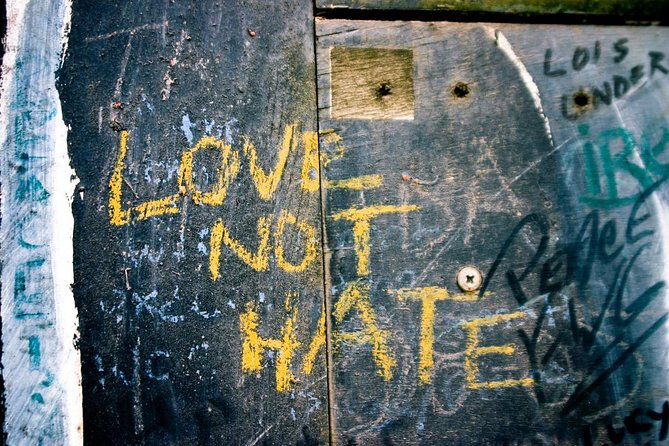
- The walk covers both sides of Belfast’s divide: Shankill Road and the Republican areas around Divis Street are both part of the route.
- The murals are the teaching tools: Art helps explain political identity, community memory, international causes, and the move toward peace.
- Expect a brisk six-kilometer walk: Comfortable shoes matter more than dressing up for the city.
- Marti brings a strong local point of view: He shares historical detail, personal context, and his hopes for Belfast’s future.
- This is an adults-only activity: It is not suitable for anyone under 18.
- Rain is possible: Bring practical clothing, since much of the experience takes place outdoors.
Why the murals make Belfast’s history easier to understand
The Troubles can be hard to grasp from a museum display or a few paragraphs in a guidebook. The conflict involved competing national identities, religion, politics, British and Irish connections, civil rights, paramilitary groups, and decades of violence. A mural puts those ideas on a street corner where people live.
That is the strength of this tour. You are not just shown a famous painted wall and sent on your way. Marti uses the art as a starting point for explaining what the images mean, who they represent, and how attitudes have changed. The focus is not only on battles and political leaders. It also includes ordinary families, working communities, trauma, and the long process of rebuilding trust.
I appreciate the effort to present Belfast as a city looking forward without pretending that the past has disappeared. The tour gives attention to peace projects, community-led art, and the idea that healing can take several generations. That makes the experience more useful than a simple mural checklist.
Still, you should know what you are signing up for. This is an adult discussion of a difficult period. Some explanations reach far back into the history of Ireland and Northern Ireland before concentrating on the events of the last 60 years. If you prefer a light introduction to street art, this may feel too serious.
More Street Art Walks in Belfast:
- London: Street Art and Graffiti Guided Walking Tour
★ 4.9 · 1,354 reviews - Berlin: City Street Art Guided Walking Tour
★ 4.8 · 1,051 reviews - Naples Spanish Quarters Walking Tour Street Art, Folklore & Sweet
★ 5.0 · 797 reviews
Starting in the Cathedral Quarter
The walk begins on Exchange Street West in Belfast’s city center, close to the Cathedral Quarter. This first section lasts about 30 minutes and introduces the newer side of Belfast’s public art.
You will see work by international street artists alongside local projects. The art here is not presented as decoration alone. It shows how Belfast has become a place where artists can address social issues, reshape neglected walls, and create work that local communities want to share.
This is a useful opening because it gives you a wider frame before the political murals appear. You start with modern street art, then move toward the more charged images of West Belfast. That change helps you see that not every mural in Belfast belongs to the same period or political tradition.
A project known as re-imaging is also part of the discussion. Its aim is to replace or reinterpret old images with murals chosen by local communities. That detail matters. It shows that public art can be part of a neighborhood’s future, not just a record of past conflict.
The opening section is also where Marti sets out the background. He has a great deal to cover, and the material can come quickly. Pay attention early, since later stops make more sense if you understand the basic terms and divisions introduced here.
Shankill Road and the Loyalist murals
From the city center, the route heads toward Shankill Road, where you will see Loyalist murals and local street art. The stop itself is listed as roughly 15 minutes, although the walk between areas and the wider commentary add to the total time.
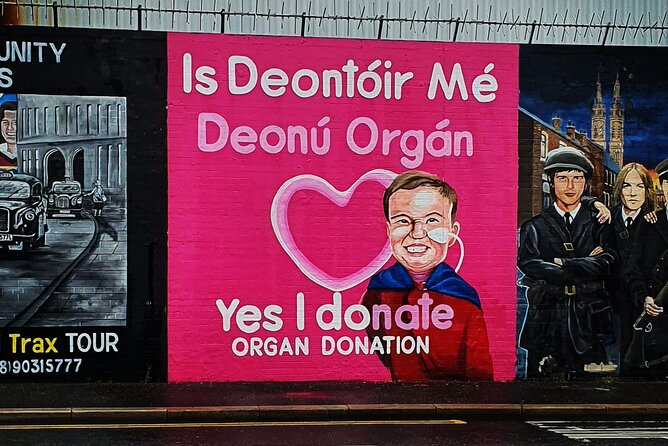
Shankill Road is one of the places where Belfast’s political identity is visible on the walls. The murals connect local neighborhoods with British identity, remembrance, military symbols, and community history. The guide’s role here is important because images can be misunderstood when viewed without context.
You should listen closely and avoid treating the walls as a collection of colorful photo backdrops. These are living community spaces. The tour asks you to look at what the art says about belonging and memory, but also to notice how street art is changing the feel of the area.
This can be one of the more sensitive parts of the walk. Marti speaks frankly, and his comments may not always feel polished or neutral in tone, even though the tour aims to explain both sides. If you want a guide who delivers a carefully scripted presentation, this may not be your ideal choice. If you value a strong local voice and are willing to hear difficult material directly, it can be more revealing.
Divis Street and the International Mural Wall
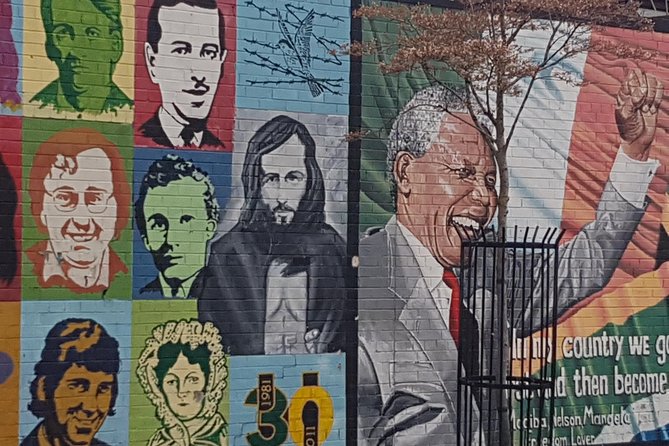
The route then reaches the International Mural Wall on Divis Street. This stop takes about 15 minutes and shifts the focus from local political identity to causes from around the world.
These murals show how Belfast’s walls have been used to express solidarity beyond Northern Ireland. The subjects can connect local political experience with international struggles, human rights, and social causes. That wider viewpoint helps prevent the tour from becoming a narrow account of one conflict.
I like this part because it shows how murals can change meaning over time. Some walls speak directly about Belfast’s past. Others use the city’s experience as a way to comment on events elsewhere. Together, they show that public art can be local in location but international in purpose.
The stop is brief, so you will not have unlimited time to study every image. If photography matters to you, keep your camera ready and listen for the key explanations. The walk continues at a steady pace, and Marti does not use a microphone, so staying near him is wise.
A few more walking tours around Belfast worth a look
- A History of Terror – Belfast City Centre Walking Tour
★ 5.0 · 2,883 reviews - Belfast: Political Conflict 3-Hour Walking Tour
★ 4.6 · 2,215 reviews - Belfast: A History of Terror Walking Tour
★ 4.9 · 854 reviews - Belfast: The Troubles Walls & Bridges Guided Walking Tour
★ 4.8 · 583 reviews
The Peace Wall and the visible line between communities
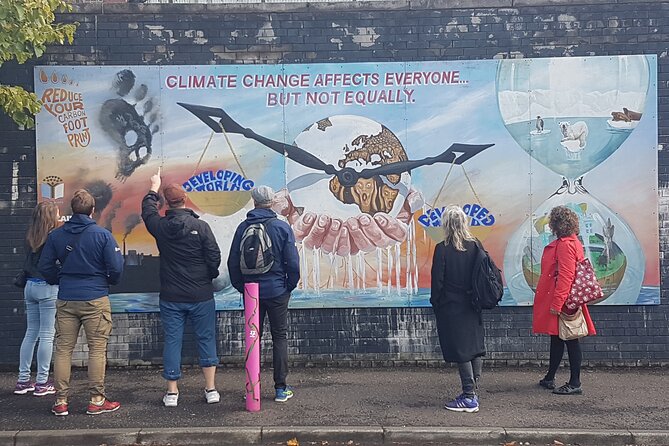
The Peace Wall is one of the most recognizable parts of the route. It separates communities that were once divided by violence and remains a powerful reminder that peace does not always mean that physical barriers vanish overnight.
The stop lasts about 10 minutes, but its meaning goes beyond the clock. You can see how a city can be peaceful while still carrying visible signs of separation. The wall represents both progress and unfinished work. Violence has eased, but the presence of the barrier shows that trust and shared life take time.
This is also where the tour’s central theme becomes clearest. Belfast is not presented as a city frozen in the Troubles. Nor is it shown as a place that has solved every problem. You are encouraged to consider the slow work of healing, the hopes of younger generations, and the role of community projects in changing public spaces.
The Peace Wall is not an attraction with a standard admission experience. It is part of the urban environment, and the value comes from the explanation and setting. Expect outdoor conditions, street noise, and a short stop rather than a formal visitor center.
The Bobby Sands mural in West Belfast
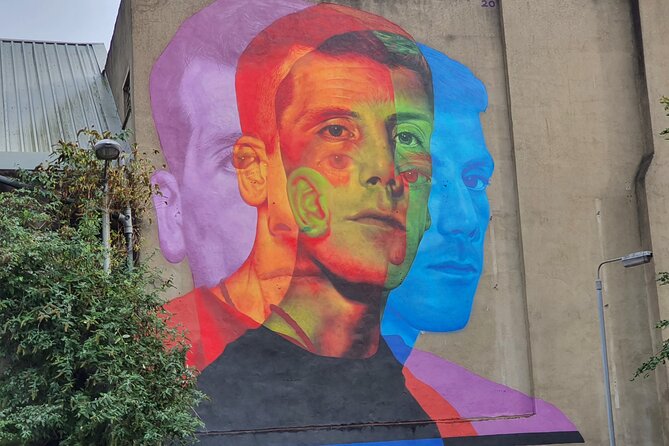
The Bobby Sands mural is described as the most photographed mural in the Republican area of West Belfast. It is a short stop, about five minutes, but it carries considerable political weight.
Bobby Sands remains a major Republican symbol, and the mural cannot be understood without the wider story of the hunger strikes, imprisonment, nationalism, and the conflict. Marti uses this image to help explain the Republican viewpoint, just as the Shankill Road murals introduce Loyalist identity.
The value here lies in seeing the two traditions within one connected walk. You are not asked to view one side as a simple hero story and the other as a simple villain story. The tour’s best moments come when it explains how different communities remember the same decades in very different ways.
That said, five minutes is not enough for a full study of the mural or the history behind it. Think of this stop as one important chapter in a longer conversation, not a complete account of Republican politics.
A brisk walk with a small group
The experience lasts about 2.5 to 3 hours, and the route covers a lot of ground. One detailed account puts the distance at a little over six kilometers. That makes this more demanding than a short city-center walk.
Wear comfortable walking shoes. You may also want water and a rain jacket. Belfast weather can change, and the tour provider specifically warns that it may be colder or wetter than you expect. Sunglasses and sunscreen can be useful in summer, but practical layers are the safer choice.
The group size is limited to eight. I see that as a real advantage here. A small group is less intrusive in residential areas, makes it easier to hear the guide without a microphone, and allows more room for questions. The downside is that the experience depends heavily on the guide’s communication style and on how comfortable the group feels discussing sensitive subjects.
Marti walks quickly and speaks clearly, but he does not use a microphone. Stay close enough to hear him, especially near traffic or when the group spreads out. If you have trouble walking briskly for several hours, this may not be the right tour for you.
Marti’s guiding style and the question of balance
Marti is a Belfast local who brings strong historical knowledge and personal experience to the walk. He is particularly good at connecting murals with the city’s present-day efforts to heal. He also gives practical advice for spending time in Belfast, which can help you make better use of the rest of your visit.
The presentation is information-heavy. Some people will welcome that, especially if they know little about the Troubles. Others may find that the facts arrive too quickly or that there is not enough informal discussion between stops.
His approach is direct rather than polished. At times, questions may be handled in a way that feels abrupt. That is worth considering before you book, because a three-hour experience leaves little room to escape a guide whose style does not suit you. The most useful way to approach it is to arrive ready for a serious conversation, not a theatrical performance.
The strongest part of his approach is the emphasis on ordinary people and long-term peace. He does not reduce Belfast to old divisions. He repeatedly returns to the future, community projects, and the idea that the city is changing while still remembering what happened.
Is $36.11 good value?
At $36.11 per person, the price is reasonable for a three-hour guided walk capped at eight people. You are paying for local interpretation, not entry tickets or a vehicle. The route itself is free, but the guide gives you access to context that would be hard to assemble by simply photographing murals on your own.
The value is strongest if you want a serious introduction to Belfast’s past and present. You see several major areas in one outing, including places that you might not choose to visit without a guide. The walk also saves you from viewing the murals as disconnected images.
The price is less appealing if you want a slow photography walk or a short introduction. You will cover ground, absorb a lot of information, and spend much of the time outdoors. Shopping and restaurant discounts are provided, but they should be treated as a small extra rather than the reason to book.
The experience is recommended by 94 percent of participants and has a 4.8 rating from 163 reviews. Those figures suggest strong satisfaction overall, but the mixed comments about pace and presentation are important. Read the description honestly: this is a focused, adult history walk with street art, not a casual sightseeing loop.
Practical details before booking
The tour is offered in English and uses a mobile ticket. Confirmation is sent when you book. It begins at Exchange Street West in Belfast and finishes at Kelly’s Cellars on Bank Street, with the option to continue a short distance toward City Hall and 2 Royal Avenue.
The route is near public transportation. No special health restrictions are listed, but you should have a moderate level of fitness. The walk is outdoors, brisk, and longer than the stop-by-stop times might suggest.
Free cancellation is available up to 24 hours before the start time. Cancellations made less than 24 hours before the experience do not receive a refund, and changes within that period are not accepted.
Who should book this Belfast mural walk?
I would choose this tour if you want to understand why Belfast’s murals matter and are willing to give the subject your full attention. It suits adults who enjoy local history, public art, political context, and frank discussion. It is also useful early in a Belfast visit, since the guide’s explanations can give meaning to places you see later.
I would be more cautious if you dislike brisk walking, prefer short answers, or want a lighthearted street-art tour. The subject is painful, the amount of information is high, and the guide’s style is personal and direct.
For the right person, this walk offers much more than a series of famous walls. It shows Belfast as a city still carrying old divisions while trying to build something better. Book it for the stories behind the paint, wear good shoes, and stay open to a complicated account.
FAQ
How long does the Belfast murals walking tour last?
The walk takes approximately three hours, with the stated duration ranging from about 2.5 to 3 hours.
How much does the tour cost?
The listed price is $36.11 per person.
Is the tour suitable for children?
No. This is an adults-only activity and is not suitable for anyone under 18.
How many people can join the tour?
The maximum group size is eight people.
What language is the tour offered in?
The tour is offered in English.
Where does the tour begin?
The meeting point is Exchange Street West, Exchange Street West, Belfast BT1, UK.
Where does the tour finish?
The main finish is at 32 Bank Street, Belfast BT1 1DA, at Kelly’s Cellars. You can also continue a short walk toward City Hall and finish at 2 Royal Avenue in a local community center.
What should I wear for the walk?
Wear comfortable shoes and dress for changeable weather. Rain and cooler temperatures are possible, while sunscreen and sunglasses may be useful in summer.
Can I cancel for a refund?
Yes. You can cancel up to 24 hours before the start time for a full refund. Cancellations or changes made less than 24 hours before the experience are not accepted and are not refunded.
Just added around Belfast
- Belfast Eclectic Walking City Center Experience, The Marti Way★ 5.0 · 348 reviews
- The Real Eclectic Belfast City Walking Tour/Experience.★ 5.0 · 152 reviews
- Belfast Centre Food Tour of 12+ Local Irish Dishes & Drinks★ 5.0 · 266 reviews
- Best of Belfast Walking Tour★ 5.0 · 399 reviews
- The Real Story of Belfast walking tour with a local guide★ 5.0 · 144 reviews
- Belfast Political Tour-Conflicting Stories Walking Tour★ 4.5 · 459 reviews
- Belfast: Best of Belfast History, Culture & Art Walking Tour★ 4.9 · 158 reviews
- Belfast Walking Tour with a Local – History & Craic★ 4.9 · 130 reviews
Street Art Walking Tours, compared.
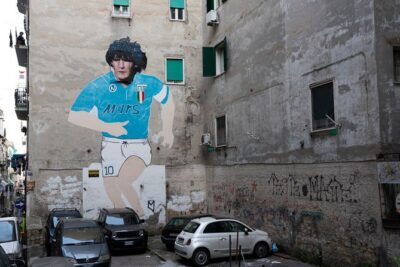
Naples Spanish Quarters Walking Tour Street Art, Folklore & Sweet
Read our review →
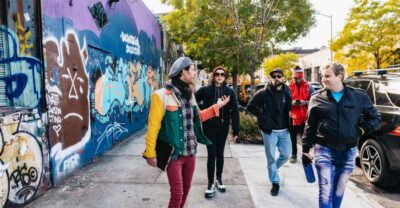
NYC: Brooklyn Graffiti & Street Art Walking Tour in Bushwick
Read our review →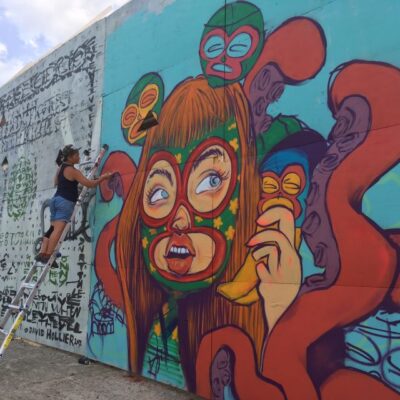
Browse the lists this tour appears in