
REVIEW · BELFAST
Belfast Political Tour-Conflicting Stories Walking Tour
Belfast’s Peace Wall is not simply a backdrop for photographs. It still separates the Falls and Shankill communities, with gates that can close at night. This tour takes you along both sides, where Republican and Loyalist guides explain the conflict through the places, people, and memories that shaped their lives.
I like two things here. First, you get more than a one-sided mural tour. Second, the guides connect broad political events to specific streets, memorials, bombings, and childhood memories. The visit to the Bobby Sands mural, Bombay Street, the Shankill memorials, and the old conflict sites gives the story a strong sense of place.
The main drawback is the format. You are outside for about three hours, often beside busy roads, and the subject is painful and politically charged. Guide quality can vary, and one poorly managed departure had the second guide fail to appear. That appears to be an exception, but it is worth knowing before you book.
Key points to know before you go
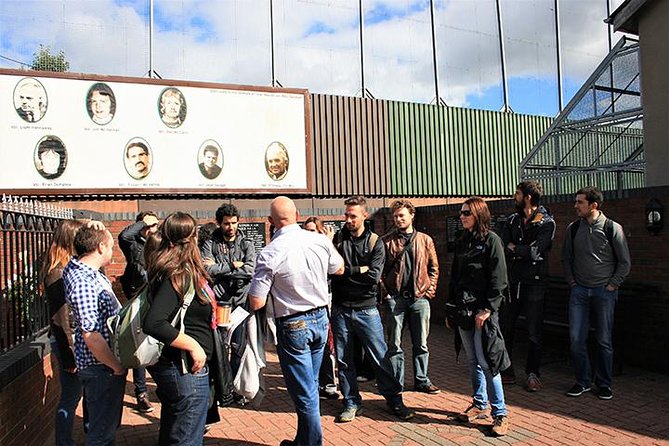
- Two sides of the Peace Wall: The walk begins around West Belfast’s Falls area and finishes on the Lower Shankill, giving you contrasting Republican and Loyalist perspectives.
- Former prisoners and local voices: Guides may include people with direct experience of the conflict, such as Paul, Jack, Ian, or Mark, though names can vary by departure.
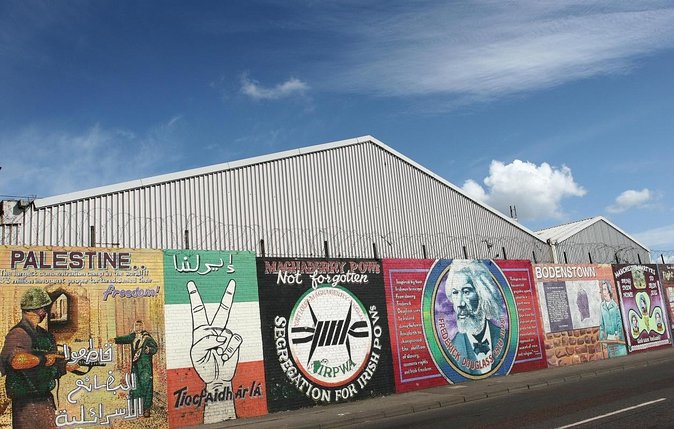
- Murals with context: You see the International Wall, Bobby Sands mural, Bombay Street, Shankill murals, the Somme Memorial, and other sites tied to real events.
- Three hours on foot: The route is mostly an easy urban walk, but you should wear comfortable shoes and prepare for wind, rain, or cold.
- A serious, unsmoothed story: The guides do not present a neat answer about who was right. You hear competing memories, grief, anger, and a continuing desire for peace.
- Good value at $36.05: For the price of a casual meal, you get two guided sections, local interpretation, and access to places that can be hard to understand on your own.
Why the Peace Wall makes this tour different
Many Belfast sightseeing walks show murals and move on. This experience asks you to look at the wall as a living part of the city. It separates neighborhoods that remain close in distance but divided by memory and trust.
The route covers both sides of West Belfast, between Falls Road and Shankill Road. You do not just hear that Catholics and Protestants, or Nationalists and Loyalists, saw the conflict differently. You walk through the communities where those views were formed.
That contrast is the heart of the tour. A Republican guide may explain the struggle for Irish unity and the experience of the Nationalist community. A Loyalist guide may focus on British identity, fear, attacks on Protestant districts, and the loss of friends and family. The point is not to hand you a single approved version.
I like that the experience leaves room for discomfort. Some stories are angry. Some are difficult to accept. The best guides, including Paul and Ian on some departures, help you understand why people think as they do without pretending that every action was justified.
You should arrive ready to listen rather than argue. This is not a political debate where you win a point. It is a walk through contested memory, and the value comes from hearing the reasons people on both sides still carry strong feelings.
A few more walking tours around Belfast worth a look
- A History of Terror – Belfast City Centre Walking Tour
★ 5.0 · 2,883 reviews - Belfast: Political Conflict 3-Hour Walking Tour
★ 4.6 · 2,215 reviews - Belfast: A History of Terror Walking Tour
★ 4.9 · 854 reviews
Starting at Divis Tower and the Falls Road side
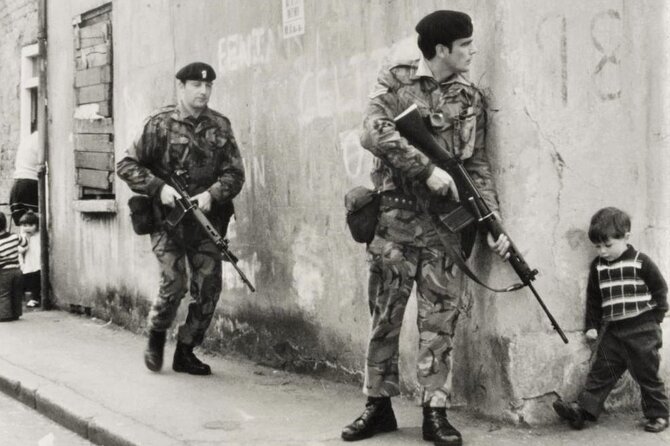
The meeting point is at Divis Tower, Belfast BT12 4QA. From there, the first half lasts about 90 minutes and focuses on the Nationalist area of West Belfast.
The opening section includes the International Wall, the Bobby Sands mural, the D Company memorial garden, and Bombay Street. These are not random stops chosen for easy photographs. Each one helps explain how political identity was displayed, defended, and remembered during the Troubles.
The Bobby Sands mural is likely to be one of the most recognizable points on the walk. Sands was a prominent Republican figure, and the mural has become an important symbol of the Republican story. Your guide places it within the wider conflict rather than treating it as an isolated piece of street art.
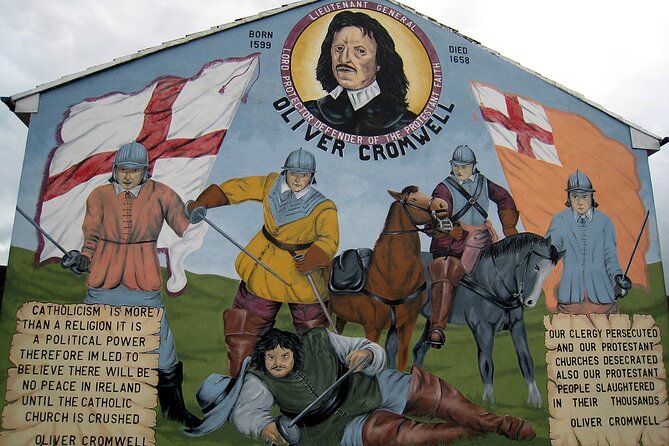
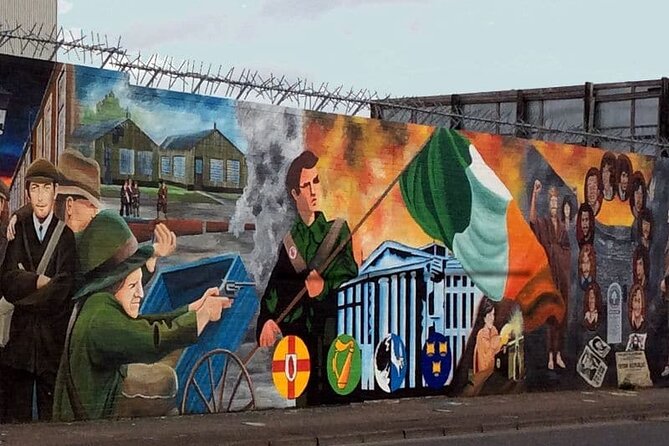
The International Wall offers another useful lesson. Murals in Belfast can commemorate local deaths, support political causes, honor imprisoned figures, or connect Northern Ireland’s struggle with movements elsewhere. Without explanation, the images can seem like a confusing collection of flags and faces. With a local guide, you get the background needed to read them.
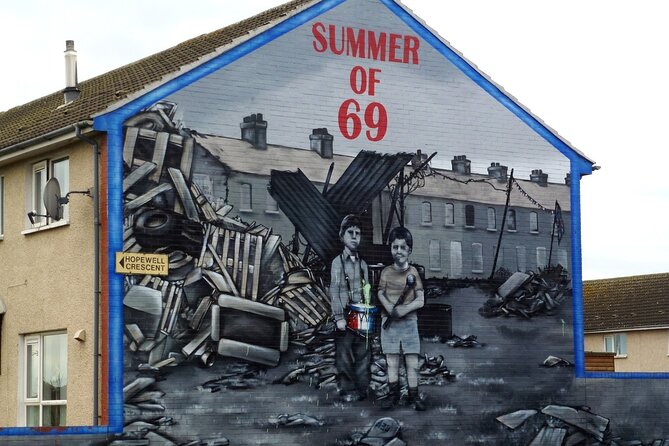
Bombay Street brings the subject closer to ordinary homes and families. The area is tied to some of the earliest violence of the conflict and shows how quickly political division could become a threat to residents. This is one reason I prefer a walking tour to a quick drive-by. You have time to see the setting and understand that these events happened in lived-in streets, not on a distant battlefield.
The pace is moderate because the group stops often. You should not expect a brisk hike, but you should expect to be standing for long periods while the guide speaks. A few people find the first section particularly strong because it combines dates and political background with personal experience.
Crossing into the Shankill story
The second 90-minute section takes you toward Shankill Road and presents a Loyalist perspective. The exact guide can vary, but departures have included guides identified as Mark or Ian, along with other local voices.
The change in tone is clear. Instead of focusing mainly on Republican volunteers and Nationalist political aims, the Shankill section centers on Loyalist identity, British connection, community defense, and the civilians killed in attacks.
Stops include the Shankill Memorial Garden, the Bayardo bombing site, a UVF memorial, the former Frizzells fish shop bombing location, and the Somme Memorial. These places reveal how the community remembers its dead and how public memorials shape local identity.
The Bayardo and Frizzells sites are especially important because they tie political violence to familiar neighborhood places. A pub, shop, or street corner can carry a painful memory for decades. The guide explains who died, what happened, and how the event affected the surrounding community.
The Somme Memorial adds another layer. Loyalist identity is linked not only to local conflict but also to remembrance of British military history. Seeing that connection in the neighborhood helps explain why symbols that may look simple to an outsider can carry deep meaning for residents.
This half may feel less structured on some departures. One guide might offer a clear timeline and personal stories, while another may focus more on individual murals and memorials. That unevenness is the main weakness of the experience. The two halves are designed to balance each other, but they may not feel equally polished every day.
Still, the contrast is useful. You are not asked to accept both narratives as equally correct. You are given the chance to see how two communities remember loss, responsibility, and survival.
The guides are the real heart of the walk
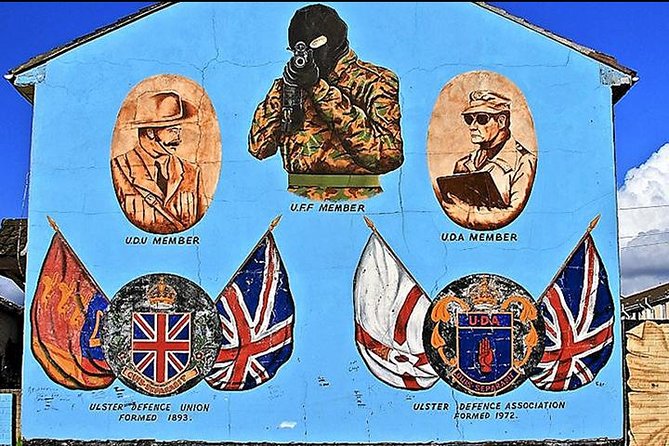
The quality of this tour depends heavily on the people leading it. The strongest departures feature former political prisoners or people who lived through the Troubles directly. Their stories add detail that a textbook cannot provide.
Guides named Paul, Jack, Ian, and Mark have been praised on different departures. Do not assume you will meet a particular person, since staffing can change. What you can expect is a local guide assigned to the Falls section and another assigned to the Shankill section when the tour operates as planned.
Jack, mentioned on one departure, gave a Republican account and discussed memorials to IRA volunteers. Mark, on another, described how the conflict affected his childhood and how friends from different backgrounds were lost. These are not interchangeable stories, and that is precisely why the format works when both guides are present.
The personal approach can also make the tour more confronting. A guide may express views you find harsh or unfair. One account described strong anti-English feeling, while another guide stressed the suffering of Loyalist families. You do not have to agree with every opinion to learn from the setting and the evidence around you.
The better guides make their own position clear without pretending to speak for everyone. They also welcome questions. Ask for dates, definitions, and local context, but keep in mind that you are hearing lived memory, not a neutral academic lecture.
Same streets, a different route:
- Belfast: The Troubles Walls & Bridges Guided Walking Tour
★ 4.8 · 583 reviews - Best of Belfast Walking Tour
★ 5.0 · 399 reviews - Belfast Eclectic Walking City Center Experience, The Marti Way
★ 5.0 · 348 reviews - Belfast Centre Food Tour of 12+ Local Irish Dishes & Drinks
★ 5.0 · 266 reviews
What three hours outdoors really means
The advertised duration is about three hours, split into two sections of roughly 90 minutes each. That is long enough to cover a serious amount of ground, but short enough to fit into a full day in Belfast.
You will be walking on city streets and stopping beside memorials, murals, and the Peace Wall. The route is generally described as manageable and without steep hills, but it is still a full walking experience. Wear shoes you can comfortably use for three hours.
Weather matters. Belfast can be windy around the wall, and one guide specifically advised dressing warmer than expected. Bring layers, and take water. A snack is sensible, especially if you plan to continue sightseeing afterward.
Some sections are beside busy roads with buses, trucks, and other traffic. Stay close to the guide and pay attention when the group stops. One poorly handled departure was criticized for poor microphone placement and for keeping the group too close to traffic. That is not a reason to reject the whole tour, but it is a fair reminder to speak up if you cannot hear or feel safe.
The group size can reach 20 people. That is small enough for a personal question but large enough that you may stand near the back. Move closer when the guide starts speaking, and tell the guide if traffic or wind makes the commentary hard to hear.
What you will take away from the two narratives
The tour does not offer a tidy ending. Northern Ireland’s political future is not resolved during the walk, and the Peace Wall remains a physical sign that peace and trust are not the same thing.
You may be surprised to learn that gates in the wall can still be closed at night. That detail matters because it shows the difference between a ceasefire and full social confidence. The communities are more peaceful, but separation remains part of daily life.
The experience also explains why the words Catholic and Protestant can be too simple on their own. The political divide is often described through Nationalist and Unionist or Republican and Loyalist identities. Religion, nationality, family history, and neighborhood belonging overlap, but they are not identical.
I find the two-guide format valuable because it prevents the murals from becoming a simple morality play. The Republican side remembers state force, discrimination, imprisonment, and the campaign for Irish unity. The Loyalist side remembers attacks, fear, British identity, and people killed in their own districts.
That does not erase responsibility for violence. It gives you the context to ask better questions. Who was considered a civilian? Why did one memorial honor a hero while another community saw the same person as a killer? Why do old symbols remain in places that are trying to build a more peaceful future?
You may still be debating these questions later in the day. That is a sign that the walk has given you something to think about, not a failure to provide a neat answer.
Is $36.05 a fair price?
At $36.05 per person, this is good value if you want history rather than a quick photo stop. You receive about three hours of guided time, two local perspectives, and access to a part of Belfast that is difficult to interpret from a map.
The price also compares well with the effort involved. You could walk along the Falls and Shankill independently, but you would miss much of the meaning behind the murals and memorial gardens. You might also misunderstand a symbol or confuse a memorial for a simple political slogan.
The value is lower if you want a light sightseeing activity. This is not a casual stroll with a few colorful murals. It deals with bombings, killings, imprisonment, paramilitary groups, and unresolved anger. You are paying for interpretation and personal testimony, not entertainment.
The tour is recommended by 93 percent of bookers and has a 4.6 rating from 460 reviews, which suggests a generally dependable experience with some real variation. The two poor accounts matter because they point to practical risks: a missing second guide, sound problems, or a tour that feels too personal and not structured enough.
One case involved a second guide not appearing. The operator acknowledged the mistake and arranged a refund through the booking company. That does not fix the missed experience, but it shows that the advertised two-part format is not guaranteed in every unusual circumstance.
Who should book this Belfast political tour?
I would choose this tour if you want to understand how the Troubles still shape Belfast. It suits curious adults, history-minded visitors, and anyone who wants local voices instead of a purely institutional account.
It is also a good choice if you are deciding between a black cab tour and a walking tour. A cab can cover more ground and keep you off your feet. This walk gives you more time beside the Peace Wall and lets you move through the Falls and Shankill areas at street level.
You should be comfortable with strong political opinions and emotional stories. An open mind helps, but that does not mean accepting every claim without question. Listen carefully, compare the two accounts, and remember that a personal story is powerful evidence of experience, not always a complete history of the conflict.
This may not suit you if you want a short, cheerful introduction to Belfast or if three hours outdoors is too much. It is also a poor fit if you dislike walking beside traffic or prefer a carefully scripted presentation with a single clear viewpoint.
Book it if you want the uncomfortable parts of Belfast explained by people connected to them. Skip it if you only want murals for photographs. For most visitors interested in the city’s political past and present, the combination of streets, memorials, and competing personal accounts makes this one of the more useful ways to spend three hours.
FAQ
Where does the Belfast Political Tour begin?
The tour begins at Divis Tower, Belfast BT12 4QA, in the West Belfast area.
Where does the tour finish?
It finishes at 154 Shankill Road, Belfast BT13 2BE, on the Lower Shankill Road. From there, it is about an eight-minute walk back to the starting point and about 15 minutes to Belfast city centre.
How long does the tour last?
The experience lasts approximately three hours. The Falls Road section takes about 90 minutes, followed by about 90 minutes around Shankill Road.
What will I see on the tour?
The route includes the International Wall, Bobby Sands mural, D Company memorial garden, Bombay Street, Shankill Memorial Garden, the Bayardo bombing site, a UVF memorial, the Frizzells fish shop bombing site, and the Somme Memorial.
Is the tour suitable for most people?
Most people can participate, and service animals are allowed. You should be prepared for about three hours of walking and standing outdoors, and comfortable footwear is recommended.
What happens if the weather is poor or I need to cancel?
You can cancel at least 24 hours before the start time for a full refund. If poor weather causes the tour to be canceled, you will be offered another date or a full refund.
Just added around Belfast
- Belfast Eclectic Walking City Center Experience, The Marti Way★ 5.0 · 348 reviews
- The Real Eclectic Belfast City Walking Tour/Experience.★ 5.0 · 152 reviews
- Belfast Centre Food Tour of 12+ Local Irish Dishes & Drinks★ 5.0 · 266 reviews
- Best of Belfast Walking Tour★ 5.0 · 399 reviews
- Belfast Troubles Murals Street Art and Peace Wall Walking Tour★ 5.0 · 163 reviews
- The Real Story of Belfast walking tour with a local guide★ 5.0 · 144 reviews
- Belfast: Best of Belfast History, Culture & Art Walking Tour★ 4.9 · 158 reviews
- Belfast Walking Tour with a Local – History & Craic★ 4.9 · 130 reviews
Walking Tours, compared.

Magical London: Harry Potter Guided Walking Tour
Read our review →
Reykjavik Food Walk – Local Foodie Adventure in Iceland
Read our review →
History and Hauntings of Salem Guided Walking Tour
Read our review →
New Orleans Premier Ghost, Voodoo and Vampire Walking Tour
Read our review →
Amsterdam Anne Frank: Small-Group Walking Tour & Local Guide
Read our review →

Edinburgh Castle: Guided Walking Tour with Entry Ticket
Read our review →
Anne Frank’s Story – Guided Walking Tour through Amsterdam
Read our review →Browse the lists this tour appears in