
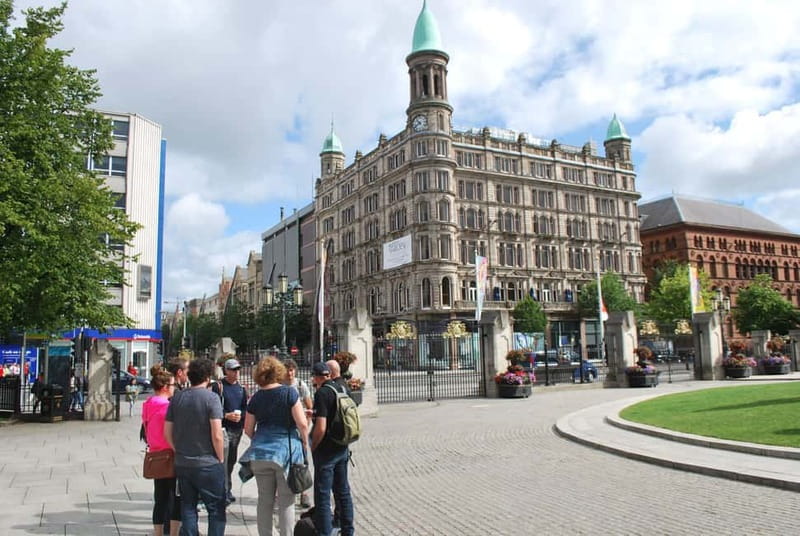
REVIEW · BELFAST
Belfast: A History of Terror Walking Tour
Belfast’s city centre can look calm and polished today, but this 2.5-hour walking tour shows how much fear and violence once filled these same streets. Starting at City Hall, you’ll follow the story of the Troubles through former attack sites, security cordons, memorials, and places where daily life changed almost overnight.
I like two things right away. First, the tour gives you the long background needed to understand why the conflict began, rather than treating the Troubles as an isolated event. Second, guides such as James, Mylie, Anne, Steve, and Chris explain the subject with care, personal insight, and occasional humour. The main drawback is the pace of information: this is a serious history lesson, and you need strong English to get the most from it.
Key points to know before booking
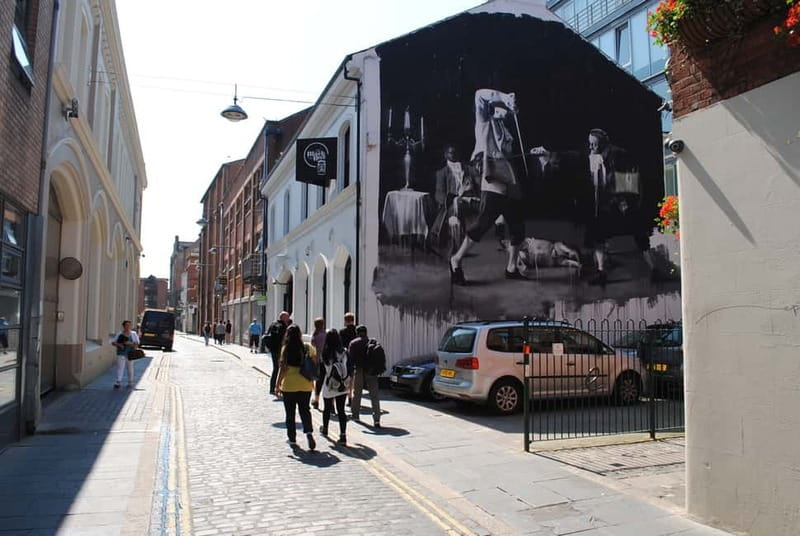
- The city centre becomes the classroom: Visit sites linked to bombings, attacks, security controls, and public remembrance.
- The tour covers 800 years of context: You’ll learn how older political, religious, and social divisions shaped the Troubles.
- Local guides add lived experience: Several guides grew up in Belfast during the conflict and can explain what ordinary life felt like.
- The tone is balanced and humane: The tour addresses the British Army, police, paramilitary groups, civilians, and competing political views.
- The route is easy on foot: It covers about 1.5 miles on flat city streets with no hills or steps.
- The ending looks toward peace: The Forgotten Troubles Memorial helps connect past violence with the work still needed today.
Starting at Belfast City Hall
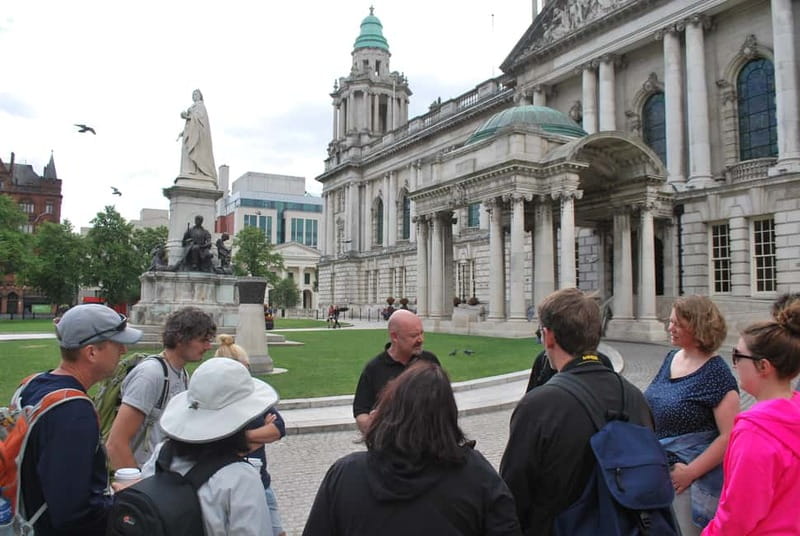
Meet your guide at the front gates of Belfast City Hall on Donegall Square North. Look for a black jacket or T-shirt with the DC Tours logo. Arriving 10 minutes early makes sense, since the guide uses the opening moments to set out the route and explain how the tour will handle a difficult subject.
City Hall is a useful starting point because it places Belfast’s political and civic life at the centre of the story. You won’t simply receive a list of dates here. The guide begins by explaining the forces that shaped Ireland’s division and the conditions that later made Belfast the main stage for the Troubles.
That long introduction matters. If you arrive knowing only that the conflict involved Catholics and Protestants, you’ll leave with a far too simple picture. The tour adds political identity, British and Irish connections, social divisions, policing, housing, and the effects of earlier events. You may not remember every date, but you should come away with a clearer sense of why the conflict developed.
A few more walking tours around the UK worth a look
- Magical London: Harry Potter Guided Walking Tour
★ 4.7 · 22,044 reviews - Edinburgh: Harry Potter Magical Guided Walking Tour
★ 4.8 · 11,944 reviews - Edinburgh Castle: Guided Walking Tour with Entry Ticket
★ 4.7 · 11,699 reviews
The long road to the Troubles
The tour’s first major strength is its time scale. The Troubles are usually dated from the late 1960s to the peace process, but the guide reaches back roughly 800 years to explain the divisions that shaped Northern Ireland.
This does not mean you’ll sit through a dry lecture before walking. The history is tied to the streets around you, which helps make the background easier to follow. Your guide explains how different communities developed separate political loyalties and how arguments over identity, rights, and constitutional status hardened over time.
I especially value this approach for anyone arriving with little knowledge of Irish history. The subject can become confusing quickly, with unfamiliar names, groups, and political positions. A local guide can sort out the basic framework before the tour reaches the most painful events.
You’ll also hear that the conflict was not only about religion. Catholic and Protestant labels mattered because they often matched wider political and social identities, but the story also involves British rule, Irish nationalism, unionism, discrimination, civil rights, and the question of whether Northern Ireland should remain part of the United Kingdom.
Following the bombing sites and attack locations
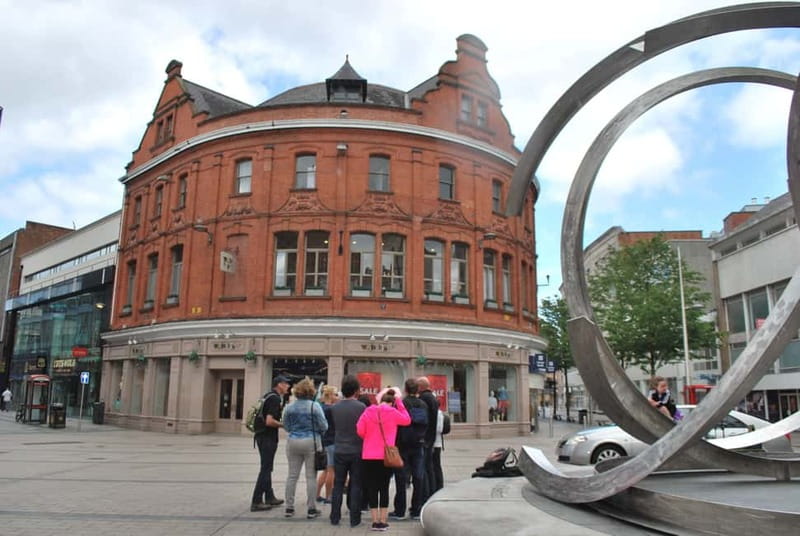
The route then moves through city-centre places where major Troubles-era events occurred. The tour includes sites of bombings and attacks, along with locations where security cordons once controlled movement through Belfast.
These stops are powerful partly because the modern city can hide what happened. Shops, offices, streets, and public spaces now serve ordinary purposes. Your guide helps you picture how these places looked and felt when bomb threats, checkpoints, searches, and sudden violence were part of daily life.
At each stop, expect a mix of facts and human detail. The guide explains what happened, who was affected, and how an attack changed the use of a public space. The focus is not on shock for its own sake. Instead, the places show how violence reached beyond political leaders and armed groups into the lives of workers, shoppers, business owners, families, and passersby.
This is where the supplied audio headsets earn their keep. Belfast streets can be noisy, and a walking tour loses much of its value if you miss names or dates. The headsets let you hear the guide clearly while moving between stops. They are also useful if you have some hearing difficulty.
The subject matter can be upsetting. You may hear about deaths, injuries, fear, and the long effect of violence on families. That is not a flaw, but it is worth knowing before you book. This is not a light sightseeing stroll with a few dramatic stories added.
Understanding daily life during the conflict
One of the most useful parts of the tour is its attention to ordinary routines. The guide explains how people lived with fear while still going to work, running shops, meeting friends, and trying to maintain a normal life.
Personal experience adds force here. Guides including Anne, Chris, Jim, Steve, and James have described growing up in Belfast during the Troubles. Their accounts help connect political events to the small choices people had to make each day.
You may hear about the tension around public places, the effect on businesses, and the way residents learned to read their surroundings. The key lesson is that conflict does not always look like constant fighting. Much of its power comes from uncertainty, restrictions, rumours, and the need to consider risks that most people never face in ordinary city life.
The best guides also know when not to overplay a story. Mylie has been praised for explaining personal accounts with care, while James is noted for checking that people understand each stage before moving on. That kind of attention matters during a long tour about grief and fear.
Appropriate humour appears from time to time. It does not erase the seriousness of the subject. Used well, it gives you a moment to breathe and makes a heavy afternoon easier to absorb.
Same streets, a different route:
- Underground Vaults Walking Tour in Edinburgh Old Town
★ 4.5 · 8,506 reviews - London: The Original Jack the Ripper Walking Tour
★ 4.7 · 7,833 reviews - Oxford University Walking Tour With University Alumni Guide
★ 5.0 · 6,905 reviews - Edinburgh Castle: Guided Walking Tour with Entry Ticket
★ 5.0 · 5,540 reviews
The role of armed groups, police, and the British Army
The tour does not present the Troubles as a story with one simple villain. You’ll learn about paramilitary organisations, the police, the British Army, and the civilians caught between competing sides.
That balance is important, but balanced does not mean vague. The guide lays out the actions and impact of the main groups, then gives you the context needed to understand why different communities saw the same event in very different ways.
This part can be particularly helpful if you have read accounts from only one political viewpoint. A neutral guide can explain why certain words, symbols, anniversaries, and neighbourhoods still carry strong meaning. You are given room to think rather than being pushed toward a ready-made verdict.
The tour also covers how security measures shaped Belfast. Former cordon locations show that the city centre was once controlled in ways that affected movement, trade, and the feel of public space. These details make the conflict more tangible than a timeline in a museum display.
The peace process and Belfast’s new direction
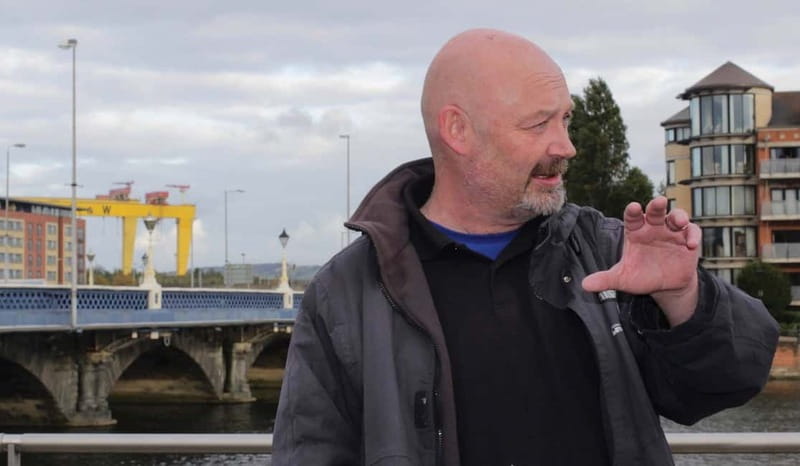
The tour does not stop at violence. It follows the path toward the peace process and explains how Belfast began to regenerate after the worst years of conflict.
You’ll learn that peace is not a single moment that solves everything. It changes the way a city functions, but old memories, political disagreements, community divisions, and questions of identity remain. Belfast’s progress is real, yet the tour avoids pretending that every problem has disappeared.
That makes the final part more useful than a simple feel-good ending. You can look at the restored and renewed city centre with a clearer understanding of what it took to get there. Cafés, offices, shops, and public spaces do not tell the whole story, but they show how a city can reclaim places once associated with danger.
The tour’s hopeful note comes from the idea that history can be faced without being simplified. The past still matters, but it does not have to dictate the future.
The Forgotten Troubles Memorial
The Forgotten Troubles Memorial gives the tour a place for reflection. It also broadens the discussion beyond the best-known events and political narratives.
At this stop, you’ll learn about people and experiences that can be left out when the Troubles are reduced to famous attacks or negotiations. The memorial helps bring attention back to human loss and to the challenges that remain in a post-conflict society.
This is not a grand landmark that you visit for architecture. Its value comes from the pause it creates at the end of a long route. After hearing about the causes, violence, and peace process, you have a chance to consider who paid the price and what reconciliation still requires.
For me, that ending fits the tour well. It leaves you with questions rather than a tidy final answer.
What the 2.5 hours feel like
The route covers about 1.5 miles, and Belfast city centre is flat, with no hills or steps. Physically, it is manageable for most people who can walk at a relaxed city pace. Comfortable shoes still matter, since you remain on foot for the full tour.
The mental pace is heavier than the walking pace. You’ll stop at 10 locations, listen to extended explanations, and move through a large amount of history. The strongest guides keep this moving with clear storytelling, personal examples, and checks to make sure the group is following.
Small groups can make the tour feel more personal. One guide, James, has been especially attentive with small groups, adapting the discussion and offering suggestions for other places to visit in Belfast. Group size can vary, so you should not assume every departure will have the same feel.
Bring a waterproof jacket and wear warm layers in winter. The tour runs in rain, and Belfast weather can change quickly. Recent visitors have completed it in wet conditions, but dry clothing and sensible footwear will make the experience much easier.
Is the $35 price fair?
At $35 per person, this is not the cheapest way to walk around Belfast, but the value is good if you want serious historical context.
You are paying for 2.5 hours with a trained local guide, a carefully planned route, audio equipment, and interpretation that would be difficult to create for yourself. You could walk past the same streets for free, but you would miss much of what happened there and why the places matter.
The tour is especially good value early in your Belfast stay. Take it near the beginning, and later visits to museums, murals, memorials, or other parts of the city will make more sense. It can also help you decide which subjects deserve further reading.
The price is less convincing if you want only a quick orientation to Belfast’s main sights. This tour is focused on modern conflict and peace, not a broad introduction to architecture, food, shopping, or every major attraction.
Free cancellation up to 24 hours before the start and the option to reserve now and pay later make booking less risky. The tour is offered in English only, and you need a good standard of English to follow the detail.
Who should book this walking tour?
I would choose this tour if you want to understand Belfast beyond headlines and stereotypes. It suits adults and children aged 12 or older who can handle serious material and stay focused for 2.5 hours.
It is also a strong choice for visitors who prefer history told through places rather than inside a museum. You’ll walk through the city centre, stand where events happened, and hear how those events affected real people.
I would be more cautious if you are travelling with young children, dislike discussions of political violence, or want a relaxed sightseeing walk. The tour is respectful, but it does not soften the subject.
You do not need prior knowledge of the Troubles. In fact, the long historical introduction makes it useful for first-time learners. Strong English is essential, since the tour is available only in English and depends on detailed spoken explanation.
Final verdict: book it for context, not entertainment alone
I recommend Belfast: A History of Terror Walking Tour if you want a thoughtful explanation of how the Troubles began, what life felt like during the conflict, and how peace changed the city.
Its best features are the local guides, the city-centre locations, the audio headsets, and the effort to present competing perspectives without losing sight of civilian suffering. James, Mylie, Anne, Chris, Steve, Jim, and the other guides bring different personal styles, but the common thread is clear storytelling with care.
Book it if you want Belfast to make sense. Skip it only if you are looking for a short, cheerful city introduction or if the subject matter feels too heavy for your trip.
FAQ
Where does the Belfast History of Terror Walking Tour begin?
The tour begins at the front gates of Belfast City Hall, Donegall Square North, Belfast. Your guide will wear a black jacket or T-shirt with the DC Tours logo.
How long is the tour?
The walking tour lasts 2.5 hours and covers about 1.5 miles.
Is the walking route difficult?
The route is through flat Belfast city centre streets, with no hills or steps. Comfortable shoes are still recommended.
What language is the tour conducted in?
The tour is available in English only. A good standard of English is needed to follow the information and storytelling.
What age is this tour suitable for?
Children under 12 are not suitable for the tour. The subject includes political violence, deaths, and the human impact of the Troubles.
Does the tour operate in bad weather?
Yes. The tour takes place regardless of the weather. Bring weather-appropriate clothing, and a waterproof jacket is recommended.
Are audio headsets provided?
Yes. Audio headsets are included so you can hear the guide clearly throughout the walk.
Can I cancel the tour?
You can cancel up to 24 hours in advance for a full refund. You can also reserve your place and pay later.
Just added around the UK
- Falmouth: Vibrant Historical Walking Tour (award-winning)★ 4.9 · 75 reviews
- The Must-Sees of Edinburgh: Small Group Walking Tour in French★ 4.9 · 88 reviews
- Edinburgh: Old Town History Walking Tour★ 4.9 · 528 reviews
- Edinburgh: Old Town Stories – Guided Walking Tour★ 4.9 · 86 reviews
- Ghosts, Ghouls & Gallows :The Original Bristol Ghost Walk★ 4.6 · 76 reviews
- Edinburgh: Private Walking Tour with a Local★ 4.4 · 78 reviews
- Edinburgh: Private Walking Tour in French with Clémentine★ 5.0 · 73 reviews
- Edinburgh: Multi-Sensory Old Town Historical Walking Tour★ 4.6 · 290 reviews
Walking Tours, compared.

Magical London: Harry Potter Guided Walking Tour
Read our review →
Reykjavik Food Walk – Local Foodie Adventure in Iceland
Read our review →
History and Hauntings of Salem Guided Walking Tour
Read our review →
New Orleans Premier Ghost, Voodoo and Vampire Walking Tour
Read our review →
Amsterdam Anne Frank: Small-Group Walking Tour & Local Guide
Read our review →
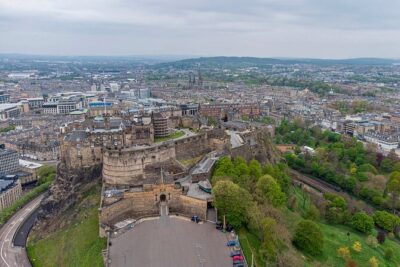
Edinburgh Castle: Guided Walking Tour with Entry Ticket
Read our review →
Anne Frank’s Story – Guided Walking Tour through Amsterdam
Read our review →Browse the lists this tour appears in