
REVIEW · BELFAST
The Real Story of Belfast walking tour with a local guide
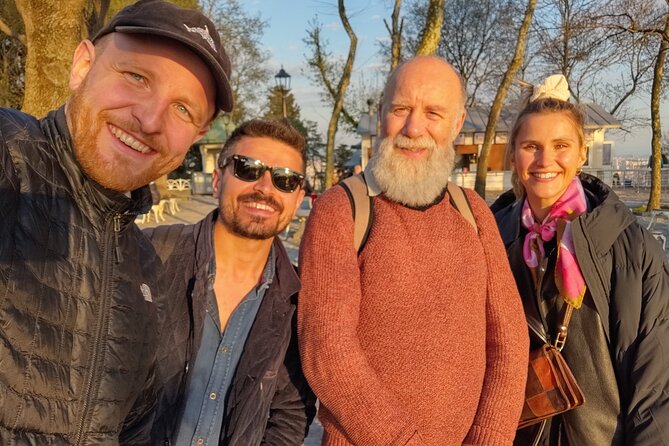
Belfast’s story is written into its streets, pubs, churches, arcades, and grand civic buildings. This small-group walk with local guide Martin connects those places into one clear account, from the city’s early growth to the political conflict that shaped modern Northern Ireland.
I like the small group of no more than 12 and the relaxed pace. I also like that the tour covers much more than the Troubles, giving you the setting you need before tackling Belfast’s harder chapters. Martin’s personal connection to the city adds useful detail, and he is happy to answer questions.
The main consideration is time on your feet. The walk lasts close to three hours, takes place in all weather, and is not suited to people with unassisted mobility issues. Comfortable shoes and rain protection are practical, not optional extras.
Why this Belfast walk is worth your morning
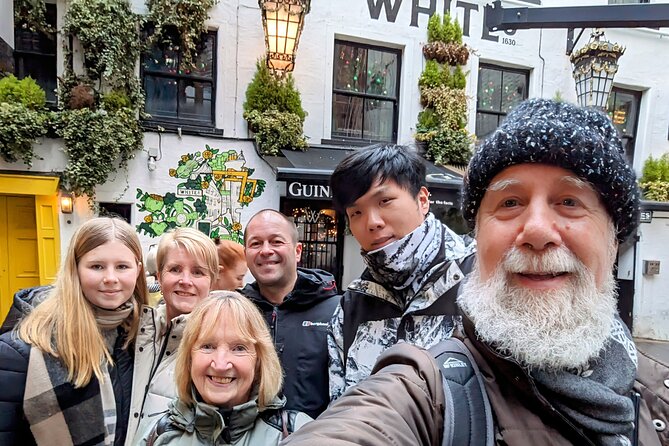
- A local guide named Martin: He explains Belfast through the places he knows well, adds personal memories, and keeps the story open to questions.
- A small group capped at 12: You can hear clearly and ask questions without shouting across a crowd.
- Old Belfast in the Belfast Entries: These narrow passages offer a glimpse of the city before modern streets and large commercial buildings took over.
- History beyond the Troubles: The tour covers Belfast’s growth, churches, linen trade, public buildings, and political life, while still explaining the conflict that shaped the city.
- A useful first look at central Belfast: The route passes several major landmarks and finishes back at City Hall, making it easy to continue exploring on your own.
- Practical city advice: Martin has been praised for sharing food and drink suggestions, extra reading material, and a simple list of places to see after the walk.
Starting at Belfast City Hall
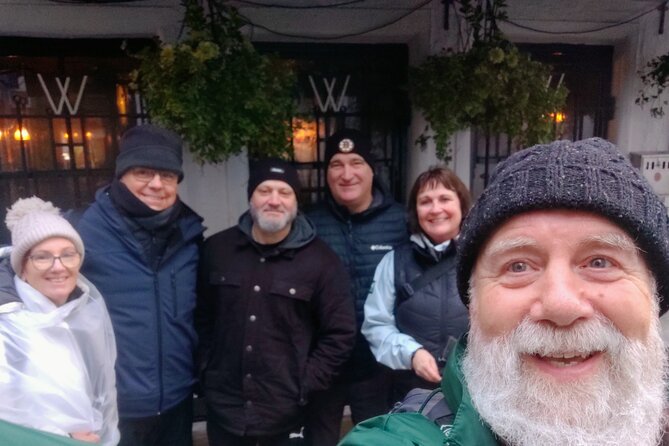
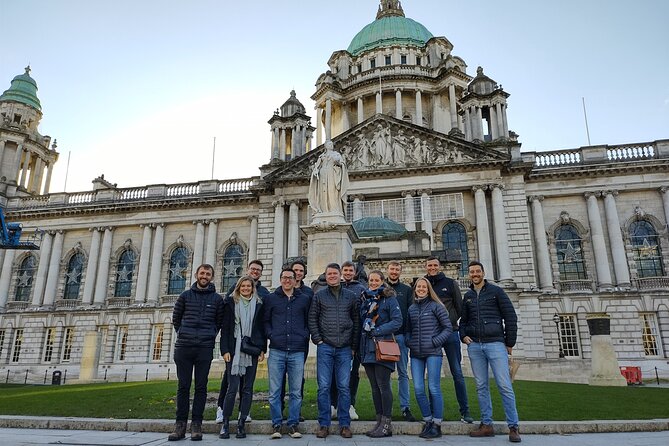
The tour begins at City Hall at 10:30 a.m., a sensible meeting point in the middle of Belfast. You spend about 30 minutes around the building, looking at its architecture and learning why it became such an important civic symbol.
This opening gives you more than a photo stop. City Hall helps explain Belfast’s rise as an industrial city and provides a useful reference point for the rest of the walk. Once you understand the importance of the civic center, the surrounding streets make more sense.
I like beginning here because you get your bearings before moving into smaller lanes and older quarters. You also have time to look at the building rather than simply gather outside it and move on.
There is no admission charge for this stop. The tour focuses on the exterior and surrounding area, so do not book it expecting a full indoor visit.
More Guided Tours in Belfast:
- Belfast: The Troubles Walls & Bridges Guided Walking Tour
★ 4.8 · 583 reviews - Magical London: Harry Potter Guided Walking Tour
★ 4.7 · 22,044 reviews - History and Hauntings of Salem Guided Walking Tour
★ 5.0 · 14,564 reviews
Ulster Hall and Belfast’s public life
A short stop beside Ulster Hall introduces the building’s long connection with music, performance, public meetings, and major figures. The hall has more than 160 years of stories attached to it, and Martin uses those stories to show how Belfast’s public life developed.
This is a brief ten-minute pause, but it adds a useful cultural layer. Belfast is not explained only through politics and industry. Its concert halls and public rooms also show what people valued, argued about, and gathered to enjoy.
You will not spend long inside or touring the hall. Think of this as a focused look at the building’s role in the city rather than a separate architectural visit.
The Belfast Entries: narrow lanes, old stories
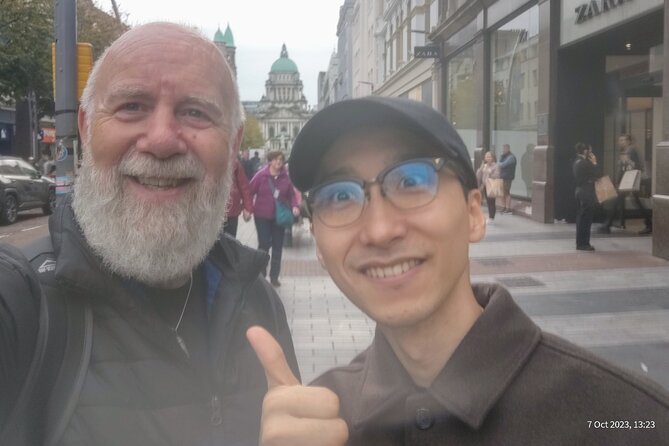
The Belfast Entries are one of the most distinctive parts of the route. These old passages preserve something of Belfast before broad modern roads and large commercial blocks changed the center.
You spend around 20 minutes walking through them and hearing about the people who shaped the city. This is where the tour’s title feels most appropriate. Instead of treating history as a list of dates, Martin places it under your feet, in the lanes where people once worked, traded, met, and moved through the city.
The entries may be less grand than City Hall or the Crown Liquor Saloon, but they are arguably more revealing. You see the scale of older Belfast and gain a better sense of how compact the early city was.
Watch your footing and keep your shoes comfortable. Narrow historic lanes are interesting precisely because they have not been smoothed into modern visitor spaces.
St Mary’s Church and Folktown
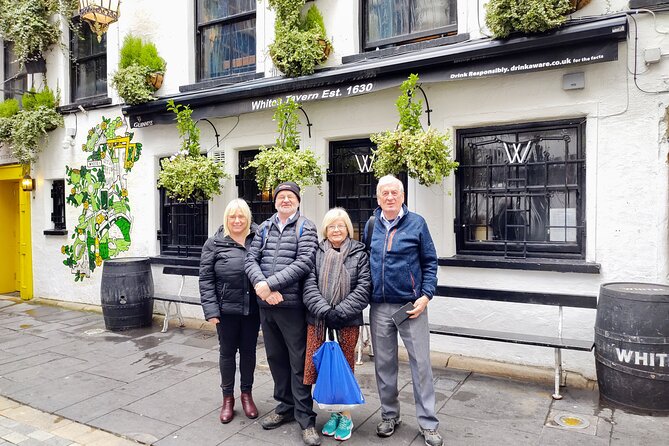
St Mary’s Roman Catholic Church marks another side of Belfast’s development. It was the city’s first Catholic church and sits at the heart of the area known as Folktown.
The stop lasts about ten minutes. Martin uses the church and its surroundings to explain religious, social, and community life in Belfast. That matters because the city’s story cannot be understood through grand civic buildings alone. Faith and neighborhood identity have always played a major part.
This stop also helps keep the tour balanced. You are not being led through one narrow version of Belfast. Instead, you see how different communities and institutions shaped the city.
The itinerary does not promise an extended interior visit, so expect to learn about the church and its setting rather than spend a long time sightseeing inside.
A few more walking tours around Belfast worth a look
- A History of Terror – Belfast City Centre Walking Tour
★ 5.0 · 2,883 reviews - Belfast: Political Conflict 3-Hour Walking Tour
★ 4.6 · 2,215 reviews - Belfast: A History of Terror Walking Tour
★ 4.9 · 854 reviews - Belfast Political Tour-Conflicting Stories Walking Tour
★ 4.5 · 459 reviews
Kelly’s Cellars and the politics of dissent
Kelly’s Cellars is Belfast’s oldest family-owned bar, and the tour pauses there for about five minutes. Its importance comes from its connection with revolution and dissent, which gives Martin another setting for discussing politics beyond formal government buildings.
The stop is short, but the location is memorable. A historic pub can reveal how political ideas moved through ordinary life, not just through speeches and official meetings.
This is not presented as a food or drink stop, and snacks are not included in the tour price. You hear the story from outside or nearby, then continue. If you want to return later for a drink, you will have the location noted, but that would be separate from the walking tour.
Linen Quarter and Belfast’s industrial rise
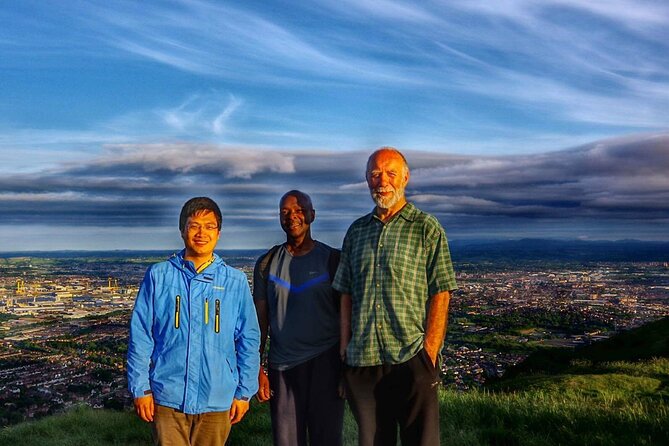
The Linen Quarter brings the city’s industrial past into view. The former linen warehouses date from the mid-1800s and point to the trade that helped make Belfast prosperous and internationally important.
You spend about ten minutes in this area. It is a valuable change of scene after the older lanes and church district because it shows the scale of Belfast’s commercial ambitions.
I particularly like this part for first-time visitors. It is easy to focus on political history and miss the economic forces that built the city. The linen warehouses help explain why Belfast gained such impressive public buildings, busy streets, and a strong civic identity.
The stop is listed as including admission, though the tour remains primarily a street-based experience. You should expect to learn about the quarter from the outside rather than take a separate warehouse tour.
Queen’s Arcade and the Assembly Rooms
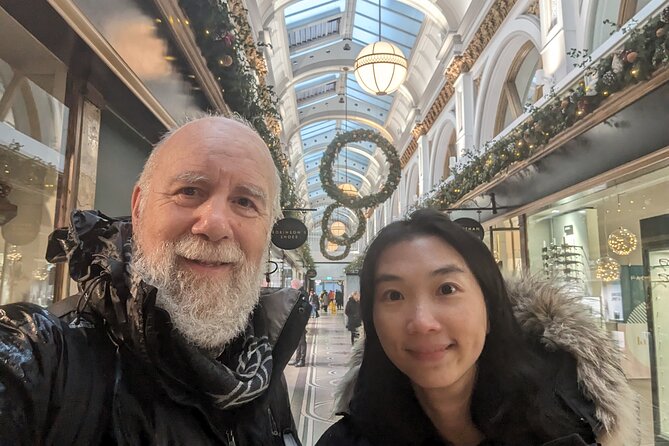
Queen’s Arcade is a Victorian shopping arcade, and the ten-minute stop gives you a look at a more refined side of nineteenth-century Belfast. Its covered passage, shopfronts, and architectural details are a pleasant contrast to the rougher character of the Belfast Entries.
The route then reaches the Assembly Rooms, Belfast’s oldest public building, for about 15 minutes. This is one of the more important historical stops because the building connects public life, leadership, political activity, and worship.
You also learn about the place where Belfast leaders and revolutionaries met and worshipped. That detail gives the tour a human scale. Political history was not only made in grand institutions. It was also shaped in rooms where people gathered, argued, planned, and practiced their faith.
Together, Queen’s Arcade and the Assembly Rooms show how much variety fits into central Belfast. Within a short distance, you move from shopping architecture to public debate and religious life.
The Crown Liquor Saloon’s remarkable interior
The Crown Liquor Saloon is one of Belfast’s best-known Victorian pubs. The stop lasts about ten minutes and focuses on the story behind the building and its elaborate interior.
The pub is often admired for its decorative details, so this is a good place to slow down and look carefully. It is not simply another old bar. Its design reflects the care and expense once put into public drinking spaces.
The tour description allows you to visit the iconic interior, but it does not include a drink or meal. If you want to linger over a pint, plan to do so after the tour or return later. That separation keeps the walk moving and lets you see more of the city within the allotted time.
The Europa Hotel and the recent past
The final major stop is the Europa Hotel, where you spend about 15 minutes. The hotel became known as a base for the world’s press and media during the Troubles.
This is where the tour’s wider historical approach pays off. Martin does not present the walk as a dedicated Troubles tour, but he does not avoid the subject. Instead, the earlier stops help you understand the city’s communities, institutions, industry, and political tensions before you reach a landmark so closely tied to the conflict.
Expect a measured explanation rather than a sensational account. The experience is designed to place the Troubles within Belfast’s longer story. That makes it a useful introduction for anyone who wants context without spending the entire morning on murals, paramilitary history, or conflict memorials.
The tour then returns to the City Hall meeting point. That makes the route easy to fit into a day of sightseeing, and you can use what you have learned to choose your next stop.
Martin’s guiding style
The guide is a major part of this experience. Martin is described as warm, patient, and easy to talk to, with a strong command of Belfast and Irish history. He also uses personal experiences and old photographs to help you compare Belfast in the past with the city you see today.
That personal element matters. Dates and names can blur together on a long walking tour, but a guide’s own connection to the city can give those facts a stronger sense of place.
Martin’s approach also appears to suit people who want a balanced account. He explains different viewpoints and does not reduce Belfast’s complicated past to a single political position. You can ask questions as you go, which is especially useful when a brief stop raises a subject you want explained more fully.
Several practical touches add value. Martin has provided city recommendations, food and drink suggestions, and a short reference sheet covering places discussed on the walk. Those extras can help you plan the rest of your stay.
Small group, price, and physical effort
At $27.78 per person, the tour offers solid value if you want nearly three hours of guided context in central Belfast. You are paying for a local guide, route planning, historical explanation, and a group size limited to 12 people. There are no extra admission fees listed for the main stops, but snacks are not included.
The small group is important. In a large crowd, narrow lanes and busy city streets can make it hard to hear. With up to 12 people, Martin can respond to questions and keep the pace more personal.
The walk requires moderate physical fitness. You will be outside in all weather, so wear comfortable shoes and dress for rain or wind. The experience is not recommended for people who need unassisted mobility support.
The tour is offered in English and uses a mobile ticket. It is near public transportation, and service animals are allowed. Since it is popular enough to be booked about 31 days ahead on average, booking early is sensible if your Belfast dates are fixed.
Free cancellation is available up to 24 hours before the start time for a full refund. Changes or cancellations inside that window are not accepted, and the tour requires a minimum number of people to operate.
Who should book this tour
I would choose this walk as an early Belfast activity, especially if you have only a day or two in the city. It gives you a framework for later visits to museums, historic buildings, neighborhoods, and political sites.
It suits you best if you:
- Want Belfast’s full story, not only the Troubles
- Prefer a small group to a large city tour
- Like asking questions while you walk
- Enjoy local stories and personal detail
- Can comfortably walk for close to three hours
- Want central landmarks in one compact route
It may not suit you if you want a dedicated conflict tour, a food tour, or extensive indoor visits. It is also not the right choice if long periods of walking in uncertain weather would be difficult.
Should you book The Real Story of Belfast?
Yes, if you want a thoughtful first introduction to Belfast and value a guide who can explain difficult subjects without turning the tour into a political argument. The strongest reasons to book are the small group, Martin’s personal connection to the city, the wide range of stops, and the clear effort to place the Troubles within a longer story.
Choose something else if your main goal is murals, political tours, or a pub crawl. For a balanced walk through Belfast’s civic, religious, industrial, commercial, and political past, this is a well-priced morning with a useful sense of place.
FAQ
Where does the tour start?
The tour starts at Belfast City Hall, Belfast BT1 5GS, UK.
What time does the tour begin?
The start time is 10:30 a.m.
How long does the walking tour last?
The tour lasts approximately 2 hours and 45 minutes to 3 hours.
Where does the tour end?
The tour ends back at the City Hall meeting point.
What language is the tour offered in?
The tour is offered in English.
How many people can join the tour?
The group has a maximum of 12 travelers.
Is the tour suitable for people with mobility issues?
The tour requires moderate physical fitness and is not recommended for people with unassisted mobility issues.
What should I wear?
Wear comfortable shoes and dress appropriately for the weather. The tour takes place in all weather conditions.
Are snacks included?
No. Snacks are not included.
Can I cancel for a full refund?
Yes. You can cancel at least 24 hours before the experience start time for a full refund. Cancellations or changes made less than 24 hours before the start time are not accepted.
Just added around Belfast
- Belfast Eclectic Walking City Center Experience, The Marti Way★ 5.0 · 348 reviews
- The Real Eclectic Belfast City Walking Tour/Experience.★ 5.0 · 152 reviews
- Belfast Centre Food Tour of 12+ Local Irish Dishes & Drinks★ 5.0 · 266 reviews
- Best of Belfast Walking Tour★ 5.0 · 399 reviews
- Belfast Troubles Murals Street Art and Peace Wall Walking Tour★ 5.0 · 163 reviews
- Belfast Political Tour-Conflicting Stories Walking Tour★ 4.5 · 459 reviews
- Belfast: Best of Belfast History, Culture & Art Walking Tour★ 4.9 · 158 reviews
- Belfast Walking Tour with a Local – History & Craic★ 4.9 · 130 reviews
Walking Tours, compared.

Magical London: Harry Potter Guided Walking Tour
Read our review →
Reykjavik Food Walk – Local Foodie Adventure in Iceland
Read our review →
History and Hauntings of Salem Guided Walking Tour
Read our review →
New Orleans Premier Ghost, Voodoo and Vampire Walking Tour
Read our review →
Amsterdam Anne Frank: Small-Group Walking Tour & Local Guide
Read our review →

Edinburgh Castle: Guided Walking Tour with Entry Ticket
Read our review →
Anne Frank’s Story – Guided Walking Tour through Amsterdam
Read our review →Browse the lists this tour appears in