
REVIEW · TOKYO
Asakusa: A Big-picture History Walk to Know Japan
Asakusa is more than a temple stop. In two hours, this walk uses the Sumida River, old gates, shopping street, temple, and shrine to explain how Japan changed from a closed feudal country into the modern nation you see today. The guide connects local sights to European history, ukiyo-e, Buddhism, Shinto, and Japan’s opening to the outside world.
I like the clear explanation of Buddhist and Shinto customs, especially the difference between prayer at a temple and worship at a shrine. I also like the way the tour reaches beyond Asakusa, explaining how ukiyo-e influenced Western Impressionist painters and why Japan once allowed only the Netherlands to trade.
The main drawback is its pace. You cover a small area, but the historical material comes quickly, and the walk involves a moderate amount of standing and walking. Some people have also found the headsets slightly echoey, so ask your guide to repeat anything you miss.
Key points about this Asakusa history walk
- The Sumida River sets up Japan’s opening to the world, including the Edo shogunate, Dutch trade, and Admiral Perry.
- Kaminarimon’s dragon offers a memorable East-West comparison, since Japanese and Western dragons carry opposite meanings.
- Nakamise connects shopping, Buddhism, and ukiyo-e, including the prints that reached Europe and influenced Impressionism.
- Sensō-ji and Asakusa Shrine share a long religious story, showing how Buddhism and Shinto coexisted for more than 1,000 years.
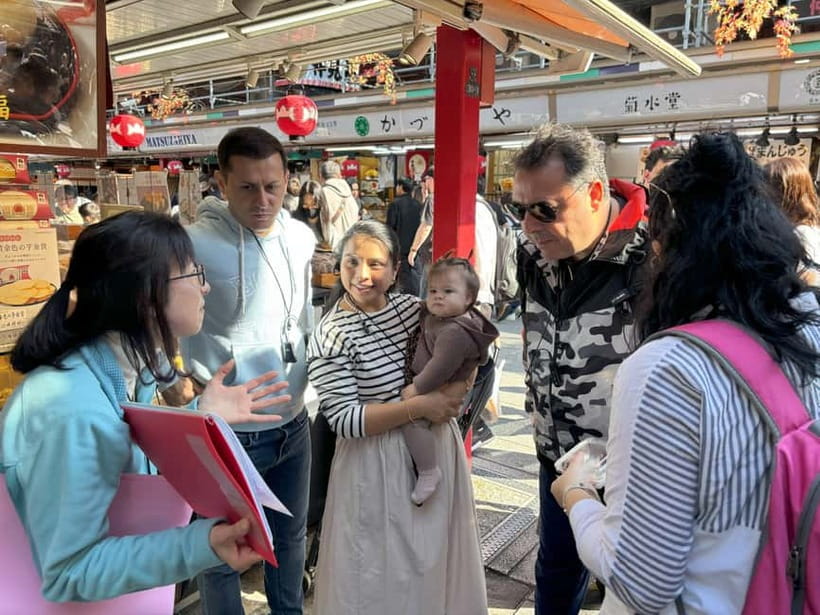
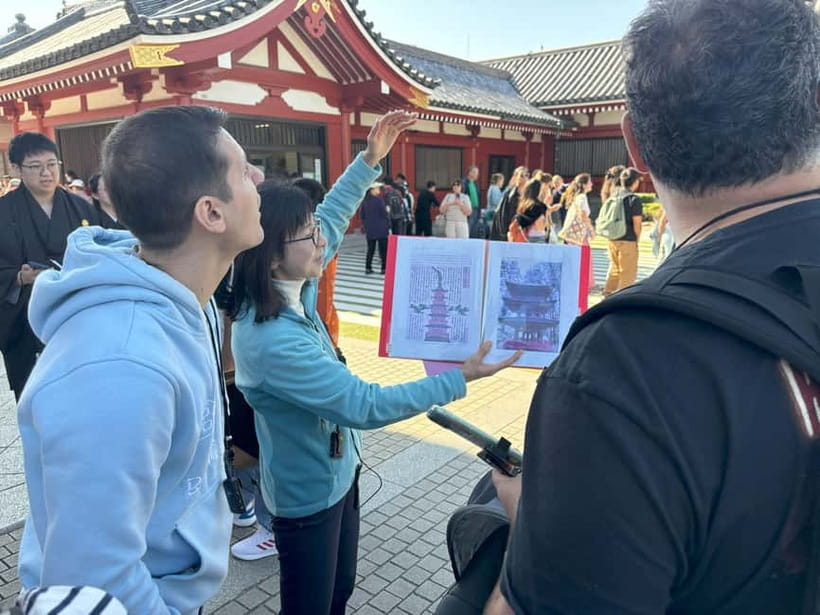
- Guides use visual material and examples, with guides such as Amy bringing printed images to make difficult ideas easier to follow.
- The two-hour format suits a first visit, with traditional snack tastings and headsets for groups of three or more.
Why this short walk explains more than Asakusa
Many Asakusa walks take you from Kaminarimon to Sensō-ji, point out the lantern, and finish with a photo. This one uses those familiar places as teaching tools. You still see the famous sights, but you also learn why they matter.
That difference is important. Asakusa can look like a collection of attractive gates, stalls, and religious buildings if you do not know the story behind them. The guide gives you a framework: Japan’s religious traditions, its long period of controlled foreign contact, its rapid opening in the 19th century, and its cultural influence overseas.
You do not need a background in Japanese history. The explanations are designed to be broad and visual rather than academic. Guides have used printed images, practical examples, and comparisons with Europe to make the material easier to grasp.
The tour costs $58 per person and lasts two hours. I see that as fair value if you want context rather than just directions. You are paying for a certified English-speaking guide, organized commentary at seven stops, traditional snack tastings, and headsets for groups of three or more. It is less attractive if you mainly want free time for shopping or quiet temple visits.
More History Walking Tours in Japan
- Tokyo: Imperial Palace and Shogun Historical Walking Tour
★ 5.0 · 2,251 reviews - Tokyo: Imperial Palace Japanese History Walking Tour
★ 4.9 · 987 reviews - Kyoto Gion: 2-Hour Geisha Culture & History Walking Tour
★ 5.0 · 1,186 reviews
Starting beside the Ginza Line
Meet in front of the Burger King beside Exit 4 of Asakusa subway station on the Ginza Line, station G19. Step outside Exit 4 rather than waiting underground. The stated meeting address is 2-chōme-20-6 Kaminarimon.
This is a practical starting point because it puts you close to Kaminarimon and the central Asakusa sights. Arrive ready to walk, with comfortable shoes, water, and clothing suited to the weather. The tour runs rain or shine.
The walk is not described as suitable for people with mobility impairments, and the activity includes a moderate amount of walking. If you have mobility concerns, contact the supplier before booking. They will try to accommodate you, but you should not assume every part of the route will be easy.
The Sumida River and Japan’s controlled borders
The first stop is Tokyo Cruise Asakusa Pier, where you spend about 15 minutes looking at Japan’s story from the river. This is a smart opening because the Sumida is not just scenery. It helps the guide explain Japan’s period of isolation and its later contact with foreign powers.
You learn why the Edo shogunate sealed the country for more than 200 years and why the Netherlands was the one European country allowed to trade. The point is not simply that Japan was closed. You also hear how controlled contact with Europe continued through Dutch trade and information.
The guide then brings the story forward to Admiral Perry’s arrival, which forced Japan to reopen. The connection to present-day Tokyo includes Odaiba’s former gun batteries and the Statue of Liberty replica facing the Pacific.
That comparison gives you a useful sense of how old defensive decisions still shape modern Tokyo. It also makes the opening of Japan feel like a local story, not a distant chapter in a textbook.
Buddhism and Shinto at the information center
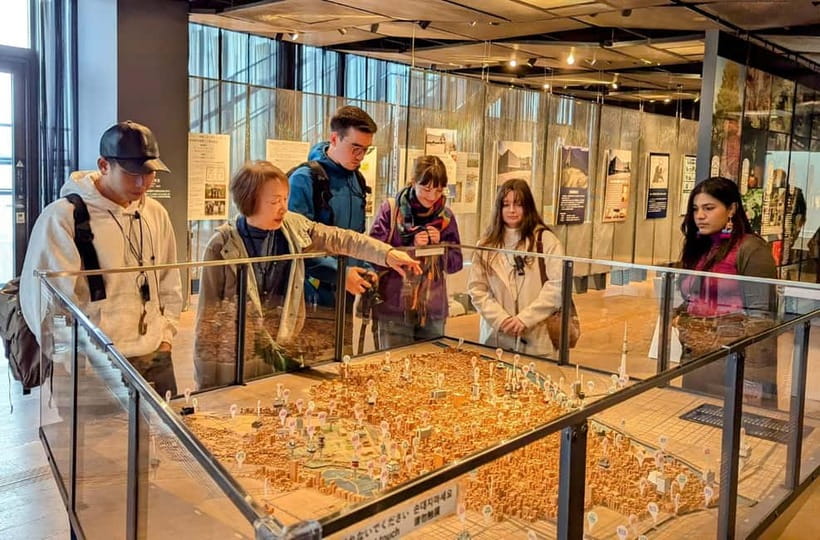
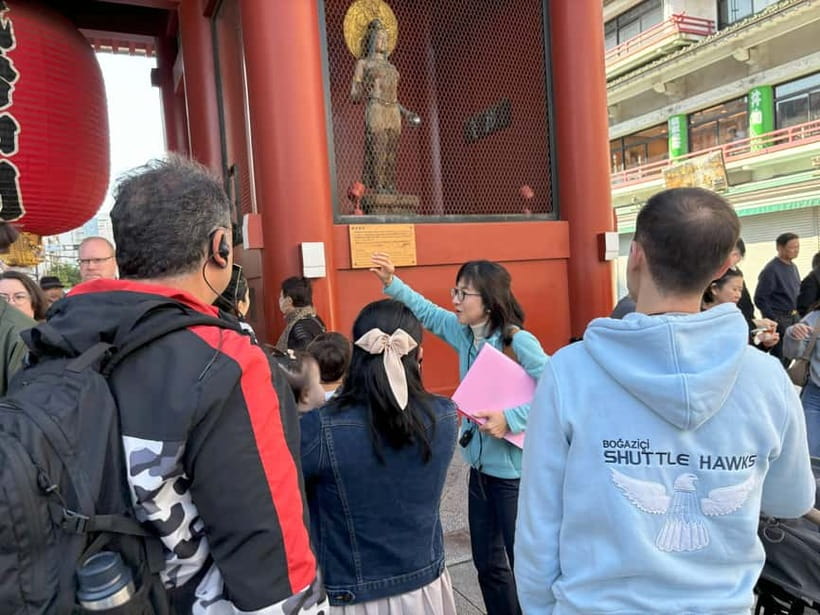
At the Asakusa Culture Tourist Information Center, the guide spends about 15 minutes laying out the basics of Buddhism and Shinto. This preparation pays off later, since the walk takes you to both a Buddhist temple and a Shinto shrine.
You learn to recognize the different religious settings and to think about what people are doing at each one. The guide explains how prayer differs in Buddhism and Shinto, giving you a practical way to behave respectfully during the rest of your visit.
I especially like this early explanation because many first-time visitors see Japanese religious customs but are unsure how to interpret them. Instead of memorizing a string of rules, you get a simple foundation before reaching the busiest sites.
The historical focus is aimed more at adults, but the tour welcomes families. One eight-year-old particularly enjoyed the fortune-telling activity at the temple entrance, and guides such as Choco have kept both children and adults involved.
More History Walking Tours in Tokyo:
- Berlin: Third Reich & Cold War Guided Walking Tour
★ 4.9 · 8,378 reviews - Munich: Third Reich & WWII Walking Tour
★ 4.6 · 6,181 reviews - Berlin’s Best: 2 Hour Walking Tour Third Reich and the Cold War
★ 5.0 · 5,486 reviews - Third Reich Berlin: Hitler and WWII Walking Tour
★ 5.0 · 3,301 reviews
Kaminarimon and the two kinds of dragons
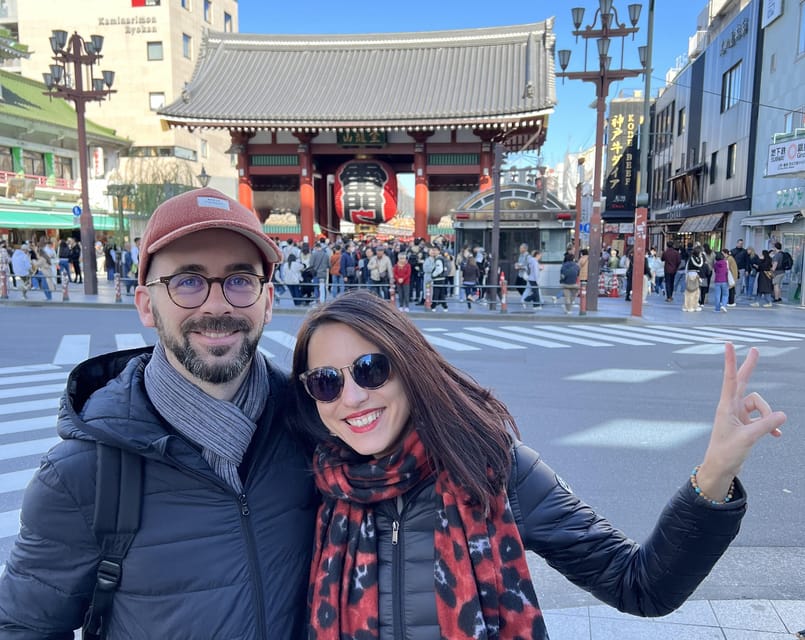
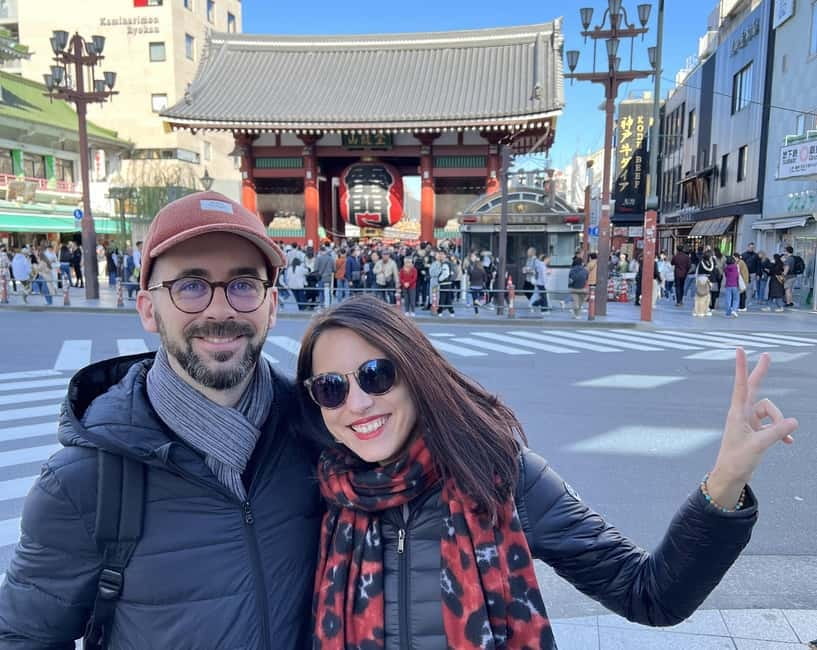
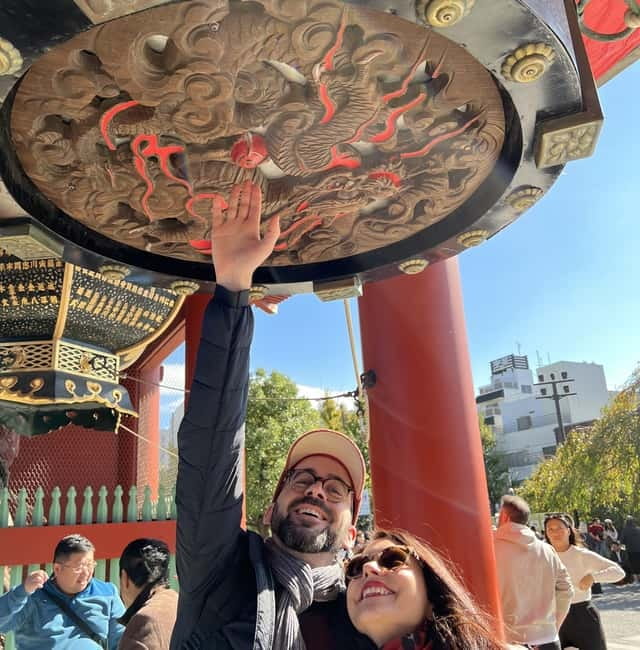
Kaminarimon, or Thunder Gate, gets about 15 minutes. This is one of Asakusa’s most recognizable sights, with its large lantern and strong visual presence, but the guide asks you to look at more than the photo opportunity.
The main lesson here concerns Japanese and Western dragons. In many Western stories, dragons are dangerous creatures to defeat. The Japanese dragon carries an opposite role, and the guide explains why that difference matters.
This is the sort of compact comparison that helps you remember a larger cultural point. You are not simply told that Japan is different. You see how the same creature can represent different ideas in two traditions.
The gate can be crowded, so your guide’s commentary is useful. Groups of three or more receive headsets, allowing you to hear while standing near a busy public landmark. One person found some echo in the earpiece, though, so tell the guide if the sound becomes difficult to follow.
Nakamise, Buddhist symbols, and ukiyo-e
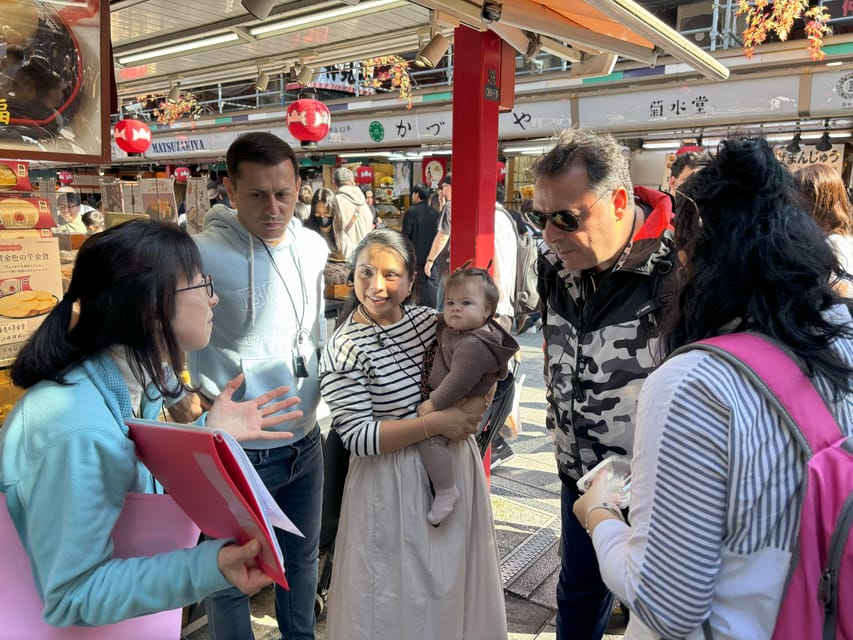
The longest stop is Nakamise Shopping Street, with about 30 minutes. This is the best place on the route for seeing how religion, commerce, art, and tourism meet in one narrow stretch.
Nakamise is one of Japan’s oldest shopping streets. You pass stalls and shops while learning about Buddhist symbols, including the vajra, also called tokko. The guide uses these objects to make Buddhist ideas visible instead of treating them as abstract terms.
The second lesson here reaches far beyond Asakusa: ukiyo-e woodblock prints. You learn how these prints unexpectedly made their way to Europe and helped influence Western Impressionist painters.
That connection adds real value to a simple walk down a shopping street. The prints were not just local decorations. They changed how European artists thought about composition, everyday scenes, and the use of space.
You should not expect a long shopping break. The tour gives you time to see Nakamise, but its purpose is explanation. If you want to buy souvenirs, note what catches your eye and return after the tour. You will get more from the guide if you stay with the group rather than browsing every stall.
Hōzōmon Gate and a surprising medieval comparison
At Hōzōmon Gate, the guide spends about 15 minutes on a comparison that many people do not expect. You learn that people in Japan and Europe had remarkably similar ways of thinking 1,000 years ago.
This does not mean the two societies were identical. The value of the comparison is that it pushes back against the idea that medieval Japan and medieval Europe developed in completely separate mental worlds. The guide uses the gate and its setting to show shared human concerns and patterns of thought.
This stop is likely to appeal to anyone who enjoys history that crosses national borders. It also keeps the tour from becoming a list of Japanese facts. You are repeatedly asked to compare, question, and connect.
Because the tour covers large ideas in short sections, you may want to ask questions as you go. Guides including Sachi, Yoko, Yasu, Kay, and Amy have been praised for answering questions and adjusting explanations to the group.
Sensō-ji, Japan’s oldest Buddhist temple
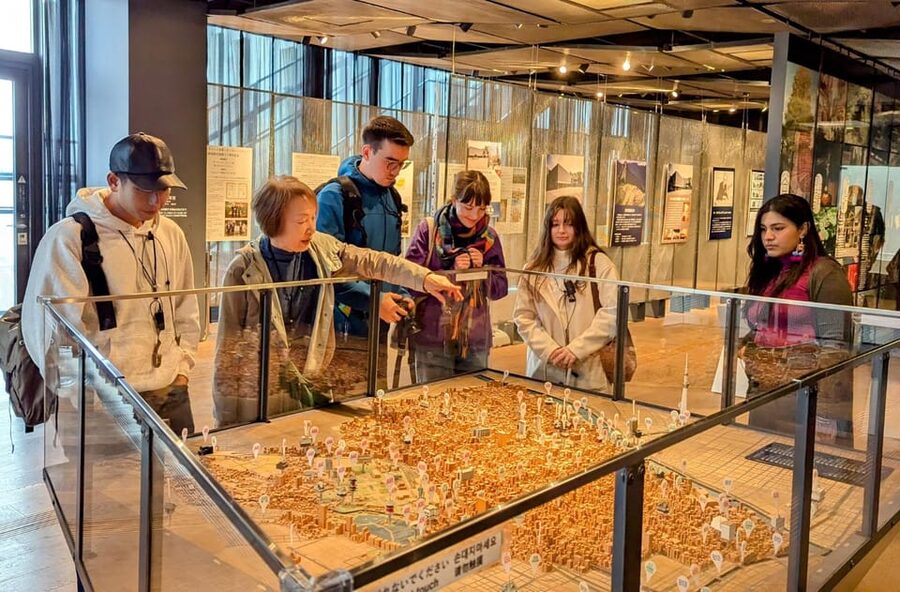
Sensō-ji receives about 15 minutes, which is enough for a focused explanation but not a full temple study. The guide presents it as Japan’s oldest Buddhist temple and uses the site to continue the comparison between medieval Japan and Europe.
This is where the earlier religious lesson becomes practical. You can look at the temple setting with a clearer idea of what makes a Buddhist site different from a Shinto one. The guide also explains how prayer works in Buddhism, rather than leaving you to copy what other people are doing.
A useful part of the visit is the chance to learn respectful behavior at shrines and temples. Kay, a Tokyo local, has helped visitors understand how to approach these places properly. That sort of advice is worth having early in a Japan trip, since you will likely visit many religious sites afterward.
The fortune-telling activity at the temple entrance can be a fun moment for families. It is not the main purpose of the tour, but it gives children a way to connect with the site while the adults follow the history.
Asakusa Shrine and a millennium of coexistence
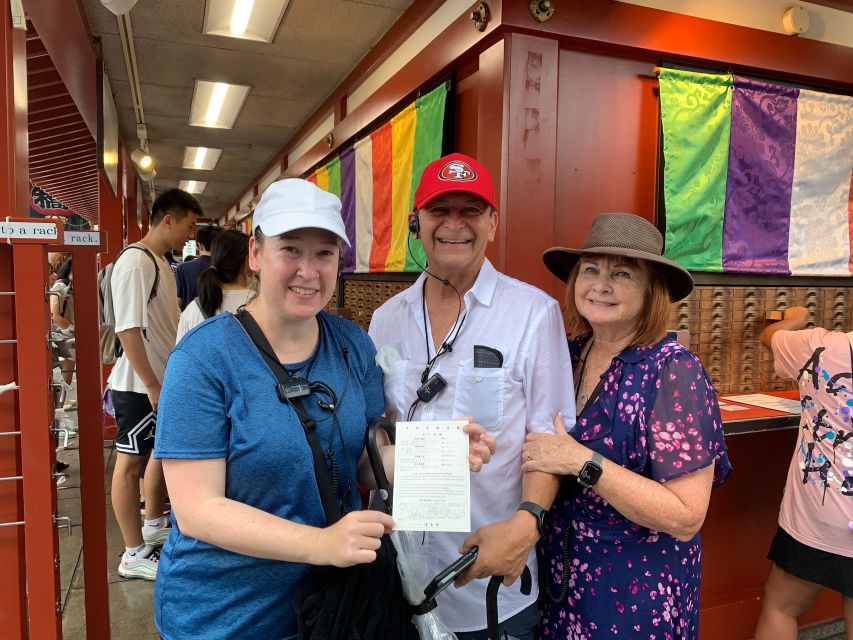
The final stop is Asakusa Shrine, where the tour spends about 15 minutes. This is the moment that ties the whole walk together.
Here you see a Shinto shrine and a Buddhist temple sharing the same grounds, worshippers, and long history. The guide explains how the two traditions coexisted peacefully for more than 1,000 years.
That arrangement may surprise you if you expect religions to be separated into distinct buildings and communities. In Japan, the relationship between Buddhism and Shinto has often been more blended and practical. Seeing both places side by side makes the explanation much easier to remember.
I like ending here because the tour does not treat Buddhism and Shinto as competing labels. Instead, you finish with a clearer picture of how religious life developed in Japan and why Asakusa remains such a good place to see that history in practice.
The guides and the way the tour feels
The guide is central to the experience. The English-language tour is led by a certified guide, and several guides have received strong praise for being warm, clear, and flexible.
Choco has kept children engaged while explaining the temple and the local area. Sachi has been especially effective at explaining Asakusa’s historical and spiritual meaning, including for teenagers. Amy has used printed images to make her explanations easier to understand.
Other named guides include Yoko, Yasu, Kay, and Sachiko. You should not assume which guide you will receive, but the repeated focus on friendly explanations and local insight suggests that the human side of the tour is one of its main strengths.
The tour can also adapt to unusual timing. During the Sanja Matsuri, one guide helped connect the mikoshi parade to the history being discussed. If your visit happens during a local event, the exact route or timing may feel less predictable, but that can add something special.
Who gets the most from the $58 price
At $58, this is not the cheapest way to see Asakusa. You can walk between the same landmarks for free, and entry to the public streets does not require a tour.
The value comes from the connections. In two hours, you get an explanation of the Sumida River, Japan’s controlled foreign trade, Perry’s arrival, Buddhist and Shinto practice, Japanese dragons, vajra symbolism, ukiyo-e, Western Impressionism, and religious coexistence.
That is a lot, so the experience suits you if you want a useful overview at the beginning of your Japan trip. It can help you make sense of later temple and shrine visits. It also works well if your time in Tokyo is short and you want one organized introduction to Asakusa.
I would be less likely to recommend it if you want a slow photographic walk, extensive shopping time, or detailed architectural study. The tour moves through a compact area, and the explanations take priority over lingering at each sight.
The traditional snack tastings are a pleasant extra, but they should not be the reason you book. The real benefit is the guide’s ability to turn familiar sights into a connected story.
Practical details before you book
The activity lasts two hours and operates in English. Audio support is included, and headsets are provided for groups of three or more. Bring comfortable shoes, water, and clothing suited to the weather.
Children under six may join free, and families are welcome. Still, the historical content is aimed more at adults, so very young children may enjoy the visual sights more than the explanations.
The tour requires a minimum number of participants. If that number is not met, the operator will notify you at least 24 hours before departure and provide a full refund. You can also cancel up to 24 hours in advance for a full refund, and the reserve-now, pay-later option keeps your plans flexible.
Should you book this Asakusa walk?
Book it if you want Asakusa to make sense, not just look good in photographs. The strongest reasons are the clear Buddhist and Shinto explanation, the river-based story of Japan’s opening, and the link between ukiyo-e and European art.
I would choose it early in a Tokyo visit, when a broad historical frame will improve the rest of your sightseeing. Come ready to walk, listen, and ask questions. If you do, the $58 price buys more than a route through famous places. It gives you a practical way to understand what you are seeing.
FAQ
How long does the Asakusa history walk last?
The tour lasts two hours.
Where does the tour meet?
Meet in front of the Burger King beside Exit 4 of Asakusa subway station, G19, on the Ginza Line. The stated address is 2-chōme-20-6 Kaminarimon.
Which language is the tour offered in?
The live tour guide speaks English, and an English audio guide is included.
What places does the tour visit?
The route includes Tokyo Cruise Asakusa Pier, Asakusa Culture Tourist Information Center, Kaminarimon, Nakamise Shopping Street, Hōzōmon Gate, Sensō-ji Temple, and Asakusa Shrine.
Are headsets provided?
Yes. Headsets are provided to hear the guide clearly for groups of three or more.
Is the tour suitable for children?
Children younger than six may join without charge, and families are welcome. The historical focus is recommended mainly for adults, although children have enjoyed activities such as fortune telling at the temple entrance.
What happens if the tour is cancelled?
The tour requires a minimum number of participants. If that number is not reached, the operator will notify you at least 24 hours before the tour, and participants will receive a full refund.
Just added around Tokyo
- Tokyo: Private Walking Tour with a Local Guide★ 4.9 · 469 reviews
- Tokyo: Private Walking Tour with a Local★ 4.4 · 419 reviews
- Tokyo: Private Custom Walking Tour with Local Guide★ 4.8 · 533 reviews
- Tokyo: Shibuya Highlights Walking Tour★ 4.8 · 601 reviews
- Tsukiji Fish Market Small-Group Food Walking Tour★ 5.0 · 621 reviews
- Tokyo Castle & Imperial PalaceーShogun Walking Tour★ 5.0 · 724 reviews
- Tokyo: Dark Side of Tokyo Shinjuku Red Light Walking Tour★ 4.7 · 862 reviews
- Tokyo Drift: GT-R Car Club R35 Liberty Walk Daikoku meeting★ 4.8 · 875 reviews
History Walking Tours, compared.

Berlin’s Best: 2 Hour Walking Tour Third Reich and the Cold War
Read our review →
Third Reich Berlin: Hitler and WWII Walking Tour
Read our review →
New Orleans Garden District History Walking Tour
Read our review →
Cartagena: Historic Center and Getsemaní Shared Walking Tour
Read our review →
Imperial Palace and Shogun Historical Walking Tour
Read our review →Browse the lists this tour appears in