
REVIEW · DRESDEN
Dresden: Guided City Walk
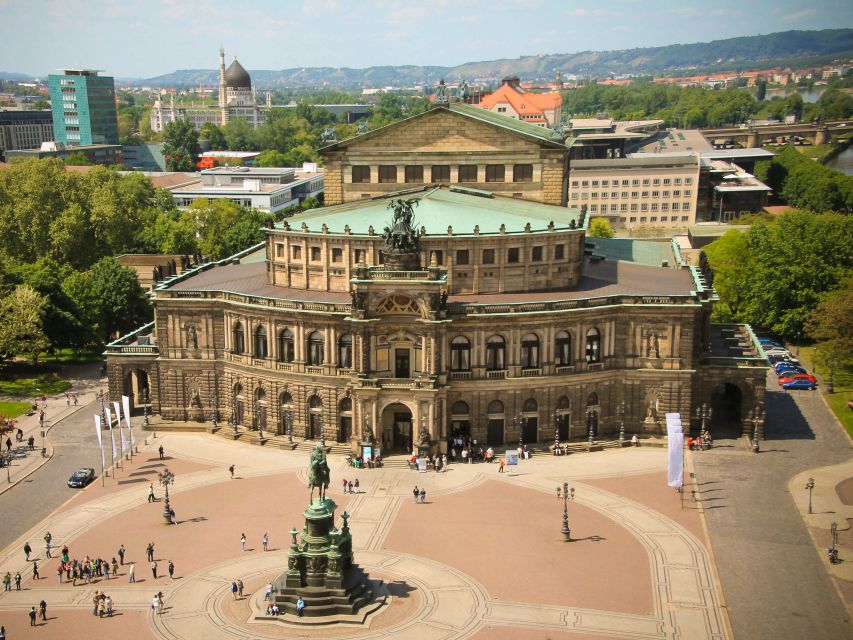
Dresden’s old town is a compact lesson in power, destruction, rebuilding, and change. In 90 minutes, this walk links the medieval Stallhof, Augustus the Strong’s Baroque showpieces, and the political drama of the 1989 Peaceful Revolution. I especially like the route’s focus on Frauenkirche, Semperoper, and Zwinger, plus its attention to newer and controversial buildings. You get Dresden as a living city, not just a row of pretty façades.
I also like the practical finish: your guide shares tips on restaurants, events, and leisure activities. The main consideration is language. This is German only, so you need enough German to follow historical stories and anecdotes. The tour has a 4.6 rating from 2,075 bookings, and the strongest praise centers on guides who make the walk informative without letting it feel dry.
Key points to know before you book
- A 90-minute route through Dresden’s core: Begin at Neumarkt and finish near the Frauenkirche, with the major old-town sights packed into a manageable walk.
- The history moves from the Middle Ages to 1989: Expect stories about medieval Dresden, Renaissance energy, Baroque ambition, East and West Germany, and the Peaceful Revolution.
- The Zwinger includes the Nymphenbad: This small, mysterious water feature is an unusual detail that many quick city walks skip.
- You see Dresden’s most famous façades from outside: The route includes the Semperoper, Residenzschloss, Fürstenzug, Stallhof, Dresden Cathedral, and Taschenbergpalais.
- German is the only tour language: The guide is live, licensed, and well informed, but no other language is listed.
- The price is modest for a first orientation: At $15 per person, the walk can be a sensible way to decide which buildings and museums deserve more of your time.
Starting beneath the QF Passage at Neumarkt
The meeting point is easy to miss if you wait outside. Go into the QF Passage and down to the lower level, where you will find the seating area of Dresden Information. This is also a useful place to get your bearings before the walk begins.
The tour starts at Neumarkt, Dresden’s grand central square and the setting for the Frauenkirche. From here, the guide can explain how the city grew, how its historic center was damaged, and how Dresden later rebuilt much of its old appearance.
I like beginning here because the square gives you an instant visual lesson. The Baroque church dominates the view, yet the surrounding buildings also raise questions about reconstruction and modern design. Your guide discusses new and controversial buildings, so the walk is not simply an exercise in admiring old stone.
The meeting area is in the historic center, and the tour ends close to the same general part of town. That makes it practical for a first morning in Dresden. You can continue on foot to the Frauenkirche, return to the square, or use the guide’s restaurant and leisure suggestions immediately after the walk.
More City Highlights Walking Tours in Germany
- Berlin City walk Government District and Places of Democracy
★ 4.7 · 8,467 reviews - Munich: Old Town & Viktualienmarkt City Walk in German
★ 4.7 · 2,304 reviews - Regensburg: Guided City Walking Tour of the Old Town
★ 4.7 · 1,395 reviews
Stallhof and Fürstenzug: Dresden’s royal stage
From the starting point, the route moves through the Stallhof, or Stable Yard. This former royal complex gives you a feel for how Dresden’s rulers used architecture to display wealth and control. It is less famous than the Frauenkirche, but it helps connect the city’s grand monuments to daily court life.
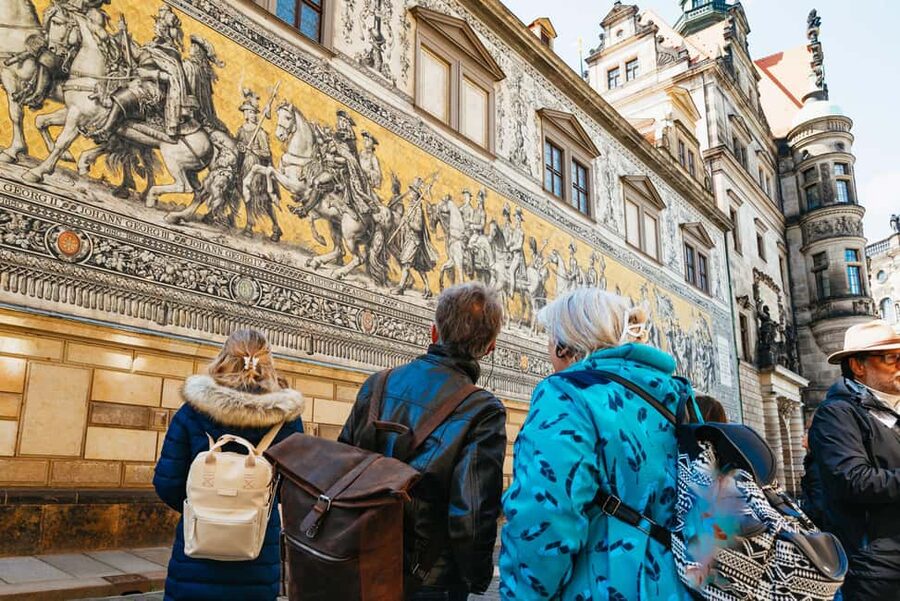
The guide then brings you to the Fürstenzug, the Procession of Princes. This long mural of mounted rulers is one of Dresden’s most memorable outdoor artworks. It is especially useful on a guided walk because the figures and dates can seem like a blur when you look at them alone. A guide can explain the sequence and why the mural matters to Saxon identity.
This portion also shows why a short guided walk can be more useful than simply following a map. The sights are close together, but their purpose is not always clear. Dresden’s center can look like one continuous Baroque set. The stories about rulers, court ceremony, and city growth give the buildings a human reason for being there.
Brühl’s Terrace and the view toward the river
Brühl’s Terrace is the route’s best place to pause and take photographs. The promenade runs along the Elbe and gives you a change of pace after the close courtyards and monumental buildings.
Your guide points out the setting and explains how Dresden developed around the river. The stop also gives you a chance to see the city from a wider angle rather than only from street level. If the group moves quickly elsewhere, this is one place where you will want to take a moment for your own photos.
The terrace can be busy, and a 90-minute schedule does not allow for a long, unhurried stop. I would treat the photo opportunities as a preview. If the river views appeal to you, you can return later with more time.
Semperoper and Dresden’s Baroque showpieces
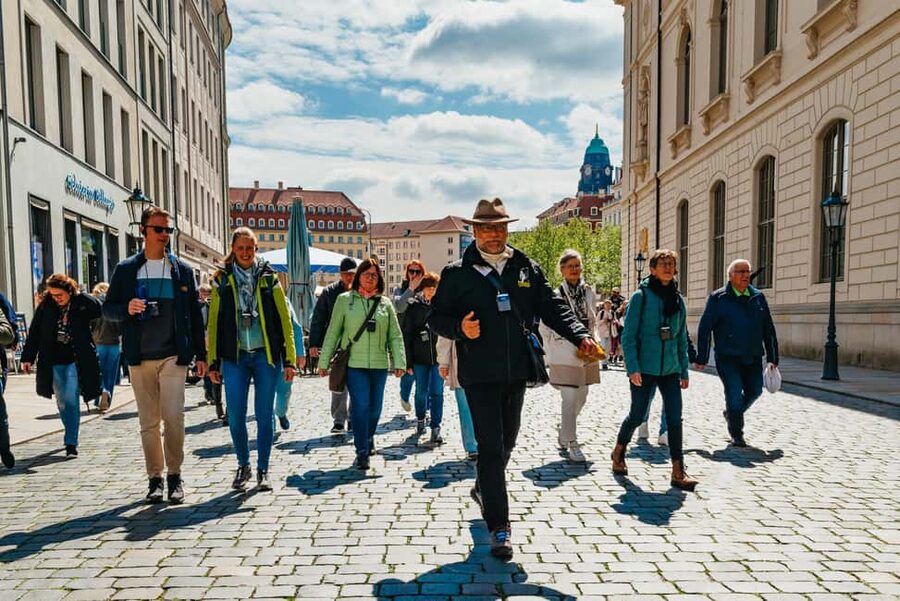
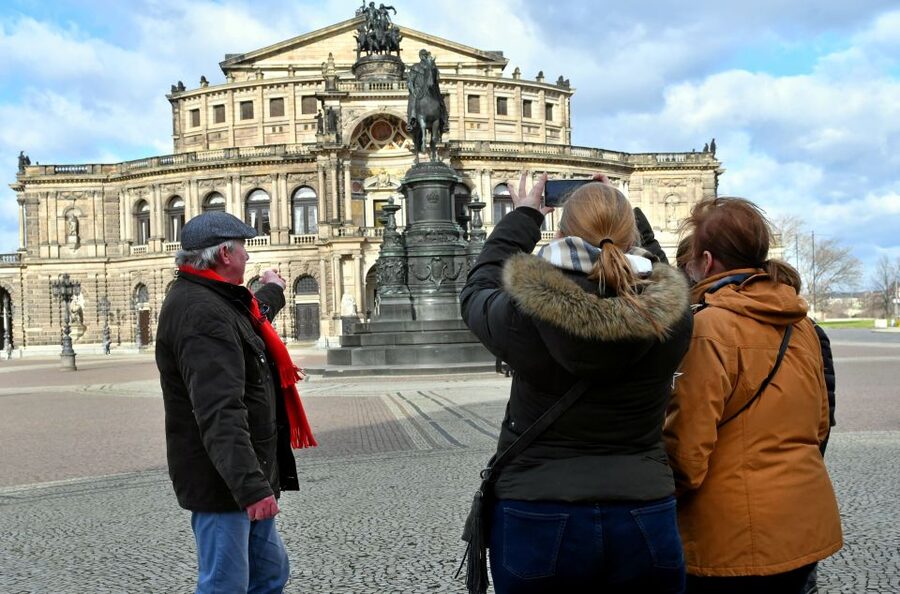
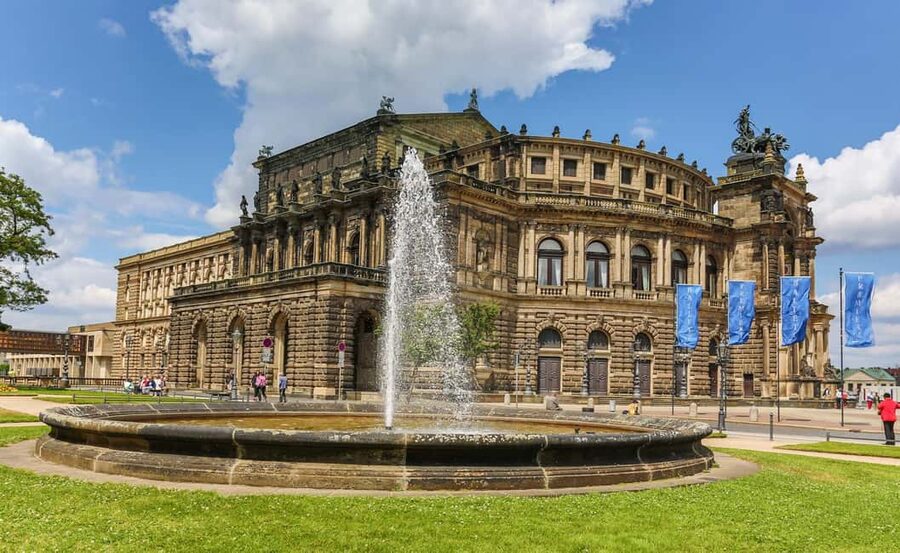
The Semperoper is one of Dresden’s signature buildings, and the outside view is a major part of the walk. The guide places the opera house within the city’s artistic and royal story, helping you see it as more than a grand façade.
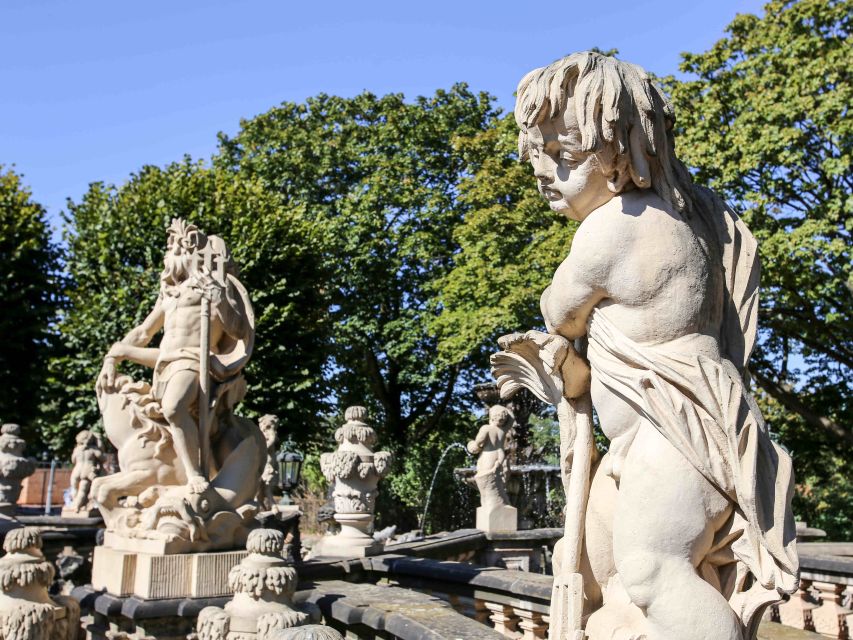
The route also includes the Zwinger, Dresden’s most theatrical Baroque complex. Its courtyards, pavilions, sculptures, and formal design show the scale of the city’s court culture. I find this stop particularly valuable for first-time visitors because the Zwinger can be confusing when approached as a collection of separate buildings. A guide helps you read it as one planned setting.
The tour includes a visit to the Nymphenbad in the Zwinger. This smaller feature has a more intimate and unusual character than the main courtyards. The name refers to water and nymphs, and the setting gives you a chance to see the playful side of Baroque decoration.
The Nymphenbad is a genuine bonus at this price. Many visitors focus only on the Zwinger’s large courtyards and miss details tucked into the complex. The stop may be brief, but it gives the walk a distinctive detail that goes beyond the standard photo list.
More City Highlights Walks in Germany:
- Cologne: Old Town Highlights Walking Tour
★ 4.6 · 1,093 reviews - Trier: Guided City Walk with Wine Tasting
★ 4.8 · 979 reviews - Ulm: City Center Walking Tour with Minster Visit
★ 4.7 · 831 reviews - Bamberg: City Highlights Walking Tour
★ 4.6 · 679 reviews
Dresden Castle and the Residenzschloss
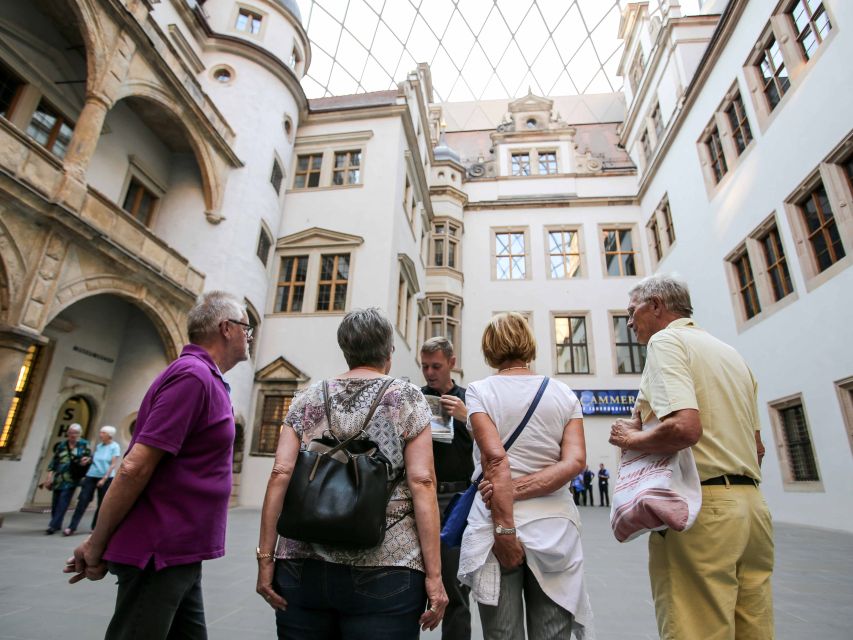
The route continues to Dresden Castle, also called the Residenzschloss. This was the political heart of Saxony and one of the key buildings for understanding Dresden’s rulers.
The guide explains the castle’s place in the city’s development, along with the connection between the royal residence, the Stallhof, the Procession of Princes, and the nearby cathedral. These stops work well together because they reveal how close the court, church, art, and public ceremony once were.
The walk is primarily an outdoor city tour, so you should not expect a full museum visit inside the castle. That is both a limit and an advantage. You get a clear introduction without spending the whole afternoon in one building, then you can decide if the castle’s collections deserve a separate visit.
The Residenzschloss is also a good reminder that Dresden’s beauty was built around concentrated political power. The guide’s discussion of medieval times, the Renaissance, and the Baroque period gives the façade a longer story than its appearance alone suggests.
From Taschenbergpalais to Dresden Cathedral

Taschenbergpalais appears later in the route, adding another royal and architectural layer to the walk. Its position near the castle and old-town monuments makes the relationship between Dresden’s court buildings easier to understand.
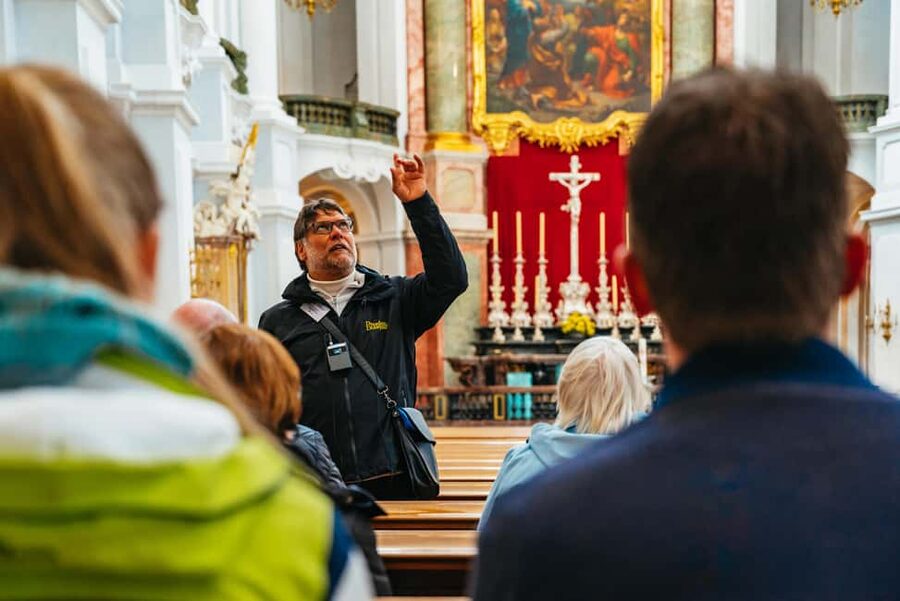
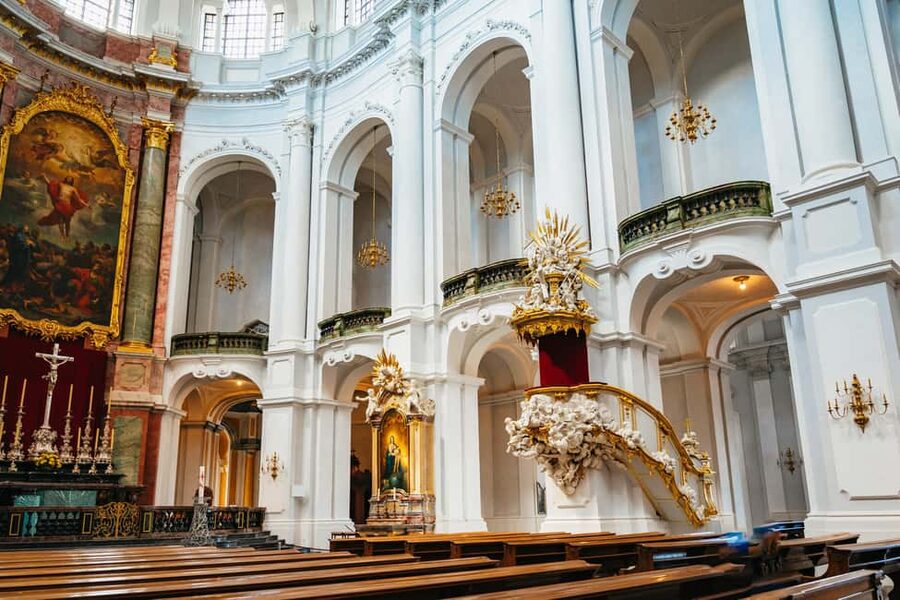
The route then leads toward Dresden Cathedral. This part is useful for seeing how religious buildings fit into the same ceremonial center as the palace and opera house. Dresden’s historic core is compact, but the buildings served very different purposes. A live guide can point out those connections as you move rather than leaving you to piece them together from signs.
The walk ends near Frauenkirche on An der Frauenkirche. That is a strong finish because you can look back at the city’s main themes in one place: medieval foundations, Baroque ambition, wartime destruction, reconstruction, and modern debate about how a historic center should look.
The history beyond pretty buildings
The tour does not stop with kings and architecture. It also covers the darker periods of the Middle Ages, the force of the Renaissance, and the social and political changes that shaped modern Germany.
I particularly value the attention to the Peaceful Revolution of 1989. Dresden was in former East Germany, so the city’s recent past cannot be understood through Baroque buildings alone. The guide discusses what life and political division meant for people in East and West Germany, then connects that background to the changes of 1989.
This gives the walk a useful balance. You hear about court life and grand construction, but also about fear, division, protest, and change. If you want only architecture, some of the political material may feel like a shift in subject. I think it makes the tour stronger, especially for anyone trying to understand Dresden as a German city rather than a historic backdrop.
The short format means the guide cannot provide a full political history. Still, the timeline is broad enough to help you place what you see. I would use the tour as an introduction, then choose one period to study in greater detail afterward.
How the $15 price holds up
At $15 per person, this is a strong value if you want an organized first look at Dresden’s old town. You receive a 90-minute guided walk, a licensed guide, photo stops, practical suggestions for restaurants and events, and the Nymphenbad visit.
The value comes from the route’s density. Dresden’s key sights sit close together, but proximity does not explain their connections. A guide turns a short walk into a basic framework for the city. You can then spend your independent time more wisely.
The price is less compelling if you already know Dresden well or plan to visit every major building with a private guide. It is also not the best choice if you need English or another language. The tour is conducted in German only.
With a 4.6 rating from 2,075 reviews, the experience has a strong overall record. The comments supplied for recent bookings praise the amount of information, the educational quality, and a friendly guide who kept the journey interesting and easy to follow. No individual guide names are provided, so you should not book expecting a particular person.
Who will get the most from this walk
I would recommend this tour to first-time visitors who want a clear introduction before choosing museums, churches, or evening activities. It suits couples, solo visitors, and families who can comfortably follow a German-speaking guide for 90 minutes.
It also works well for anyone interested in how Dresden changed across several eras. The combination of medieval stories, Renaissance development, Baroque architecture, and 1989 history gives you more range than a monument-only walk.
Families should note the booking rule: no more than four children’s tickets can be booked per adult. School classes and youth groups of 10 or more people, with participants under 15, are asked to reserve an exclusive group tour instead.
The tour is wheelchair accessible, which makes the compact old-town route available to more people. You should still consider the pace of a walking group and the time available at each stop, but accessibility is specifically provided.
Practical advice for making the walk count
Wear comfortable shoes and keep the schedule open for a little time afterward. The route finishes near the Frauenkirche, so you can continue exploring without arranging another transfer.
Bring a phone or small camera for the photo stops, especially at Brühl’s Terrace, the Zwinger, and the central squares. The tour is designed to show you the outside setting of major sights, so you will want to return later if you plan interior visits.
Listen for the small anecdotes. The guide’s value is not only the list of buildings, but the stories that connect them. The supplied feedback repeatedly praises the amount of information and the way the guide keeps it interesting, which is exactly what you want from a short orientation walk.
If food is part of your plans, ask for the promised restaurant tips before the tour ends. You can also request suggestions for events and leisure activities. Those local pointers may be more useful than a generic list found online because they relate to where you are standing and what you have already seen.
Free cancellation is available up to 24 hours before the start, and you can reserve now while paying later. Check the available start times before booking, since the tour lasts 90 minutes and the exact departure time can affect your plans for museums or meals.
Should you book the Dresden Guided City Walk?
Book it if you want an affordable, well-paced introduction to Dresden’s historic center and you understand German well enough to follow a live explanation. The route covers an impressive amount in 90 minutes, from the Stallhof and Fürstenzug to Brühl’s Terrace, Semperoper, Zwinger, castle, cathedral, and Frauenkirche.
I would especially choose it early in a Dresden stay. The guide’s history overview and local tips can help you decide where to return, while the $15 price keeps the risk low.
Skip it if you need English, want lengthy interior visits, or already have a detailed plan for Dresden’s monuments. For everyone else, this is a practical first walk with enough history, architecture, and modern context to make the city easier to understand.
FAQ
Where does the Dresden city walk begin?
The meeting point is in the lower level of the QF Passage, in the seating area of Dresden Information. The tour begins at Neumarkt.
Where does the tour finish?
The walk ends near Frauenkirche at An der Frauenkirche, 01067 Dresden, Germany.
How long does the walking tour last?
The tour lasts 90 minutes.
Is the tour available in English?
No. The live tour is available in German only.
What sights are included on the route?
The route includes Stallhof, Fürstenzug, Brühl’s Terrace, Semperoper, Zwinger, Dresden Castle, Dresden Cathedral, Taschenbergpalais, and the Frauenkirche area. It also includes the Nymphenbad in the Zwinger.
Is the tour wheelchair accessible?
Yes, the activity is listed as wheelchair accessible.
Just added around Germany
- Hamburg: Guided Port Walk for Families★ 4.6 · 191 reviews
- East Berlin and the Wall: Walking Tour★ 4.9 · 407 reviews
- Dresden: Shared Small Group Walking Tour in English★ 4.8 · 172 reviews
- Dresden: Taste of Dresden Food Walk★ 4.6 · 397 reviews
- Dresden: Private Guided Walking Tour★ 4.5 · 81 reviews
- Dresden: Guided City Walk and Panometer Entrance Ticket★ 4.5 · 176 reviews
- Dresden Old Town – Guided Walking Tour in English★ 4.8 · 135 reviews
- Dresden: Neustadt District Street Art Guided Walking Tour★ 4.3 · 333 reviews
City Highlights Walking Tours, compared.

Berlin City walk Government District and Places of Democracy
Read our review →
Historic Charleston Guided Sightseeing Walking Tour
Read our review →

Oxford: University and City Walking Tour with Alumni Guide
Read our review →
City Highlights Temple and Market Walking Tour
Read our review →
A History of Terror – Belfast City Centre Walking Tour
Read our review →Browse the lists this tour appears in