
REVIEW · DRESDEN
Dresden: Private Guided Walking Tour
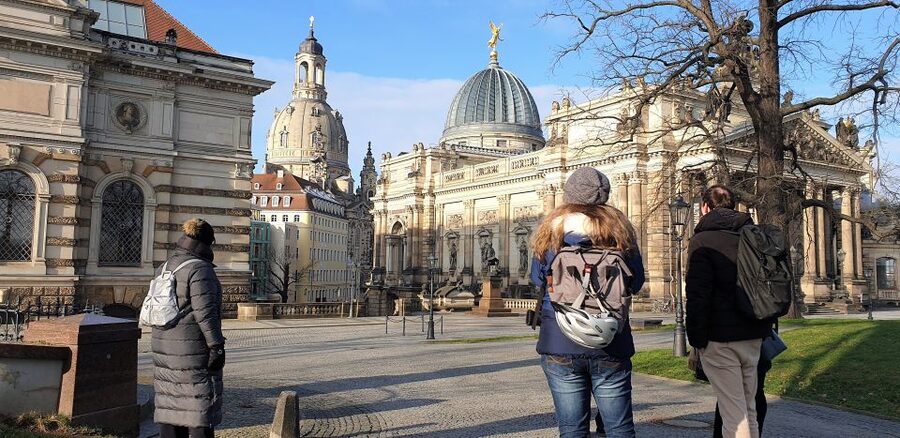
Dresden’s old town is a compact lesson in power, war, art, and rebuilding. In two hours, this private walk takes you from the grand square at Neumarkt through the Baroque center, past the Frauenkirche, Semperoper, Zwinger, Dresden Castle, and the Elbe-side Brühl’s Terrace. The Peaceful Revolution of 1989 also gets a place in the story, so this is more than a parade of pretty facades.
I like the private format, which lets your guide adjust the talk to your group, and I like the broad time span, from the Middle Ages through the Renaissance, Baroque age, East Germany, and reunification. The main caution is group size: up to 25 people is private, but it is not necessarily a quiet, intimate walk. One serious operational complaint also appears in the feedback, involving a no-show and a delayed refund, so confirm your meeting details carefully.
Key points at a glance
- Neumarkt meeting point: Begin at Dresden Information in the basement of the QF Passage at Neumarkt 2.
- Classic Baroque route: See Frauenkirche, the Zwinger, Semperoper, Dresden Castle, and the Procession of Princes.
- History beyond architecture: Hear about medieval Dresden, Renaissance energy, Baroque splendor, and the events of 1989.
- Private group format: Book one group of up to 25 people, with English or German guiding.
- Local advice included: Ask your guide about restaurants, events, and other places to visit.
- Flexible booking: The two-hour tour is wheelchair accessible, offers free cancellation up to 24 hours before departure, and allows reserve-now, pay-later booking.
Why Dresden makes a good walking-tour city
Dresden rewards walking because its main historic sights sit close together in the old town. You do not spend your limited sightseeing time riding from one district to another. Instead, the tour links major landmarks in a steady route that begins at Neumarkt and ends near the Frauenkirche.
That compact route also helps you understand how the city was shaped. Dresden’s Baroque center was built to impress, with royal buildings, grand courtyards, churches, and ceremonial spaces. Yet the city’s story is not only about splendor. Your guide also covers destruction, division, the experience of East and West Germany, and the peaceful protests that helped bring political change in 1989.
I appreciate that balance. A tour focused only on ornate buildings can leave Dresden feeling like an outdoor museum. A guide who connects those buildings to war, government, religion, daily life, and modern politics gives you a better sense of the city as a lived place.
The format suits a first visit especially well. You get the basic map, the key names, and enough historical context to decide which sights deserve more of your own time later.
More Private Walking Tours in Germany
- Private Walking Tour Berlin Third Reich Hitler and World War II
★ 5.0 · 360 reviews - Private Walking Tour: World War 2 and Cold War Sites in Berlin
★ 5.0 · 230 reviews - The History of Berlin: WWII PRIVATE Walking Tour With Locals
★ 5.0 · 209 reviews
Starting at Neumarkt and Frauenkirche
Meet your guide at Dresden Information, Neumarkt 2, inside the QF Passage on the basement floor. This detail matters because Neumarkt is a busy central area, and the meeting point is indoors rather than simply at a statue or church entrance. Give yourself enough time to find the passage and go downstairs.
Neumarkt is the right place to begin. The square is closely tied to Dresden’s best-known landmark, the Frauenkirche. Its large dome and carefully restored Baroque form make an immediate impression, but the church also opens the door to the city’s modern story.
Your guide can place the church in the wider sequence of Dresden’s history, from the old city to the devastation of the Second World War and the rebuilding that followed. The tour does not promise a church interior visit, so you should treat this as a city walk rather than an admission tour. If entering the Frauenkirche is important to you, ask about timing and make a separate plan.
The opening stop is also useful for orientation. From here, your guide can point out how the restored center fits together and explain what you are seeing before the route moves into the royal and theatrical heart of the city.
The Zwinger and Dresden’s Baroque show
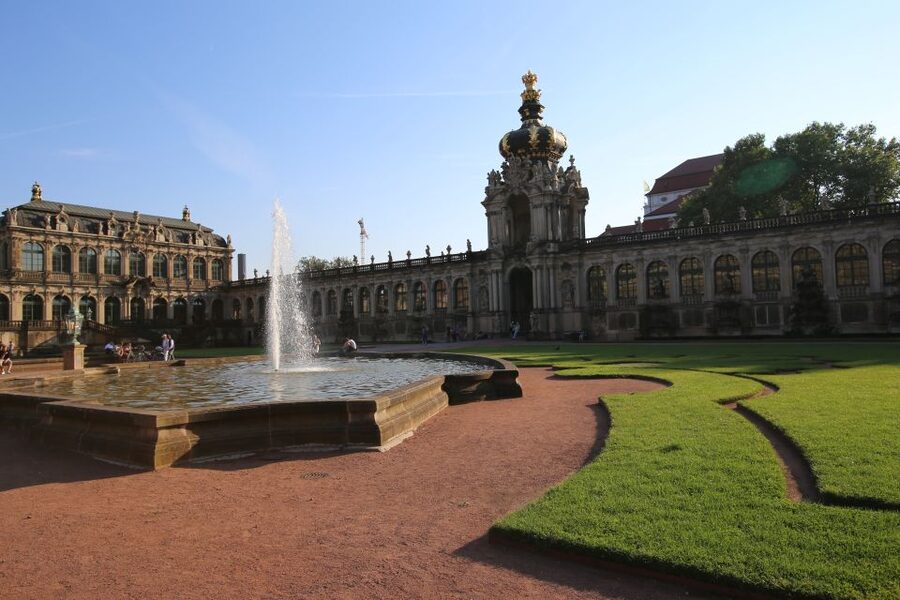
The Baroque Zwinger is one of the route’s major visual rewards. Its broad courtyards, sculpted decoration, and theatrical design express the age when Dresden’s rulers used architecture to project wealth and power.
You will not simply be shown a grand building and sent on your way. The guide’s job is to explain why Dresden developed such an ornate center and how the Baroque period differed from the medieval and Renaissance chapters introduced earlier. That change in style becomes easier to grasp when you see the buildings in sequence.
The Zwinger is also a place where a two-hour tour must make choices. This walk gives you an exterior introduction rather than a museum visit. If you want to spend time with the collections inside the Zwinger, plan a separate visit after the tour. The benefit here is breadth: you see the Zwinger as part of the city’s larger story, along with several other important sights in the same morning or afternoon.
I would listen for the small anecdotes. The tour description promises both major events and lesser stories, and the strongest guides often make a familiar facade easier to remember through one good human detail.
Semperoper and Dresden’s cultural identity
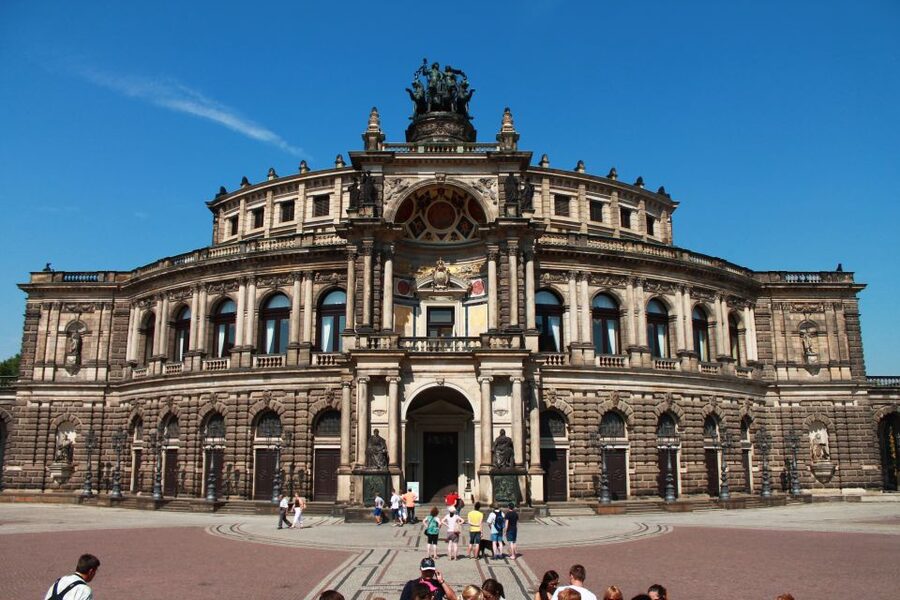
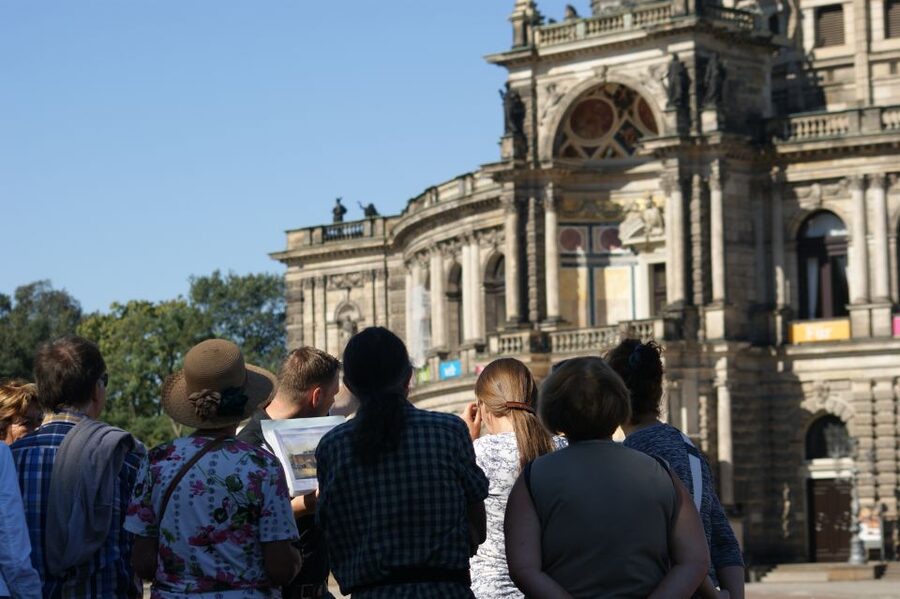
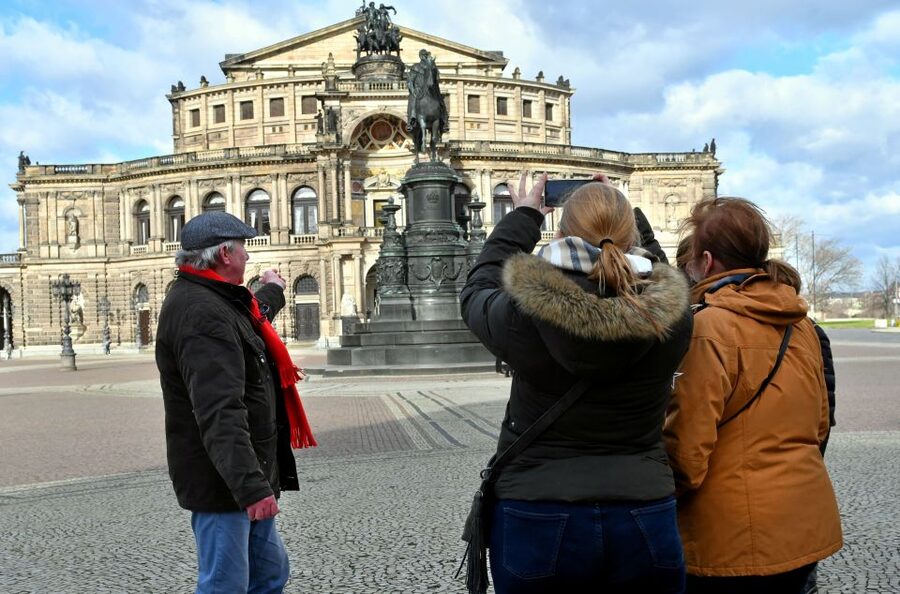
The Semperoper adds a different note to the route. Where the Zwinger communicates courtly display, the opera house points to Dresden’s long connection with music, performance, and high culture.
Your guide will discuss the building as part of the old town rather than offer a performance or backstage visit. That distinction is important. You are paying for interpretation and orientation, not a ticket to a show.
Still, the stop helps break up the architecture. Dresden’s center is not one long row of churches and palaces. It also reflects royal entertainment, public ceremony, and the city’s place in European culture. A lively guide can connect those themes without turning the walk into a lecture.
The experience seems particularly suited to mixed-age groups. A June review praised Frau Schulz for keeping both younger and older members interested, and another review praised a guide for adapting well to the group. That kind of flexibility is valuable when not everyone in your party has the same interest in architecture or political history.
Same streets, a different route:
- Discover Berlin Half-Day Walking Tour
★ 5.0 · 9,624 reviews - Berlin City walk Government District and Places of Democracy
★ 4.7 · 8,467 reviews - Berlin: Third Reich & Cold War Guided Walking Tour
★ 4.9 · 8,378 reviews - Munich: Third Reich & WWII Walking Tour
★ 4.6 · 6,181 reviews
Dresden Castle and the Procession of Princes
From the Baroque center, the route continues toward Dresden Castle. This is where the city’s royal past becomes especially clear. The castle complex links Dresden’s rulers with the ceremonial spaces nearby, including the Procession of Princes and the Stallhof.
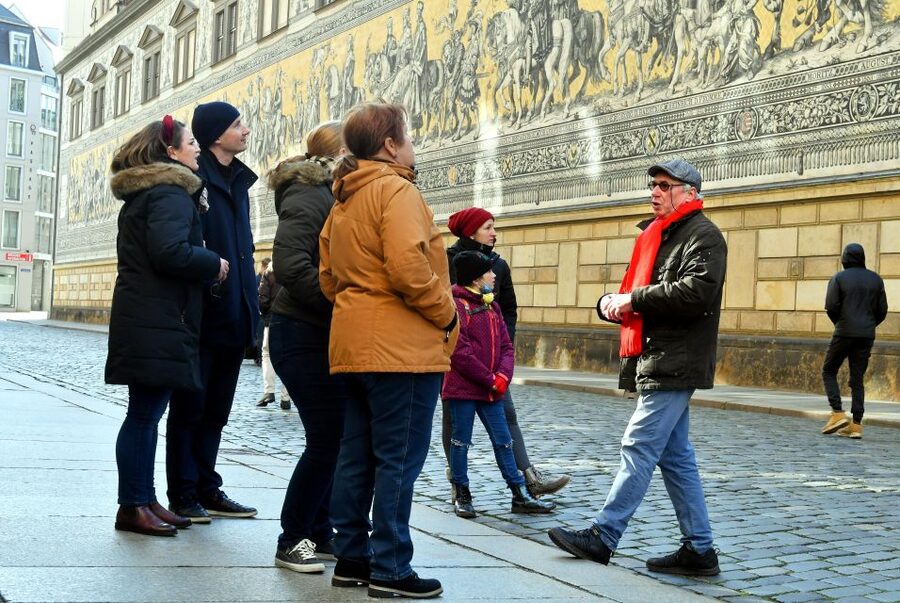
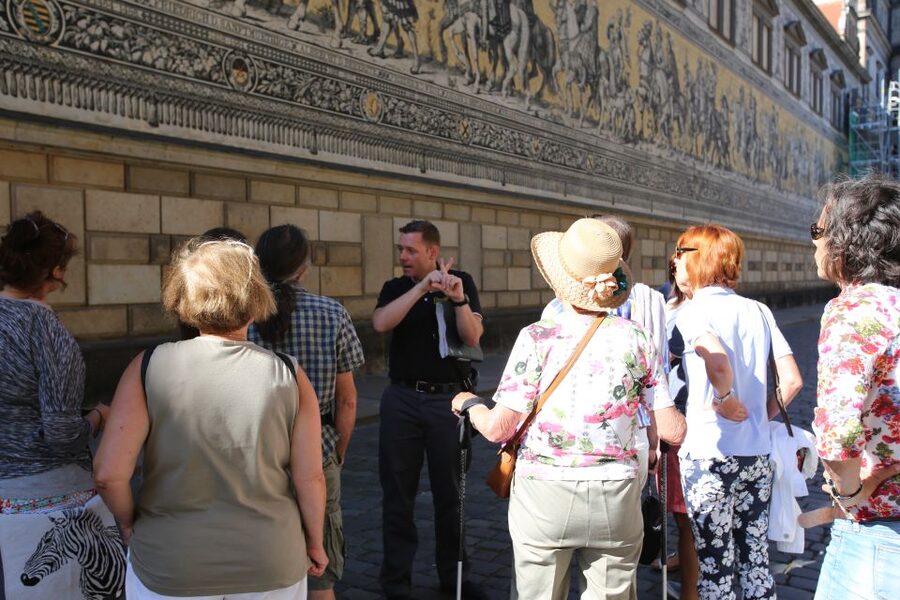
The Procession of Princes is a long exterior mural made from porcelain tiles. The tour gives you a chance to see it in place and understand its role in the city’s public image. Rather than treating it as a quick photo stop, ask your guide how the figures fit into Saxon history and why this wall is such a memorable part of the route.
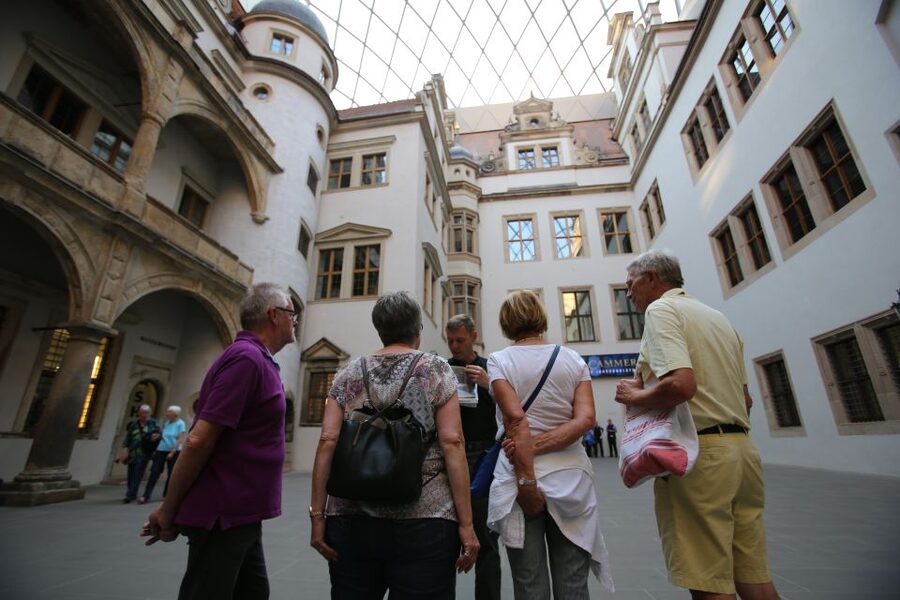
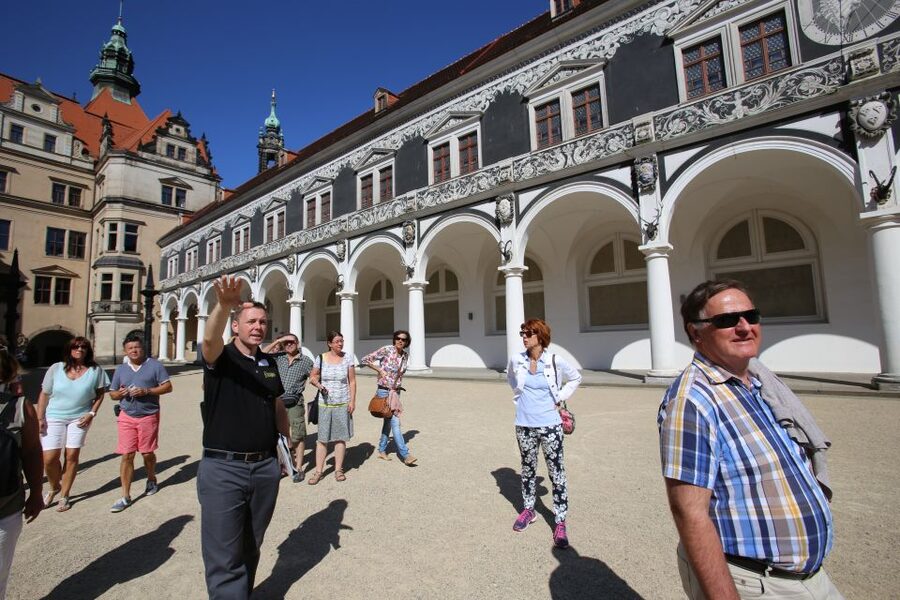
The Stallhof, or stable courtyard, adds another layer. Its name and setting recall the practical side of court life, while the surrounding buildings show how ceremony and everyday function existed side by side. These are the sorts of details that can slip past you if you walk through alone.
Dresden Castle is also a good point to ask about museums and interiors. The walk shows you the historic setting, but it is not designed to provide extended indoor time. If you want a full museum visit, use the walking tour to identify what interests you, then return with a separate ticket and several hours to spare.
Dresden Cathedral and the royal center
The route next reaches Dresden Cathedral, another key building in the old town. Its position near the castle and other royal structures helps you see how religion, monarchy, and public life were arranged in the historic center.
Your guide covers more than dates and construction styles. The stated scope includes the darker medieval period, the Renaissance, the Baroque era, and the city’s more recent political changes. That wide sweep is useful because Dresden can otherwise appear frozen in the eighteenth century.
A two-hour format means the explanation at each stop must remain focused. You should expect clear context and stories, not an exhaustive account of every ruler, war, and rebuilding project. I see that as a strength for a first walk. You get a working framework without spending half a day on one building.
If you are interested in religious history, pay close attention here and ask questions. The private setting is one of the better reasons to choose this tour over a large public walk. You can steer the conversation toward architecture, faith, royal power, modern politics, or practical sightseeing.
Taschenbergpalais and Augustus Bridge
The walk then moves past Taschenbergpalais toward Augustus Bridge. These stops extend the tour beyond the most obvious postcard views and help connect the old town to the Elbe.
Taschenbergpalais reflects the courtly side of Dresden’s past. The guide can place it within the royal district and explain how the palace relates to the nearby castle, theater, cathedral, and ceremonial spaces. You get a better sense of how carefully these buildings were grouped to create a grand urban setting.
At Augustus Bridge, the city opens toward the river. The bridge gives you a different view of Dresden than the enclosed squares and courtyards. It also helps explain the relationship between the old town and the wider city.
The route finishes near the Frauenkirche, not at a distant transport stop. That is practical if you want to continue sightseeing, find lunch, return to your hotel, or visit another attraction nearby. Ask your guide for restaurant and event advice before parting. Those tips are included, and they may be more useful than a generic list printed on a map.
A history lesson that reaches 1989
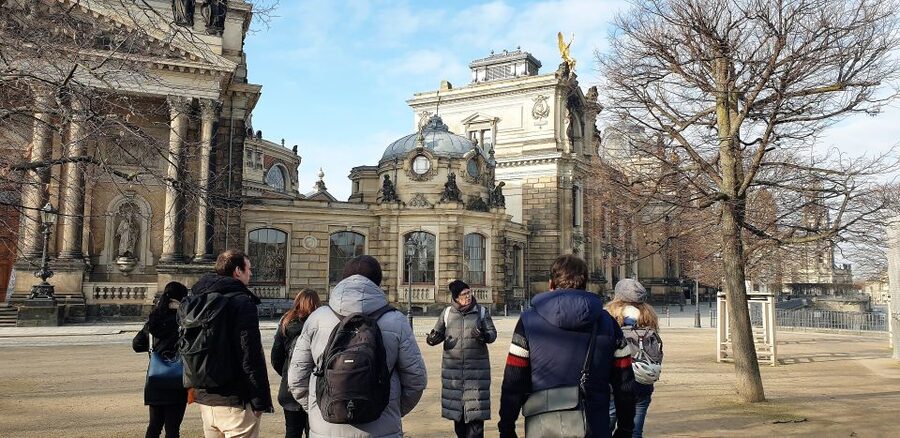
The most valuable part of this tour may be its move from Baroque grandeur into twentieth-century history. Dresden’s buildings can look polished and timeless, but the city has experienced war, political division, state socialism, and major change within living memory.
The guide introduces the Peaceful Revolution of 1989 and what life could feel like for people in former East and West Germany. That subject gives the walk a human scale. You are not only hearing about governments and borders. You are considering how political systems shaped ordinary lives and how people responded to them.
The tour does not provide a separate museum session on East Germany, so anyone seeking a detailed account of the period will need more time elsewhere. But as part of a city overview, this is an important inclusion. It prevents Dresden’s past from ending with the Baroque age.
I would make a point of asking questions here. A private group gives you more room to request clarification than a large scheduled tour usually does. The exact emphasis may vary by guide, but the promised range gives you a solid chance to connect the old town’s grand architecture with the city’s recent past.
Guides, language, and the private-group tradeoff
The tour uses licensed guides in English or German. The feedback includes strong praise for Frau Schulz and for a guide named Idiko, along with repeated approval of friendly, experienced, entertaining guiding. One German-language review describes the guide as especially good at adjusting to the group, while another praises a last-minute booking that still produced a rewarding visit.
Those comments point to the tour’s best feature: the human delivery. Dresden has plenty of buildings, but the guide determines whether you remember a useful story or only a string of names. The description promises humor, anecdotes, restaurant advice, and event tips, so this should feel more conversational than a purely academic lecture.
At the same time, you should read private small group in practical terms. The maximum is 25 people. For a family, club, or company group, that is convenient and often good value. For two people hoping for a quiet personal tour, it could feel larger than expected if the booking reaches its limit.
The tour is available only in English or German. You can request another language or a different meeting point, but that requires a separate request and is not guaranteed by the standard arrangement.
Is $212 good value for two hours?
The listed price is $212 per group of up to 25 people, not $212 per person. That changes the calculation considerably.
For a full group, the cost per person can be quite low. Even a group of ten would divide the fee into a reasonable amount for a licensed private guide who covers the old town’s main sights and gives tailored advice. For only two people, the price is much harder to justify unless you place a high value on privacy and direct questions.
You are paying for a route, interpretation, and flexibility, not admissions to the Zwinger, Dresden Castle, Semperoper, or Frauenkirche. Those buildings are viewed from the route, so budget separately if you want to go inside any of them.
I consider the fee sensible for families, wedding groups, school groups, business groups, and larger friend groups. It is less compelling for solo visitors or couples who could join a public walking tour at a lower individual price. The private format becomes most valuable when your group has a shared interest or needs the guide to adjust the pace and subject matter.
The overall rating is 4.5 from 81 ratings, with several recent five-star comments praising the guides’ historical detail, humor, flexibility, and ability to appeal to different ages. One one-star account describes nobody arriving and a refund not yet being received. That is a serious concern, even though it appears alongside much more positive feedback. Use the supplied contact details, arrive at the exact meeting point, and keep your booking confirmation available.
Practical fit for your day in Dresden
The tour lasts two hours, so it works well near the start of a sightseeing day. Begin with the walk, learn the layout, then return to the places that deserve more time. Ending near Frauenkirche keeps you close to the same central cluster of sights.
It also fits well after arrival if you want a quick orientation before exploring on your own. The route is entirely on foot, and the activity is listed as wheelchair accessible. You should still consider the historic setting and ask the provider if your group has specific mobility needs, especially if the exact route or access conditions matter to you.
The free cancellation window extends to 24 hours before the tour for a full refund. Reserve-now, pay-later booking is also offered, which helps if your schedule is still changing. These policies are useful, but they do not replace checking the meeting instructions carefully.
I would choose the English tour for a first visit if you want the broadest possible introduction to Dresden’s architecture and modern past. German-speaking visitors can expect the same route and scope in German. If your group needs another language, request it before booking rather than assuming it will be available.
Who should book this Dresden walk?
Book it if you want the major old-town sights tied together by one guide instead of seeing each building as an isolated photo stop. It is especially suitable for groups that can share the $212 fee, families with different ages, and anyone who wants restaurant or event suggestions after the formal sightseeing ends.
It is also a good choice if modern German history matters to you. The references to 1989 and life in former East and West Germany give the tour a wider reach than a standard Baroque architecture walk.
Think twice if you mainly want museum interiors, a highly detailed study of one palace, or a very small personal tour. The route is broad, the time is short, and the maximum group size is 25. In that case, use this as an introduction and plan separate visits to the interiors that catch your attention.
FAQ
Where does the Dresden walking tour begin?
Meet your guide at Dresden Information, Neumarkt 2, 01067 Dresden, in the basement floor of the QF Passage.
How long does the tour last?
The walking tour lasts two hours.
What languages are available?
The tour is offered in English or German. You can send a request for another language or a different meeting point.
How large can the private group be?
The maximum group size is 25 people.
Which main sights are included on the route?
The route begins at Neumarkt and includes Frauenkirche, the Semperoper, the Baroque Zwinger, Dresden Castle, Brühl’s Terrace, the Procession of Princes, Stallhof, Dresden Cathedral, Taschenbergpalais, and Augustus Bridge. It finishes near Frauenkirche.
Is the walking tour wheelchair accessible?
Yes. The activity is listed as wheelchair accessible.
Should you book it?
I would book this tour for a group that wants a clear first look at Dresden, especially if you value a private guide and want both Baroque architecture and the events of 1989 included. The $212 price makes the most sense when several people share it.
For a couple on a tight budget, the cost may be hard to defend. For a larger group, the route, licensed guide, local tips, and flexible conversation make the price more reasonable. Just remember that private can mean up to 25 people, not necessarily a personal two-person outing, and confirm the meeting arrangements before the day.
Just added around Germany
- Hamburg: Guided Port Walk for Families★ 4.6 · 191 reviews
- East Berlin and the Wall: Walking Tour★ 4.9 · 407 reviews
- Dresden: Shared Small Group Walking Tour in English★ 4.8 · 172 reviews
- Dresden: Taste of Dresden Food Walk★ 4.6 · 397 reviews
- Dresden: Guided City Walk and Panometer Entrance Ticket★ 4.5 · 176 reviews
- Dresden Old Town – Guided Walking Tour in English★ 4.8 · 135 reviews
- Dresden: Neustadt District Street Art Guided Walking Tour★ 4.3 · 333 reviews
- Dresden: Guided Walking Tour and Chocolate Museum Ticket★ 4.5 · 479 reviews
Private Walking Tours, compared.

Barcelona Helicopter, Sailboat & Old Town Private Walking Tour
Read our review →

Lyon: Private Walking Tour of “Traboules” in the Old Town
Read our review →
Browse the lists this tour appears in