
REVIEW · DUBLIN
Dublin: Sightseeing Walking Tour in German
Dublin’s best stories often sit beside the grand landmarks. This German-language walking tour connects Dublin Castle, Christ Church Cathedral, Temple Bar, the River Liffey, and Trinity College, while also pointing out odd little details such as a former Lisbon tram now used as a café and a church that is no longer a church. I like the small-group format and the easy pace, which give a guide room to explain the city rather than rush you from one photo stop to the next.
I also like the route’s range. In 2.5 hours, you cross from the medieval quarter to the Northside, see the General Post Office and O’Connell Street, and finish near the Book of Kells. The main consideration is that all stops are exterior visits, so you will need separate time and admission tickets if you want to enter the castle, cathedral, or Trinity’s library.
Key points to know before you book
- German-speaking guide: The entire walking tour is conducted in German, with extra guides provided when needed.
- Dublin from both sides of the Liffey: The route links the medieval quarter, Temple Bar, the Italian Quarter, and O’Connell Street.
- Small-group setting: The format is suited to questions, close listening, and a less hurried walk.
- Unusual details along the way: Look for a former cinema, a church now used as a café and bar, a Lisbon tram, and a wobbly bridge.
- Exterior sightseeing only: You see the main landmarks from outside, with time afterward for independent visits.
- Good central starting point: Meet at the Tree of Gold statue on Dame Street, near Fownes Street Upper.
Starting on Dame Street at the Tree of Gold
The tour begins at the Tree of Gold statue, also called Crann an Óir, at the Central Plaza on Dame Street in Dublin 2. This is a useful starting point because Dame Street sits between several of the city center’s main areas, including Dublin Castle, Temple Bar, and Trinity College.
You should arrive ready to walk for 2.5 hours. The tour is listed as wheelchair accessible, and the pace is described as easy-going, but Dublin’s central streets can include uneven paving and busy crossings. If mobility is a concern, confirm the day’s route with the provider before setting out.
The guide speaks German, which is the main reason to choose this tour over a general Dublin walk. A good guide can explain place names, political events, jokes, and local references in a way that is easier to follow in your own language. The supplied rating is 4.7 from 231 reviews, and the praise centers on the entertaining, easy-to-follow way information is delivered. That matters on a history walk, where a long chain of dates can quickly become tiring.
More City Highlights Walks in Dublin:
- Berlin City walk Government District and Places of Democracy
★ 4.7 · 8,467 reviews - Historic Charleston Guided Sightseeing Walking Tour
★ 5.0 · 6,216 reviews - Quebec City Walking Tour
★ 5.0 · 4,716 reviews
Dublin Castle and the medieval quarter
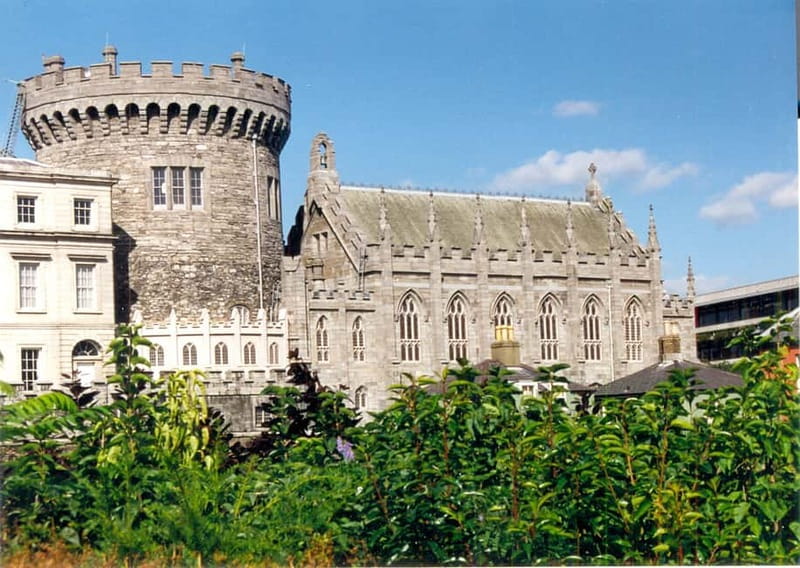
From Dame Street, the route moves into what was once Dublin’s Viking and medieval quarter. Dublin Castle and its grounds are among the key early stops, though this experience visits them from the outside.
The castle gives your guide a natural place to explain how Dublin developed as a center of power. You can expect attention to the grounds and gardens, as well as the buildings’ role in the city’s past. Since there is no interior visit included, think of this part as orientation rather than a full castle tour.
That limitation is worth keeping in mind. If you want to see grand rooms, exhibitions, or more of the castle complex, you will need to return independently after the walk. The benefit of an exterior stop is that you keep moving and make room for several other parts of central Dublin.
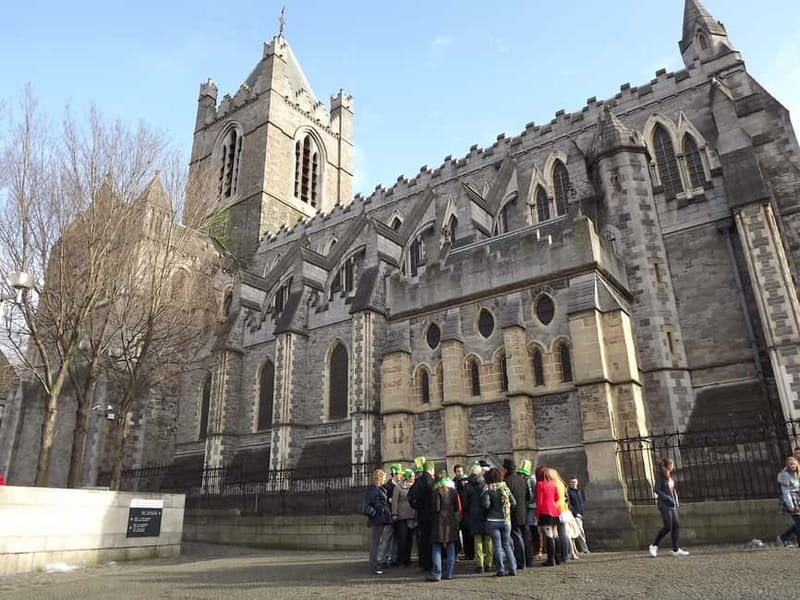
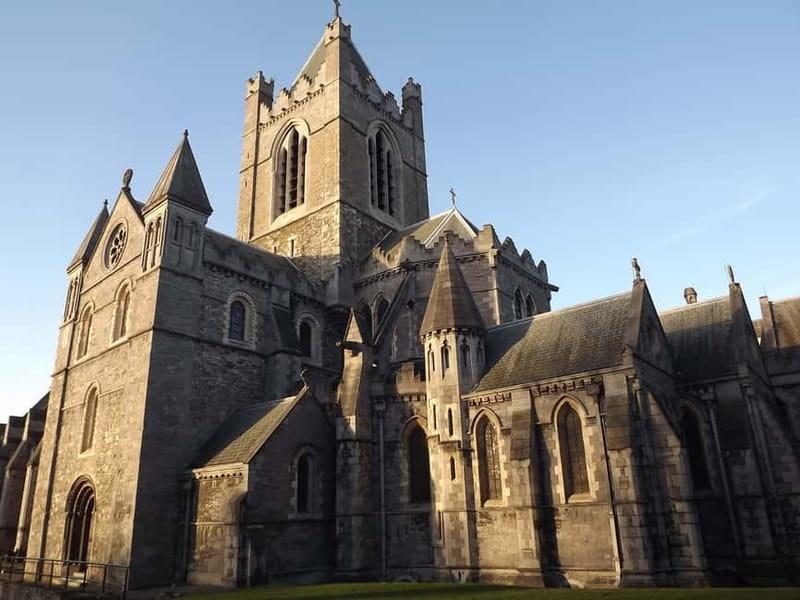
Christ Church Cathedral follows as another major landmark. Again, you see it from outside. The cathedral helps mark the transition between Dublin’s medieval center and the streets that later became associated with commerce, theater, nightlife, and public life.
Fishamble Street, Smock Alley, and stories beneath the surface
The route continues along Fishamble Street and Smock Alley, two places that help give the older quarter a more human scale. These are not simply broad postcard stops. They are streets where a guide can connect buildings, performance, religion, trade, and everyday city life.
Smock Alley is especially useful for understanding how Dublin’s cultural life changed over time. The tour’s appeal lies in hearing those connections while standing in the actual streets, rather than receiving a list of detached facts.
You will also hear about Dublin’s first full-time cinema, now defunct. Details like this are a strong part of the walk. They show that the city is not only a collection of famous buildings. Its story includes entertainment venues, businesses, old transport links, political symbols, and places that have changed purpose.
Meeting House Square and Temple Bar
The walk then reaches Meeting House Square in Temple Bar. This is one of Dublin’s best-known areas, but the tour treats it as part of a larger route rather than as the whole experience.
Temple Bar can feel crowded and heavily focused on nightlife, especially around its most famous streets. A guide helps you look beyond the pubs and colorful façades to the district’s older uses and less obvious corners. The stop also gives you a chance to understand how the neighborhood fits between the medieval quarter and the River Liffey.
Do not expect a pub crawl or a food tour. The focus is the city’s story, with short stops and commentary as you walk. You may want to return to Temple Bar later if you plan to eat or listen to live music, since the walking tour does not include food, drinks, or indoor visits.
A few more walking tours around Dublin worth a look
- Dublin Highlights and Hidden Gems Guided Walking Tour
★ 5.0 · 6,020 reviews - Dublin: Highlights and Hidden Gems Walking Tour
★ 4.9 · 2,140 reviews - 1916 Rebellion Walking Tour
★ 5.0 · 1,605 reviews - 90 Minute Dublin Walking tour and Sightseeing tips
★ 5.0 · 916 reviews
Crossing the Millennium Bridge and the River Liffey
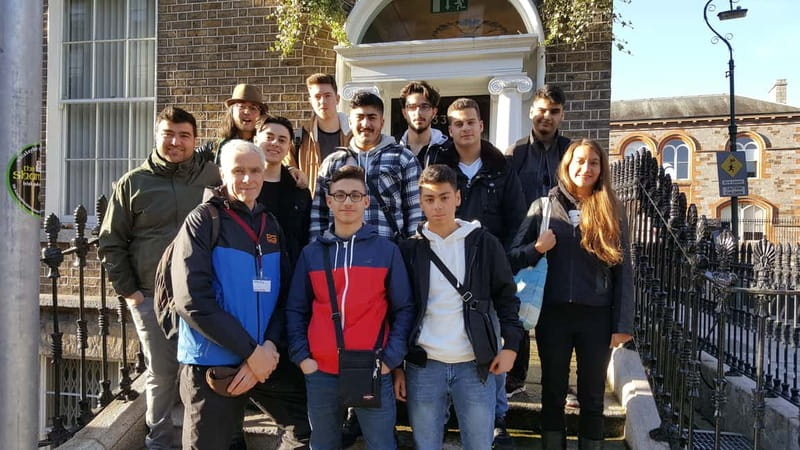
The Millennium Bridge provides a clear change of scene. Crossing the River Liffey, you move from the south side to Dublin’s Northside and get a sense of how the river divides and connects the city center.
The bridge is also one of the tour’s more playful moments. You may notice its slight movement underfoot, described as a wobbly bridge experience. It is a small detail, but it breaks up the historical commentary and gives you a physical memory of the route.
The Liffey crossing is valuable because many short city walks stay on one side of the river. This route gives you a broader view of Dublin’s center, linking areas that have different identities but sit within an easy walk of one another.
The Italian Quarter and St Mary’s Church
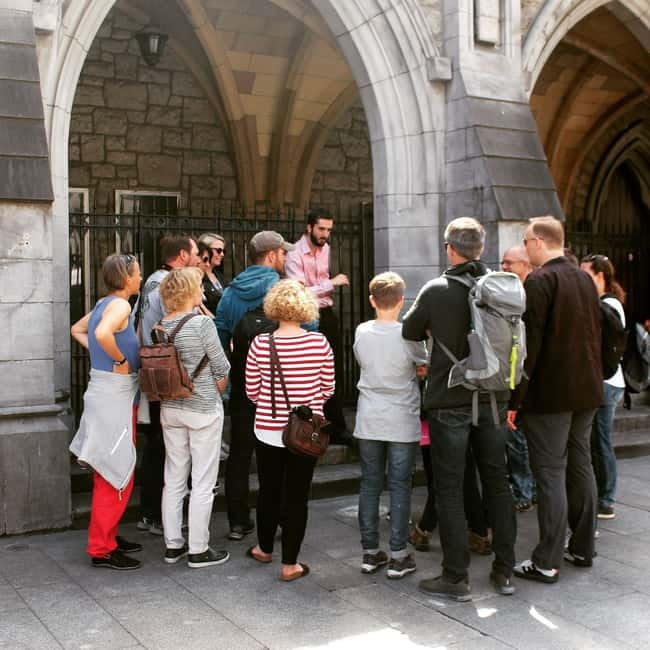
After crossing the river, the tour enters the Italian Quarter. The name alone makes this a useful stop for understanding how Dublin’s center has absorbed different communities, businesses, and styles over time.
The route also includes St Mary’s Church, now known as a café and bar. It is one of the walk’s most memorable examples of a building changing purpose. You will see how a former religious space can become part of modern city life without losing its architectural character.
This stop also shows why the tour is more than a checklist of major sights. You are not only looking at the building itself. You are hearing how Dublin reuses old spaces and layers new activity over earlier functions.
Henry and Moore Streets, then O’Connell Street
The walk continues through Henry Street and Moore Street before reaching O’Connell Street. These streets bring the tour into a busier commercial and civic part of Dublin.
O’Connell Street is one of the city’s main historic avenues, and it gives the guide room to discuss public memory and political change. The scale is different from the narrow medieval streets. Here, the focus shifts toward national events, public demonstrations, monuments, and the struggle for Irish independence.
The route passes the General Post Office, one of the most important stops on the Northside. The building served as headquarters for the rebels during the 1916 Rising. The fighting caused major destruction to the post office and much of the surrounding street, so this is an ideal place to connect a building with the people and events that shaped modern Ireland.
I appreciate that the tour includes the human stories linked to these sites. Political history can feel distant when it is reduced to years and names. Standing outside the General Post Office, you can better understand how a public building became tied to rebellion, destruction, and Ireland’s move toward independence.
The O’Connell Monument adds another layer. It is a chance to discuss the person commemorated and the role of monuments in a city where public spaces carry strong political meaning.
The former Parliament House and Trinity College
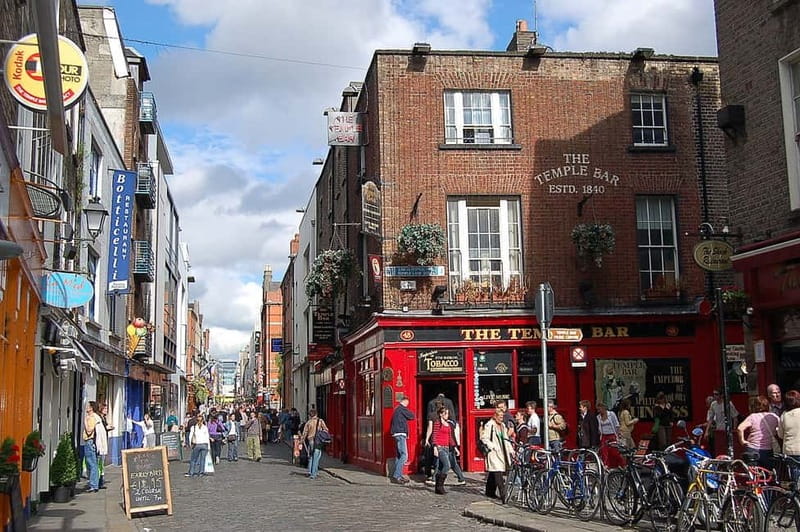
The final part of the walk brings you toward the former 18th-century Houses of Parliament, now the Bank of Ireland. The building is an important reminder that Dublin’s political institutions have changed location and purpose over time.
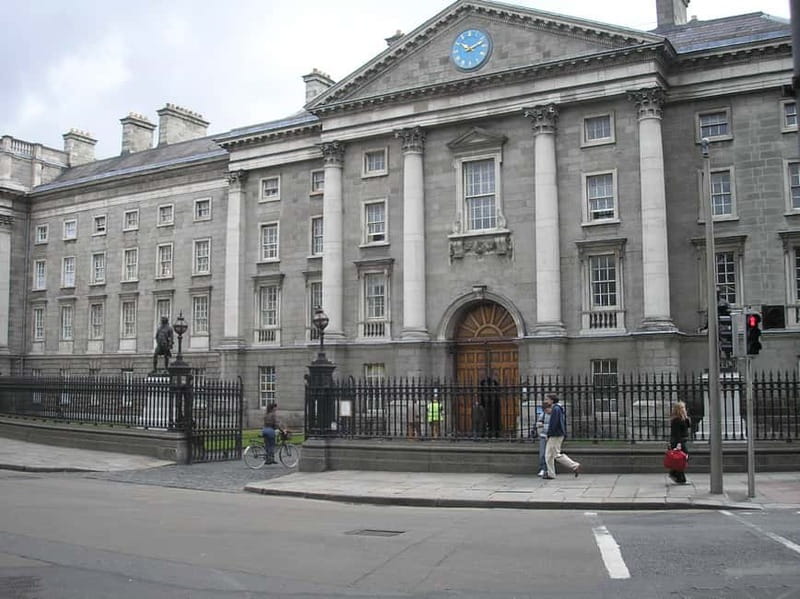
You then finish around Trinity College, close to the famed Book of Kells. This is a smart ending for a city introduction. Trinity is one of Dublin’s best-known sights, and you can use the information from the walk to decide if you want to visit the college and library separately.
The Book of Kells is not included as an indoor visit. The experience takes you to the area outside Trinity College, so you will need another ticket and a separate time slot if you want to see the manuscript and the Old Library.
There is a small logistical inconsistency in the supplied details: the route description says the walk finishes outside Trinity College, while the meeting information says the activity ends back at the meeting point. Ask the provider where your specific departure will finish before booking onward plans. Either way, the route ends in central Dublin, close to major sights and city streets.
The unusual details make this walk memorable
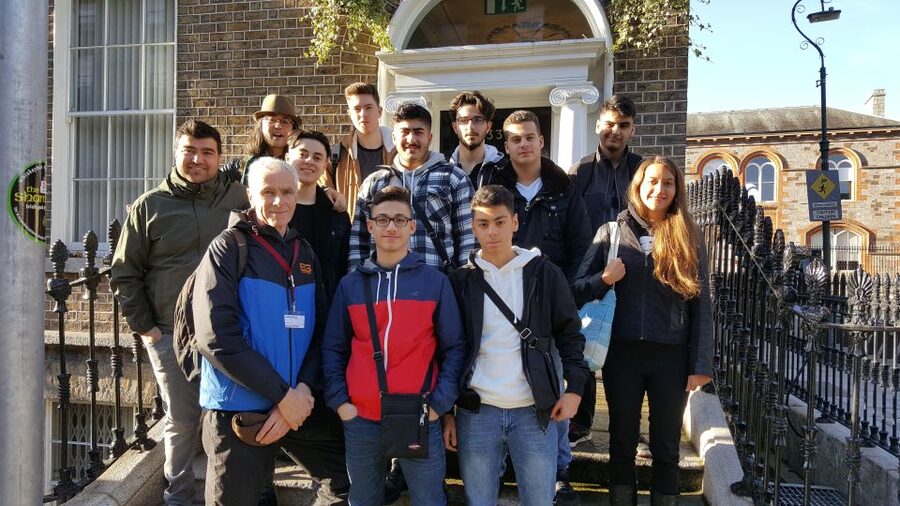
The major landmarks give the tour its structure, but the surprises give it personality. Along the way, the guide points out:
- A former full-time cinema that no longer operates
- A church that has become a café and bar
- A former Lisbon tram now serving as a café
- An amusing version of a famous Leonardo da Vinci painting
- A wobbly bridge over the Liffey
- A post box connected with Ireland’s move toward independence
- A naked representation of a famous 18th-century composer
These details are not substitutes for Dublin Castle, the General Post Office, or Trinity College. They work as small breaks from the main historical thread. I like that balance because you leave with both a basic map of the city and a few odd facts you are likely to remember.
What $34 buys you
At $34 per person, the tour is priced as a guided introduction rather than a ticketed attraction package. The fee covers a professional, well-trained German-speaking guide. It does not cover entry to Dublin Castle, Christ Church Cathedral, Trinity College, or any other interior.
The value is strongest if you want help making sense of Dublin quickly. In 2.5 hours, you cover both sides of the river and several districts that would be easy to see separately but harder to connect on your own. You also get context for choosing later visits.
The value is weaker if you want long stops inside museums, churches, or historic buildings. You will spend most of the time walking and listening, not exploring interiors. Tips are not included, so plan to handle gratuities separately if you choose to give one.
The booking terms are useful for a flexible itinerary. You can reserve now and pay later, and cancellation is free up to 24 hours before the tour for a full refund.
Who will get the most from this German-language walk?
I would choose this tour for a first visit to Dublin, especially if you prefer to hear history in German. It suits you if you want a city overview before deciding how to spend the rest of your time.
It is also a good fit if you enjoy small observations as much as major monuments. The former cinema, repurposed church, tram café, post box, and composer statue give the route a local flavor without turning it into a narrow specialist tour.
Families and mixed-age groups may appreciate the easy-going format, although the 2.5-hour duration means you should be comfortable spending that time on foot. The listed wheelchair accessibility is helpful, but you should still confirm route conditions if you need specific access arrangements.
I would look elsewhere if your priority is a full interior tour of Dublin Castle, Christ Church Cathedral, or the Book of Kells. Those places appear as exterior landmarks here, not included admissions.
Should you book it?
Book this walk if you want a German-speaking introduction to central Dublin that combines famous sights with unusual street details. The small-group format, broad route, and strong rating make it a practical first-day choice, especially at $34.
Skip it if you want a slow, interior-focused visit or a tour built around food, drinks, or nightlife. For most people who want to get their bearings, learn the main stories, and discover a few easy-to-miss corners, this is a sensible and entertaining start.
FAQ
Is the Dublin walking tour conducted in German?
Yes. The live tour guide speaks German, and additional guides are provided when required.
How long does the tour last?
The walking tour lasts 2.5 hours.
Where does the tour start?
The meeting point is the Tree of Gold statue, also called Crann an Óir, at Central Plaza on Dame Street in Dublin 2, near the corner of Dame Street and Fownes Street Upper.
Does the tour include entry to Dublin Castle or the Book of Kells?
No. The listed visits are external. You may have opportunities to visit some sites separately after the walk, but admission is not included.
Is the tour wheelchair accessible?
Yes, the activity is listed as wheelchair accessible.
Can I cancel the tour for a refund?
Yes. You can cancel up to 24 hours in advance for a full refund. You can also reserve now and pay later.
Just added around Dublin
- Dublin: Traditional Pub Walking Tour★ 4.6 · 295 reviews
- Dublin: Traditional Pubs Walking Tour with Local Guide★ 4.9 · 112 reviews
- Dublin: Macabre History Walking Tour★ 4.9 · 95 reviews
- Dublin’s Haunted History Walking Tour★ 4.3 · 345 reviews
- Dublin: Irish Music Walking Tour with Live Performance★ 4.8 · 137 reviews
- Dublin: Highlights and Hidden Corners Walking Tour★ 4.8 · 79 reviews
- Dublin: Delicious Walking Food Tour★ 4.9 · 137 reviews
- Dublin Highlights: 2.45-Hour Walking Tour in Italian★ 4.7 · 460 reviews
City Highlights Walking Tours, compared.

Berlin City walk Government District and Places of Democracy
Read our review →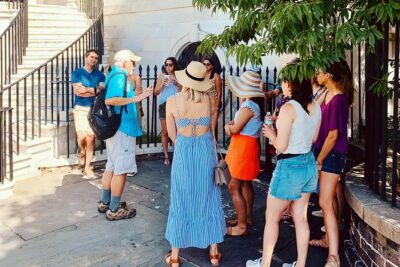
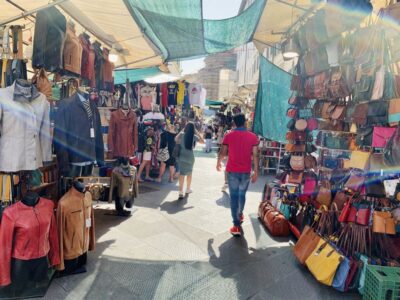
Historic Charleston Guided Sightseeing Walking Tour
Read our review →
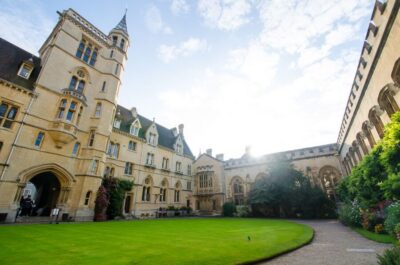
Oxford: University and City Walking Tour with Alumni Guide
Read our review →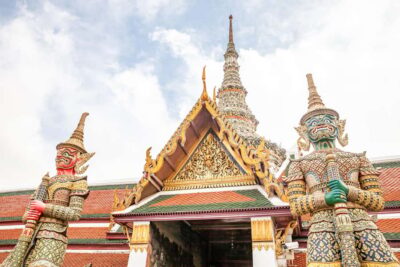
City Highlights Temple and Market Walking Tour
Read our review →
A History of Terror – Belfast City Centre Walking Tour
Read our review →Browse the lists this tour appears in