
REVIEW · BELFAST
Belfast: The Troubles Walls & Bridges Guided Walking Tour
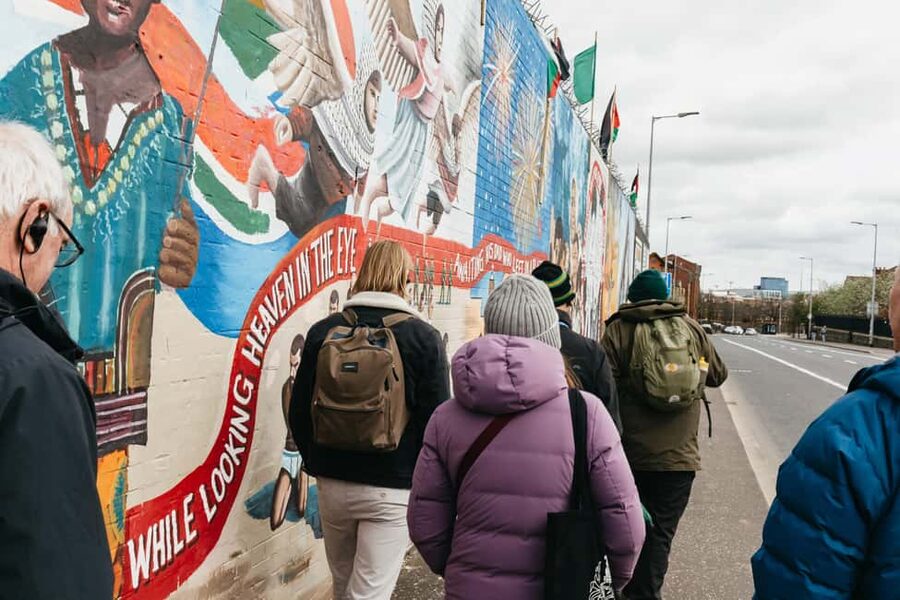
Belfast’s Peace Walls are not a distant monument. They are working barriers beside homes, roads, garages, and everyday life. This three-hour walk takes you from City Hall through Divis and the Falls, across fortified gates into the Shankill area, and back through Belfast’s changing city center.
I like the way the tour gives you both communities’ perspectives rather than reducing The Troubles to a simple religious quarrel. I also like the local voices. Guides Steve and Arthur bring lived experience, humor, and blunt detail to places that can look ordinary until you understand what happened there. The drawback is clear: this is a long walk with few rest stops, no shelter for much of the route, and upsetting material that is not suitable for children under 14.
Key points to know before you go
- See the Peace Walls as part of daily life: You pass security gates, housing areas, and streets where division remains visible.
- Hear from guides with local experience: Steve and Arthur are praised for personal stories, clear explanations, and a balanced approach.
- Walk through Divis and the Falls: Political murals and the International Wall connect local events with wider Irish and world politics.
- Cross into the Shankill area: You do not walk along Shankill Road itself, but you do pass through the district and its fortified entrances.
- Plan for a serious three hours: The walk can run to three and a half hours, with roughly 8,500 steps and limited toilet access.
- Expect adult subject matter: The tour includes graphic details about violence, loss, and the human cost of The Troubles.
Why this Belfast walk feels different
Many city walks point out grand buildings, famous streets, and places to take pictures. This one uses the city as evidence. A post box, a 24-hour garage, a security gate, and a painted wall all help explain how political division shaped ordinary routines.
That approach is useful because Belfast’s conflict is easy to misunderstand from a short visit. The tour begins with the long political and social background that led to The Troubles, then shows how that past still appears in the built environment. You are not simply told that communities were divided. You see the walls, gates, flags, murals, and routes that made separation part of daily life.
The guide’s job is also to keep the story from becoming a contest between two fixed sides. Steve and Arthur are described as direct, witty, and deeply familiar with Belfast. Their accounts include local experience, but the stated aim is to explain both Irish nationalist and British unionist viewpoints with care.
That balance does not mean the tour is bland. It deals with power, inequality, identity, violence, and political decisions. Some details are graphic. At other moments, the guide uses humor to keep the group listening through a difficult subject. The tone can shift from funny to grim within a few minutes, which is part of what makes the walk feel human rather than like a classroom lecture.
More Guided Tours in the UK:
- Magical London: Harry Potter Guided Walking Tour
★ 4.7 · 22,044 reviews - Edinburgh: Harry Potter Magical Guided Walking Tour
★ 4.8 · 11,944 reviews - Edinburgh Castle: Guided Walking Tour with Entry Ticket
★ 4.7 · 11,699 reviews
Starting beside Belfast City Hall
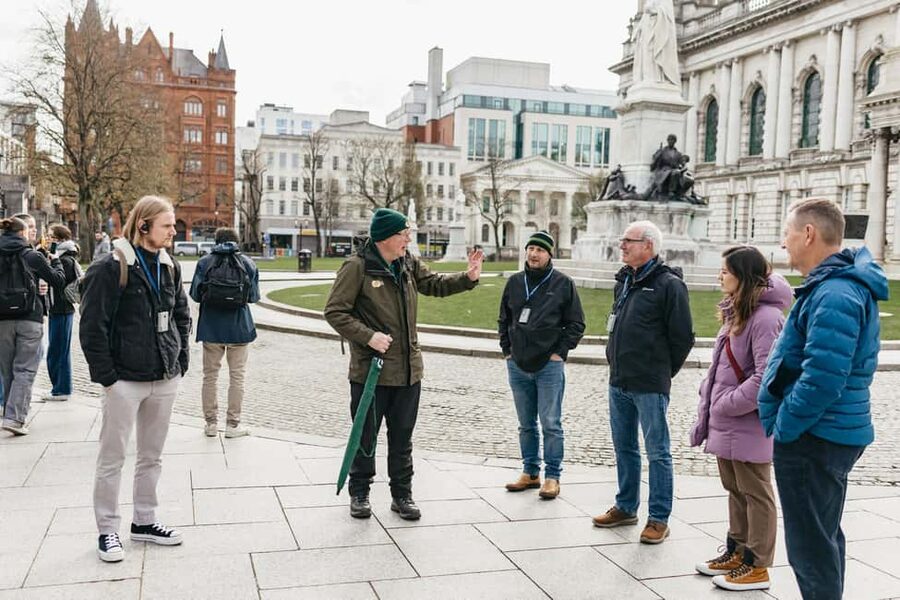
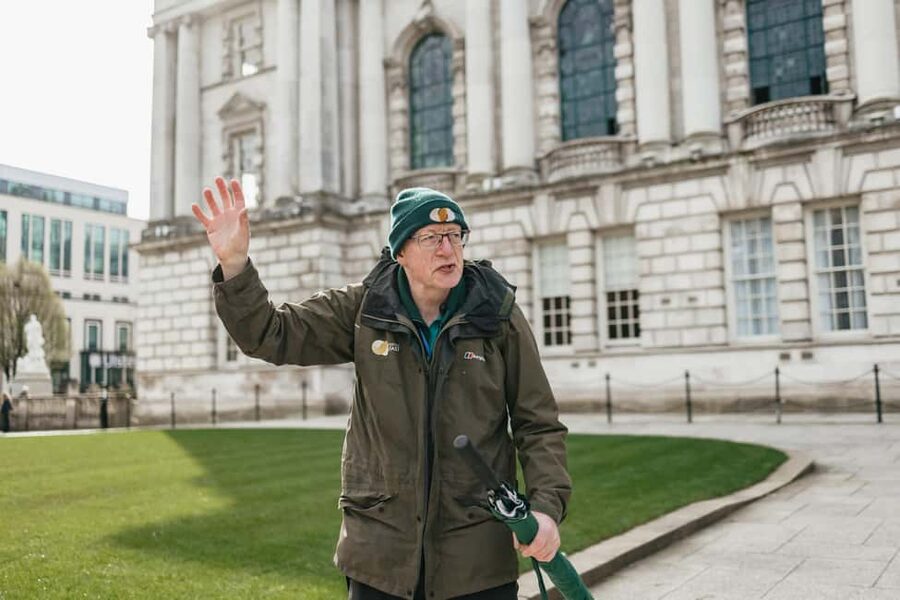
Meet outside the large railings of Belfast City Hall, on the pavement beside a small blue information table. Look for the guide near two black ornamental lamp posts. A blue information board sits between them, and you should be able to see the statue of Queen Victoria through the railings.
The guide carries a large green and white golf umbrella and wears green. This detail matters because some map applications send people to Donegall Square West, where buses park, or to the rear of City Hall. The meeting point is on the front side, across from the main shopping avenue and a Nationwide Building Society.
The opening section lasts about 20 minutes. You get a safety briefing, an outline of the route, and an introduction to Belfast’s political story. City Hall is a sensible starting place because it represents civic Belfast, while the walk soon moves into neighborhoods where the conflict was lived at street level.
Use this time to check your shoes, clothing, and water. You will be walking for most of three hours, and the route was not designed as a visitor trail. There are no regular rest stops.
From City Hall toward Divis and the Falls
The route leaves the center and heads toward Divis and the Falls Road, the Irish nationalist part of West Belfast. The guide places the area in context before focusing on the worst years of the conflict. You learn how tensions grew and how mobs, housing, and street-level confrontation helped turn political division into open violence.
At Divis, the story becomes more immediate. The area was affected by homes being set alight and by the rapid collapse of trust between neighbors and authorities. The guide explains what happened while also showing how the neighborhood looks now, which helps you avoid seeing it only as a frozen scene from the past.
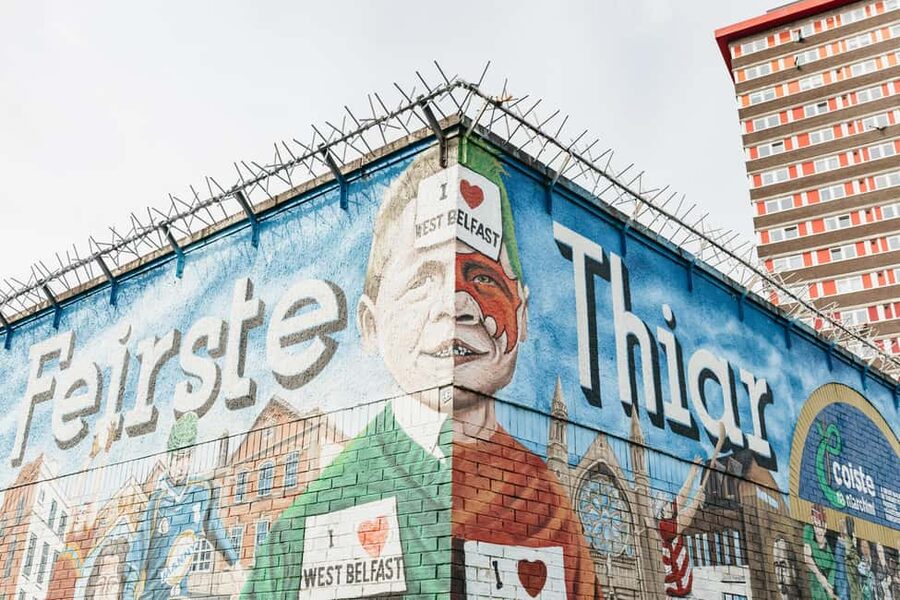
Near Divis Tower, you see an early mural expressing Irish and local identity. It is not just colorful decoration. Political murals can act as memorials, statements of loyalty, warnings, or claims to space. The guide explains the meaning behind them rather than treating them as a photo backdrop.
This part of the route takes around 25 minutes before the longer Peace Walls section. It is a useful reminder that the conflict was not confined to famous events or politicians. It altered housing, movement, employment, family life, and the way people read the streets around them.
Reading the murals along the International Wall
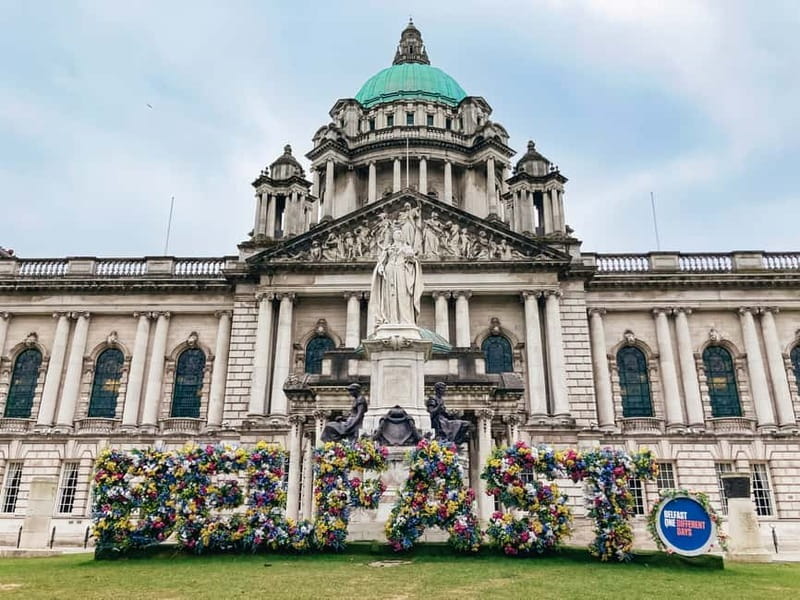
The International Wall is one of the most visually striking parts of the walk. Its murals are political and change over time to reflect local issues and events around the world. You will have opportunities for photographs, but the guide keeps the focus on meaning and context.
The wall gives you a way to see how Belfast connected local identity with international causes. A mural may express solidarity, commemorate a person, or frame a political struggle through images and slogans. The guide explains how these displays fit into the history of the Falls area and how public art can also reinforce division.
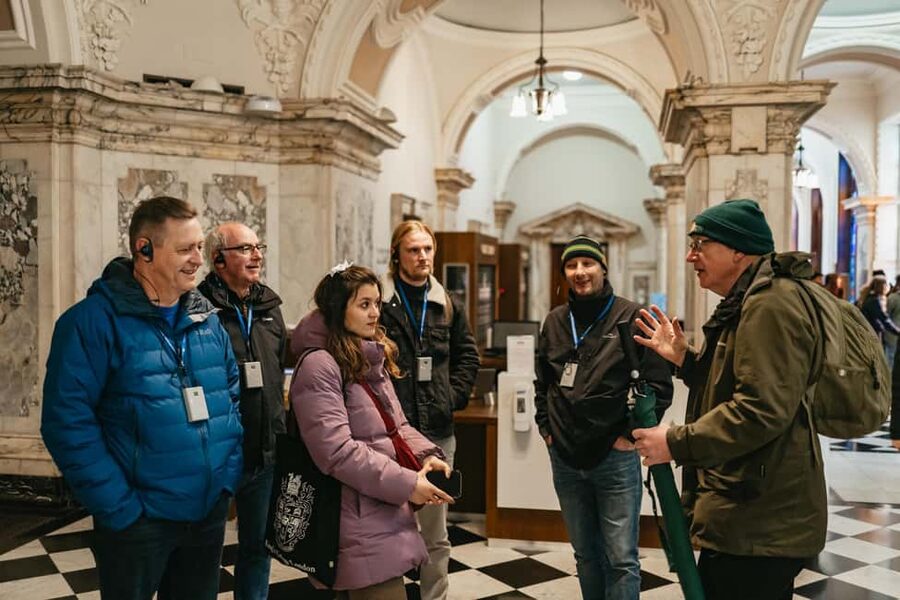
I would not come expecting a quick mural tour. The value is in hearing why a particular image matters and how residents may read it differently from an outsider. The headsets help here. Larger groups receive listening sets, so you can hear the guide while walking through traffic or spread-out streets rather than clustering tightly around him.
The equipment is a practical plus, especially for people who find it hard to hear outdoors. One useful detail is that the headsets also help you keep track of the group if you need to step aside briefly, though you should still stay alert and follow the guide’s instructions.
A few more walking tours around the UK worth a look
- Underground Vaults Walking Tour in Edinburgh Old Town
★ 4.5 · 8,506 reviews - London: The Original Jack the Ripper Walking Tour
★ 4.7 · 7,833 reviews - Oxford University Walking Tour With University Alumni Guide
★ 5.0 · 6,905 reviews - Edinburgh Castle: Guided Walking Tour with Entry Ticket
★ 5.0 · 5,540 reviews
Passing through gates into the Shankill area
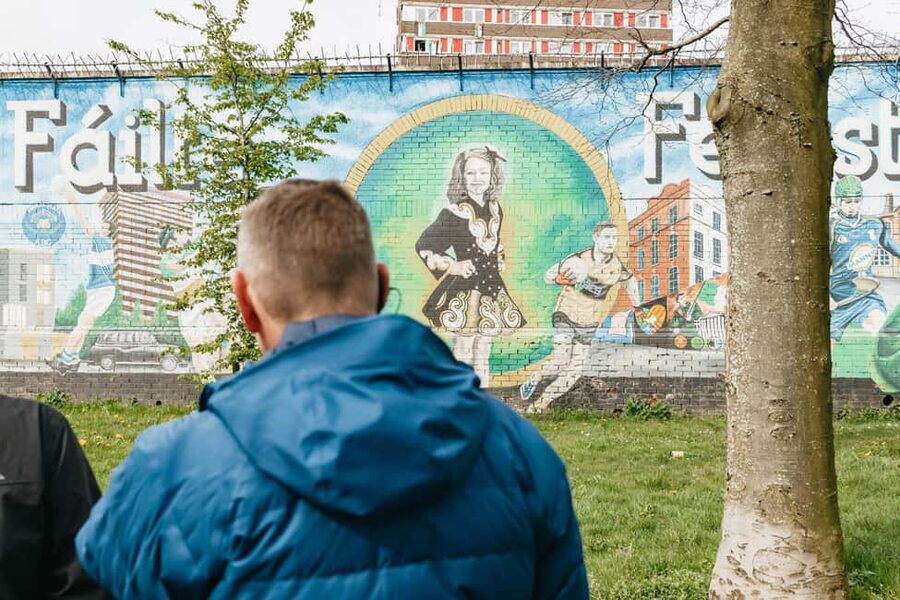
The tour then crosses toward the British unionist Shankill area. You do not walk along Shankill Road itself. The route does enter the wider area, using heavily fortified security gates that once served, and in some cases still serve, as borders between neighborhoods.
This is one of the most telling parts of the experience. A border usually suggests a distant country. Here, the dividing line can be a gate within a city, close to houses and ordinary roads. The guide explains why the gates were created, how they shaped movement, and why some remain.
Do not expect a polished visitor attraction. This is a working-class residential area, and the route passes through places that were never built for sightseeing. That can make the experience more awkward than a standard city tour, but it also gives the subject weight. You are seeing the physical remains of decisions made for safety, control, and separation.
The guide also discusses tragedies linked to the area. Some details are hard to hear. If you prefer light sightseeing, this is not the right walk. If you want a plain account of how violence affected communities, this section is central.
The Peace Walls after seventy-five minutes
The main stop at the Peace Walls takes about 75 minutes, making it the longest part of the walk. You have time for photographs and for a fuller explanation of their creation. The guide also addresses the uncomfortable question of why the walls are still standing.
The height of the barriers can be startling. From the ground, they make the division feel large and permanent, even though the neighborhoods are close together. Roads and gates add another layer. Some access points are locked at night, a detail that shows how peace and normality do not mean the old boundaries have vanished.
I find this stop most useful when you look beyond the mural photographs. Pay attention to the wall’s scale, the gates, the road layout, and what is hidden from view. The tour’s central argument is that the most important evidence is often ordinary and easy to miss.
You also get time to take pictures without rushing. Still, photography should not become the whole point. These are places tied to pain and continuing memory, so listen to the guide before wandering off for a better angle.
Returning through the Falls and back to central Belfast
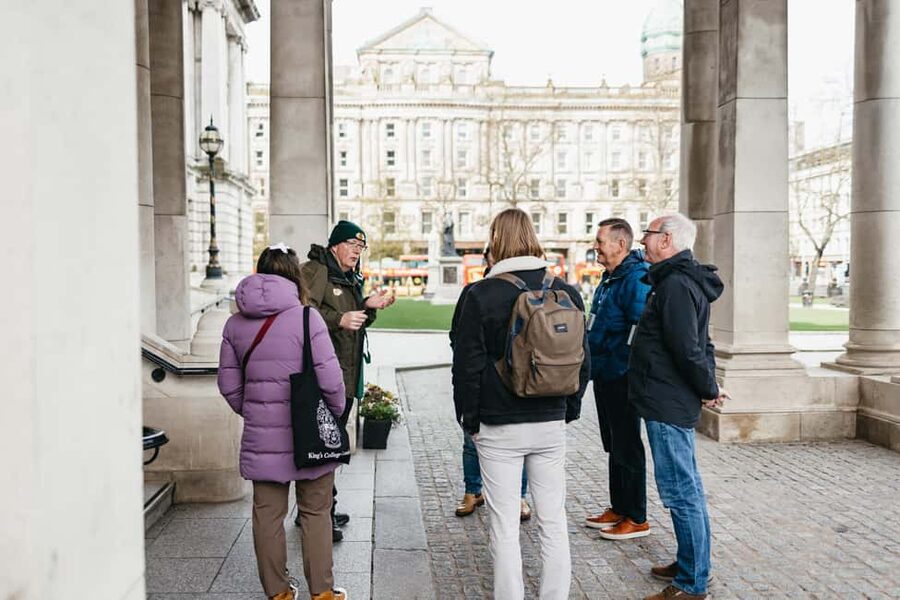
The group returns toward the Irish Falls Road through more security gates. At one point, an Irish ballad forms part of the walk. The moment is designed to show how sound, music, and identity fit into the story, not simply to add atmosphere.
Looking back at the gates and walls helps connect the separate parts of the route. You have seen the nationalist area, crossed into the unionist area, and then returned. The physical journey makes the political division easier to understand than a map or short explanation would.
The final stretch turns toward Belfast city center and places The Troubles within the political and economic setting of the peace process. The guide also looks at people who built connections between communities, including musicians, boxers, and historians.
That change in emphasis matters. The walk does not end by presenting Belfast as permanently broken. It points to the work of ordinary people who challenged the idea that communities had to remain separate. The tone becomes more hopeful, though not falsely cheerful.
A different Belfast in the city center
Near the end, you see a beautiful Victorian building that has been reused as an arts venue. It represents the Belfast of today: creative, changing, and willing to use old spaces in new ways.
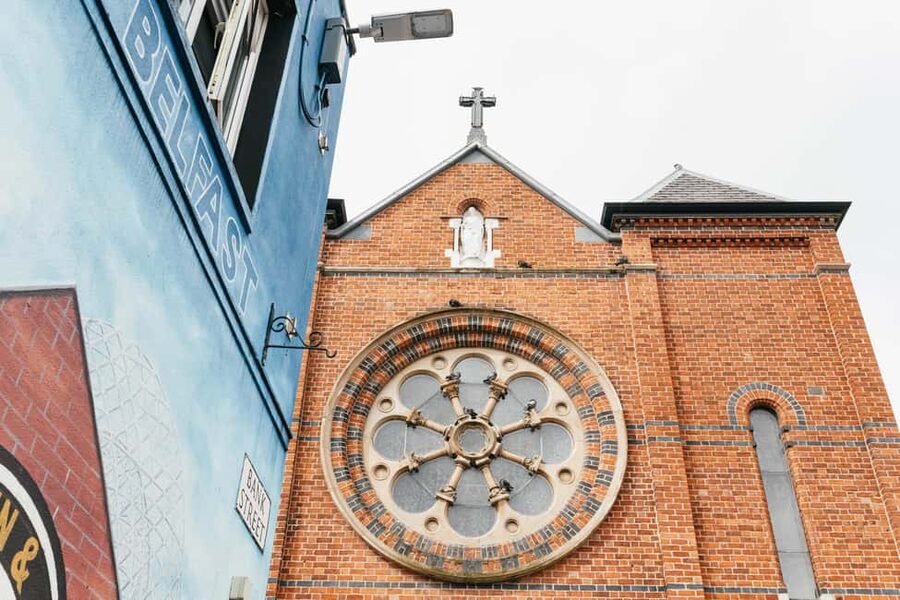
The tour finishes in a historic church in central Belfast. The church’s place in Irish history complicates the usual two-sided picture of the city. That is a smart ending because it leaves you with a more complicated understanding of identity, rather than a simple Irish-versus-British label.
The walk finishes on Rosemary Street, close to central Belfast. You are not left at the Peace Walls or in West Belfast, so the route ends with a practical return to the city center.
Is $32 a fair price?
At $32 per person, the tour offers good value if your aim is to understand Belfast rather than simply collect landmarks. Three hours with a local guide, headsets for larger groups, and a route through Divis, the Falls, the Peace Walls, and the Shankill area gives you more context than a brief photo stop.
The value depends on the kind of trip you want. If you have only a short time in Belfast, this is an efficient way to see the areas most closely tied to The Troubles. One traveler used the walk during a brief cruise stop and found it a strong use of limited time.
You are paying for explanation, not comfort. There is no meal, transport, indoor shelter, or regular seating included. The route can last longer than the scheduled three hours, sometimes reaching about three and a half hours, so allow at least 90 minutes before your next activity.
Free cancellation up to 24 hours before the start and the option to reserve now and pay later make the booking less rigid. The tour is offered in English, with an English audio component through the listening sets.
Who should book this walk?
I would recommend it to adults who want a serious introduction to Belfast’s recent past and present-day divisions. It suits curious first-time visitors, history-minded travelers, people who have seen murals before but lacked context, and anyone who wants a local perspective rather than a quick overview.
You should be comfortable walking a good distance. One estimate puts the route at about 8,500 steps. Wear comfortable shoes, bring weather-appropriate clothing, and take rain protection seriously. There is little shelter, and bad weather can make the route harder.
This is not suitable for children under 14. The subject includes graphic detail, violence, and trauma. Even adults may find parts emotionally heavy, so leave space afterward to think rather than scheduling another demanding activity immediately.
The tour may also suit visitors who know very little about The Troubles, though a small amount of preparation can help. A basic grasp of Irish and British political terms will make the explanations easier to follow. Still, the guides build the story from the ground up.
Should you book the Belfast Walls and Bridges Tour?
Book it if you want Belfast explained through its streets, walls, gates, murals, and personal stories. Steve and Arthur bring different personal touches, but both are praised for clear, balanced explanations, strong local knowledge, humor, and an ability to connect past events with life today.
Skip it if you want a relaxed sightseeing walk, frequent café stops, or a route designed mainly for photographs. This experience asks you to listen, walk, and sit with painful material.
For most adults with a serious interest in Belfast, the $32 cost is fair. The strongest reason to go is not the murals alone. It is the chance to understand how a political conflict became part of the city’s buildings, routines, memories, and hopes for the future.
FAQ
How long is the Belfast Walls and Bridges walking tour?
The scheduled duration is three hours, but the tour can run longer. Allow at least one and a half hours before your next activity.
Where does the tour start?
It starts on the pavement outside the large railings of Belfast City Hall, beside a blue information table and between two black ornamental lamp posts.
How can I identify the guide?
The guide wears green and carries a large green and white golf umbrella. You should meet on the front side of City Hall, not at the back or at Donegall Square West.
Where does the tour finish?
It finishes on Rosemary Street in Belfast city center.
Does the tour visit Shankill Road?
The route does not visit Shankill Road itself, but it does pass through the wider Shankill area.
Is the tour suitable for children?
No. The tour is not suitable for children under 14 because it includes graphic details and difficult subject matter.
How much walking is involved?
The walk lasts about three hours and can involve roughly 8,500 steps. Comfortable shoes are important.
Are toilets available during the tour?
Facilities are limited. A leisure center near the Peace Walls can be used approximately two hours into the tour, but there are no regular rest stops.
What is included in the price?
The price includes the walking tour, a live English-speaking guide, and listening sets for larger groups. Food and drinks are not included.
Just added around the UK
- Falmouth: Vibrant Historical Walking Tour (award-winning)★ 4.9 · 75 reviews
- The Must-Sees of Edinburgh: Small Group Walking Tour in French★ 4.9 · 88 reviews
- Edinburgh: Old Town History Walking Tour★ 4.9 · 528 reviews
- Edinburgh: Old Town Stories – Guided Walking Tour★ 4.9 · 86 reviews
- Ghosts, Ghouls & Gallows :The Original Bristol Ghost Walk★ 4.6 · 76 reviews
- Edinburgh: Private Walking Tour with a Local★ 4.4 · 78 reviews
- Edinburgh: Private Walking Tour in French with Clémentine★ 5.0 · 73 reviews
- Edinburgh: Multi-Sensory Old Town Historical Walking Tour★ 4.6 · 290 reviews
Walking Tours, compared.

Magical London: Harry Potter Guided Walking Tour
Read our review →
Reykjavik Food Walk – Local Foodie Adventure in Iceland
Read our review →
History and Hauntings of Salem Guided Walking Tour
Read our review →
New Orleans Premier Ghost, Voodoo and Vampire Walking Tour
Read our review →
Amsterdam Anne Frank: Small-Group Walking Tour & Local Guide
Read our review →
Edinburgh Castle: Guided Walking Tour with Entry Ticket
Read our review →
Anne Frank’s Story – Guided Walking Tour through Amsterdam
Read our review →Browse the lists this tour appears in