
REVIEW · VIENNA
Historical Hitler Walking Tour of Vienna
Vienna’s grand center carries a darker story beneath its imperial polish. This walking tour connects Hitler’s early years in the city with the Nazi takeover of Austria, the destruction of Jewish life, and the wartime damage that reshaped Vienna. Heldenplatz and the Jewish memorials give the tour its strongest emotional weight.
I like the way the walk links famous sights with less familiar places, including the former Gestapo headquarters at Morzinplatz. I also like the guides’ use of photos, maps, and extra background on tablets, which helps you picture buildings and events that no longer exist. The main drawback is its title: this is not a narrow tour of Hitler alone, but a wider study of Vienna, antisemitism, National Socialism, and Austria’s difficult past.
Key points to know before you go
- A 2.5-hour historical walk: The route covers central Vienna at an easy pace, but you will be outside for much of the afternoon.
- More than Hitler’s biography: Expect context about Vienna around 1900, the Anschluss, Nazi persecution, wartime destruction, and the Holocaust.
- Powerful central sites: Heldenplatz, Judenplatz, Morzinplatz, and the Memorial Against War and Fascism give the subject a clear physical setting.
- English-speaking licensed guides: Dieter, Wolfgang, Stephan, Charles, Siggy, and other guides have led this experience, with strong praise for their historical detail and clear delivery.
- Small enough for discussion: Groups can reach 25 people, so ask questions early and stay close to the guide.
- Good value at $32.65: For two and a half hours with a licensed guide, the price is fair, especially if you want historical context rather than a quick monument tour.
What this Hitler and Vienna tour really covers
The name may suggest a biography lesson focused tightly on Adolf Hitler. You will get some of that, especially his early years in Vienna and the art school that rejected his application. But the wider subject is how Vienna’s society, politics, arts, antisemitism, and Jewish community fit into the story.
That distinction matters. If you want a standard Second World War sightseeing tour, this may not be the best match. The walk is built around explanation and discussion. You will visit monuments and important addresses, but the guide’s storytelling is the main event.
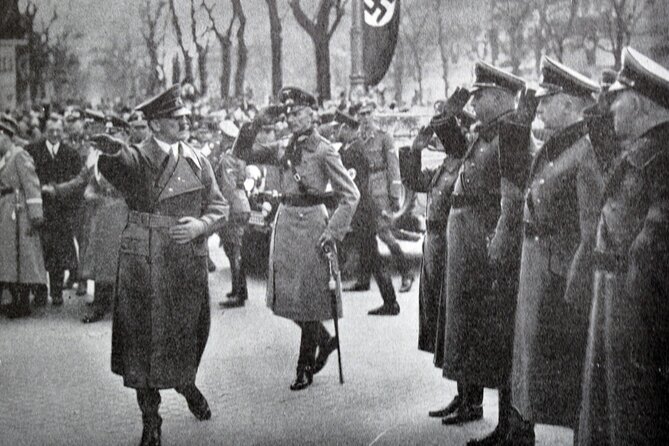
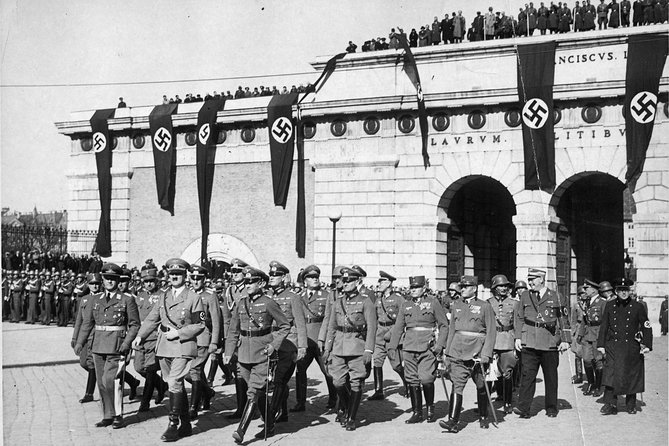
The tour draws on the historical setting explored in Brigitte Hamann’s book Hitler’s Vienna. That means attention goes beyond Hitler’s movements. You will hear about the city at the turn of the 20th century, the cultural world he encountered, the political climate that shaped his ideas, and Austria’s role after the Anschluss in 1938.
The strongest guides make this difficult subject measured and clear. Dieter is praised for his organized presentation and care for the group. Wolfgang is noted for a philosophical approach and strong command of the subject. Stephan has used maps and photographs on an iPad to clarify the story. Charles has been especially effective at adding detail for people who already know the broad outline of Hitler’s rise.
A few more walking tours around Vienna worth a look
- Vienna: Guided Walking Tour of City Center Highlights
★ 4.7 · 4,989 reviews - Vienna: Vienna Central Cemetery Guided Walking Tour
★ 4.8 · 3,307 reviews - Vienna: Guided Walking Tour of City Highlights & Hidden Gems
★ 4.9 · 2,180 reviews
Starting outside the Albertina Museum
The meeting point is at Albertinaplatz, outside the Albertina Museum. This is a central location near some of Vienna’s most famous sights, but it can be busy. Arrive early, identify the guide, and stay alert when the group begins walking.
One practical warning deserves attention: a participant was left behind when the group moved away quickly from the meeting point. The operator apologized and said guides are instructed to keep the group together. Even so, you should make sure the guide knows you are present before the walk begins, especially if the square is crowded.
The tour starts at 2:30 p.m. and lasts about two hours and thirty minutes. It ends near Schwedenplatz, close to U-Bahn lines 1 and 4 and a range of restaurants. That makes the timing useful if you want dinner or an easy ride back after the walk.
Vienna State Opera and the cultural world Hitler encountered
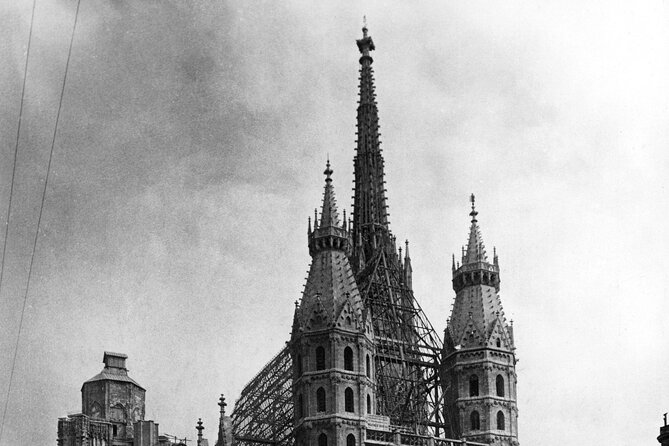
The first main stop is the Vienna State Opera, one of the city’s grandest cultural buildings. It opened in 1869 with Mozart’s Don Giovanni, in the presence of Emperor Franz Joseph and Empress Elisabeth. The setting helps explain Vienna as a major center of music, theater, art, and imperial culture.
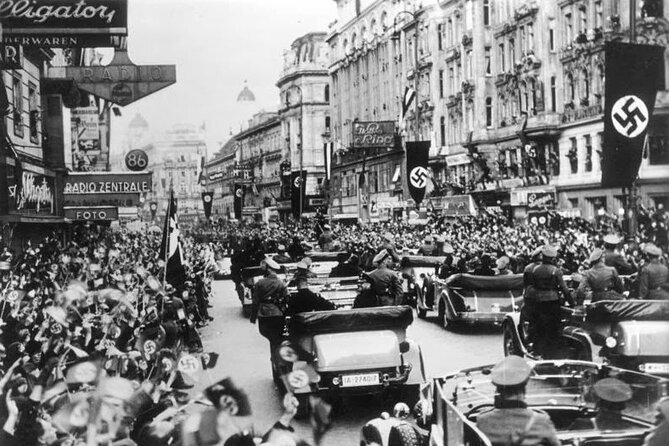
The guide then turns to the rupture caused by the Anschluss, Austria’s annexation by Nazi Germany in 1938. Hitler visited the opera that year, and the institution’s artists and employees faced dismissal, persecution, exile, and murder. Some works were banned from performance.
This is a useful opening because it shows that Nazi rule did not affect only government offices and military sites. It reached into orchestras, theaters, museums, universities, and daily cultural life. You see a beautiful landmark, then learn how its staff and repertoire were altered by dictatorship.
The stop lasts about ten minutes, but the discussion may take longer depending on questions and the group. You do not enter the opera as part of the tour, so think of this as an outdoor history talk beside a major landmark.
The Memorial Against War and Fascism
At Albertinaplatz, the Memorial Against War and Fascism shifts the tour from cultural history to public memory. Austrian sculptor Alfred Hrdlicka created the memorial, which has been in place since 1988. It is dedicated to the victims of war and fascism and confronts one of the darkest periods in Austria’s past.
This is an important stop because Vienna does not tell its wartime story through one single monument. The memorial is direct and stark. Your guide can explain how Austria has dealt with responsibility, victimhood, remembrance, and the long process of facing its role under National Socialism.
The tour does not treat the memorial as a quick photo stop. You should expect a short explanation, then time to look closely at the work. The subject is heavy, and the tone becomes more reflective here.
Same streets, a different route:
- Vienna: Viennese Underworld Guided Walking Tour
★ 4.7 · 1,865 reviews - Vienna: World War II Historical Walking Tour
★ 4.8 · 1,772 reviews - Vienna Historic Center Small Group Walking Tour
★ 5.0 · 1,746 reviews - Vienna: Private Walking Tour with a Local
★ 4.6 · 1,446 reviews
The art school that rejected Hitler
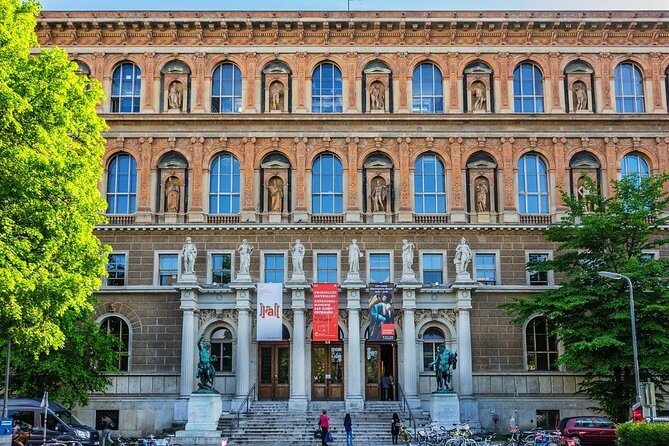
The Akademie der bildenden Künste is one of the tour’s most talked-about locations. Hitler applied to the Vienna Academy of Fine Arts but was not accepted. The fact is familiar, yet it can easily be turned into a simplistic story about one rejection creating a dictator.
A good guide gives you more careful context. The stop deals with Hitler’s early years, his ambitions, and the Vienna he encountered before the First World War. It also helps separate confirmed facts from later myths about his life.
Do not expect a dramatic interior visit. The value is in the explanation outside the building and in the way the guide connects this small personal episode with larger questions about politics, identity, art, and antisemitism. If you already know the basic Hitler biography, the surrounding social context is likely to be more useful than the rejection itself.
Heldenplatz and the speech that changed Vienna
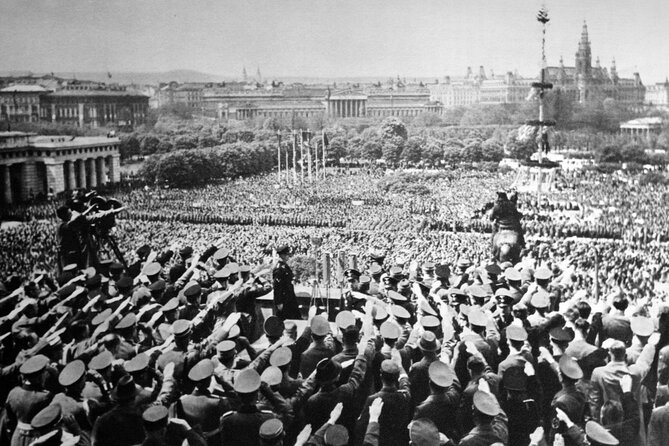
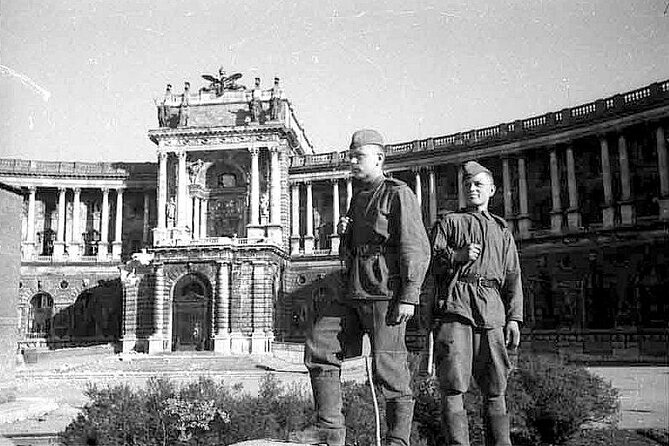
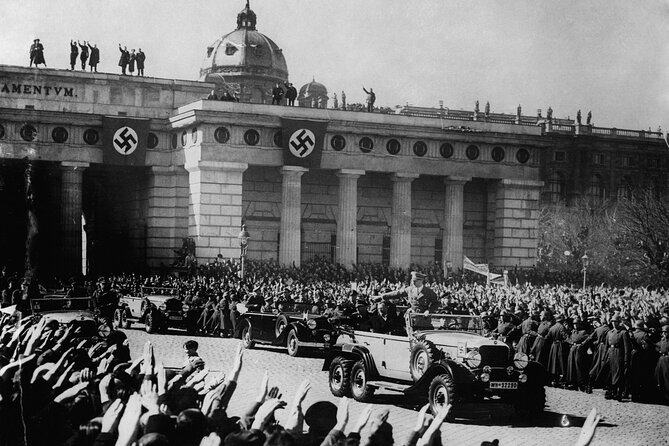
Heldenplatz is one of the tour’s most important stops. On March 15, 1938, Hitler addressed a huge crowd from the balcony of the Neue Hofburg after Austria’s annexation by Nazi Germany. The speech and the public response became a lasting symbol of the Nazi seizure of power in Austria.
Standing in the square gives the event a scale that a book or documentary cannot. The imperial buildings around you create a striking setting, and the guide can explain how the square became associated with both mass approval and later national trauma.
This is also where the tour asks hard questions about Austria’s behavior. The story is not simply that Germany forced Nazi rule on an unwilling country. Many Austrians supported the Anschluss and participated in persecution, while others resisted or suffered. The guide’s job is to place those facts together without turning the stop into a slogan.
You will spend roughly ten minutes here, though this is one of the places where questions can add real value. If you want photographs of Vienna’s imperial architecture, take them before or after the historical explanation so you can give the subject your full attention.
Judenplatz and the murdered Jewish community
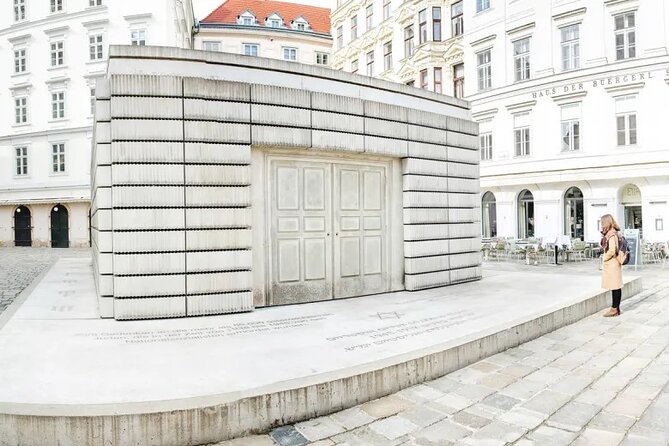
At Judenplatz, the mood becomes more personal. The Holocaust Memorial for the Austrian Jewish victims of the Shoah commemorates more than 65,000 Austrian Jews murdered by the National Socialists between 1938 and 1945.
The memorial is known for its library-like form, with its books turned inward and their titles unreadable. The image suggests lives, stories, and knowledge made inaccessible by murder. Your guide will help place the memorial within the history of Vienna’s Jewish population and the persecution that began after 1938.
This stop is one of the clearest reasons to choose the tour. You are not only hearing about Nazi policy in the abstract. You are standing in a central Vienna square and considering the people, families, and institutions that were destroyed.
The walk also addresses the range of Jewish responses to persecution, including deportation, forced emigration, and suicide. That part of the subject is painful, but it helps you understand how rapidly legal discrimination and public violence became a life-or-death crisis.
Morzinplatz and the former Gestapo headquarters
Morzinplatz marks the site of the former Hotel Metropole, once a luxury hotel and later one of the Gestapo’s most brutal headquarters in the Third Reich. The building was destroyed, but the address remains a place of memory.
This stop helps you picture the machinery of terror within ordinary city streets. Vienna’s center was not separate from the Nazi regime. Police, administrators, informers, and victims occupied the same urban space where you now walk between museums, shops, and transit stops.
The memorial here is less visually famous than the one at Judenplatz, which makes the guide’s explanation especially useful. You may pass the location without recognizing what happened there. That is exactly why a walking tour can add something that a self-guided visit might miss.
The Stadttempel and why the synagogue is out of sight
Near the end of the route, the tour reaches the area around the Stadttempel, Vienna’s main synagogue, at Seitenstettengasse 4. The synagogue is concealed behind a five-story apartment building rather than facing the street openly.
The reason goes back to regulations that required non-Catholic places of worship to remain hidden from public view. The building’s design reflects an older system of religious restriction, long before the Nazi period, and adds another layer to Vienna’s story of Jewish life.
The tour does not simply point out the synagogue and move on. You learn why its position is unusual and how architecture can reveal the rules imposed on a religious community. The stop also reminds you that Jewish Vienna existed for centuries, not only as a subject connected to the Holocaust.
The tour ends a few minutes’ walk from Schwedenplatz. You can take the U1 or U4 from there, or find a restaurant for dinner.
How the guides shape the experience
The quality of this tour depends heavily on the individual guide. Dieter is praised for warmth, organization, and strong historical detail. Wolfgang is known for keeping the story focused on Vienna and Austria while encouraging questions. Stephan has brought maps and photographs on a tablet, which is useful when discussing demolished buildings or crowded historical scenes.
Charles has also been praised for making familiar material feel fresh, while Siggy is described as honest, engaging, and attentive to the group. The guides are not all identical in style, and that is normal for a regular walking experience, but the shared strength is subject knowledge and a serious approach to the topic.
You should not expect theatrical reenactments or a light sightseeing patter. The best parts are carefully explained, sometimes philosophical, and often unsettling. If you enjoy asking questions, this format gives you room to do so.
One practical issue is hearing the guide in a busy street. A past participant found the audio difficult at times. Stay near the guide, keep the group within sight, and ask for repetition if traffic or other city noise gets in the way.
Is $32.65 fair for two and a half hours?
At $32.65 per person, the tour offers solid value if you want a serious guided history walk. You are paying for a licensed guide, an English presentation, and about two and a half hours of connected interpretation across central Vienna. There are no extra admission fees at the listed stops, though this is mainly an outdoor experience rather than an attraction-entry tour.
The value is strongest for people who would otherwise read plaques without understanding how the sites connect. The guide links the opera, memorials, academy, palace square, synagogue, and Gestapo site into one story.
The price is less compelling if you want to enter museums, tour the State Opera, or spend most of the time inside. You also need to factor in Vienna’s weather. The tour requires good weather, and the route can feel cold in winter or exposed in rain. Guides have sometimes included indoor pauses to warm up, but you should bring water, sun protection, a raincoat, or an umbrella.
Wear comfortable shoes and clothes. The walk is described as easy enough for someone with moderate fitness, but it lasts 150 minutes and includes regular outdoor walking.
Who should book this walk?
I would choose this tour if you have a strong interest in 20th-century European history, Jewish Vienna, National Socialism, or the way cities remember painful events. It also suits you if you prefer explanations and discussion over a quick list of famous buildings.
You do not need to be a specialist. Several stops begin with familiar facts, then add Austrian detail that is often left out of general accounts of Hitler and the Second World War.
I would think twice if you want a cheerful introduction to Vienna, a museum-heavy afternoon, or a tour devoted only to Hitler’s personal biography. The subject is grim, and the two-and-a-half-hour length requires attention. It is also not ideal if you are unprepared for cold or wet weather.
The group can include up to 25 people. That is still manageable, but you will get the most from it by staying near the guide and speaking up when you cannot hear.
Should you book the Historical Hitler Walking Tour of Vienna?
Book it if you want to understand how Vienna’s imperial culture, Jewish community, political life, and public spaces were altered by National Socialism. The strongest parts are Heldenplatz, Judenplatz, Morzinplatz, and the discussion of the synagogue concealed behind its apartment frontage.
Go in expecting a broader Vienna and Hitler tour, not a narrow biography. At $32.65, the experience is a worthwhile use of an afternoon for history-minded visitors, especially when led by a strong guide such as Dieter, Wolfgang, Stephan, or Charles. Bring good shoes and weather protection, then leave enough time afterward to reflect on what you have seen.
FAQ
Where does the Historical Hitler Walking Tour of Vienna start?
The tour starts at Albertinaplatz, outside the Albertina Museum in central Vienna.
Where does the tour finish?
It finishes a few minutes’ walk from Schwedenplatz, near Vienna’s U1 and U4 underground lines and several restaurants.
What time does the tour begin?
The scheduled start time is 2:30 p.m.
How long does the walking tour last?
The tour lasts approximately two hours and thirty minutes.
Is the tour offered in English?
Yes. The experience is offered in English and includes a licensed guide.
What should I bring?
Wear comfortable shoes and clothes. Because Vienna’s weather can change, bring water, sunblock, and a raincoat or umbrella.
Can I cancel for a full refund?
Yes. You can cancel at least 24 hours before the start time for a full refund. Cancellations or changes made less than 24 hours before the start time are not refunded. If poor weather or an insufficient number of participants causes the operator to cancel, you will be offered another date or experience, or a full refund.
Just added around Vienna
- Vienna: City Center Guided Walking Tour★ 4.8 · 99 reviews
- Vienna: Essential History Walking Tour★ 4.9 · 633 reviews
- Vienna: Private Walking Tour with a Guide★ 4.7 · 962 reviews
- Vienna for Food Lovers: Cafés, Markets & Austrian Cuisine★ 5.0 · 1,063 reviews
- Vienna: Ghosts and Legends Guided Nighttime Walking Tour★ 4.4 · 1,088 reviews
- Vienna: 1.5-Hour Underground Walking Tour★ 4.9 · 1,146 reviews
- Vienna: Private Walking Tour with a Local★ 4.6 · 1,446 reviews
- Vienna Historic Center Small Group Walking Tour★ 5.0 · 1,746 reviews
Walking Tours, compared.

Magical London: Harry Potter Guided Walking Tour
Read our review →
Reykjavik Food Walk – Local Foodie Adventure in Iceland
Read our review →
History and Hauntings of Salem Guided Walking Tour
Read our review →
New Orleans Premier Ghost, Voodoo and Vampire Walking Tour
Read our review →
Amsterdam Anne Frank: Small-Group Walking Tour & Local Guide
Read our review →
Edinburgh Castle: Guided Walking Tour with Entry Ticket
Read our review →
Anne Frank’s Story – Guided Walking Tour through Amsterdam
Read our review →Browse the lists this tour appears in