
REVIEW · BUCHAREST
Bucharest: Relics of Communism 3-Hour Walking Tour
Bucharest’s communist past is easiest to understand on foot, where grand avenues, concrete apartment blocks, battered churches, and monuments to revolution sit close together. This tour begins at the balcony where Nicolae Ceausescu gave his last speech, then follows the story from dictatorship to the 1989 Revolution and its aftermath.
I like the small group of up to 10 because it gives you room to ask direct questions. I also like the focus on daily life, from ration cards and black-market shopping to propaganda and the secret police. The main consideration is that three hours on foot can feel long in bad weather, and the tour does not include hotel pickup or a stated interior visit to the Palace of the Parliament.
Key points at a glance
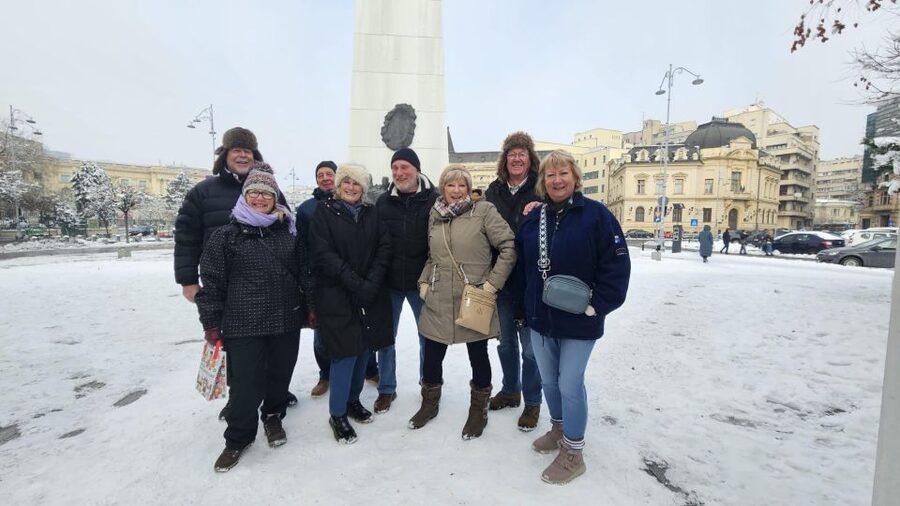
- Begin at the site of Ceausescu’s last speech: Revolution Square gives the tour an immediate human and political focus.
- See Bucharest’s hidden religious survivors: The Michael the Voivode Church helps explain what was lost or threatened during redevelopment.
- Walk through Ceausescu’s Civic Centre: The Palace of the Parliament and its broad surroundings show the scale of the former regime’s ambition.
- Learn about ordinary life, not just leaders: Expect discussion of food shortages, ration cards, propaganda, surveillance, and informal trade.
- Keep the group personal: The maximum group size is 10, and named guides including Elena, Stefan, and Tudor have led past departures.
- Good value at $44: You get three hours with an English-speaking guide, a small Romanian snack souvenir, and a route through several central landmarks.
Starting at Revolution Square and the last speech
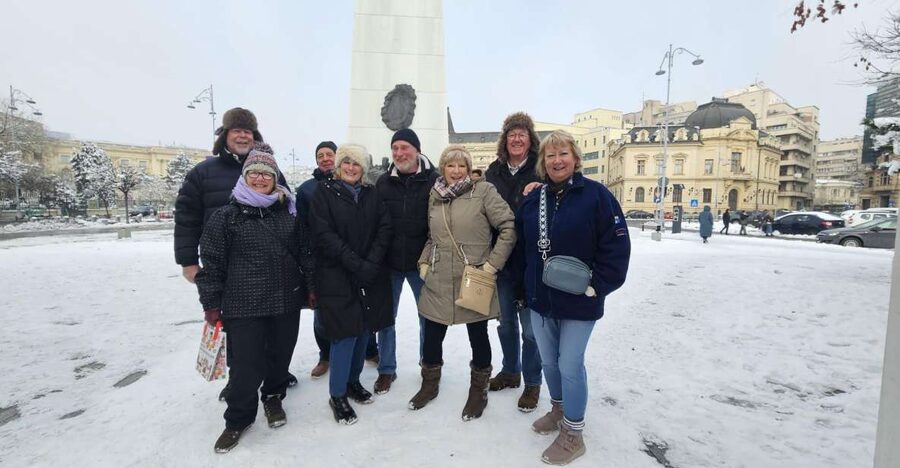
The tour starts at the Memorial of Rebirth in Revolution Square. This is a useful meeting point because the square is not simply an attractive central plaza. It is where the final public chapter of Ceausescu’s rule began.
From the balcony nearby, Ceausescu delivered his last speech in December 1989. The moment began as a familiar piece of political theater, with a large crowd gathered to hear the leader. Then the mood changed. The crowd interrupted him, and the authority that had seemed fixed for decades began to break in public.
Your guide spends about 20 minutes in Revolution Square, setting out the main events of the 1989 Revolution and Romania’s move toward democracy. I find this opening especially useful if you know the broad outline but not the local details. Instead of treating the revolution as a distant textbook event, the tour places it in the very square where people gathered, protested, and watched the regime unravel.
The Memorial of Rebirth also gives you a chance to consider how Romania remembers that period. The monument is unusual and open to interpretation, which makes it a natural prompt for conversation about memory, public art, and the difficult process of looking back at dictatorship.
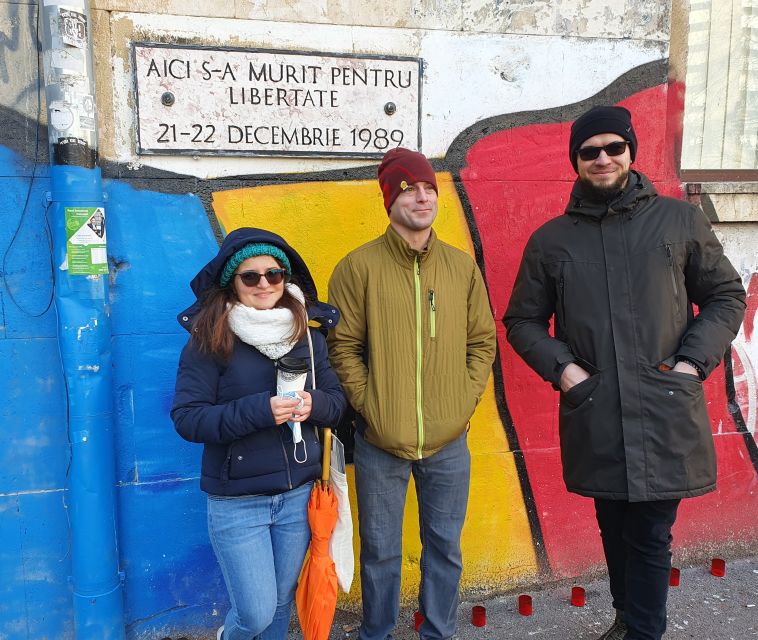
The stop at Piața 21 Decembrie 1989 lasts about 15 minutes. Its name itself marks the date when the uprising reached a critical point. Here, the guide can connect the physical setting with the political pressure building in Bucharest. You should expect explanation and storytelling rather than a museum visit, so listen closely and ask questions while the group is still gathered.
More History Walking Tours in the world:
- Berlin: Third Reich & Cold War Guided Walking Tour
★ 4.9 · 8,378 reviews - Munich: Third Reich & WWII Walking Tour
★ 4.6 · 6,181 reviews - Berlin’s Best: 2 Hour Walking Tour Third Reich and the Cold War
★ 5.0 · 5,486 reviews
The daily grind under Ceausescu
The most useful part of the tour is its attention to ordinary Romanian life. The communist period lasted more than 40 years, but it was not experienced only through official speeches and monumental buildings. It shaped what people ate, how they shopped, what they watched, what they said in public, and how carefully they trusted others.
You hear about ration cards and food shortages, along with the black market that helped people find goods that official shops could not reliably provide. These details make the period easier to understand. A discussion of ideology can remain abstract, but the question of how a family found food or household supplies brings the system down to street level.
Propaganda and the secret police are also part of the discussion. The guide explains how the state promoted its own image and how surveillance affected private life. This is the point where the tour becomes more than an architecture walk. Buildings show the regime’s power, but these stories explain how that power reached into homes, workplaces, schools, and conversations.
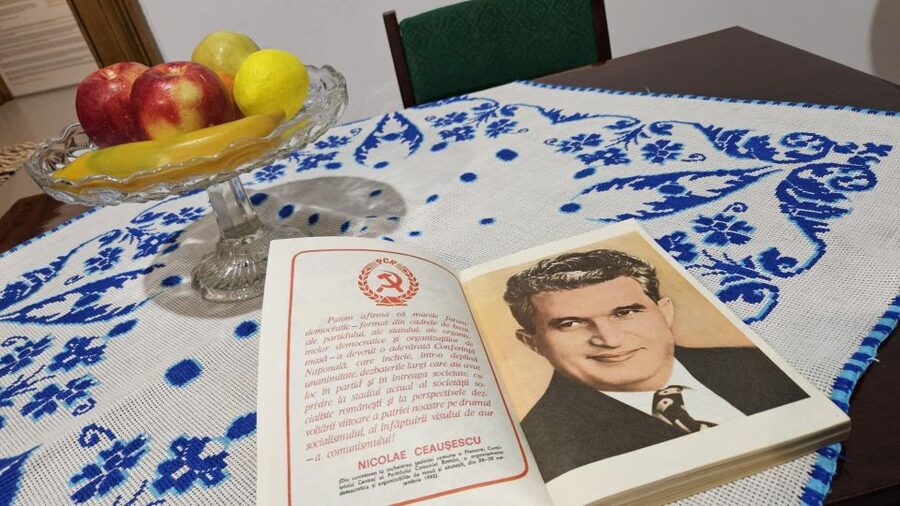
Past guides have included Elena, Stefan, and Tudor. The written feedback about these guides repeatedly highlights clear explanations, personal stories, visual material, and a willingness to answer questions. One guide used old communist schoolbooks, the mandatory school scarf, photographs comparing old and new Bucharest, and a photographic record of the Revolution. You should not assume every departure includes the same materials, but the tour has a history of using objects and images to make the subject more concrete.
That personal approach matters. Some departures have lasted longer than the advertised time when the guide and group had more to discuss. One solo participant described having a relaxed tour with plenty of room for questions. A small group also means you can ask about subjects that matter to you, such as the revolution, architecture, World War II connections, or the transition after 1989.
The Michael the Voivode Church and erased places
The route then reaches Michael the Voivode Church for about 15 minutes. This stop changes the pace and mood. The tour is not only about the new districts built by the communist state. It also shows the older religious buildings that survived attempts to reshape Bucharest.
The churches connected to this part of the route are important because communist redevelopment often favored monumental civic planning over older neighborhoods and religious sites. The guide explains how churches were threatened, concealed, moved, or left out of the official picture. The point is not simply to admire an old building. It is to understand the conflict between a state seeking to redesign the capital and a city whose identity could not be reduced to new boulevards and government blocks.
I like this stop because it breaks up the concrete scale of the Civic Centre. It also shows that the communist city was built over an older Bucharest rather than created on empty ground. You see the tension between inherited architecture and political planning in a compact, memorable way.
This is also a place where you should allow the guide to set the context. The tour is conducted in English, and the church visit is guided rather than a quick photo stop. Dress and behavior should be respectful at a religious site, even though the supplied details do not specify a formal dress code.
Piața Unirii and the changing face of Bucharest
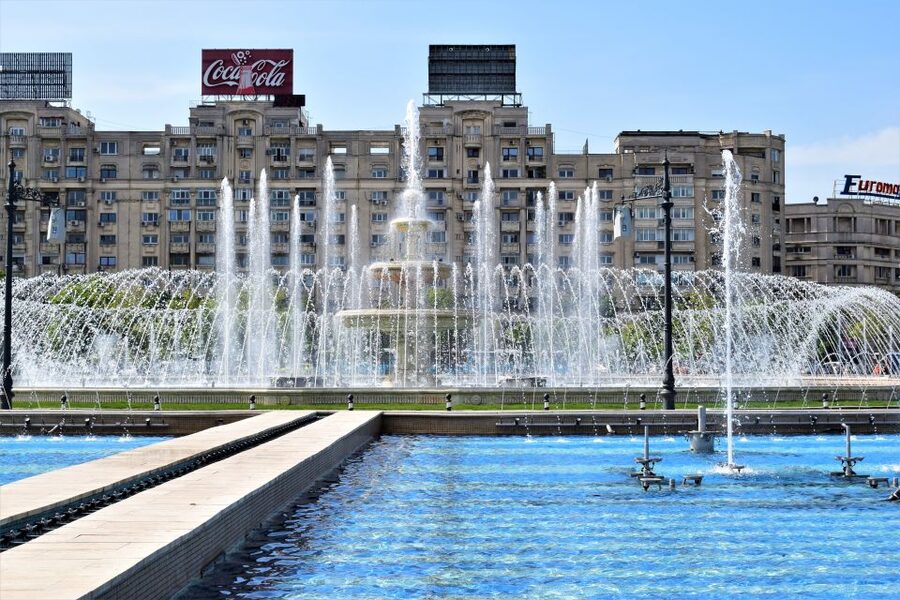
Piața Unirii is another 15-minute stop. It helps connect the older central city with the large-scale districts associated with Ceausescu’s rule. By this point, you have heard about the political events and the effect of communism on daily life. The square gives you a clearer sense of how those changes appeared in the city itself.
One of the tour’s strengths is the contrast between elegant older architecture and rows of communist apartment blocks. Bucharest can change character within a few minutes of walking. A historic facade may lead toward a broad road, a concrete residential district, or a planned civic space designed to control movement and focus attention on the state.
Piața Unirii also helps explain why this experience works better as a walk than as a list of monuments. From a vehicle, you can see large buildings, but you miss the shifts in scale and texture. Walking lets you notice how the old city and the communist city meet, sometimes awkwardly, sometimes almost casually.
The pace is generally described as relaxed. That is good news if you want time for explanations and photographs, but it also means you should wear comfortable shoes. Three hours is not an extreme amount of walking, yet the route includes several outdoor stops and may feel tiring if you are not used to city tours.
More Three-Hour Tours in the world:
- Prague: 3-Hour Walking Tour of Old Town & Prague Castle
★ 4.7 · 5,696 reviews - Experience Porto’s Charm: 3-Hour Guided Walking Tour
★ 5.0 · 2,432 reviews - Valletta: 3-Hour Walking Tour
★ 4.7 · 2,219 reviews - Belfast: Political Conflict 3-Hour Walking Tour
★ 4.6 · 2,215 reviews
The Palace of the Parliament and Civic Centre
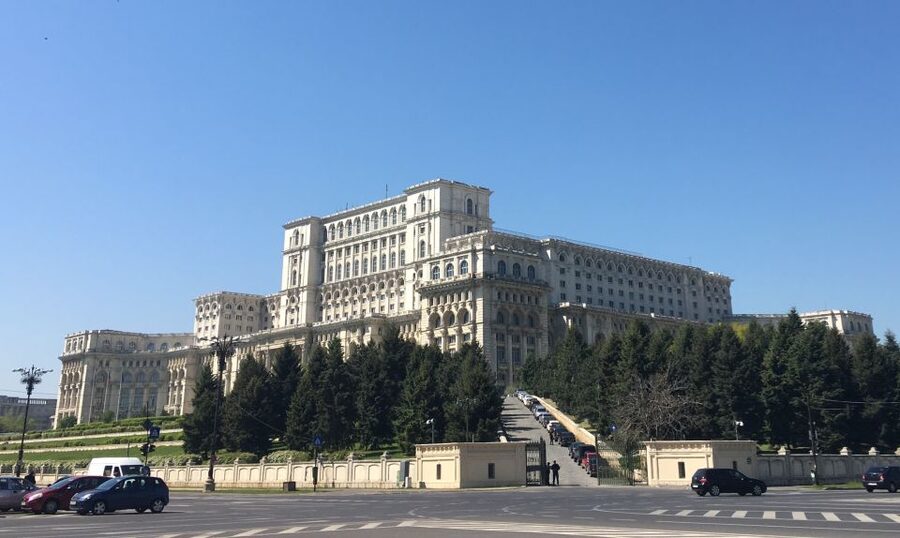
The tour’s largest visual statement comes in the later section, when you reach the Palace of the Parliament and the buildings of the Civic Centre project. The Palace was designed as the absolute center of power, and its scale was meant to communicate control, permanence, and the reach of the state.
The building is best understood in relation to the enormous urban project around it. Ceausescu’s plan did not involve one isolated government building. It included a new district, broad approaches, formal spaces, and the removal or reshaping of large parts of the existing city. The Civic Centre shows how architecture can become political theater.
You spend about 20 minutes at the Palace of the Parliament. The tour description promises a guided look at the building and Civic Centre, but it does not include an interior admission or a separate parliamentary visit. If you want to see inside the Palace, treat that as a separate plan and confirm the current entry arrangements before booking. One past guide helped participants buy parliament tickets, but that should not be taken as a guaranteed part of this experience.
From the outside, the Palace raises useful questions. How much labor and material went into it? What did the building mean to people living through shortages? How did the project change the city? Your guide places the structure within Ceausescu’s rule rather than presenting it as a neutral architectural sight.
The final stop is Piața Constituției. This broad space gives you a good visual sense of the planned axis and the relationship between the Palace and the Civic Centre. It is a fitting end because the tour moves from the intimate shock of the 1989 Revolution to the grand physical expression of the system that the revolution challenged.
What makes the guiding valuable
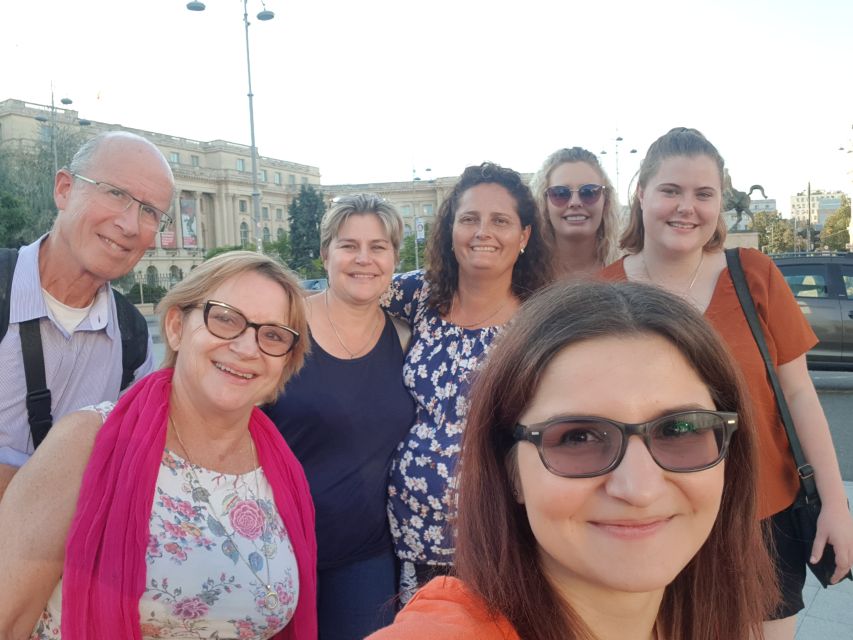
The subject needs careful handling. A guide can turn the tour into a dry list of dates, or into a simple story of villains and victims. The strongest reports about Elena, Stefan, and Tudor point to a more balanced style, with factual explanation, personal stories, light humor, and room for questions.
That balance is important because Romania’s communist period was complicated. People experienced the same system in different ways, and the years after 1989 brought their own changes and frustrations. The tour aims to explain both the regime and its effects rather than treating communism as a museum piece.
You can also shape the discussion. If you are interested in the Revolution, ask for more detail about the events at Revolution Square. If architecture is your main reason for booking, ask how the Civic Centre changed the old city. If daily life matters most, focus on rationing, school, propaganda, and informal trade.
The guide’s role is especially important in a small group. With no more than 10 people, the experience can feel closer to a private walk than a large city excursion. That does not guarantee a particular guide or a longer-than-advertised route, but it gives the format a clear advantage over a crowded tour where questions are difficult.
Price, pace, and practical value
At $44 per person, this is not the cheapest way to see Bucharest from the outside. The value comes from the interpretation. You are paying for three hours of connected explanation, not just access to a series of public squares.
The price includes an English-speaking guide and a Romanian snack souvenir. Hotel pickup and drop-off are not included, so you need to reach the Memorial of Rebirth in Revolution Square yourself. The tour finishes at Piața Constituției, leaving you in a different part of central Bucharest.
For me, the small group is what makes the price easier to justify. You get a focused route through Revolution Square, Piața 21 Decembrie 1989, Michael the Voivode Church, Piața Unirii, the Palace of the Parliament, and Piața Constituției. You also get historical context that is difficult to pick up from looking at buildings alone.
The route is best for someone who wants a serious introduction to Bucharest’s recent past. It suits first-time visitors who want a clear framework for the city, history-minded people, and anyone drawn to the relationship between architecture and political power. It also works well for a solo participant, since the small format leaves more room for conversation.
It is less suitable if you want a fast highlights tour, a museum-heavy outing, or a comfortable ride between sights. The focus is walking, outdoor observation, and discussion. In warm weather, bring water and sun protection. In poor weather, the open-air format may be less pleasant.
The activity offers free cancellation up to 24 hours before the start, and you can reserve now and pay later. That is useful if your Bucharest schedule is still shifting. Starting times vary, so check availability for your date.
Should you book this Bucharest communism tour?
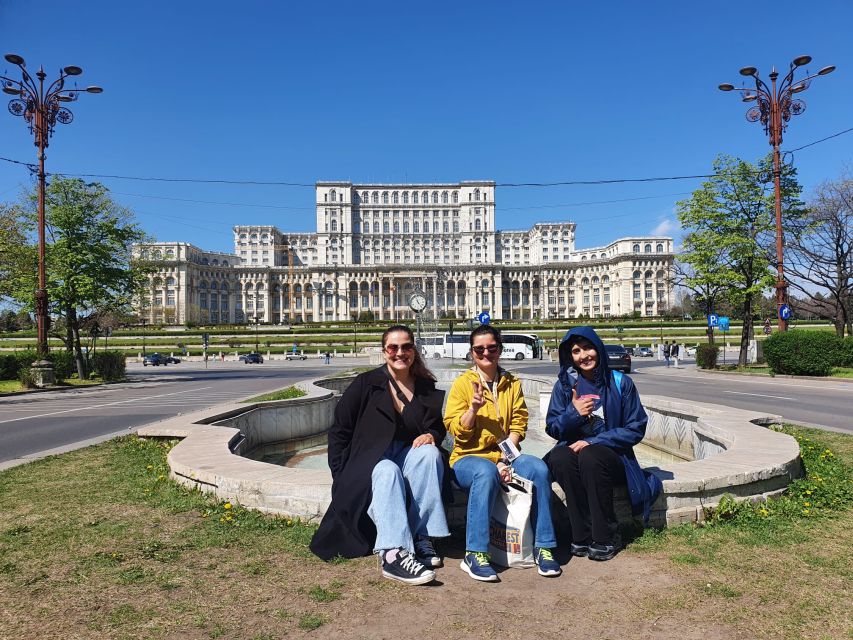
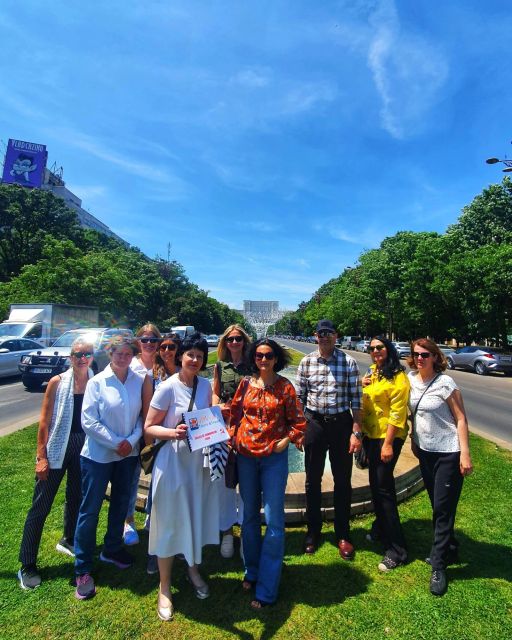
I would book it if you want to understand why Bucharest looks the way it does today. The route links the 1989 Revolution, everyday life under Ceausescu, older churches, apartment blocks, and the massive Civic Centre in a way that makes the city easier to read.
Book it especially early in your stay if you want context for later sightseeing. After this walk, the Palace of the Parliament and the central streets will make more sense, and you will notice the contrast between old Bucharest and the communist rebuilding more clearly.
Skip it if you dislike long conversations, outdoor walking, or modern political history. Also remember that a visit inside the Palace is not listed as included. For most visitors interested in Romania’s recent past, though, the $44 price buys a focused, personal introduction rather than a superficial look at imposing buildings.
FAQ
How long is the Bucharest Relics of Communism tour?
The walking tour lasts three hours.
What language is the tour conducted in?
The tour is conducted in English with a live English-speaking guide.
How many people can join the tour?
The group is limited to 10 participants.
Where does the tour begin?
You meet the guide at the Memorial of Rebirth in Revolution Square.
Where does the tour finish?
The tour finishes at Piața Constituției.
What places does the route include?
The route includes Revolution Square, Piața 21 Decembrie 1989, Michael the Voivode Church, Piața Unirii, the Palace of the Parliament, and the Civic Centre area.
Does the tour include entry inside the Palace of the Parliament?
An interior admission is not listed as included. The tour provides a guided look at the Palace and Civic Centre from the route.
Is hotel pickup included?
No. Hotel pickup and drop-off are not included.
What is included in the price?
The price includes the walking tour with an English guide and a Romanian snack souvenir.
Can I cancel the booking?
You can cancel up to 24 hours in advance for a full refund. You can also reserve now and pay later.
Just added around the world
- Fira: Guided Foodie Walking Tour with Tastings★ 4.9 · 474 reviews
- Fez: Guided Walking Tour of the Historic Medina★ 5.0 · 359 reviews
- Fez: Walking Tour in the Ancient City of Fez★ 4.8 · 73 reviews
- Faro: Old Town Guided Walking Food Tour★ 4.9 · 94 reviews
- Feel like a local – Walking Tour in Mykonos Town 2hours★ 4.4 · 77 reviews
- Fes: A Guided Walking Tour Through the Historic Medina★ 4.4 · 97 reviews
- Fez: Half-Day City Private Walking Tour with a Guide★ 4.6 · 114 reviews
- Fanal / Assobiadores – Levada Walk★ 4.6 · 93 reviews
History Walking Tours, compared.

Berlin’s Best: 2 Hour Walking Tour Third Reich and the Cold War
Read our review →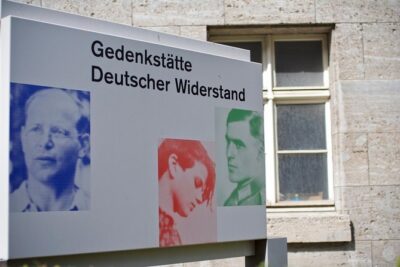
Third Reich Berlin: Hitler and WWII Walking Tour
Read our review →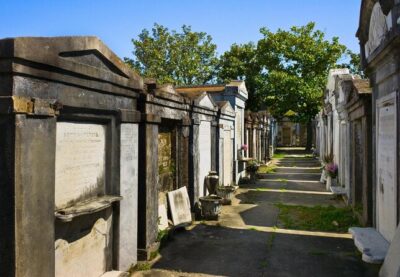
New Orleans Garden District History Walking Tour
Read our review →
Cartagena: Historic Center and Getsemaní Shared Walking Tour
Read our review →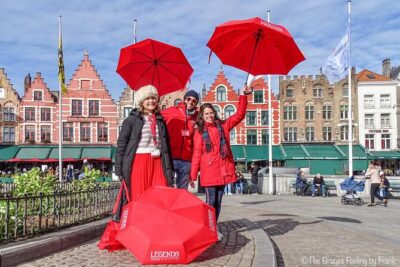
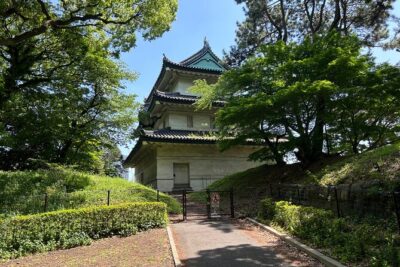
Imperial Palace and Shogun Historical Walking Tour
Read our review →Browse the lists this tour appears in