
REVIEW · BUCHAREST
Bucharest: Ghost Stories & Romanian Mythology Walking Tour
Bucharest’s darker side is less about cheap scares than the beliefs people use to explain death, restless spirits, and bad luck. This 2.5-hour evening walk links haunted places with Romanian customs, Dracula lore, witchcraft, and a real 1970s vampire case.
I like the research-based storytelling, especially when guides such as Tudor and Rares explain where folklore ends and documented events begin. I also like that the walk takes you to parts of Bucharest you might otherwise pass by, including atmospheric parks and striking old buildings. The drawback is simple: you visit haunted houses from outside only, and winter weather can make the long outdoor stops very cold.
Key points at a glance
- Romanian folklore beyond Dracula: Learn about spirits, witches, protective rituals, burial customs, and mythological creatures.
- A real 1970s vampire case: Hear the unsettling story of a person said to have terrorized Bucharest in modern times.
- Strong guides make the difference: Tudor, Rares, Ali, and Bogdan are praised for clear English, humor, research, and easy conversation.
- More than a ghost walk: The route also introduces Bucharest’s architecture, parks, buildings, and changing customs.
- Outdoor-only experience: You see haunted sites but do not enter the houses, so expect storytelling rather than staged indoor scares.
- Plan for the weather: Comfortable shoes and warm clothing matter, especially during cold nights.
A ghost walk rooted in Romanian customs
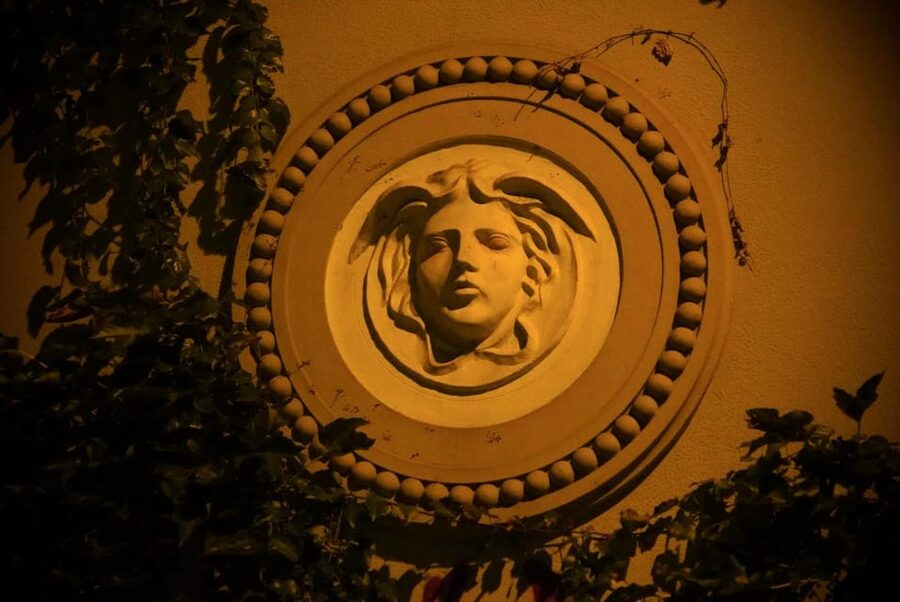
I like this Bucharest tour because it treats supernatural stories as part of culture, not just as decoration for a spooky night. You hear about ghosts and vampires, but you also learn why certain Romanian families used rituals to guard against evil spirits, how burial customs were understood, and what happens in local folklore when those customs are ignored.
That gives the walk more substance than a standard parade of haunted addresses. A story about a spirit becomes a way to discuss grief, religion, village traditions, family memory, and fear of the unknown. The best guides keep asking for your thoughts and comparing Romanian beliefs with folklore from your own country.
The tone is usually curious and conversational. It can be creepy, but it is not built around actors jumping from doorways or theatrical effects. If you want a staged horror show, this may feel restrained. If you want stories supported by research and local context, that restraint is a strength.
More Ghost and Haunted Walks in the world:
- New Orleans Premier Ghost, Voodoo and Vampire Walking Tour
★ 4.5 · 12,856 reviews - London: The Original Jack the Ripper Walking Tour
★ 4.7 · 7,833 reviews - Chicago: Gangsters and Ghosts Walking Tour
★ 5.0 · 7,155 reviews
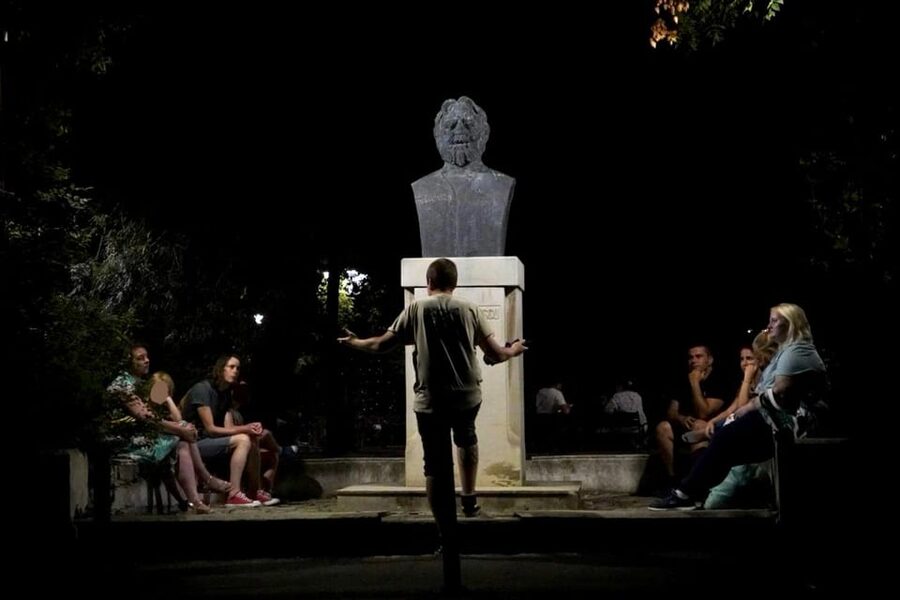
Meeting beside the National Theatre
The tour begins beside the statues in front of the National Theatre. This is a useful central meeting point, but you should allow time to find the exact statues and arrive ready to walk. Transportation to the meeting point is not included, so arrange your own route there.
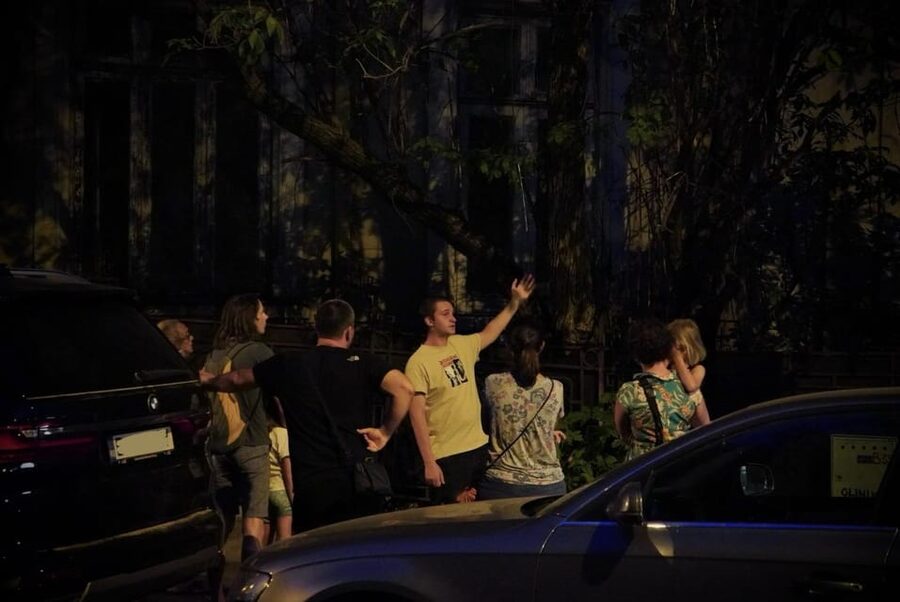
From the beginning, the guide sets the pace and explains the kind of evening ahead. The guides who receive the strongest praise, including Tudor, Rares, Ali, and Bogdan, do more than recite prepared lines. They invite questions, include quieter people, and adjust the conversation to the group.
That matters on a walking tour. A guide who can keep a group together, explain a story clearly, and pause when needed makes two and a half hours feel manageable. Several guides are also comfortable adding humor, personal memories, and family stories, which helps connect old beliefs with modern Romanian life.
The first stops: haunted places and city history
The exact sequence of stops can vary, but the experience centers on Bucharest sites linked with strange events, tragic deaths, unsolved murders, and supernatural reports. You stop outdoors while the guide explains what happened, why the site became associated with haunting, and how the story has been remembered.
I appreciate that these places are not treated as isolated curiosities. The guide may also point out architecture and explain something about Bucharest’s buildings and neighborhoods. This turns the walk into an alternative introduction to the city. You are not only following a ghost story. You are learning how older streets, parks, and buildings fit into Bucharest’s past.
Do not expect to enter abandoned or haunted homes. Entry into haunted houses is not included, and the tour specifically visits them from outside. That is important if you are picturing an indoor investigation with equipment and locked rooms. The appeal here is the guide’s account and the atmosphere around the location.
Some stops may involve standing on a pavement or in a park while you listen. One guide was even willing to add an extra stop when the group asked. The route is described as a walk with regular pauses rather than a strenuous hike, but comfortable shoes remain a good idea.
Why the folklore matters more than the fright
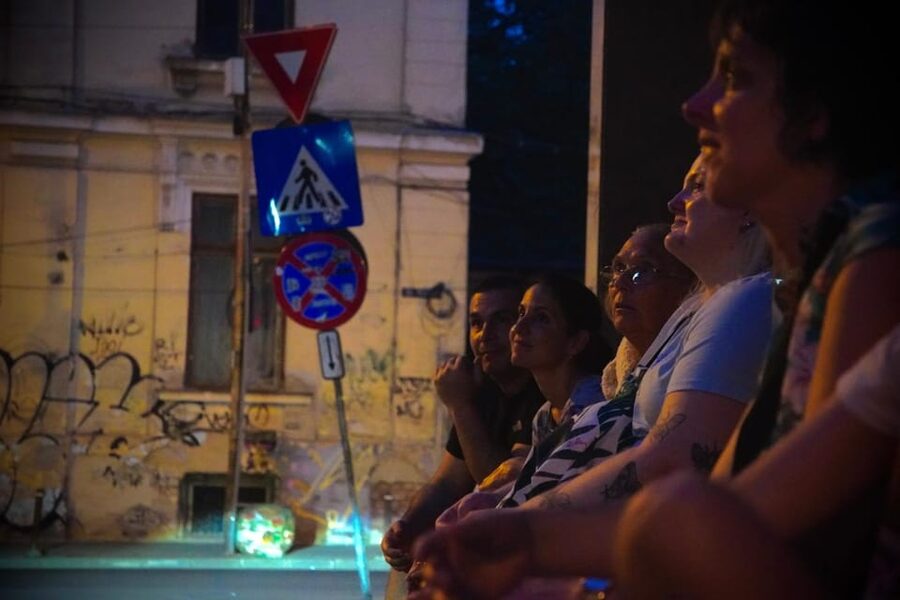
Romanian mythology has plenty of creatures and spirits, but the most interesting material often concerns ordinary actions meant to prevent supernatural trouble. You may hear about customs used to protect a home, rituals connected with burial, and beliefs about what can happen when the proper steps are not followed.
This is where the tour becomes useful for understanding Romania. Folklore is not only a collection of old monsters. It shows how people made sense of illness, death, bad luck, and unexplained events. The guide explains these beliefs in a way that lets you enjoy the eerie side without treating Romanian culture as a costume.
Witchcraft also appears in the stories. The subject is handled as part of Romanian tradition and belief, not simply as a prop for Halloween. You may hear about witches, spirits, protective practices, and the difference between a frightening tale and a custom people still remember.
I would pay close attention to the burial material. It is among the more distinctive parts of the walk because it moves beyond familiar vampire clichés. The stories can be dark, but they show how strongly communities cared about giving the dead the correct treatment and keeping the living safe.
A few more walking tours around the world worth a look
- Magical London: Harry Potter Guided Walking Tour
★ 4.7 · 22,044 reviews - Reykjavik Food Walk – Local Foodie Adventure in Iceland
★ 5.0 · 18,952 reviews - History and Hauntings of Salem Guided Walking Tour
★ 5.0 · 14,564 reviews - Amsterdam Anne Frank: Small-Group Walking Tour & Local Guide
★ 4.8 · 12,789 reviews
Dracula, vampires, and a modern Bucharest case
No supernatural tour in Romania can avoid Dracula. The useful question is how the guide handles him. Here, Dracula becomes a starting point for separating popular fiction from Romanian history, vampire legends, and local beliefs.
You should not expect Bucharest to be presented as a film set. The tour connects Dracula’s legacy with the wider mythology of vampires and the fear of the dead returning. That approach gives the famous name its proper place without letting it swallow every other story.
The more unusual section concerns a real vampire who reportedly terrorized Bucharest in the 1970s. The case brings the folklore closer to modern life. It is one thing to hear a medieval legend. It is another to consider how a vampire story could form around events in a recognizable, recent city.
The guide’s research is especially important here. Tudor, in particular, is praised for investigating stories and looking for evidence rather than relying only on repeated tourist tales. That does not turn every supernatural claim into fact, but it helps you understand which parts are documented, which are believed, and which have grown through retelling.
Parks, architecture, and the city after dark
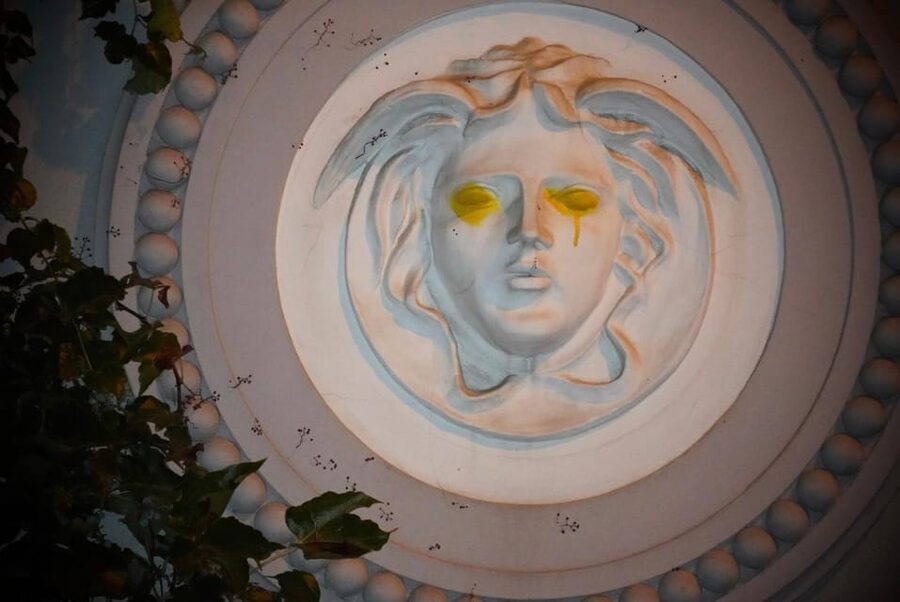
One of the pleasant surprises is that the route is not limited to gloomy doorways. The walk can include parks and attractive buildings, giving you a broader look at Bucharest at night. In winter, parks decorated with lights can be especially atmospheric, though the cold may be severe.
The city views are not the main product, so do not book this as a substitute for a standard Bucharest sightseeing tour. Still, the route can take you to places you would not choose on a first stroll through the center. The ghost stories give you a reason to notice details that might otherwise seem ordinary.
This is also a good first-night activity if you want an introduction with some personality. You learn about buildings, city history, customs, and local stories in one evening. You will not receive a full survey of Bucharest, but you may finish with a better sense of how the city’s past and present overlap.
The guides: Tudor, Rares, Ali, and Bogdan
The guide is the biggest variable in any storytelling tour, and this experience appears to benefit from a strong team. Tudor is repeatedly praised for detailed research, lively delivery, humor, and his habit of asking the group questions. He is also willing to keep talking when people want more context.
Rares is described as friendly, professional, and well prepared. His style suits people who want a clear account of Romanian beliefs and Bucharest’s darker stories without too much showmanship. On very cold nights, a calm and engaging guide becomes especially valuable.
Ali brings personal memories and family experiences into the discussion, including stories about growing up and her grandmother. That can make customs feel less distant. She is also praised for keeping groups together and drawing quieter participants into the conversation.
Bogdan is another guide associated with an enthusiastic, humorous approach. The guides do not all tell the stories in exactly the same way, which can be a good thing. You are getting live interpretation, not an audio track.
The tour is offered in English. Clear English matters here because the experience depends on detail, tone, and small distinctions between history, belief, and legend. The available information does not promise one particular guide, so you should treat names as examples of the team rather than a guarantee of who will lead your walk.
Group size, pace, and the cold-weather question
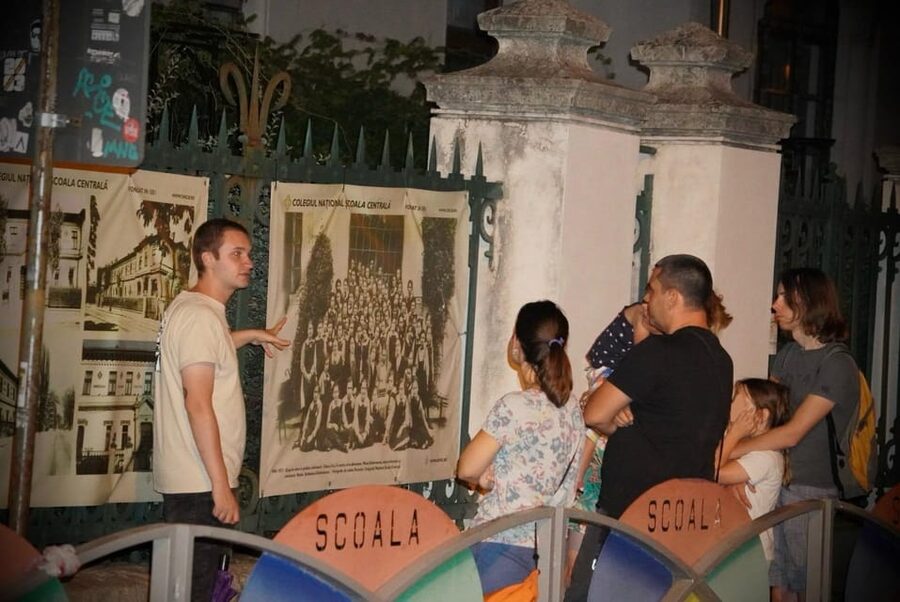
The size of the group can vary. Some outings have been small, with only two people, while others have had around nine or more. A small group allows more questions and a more personal exchange. A larger group can bring a wider mix of nationalities and folklore comparisons, but you may have less time to speak directly with the guide.
The walk lasts about two and a half hours. That is long enough to build a proper theme and cover several stories, but it also means you should plan for extended time outdoors. Wear shoes that can handle city walking and bring warm clothing even if the evening begins pleasantly.
Cold weather deserves serious attention. People have joined in temperatures as low as minus 11 degrees Celsius, and one winter outing took place at minus 4. Guides kept the groups engaged, but no storyteller can make frozen hands comfortable. If you are visiting in winter, add layers, gloves, and a hat. In warmer months, the outdoor format should feel easier, but you still need walking shoes.
The tour is not suitable for wheelchair users according to the activity information. Children under 10 are not accepted. Older children may be able to enjoy the stories, and one guide made an effort to accommodate children, but the subject matter includes death, murder, witchcraft, and frightening folklore.
Is $35 a fair price?
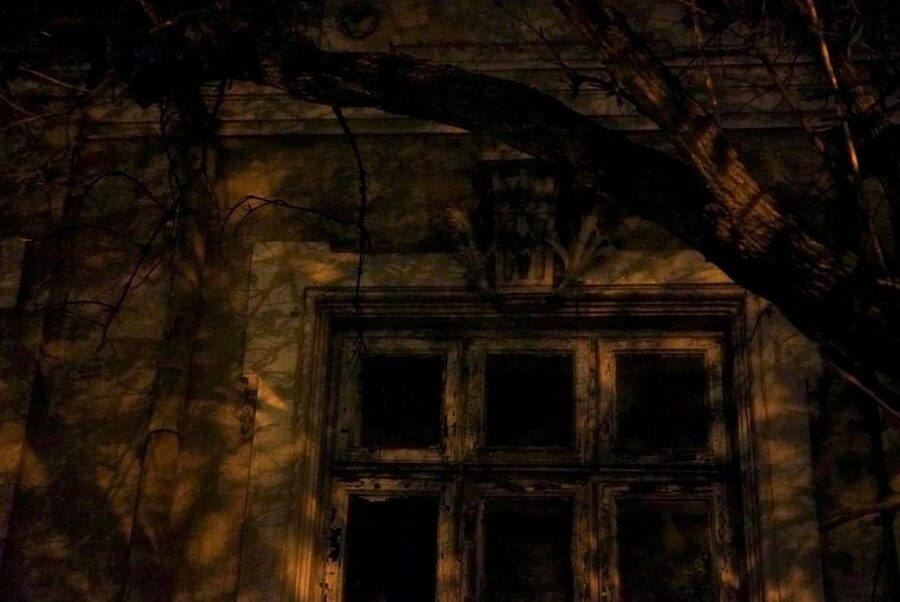
At $35 per person, this is not the cheapest way to spend an evening in Bucharest, but the value depends on what you want from a walking tour. You are paying for two and a half hours with a live English-speaking guide, not admission to a haunted attraction. There are no meals, drinks, or house entries included.
I think the price is reasonable if you care about local interpretation. A guide who has researched the stories, answers questions, and explains customs can give you something difficult to get from a guidebook. The price is less compelling if you only want a quick stroll past spooky buildings or a theatrical scare show.
The route also combines several experiences: folklore, city history, architecture, modern crime stories, and evening walking. That makes it a better value than a narrow ghost tour for someone visiting Bucharest for a short stay.
Flexible booking helps if your plans are uncertain. You can cancel up to 24 hours ahead for a full refund, and the reserve-now, pay-later option lets you hold a place without paying immediately. Check the available start times when booking, since the exact schedule is not fixed in the basic activity details.
Who should book this Bucharest ghost tour?
I would choose this walk if you enjoy history with a dark edge, local customs, and stories that leave room for questions. It is especially suitable for adults, older children who can handle unsettling subjects, solo visitors who want a social evening, and couples looking for something beyond the usual city sights.
It also works well early in your stay. The route can introduce you to Bucharest’s streets, parks, buildings, and beliefs before you decide which parts of the city deserve a closer look. If you are a writer, photographer, or fan of Gothic folklore, the mix of documented cases and traditional stories should give you plenty to think about.
I would skip it if you dislike standing outdoors, need step-free access, want to enter haunted buildings, or prefer fast sightseeing with little discussion. The tour rewards patience. Its best moments come when the guide takes time to explain why a story matters.
Should you book it?
Book this tour if you want Bucharest presented through its ghosts, customs, and uneasy memories rather than through Dracula alone. The combination of researched stories, local beliefs, modern cases, and lesser-seen streets gives the evening real character.
Bring warm clothes, wear comfortable shoes, and keep your expectations clear: this is an outdoor storytelling walk, not a haunted-house attraction. At $35, it is a good choice for an independent traveler who values a strong guide and an unusual look at Romanian culture. Tudor, Rares, Ali, or Bogdan may each bring a different style, but the format remains the same: walk, listen, ask questions, and let Bucharest’s darker stories do the work.
FAQ
Where does the Bucharest ghost tour meet?
The meeting point is beside the statues in front of the National Theatre in Bucharest.
How long does the tour last?
The walking tour lasts approximately 2.5 hours.
What language is the tour offered in?
The tour is offered in English with a live professional guide.
Will I enter the haunted houses?
No. You visit the haunted sites, but entry into the haunted houses is not included.
What does the tour cover?
You hear stories about tragic deaths, unsolved murders, ghosts, witches, vampires, mythological creatures, Romanian customs, protective rituals, Dracula, and a real 1970s vampire case linked to Bucharest.
How much does the experience cost?
The price is $35 per person.
Is the tour suitable for children or wheelchair users?
The tour is not suitable for children under 10 or for wheelchair users.
Just added around the world
- Fira: Guided Foodie Walking Tour with Tastings★ 4.9 · 474 reviews
- Fez: Guided Walking Tour of the Historic Medina★ 5.0 · 359 reviews
- Fez: Walking Tour in the Ancient City of Fez★ 4.8 · 73 reviews
- Faro: Old Town Guided Walking Food Tour★ 4.9 · 94 reviews
- Feel like a local – Walking Tour in Mykonos Town 2hours★ 4.4 · 77 reviews
- Fes: A Guided Walking Tour Through the Historic Medina★ 4.4 · 97 reviews
- Fez: Half-Day City Private Walking Tour with a Guide★ 4.6 · 114 reviews
- Fanal / Assobiadores – Levada Walk★ 4.6 · 93 reviews
Ghost and Haunted Walking Tours, compared.

New Orleans Premier Ghost, Voodoo and Vampire Walking Tour
Read our review →
Ghost Walking Tour Where Legends Come To Life
Read our review →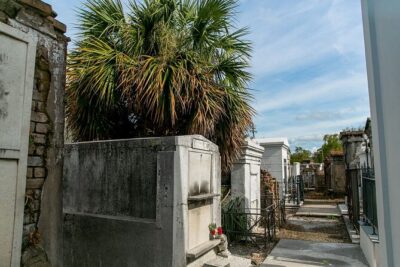
St. Louis Cemetery No. 1 Official Walking Tour
Read our review →
Savannah History and Haunts Candlelit Ghost Walking Tour
Read our review →
Browse the lists this tour appears in