
REVIEW · BUCHAREST
Bucharest: Communism and History Guided City Walking Tour
Bucharest’s communist past is easiest to grasp when you see it in the streets. This three-hour walking tour links churches, demolished neighborhoods, moved buildings, grocery shops, grand boulevards, and Revolution Square into one clear story about dictatorship and daily life.
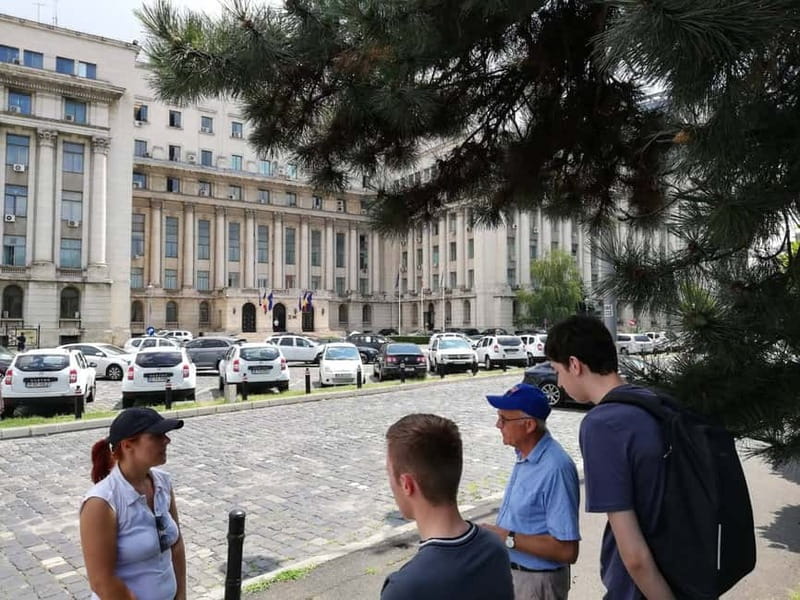
I like two things right away: the tour connects big political events with ordinary Romanian lives, and the guides use personal memories, family stories, photographs, and even a period-style snack to make the subject feel real. Guides including Andreea, Daniela, Octavian, and Mihai are praised for clear English, patient answers, and a warm way of telling difficult stories.
The main drawback is physical rather than historical. You walk for three hours, in rain or shine, and the route is not suitable for wheelchair users or people with back problems. The Parliament is seen only from outside, so book this for context and street-level history, not for an interior visit.
Key points to know before you book
- The Parliament is an outside stop: You get a useful view of the House of the People and its political meaning, but there is no interior tour.
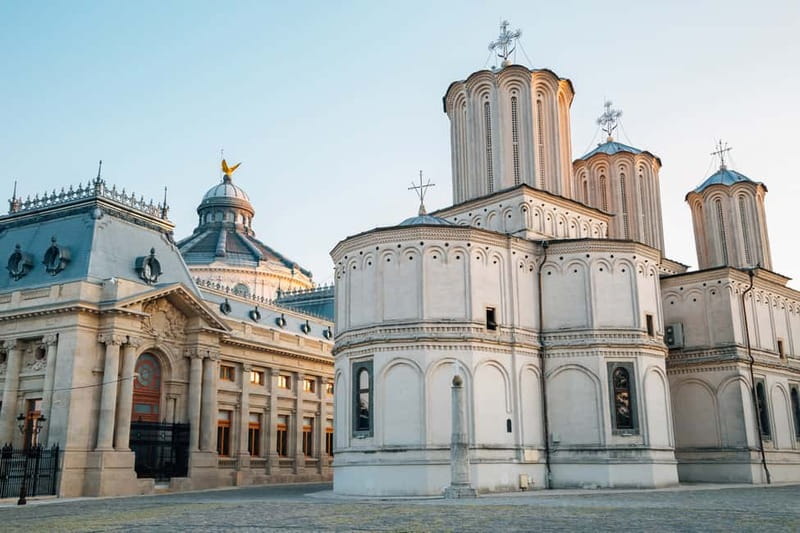
- The route starts at the Patriarchal Cathedral: From Piata Unirii, you must walk uphill to reach the meeting point.
- Daily life is central: Expect stories about food shortages, nationalization, surveillance, religion, housing, and the pressure of the regime.
- The 1989 Revolution gets a proper ending: The walk finishes in Revolution Square, where the fall of communism is explained on location.
- A café break is built in: You have about 15 minutes to rest, use facilities, and buy your own drink.
- The guides are the strongest part: Andreea, Daniela, Octavian, Mihai, and others are repeatedly praised for clear explanations, personal detail, and lively storytelling.
Why this Bucharest walk works so well

A city tour about communism can easily become a list of dates and political names. This one uses the city itself as the outline. You begin with religion and the arrival of communism, move through nationalization and demolition, then reach the enormous Parliament building and the final days of the regime.
I like that structure because it helps you understand cause and effect. The route is not just a collection of sights. Each stop marks a change in Romanian life, from the seizure of private property to the control of food, from fear of the Secret Police to the public uprising of 1989.
The walk covers about 15 locations, though some are passed rather than entered. That gives you a broad view of central Bucharest in three hours. It also means the guide has to keep the pace moving, so this is better for people who enjoy listening while walking than for anyone wanting long periods at each monument.
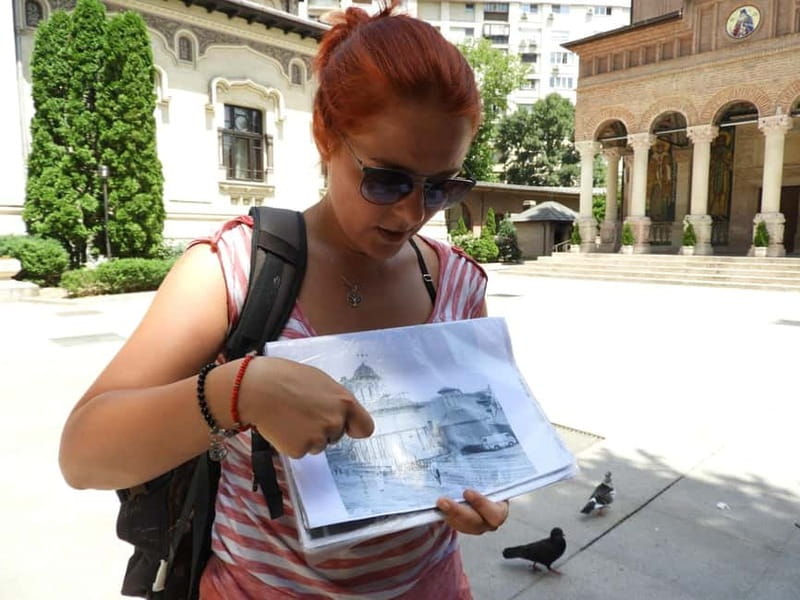
The tour is offered in English, and the strongest guide names in the available information include Andreea, Daniela, Octavian, Mihai, and Ion. The exact guide depends on the date. You can expect a presentation that mixes factual explanation with personal or family memories. Several guides are praised for bringing visual aids, answering many questions, and adjusting the walking pace to the group.
More History Walking Tours in the world:
- Berlin: Third Reich & Cold War Guided Walking Tour
★ 4.9 · 8,378 reviews - Munich: Third Reich & WWII Walking Tour
★ 4.6 · 6,181 reviews - Berlin’s Best: 2 Hour Walking Tour Third Reich and the Cold War
★ 5.0 · 5,486 reviews
Starting at the Patriarchal Cathedral
The meeting point is in front of the Patriarchal Cathedral, reached from Piata Unirii metro station. Allow time for the uphill walk from Union Square. Arriving early is useful because the cathedral area gives you a calm place to get oriented before the group sets off.
The first stop deals with religion under communism and the events that helped bring the communist regime to power. That is a smart opening. It reminds you that the story is not only about Ceaușescu and the 1980s. It begins earlier, with the political changes that reshaped Romania after the Second World War.
The cathedral also introduces one of the tour’s recurring themes: the tension between official ideology and personal belief. You hear how religion fit into a system that wanted loyalty to the state, then see how historical places survived while the city around them was altered.
From here, the tour enters a nearby neighborhood affected by nationalization. This is where abstract policy becomes easier to picture. Private homes and businesses were taken into state ownership, changing who could live in a building and who could control property. You see the city not as a museum, but as a place where political decisions altered family life.
Antim Monastery and Bucharest’s moved buildings
Antim Monastery is one of the most memorable stops because it shows what was saved during the great rebuilding of Bucharest. The monastery is a beautiful religious complex, but its importance on this walk goes beyond architecture.
During Ceaușescu’s grand urban redesign, large sections of the city were cleared for new roads and monumental buildings. Some structures were destroyed. Others were physically moved to protect them from demolition. Antim Monastery is presented as part of that difficult story.
I find this stop valuable because it gives you a human scale before the route reaches the giant Parliament. You can look at a historic building and then consider the enormous force required to preserve it while nearby streets and neighborhoods were being erased or rebuilt.
The tour explains the destruction of Bucharest as one of the largest demolitions of a European city during peacetime. That is a strong claim with a powerful visual result, but the guide’s job is to show how the changes affected residents, not just to repeat the statistic. You learn about the loss of homes, familiar streets, and old urban patterns.
The Parliament view and Ceaușescu’s megalomania
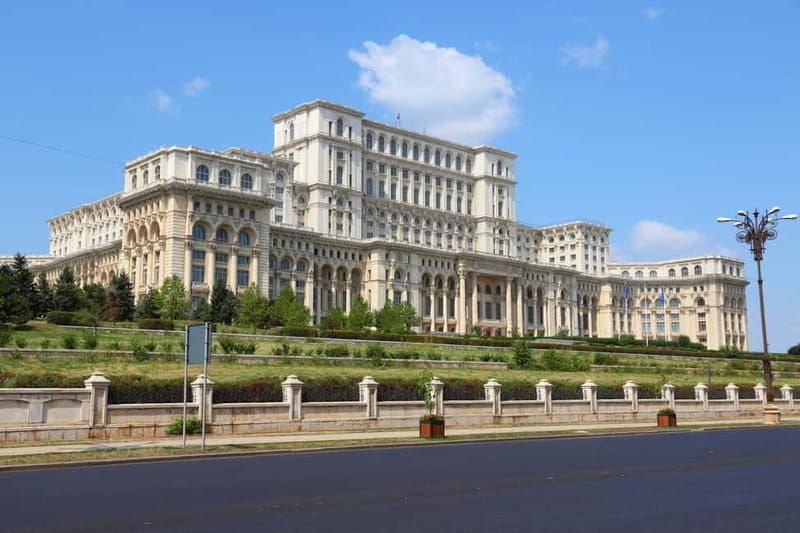
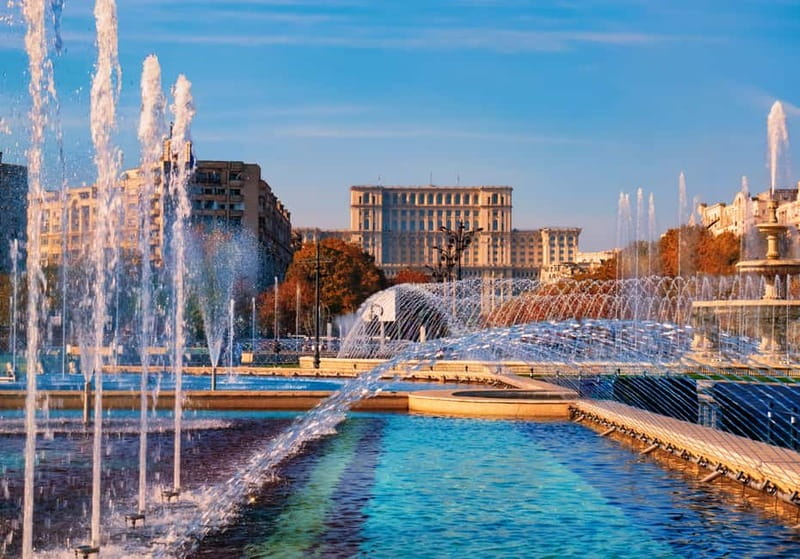
The House of the People, now the Palace of Parliament, is the route’s biggest visual moment. You stop for photographs and hear how the building was conceived as a symbol of state power and Nicolae Ceaușescu’s megalomania.
The building is impressive from the outside, but the real value of the stop is learning what its construction meant for Bucharest. The guide explains the planning, demolition, labor, and political message behind it. The immense scale makes more sense once you understand that it was designed to project the authority of one ruler and his system.
Keep your expectations clear: there is no interior visit. You will see the Parliament from outside and hear the story connected to it. If entering the building is important to you, you will need a separate visit.
I like the outside-only format for this particular tour because it keeps the focus on the city around the building. The Parliament is not treated as a stand-alone attraction. It becomes evidence of how power reshaped Bucharest, often at the cost of entire neighborhoods.
More City Highlights Walks in the world:
- Berlin City walk Government District and Places of Democracy
★ 4.7 · 8,467 reviews - Historic Charleston Guided Sightseeing Walking Tour
★ 5.0 · 6,216 reviews - Quebec City Walking Tour
★ 5.0 · 4,716 reviews - Florence: Highlights Walking Tour with Expert Guide
★ 4.6 · 4,662 reviews
A short café break and a taste of ration-era life
After the first stretch of walking and history, you stop at a local café for about 15 minutes. Your coffee or other purchase is not included, but the pause matters. Three hours of serious subject matter is easier to absorb when you have time to sit, use the restroom, and ask follow-up questions.
The tour also includes a communist-type snack. This small detail is more useful than it may sound. Food shortages, rationing, and the struggle to feed a family are easier to understand when the guide can connect the story to something you can see and taste.
One guide used a rum-flavored biscuit as a way to evoke the period. That kind of object can open a conversation about memory, scarcity, and the difference between official promises and daily reality.
The stop at an old Alimentara, or grocery store, continues the same theme. You hear about the well-being of ordinary people and what shopping looked like under the regime. The building itself may not seem dramatic, but that is exactly why it works. Communist history was lived in shops, apartment blocks, queues, workplaces, and kitchens, not only in government offices.
Calea Victoriei, Caru’ cu bere, and the Secret Police
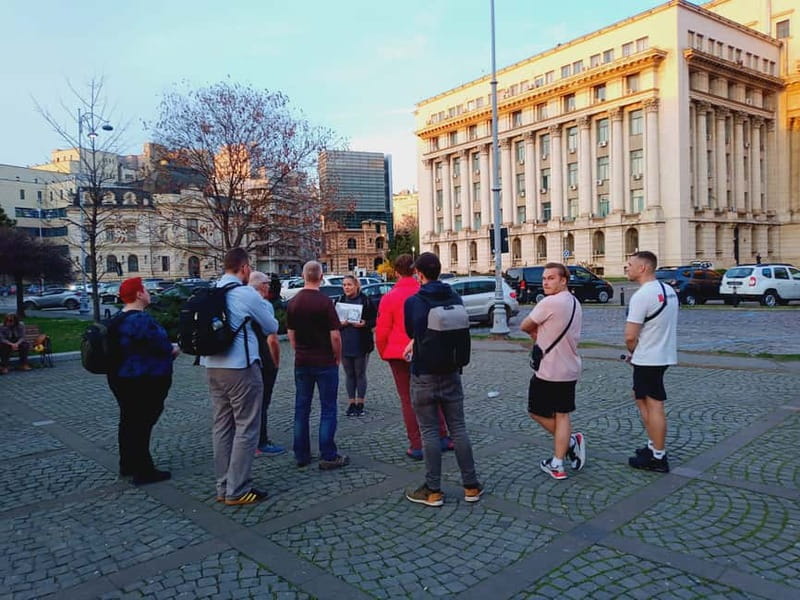
The route then reaches Calea Victoriei, one of Bucharest’s most attractive streets. Walking here gives the tour a change of mood. You are no longer looking only at the monumental center created by communism. You are also seeing a major historic boulevard where older Bucharest and communist symbols sit close together.
Caru’ cu bere is included as a pass-by sight. The famous restaurant is not presented as a meal stop, but it helps place the political story in the city’s older social world. You see how the route moves between different eras instead of isolating communism from the rest of Bucharest’s past.
The Secret Police material is among the tour’s most serious sections. You pass a former center associated with torture and learn about the influence of the security services. This part can be unsettling, and it should be. The goal is not to make the past feel theatrical. It is to explain how surveillance and fear affected ordinary behavior.
The guides are especially helpful here because they connect the institution to personal choices. You may hear about the need to be careful with words, the fear of informing, and the pressure created by a state that could reach into private life. The exact stories depend on your guide, but the tour’s strength is its attention to people rather than only to organizations.
Revolution Square and the end of the regime
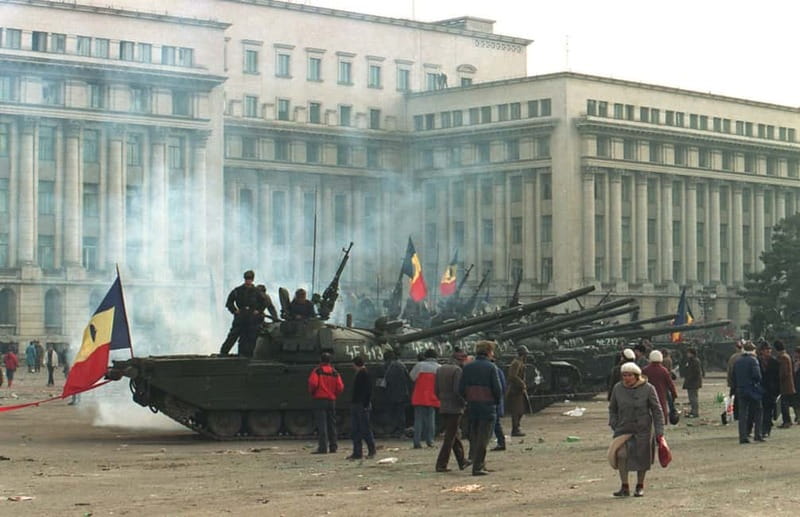
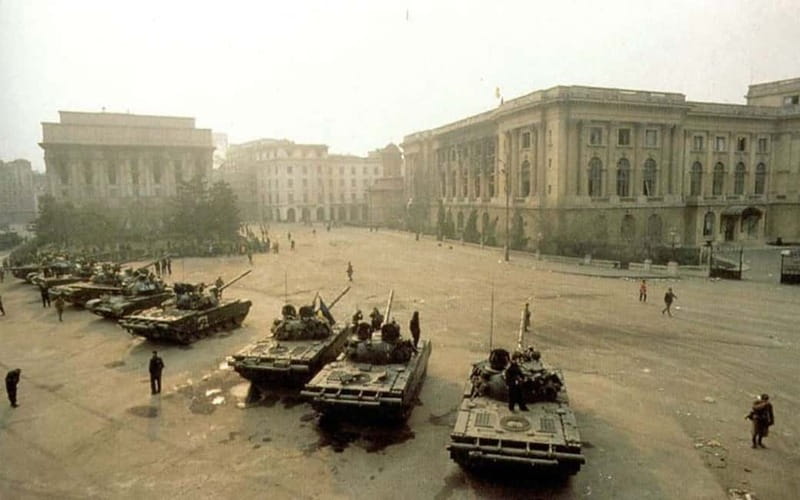
The final walk leads to Revolution Square, where the tour ends. This is the right place to finish because the square is tied directly to the collapse of communist rule in 1989 and the beginning of democracy.
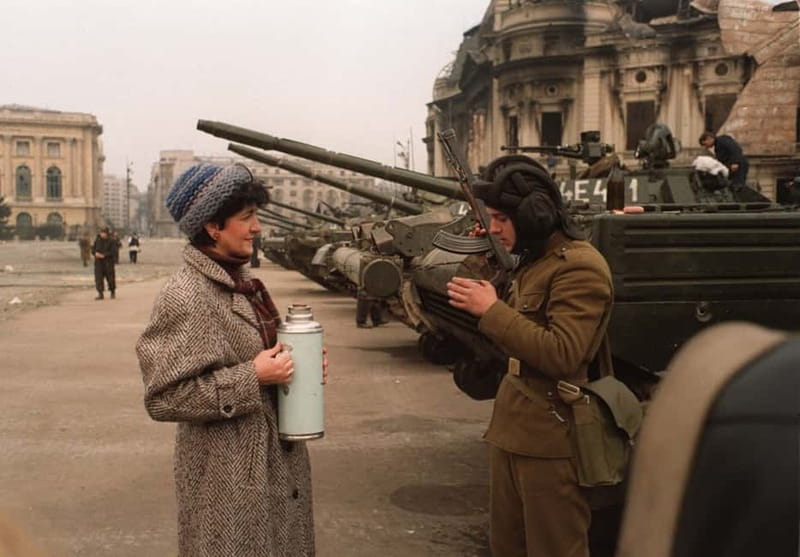
The guide explains the days of the Revolution, helping you follow the sequence of events rather than treating the uprising as a single dramatic afternoon. You hear how public anger, political uncertainty, and mass action brought the regime to an end.
For me, the value of ending here is that the tour does not pretend history stopped in 1989. The guides also discuss how the communist period still affects Romanian life and attitudes today. That final connection prevents the walk from becoming a sealed-off lesson about the past.
You can also ask questions at this point. Several guides are praised for taking time with difficult or detailed questions, and some offer ideas for other places to eat or visit in Bucharest. Since the tour ends in a central area, you can continue exploring on foot afterward.
What the $31 price gets you
At $31 per person, this is a fair price if you want a serious introduction to Bucharest’s recent past. You get three hours with a live English-speaking guide, roughly 15 historical points, the Parliament viewpoint, the café pause, and the period-style snack.
The value comes from the connections. If you visited these places alone, you would see a cathedral, a monastery, a monumental government building, a boulevard, and a square. The guide explains how they fit into one political story.
The price does not include hotel pickup, drinks at the café, or entry inside the Parliament. Those limits are easy to understand, but they are worth noting when you compare this with a shorter orientation walk or an interior Parliament visit.
I would especially consider booking it early in your Bucharest stay. The tour gives you useful context for the city, and several guides also point out places worth returning to later. It is not a cheap way to tick off monuments, but it is good value if understanding the city matters more than collecting interiors.
Practical advice for a comfortable walk
Wear comfortable shoes. The route includes walking between stops, a hill at the beginning, and a normal walking pace along Calea Victoriei. Bring water and dress for the forecast, since the tour operates in ordinary rain and other manageable weather.
The tour can be canceled or rescheduled if severe conditions make walking unsafe, including heavy rain, blizzards, extreme wind, or extreme heat. Otherwise, plan to continue in poor weather. An umbrella is sensible, though one guide has helped by bringing extra umbrellas for the group.
This is not suitable for wheelchair users or people with back problems. The route includes uneven urban movement and the climb to the cathedral. A review described a group that included a wheelchair user and a comfortable pace, but the official guidance still says the experience is not suitable, so you should contact the provider before booking if mobility is a concern.
The meeting point is easy to reach by metro, but do not confuse Piata Unirii with the cathedral itself. You still need to climb the hill from the square. Cancellation is free up to 24 hours before the start, and you can reserve now and pay later.
Who should book this tour
Book it if you want to understand why Bucharest looks the way it does, not simply photograph the Parliament. It suits people interested in twentieth-century politics, architecture, human rights, food shortages, religion, and the memories that survive after a dictatorship.
Families with teenagers can get a lot from it, especially if young people enjoy asking questions. The stories are serious, but the guides are described as friendly and engaging rather than dry. It also works well as a first-day activity because it gives you a strong framework for the rest of the city.
You may want to skip it if you dislike walking, need step-free access, or mainly want grand buildings and cheerful sightseeing. The subject includes torture, surveillance, deprivation, demolition, and political violence. It is worthwhile, but it is not light entertainment.
Should you book the Communism and History Walking Tour?
I would book this tour if you have three hours and want the city to make more sense. The outside view of the Parliament is not enough on its own, but paired with the cathedral, Antim Monastery, nationalized neighborhoods, the old grocery store, Secret Police sites, Calea Victoriei, and Revolution Square, it forms a clear picture of communist Bucharest.
The strongest reason to go is the guide. Andreea, Daniela, Octavian, Mihai, and Ion are all praised for bringing clarity and personal detail to a difficult subject. If you want a straightforward city walk with real historical weight, this is one of the better uses of an afternoon in Bucharest.
FAQ
Where does the tour start?
It starts in front of the Patriarchal Cathedral. The closest metro station is Piata Unirii, but you must walk uphill from Union Square to reach the cathedral.
Where does the tour finish?
The tour ends at Revolution Square in central Bucharest.
How long does the walking tour last?
The tour lasts three hours, including a short café break of about 15 minutes.
Can I go inside the Palace of Parliament?
No. The Parliament, also called the House of the People, is visited from outside only. You stop for photographs and receive an explanation of its construction and meaning.
Is food or drink included?
A communist-type snack is included. Drinks or anything else you choose to buy during the café break are at your own expense.
Is the tour suitable for wheelchair users?
The official information says it is not suitable for wheelchair users or people with back problems. The route includes walking and an uphill approach to the Patriarchal Cathedral.
What happens if the weather is bad?
The tour runs in ordinary rain and other manageable weather. If heavy rain, a blizzard, extreme wind, or extreme heat makes the walk unsafe, it may be canceled with a full refund or moved to another day.
Just added around the world
- Fez: Guided Walking Tour of the Historic Medina★ 5.0 · 359 reviews
- Fez: Walking Tour in the Ancient City of Fez★ 4.8 · 73 reviews
- Fira: Guided Foodie Walking Tour with Tastings★ 4.9 · 474 reviews
- Faro: Old Town Guided Walking Food Tour★ 4.9 · 94 reviews
- Feel like a local – Walking Tour in Mykonos Town 2hours★ 4.4 · 77 reviews
- Fes: A Guided Walking Tour Through the Historic Medina★ 4.4 · 97 reviews
- Fez: Half-Day City Private Walking Tour with a Guide★ 4.6 · 114 reviews
- Fanal / Assobiadores – Levada Walk★ 4.6 · 93 reviews
History Walking Tours, compared.

Berlin’s Best: 2 Hour Walking Tour Third Reich and the Cold War
Read our review →
Third Reich Berlin: Hitler and WWII Walking Tour
Read our review →
New Orleans Garden District History Walking Tour
Read our review →
Cartagena: Historic Center and Getsemaní Shared Walking Tour
Read our review →
Imperial Palace and Shogun Historical Walking Tour
Read our review →Browse the lists this tour appears in